
North America B2B E-Commerce Market Outlook to 2030
Region:North America
Author(s):Sanjana Verma
Product Code:KROD9610
December 2024
83
About the Report
North America B2B E-Commerce Market Overview
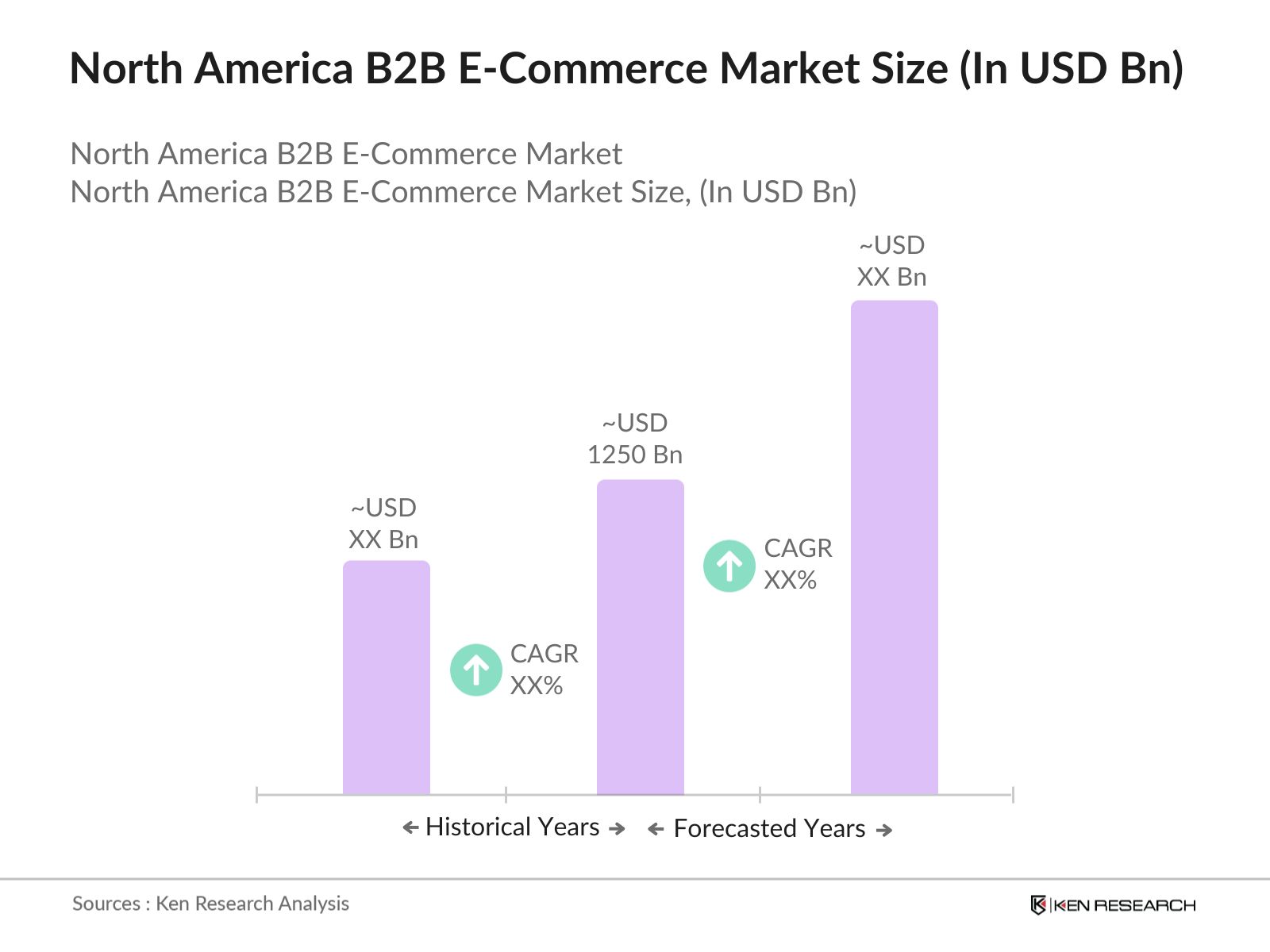
- The North America B2B E-Commerce market, valued at USD 1,250 billion, is primarily driven by the accelerated digital transformation of businesses, particularly in procurement, supply chain management, and sales channels. This expansion is further supported by innovations in cloud-based platforms, allowing companies to integrate their supply chains into a seamless digital environment.
- Cities in the U.S., such as New York, Los Angeles, and Chicago, dominate the North American B2B E-Commerce market due to their significant industrial base and business-to-business activities. These cities are home to many multinational corporations and SMEs, which leverage e-commerce platforms for procurement and sales. Canada also plays a key role, with Toronto emerging as a major player due to its thriving tech ecosystem and business-friendly environment.
- Data privacy regulations like the General Data Protection Regulation (GDPR) and California Consumer Privacy Act (CCPA) are shaping how North American B2B e-commerce platforms handle user data. In 2023, businesses in the US faced fines exceeding $500 million for non-compliance with CCPA regulations, as reported by the US Federal Trade Commission. These laws mandate stricter controls on data collection, storage, and processing, impacting how companies manage sensitive customer information.
North America B2B E-Commerce Market Segmentation
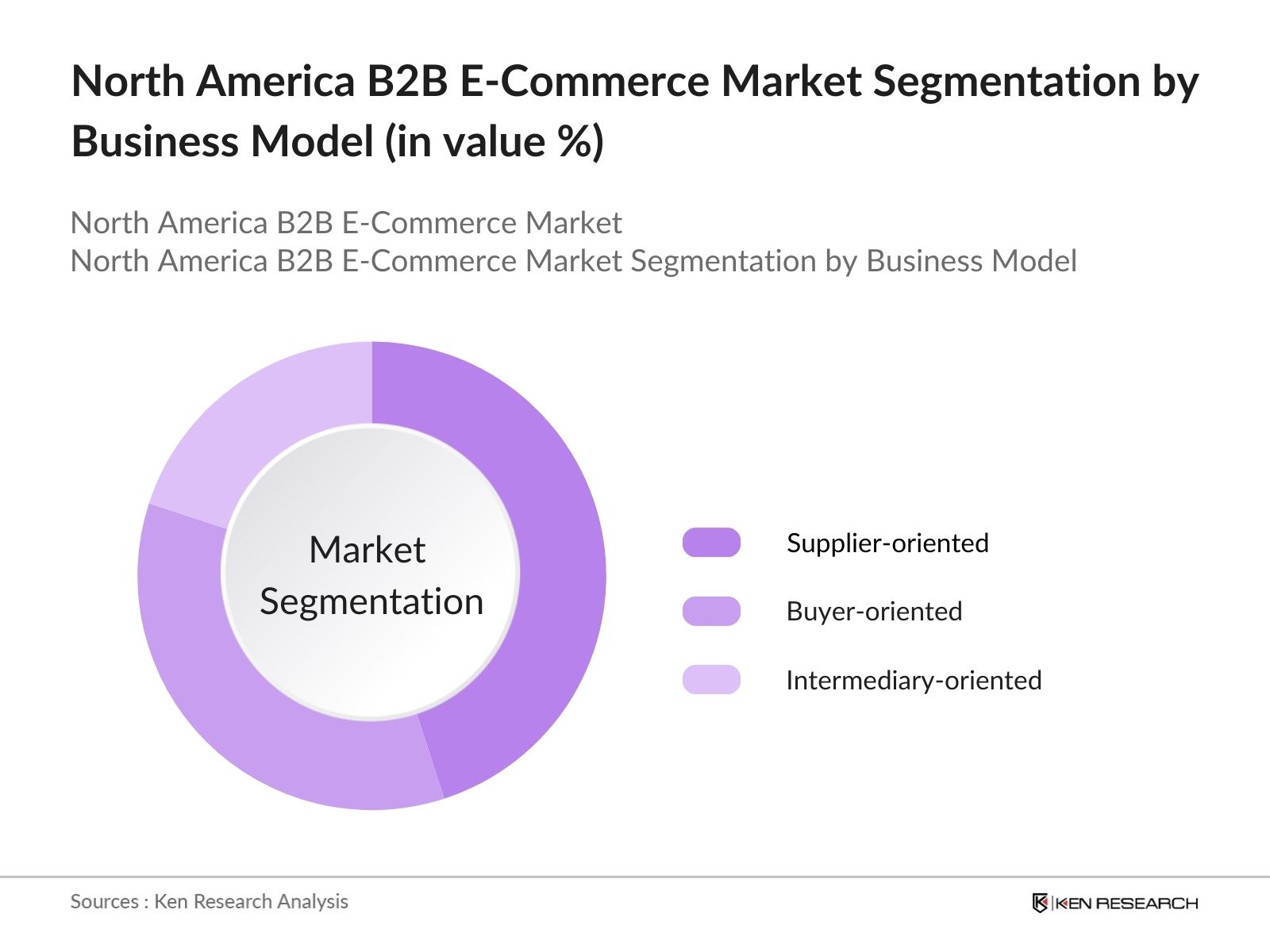
By Business Model: The North America B2B E-Commerce market is segmented by business model into supplier-oriented e-commerce, buyer-oriented e-commerce, and intermediary-oriented e-commerce. Supplier-oriented e-commerce currently holds a dominant market share, as suppliers increasingly adopt digital platforms to streamline their distribution processes and reach a wider audience. Major suppliers across manufacturing, wholesale, and retail sectors use proprietary platforms to interact directly with buyers, offering tailored solutions and enhancing customer relationships.
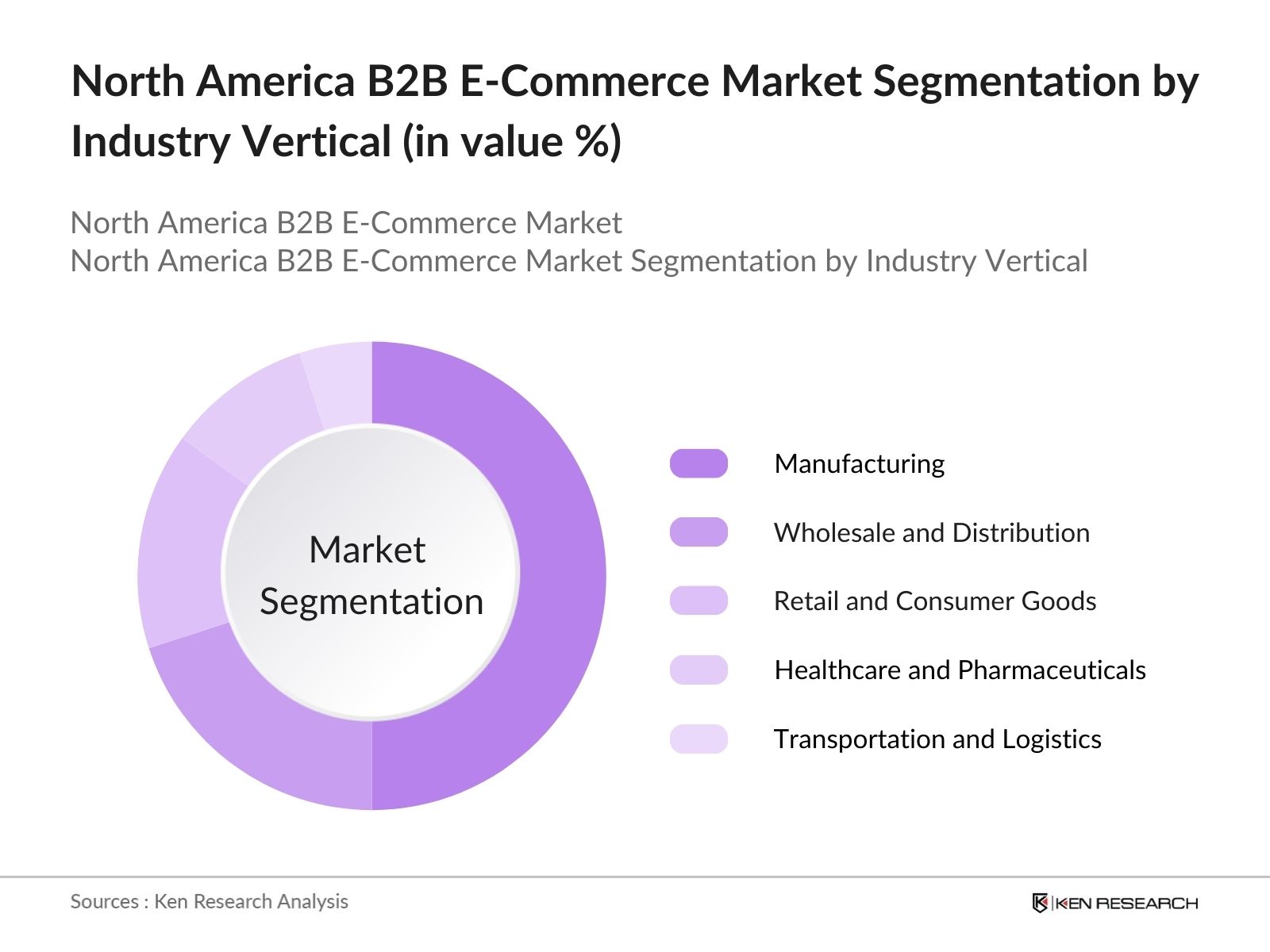
By Industry Vertical: The market is also segmented by industry vertical into manufacturing, wholesale and distribution, retail and consumer goods, healthcare and pharmaceuticals, and transportation and logistics. The manufacturing segment dominates, holding a significant share of the market due to its heavy reliance on e-commerce platforms for procuring raw materials and machinery. Manufacturers benefit from the scalability of these platforms, allowing them to manage complex supply chains, automate procurement, and reduce overall transaction costs. The adoption of AI and predictive analytics for inventory management further strengthens the role of e-commerce in the manufacturing sector, contributing to its market dominance.
North America B2B E-Commerce Market Competitive Landscape
The North America B2B E-Commerce market is highly competitive, with both established global players and emerging regional firms vying for market share. Companies like Amazon Business and Alibaba have created strong footholds through their vast distribution networks and advanced technological capabilities. The competitive landscape is also shaped by smaller players offering specialized services, such as AI-powered procurement platforms and supply chain solutions.
|
Company |
Established Year |
Headquarters |
Market Cap (2023) |
Active Users (2023) |
Number of Employees |
Platform Type |
Digital Payment Solutions |
Supply Chain Integration |
Cloud-based Services |
|
Amazon Business |
1994 |
Seattle, WA, USA |
- |
- |
- |
- |
- |
- |
- |
|
Alibaba.com |
1999 |
Hangzhou, China |
- |
- |
- |
- |
- |
- |
- |
|
Shopify Plus |
2006 |
Ottawa, Canada |
- |
- |
- |
- |
- |
- |
- |
|
Global Sources |
1971 |
Hong Kong |
- |
- |
- |
- |
- |
- |
- |
|
ThomasNet |
1898 |
New York, USA |
- |
- |
- |
- |
- |
- |
- |
North America B2B E-Commerce Market Analysis
Growth Drivers
- Increasing Supply Chain Digitization: The digitization of supply chains is significantly boosting North Americas B2B e-commerce market. According to the World Bank, logistics and supply chain management systems in the US have seen a shift toward digital platforms, resulting in improved transparency and efficiency. In 2023, over 60% of US-based B2B companies reported implementing digital supply chain solutions, leading to a reduction in manual errors and operational delays.
- Adoption of Procurement Automation Solutions: Procurement automation is emerging as a core driver of B2B e-commerce, with over 25% of B2B transactions now processed via automated procurement platforms in the US, according to the latest data from the IMF. These platforms reduce procurement cycle times by 30% and cut procurement costs by as much as $250 billion annually across North America, resulting in faster order fulfillment. Government-backed incentives for businesses to adopt cloud-based procurement systems are playing a crucial role in expanding the market, with significant adoption rates observed among large-scale enterprises.
- Expansion of B2B Marketplaces: B2B marketplaces have grown rapidly, particularly in the US and Canada. According to the US Department of Commerce, there are over 200 specialized B2B marketplaces operating as of 2023, catering to sectors such as industrial equipment, IT solutions, and raw materials. These platforms have streamlined procurement processes for businesses and have enabled smaller companies to access global markets without the need for traditional intermediaries.
Challenges
- Cybersecurity and Data Privacy Concerns: Cybersecurity threats remain a major concern for North American B2B e-commerce, especially with the rise of digitized supply chains and procurement automation. The FBI reported that cybercrime costs exceeded $12.5 billion in the US in 2023, with B2B businesses being a primary target due to the large transaction values involved. In response, the US government has implemented stricter data privacy regulations such as CCPA to enhance security protocols for B2B platforms.
- Resistance to Digital Transformation in SMEs: Small and medium-sized enterprises (SMEs) in North America, especially in sectors like manufacturing and construction, continue to resist the shift to digital solutions. According to a 2023 report by the World Bank, only 40% of SMEs in the US have fully integrated digital tools into their business operations, citing cost and a lack of digital literacy as primary barriers. This resistance has slowed the adoption of e-commerce platforms among smaller players, impacting overall market growth in the B2B segment.
North America B2B E-Commerce Market Future Outlook
Over the next five years, the North America B2B E-Commerce market is expected to experience substantial growth driven by the continuous digitization of procurement processes, integration of AI and automation technologies, and the increasing adoption of cloud-based e-commerce solutions. The growing focus on cross-border trade and seamless payment integrations will also contribute to market expansion. Additionally, increased adoption by SMEs, supported by government incentives for digital transformation, is expected to bolster market growth.
Future Market Opportunities
- Growth in AI & Machine Learning for Personalized B2B Solutions: The integration of AI and machine learning into B2B e-commerce platforms is enabling personalized buyer experiences. In 2024, over 30% of B2B companies in North America are expected to use AI-driven solutions to automate processes such as order forecasting and customer recommendations, according to the World Bank. These technologies are reducing manual workloads, enhancing procurement decision-making, and improving customer engagement by offering tailored solutions.
- Expansion of Cross-border Trade Platforms: Cross-border B2B trade is experiencing strong growth, driven by the expansion of digital platforms facilitating international transactions. Platforms like Alibaba and Amazon Business are making it easier for businesses to access global markets, driving increased demand for export services. Government initiatives such as the US Trade Expansion Program are further enabling North American SMEs to participate in global trade.
Scope of the Report
|
By Business Model |
Supplier-oriented E-commerce Buyer-oriented E-commerce Intermediary-oriented E-commerce |
|
By Platform Type |
Proprietary Platforms Third-party Marketplaces Cloud-based E-commerce Solutions |
|
By Industry Vertical |
Manufacturing Wholesale and Distribution Retail and Consumer Goods Healthcare and Pharmaceuticals Transportation and Logistics |
|
By Deployment Mode |
On-premise Cloud-based |
|
By Payment Mode |
Digital Payment Gateways E-Wallets Bank Transfers Credit and Debit Cards |
Products
Key Target Audience
E-commerce Platform Providers
Payment Gateway Providers
Logistics and Fulfillment Companies
Large Enterprises
SMEs and Startups
Investors and Venture Capitalist Firms
Government and Regulatory Bodies (FTC, SEC)
IT and Software Development Firms
Companies
Players Mentioned in the Report
Amazon Business
Alibaba.com
Shopify Plus
Global Sources
ThomasNet
eWorldTrade
Rakuten
Mercateo
Ariba Network
Walmart Marketplace
Table of Contents
North America B2B E-Commerce Market Overview
1.1 Definition and Scope
1.2 Market Taxonomy
1.3 Market Structure (E-commerce platforms, Procurement Solutions, B2B Marketplaces)
1.4 Market Segmentation Overview
North America B2B E-Commerce Market Size (In USD Billion)
2.1 Historical Market Size
2.2 Year-On-Year Growth Analysis
2.3 Key Market Developments and Milestones
North America B2B E-Commerce Market Analysis
3.1 Growth Drivers (Supply Chain Digitization, Rising Adoption of Cloud Solutions, Procurement Automation)
3.1.1 Increasing Supply Chain Digitization
3.1.2 Adoption of Procurement Automation Solutions
3.1.3 Expansion of B2B Marketplaces
3.1.4 Digital Payment Integration (Fintech, Payment Gateways, Blockchain Integration)
3.2 Market Challenges (Cybersecurity Threats, Fragmented Supply Chain Solutions, Limited Digital Literacy in SMEs)
3.2.1 Cybersecurity and Data Privacy Concerns
3.2.2 Resistance to Digital Transformation in SMEs
3.2.3 Fragmented Solutions for Order Fulfillment
3.2.4 Complexity in Regulatory Compliance for Cross-border Transactions
3.3 Opportunities (Integration of AI & ML, Cross-border Trade Enablement, Customization of Platforms)
3.3.1 Growth in AI & Machine Learning for Personalized B2B Solutions
3.3.2 Expansion of Cross-border Trade Platforms
3.3.3 Customization and Localization of E-Commerce Platforms
3.3.4 Increased Demand for Subscription-based SaaS Models
3.4 Trends (AI-based Supply Chain Optimization, Blockchain for Order Tracking, Omnichannel E-commerce)
3.4.1 AI-driven Predictive Analytics for Inventory Management
3.4.2 Blockchain Integration for Enhanced Transparency
3.4.3 Rise of Omnichannel Strategies for B2B Buyers
3.4.4 Automation of E-Procurement Processes
3.5 Government Regulations (Data Privacy Laws, Cross-border Trade Regulations, Digital Taxation Policies)
3.5.1 Data Privacy Laws (GDPR, CCPA)
3.5.2 Cross-border Trade Regulations (Tariffs, Compliance Standards)
3.5.3 E-commerce Taxation Policies (Sales Tax, VAT)
3.5.4 Policies Promoting Digital Transformation in SMEs
3.6 SWOT Analysis
3.7 Stakeholder Ecosystem (E-commerce Platforms, Logistics Providers, Payment Gateways)
3.8 Porters Five Forces (Supplier Power, Buyer Power, Threat of Substitutes, Industry Rivalry, Entry Barriers)
3.9 Competition Ecosystem (Industry Leaders, Regional Players, Disruptors)
North America B2B E-Commerce Market Segmentation
4.1 By Business Model (In Value %)
4.1.1 Supplier-oriented E-commerce
4.1.2 Buyer-oriented E-commerce
4.1.3 Intermediary-oriented E-commerce
4.2 By Platform Type (In Value %)
4.2.1 Proprietary Platforms
4.2.2 Third-party Marketplaces
4.2.3 Cloud-based E-commerce Solutions
4.3 By Industry Vertical (In Value %)
4.3.1 Manufacturing
4.3.2 Wholesale and Distribution
4.3.3 Retail and Consumer Goods
4.3.4 Healthcare and Pharmaceuticals
4.3.5 Transportation and Logistics
4.4 By Deployment Mode (In Value %)
4.4.1 On-premise
4.4.2 Cloud-based
4.5 By Payment Mode (In Value %)
4.5.1 Digital Payment Gateways
4.5.2 E-Wallets
4.5.3 Bank Transfers
4.5.4 Credit and Debit Cards
North America B2B E-Commerce Market Competitive Analysis
5.1 Detailed Profiles of Major Competitors
5.1.1 Amazon Business
5.1.2 Alibaba.com
5.1.3 Shopify Plus
5.1.4 Global Sources
5.1.5 ThomasNet
5.1.6 eWorldTrade
5.1.7 Walmart Marketplace
5.1.8 Rakuten
5.1.9 Mercateo
5.1.10 Ariba Network
5.2 Cross Comparison Parameters (Employee Strength, Revenue, Market Penetration, Number of Active Buyers/Sellers, API Integration Capabilities, Fulfillment Network, AI & Machine Learning Capabilities, Digital Payment Solutions)
5.3 Market Share Analysis
5.4 Strategic Initiatives (Mergers, Partnerships, Acquisitions)
5.5 Investment Analysis
5.6 Venture Capital and Private Equity Funding
5.7 Government Grants and Subsidies
North America B2B E-Commerce Market Regulatory Framework
6.1 Data Privacy and Security Compliance (GDPR, CCPA)
6.2 Cross-border Trade Compliance (Tariffs, Customs Regulations)
6.3 Payment Processing Regulations (PSD2, KYC/AML Requirements)
North America B2B E-Commerce Future Market Size (In USD Billion)
7.1 Future Market Size Projections
7.2 Key Factors Driving Future Market Growth (E-commerce Penetration, SMEs Digitization, AI, and Automation)
North America B2B E-Commerce Future Market Segmentation
8.1 By Business Model (In Value %)
8.2 By Platform Type (In Value %)
8.3 By Industry Vertical (In Value %)
8.4 By Deployment Mode (In Value %)
8.5 By Payment Mode (In Value %)
North America B2B E-Commerce Market Analysts Recommendations
9.1 TAM/SAM/SOM Analysis
9.2 Market Penetration Strategy
9.3 Digital Transformation Initiatives for SMEs
9.4 Strategic Expansion into New Vertical Markets
Disclaimer
Contact Us
Research Methodology
Step 1: Identification of Key Variables
The research process begins with mapping the North America B2B E-Commerce ecosystem, which includes all major stakeholders such as platform providers, logistics providers, and payment gateways. Extensive desk research from secondary sources and proprietary databases is conducted to identify key variables influencing market trends and dynamics, such as digital payment integration and supply chain automation.
Step 2: Market Analysis and Construction
Historical data on North Americas B2B e-commerce growth is compiled and analyzed. This includes an assessment of revenue generation, user engagement on platforms, and market penetration across industry verticals. Service performance metrics are evaluated to ensure the reliability of revenue estimates.
Step 3: Hypothesis Validation and Expert Consultation
Market hypotheses are validated through expert consultations with key industry players. These include supply chain managers, platform providers, and procurement officers. Data from these interviews are used to refine our analysis, ensuring accuracy in market size and competitive insights.
Step 4: Research Synthesis and Final Output
The final stage involves engaging with platform providers and industry participants to verify the data obtained. This step ensures the accuracy of the bottom-up market sizing approach and provides a comprehensive analysis of the North America B2B E-Commerce market.
Frequently Asked Questions
01. How big is the North America B2B E-Commerce market?
The North America B2B E-Commerce market is valued at USD 1250 billion, driven by rapid digitization in procurement, supply chain, and sales processes.
02. What are the challenges in the North America B2B E-Commerce market?
Challenges in North America B2B E-Commerce market include cybersecurity threats, resistance to digital transformation among SMEs, and fragmented e-commerce solutions, which complicate end-to-end supply chain integration.
03. Who are the major players in the North America B2B E-Commerce market?
Key players in North America B2B E-Commerce market include Amazon Business, Alibaba.com, Shopify Plus, Global Sources, and ThomasNet. These companies dominate due to their extensive digital infrastructure and advanced platform capabilities.
04. What are the growth drivers of the North America B2B E-Commerce market?
Growth in North America B2B E-Commerce market is driven by the increased adoption of digital procurement platforms, AI-driven inventory management, and seamless digital payment integrations across industries.
Why Buy From Us?

What makes us stand out is that our consultants follows Robust, Refine and Result (RRR) methodology. i.e. Robust for clear definitions, approaches and sanity checking, Refine for differentiating respondents facts and opinions and Result for presenting data with story

We have set a benchmark in the industry by offering our clients with syndicated and customized market research reports featuring coverage of entire market as well as meticulous research and analyst insights.

While we don't replace traditional research, we flip the method upside down. Our dual approach of Top Bottom & Bottom Top ensures quality deliverable by not just verifying company fundamentals but also looking at the sector and macroeconomic factors.

With one step in the future, our research team constantly tries to show you the bigger picture. We help with some of the tough questions you may encounter along the way: How is the industry positioned? Best marketing channel? KPI's of competitors? By aligning every element, we help maximize success.

Our report gives you instant access to the answers and sources that other companies might choose to hide. We elaborate each steps of research methodology we have used and showcase you the sample size to earn your trust.

If you need any support, we are here! We pride ourselves on universe strength, data quality, and quick, friendly, and professional service.