
North America Bamboo Clothes Market Outlook to 2030
Region:Mexico
Author(s):Shreya Garg
Product Code:KROD6667
Region:Mexico
Author(s):Shreya Garg
Product Code:KROD6667
December 2024
98
By Product Type: The market is segmented by product type into bamboo T-shirts, bamboo socks, bamboo underwear, bamboo dresses, and bamboo activewear. Bamboo T-shirts hold a dominant market share under the product type segmentation. This dominance is attributed to the versatility and everyday wearability of bamboo T-shirts, which are preferred by a wide demographic due to their soft texture, breathability, and durability. As consumers shift towards eco-conscious choices, the lightweight and comfortable nature of bamboo T-shirts has further solidified their position in the market. Bamboo T-shirts are also marketed heavily as sustainable alternatives to traditional cotton products, aligning with the increasing demand for ethical fashion. 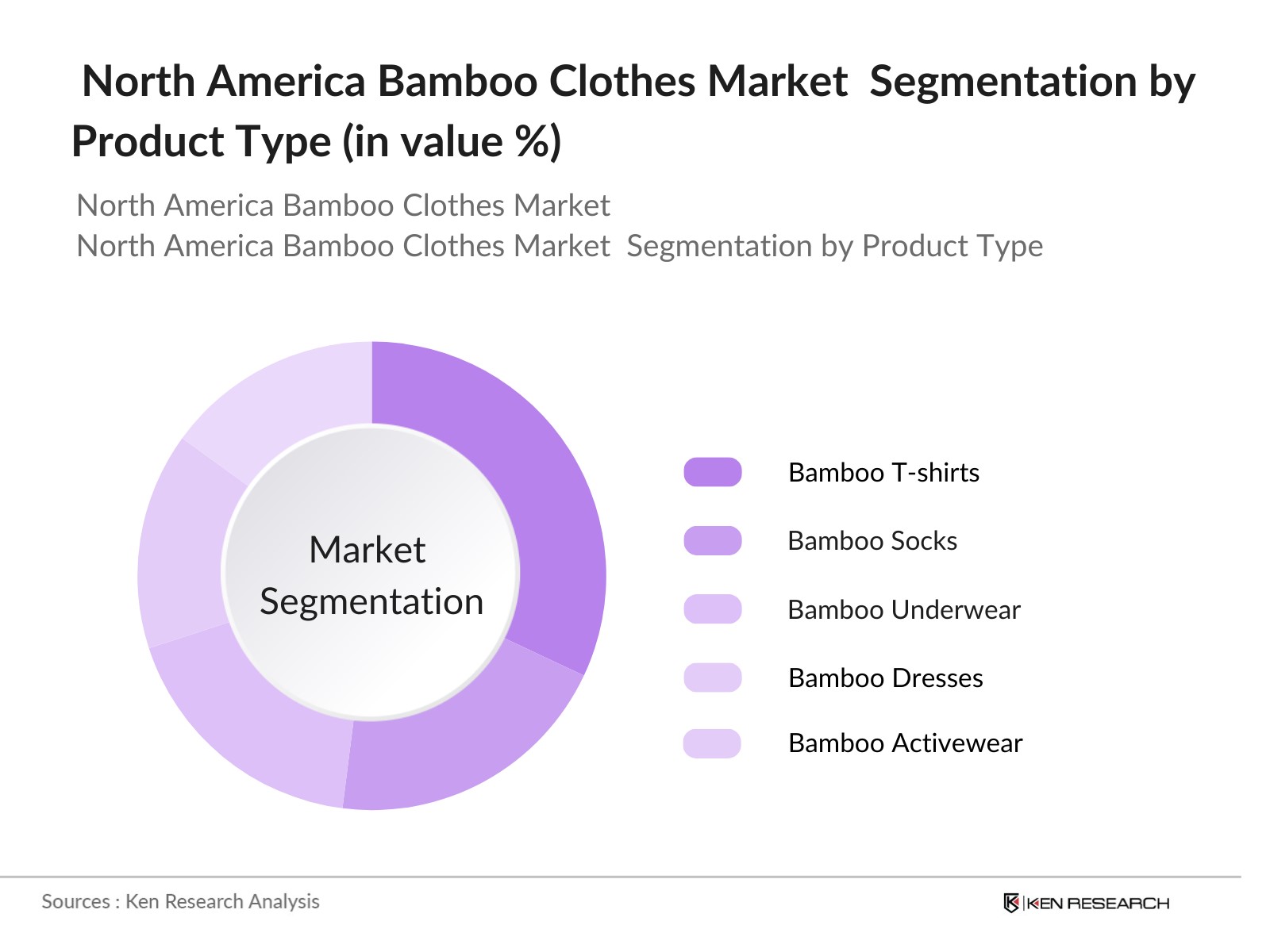
By Distribution Channel: The market is further segmented by distribution channels into online retailers and offline retailers. Online retailers have captured the majority market share, driven by the convenience they offer to consumers and the ability to access a wide variety of products at competitive prices. E-commerce giants like Amazon and specialized eco-friendly online stores have leveraged their strong logistical networks to deliver bamboo apparel across North America. Additionally, the increasing preference for direct-to-consumer (D2C) models has enabled smaller bamboo clothing brands to reach customers directly without the need for intermediaries, further fueling the growth of online retail channels. 
The North America bamboo clothes market is characterized by a mix of well-established global players and local eco-friendly brands. This consolidation highlights the influence these key companies have in terms of production, innovation, and distribution strategies. The competitive landscape is driven by sustainability, with companies differentiating themselves through certifications, eco-friendly manufacturing processes, and ethical sourcing of raw materials.
|
Company |
Establishment Year |
Headquarters |
No. of Employees |
Revenue |
Global Presence |
Sustainable Certifications |
Ethical Sourcing |
Product Innovation |
Partnerships with Eco Initiatives |
|
BAM Clothing |
2006 |
UK |
|||||||
|
Thought Clothing |
2002 |
UK |
|||||||
|
Boody |
2011 |
Australia |
|||||||
|
Cariloha |
2007 |
USA |
|||||||
|
Tasc Performance |
2009 |
USA |
The North America bamboo clothes market is expected to witness continued growth, driven by several factors, including increasing consumer demand for sustainable and eco-friendly textiles, advancements in bamboo textile technology, and the rise of online retail. Consumers are becoming more conscious of the environmental impacts of their purchases, leading to a greater preference for biodegradable and ethically sourced materials like bamboo. This trend is expected to further expand as more brands incorporate sustainability into their core business strategies.
|
By Product Type |
Bamboo T-shirts Bamboo Socks Bamboo Underwear Bamboo Dresses Bamboo Activewear |
|
By Distribution Channel |
Online Retailers Offline Retailers |
|
By End-User |
Mens Clothing Womens Clothing Kids Clothing |
|
By Fabric Type |
100% Bamboo Fabric Bamboo-Cotton Blends Bamboo-Lycra Blends |
|
By Region |
USA Canada Mexico |
Key Target Audience
1.1 Definition and Scope
1.2 Market Taxonomy
1.3 Market Growth Rate
1.4 Market Segmentation Overview
2.1 Historical Market Size
2.2 Year-on-Year Growth Analysis
2.3 Key Market Developments and Milestones
3.1 Growth Drivers
3.1.1 Rising Consumer Demand for Sustainable Apparel
3.1.2 Increasing Awareness of Bamboo Fiber Benefits (Eco-friendliness, Hypoallergenic Properties, Moisture-wicking)
3.1.3 Favorable Government Policies Supporting Sustainable Textiles
3.1.4 Expansion of Ethical Fashion Movements
3.2 Market Challenges
3.2.1 High Production Costs
3.2.2 Limited Availability of Raw Materials (Bamboo Sources)
3.2.3 Regulatory Issues (Textile Standards and Compliance)
3.3 Opportunities
3.3.1 Increased Demand for Organic Certifications (GOTS, OEKO-TEX)
3.3.2 Expansion into Activewear and Leisurewear Segments
3.3.3 Innovation in Blends with Other Sustainable Fibers
3.4 Trends
3.4.1 Integration of Bamboo Clothes with E-commerce (D2C Model Growth)
3.4.2 Rising Popularity of Bamboo Apparel in Athleisure Market
3.4.3 Collaborations Between Fashion Brands and Eco-friendly Initiatives
3.5 Government Regulations
3.5.1 Textile Fiber Products Identification Act (TFPIA) and Compliance
3.5.2 USDA Organic Certification Impact on Production
3.5.3 Regulations on Environmental Impact and Carbon Footprint Reporting
3.6 SWOT Analysis (Strengths, Weaknesses, Opportunities, Threats)
3.7 Stakeholder Ecosystem (Manufacturers, Raw Material Suppliers, Retailers)
3.8 Porters Five Forces (Bargaining Power of Suppliers, Buyers, New Entrants, Competitors, and Substitutes)
3.9 Competition Ecosystem
4.1 By Product Type (In Value %)
4.1.1 Bamboo T-shirts
4.1.2 Bamboo Socks
4.1.3 Bamboo Underwear
4.1.4 Bamboo Dresses
4.1.5 Bamboo Activewear
4.2 By Distribution Channel (In Value %)
4.2.1 Online Retailers (E-commerce Growth Rate)
4.2.2 Offline Retailers (Specialty Stores, Hypermarkets)
4.3 By End-User (In Value %)
4.3.1 Mens Clothing
4.3.2 Womens Clothing
4.3.3 Kids Clothing
4.4 By Fabric Type (In Value %)
4.4.1 100% Bamboo Fabric
4.4.2 Bamboo-Cotton Blends
4.4.3 Bamboo-Lycra Blends
4.5 By Region (In Value %)
4.5.1 USA
4.5.2 Canada
4.5.3 Mexico
5.1 Detailed Profiles of Major Companies
5.1.1 BAM Clothing
5.1.2 Thought Clothing
5.1.3 Boody
5.1.4 Free Fly Apparel
5.1.5 Cariloha
5.1.6 Spun Bamboo
5.1.7 Tasc Performance
5.1.8 Tentree
5.1.9 Panda Silks
5.1.10 Bamboo Clothing Company
5.1.11 Bamboo Body
5.1.12 YALA Designs
5.1.13 Kindred Bravely
5.1.14 Green Shirts
5.1.15 Larkspur Sustainable Apparel
5.2 Cross Comparison Parameters (Production Capacity, Fabric Innovation, Global Presence, Revenue, No. of Employees, Sustainable Practices, Certifications, Ethical Sourcing)
5.3 Market Share Analysis
5.4 Strategic Initiatives
5.5 Mergers and Acquisitions
5.6 Investment Analysis
5.7 Private Equity and Venture Capital Funding
5.8 Government Grants for Sustainable Fashion
6.1 Environmental Compliance Standards
6.2 Certification Processes (GOTS, OEKO-TEX)
6.3 Textile Fiber Products Identification Compliance (TFPIA)
7.1 Future Market Size Projections
7.2 Key Factors Driving Future Market Growth (Sustainability, Consumer Preferences, Innovation in Fabric)
8.1 By Product Type (In Value %)
8.2 By Distribution Channel (In Value %)
8.3 By End-User (In Value %)
8.4 By Fabric Type (In Value %)
8.5 By Region (In Value %)
9.1 Total Addressable Market (TAM), Serviceable Available Market (SAM), Serviceable Obtainable Market (SOM) Analysis
9.2 Key Consumer Cohorts and Targeting Strategy
9.3 Sustainability and Marketing Initiatives
9.4 White Space Opportunity Analysis in Niche Apparel Segments
This initial step involved mapping the North American bamboo clothes market ecosystem, identifying key stakeholders such as manufacturers, suppliers, retailers, and certification bodies. Primary and secondary research sources, including government databases, industry reports, and academic papers, were analyzed to define critical market variables influencing supply, demand, and growth dynamics.
Historical data on the North American bamboo clothes market were compiled and assessed. Market penetration, consumer purchasing trends, and the performance of distribution channels were analyzed to establish a reliable base for market revenue estimates. Specific metrics such as product adoption rates and sustainable material preferences were measured to support the overall market analysis.
Market hypotheses were formulated and validated through interviews with industry experts, including representatives from leading bamboo clothing manufacturers and eco-friendly apparel brands. Insights on production, distribution strategies, and consumer preferences were gathered to enhance the market analysis.
In the final stage, the gathered data were synthesized, and final market estimates were cross-verified with industry experts. The analysis included factors such as product innovations, market expansion strategies, and sustainability practices to ensure an accurate and comprehensive understanding of the North American bamboo clothes market.
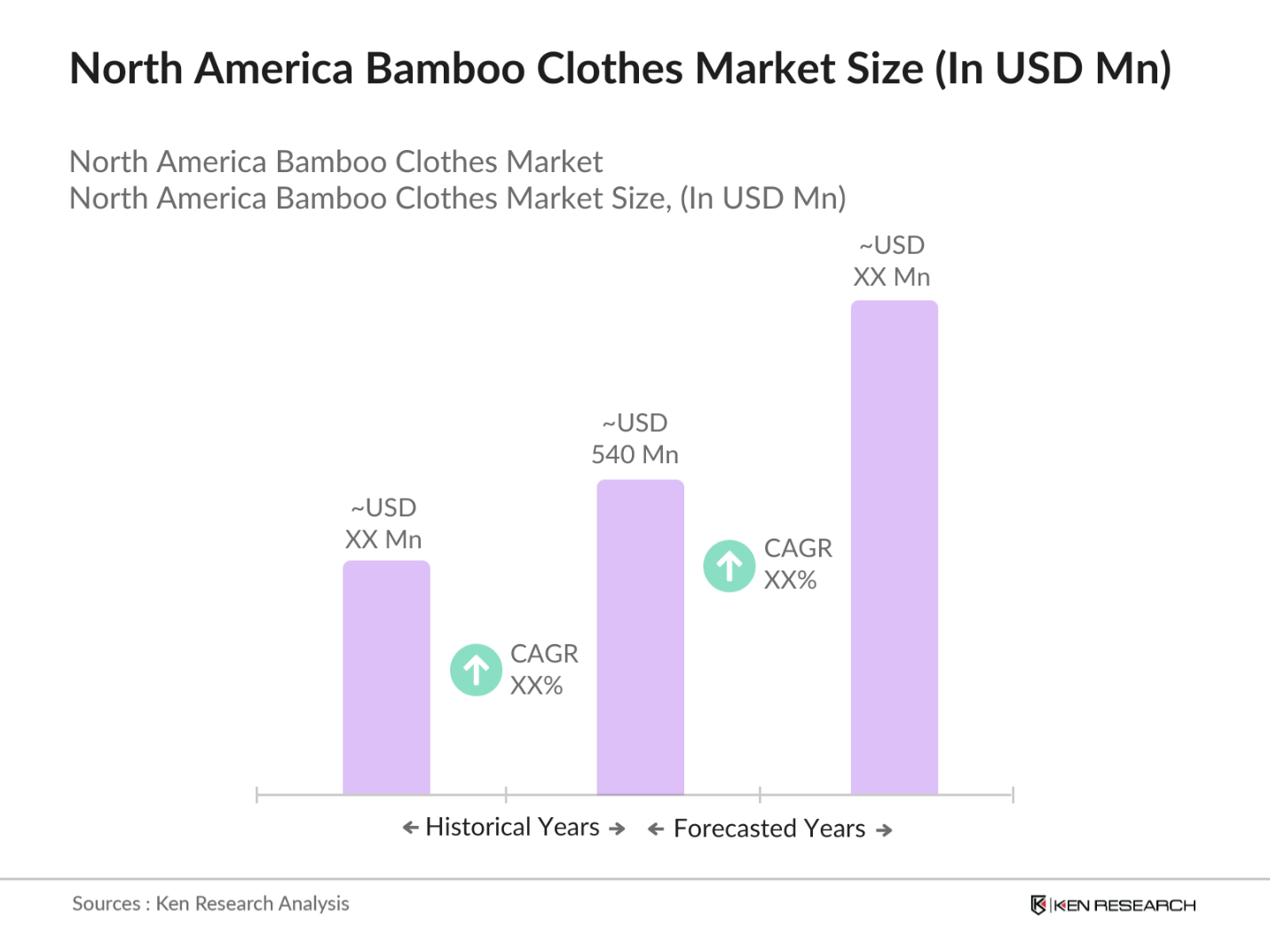
The North America bamboo clothes market is valued at USD 540 million, driven by growing consumer demand for sustainable textiles and innovations in eco-friendly clothing production.
The challenges include high production costs, limited availability of bamboo as a raw material, and regulatory hurdles related to textile certifications and compliance with sustainability standards.
Key players include BAM Clothing, Thought Clothing, Boody, Cariloha, and Tasc Performance. These companies dominate the market through their strong distribution networks, product innovations, and commitment to sustainability.
The growth drivers include rising consumer awareness of environmental sustainability, increasing adoption of bamboo textiles in mainstream fashion, and the expansion of e-commerce platforms offering eco-friendly clothing.
Key trends include the integration of bamboo clothes into the athleisure and activewear segments, collaborations between fashion brands and environmental organizations, and a growing focus on ethical sourcing and transparency in production practices.

What makes us stand out is that our consultants follows Robust, Refine and Result (RRR) methodology. i.e. Robust for clear definitions, approaches and sanity checking, Refine for differentiating respondents facts and opinions and Result for presenting data with story

We have set a benchmark in the industry by offering our clients with syndicated and customized market research reports featuring coverage of entire market as well as meticulous research and analyst insights.

While we don't replace traditional research, we flip the method upside down. Our dual approach of Top Bottom & Bottom Top ensures quality deliverable by not just verifying company fundamentals but also looking at the sector and macroeconomic factors.

With one step in the future, our research team constantly tries to show you the bigger picture. We help with some of the tough questions you may encounter along the way: How is the industry positioned? Best marketing channel? KPI's of competitors? By aligning every element, we help maximize success.

Our report gives you instant access to the answers and sources that other companies might choose to hide. We elaborate each steps of research methodology we have used and showcase you the sample size to earn your trust.

If you need any support, we are here! We pride ourselves on universe strength, data quality, and quick, friendly, and professional service.