Region:North America
Author(s):Geetanshi
Product Code:KRAD0050
Pages:94
Published On:August 2025

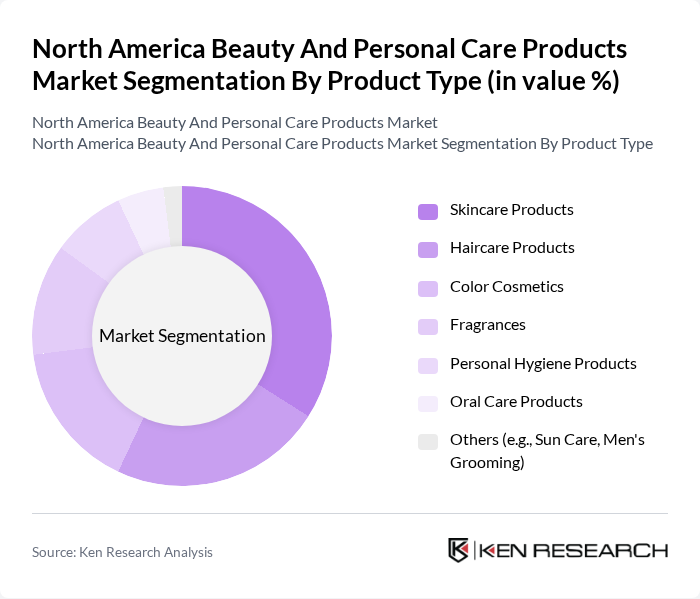
By Product Type:The product type segmentation includes skincare products, haircare products, color cosmetics, fragrances, personal hygiene products, oral care products, and others (such as sun care and men's grooming). Among these, skincare products are the most dominant segment, driven by increasing consumer awareness about skin health, the growing popularity of anti-aging and moisturizing products, and rising concerns over environmental stressors. Haircare products also hold a significant share, fueled by trends in hair styling, scalp health, and treatment-focused innovations .
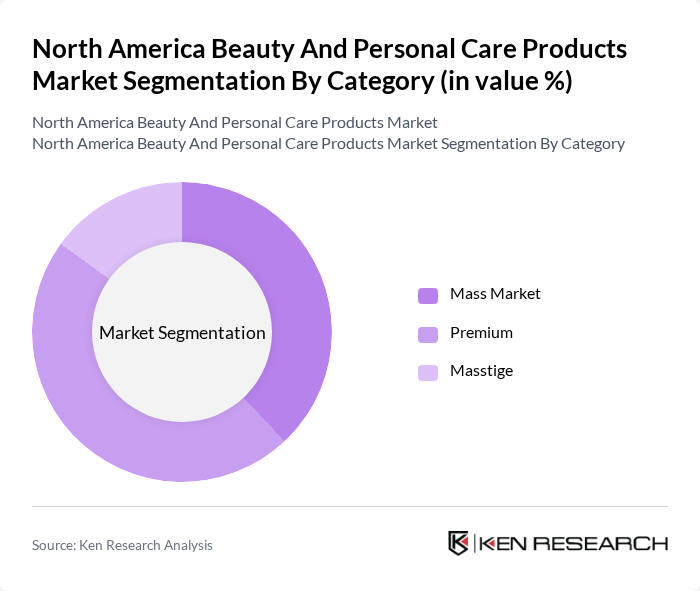
By Category:The category segmentation includes mass market, premium, and masstige products. The premium category is currently leading the market, driven by consumers' willingness to invest in high-quality and luxury beauty products, particularly among millennials and Gen Z who prioritize brand reputation, product efficacy, and ethical standards. The mass market segment remains strong due to its affordability and accessibility, catering to a broad consumer base, while the masstige segment is gaining traction as consumers seek a blend of quality and value .
The North America Beauty And Personal Care Products Market is characterized by a dynamic mix of regional and international players. Leading participants such as Procter & Gamble Co., The Estée Lauder Companies Inc., Coty Inc., Revlon Inc., Johnson & Johnson Consumer Inc., L'Oréal USA Inc., Mary Kay Inc., Avon Products Inc., Unilever United States, Inc., Shiseido Americas Corporation, Amway Corp., Neutrogena Corporation, Colgate-Palmolive Company, Kimberly-Clark Corporation, Beautycounter, Edgewell Personal Care Company, E.l.f. Beauty, Inc., Jack Henry, Jaxon Lane, and Sephora USA, Inc. contribute to innovation, geographic expansion, and service delivery in this space.
The North American beauty and personal care market is poised for dynamic growth, driven by evolving consumer preferences and technological advancements. As personalization becomes a key trend, brands are increasingly leveraging data analytics to tailor products to individual needs. Additionally, the rise of sustainability initiatives is prompting companies to adopt eco-friendly practices, enhancing brand loyalty. With the continued expansion of e-commerce and digital marketing, businesses that adapt to these trends will likely capture a larger share of the market in the future.
| Segment | Sub-Segments |
|---|---|
| By Product Type | Skincare Products Haircare Products Color Cosmetics Fragrances Personal Hygiene Products Oral Care Products Others (e.g., Sun Care, Men's Grooming) |
| By Category | Mass Market Premium Masstige |
| By End-User | Women Men Children |
| By Distribution Channel | Online Retail Supermarkets/Hypermarkets Specialty Stores Pharmacies/Drugstores Direct Sales Others (e.g., Department Stores, Convenience Stores) |
| By Price Range | Premium Mid-Range Economy |
| By Ingredient Type | Natural Ingredients Synthetic Ingredients Organic Ingredients |
| By Brand Type | Established Brands Emerging Brands Private Labels |
| Scope Item/Segment | Sample Size | Target Respondent Profiles |
|---|---|---|
| Skincare Product Usage | 120 | Consumers aged 18-35, Skincare Enthusiasts |
| Haircare Product Preferences | 90 | Haircare Professionals, Salon Owners |
| Cosmetics Buying Behavior | 100 | Makeup Artists, Beauty Influencers |
| Men's Grooming Trends | 60 | Male Consumers, Grooming Product Retailers |
| Natural and Organic Products | 70 | Eco-conscious Consumers, Health and Wellness Advocates |
The North America Beauty and Personal Care Products Market is valued at approximately USD 130 billion, reflecting a significant growth trend driven by consumer demand for innovative and high-quality products, as well as a focus on personal grooming and self-care.

What makes us stand out is that our consultants follow Robust, Refine and Result (RRR) methodology. Robust for clear definitions, approaches and sanity checking, Refine for differentiating respondents' facts and opinions, and Result for presenting data with story.

We have set a benchmark in the industry by offering our clients with syndicated and customized market research reports featuring coverage of entire market as well as meticulous research and analyst insights.

While we don't replace traditional research, we flip the method upside down. Our dual approach of Top Bottom & Bottom Top ensures quality deliverable by not just verifying company fundamentals but also looking at the sector and macroeconomic factors.

With one step in the future, our research team constantly tries to show you the bigger picture. We help with some of the tough questions you may encounter along the way: How is the industry positioned? Best marketing channel? KPI's of competitors? By aligning every element, we help maximize success.

Our report gives you instant access to the answers and sources that other companies might choose to hide. We elaborate each steps of research methodology we have used and showcase you the sample size to earn your trust.

If you need any support, we are here! We pride ourselves on universe strength, data quality, and quick, friendly, and professional service.













