
North America Biometric Market Outlook to 2030
Region:Global
Author(s):Sanjna
Product Code:KROD9712
November 2024
84
About the Report
North America Biometric Market Overview
- The North America Biometric Market is valued at USD 11 billion, grounded in a five-year analysis showing consistent growth due to widespread adoption across sectors like government, healthcare, and financial services. This demand is driven by heightened security concerns, advancements in AI-based biometric technologies, and increasing use in consumer electronics. Additionally, ongoing initiatives by federal and local governments have further solidified biometrics as a critical tool for enhancing security across multiple applications.
- In North America, the United States holds a leading position due to its robust infrastructure, technology-driven economy, and high demand across industries such as banking, defense, and healthcare. Key cities like New York and San Francisco exhibit concentrated activity in biometric R&D and deployment, largely attributed to advanced technology adoption and corporate headquarters of leading players, driving innovation and regional dominance.
- Compliance with biometric data policies is mandatory for organizations, enforced through regional and federal regulations. By 2023, the Federal Trade Commission handled over 4,000 compliance cases concerning biometric data, marking a 10% increase in regulatory oversight. Such policies ensure adherence to stringent biometric data handling and storage requirements, safeguarding user privacy and reducing data misuse risks.

North America Biometric Market Segmentation
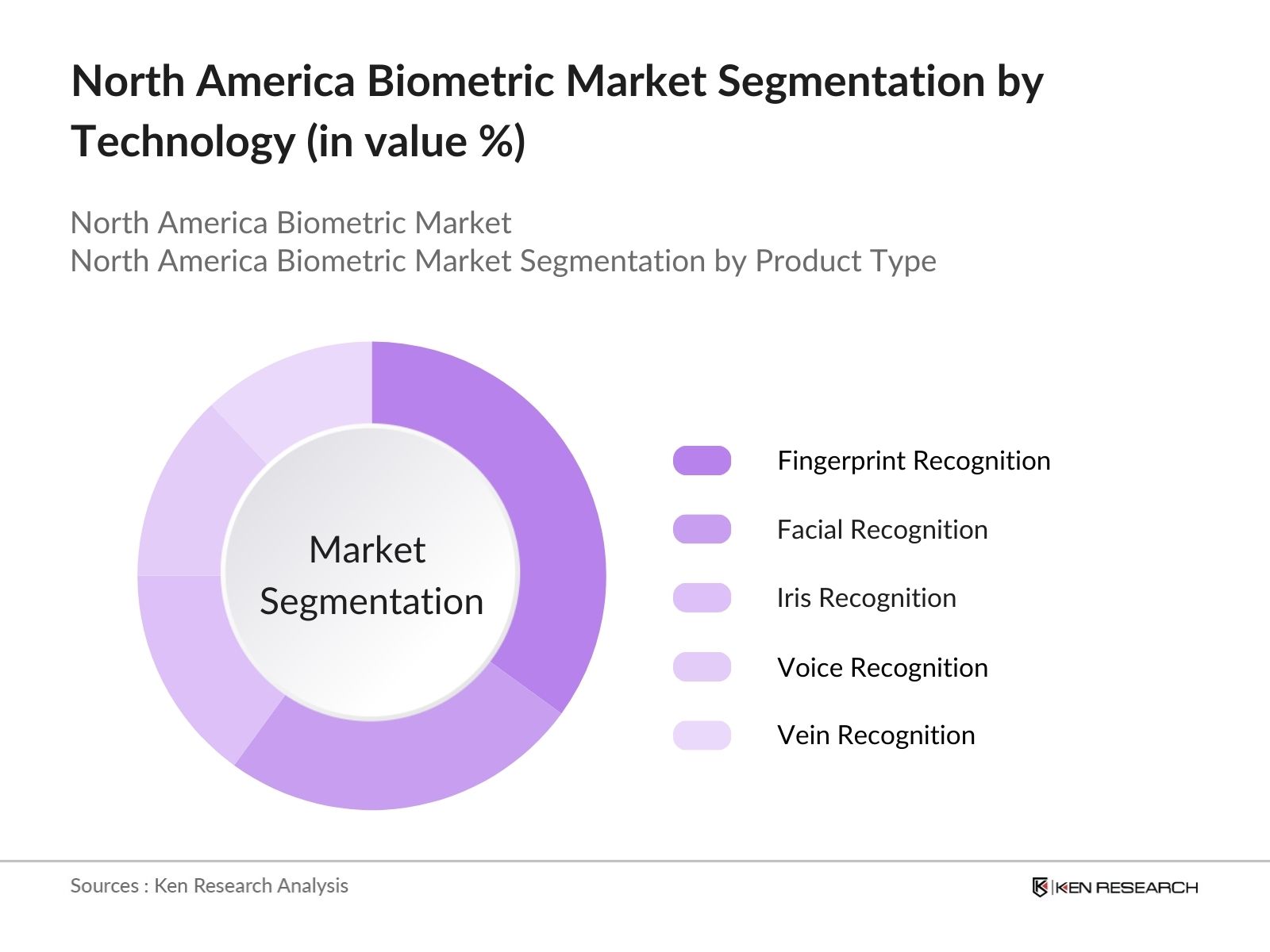
By Technology The North America Biometric Market is segmented by technology into fingerprint recognition, facial recognition, iris recognition, voice recognition, and vein recognition. Currently, fingerprint recognition holds the largest market share due to its widespread use in smartphones, financial transactions, and access control systems. This dominance is largely due to its affordability, proven reliability, and established compatibility with various devices, contributing to its extensive application in both consumer electronics and enterprise security settings.
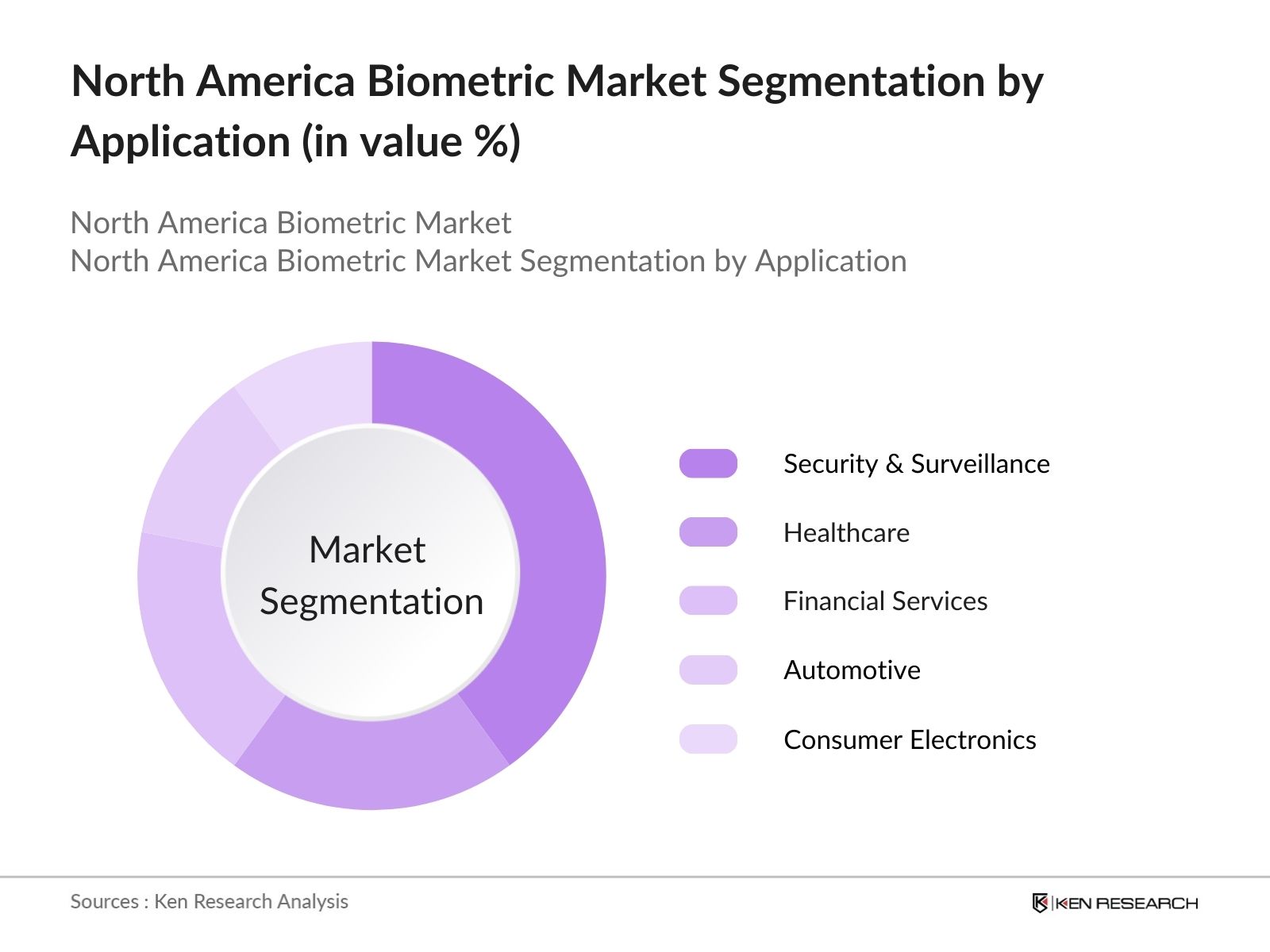
By Application The market is also segmented by application, including security and surveillance, healthcare, financial services, automotive, and consumer electronics. Within this category, security and surveillance applications dominate due to the increased adoption of biometric systems by governmental bodies, particularly for border control and national security. The demand for high-precision authentication in critical infrastructures further drives this segments growth, making it a critical focus for both private and public sector investments.
North America Biometric Market Competitive Landscape
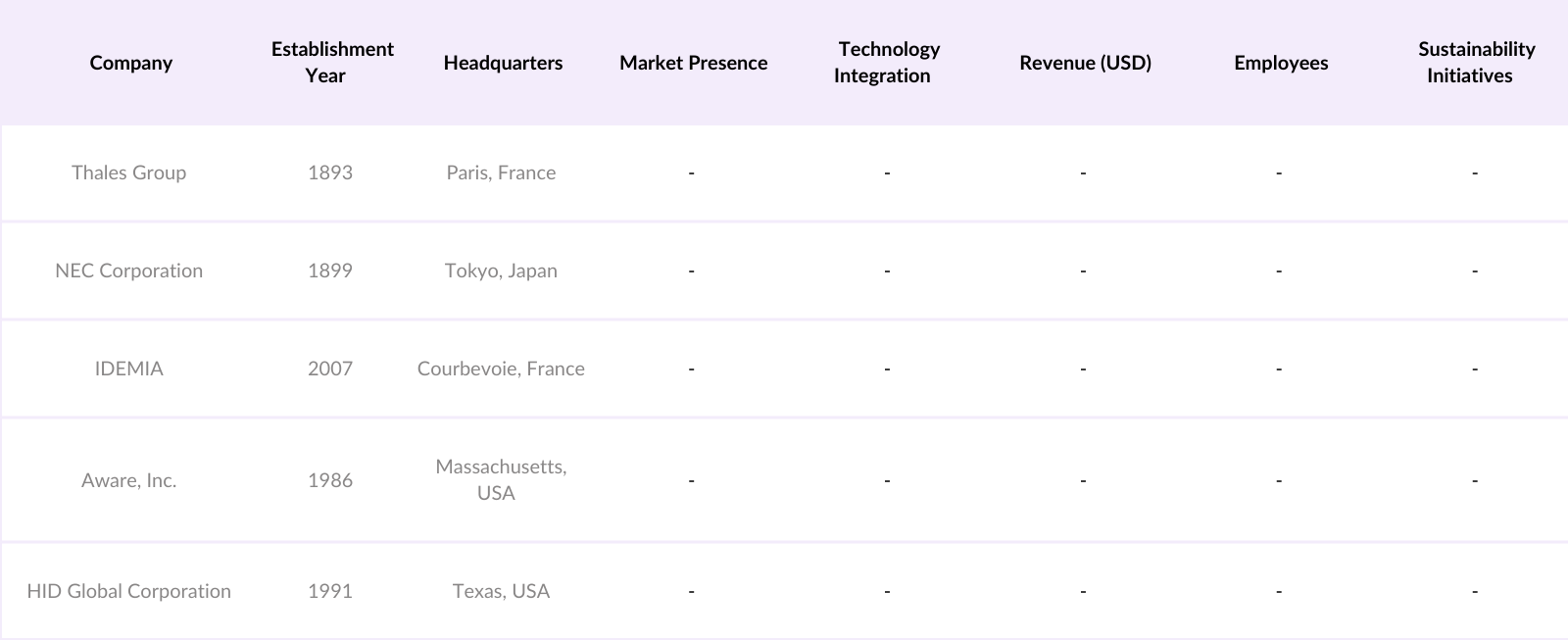
The North America Biometric Market is dominated by both established players and emerging technology providers. Key companies have achieved significant market influence through innovative technologies and strategic alliances across various application sectors, positioning themselves to capitalize on increasing demand.
North America Biometric Market Analysis
Growth Drivers
- Rising Demand in Healthcare and Security Applications: The North American biometric market is seeing a sharp increase in healthcare and security applications due to enhanced security requirements in patient identification and data protection. As of 2023, the U.S. healthcare sector, with over 900,000 patient records affected in breaches, is emphasizing biometric integration for secure, efficient authentication processes. Federal agencies reported over 18 million biometric screenings in healthcare and security settings to verify identities in sensitive zones, underscoring a broader adoption trend. The U.S. Department of Health and Human Services has highlighted the need for robust identity management as part of cybersecurity protocols.
- Technological Advancements in AI-Driven Biometric Solutions: In 2024, AI-enhanced biometric systems processed data up to 40% quicker than traditional methods in federal trials, demonstrating efficiency improvements in security checkpoints across airports and government facilities. The Department of Homeland Security has reported over 60,000 successful biometric transactions using AI technology in border control, underscoring its impact. Investments in AI are estimated to have increased automation capabilities, reducing manual verification times.
- Increasing Investments from Government Initiatives and Defense Sectors: Governments across North America have ramped up investments in biometric technologies for national security and defense. In 2023, the U.S. defense sector alone dedicated approximately 18,000 projects to improve biometric identification for tactical operations. This shift has enhanced real-time decision-making in defense scenarios, with facial and fingerprint recognition deployed in over 50 military facilities. Federal funding into biometric solutions for defense is projected to enhance surveillance and secure personnel identification protocols.
Challenges
- Privacy Concerns in Data Security and User Consent: Data security and user consent remain critical challenges, especially with sensitive biometric data. In 2024, the Office of the Privacy Commissioner reported that 73% of North American consumers expressed concerns over data misuse in biometric applications. Regulatory bodies recorded a rise in complaints, reaching over 15,000 cases related to biometric data handling in North America, reinforcing the need for stronger consent measures and transparent data management practices in the biometric market.
- High Initial Costs and Maintenance Requirements: Initial deployment and ongoing maintenance costs for biometric systems are high, affecting market adoption, particularly in smaller enterprises. In 2023, maintenance costs accounted for approximately 35% of the total expenditures for biometric systems in the U.S. government buildings, according to federal budgets. These expenses have caused delays in implementation across smaller agencies and organizations, highlighting cost as a deterrent to widespread adoption in North America.
North America Biometric Market Future Outlook
North America Biometric Market is expected to witness steady growth driven by technological advancements, expanding applications in healthcare and financial services, and supportive government policies focused on enhancing national security. The increasing use of biometrics in consumer electronics and vehicle authentication systems further presents a favorable outlook for market expansion.
Market Opportunities
- Expansion in Financial Services and Payment Applications: The financial sector in North America has shown strong interest in biometric solutions for secure transactions. In 2024, over 4 million transactions in the U.S. were authenticated using biometric methods in banking, marking a rise in digital payment security. The Department of Treasury has recommended biometrics to combat rising cases of fraud in banking, indicating vast future growth potential in financial applications where security is paramount.
- Integration with Mobile Devices and Cloud Computing: Mobile device manufacturers are integrating biometric technologies for secure access to cloud-stored data, facilitating a rapid growth in applications. As of 2023, over 200 million biometric-enabled smartphones were operational in North America, with integration into cloud-based authentication systems gaining traction. Cloud companies report that biometric access reduced unauthorized access attempts by 27% in 2023. This trend reflects a strong shift towards cloud security via biometric integration.
Scope of the Report
|
Segment |
Sub-Segment |
|
Technology |
Fingerprint Recognition |
|
Facial Recognition |
|
|
Iris Recognition |
|
|
Vein Recognition |
|
|
Voice Recognition |
|
|
Application |
Security and Surveillance |
|
Healthcare |
|
|
Financial Services |
|
|
Automotive |
|
|
Consumer Electronics |
|
|
Component |
Hardware |
|
Software |
|
|
Authentication Type |
Unimodal |
|
Multimodal |
|
|
Country |
United States |
|
Canada |
|
|
Mexico |
Products
Key Target Audience
Biometric Hardware Manufacturers
Software Development Companies for Biometrics
Banking and Financial Institutions
Security and Surveillance Agencies
Automotive and Consumer Electronics Manufacturers
Investors and Venture Capitalist Firms
Government and Regulatory Bodies (e.g., U.S. Department of Homeland Security)
Companies
Players Mentioned in the Report
Thales Group
NEC Corporation
IDEMIA
Aware, Inc.
HID Global Corporation
Cognitec Systems GmbH
Fujitsu Limited
BioID GmbH
Precise Biometrics
Suprema Inc.
Table of Contents
1. North America Biometric Market Overview
1.1 Definition and Scope
1.2 Market Taxonomy
1.3 Growth Rate Analysis
1.4 Market Segmentation Overview
2. North America Biometric Market Size (In USD Mn)
2.1 Historical Market Size
2.2 Year-On-Year Growth Analysis
2.3 Key Market Developments and Milestones
3. North America Biometric Market Analysis
3.1 Growth Drivers
3.1.1 Rising Demand in [Healthcare and Security Applications]
3.1.2 Technological Advancements in [AI-Driven Biometric Solutions]
3.1.3 Increasing Investments from [Government Initiatives and Defense Sectors]
3.1.4 Growing Demand for [Multimodal Biometrics]
3.2 Market Challenges
3.2.1 Privacy Concerns in [Data Security and User Consent]
3.2.2 High Initial Costs and [Maintenance Requirements]
3.2.3 Regulatory Hurdles in [Data Compliance Standards]
3.3 Opportunities
3.3.1 Expansion in [Financial Services and Payment Applications]
3.3.2 Integration with [Mobile Devices and Cloud Computing]
3.3.3 Advancements in [Behavioral Biometrics]
3.4 Trends
3.4.1 Shift Towards [Contactless Biometrics]
3.4.2 Adoption of [Biometric Authentication for IoT Devices]
3.4.3 Increased R&D in [Liveness Detection Technologies]
3.5 Government Regulation
3.5.1 Standards on [Data Protection and Biometric Encryption]
3.5.2 Compliance with [Regional and Federal Biometric Policies]
3.5.3 Impact of [GDPR and Similar Data Laws]
3.6 SWOT Analysis
3.7 Stakeholder Ecosystem
3.8 Porters Five Forces
3.9 Competition Ecosystem
4. North America Biometric Market Segmentation
4.1 By Technology (In Value %)
4.1.1 Fingerprint Recognition
4.1.2 Facial Recognition
4.1.3 Iris Recognition
4.1.4 Vein Recognition
4.1.5 Voice Recognition
4.2 By Application (In Value %)
4.2.1 Security and Surveillance
4.2.2 Healthcare
4.2.3 Financial Services
4.2.4 Automotive
4.2.5 Consumer Electronics
4.3 By Component (In Value %)
4.3.1 Hardware
4.3.2 Software
4.4 By Authentication Type (In Value %)
4.4.1 Unimodal
4.4.2 Multimodal
4.5 By Country (In Value %)
4.5.1 United States
4.5.2 Canada
4.5.3 Mexico
5. North America Biometric Market Competitive Analysis
5.1 Detailed Profiles of Major Companies
5.1.1 Thales Group
5.1.2 NEC Corporation
5.1.3 IDEMIA
5.1.4 Aware, Inc.
5.1.5 HID Global Corporation
5.1.6 Cognitec Systems GmbH
5.1.7 Fujitsu Limited
5.1.8 BioID GmbH
5.1.9 Precise Biometrics
5.1.10 Suprema Inc.
5.2 Cross Comparison Parameters (Headquarters Location, Core Competencies, Product Innovations, Industry Certifications, Market Presence, Strategic Partnerships, Customer Base, R&D Investments)
5.3 Market Share Analysis
5.4 Strategic Initiatives
5.5 Mergers and Acquisitions
5.6 Investment Analysis
5.7 Private Equity Investments
5.8 Venture Capital Funding
6. North America Biometric Market Regulatory Framework
6.1 Compliance Standards
6.2 Certification Processes
6.3 Data Protection and Privacy Laws
7. North America Biometric Future Market Size (In USD Mn)
7.1 Future Market Size Projections
7.2 Key Factors Driving Future Growth
8. North America Biometric Market Analysts Recommendations
8.1 Market Entry Strategies
8.2 Key Marketing Initiatives
8.3 Emerging White Space Opportunities
Research Methodology
Step 1: Identification of Key Variables
This initial step involves mapping the ecosystem within the North America Biometric Market to identify all relevant stakeholders. Extensive desk research and use of proprietary databases allow for the identification of critical variables that drive market dynamics.
Step 2: Market Analysis and Construction
This phase comprises a detailed analysis of historical market data, assessing both penetration and the overall industry landscape. It also includes evaluation of the competitive landscape and segmentation accuracy to ensure robust market estimates.
Step 3: Hypothesis Validation and Expert Consultation
Market hypotheses are developed and validated through telephonic and online interviews with industry experts from a range of related sectors. These consultations provide deeper insights into operational aspects, which are crucial in refining the collected data.
Step 4: Research Synthesis and Final Output
The final step integrates insights from multiple biometric manufacturers, ensuring all data is corroborated. This synthesis yields an in-depth, accurate analysis of the North America Biometric Market, ready for presentation.
Frequently Asked Questions
1. How big is the North America Biometric Market?
The North America Biometric Market is valued at USD 11 billion, driven by increasing applications across government, healthcare, and financial services.
2. What are the challenges in the North America Biometric Market?
Key challenges in North America Biometric Market include privacy concerns, high implementation costs, and complex regulatory requirements impacting adoption rates.
3. Who are the major players in the North America Biometric Market?
Major players in North America Biometric Market include Thales Group, NEC Corporation, IDEMIA, and HID Global, with established market positions due to advanced R&D and diversified application reach.
4. What drives the North America Biometric Markets growth?
Growth in North America Biometric Market is propelled by rising security concerns, government investments, and technological advancements in biometrics such as AI-driven solutions.
Why Buy From Us?

What makes us stand out is that our consultants follows Robust, Refine and Result (RRR) methodology. i.e. Robust for clear definitions, approaches and sanity checking, Refine for differentiating respondents facts and opinions and Result for presenting data with story

We have set a benchmark in the industry by offering our clients with syndicated and customized market research reports featuring coverage of entire market as well as meticulous research and analyst insights.

While we don't replace traditional research, we flip the method upside down. Our dual approach of Top Bottom & Bottom Top ensures quality deliverable by not just verifying company fundamentals but also looking at the sector and macroeconomic factors.

With one step in the future, our research team constantly tries to show you the bigger picture. We help with some of the tough questions you may encounter along the way: How is the industry positioned? Best marketing channel? KPI's of competitors? By aligning every element, we help maximize success.

Our report gives you instant access to the answers and sources that other companies might choose to hide. We elaborate each steps of research methodology we have used and showcase you the sample size to earn your trust.

If you need any support, we are here! We pride ourselves on universe strength, data quality, and quick, friendly, and professional service.