
North America Blockchain Market Outlook to 2030
Region:North America
Author(s):Shreya Garg
Product Code:KROD6695
December 2024
87
About the Report
North America Blockchain Market Overview
- The North America Blockchain market is valued at USD 2.6 billion, driven primarily by the increasing adoption of blockchain technology across various industries such as financial services, supply chain, and healthcare. The financial sector, especially cryptocurrency and cross-border payments, has seen significant demand for decentralized solutions, which has boosted blockchain usage. Additionally, enterprises across North America are adopting blockchain for transparency, efficiency, and security in supply chain operations and data management. The rapid technological advancements in blockchain protocols and rising investment from venture capital firms further fuel the market growth.
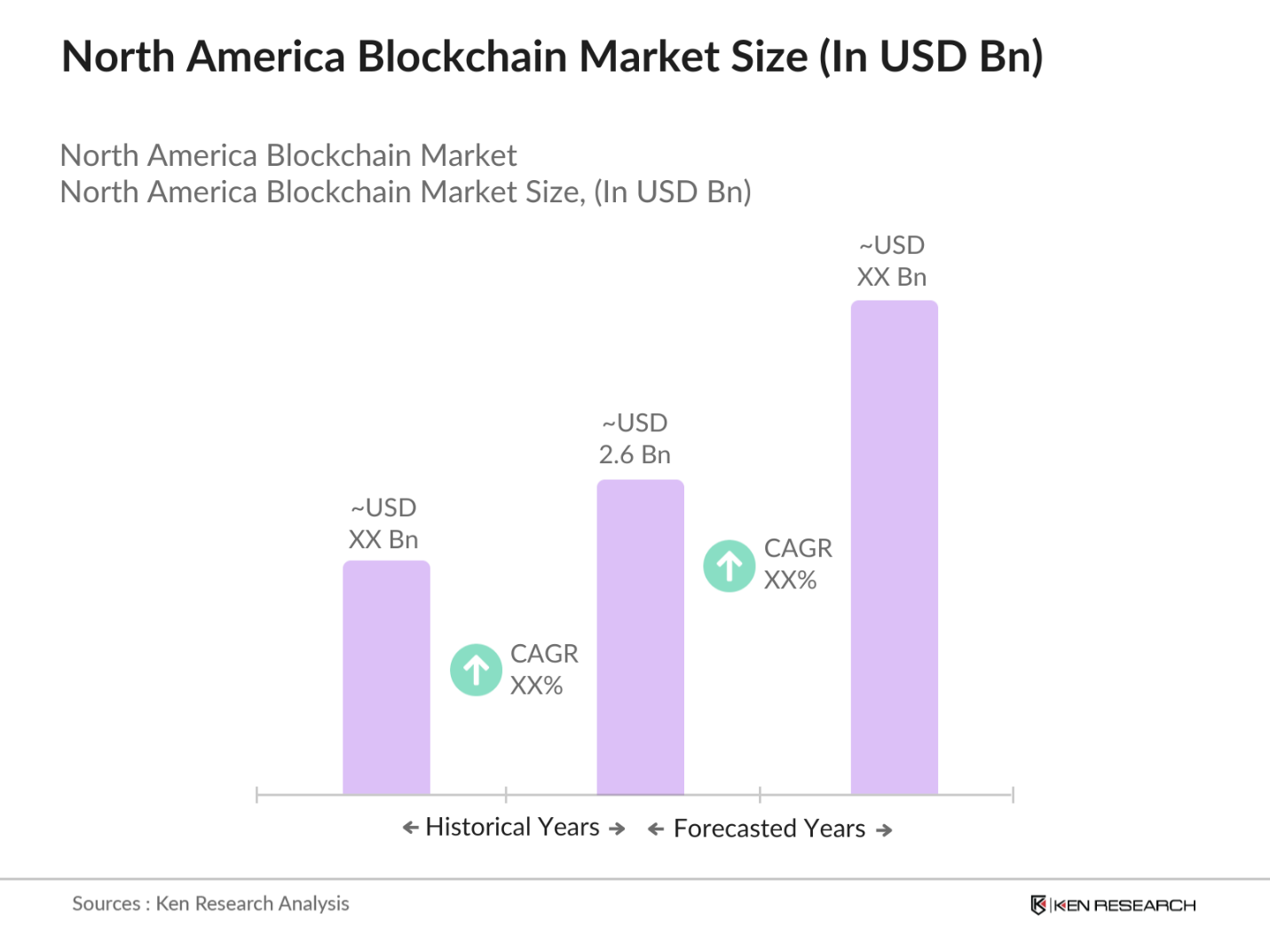
- The United States leads the North America Blockchain market, attributed to its robust technology ecosystem, significant investments in blockchain projects, and favorable regulatory environment in key states like California and New York. Silicon Valley in California is a hub for blockchain innovations due to the concentration of tech companies and blockchain startups. Canada is also making strides, particularly in Toronto, which is emerging as a blockchain innovation hub with government support and a highly skilled labor force. These regions dominate because of their innovation-friendly policies and substantial financial sector involvement.
- The U.S. Securities and Exchange Commission (SEC) and the Commodity Futures Trading Commission (CFTC) have been at the forefront of developing a regulatory framework for blockchain in North America. In 2024, the SEC processed over 150 cases involving cryptocurrencies and blockchain applications, highlighting the importance of regulatory clarity in the space. The CFTC also plays a role in overseeing blockchain applications in commodities trading, with regulations designed to protect consumers and promote innovation. This framework provides greater certainty for businesses and investors in the blockchain sector.
North America Blockchain Market Segmentation
By Application: The market is segmented by application into financial services, supply chain, healthcare, retail, and energy. Financial services hold a dominant share, driven by the widespread adoption of cryptocurrency platforms and decentralized finance (DeFi) solutions. Blockchain's ability to facilitate secure, efficient, and transparent financial transactions has made it an integral technology for banks and financial institutions. Furthermore, the rise of blockchain-based smart contracts and payment systems is enhancing efficiency in cross-border transactions, leading to the sustained dominance of the financial services segment. 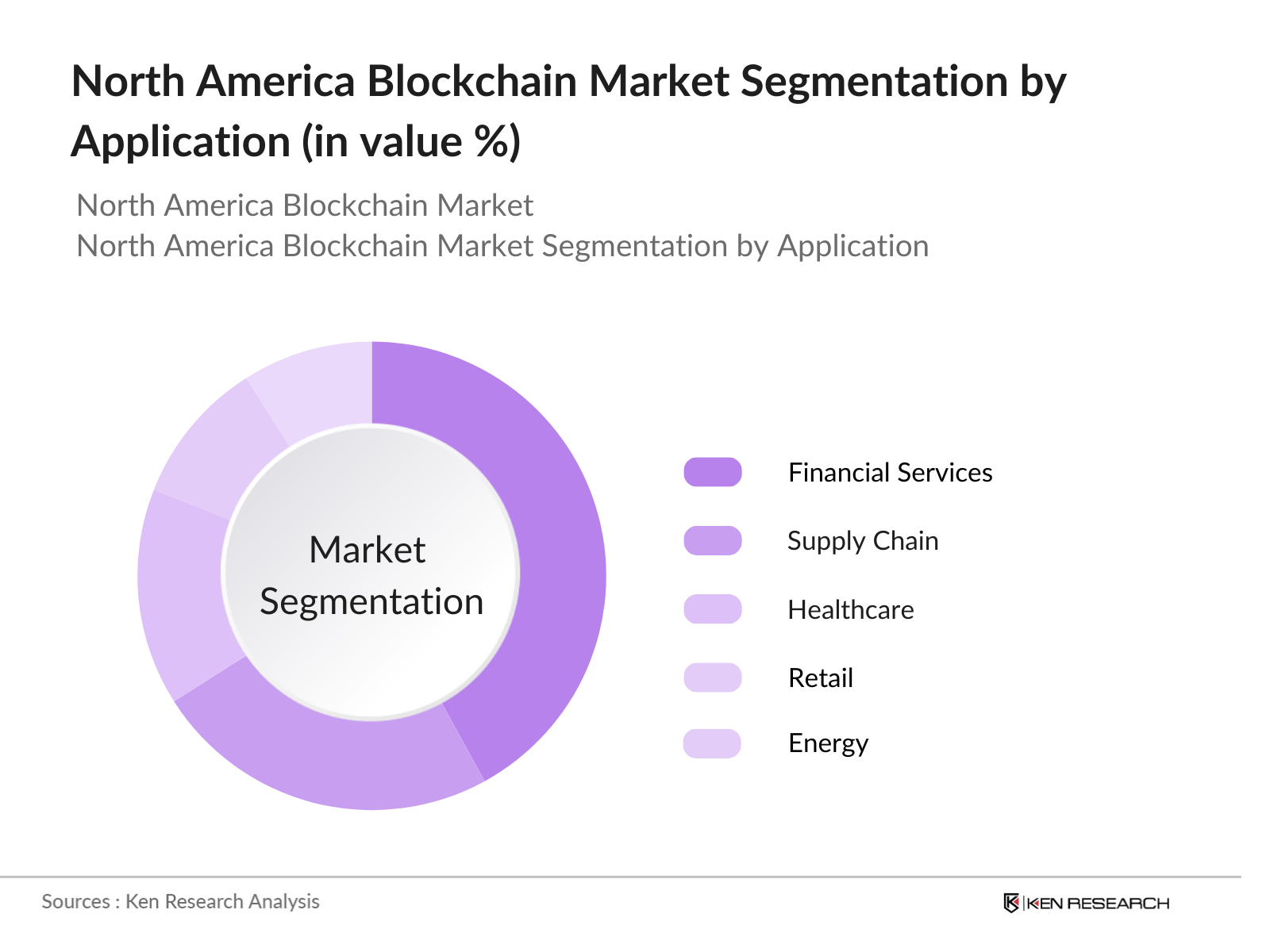
By Enterprise Size: The market is segmented by enterprise size into small and medium enterprises (SMEs) and large enterprises. Large enterprises dominate the market due to their vast resources and ability to integrate blockchain solutions at scale. Large enterprises, especially in industries such as financial services and retail, are adopting blockchain to streamline operations, reduce costs, and enhance data transparency. Their investments in private blockchain networks and consortium-based models provide them a competitive edge, securing their dominant position in the market. 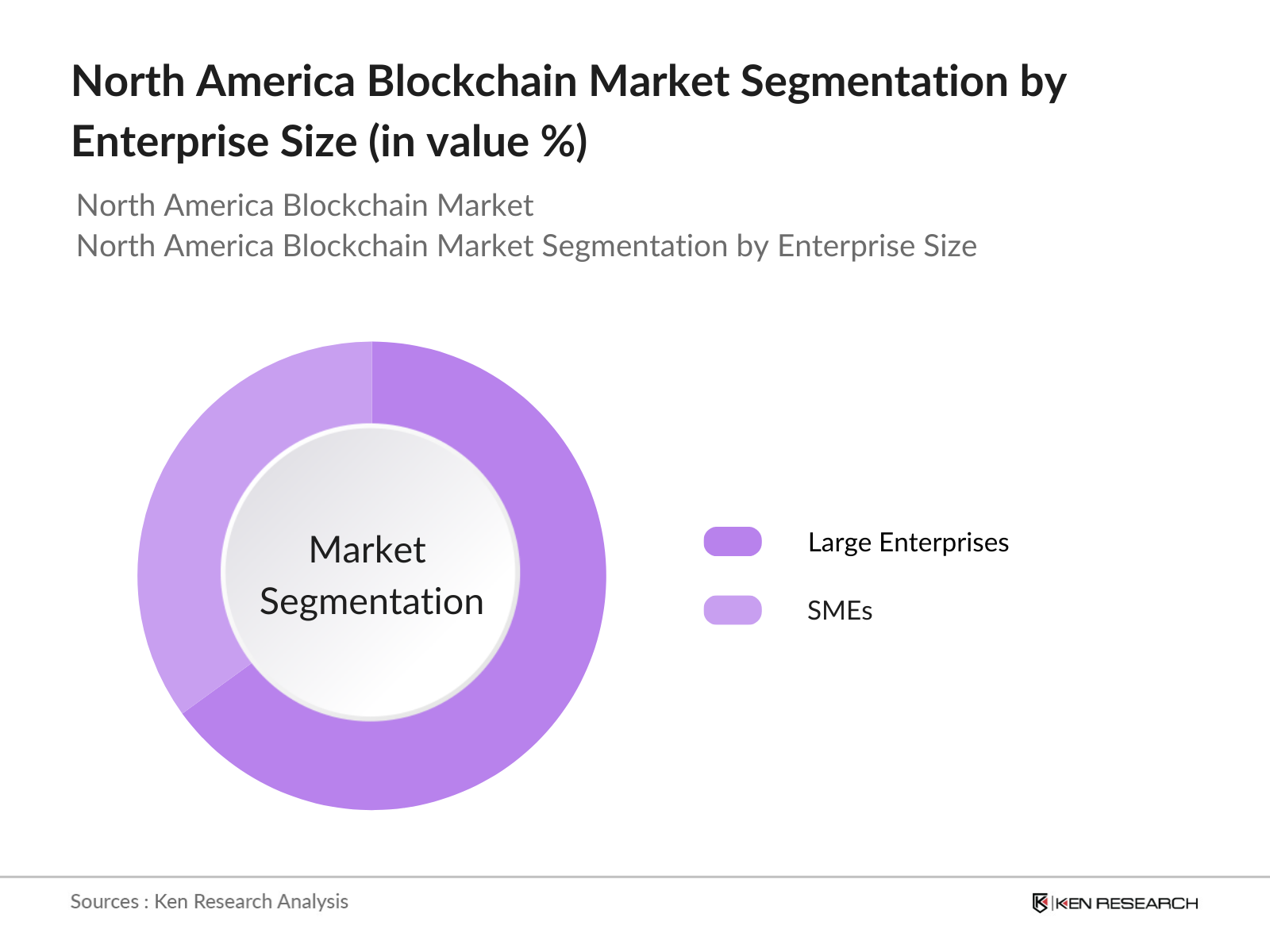
North America Blockchain Market Competitive Landscape
The North America Blockchain market is dominated by a mix of established technology giants and blockchain-specific startups. This competitive landscape is shaped by high levels of investment, innovation, and strategic partnerships. Key players continue to advance blockchain development through acquisitions, mergers, and venture capital funding. The competitive landscape shows how traditional tech giants and blockchain-native companies are establishing strong positions in the market by developing unique offerings and partnering with industry leaders.
|
Company Name |
Year Established |
Headquarters |
Blockchain Focus |
R&D Investment |
Strategic Partnerships |
Acquisitions |
Market Share (%) |
No. of Blockchain Patents |
Revenue (USD Bn) |
|
IBM Corporation |
1911 |
Armonk, New York |
|||||||
|
Microsoft Corporation |
1975 |
Redmond, Washington |
|||||||
|
Oracle Corporation |
1977 |
Austin, Texas |
|||||||
|
Amazon Web Services (AWS) |
2006 |
Seattle, Washington |
|||||||
|
Ripple Labs Inc. |
2012 |
San Francisco, CA |
North America Blockchain Industry Analysis
Growth Drivers
- Increased Adoption in Financial Services: The financial services sector in North America has increasingly adopted blockchain technology, particularly in cryptocurrency transactions and cross-border payments. In 2023, blockchain was used in cross-border payment transactions totaling over $2 trillion across the region. The USA, a significant player, has integrated blockchain into payment systems to enhance efficiency and reduce costs, while smart contracts have become more prevalent in sectors like insurance and real estate, promoting automated and secure contractual agreements. Canada has also adopted blockchain in various banking solutions, focusing on enhancing the speed of financial transactions.
- Supply Chain Management: Supply chain management has seen significant blockchain integration, with major North American companies using the technology for track-and-trace solutions. In 2024, over 80% of the top Fortune 500 companies in North America utilized blockchain for supply chain transparency, improving visibility in sectors like retail and pharmaceuticals. Blockchain-enabled solutions have reduced the time to verify product origin and quality by 40% compared to traditional systems, creating trust and efficiency in international trade. The food industry, in particular, uses blockchain to track the origin of products, ensuring safety and compliance.
- Rising Demand for Decentralized Applications: The demand for decentralized applications (DApps) and NFTs has surged in North America. As of 2024, the number of DApps deployed on blockchain platforms exceeded 5,000, with leading use cases in gaming, finance, and digital art. The NFT market has also gained significant traction, with artists and creators generating over $4 billion in revenue via blockchain-powered platforms in the USA and Canada. The decentralized nature of these applications reduces reliance on centralized authorities, offering greater control and ownership to users, and driving further market penetration.
Market Challenges
- High Energy Consumption of Blockchain Networks: One of the primary challenges facing the blockchain sector in North America is the high energy consumption of blockchain networks, especially proof-of-work systems like Bitcoin. As of 2023, Bitcoin mining operations in the USA consumed more than 141.2 terawatt-hours (TWh) of electricity, which is comparable to the energy consumption of entire countries such as Argentina. This level of energy use has raised concerns over environmental sustainability, prompting calls for more energy-efficient consensus mechanisms and regulatory scrutiny on the carbon footprint of blockchain activities.
- Scalability and Interoperability Issues: Blockchain technology in North America faces challenges related to scalability and interoperability. In 2024, many blockchain networks in the region processed transactions at a fraction of the speed of traditional systems, with some managing only 10-20 transactions per second compared to Visas 24,000 per second. Moreover, blockchain networks often do not easily communicate with one another, leading to interoperability challenges across platforms. These technological barriers hinder the ability of companies to scale up blockchain solutions to meet the growing demand in areas like supply chain and financial services.
North America Blockchain Market Future Outlook
Over the next five years, the North America Blockchain market is expected to witness significant growth driven by continuous innovation in blockchain protocols, enterprise adoption, and growing government interest in Central Bank Digital Currencies (CBDCs). Additionally, the rise of decentralized finance (DeFi), digital identities, and the integration of blockchain with AI and IoT technologies will further expand blockchain applications across various sectors. The scalability solutions being developed and implemented by blockchain companies are expected to address current limitations, making the technology more accessible to small and medium enterprises.
Future Market Opportunities
- Expansion into Sectors Like Healthcare: Healthcare offers a significant growth opportunity for blockchain in North America, especially in enhancing data security and medical record management. In 2023, over 100 hospitals and healthcare systems in the USA had adopted blockchain for managing electronic health records, ensuring data integrity and improving patient privacy. Blockchain technology enables the secure sharing of medical records across institutions, with an estimated reduction of data breaches by 50% in facilities utilizing the technology. This helps streamline healthcare services, providing safer and faster access to patient data.
- Development of Hybrid Blockchain Solutions: Hybrid blockchain solutions, which combine the benefits of both public and private blockchains, represent a key opportunity for expansion in North America. As of 2024, hybrid blockchain models were being actively developed for industries like finance, supply chain, and government. These systems allow organizations to leverage the transparency and security of public blockchains while maintaining the privacy of sensitive information on private blockchains. For example, hybrid blockchains are already used by financial institutions for handling sensitive client data while ensuring transparency in public transaction records.
Scope of the Report
|
Product Type |
Public Blockchain Private Blockchain Hybrid Blockchain |
|
Application |
Financial Services Supply Chain Healthcare Retail Energy and Utilities |
|
Enterprise Size |
SMEs Large Enterprises |
|
Industry Vertical |
BFSI Government Telecom Retail and E-Commerce Energy |
|
Region |
USA Canada Mexico |
Products
Key Target Audience
Blockchain Development Companies
Financial Institutions (Banks, Investment Firms)
Technology Solution Providers
Supply Chain Managers
Healthcare Providers
Retail Chains and E-commerce Platforms
Investors and Venture Capitalist Firms
Government and Regulatory Bodies (SEC, CFTC)
Companies
Major Players
IBM Corporation
Microsoft Corporation
Oracle Corporation
Amazon Web Services (AWS)
Ripple Labs Inc.
ConsenSys
Hyperledger (Linux Foundation)
Chainalysis
R3
Digital Asset Holdings
Bitfury Group
Guardtime
Blockstream
Circle Internet Financial
BTL Group
Table of Contents
North America Blockchain Market Overview
1.1. Definition and Scope
1.2. Market Taxonomy (Blockchain Platforms, Blockchain-as-a-Service, Private and Public Blockchains)
1.3. Market Growth Rate (Blockchain Adoption in Financial Services, Supply Chain, Healthcare, and Other Industries)
1.4. Market Segmentation Overview
North America Blockchain Market Size (In USD Bn)
2.1. Historical Market Size
2.2. Year-On-Year Growth Analysis
2.3. Key Market Developments and Milestones (Major Partnerships, Regulatory Changes, Technology Advancements)
North America Blockchain Market Analysis
3.1. Growth Drivers
3.1.1. Increased Adoption in Financial Services (Cryptocurrency, Cross-border Payments, Smart Contracts)
3.1.2. Supply Chain Management (Track-and-Trace, Data Transparency)
3.1.3. Government Support and Regulatory Approvals (USA Blockchain Initiatives, Canadas Blockchain Innovation)
3.1.4. Rising Demand for Decentralized Applications (DApps, NFTs)
3.2. Market Challenges
3.2.1. Regulatory Uncertainty (Lack of Standardization, Compliance Challenges)
3.2.2. High Energy Consumption of Blockchain Networks
3.2.3. Scalability and Interoperability Issues
3.3. Opportunities
3.3.1. Integration with IoT and AI Technologies
3.3.2. Expansion into Sectors Like Healthcare (Data Security, Medical Records Management)
3.3.3. Development of Hybrid Blockchain Solutions
3.4. Trends
3.4.1. Adoption of Smart Contracts and DeFi (Decentralized Finance)
3.4.2. Growing Interest in Central Bank Digital Currencies (CBDCs)
3.4.3. Enterprise Blockchain Solutions (Consortia-Based Models)
3.5. Government Regulation
3.5.1. Regulatory Framework by SEC and CFTC (USA)
3.5.2. Blockchain Policies in Canada (Blockchain Strategy and Guidelines)
3.5.3. Digital Identity and Data Privacy Laws
3.6. SWOT Analysis
3.7. Stakeholder Ecosystem (Blockchain Developers, Financial Institutions, Tech Companies, Governments)
3.8. Porters Five Forces Analysis (Bargaining Power of Suppliers, Buyers, Threat of Substitutes, New Entrants, Competitive Rivalry)
3.9. Competitive Landscape
North America Blockchain Market Segmentation
4.1. By Product Type (In Value %)
4.1.1. Public Blockchain
4.1.2. Private Blockchain
4.1.3. Hybrid Blockchain
4.2. By Application (In Value %)
4.2.1. Financial Services (Cryptocurrency, Cross-border Transactions)
4.2.2. Supply Chain (Asset Tracking, Transparency)
4.2.3. Healthcare (Patient Data, Supply Chain Management)
4.2.4. Retail (Payments, Loyalty Programs)
4.2.5. Energy and Utilities (Grid Management, Renewable Energy Trading)
4.3. By Enterprise Size (In Value %)
4.3.1. SMEs
4.3.2. Large Enterprises
4.4. By Industry Vertical (In Value %)
4.4.1. BFSI (Banking, Financial Services, Insurance)
4.4.2. Government (Voting, Identity Verification)
4.4.3. Telecom (Data Security, 5G Blockchain Use Cases)
4.4.4. Retail and E-Commerce (Supply Chain, Payments)
4.4.5. Energy (Smart Grids, Blockchain for Energy Trading)
4.5. By Region (In Value %)
4.5.1. USA
4.5.2. Canada
4.5.3. Mexico
North America Blockchain Market Competitive Analysis
5.1 Detailed Profiles of Major Companies
5.1.1. IBM Corporation
5.1.2. Microsoft Corporation
5.1.3. Oracle Corporation
5.1.4. Amazon Web Services (AWS)
5.1.5. Ripple Labs Inc.
5.1.6. ConsenSys
5.1.7. R3
5.1.8. Guardtime
5.1.9. BTL Group
5.1.10. Digital Asset Holdings
5.1.11. Hyperledger (Linux Foundation)
5.1.12. Chainalysis
5.1.13. Circle Internet Financial
5.1.14. Bitfury Group
5.1.15. Blockstream
5.2 Cross Comparison Parameters (Blockchain Adoption, Headquarters, R&D Investment, Industry Collaboration, Revenue)
5.3. Market Share Analysis
5.4. Strategic Initiatives (Blockchain Collaborations, Innovation Programs)
5.5. Mergers And Acquisitions (Recent Blockchain Acquisitions in North America)
5.6. Investment Analysis (Venture Capital, Private Equity)
5.7 Government Grants and Initiatives
5.8 Venture Capital Funding
North America Blockchain Market Regulatory Framework
6.1. Blockchain Legal Frameworks (Financial Compliance, Data Protection Laws)
6.2. Certification and Compliance Requirements (ISO, SOC 2)
6.3. Government Standards and Initiatives
North America Blockchain Future Market Size (In USD Bn)
7.1. Future Market Size Projections
7.2. Key Factors Driving Future Market Growth (Emergence of New Blockchain Use Cases, Decentralized Finance, Expansion into New Industries)
North America Blockchain Future Market Segmentation
8.1. By Product Type (In Value %)
8.2. By Application (In Value %)
8.3. By Industry Vertical (In Value %)
8.4. By Enterprise Size (In Value %)
8.5. By Region (In Value %)
North America Blockchain Market Analysts Recommendations
9.1. Total Addressable Market (TAM)/Serviceable Available Market (SAM)/Serviceable Obtainable Market (SOM) Analysis
9.2. Customer Segmentation and Profiling
9.3. Marketing Initiatives (Strategic Partnerships, Blockchain Conferences)
9.4. White Space Opportunity Analysis (Unexplored Sectors and Niches for Blockchain Adoption)
Disclaimer
Contact Us
Research Methodology
Step 1: Identification of Key Variables
The initial phase involves constructing an ecosystem map that includes all the stakeholders in the North America Blockchain Market. Extensive desk research was conducted using a combination of secondary and proprietary databases to gather comprehensive industry-level information. The goal was to define critical variables influencing the market, such as blockchain adoption rates, regulatory frameworks, and enterprise investment trends.
Step 2: Market Analysis and Construction
In this phase, historical data on blockchain adoption, transaction volume, and revenue generation was analyzed. The assessment included the ratio of blockchain marketplaces to service providers, along with evaluating blockchain use cases in key industries such as finance, healthcare, and supply chain. This helped ensure the accuracy of market estimates and future projections.
Step 3: Hypothesis Validation and Expert Consultation
Key market hypotheses were validated through interviews with blockchain industry experts. Computer-assisted telephone interviews (CATIs) were conducted to gather financial insights and operational data, ensuring the reliability of market projections. Insights gained from industry practitioners helped refine and corroborate data.
Step 4: Research Synthesis and Final Output
The final stage involved direct engagement with blockchain developers and enterprises using blockchain to gather in-depth insights into product segments and market trends. The data obtained was synthesized to provide a comprehensive, accurate, and validated analysis of the North America Blockchain market.
Frequently Asked Questions
01. How big is the North America Blockchain Market?
The North America Blockchain market is valued at USD 2.6 billion, driven by increasing demand for secure, transparent, and decentralized solutions across industries like finance, supply chain, and healthcare.
02. What are the challenges in the North America Blockchain Market?
The major challenges in the North America Blockchain market include regulatory uncertainty, high energy consumption of blockchain networks, and issues related to scalability and interoperability, which limit wider adoption of blockchain solutions.
03. Who are the major players in the North America Blockchain Market?
Key players in the North America Blockchain market include IBM Corporation, Microsoft Corporation, Oracle Corporation, Amazon Web Services (AWS), and Ripple Labs Inc., all of which are making significant investments in blockchain technology.
04. What are the growth drivers of the North America Blockchain Market?
The North America Blockchain market is driven by increasing enterprise adoption of blockchain technology, the rise of decentralized finance (DeFi), and government interest in Central Bank Digital Currencies (CBDCs).
05. What are the opportunities in the North America Blockchain Market?
Opportunities in the North America Blockchain market lie in the integration of blockchain with emerging technologies like AI and IoT, expansion of blockchain use cases in healthcare and supply chain, and the development of hybrid blockchain solutions.
Why Buy From Us?

What makes us stand out is that our consultants follows Robust, Refine and Result (RRR) methodology. i.e. Robust for clear definitions, approaches and sanity checking, Refine for differentiating respondents facts and opinions and Result for presenting data with story

We have set a benchmark in the industry by offering our clients with syndicated and customized market research reports featuring coverage of entire market as well as meticulous research and analyst insights.

While we don't replace traditional research, we flip the method upside down. Our dual approach of Top Bottom & Bottom Top ensures quality deliverable by not just verifying company fundamentals but also looking at the sector and macroeconomic factors.

With one step in the future, our research team constantly tries to show you the bigger picture. We help with some of the tough questions you may encounter along the way: How is the industry positioned? Best marketing channel? KPI's of competitors? By aligning every element, we help maximize success.

Our report gives you instant access to the answers and sources that other companies might choose to hide. We elaborate each steps of research methodology we have used and showcase you the sample size to earn your trust.

If you need any support, we are here! We pride ourselves on universe strength, data quality, and quick, friendly, and professional service.