North America Boat Market Outlook to 2030

Region:North America

Author(s):Meenakshi

Product Code:KROD3525

Published On

October 2024

Total pages

85

About the Report

North America Boat Market Overview

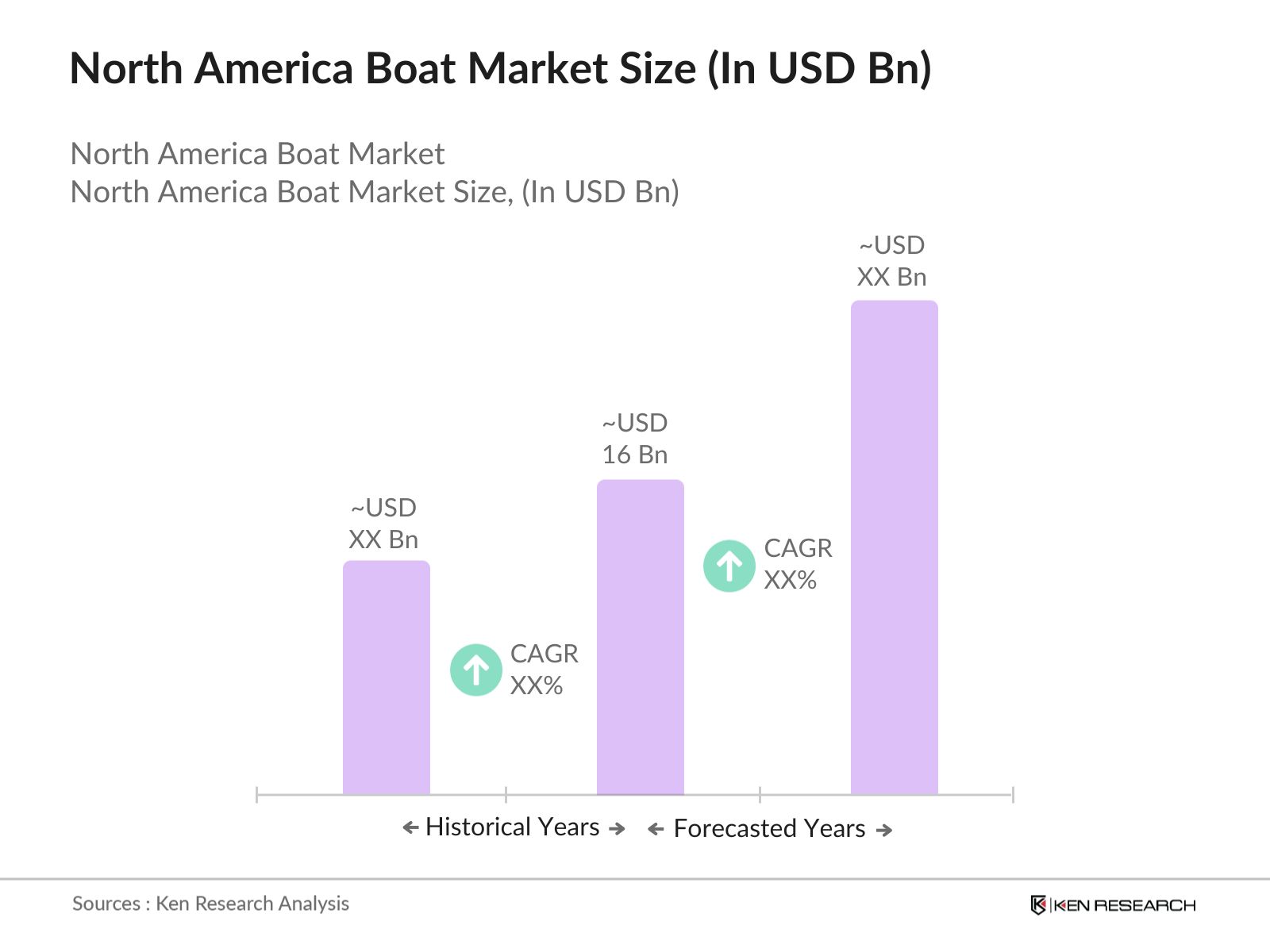
  • The North America Boat Market is valued at USD 16 billion, driven by a robust demand for recreational boating activities across the region. A significant factor contributing to this growth is the rising disposable income of consumers and an increasing preference for water-based recreational activities. Boating, as a leisure activity, has seen a surge in participation rates, especially in coastal cities.
  • The United States remains the dominant player in the North America boat market due to its extensive coastline, a well-developed boating culture, and robust marine infrastructure. Coastal cities such as Miami, Fort Lauderdale, and Los Angeles are particularly prominent hubs for boat manufacturers and users alike. Furthermore, Canada is also seeing growth in the boat market, particularly around regions with abundant lakes such as Ontario and British Columbia.
  • The International Maritime Organization's (IMO) Marine Environment Protection Committee (MEPC 80) introduced the 2023 IMO Strategy, aiming for net-zero greenhouse gas (GHG) emissions from international shipping by 2050. This strategy promotes the uptake of alternative low-GHG fuels by 2030, and also includes lifecycle GHG assessments for marine fuels. These global regulatory measures enhance the development of cleaner, energy-efficient boat technologies, contributing to the eco-friendly boat market.

North America Boat Market Size

North America Boat Market Segmentation

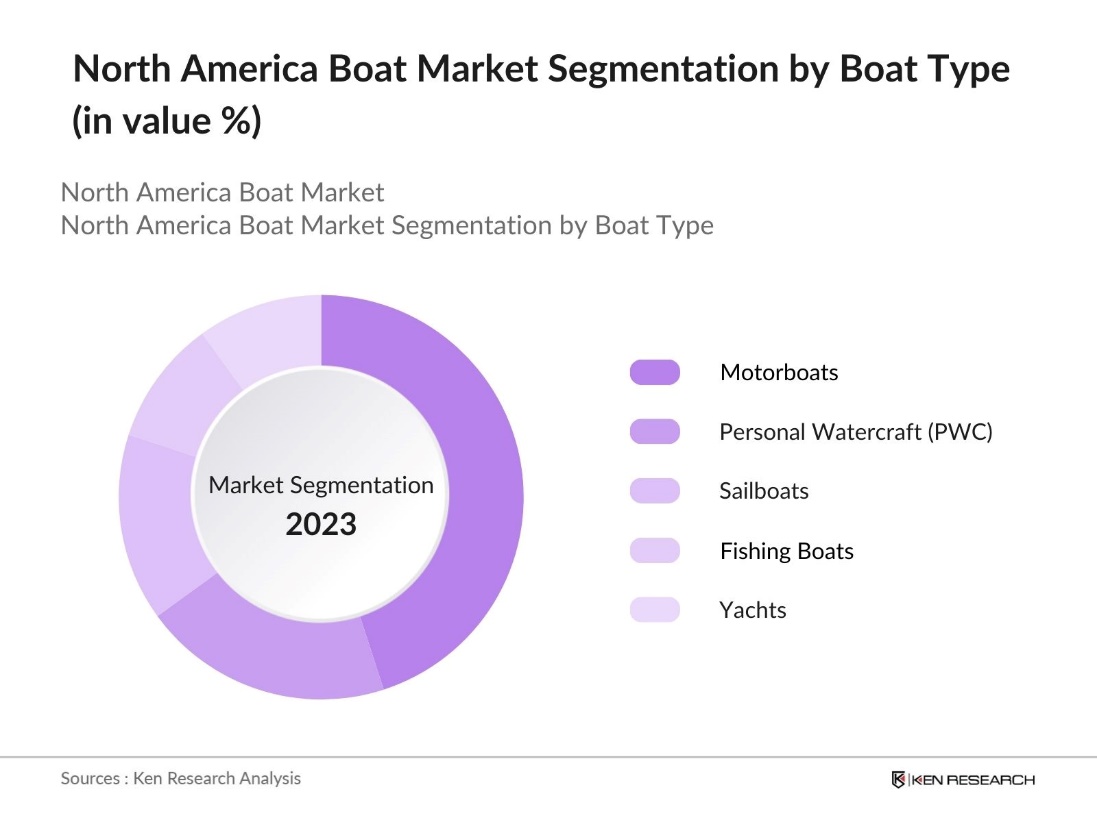
  • By Boat Type: The North America boat market is segmented by boat type into motorboats, sailboats, personal watercraft (PWC), fishing boats, and yachts. Motorboats dominate this segment, primarily due to their versatility and widespread use for both leisure and competitive boating activities. Motorboats are popular among a diverse range of consumers, including recreational users and fishing enthusiasts. The segment's dominance is further strengthened by continuous product innovation, including the development of high-speed boats and electric propulsion systems.

North America Boat Market Segmentation by Boat Type

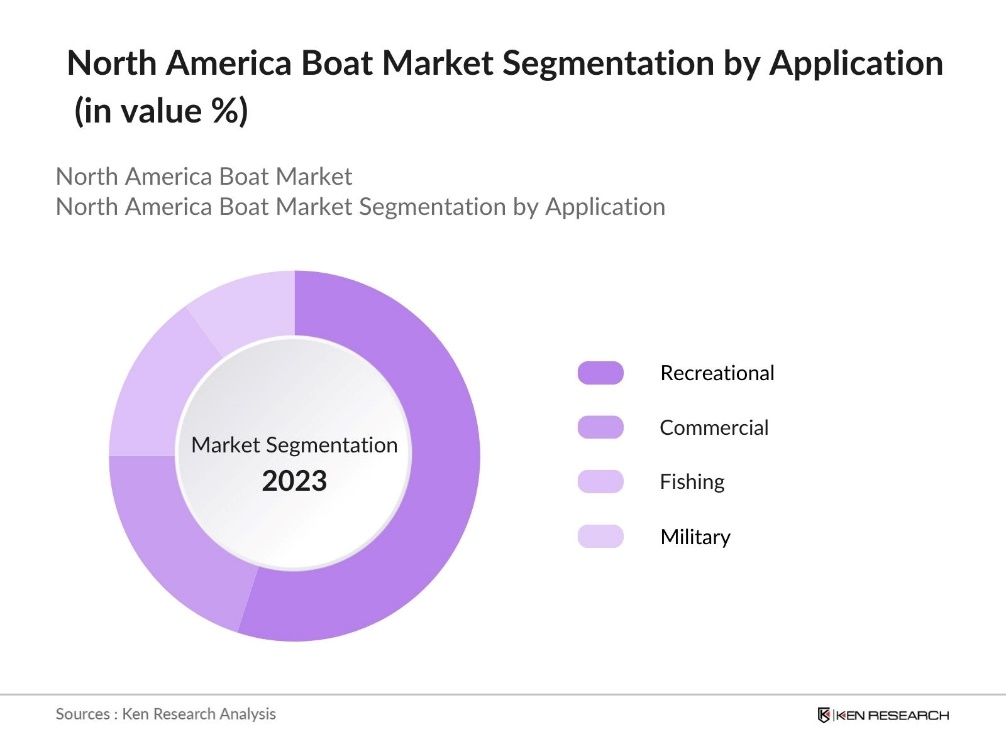
  • By Application: The North America boat market is segmented by application into recreational, commercial, fishing, and military uses. The recreational segment holds the largest market share, primarily driven by increasing consumer interest in water sports and leisure activities. Boating as a recreational activity has gained significant traction, especially with the rise of high-net-worth individuals and the appeal of marine tourism. The commercial and fishing applications are also growing, but recreational boating remains the predominant driver of market growth.

North America Boat Market Segmentation by Application

North America Boat Market Competitive Landscape

The market is highly consolidated with a few key players dominating the market. These players are known for their innovative technologies, extensive product lines, and strong distribution networks. The competitive landscape in this market is defined by these market leaders, who have captured significant market share through innovation, strong brand recognition, and a broad product portfolio that caters to various boating segments.

Company

Establishment Year

Headquarters

Boat Type

Production Capacity

R&D Investments

Sales Channels

Fleet Size

Partnerships

Dealer Network

Brunswick Corporation

1845

Mettawa, Illinois


Yamaha Motor Co., Ltd.

1955

Iwata, Japan


Malibu Boats, Inc.

1982

Loudon, Tennessee


Beneteau Group

1884

Saint-Gilles, France


MasterCraft Boat Holdings, Inc.

1968

Vonore, Tennessee


North America Boat Industry Analysis

Growth Drivers

  • Rising Disposable Income: The increase in disposable income across North America is driving demand for luxury and recreational boating. According to the World Bank, the U.S. GDP per capita reached USD 66,755 in 2023, enabling more individuals to spend on leisure activities like boating. Higher income levels allow consumers to invest in larger and more technologically advanced boats. The upward trend in disposable income aligns with the robust recreational boating market, as spending on discretionary items like boats has increased.
  • Increase in Recreational Boating Activities: The NOAA Fisheries' website provides extensive recreational fishing data to help monitor and manage fish stocks. One key growth driver in recreational boating and fishing is the increasing participation in marine activities. The U.S. saw nearly 185 million saltwater fishing trips in recent years, showing a growing trend in recreational marine sports. This rise is supported by the availability of data on fishing efforts, species caught, and the development of new marine infrastructure.
  • Technological Advancements in Boat Manufacturing: Technological advancements in boat manufacturing drive market growth through the integration of advanced materials like carbon fiber, enhancing durability and efficiency. Additionally, IoT-based systems are becoming common in boats, improving navigation, safety, and operational convenience. These innovations attract both recreational and commercial buyers, fueling the expansion of the boating industry by offering smarter, more resilient vessels.

Market Challenges

  • High Maintenance and Operational Costs: High maintenance and operational costs are significant challenges for boat owners, often discouraging ownership. Routine expenses, such as repairs, upkeep, and fuel, can become burdensome, particularly for budget-conscious buyers. Fuel price volatility adds to this financial strain, making the operational cost of boats even higher. These factors make boat ownership less attractive to some potential buyers, affecting overall demand in the market.
  • Environmental Regulations Impacting Production: Strict environmental regulations, especially concerning emissions, challenge boat manufacturers by requiring low-emission technologies and eco-friendly materials. This raises production costs and complicates the manufacturing process, as companies must adapt to evolving standards. The restrictions limit the use of certain materials and impact production timelines, creating additional hurdles for manufacturers to stay compliant while maintaining efficiency and profitability.

North America Boat Market Future Outlook

Over the next five years, the North America boat market is expected to experience sustained growth, driven by increasing consumer interest in leisure activities and continued technological innovations. The market will also benefit from growing environmental concerns, which are pushing demand for electric and hybrid boats. Additionally, expanding marine tourism and government initiatives aimed at promoting recreational water activities will further boost market prospects.

Market Opportunities

  • Growth of Eco-friendly Boats (Electric, Hybrid): The eco-friendly boat market is growing rapidly, driven by increasing environmental awareness and technological advancements in electric and hybrid models. Initiatives promoting green energy alternatives, such as incentives for electric boats, are boosting adoption in North America. Additionally, certifications and regulations that encourage eco-friendly marine practices further support this segment, making electric and hybrid boats an attractive option for environmentally conscious consumers seeking lower operational costs and sustainability in boating.
  • Increasing Adoption of Smart Technology in Boats: The increasing adoption of smart technology in boats is transforming the boating experience. Innovations like GPS systems, smart anchors, and automated navigation enhance safety, efficiency, and ease of use. IoT integration allows boaters to control and monitor systems remotely, making boating more accessible and appealing to tech-savvy consumers. These advancements streamline operations, improve navigation, and offer a more connected and enjoyable boating experience, driving interest in modern, technology-enhanced vessels.

Scope of the Report

Boat Type

Motorboats

Sailboats

Personal Watercraft

Fishing Boats

Yachts

Application

Recreational

Commercial

Fishing

Military

Engine Type

Outboard

Inboard

Electric

Hybrid

Material Type

Fiberglass

Wood

Aluminum

Composite Materials

Region

United States

Canada

Mexico

Products

Key Target Audience

  • Boat Manufacturers

  • Marine Equipment Manufactures Companies

  • Tourism Operators

  • Marina Developers

  • Yacht Clubs and Marine Associations

  • Investments and Venture Capitalist Firms

  • Environmental Regulatory Bodies (Environmental Protection Agency, Fisheries and Oceans Canada)

  • Government Agencies (U.S. Coast Guard, Canadian Marine Association)

  • Banks and Financial Institutions

Companies

Major Players

  • Brunswick Corporation

  • Yamaha Motor Co., Ltd.

  • Malibu Boats, Inc.

  • Beneteau Group

  • MasterCraft Boat Holdings, Inc.

  • Marine Products Corporation

  • Viking Yacht Company

  • Smoker Craft, Inc.

  • Chaparral Boats, Inc.

  • Cobalt Boats

  • Ferretti Group

  • Sea Ray Boats, Inc.

  • Correct Craft

  • Tracker Boats

  • Groupe Beneteau

Table of Contents

1. North America Boat Market Overview

1.1. Definition and Scope
1.2. Market Taxonomy
1.3. Market Growth Rate
1.4. Market Segmentation Overview

2. North America Boat Market Size (In USD Bn)

2.1. Historical Market Size
2.2. Year-On-Year Growth Analysis
2.3. Key Market Developments and Milestones

3. North America Boat Market Analysis

3.1. Growth Drivers

3.1.1. Rising Disposable Income

3.1.2. Increase in Recreational Boating Activities

3.1.3. Technological Advancements in Boat Manufacturing

3.1.4. Government Initiatives to Promote Marine Tourism

3.2. Market Challenges

3.2.1. High Maintenance and Operational Costs

3.2.2. Environmental Regulations Impacting Production

3.2.3. Volatility in Fuel Prices

3.3. Opportunities

3.3.1. Growth of Eco-friendly Boats (Electric, Hybrid)

3.3.2. Expansion of Marine Infrastructure

3.3.3. Increasing Adoption of Smart Technology in Boats

3.4. Trends

3.4.1. Rise of Electric and Hybrid Boats

3.4.2. Boating as a Leisure Activity Among Millennials

3.4.3. Growth in Boat-sharing Platforms

3.5. Government Regulation

3.5.1. Emission Standards for Boats

3.5.2. Safety Regulations and Certification

3.5.3. Marine Environmental Protection Laws

3.6. SWOT Analysis
3.7. Stakeholder Ecosystem
3.8. Porters Five Forces Analysis
3.9. Competition Ecosystem

4. North America Boat Market Segmentation

4.1. By Boat Type (In Value %)

4.1.1. Motorboats

4.1.2. Sailboats

4.1.3. Personal Watercraft (PWC)

4.1.4. Fishing Boats

4.1.5. Yachts

4.2. By Application (In Value %)

4.2.1. Recreational

4.2.2. Commercial

4.2.3. Fishing

4.2.4. Military

4.3. By Engine Type (In Value %)

4.3.1. Outboard

4.3.2. Inboard

4.3.3. Electric

4.3.4. Hybrid

4.4. By Material Type (In Value %)

4.4.1. Fiberglass

4.4.2. Wood

4.4.3. Aluminum

4.4.4. Composite Materials

4.5. By Region (In Value %)

4.5.1. United States

4.5.2. Canada

4.5.3. Mexico

5. North America Boat Market Competitive Analysis

5.1 Detailed Profiles of Major Competitors

5.1.1. Brunswick Corporation

5.1.2. Malibu Boats, Inc.

5.1.3. Beneteau Group

5.1.4. Marine Products Corporation

5.1.5. Yamaha Motor Co., Ltd.

5.1.6. MasterCraft Boat Holdings, Inc.

5.1.7. Smoker Craft, Inc.

5.1.8. Tracker Boats

5.1.9. Chaparral Boats, Inc.

5.1.10. Correct Craft

5.1.11. Cobalt Boats

5.1.12. Ferretti Group

5.1.13. Groupe Beneteau

5.1.14. Sea Ray Boats, Inc.

5.1.15. Viking Yacht Company

5.2 Cross Comparison Parameters (Boat Production Capacity, Manufacturing Facilities, Sales Channels, Fleet Size, Partnerships, Customization Options, Dealer Network, Market Presence)
5.3. Market Share Analysis
5.4. Strategic Initiatives
5.5. Mergers and Acquisitions
5.6. Investment Analysis
5.7. Venture Capital Funding
5.8. Government Grants
5.9. Private Equity Investments

6. North America Boat Market Regulatory Framework

6.1. Emission Standards
6.2. Compliance with Safety Regulations
6.3. Licensing and Certifications

7. North America Boat Future Market Size (In USD Bn)

7.1. Future Market Size Projections
7.2. Key Factors Driving Future Market Growth

8. North America Boat Future Market Segmentation

8.1. By Boat Type (In Value %)
8.2. By Application (In Value %)
8.3. By Engine Type (In Value %)
8.4. By Material Type (In Value %)
8.5. By Region (In Value %)

9. North America Boat Market Analysts Recommendations

9.1. TAM/SAM/SOM Analysis
9.2. Customer Cohort Analysis
9.3. Marketing Initiatives
9.4. White Space Opportunity Analysis

Disclaimer Contact Us

Research Methodology

Step 1: Identification of Key Variables

The initial phase involves constructing an ecosystem map encompassing all major stakeholders within the North America Boat Market. This step is underpinned by extensive desk research, utilizing secondary and proprietary databases to gather comprehensive industry-level information. The primary objective is to identify and define the critical variables that influence market dynamics.

Step 2: Market Analysis and Construction

In this phase, we will compile and analyze historical data pertaining to the North America Boat Market. This includes assessing market penetration, the ratio of marketplaces to service providers, and resultant revenue generation. Furthermore, an evaluation of quality statistics will be conducted to ensure the reliability of the revenue estimates.

Step 3: Hypothesis Validation and Expert Consultation

Market hypotheses will be developed and subsequently validated through computer-assisted telephone interviews (CATIs) with industry experts representing various boat manufacturers. These consultations will provide valuable operational and financial insights directly from industry practitioners, refining the market data.

Step 4: Research Synthesis and Final Output

The final phase involves direct engagement with multiple boat manufacturers to acquire detailed insights into product segments, sales performance, consumer preferences, and other relevant factors. This interaction will complement the statistics derived from the bottom-up approach, ensuring a comprehensive and validated analysis of the North America Boat Market.

Frequently Asked Questions

1. How big is the North America Boat Market?

The North America boat market is valued at USD 16 billion, driven by rising disposable incomes, the popularity of recreational boating, and continuous innovation in boat technology.

2. What are the key challenges in the North America Boat Market?

Key challenges in North America boat market include stringent environmental regulations affecting boat manufacturing, high maintenance costs for boat owners, and fluctuating fuel prices that impact operational costs.

3. Who are the major players in the North America Boat Market?

Key players in the North America boat market include Brunswick Corporation, Yamaha Motor Co., Ltd., Malibu Boats, Beneteau Group, and MasterCraft Boat Holdings. These companies dominate the market due to their extensive distribution networks, innovative products, and established brand loyalty.

4. What are the growth drivers of the North America Boat Market?

Growth in the North America boat market is driven by rising demand for recreational boating, technological advancements such as electric propulsion systems, and an increasing number of high-net-worth individuals looking for luxury watercraft.

Why Buy From Us?

RRR
Refine Robust Result (RRR) Framework

What makes us stand out is that our consultants follows Robust, Refine and Result (RRR) methodology. i.e. Robust for clear definitions, approaches and sanity checking, Refine for differentiating respondents facts and opinions and Result for presenting data with story

Our Reach Is Unmatched

We have set a benchmark in the industry by offering our clients with syndicated and customized market research reports featuring coverage of entire market as well as meticulous research and analyst insights.

Research
Shifting the Research Paradigm

While we don't replace traditional research, we flip the method upside down. Our dual approach of Top Bottom & Bottom Top ensures quality deliverable by not just verifying company fundamentals but also looking at the sector and macroeconomic factors.

Insite
More Insights-Better Decisions

With one step in the future, our research team constantly tries to show you the bigger picture. We help with some of the tough questions you may encounter along the way: How is the industry positioned? Best marketing channel? KPI's of competitors? By aligning every element, we help maximize success.

Trust
Transparency and Trust

Our report gives you instant access to the answers and sources that other companies might choose to hide. We elaborate each steps of research methodology we have used and showcase you the sample size to earn your trust.

support
Round the Clock Support

If you need any support, we are here! We pride ourselves on universe strength, data quality, and quick, friendly, and professional service.

Why Client Choose Us?

400000+ Reports in repository
150+ Consulting project a year
100+ Analysts
8000+ Client Queries in 2022