
North America Bottled Water Market Outlook to 2030
Region:Mexico
Author(s):Paribhasha Tiwari
Product Code:KROD3557
Region:Mexico
Author(s):Paribhasha Tiwari
Product Code:KROD3557
October 2024
95
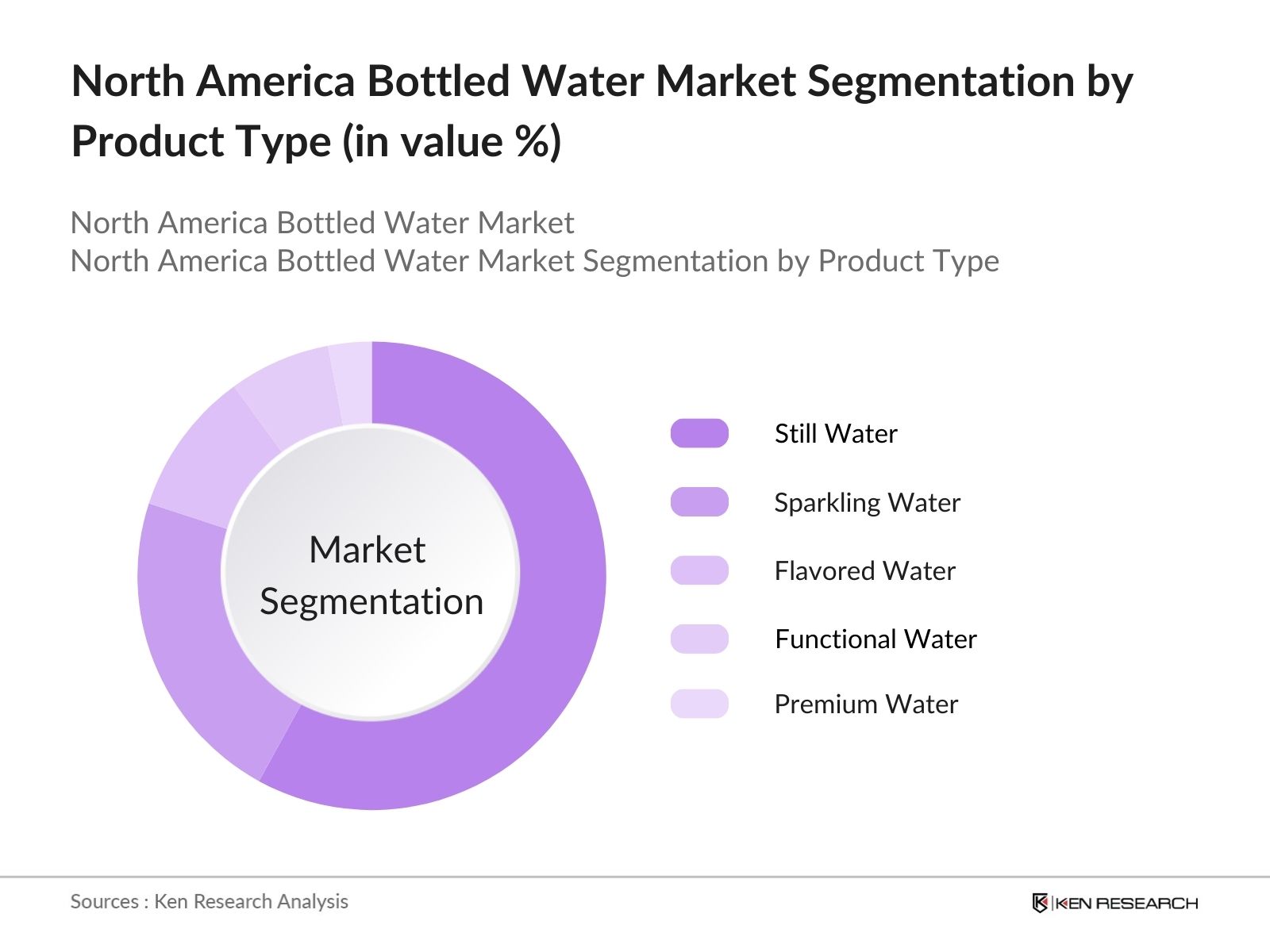
By Product Type: The North America bottled water market is segmented by product type into still water, sparkling water, flavored water, functional water, and premium water. Among these, still water holds a dominant market share due to its affordability and broad consumer appeal. Brands like Aquafina and Dasani have captured significant market share through their widespread availability and marketing campaigns focused on hydration and wellness. Still water is often preferred by consumers for everyday consumption and is widely available in supermarkets, convenience stores, and vending machines.
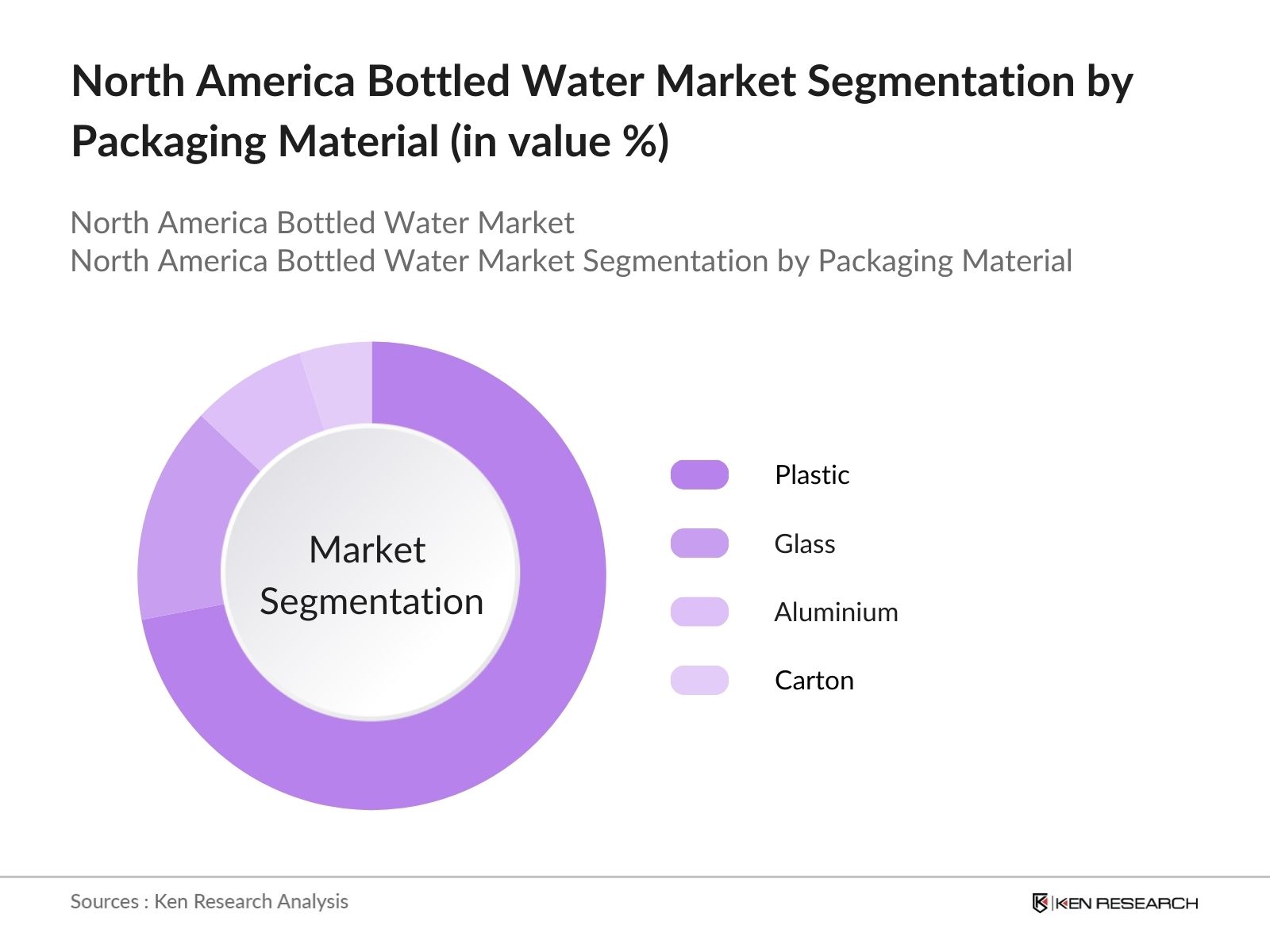
By Packaging Material: The market is further segmented by packaging material into plastic, glass, aluminum, and carton. Plastic remains the dominant packaging material, holding the highest market share due to its lightweight, cost-effective, and recyclable nature. Plastic bottled water is a popular choice across various distribution channels, from supermarkets to online platforms. However, growing environmental concerns and consumer demand for sustainable packaging solutions are driving the adoption of alternatives like glass and aluminum, particularly in premium bottled water segments.
The North America bottled water market is highly competitive, with key players leveraging product innovation, sustainability initiatives, and strategic partnerships to maintain their market position. The market is characterized by a mix of large multinational companies and regional players, with the former dominating due to extensive distribution networks and marketing budgets.
|
Company Name |
Year Established |
Headquarters |
Revenue |
Product Portfolio |
Sustainability Initiatives |
Geographical Presence |
Strategic Partnerships |
Innovations in Packaging |
|
Nestlé Waters North America |
1976 |
Stamford, USA |
$4.5B |
|||||
|
PepsiCo, Inc. (Aquafina) |
1965 |
Purchase, USA |
$5B |
|||||
|
The Coca-Cola Company (Dasani) |
1892 |
Atlanta, USA |
$7B |
|||||
|
Danone S.A. (Evian) |
1919 |
Paris, France |
$2.2B |
|||||
|
Niagara Bottling, LLC |
1963 |
Ontario, USA |
$3.1B |
Over the next five years, the North America bottled water market is expected to experience significant growth driven by several factors. The rise in consumer health consciousness, the increasing demand for functional and flavored water, and the shift towards sustainable packaging will continue to propel market expansion. Additionally, technological advancements in smart packaging and the growing influence of e-commerce platforms are anticipated to create new opportunities for market players. The premium and functional water segments are likely to witness substantial growth as consumers seek products that offer additional health benefits, such as electrolytes, vitamins, and natural ingredients. Moreover, the focus on reducing plastic waste will lead to further innovations in packaging materials, with glass and aluminum gaining more traction.
Innovation in Sustainable Packaging: In response to environmental concerns, 2024 is seeing heightened interest in sustainable packaging solutions within the North American bottled water market. Companies are exploring biodegradable bottles made from plant-based materials, which decompose more quickly than traditional plastics. Concurrently, advancements in recycling technology are making it easier to process and repurpose plastic bottles, with over $500 million being invested in North American recycling infrastructure (EPA). These innovations offer significant opportunities for bottled water companies to differentiate themselves by adopting eco-friendly packaging options, appealing to environmentally-conscious consumers and mitigating regulatory risks.
Expansion of E-commerce Distribution Channels: The rise of e-commerce is reshaping how bottled water is sold across North America in 2024. With more than 315 million North Americans actively using the internet (World Bank), online shopping platforms are becoming a key distribution channel for bottled water brands. Subscription models are gaining popularity, allowing consumers to receive regular water deliveries, which saves time and ensures consistent access to preferred brands. E-commerce offers bottled water companies the ability to reach a wider audience, reduce traditional retail costs, and tap into a market that values convenience and home delivery services.
|
Segments |
Sub-segments |
|
By Product Type |
Still Water Sparkling Water Flavored Water Functional Water Premium Water |
|
By Packaging Material |
Plastic Glass Aluminum Carton |
|
By Distribution Channel |
Supermarkets & Hypermarkets Convenience Stores Online Retailers Direct-to-Consumer Specialty Stores |
|
By End-user |
Residential Commercial Institutional |
|
By Region |
United States Canada Mexico |
Key Target Audience
1.1. Definition and Scope
1.2. Market Taxonomy
1.3. Market Growth Rate (CAGR, Volume Growth, Revenue Growth)
1.4. Market Segmentation Overview
2.1. Historical Market Size
2.2. Year-On-Year Growth Analysis
2.3. Key Market Developments and Milestones
3.1. Growth Drivers
3.1.1. Increasing Health Awareness (Functional Water, Alkaline Water Demand)
3.1.2. Rising Demand for Convenience Products (Portable Bottled Water, On-the-Go Consumption)
3.1.3. Shift Towards Premiumization (Luxury Bottled Water, Enhanced Water Products)
3.1.4. Expanding Urbanization and Population Growth (Demand for Safe Drinking Water)
3.2. Market Challenges
3.2.1. Environmental Concerns (Plastic Waste, Sustainability Challenges)
3.2.2. Regulatory Compliance (FDA Regulations, State-specific Water Quality Standards)
3.2.3. Cost of Bottled Water vs. Tap Water (Pricing Pressures, Competitive Landscape)
3.3. Opportunities
3.3.1. Innovation in Sustainable Packaging (Biodegradable Bottles, Recycling Technologies)
3.3.2. Expansion of E-commerce Distribution Channels (Online Sales Growth, Subscription Models)
3.3.3. Increasing Demand for Flavored and Functional Water (Hydration Products, Added Nutritional Benefits)
3.4. Trends
3.4.1. Rise of Private Label Brands (Retailer-owned Bottled Water)
3.4.2. Introduction of Smart Packaging Solutions (QR Codes, Traceability)
3.4.3. Growth of Premium and Luxury Segments (Glass Bottles, Natural Spring Sources)
3.5. Government Regulation
3.5.1. FDA Guidelines on Bottled Water Safety
3.5.2. State-specific Legislation on Water Quality
3.5.3. Initiatives for Reducing Plastic Pollution (Bans on Single-use Plastics, Circular Economy Policies)
3.6. SWOT Analysis
3.7. Stakeholder Ecosystem (Producers, Distributors, Retailers, Consumers)
3.8. Porter’s Five Forces (Supplier Power, Buyer Power, Competitive Rivalry, Threat of New Entrants, Threat of Substitutes)
3.9. Competition Ecosystem
4.1. By Product Type (In Value %)
4.1.1. Still Water
4.1.2. Sparkling Water
4.1.3. Flavored Water
4.1.4. Functional Water
4.1.5. Premium Water
4.2. By Packaging Material (In Value %)
4.2.1. Plastic
4.2.2. Glass
4.2.3. Aluminum
4.2.4. Carton
4.3. By Distribution Channel (In Value %)
4.3.1. Supermarkets and Hypermarkets
4.3.2. Convenience Stores
4.3.3. Online Retailers
4.3.4. Direct-to-Consumer
4.3.5. Specialty Stores
4.4. By End-user (In Value %)
4.4.1. Residential
4.4.2. Commercial
4.4.3. Institutional
4.5. By Region (In Value %)
4.5.1. United States
4.5.2. Canada
5.1. Detailed Profiles of Major Companies
5.1.1. Nestlé Waters North America
5.1.2. PepsiCo, Inc. (Aquafina)
5.1.3. The Coca-Cola Company (Dasani)
5.1.4. Danone S.A. (Evian)
5.1.5. Niagara Bottling, LLC
5.1.6. Crystal Geyser Water Company
5.1.7. Voss Water
5.1.8. Essentia Water, LLC
5.1.9. Mountain Valley Spring Company
5.1.10. FIJI Water Company LLC
5.1.11. S. Pellegrino (Sanpellegrino)
5.1.12. CG Roxane LLC (Crystal Geyser)
5.1.13. Flow Water Inc.
5.1.14. JUST Goods, Inc. (JUST Water)
5.1.15. Icelandic Glacial Inc.
5.2. Cross Comparison Parameters (Revenue, Market Share, Product Portfolio, Geographical Presence, Sustainability Initiatives, Packaging Innovations, Product Differentiation, Strategic Partnerships)
5.3. Market Share Analysis
5.4. Strategic Initiatives
5.5. Mergers And Acquisitions
5.6. Investment Analysis
5.7. Venture Capital Funding
5.8. Government Grants
5.9. Private Equity Investments
6.1. Environmental Standards
6.2. Compliance Requirements
6.3. Certification Processes
7.1. Future Market Size Projections
7.2. Key Factors Driving Future Market Growth
8.1. By Product Type (In Value %)
8.2. By Packaging Material (In Value %)
8.3. By Distribution Channel (In Value %)
8.4. By End-user (In Value %)
8.5. By Region (In Value %)
9.1. TAM/SAM/SOM Analysis
9.2. Customer Cohort Analysis
9.3. Marketing Initiatives
9.4. White Space Opportunity Analysis
The research process begins by mapping out key stakeholders and identifying the major factors influencing the North American bottled water market. This includes secondary research from industry reports, proprietary databases, and public domain data to compile critical metrics such as product demand, pricing trends, and consumer behavior.
In this phase, historical data from the North American bottled water market is analyzed, focusing on revenue generation, product penetration, and the ratio of market demand to supply. Further analysis of consumer preferences and packaging innovations is conducted to provide a robust understanding of market trends.
Market hypotheses are developed based on initial research and are subsequently validated through expert interviews with key stakeholders, including bottled water manufacturers, distributors, and industry associations. These insights offer real-time, practical perspectives on market dynamics and validate growth projections.
The final stage consolidates data from various sources, including manufacturers, suppliers, and regulatory agencies. This step ensures that the research conclusions are thoroughly vetted, providing actionable insights and strategic recommendations for stakeholders in the bottled water market.
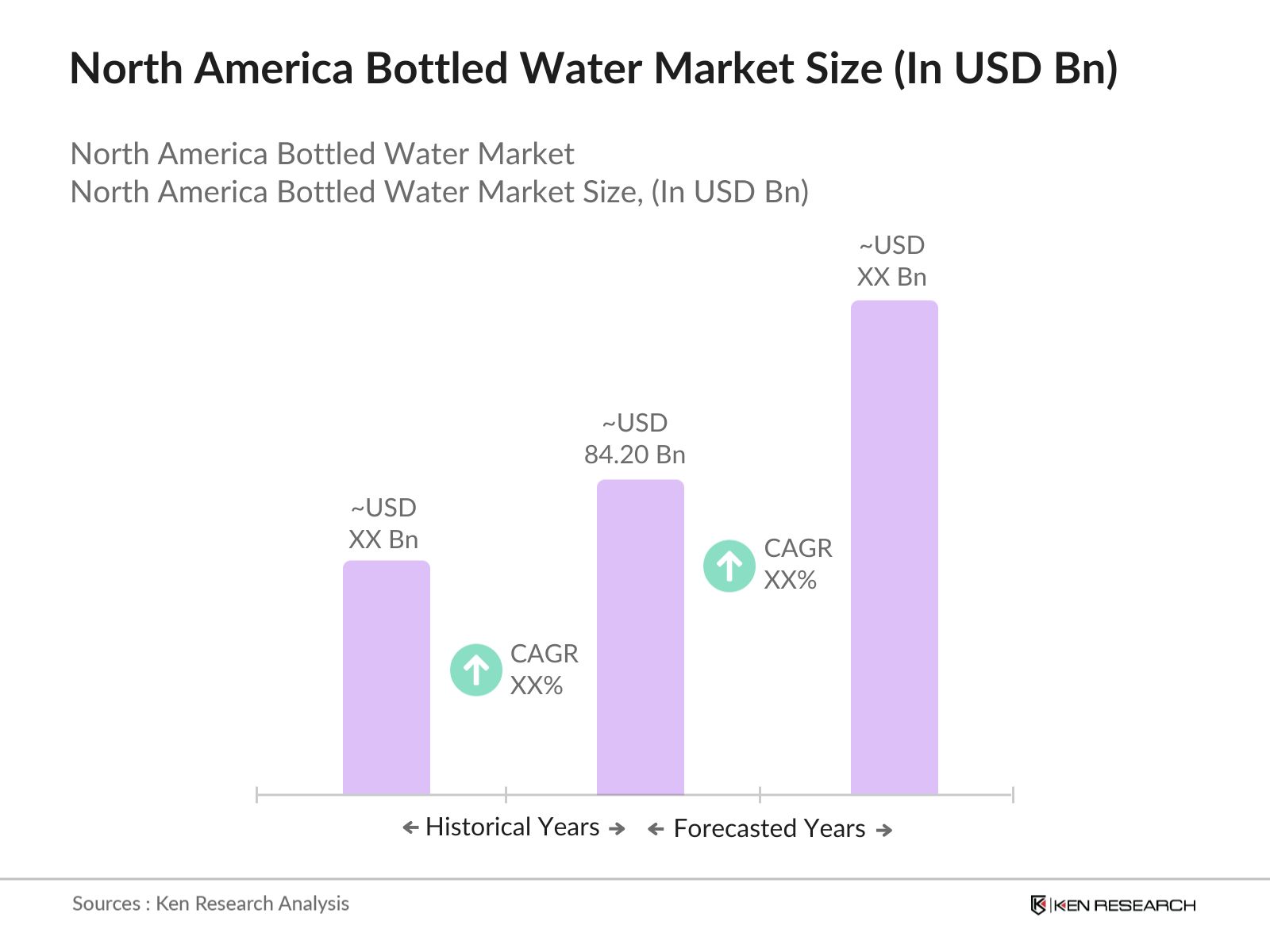
The North America bottled water market is valued at USD 84.20 billion, driven by rising consumer demand for safe, portable, and healthy beverage options.
Key challenges include environmental concerns over plastic waste, increasing regulatory pressures on packaging materials, and competition from tap water and water filtration systems.
Major players include Nestlé Waters North America, PepsiCo (Aquafina), The Coca-Cola Company (Dasani), Danone S.A. (Evian), and Niagara Bottling, LLC.
The market is driven by increasing health awareness, rising urbanization, and the demand for convenient and on-the-go hydration solutions.

What makes us stand out is that our consultants follows Robust, Refine and Result (RRR) methodology. i.e. Robust for clear definitions, approaches and sanity checking, Refine for differentiating respondents facts and opinions and Result for presenting data with story

We have set a benchmark in the industry by offering our clients with syndicated and customized market research reports featuring coverage of entire market as well as meticulous research and analyst insights.

While we don't replace traditional research, we flip the method upside down. Our dual approach of Top Bottom & Bottom Top ensures quality deliverable by not just verifying company fundamentals but also looking at the sector and macroeconomic factors.

With one step in the future, our research team constantly tries to show you the bigger picture. We help with some of the tough questions you may encounter along the way: How is the industry positioned? Best marketing channel? KPI's of competitors? By aligning every element, we help maximize success.

Our report gives you instant access to the answers and sources that other companies might choose to hide. We elaborate each steps of research methodology we have used and showcase you the sample size to earn your trust.

If you need any support, we are here! We pride ourselves on universe strength, data quality, and quick, friendly, and professional service.