
North America Business Jet Market Outlook to 2030
Region:Mexico
Author(s):Naman Rohilla
Product Code:KROD3111
Region:Mexico
Author(s):Naman Rohilla
Product Code:KROD3111
November 2024
81
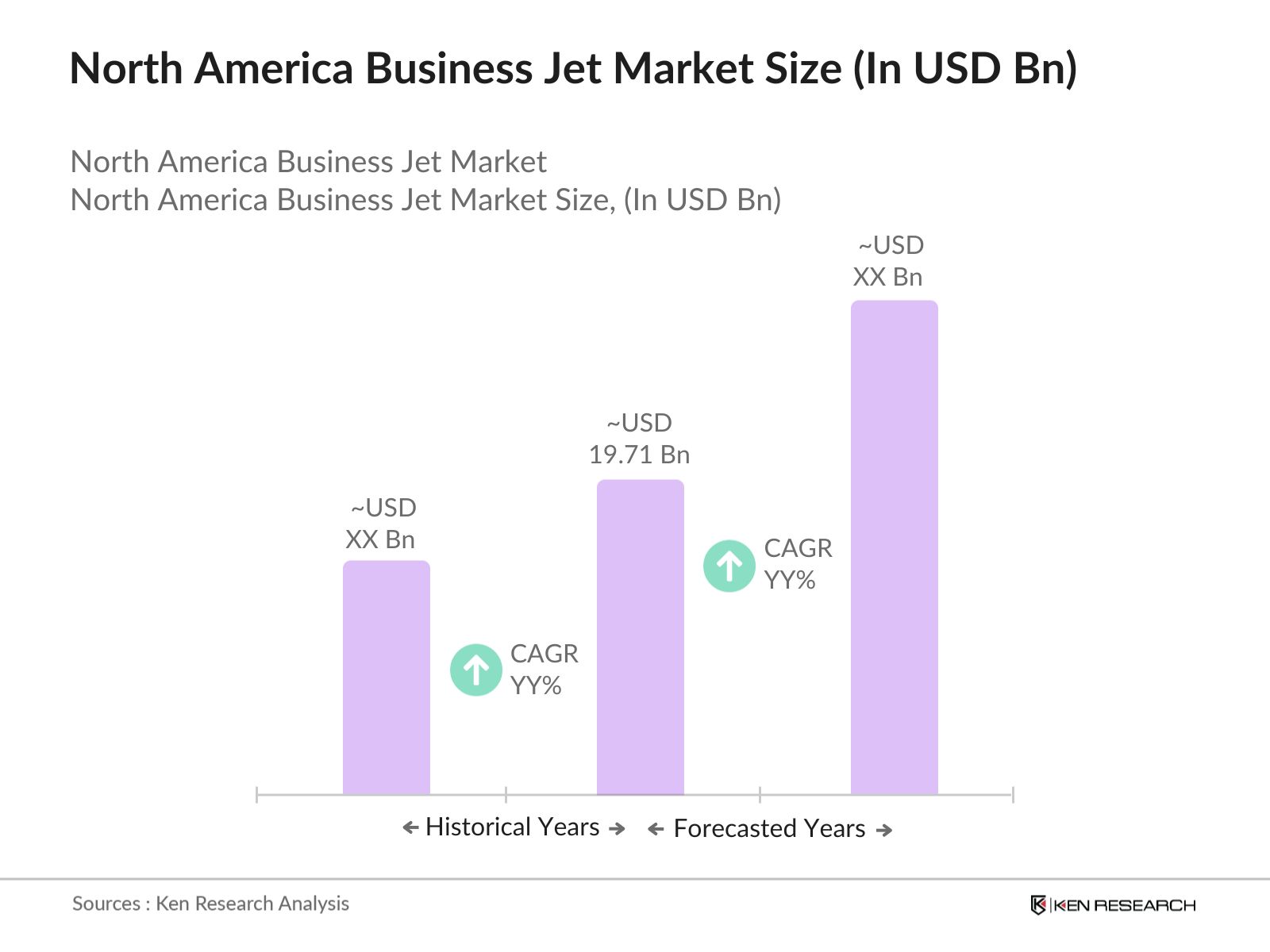
The North America Business Jet Market is segmented by aircraft type, end-user, range, platform, and geographical region.
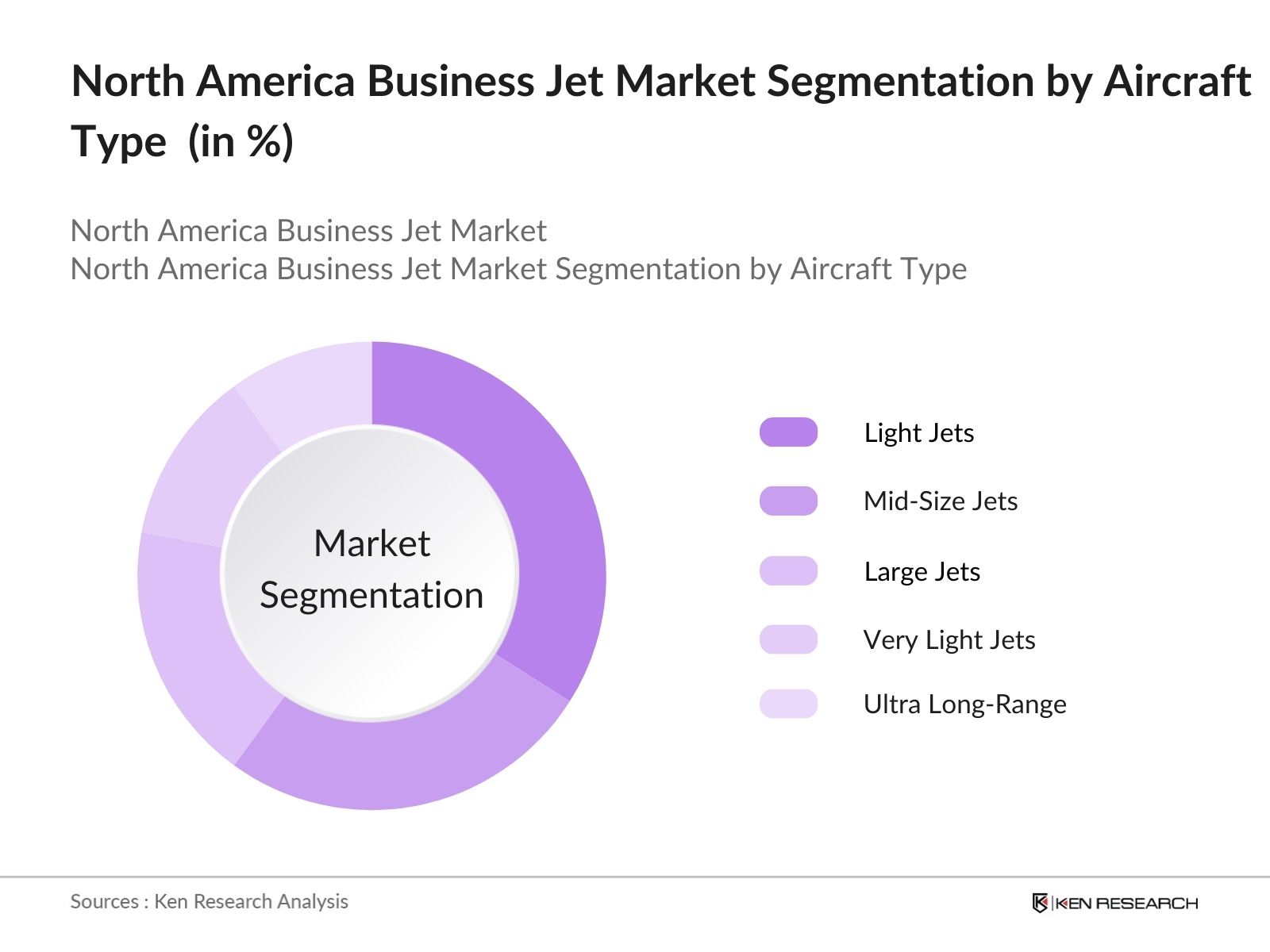
By Aircraft Type: The North America business jet market is segmented by aircraft type into light jets, mid-size jets, large jets, very light jets, and ultra long-range jets. Recently, light jets hold a dominant market share under the aircraft type segmentation due to their versatility, lower operational costs, and ability to access smaller airports. Their affordability and efficiency make them particularly popular among private individuals and smaller corporations.
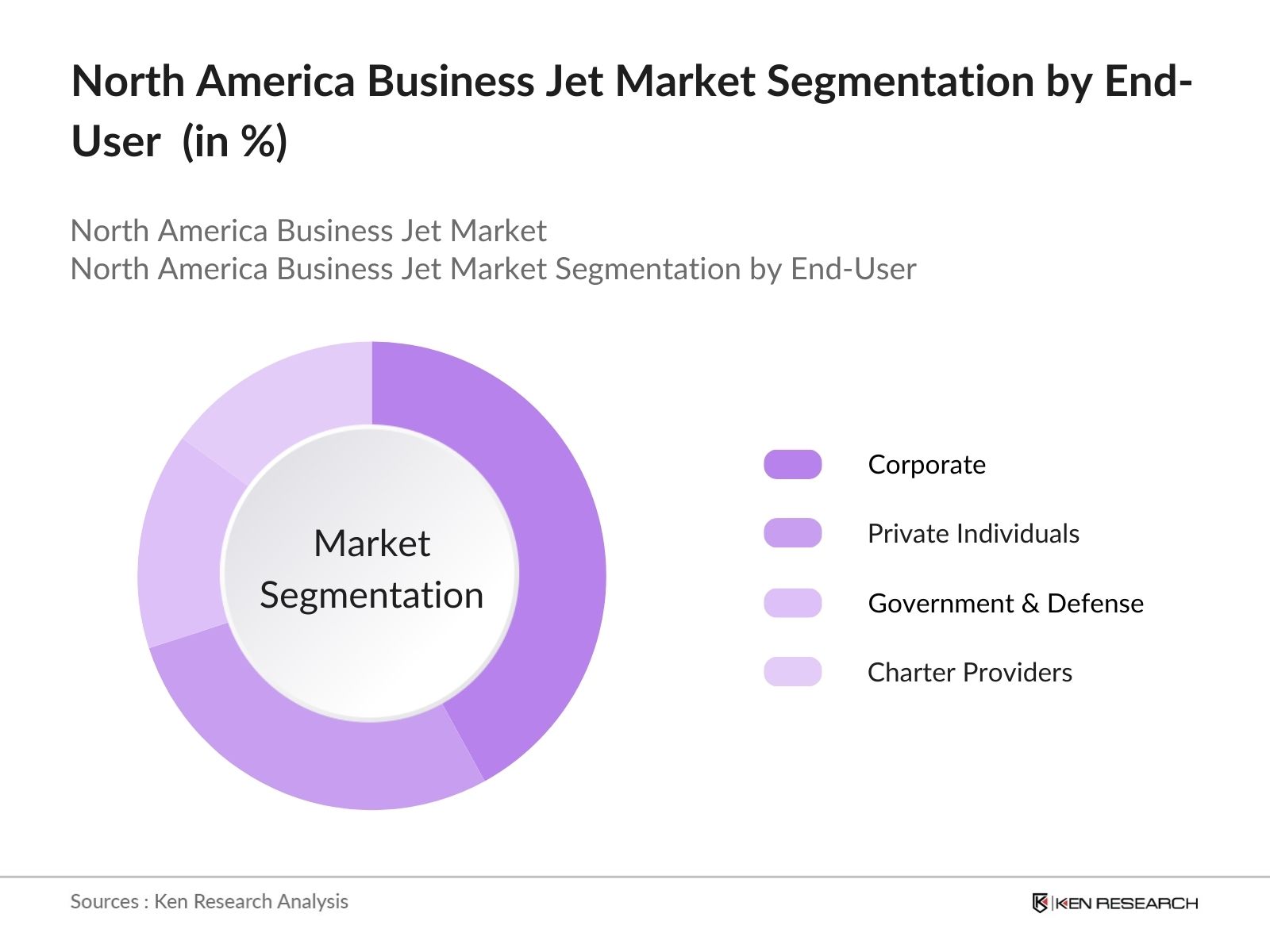
By End-User: The North America business jet market is further segmented by end-user into corporate, private individuals, government and defense, and charter providers. Corporate users dominate the end-user market due to the rising need for time-efficient travel and the ability to access multiple cities in a single day, reducing business downtime. Corporate executives and business owners often use these jets for their flexibility and convenience.
The North American business jet market is dominated by a few key players, such as Gulfstream Aerospace, Bombardier Inc., and Textron Aviation. These companies hold a substantial influence due to their advanced manufacturing capabilities, global reach, and continuous innovation. Their strong market positions are also supported by strategic partnerships and a focus on high-end jets that meet the evolving needs of corporate and private customers.
|
Company Name |
Establishment Year |
Headquarters |
No. of Aircraft Models |
R&D Investment |
Fleet Size |
Global Presence |
Technological Advancements |
Sustainability Initiatives |
|
Gulfstream Aerospace |
1958 |
Savannah, USA |
- |
- |
- |
- |
- |
- |
|
Bombardier Inc. |
1942 |
Montreal, Canada |
- |
- |
- |
- |
- |
- |
|
Textron Aviation (Cessna) |
1927 |
Wichita, USA |
- |
- |
- |
- |
- |
- |
|
Embraer Executive Jets |
1969 |
So Jos dos Campos, Brazil |
- |
- |
- |
- |
- |
- |
|
Dassault Aviation |
1929 |
Paris, France |
- |
- |
- |
- |
- |
- |
Over the next five years, the North America business jet market is expected to show growth driven by increasing demand from corporate entities, the rise of on-demand charter services, and a growing preference for private air travel in the post-pandemic era. The development of sustainable aviation technologies, such as electric and hybrid jets, along with the rise in fractional ownership programs, is expected to further propel market growth.
|
By Aircraft Type |
Light Jets Mid-Size Jets Large Jets Very Light Jets Ultra Long-Range Jets |
|
By End-User |
Corporate Private Individuals Government and Defense Charter Providers |
|
By Range |
Short Range (<2,000 NM) Medium Range (2,000 - 4,000 NM) Long Range (>4,000 NM) |
|
By Platform |
On-Demand Services Fractional Ownership Programs Full Ownership |
|
By Region |
USA Canada Mexico |
1.1 Definition and Scope
1.2 Market Taxonomy (By Aircraft Type, By End-User, By Range, By Platform, By Region)
1.3 Market Growth Rate (CAGR, YoY Growth)
1.4 Market Segmentation Overview (Business Segmentation Overview with Key Focus Areas)
2.1 Historical Market Size (Market Size for the Last Five Years)
2.2 Year-On-Year Growth Analysis (YoY Analysis of Market Size and Growth)
2.3 Key Market Developments and Milestones (Major Events Impacting Market Growth)
3.1 Growth Drivers
3.1.1 High Net Worth Individual (HNWI) Expansion
3.1.2 Business Travel Demand
3.1.3 Technological Advancements in Aircraft Efficiency
3.1.4 Corporate Sector Growth
3.2 Market Challenges
3.2.1 Regulatory Restrictions on Air Travel
3.2.2 High Ownership Costs
3.2.3 Environmental Concerns
3.2.4 Limited Airport Infrastructure for Business Jets
3.3 Opportunities
3.3.1 Rise in Fractional Ownership and Leasing Programs
3.3.2 Increased Adoption of Electric and Sustainable Aviation
3.3.3 Government Incentives for Aerospace Development
3.4 Trends
3.4.1 Preference for Light Jets
3.4.2 Increasing Popularity of Hybrid Aircraft
3.4.3 Connectivity and In-Flight Entertainment Demand
3.4.4 Growth in On-Demand Charter Services
3.5 Government Regulations
3.5.1 Federal Aviation Administration (FAA) Regulations
3.5.2 Environmental Standards for Aircraft Emissions
3.5.3 Subsidies for Electric and Hybrid Jet Development
3.5.4 Incentives for Infrastructure Development (Airport and Runway Investments)
3.6 SWOT Analysis
3.7 Stake Ecosystem (Key Stakeholders Including OEMs, FBOs, and Charter Providers)
3.8 Porters Five Forces Analysis (Bargaining Power of Suppliers, Bargaining Power of Buyers, Threat of New Entrants, Threat of Substitutes, Industry Rivalry)
3.9 Competitive Landscape Overview (Overview of Market Competition and Fragmentation)
4.1 By Aircraft Type (In Value %)
4.1.1 Light Jets
4.1.2 Mid-Size Jets
4.1.3 Large Jets
4.1.4 Very Light Jets
4.1.5 Ultra Long-Range Jets
4.2 By End-User (In Value %)
4.2.1 Corporate
4.2.2 Private Individuals
4.2.3 Government and Defense
4.2.4 Charter Providers
4.3 By Range (In Value %)
4.3.1 Short Range (<2,000 NM)
4.3.2 Medium Range (2,000 - 4,000 NM)
4.3.3 Long Range (>4,000 NM)
4.4 By Platform (In Value %)
4.4.1 On-Demand Services (Jet Charter and Leasing)
4.4.2 Fractional Ownership Programs
4.4.3 Full Ownership
4.5 By Region (In Value %)
4.5.1 USA
4.5.2 Canada
4.5.3 Mexico
5.1 Detailed Profiles of Major Companies
5.1.1 Gulfstream Aerospace
5.1.2 Bombardier Inc.
5.1.3 Dassault Aviation
5.1.4 Embraer Executive Jets
5.1.5 Textron Aviation (Cessna)
5.1.6 Honda Aircraft Company
5.1.7 Boeing Business Jets
5.1.8 Airbus Corporate Jets
5.1.9 Pilatus Aircraft Ltd
5.1.10 Cirrus Aircraft
5.1.11 Aerion Supersonic
5.1.12 SyberJet Aircraft
5.1.13 Eclipse Aerospace
5.1.14 One Aviation
5.1.15 Nextant Aerospace
5.2 Cross Comparison Parameters (No. of Aircraft Delivered, Average Price per Aircraft, Fleet Size, Manufacturing Facilities, R&D Investment, Market Share, Customer Base, Revenue)
5.3 Market Share Analysis (Company Wise Revenue and Market Penetration)
5.4 Strategic Initiatives (Product Launches, Collaborations, and Partnerships)
5.5 Mergers and Acquisitions (Major M&As in the Business Jet Sector)
5.6 Investment Analysis (Investments in R&D and Manufacturing)
5.7 Government Grants (Government Support and Aerospace Development Initiatives)
5.8 Venture Capital Funding (VC Investments in Business Jet Innovations)
5.9 Private Equity Investments (PE Involvement in Major Business Jet Companies)
6.1 FAA Regulations (FAA Certification and Compliance)
6.2 Environmental Regulations (Carbon Emission Reduction and Noise Control)
6.3 Aircraft Certification Processes (Airworthiness Standards)
6.4 Airport Infrastructure Requirements
7.1 Future Market Size Projections (Market Size Forecast for Business Jet Industry)
7.2 Key Factors Driving Future Market Growth (Growth Factors, Emerging Markets, and Technological Advancements)
8.1 By Aircraft Type (In Value %)
8.2 By End-User (In Value %)
8.3 By Range (In Value %)
8.4 By Platform (In Value %)
8.5 By Region (In Value %)
9.1 TAM/SAM/SOM Analysis (Total Addressable Market, Serviceable Available Market, Serviceable Obtainable Market)
9.2 Customer Cohort Analysis (Business Jet Buyers, Key Corporate Clients)
9.3 Marketing Initiatives (Strategies to Increase Market Share and Improve Sales)
9.4 White Space Opportunity Analysis (New Business Models and Unexplored Markets)
Disclaimer Contact UsThe initial stage involved identifying major stakeholders, including aircraft manufacturers, charter providers, and corporate jet users. Extensive secondary research was conducted through industry reports and proprietary databases to pinpoint critical factors influencing the market.
Data from industry reports and annual filings were collected to assess historical trends in the business jet market. Penetration rates and fleet size data were analyzed to establish current market performance and revenue patterns across different segments.
Market hypotheses were tested through in-depth interviews with industry executives, focusing on trends in aircraft ownership, leasing, and the emergence of new technologies. These interviews helped validate key market insights.
The final step combined all data points, including aircraft delivery rates and emerging trends in electric aviation. This synthesis created a comprehensive outlook on the future trajectory of the North American business jet market, backed by both qualitative and quantitative analysis.
The North America business jet market was valued at USD 19.71 billion, driven by rising demand from high-net-worth individuals and corporate executives seeking faster, more efficient travel solutions.
The North America business jet market's key challenges include regulatory restrictions, high ownership and maintenance costs, and growing environmental concerns related to carbon emissions.
The North America business jet market is led by major companies such as Gulfstream Aerospace, Bombardier Inc., Textron Aviation, Embraer Executive Jets, and Dassault Aviation.
The North America business jet market is propelled by increasing corporate demand, the rise in fractional ownership programs, and advancements in electric and hybrid aviation technology.

What makes us stand out is that our consultants follows Robust, Refine and Result (RRR) methodology. i.e. Robust for clear definitions, approaches and sanity checking, Refine for differentiating respondents facts and opinions and Result for presenting data with story

We have set a benchmark in the industry by offering our clients with syndicated and customized market research reports featuring coverage of entire market as well as meticulous research and analyst insights.

While we don't replace traditional research, we flip the method upside down. Our dual approach of Top Bottom & Bottom Top ensures quality deliverable by not just verifying company fundamentals but also looking at the sector and macroeconomic factors.

With one step in the future, our research team constantly tries to show you the bigger picture. We help with some of the tough questions you may encounter along the way: How is the industry positioned? Best marketing channel? KPI's of competitors? By aligning every element, we help maximize success.

Our report gives you instant access to the answers and sources that other companies might choose to hide. We elaborate each steps of research methodology we have used and showcase you the sample size to earn your trust.

If you need any support, we are here! We pride ourselves on universe strength, data quality, and quick, friendly, and professional service.