
North America Center Console Car Market Outlook to 2030
Region:North America
Author(s):Sanjna Verma
Product Code:KROD2377
December 2024
85
About the Report
North America Center Console Car Market Overview
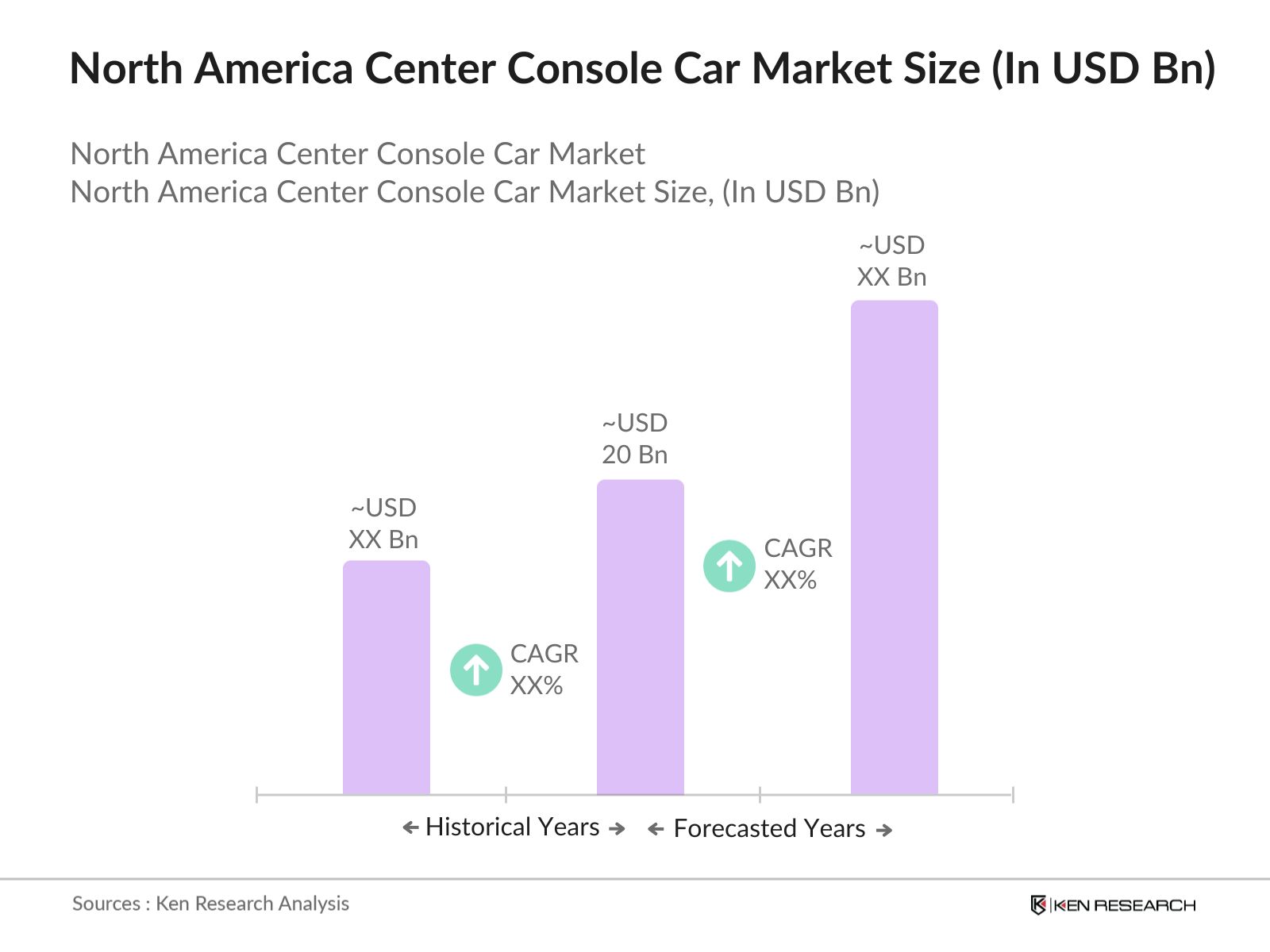
- The North America Center Console Car Market is valued at USD 20 billion, based on a five-year historical analysis. This valuation is largely driven by the increasing demand for customized and technologically advanced vehicle interiors. Consumer preferences for luxury and premium car features, such as advanced infotainment systems and ergonomic designs, have propelled the growth of the center console car market in this region.
- Cities like Detroit, Toronto, and Mexico City dominate the market due to their well-established automotive industries and proximity to key manufacturing facilities. Detroit, as the historic center of the U.S. automotive industry, provides a strong base for OEMs, while Toronto and Mexico City benefit from their roles in supply chain networks and growing demand for personal vehicles in the region. These cities lead in production and innovation, ensuring their dominance in the center console car market.
- The Federal Motor Vehicle Safety Standards (FMVSS) impose strict safety requirements for vehicle interior components, including center consoles. These regulations are aimed at ensuring that consoles are designed to minimize the risk of injury during accidents. In 2023, the FMVSS introduced new guidelines for electronic systems integrated into center consoles, requiring enhanced protection against electrical faults and malfunctions. These standards, enforced by the National Highway Traffic Safety Administration (NHTSA), have prompted automakers to prioritize safety features in console designs to comply with federal regulations.
North America Center Console Car Market Segmentation
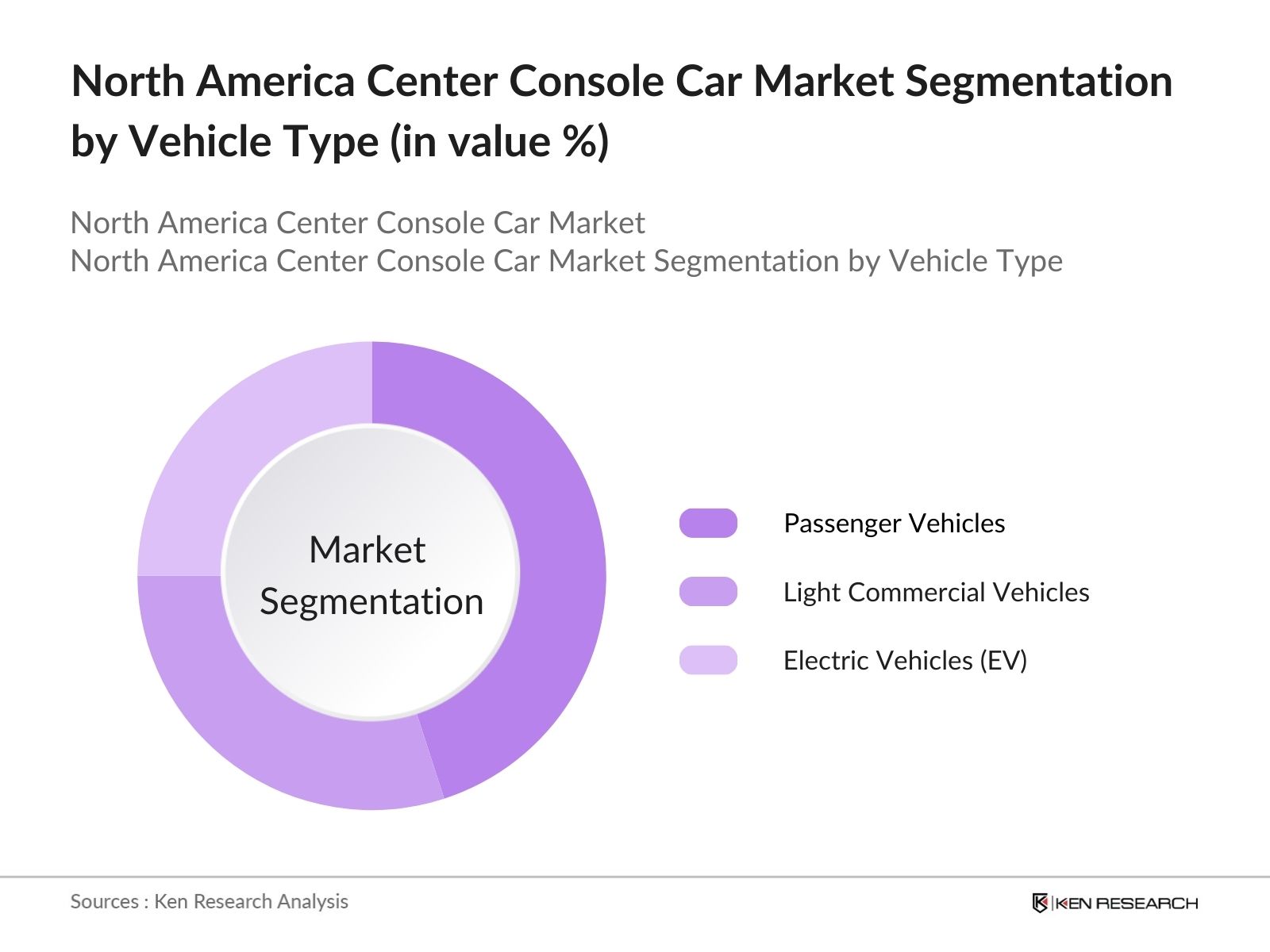
By Vehicle Type: The North America Center Console Car Market is segmented by vehicle type into passenger vehicles, light commercial vehicles, and electric vehicles (EV). Passenger vehicles have a dominant market share under this segmentation due to their widespread use in personal transportation and the preference for comfort and customization among consumers. Additionally, passenger cars account for a larger share of automotive production, further driving the demand for center consoles with integrated smart features like wireless charging and touch-based infotainment systems.
By Material: The market is further segmented by material type into plastics, leather, metal finishes, and carbon fiber. Plastics dominate this segment due to their cost-effectiveness and versatility in design. Most center consoles are made from high-quality plastics that offer durability while being lightweight. The use of plastics is also preferred because of the flexibility they offer in integrating various electronic components, making them suitable for both mass-market and premium vehicle models.

North America Center Console Car Market Competitive Landscape
The North America Center Console Car Market is highly competitive, with a mix of global OEMs and specialized interior component manufacturers leading the market. Major players include Adient, Faurecia, and Magna International, each holding a significant portion of the market due to their extensive manufacturing capabilities, strong partnerships with leading automakers, and their focus on innovation in vehicle interiors. The market consolidation emphasizes the importance of established supply chain networks and technological advancements in maintaining competitive advantages.
|
Company |
Establishment Year |
Headquarters |
Number of Employees |
R&D Investment |
Manufacturing Facilities |
OEM Partnerships |
Product Portfolio |
Sustainability Initiatives |
Revenue |
|
Adient |
2016 |
Plymouth, Michigan |
- |
- |
- |
- |
- |
- |
- |
|
Faurecia |
1997 |
Nanterre, France |
- |
- |
- |
- |
- |
- |
- |
|
Magna International Inc. |
1957 |
Aurora, Ontario |
- |
- |
- |
- |
- |
- |
- |
|
Grupo Antolin |
1950 |
Burgos, Spain |
- |
- |
- |
- |
- |
- |
- |
|
Yanfeng Automotive |
1936 |
Shanghai, China |
- |
- |
- |
- |
- |
- |
- |
North America Center Console Car Market Analysis
Growth Drivers
- Rise in Vehicle Customization: Vehicle customization is becoming increasingly popular in North America, particularly in the high-end segment. Consumers are seeking personalized features, including center consoles that cater to luxury preferences. This trend has seen significant growth in vehicle interior modifications, including the adoption of high-tech, sleek, and ergonomic center consoles. According to the U.S. Department of Commerce, over 16.5 million passenger cars were sold in 2023, many of which included customized interior features.
- Increasing Vehicle Sales: North America's increasing vehicle sales directly impact the demand for center console car components. In 2023, the U.S. witnessed a rebound in automotive production, with over 10 million light vehicles manufactured domestically. Consumers are leaning towards vehicles with advanced infotainment systems and smart features, which are integrated into center consoles. This demand is further fueled by a rise in consumer disposable income, leading to increased purchases of mid-range and luxury vehicles that feature premium center consoles.
- Technological Advancements: Technological advancements in automotive interiors, particularly the integration of Artificial Intelligence (AI) and smart features, are driving the development of innovative center consoles. Modern consoles now feature touchscreen controls, voice-activated systems, and smart storage options. In 2024, approximately 7.2 million vehicles in North America are expected to come equipped with AI-based infotainment systems, as indicated by the National Highway Traffic Safety Administration (NHTSA).
Challenges
- High Production Costs for Advanced Features: The production of advanced center consoles with integrated smart features and premium materials incurs high manufacturing costs. TheWorld Bank's Agriculture Raw Material Price Indexreported a4% lower average in 2023 compared to 2022, indicating a decline rather than an increase overall. This rise in material costs, combined with the complex manufacturing processes required for these advanced features, poses a challenge for manufacturers aiming to balance cost and consumer demand for high-quality center consoles.
- Regulatory Compliance Costs: Complying with North America's stringent automotive safety and environmental regulations significantly increases production costs for center console manufacturers. The Federal Motor Vehicle Safety Standards (FMVSS) set rigorous guidelines for vehicle interior components, including center consoles, to ensure safety. These regulatory costs are a challenge, particularly for smaller manufacturers who must comply without compromising product affordability.
North America Center Console Car Market Future Outlook
North America Center Console Car Market is expected to witness steady growth driven by the increasing demand for advanced vehicle interiors, rising sales of electric vehicles, and the trend towards vehicle customization. Moreover, technological advancements such as AI-driven infotainment systems, wireless charging pads, and biometric controls will continue to fuel innovation within this segment. As OEMs focus more on enhancing the user experience, the demand for personalized and high-tech center consoles will only grow further.
Future Market Opportunities
- Adoption of Sustainable Materials: With increasing consumer awareness and regulatory pressure, the automotive industry is shifting toward the use of sustainable materials in vehicle interiors. Center consoles made from recycled plastics and eco-friendly materials are gaining traction in North America. In 2023, over 3 million vehicles sold in the U.S. incorporated sustainable materials in their interiors, according to the Environmental Protection Agency (EPA). This adoption is not only meeting environmental regulations but also attracting eco-conscious consumers looking for greener automotive options.
- Growth in Electric Vehicle Segment: The growing adoption of electric vehicles (EVs) is creating new opportunities for center console manufacturers. EV-specific center consoles, designed to integrate seamlessly with the unique interior layouts of electric cars, are in high demand. In 2024, the U.S. is expected to see over 1.2 million EV sales, driven by government incentives and increasing consumer demand, according to the U.S. Department of Energy.
Scope of the Report
|
By Vehicle Type |
Passenger Vehicles Light Commercial Vehicles Electric Vehicles (EV) |
|
By Material |
Plastics Leather Metal Finishes Carbon Fiber |
|
By Component Type |
Storage Compartments Infotainment Control Systems Cup Holders Armrests |
|
By Sales Channel |
OEM (Original Equipment Manufacturers) Aftermarket |
|
By Region |
United States Canada Mexico |
Products
Key Target Audience
Automotive Manufacturers (OEMs)
Automotive Manufacturers
Automotive Software Developers
Insurance Companies
Investors and Venture Capitalist Firms
Government and Regulatory Bodies (U.S. Department of Transportation, National Highway Traffic Safety Administration)
Electric Vehicle Manufacturers
Automotive Design and Engineering Firms
Companies
Players Mentioned in the Report
Adient
Faurecia
Magna International Inc.
Grupo Antolin
Yanfeng Automotive Interiors
Johnson Controls International
Toyota Boshoku Corporation
Lear Corporation
Tachi-S Co., Ltd.
Gentherm
Table of Contents
North America Center Console Car Market Overview
1.1. Definition and Scope
1.2. Market Taxonomy
1.3. Key Market Growth Metrics (Passenger Car Production, Car Sales, Aftermarket Demand)
1.4. Market Segmentation Overview
North America Center Console Car Market Size (In USD Bn)
2.1. Historical Market Size (Driven by Vehicle Production and Aftermarket Installations)
2.2. Year-On-Year Growth Analysis (Passenger Vehicle vs. Light Commercial Vehicle)
2.3. Key Market Developments and Milestones (OEM Innovations, Product Design Upgrades)
North America Center Console Car Market Analysis
3.1. Growth Drivers
3.1.1. Rise in Vehicle Customization (Customization Trends, Luxury Preferences)
3.1.2. Increasing Vehicle Sales (OEM Production Growth, Consumer Preferences)
3.1.3. Technological Advancements (Integration of Smart Features, AI in Consoles)
3.1.4. Expanding Aftermarket Segment (Demand for Upgraded Features, Aftermarket Product Launches)
3.2. Market Challenges
3.2.1. High Production Costs for Advanced Features (Material Costs, Manufacturing Processes)
3.2.2. Competition from Low-Cost Alternatives (Global Market Competition, Price Sensitivity)
3.2.3. Regulatory Compliance Costs (Safety Standards, Emission Standards)
3.2.4. Dependency on Global Supply Chains (Supply Chain Disruptions, Material Shortages)
3.3. Opportunities
3.3.1. Adoption of Sustainable Materials (Environmental Regulations, Consumer Preferences)
3.3.2. Growth in Electric Vehicle Segment (EV-Specific Design and Features)
3.3.3. Expansion into Premium Segment (Luxury OEM Collaborations, High-End Design Features)
3.3.4. Rise in Demand for Integrated Infotainment Systems (Connectivity Features, Navigation Enhancements)
3.4. Trends
3.4.1. Integration of Wireless Charging Pads (Mobile Device Integration)
3.4.2. Use of Biometric Controls (Enhanced Security, Driver Identification)
3.4.3. Minimalist Designs and Space Optimization (Interior Design Trends)
3.4.4. Personalization Options for Consumers (OEM Customization Packages)
3.5. Government Regulations
3.5.1. Federal Motor Vehicle Safety Standards (FMVSS)
3.5.2. Environmental Protection Agency (EPA) Guidelines on Vehicle Interiors
3.5.3. Department of Transportation (DOT) Compliance for Vehicle Interiors
3.5.4. National Highway Traffic Safety Administration (NHTSA) Interior Safety Standards
3.6. SWOT Analysis (Market-Specific Considerations)
3.7. Stakeholder Ecosystem (OEMs, Aftermarket, Suppliers)
3.8. Porters Five Forces (Supplier Power, Buyer Power, Competitive Intensity)
3.9. Competitive Landscape (Key Players, Strategic Collaborations)
North America Center Console Car Market Segmentation
4.1. By Vehicle Type (In Value %)
4.1.1. Passenger Vehicles
4.1.2. Light Commercial Vehicles
4.1.3. Electric Vehicles (EV)
4.2. By Material (In Value %)
4.2.1. Plastics
4.2.2. Leather
4.2.3. Metal Finishes
4.2.4. Carbon Fiber
4.3. By Component Type (In Value %)
4.3.1. Storage Compartments
4.3.2. Infotainment Control Systems
4.3.3. Cup Holders
4.3.4. Armrests
4.4. By Sales Channel (In Value %)
4.4.1. OEM (Original Equipment Manufacturers)
4.4.2. Aftermarket
4.5. By Region (In Value %)
4.5.1. United States
4.5.2. Canada
4.5.3. Mexico
North America Center Console Car Market Competitive Analysis
5.1. Detailed Profiles of Major Companies
5.1.1. Adient
5.1.2. Faurecia
5.1.3. Magna International Inc.
5.1.4. Grupo Antolin
5.1.5. Yanfeng Automotive Interiors
5.1.6. Johnson Controls International
5.1.7. Toyota Boshoku Corporation
5.1.8. Lear Corporation
5.1.9. Tachi-S Co., Ltd.
5.1.10. Gentherm
5.2. Cross Comparison Parameters (Revenue, R&D Investments, Technology Adoption, Product Portfolio, Employee Count, Manufacturing Capabilities, Regional Presence, Market Penetration)
5.3. Market Share Analysis (OEMs, Aftermarket Players)
5.4. Strategic Initiatives (Product Innovations, Strategic Partnerships)
5.5. Mergers And Acquisitions (Impact on Competitive Landscape)
5.6. Investment Analysis (Key Investors, Recent Investments in Innovation)
5.7. Venture Capital Funding (Startup Ecosystem, Investment Trends)
5.8. Government Grants (Support for Sustainable Materials)
5.9. Private Equity Investments (Market Opportunities for Private Investors)
North America Center Console Car Market Regulatory Framework
6.1. Interior Safety Standards
6.2. Compliance Requirements for Console Design
6.3. Certification Processes for Vehicle Interiors
North America Center Console Car Future Market Size (In USD Bn)
7.1. Future Market Size Projections (Growth in EV Segment, Aftermarket Expansion)
7.2. Key Factors Driving Future Market Growth (Technology Adoption, Changing Consumer Preferences)
North America Center Console Car Future Market Segmentation
8.1. By Vehicle Type (In Value %)
8.2. By Material (In Value %)
8.3. By Component Type (In Value %)
8.4. By Sales Channel (In Value %)
8.5. By Region (In Value %)
North America Center Console Car Market Analysts Recommendations
9.1. TAM/SAM/SOM Analysis
9.2. Customer Cohort Analysis (Based on Vehicle Preferences, Segment Demand)
9.3. Marketing Initiatives (OEM Partnerships, Aftermarket Engagement)
9.4. White Space Opportunity Analysis (EV-Specific Console Features, Premium Segment Focus)
Research Methodology
Step 1: Identification of Key Variables
The research begins with mapping out the major stakeholders and key variables that influence the North America Center Console Car Market. This includes gathering data on automotive production, consumer preferences, and regulatory guidelines through a combination of proprietary databases and desk research.
Step 2: Market Analysis and Construction
In this step, historical data on market size, vehicle sales, and OEM trends is compiled. The data is then analyzed to determine the penetration of various segments, including vehicle type and materials used in center consoles, which are crucial in estimating the markets growth trajectory.
Step 3: Hypothesis Validation and Expert Consultation
Market hypotheses are generated based on the historical data, and these are validated through consultations with industry experts. These experts include professionals from OEMs and interior component manufacturers, offering insights into current market dynamics.
Step 4: Research Synthesis and Final Output
The final step consolidates all data collected through the bottom-up approach, ensuring the accuracy of market figures and segmentation. Engagement with OEMs and suppliers is key to cross-verifying data and ensuring a comprehensive report.
Frequently Asked Questions
01 How big is the North America Center Console Car Market?
The North America Center Console Car Market was valued at USD 20 billion in 2023, driven by increased demand for vehicle customization, especially in the premium and luxury car segments.
02 What are the challenges in the North America Center Console Car Market?
Challenges in North America Center Console Car Market include the rising costs of advanced materials like carbon fiber and leather, as well as the need for regulatory compliance regarding safety and environmental standards for interior components.
03 Who are the major players in the North America Center Console Car Market?
Major players in North America Center Console Car Market include Adient, Faurecia, Magna International Inc., Grupo Antolin, and Yanfeng Automotive Interiors, all of which lead due to their partnerships with top automotive manufacturers.
04 What are the growth drivers of the North America Center Console Car Market?
North America Center Console Car Market is driven by factors such as technological advancements in infotainment systems, the growing popularity of electric vehicles, and consumer demand for comfort and customization.
Why Buy From Us?

What makes us stand out is that our consultants follows Robust, Refine and Result (RRR) methodology. i.e. Robust for clear definitions, approaches and sanity checking, Refine for differentiating respondents facts and opinions and Result for presenting data with story

We have set a benchmark in the industry by offering our clients with syndicated and customized market research reports featuring coverage of entire market as well as meticulous research and analyst insights.

While we don't replace traditional research, we flip the method upside down. Our dual approach of Top Bottom & Bottom Top ensures quality deliverable by not just verifying company fundamentals but also looking at the sector and macroeconomic factors.

With one step in the future, our research team constantly tries to show you the bigger picture. We help with some of the tough questions you may encounter along the way: How is the industry positioned? Best marketing channel? KPI's of competitors? By aligning every element, we help maximize success.

Our report gives you instant access to the answers and sources that other companies might choose to hide. We elaborate each steps of research methodology we have used and showcase you the sample size to earn your trust.

If you need any support, we are here! We pride ourselves on universe strength, data quality, and quick, friendly, and professional service.