
North America Christmas Tree Market Outlook to 2030
Region:North America
Author(s):Yogita Sahu
Product Code:KROD6087
November 2024
80
About the Report
North America Christmas Tree Market Overview
- The North America Christmas tree market is valued at USD 1.35 billion, based on a five-year historical analysis. The market is primarily driven by the sustained popularity of Christmas celebrations, both in traditional and contemporary settings. Increasing consumer preference for artificial Christmas trees due to convenience and reusability has contributed significantly to market expansion.
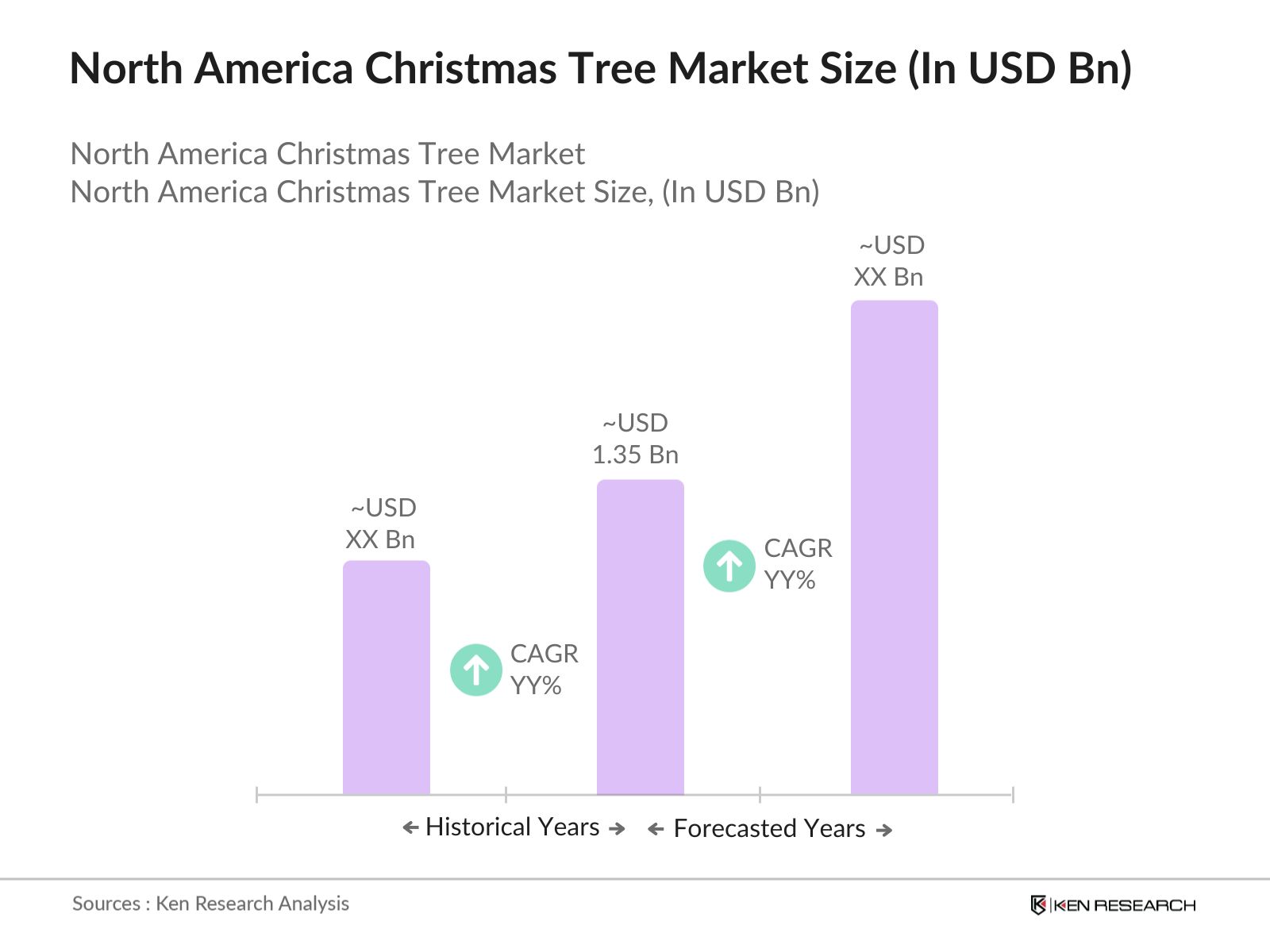
- The USA remains the dominant country in the market, owing to its large consumer base and deeply ingrained Christmas traditions. Major cities like New York and Los Angeles see sales due to the high population density and cultural affinity for elaborate Christmas decorations.
- Governments at state and local levels across the U.S. have introduced initiatives to encourage the recycling of real Christmas trees post-holiday season. In 2024, over 50% of U.S. counties participated in tree recycling programs, converting them into mulch or biofuel. These efforts align with sustainability goals, ensuring that real trees remain an environmentally friendly option.
North America Christmas Market Segmentation
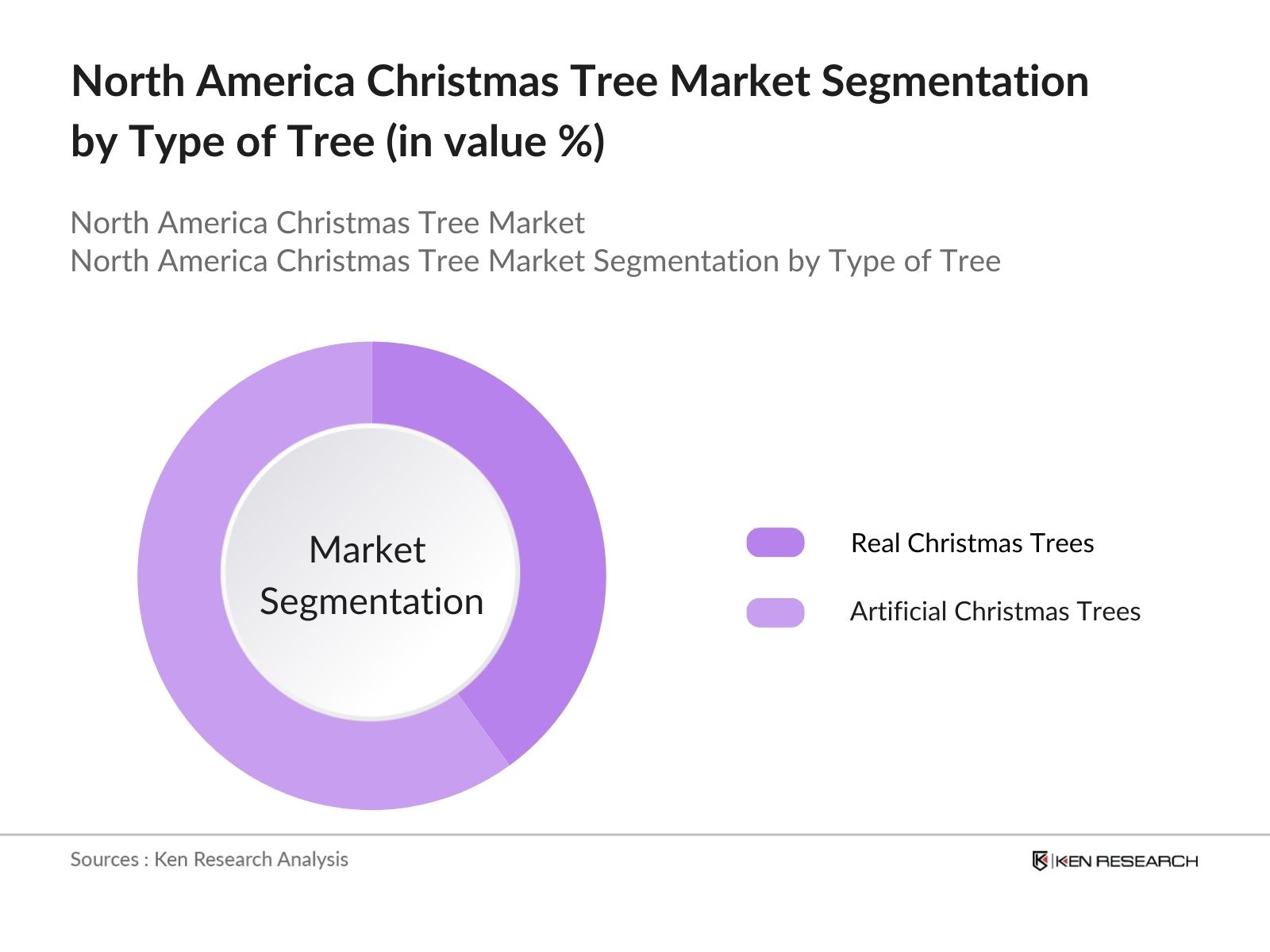
By Type of Tree: The market is segmented by tree type into real Christmas trees and artificial Christmas trees. Recently, artificial Christmas trees have taken a dominant market share under this segment. This is due to the convenience they offer, including durability and the ability to be reused year after year. Additionally, advancements in design and material quality make these trees increasingly realistic, appealing to a wider audience.
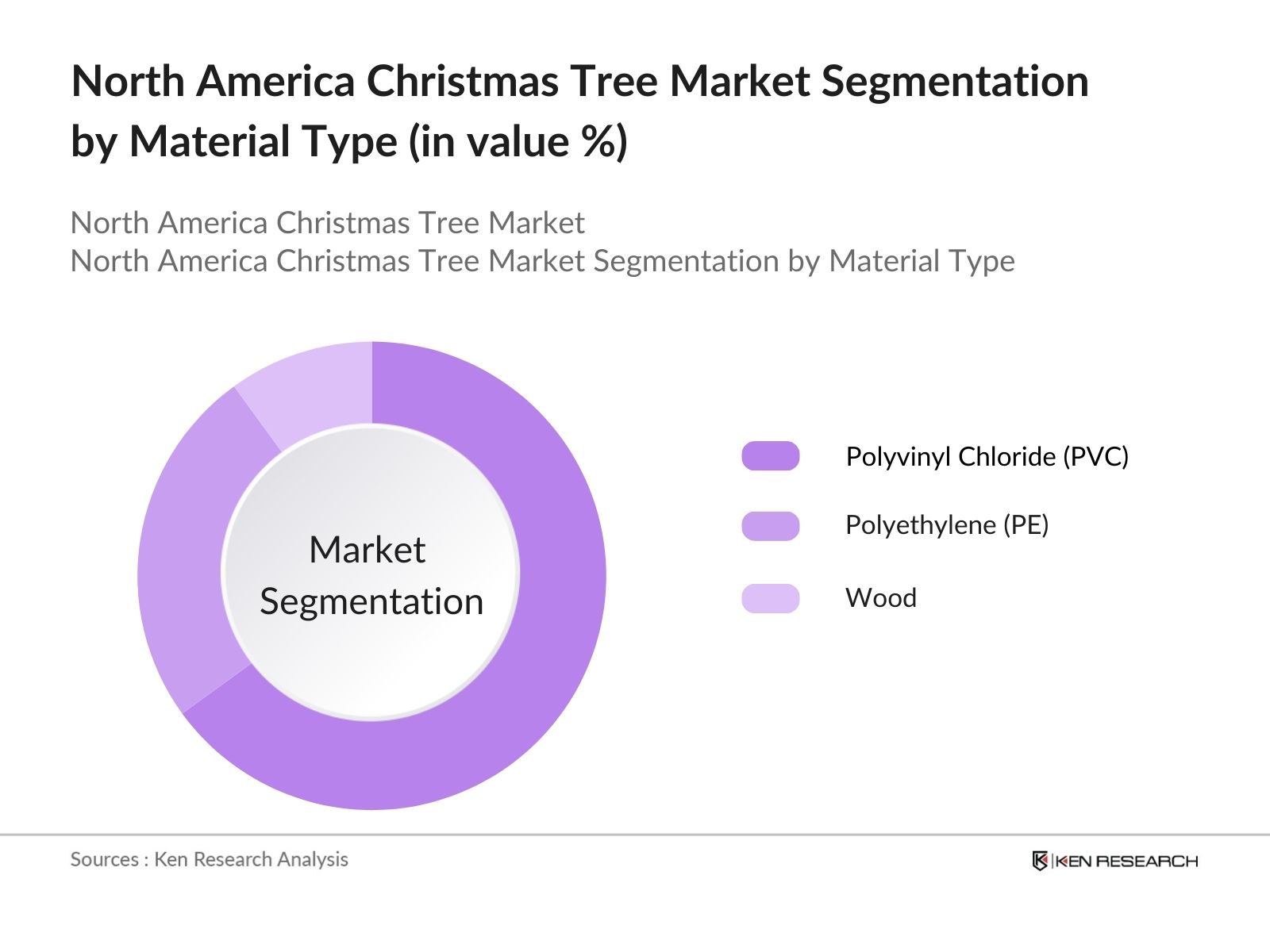
By Material Type: The market is also segmented by material type into polyvinyl chloride (PVC), polyethylene (PE), and wood. PVC dominates this segment due to its low cost and widespread availability. PVC trees are highly durable and lightweight, making them easy to handle and store. They have a broad appeal among consumers who prioritize affordability and practicality, especially for those looking for a cost-effective holiday solution.
North America Christmas Market Competitive Landscape
The market is dominated by several key players, both local and international. These companies have established a strong presence through innovative products and expansive distribution networks. Artificial tree manufacturers dominate a portion of the market, while real tree suppliers cater to niche segments that prioritize authenticity and environmental sustainability.
|
Company |
Year of Establishment |
Headquarters |
Revenue |
Number of Employees |
Product Portfolio |
Distribution Network |
Sustainability Initiatives |
Pricing Strategy |
Customer Base |
|
National Tree Company |
1990 |
New Jersey, USA |
|||||||
|
Balsam Hill |
2006 |
California, USA |
|||||||
|
Tree Classics |
1976 |
Illinois, USA |
|||||||
|
Puleo International |
1950 |
New Jersey, USA |
|||||||
|
Fraser Hill Farm |
1995 |
Michigan, USA |
North America Christmas Market Analysis
Market Growth Drivers
- Increase in Domestic Production of Christmas Trees: North America produces around 30 million real Christmas trees annually, which contributes significantly to meeting domestic demand. The United States is one of the largest producers, with states like Oregon and North Carolina leading the market in tree production. This availability of local supply is a key driver of growth, as it reduces import dependency and supports local farmers.
- Consumer Preference for Real Trees: In 2024, real Christmas trees remain the preference for many families, with over 20 million households in North America purchasing real trees annually. This preference is driven by sustainability factors, as real trees are biodegradable and recyclable, aligning with increasing consumer awareness of environmental impact. The National Christmas Tree Association reported that the preference for real trees has shown steady growth, supported by environmental consciousness and the sensory experience they provide, boosting sales within the market.
- Increase in Holiday Spending: The 2024 holiday season saw record-breaking consumer spending across North America, with total holiday sales exceeding $1 trillion in the United States. A portion of this spending was allocated to holiday decorations, including Christmas trees. This trend of high consumer expenditure during the festive period has directly driven the demand for both real and artificial trees. Strong economic indicators, such as increased employment rates and stable wages in 2024, have also fueled this spending surge.
Market Challenges
- Impact of Climate Change on Tree Production: Extreme weather conditions, particularly wildfires and droughts, have affected Christmas tree farms in regions like Oregon and California. In 2024, more than 500,000 trees were damaged or lost due to climate-induced disasters, reducing the overall supply. This scarcity increases prices and complicates supply chains, making it difficult to meet demand during peak seasons.
- Increased Competition from Artificial Trees: Artificial trees, particularly those made from PVC and imported from countries like China, have continued to dominate a portion of the market. In 2024, the North American market sold over 30 million artificial trees. Their durability and convenience, along with competitive pricing, present a challenge for real tree growers in maintaining market share.
North America Christmas Market Future Outlook
Over the next five years, the North America Christmas tree industry is expected to witness steady growth, driven by the rising preference for artificial trees, increasing environmental awareness, and consumer trends toward sustainable holiday practices. Companies focusing on eco-friendly production and recycling initiatives are likely to gain a competitive edge.
Future Market Opportunities
- Increasing Shift Towards Sustainable and Eco-Friendly Options: Over the next five years, the market will likely see a growing shift toward sustainable and biodegradable tree options, as consumer awareness of environmental impacts increases. Government-backed sustainability campaigns are expected to drive this trend, with an estimated 10 million trees being recycled annually by 2029.
- Adoption of Smart Farming Technologies: The adoption of advanced farming technologies, such as precision irrigation systems and climate monitoring tools, is projected to rise in the Christmas tree farming sector. By 2029, the integration of these technologies could lead to an increase in farm productivity, ensuring a stable supply of high-quality trees despite climate challenges.
Scope of the Report
|
By Type of Tree |
Real Christmas Trees Artificial Christmas Trees |
|
By Material Type |
Polyvinyl Chloride (PVC) Polyethylene (PE) Wood |
|
By Tree Size |
Below 6 feet 6-9 feet Above 9 feet |
|
By Distribution Channel |
Online Stores Specialty Stores Supermarkets & Hypermarkets Others |
|
By Region |
USA Canada Mexico |
Products
Key Target Audience Organizations and Entities Who Can Benefit by Subscribing This Report:
Investors and Venture Capitalist Firms
Government and Regulatory Bodies (e.g., U.S. Environmental Protection Agency)
Banks and Financial Institution
Christmas Tree Manufacturers
Logistics and Supply Chain Management Companies
Private Equity Firms
Companies
Players Mentioned in the Report:
National Tree Company
Balsam Hill
Vickerman Company
Tree Classics
Fraser Hill Farm
Treetopia
Puleo International
Artificial Plants and Trees
Hayneedle Inc.
General Foam Plastics
King of Christmas
Santas Own
Holiday Bright Lights
Christmas Tree World
Oncor Recycled Trees
Table of Contents
North America Christmas Tree Market Overview
1.1. Definition and Scope
1.2. Market Taxonomy
1.3. Market Growth Rate
1.4. Market Segmentation Overview
North America Christmas Tree Market Size (In USD Bn)
2.1. Historical Market Size
2.2. Year-On-Year Growth Analysis
2.3. Key Market Developments and Milestones
North America Christmas Tree Market Analysis
3.1. Growth Drivers
3.1.1. Rising demand for sustainable and eco-friendly trees
3.1.2. Increasing online sales of Christmas decorations
3.1.3. Popularity of artificial trees due to convenience
3.1.4. Heightened consumer spending on holiday festivities
3.2. Market Challenges
3.2.1. Environmental concerns regarding plastic use in artificial trees
3.2.2. Supply chain disruptions affecting real tree availability
3.2.3. Rising costs of production and transportation
3.2.4. Regulatory pressure on deforestation
3.3. Opportunities
3.3.1. Growth in tree recycling programs and initiatives
3.3.2. Expansion of markets in untapped rural regions
3.3.3. Technological advancements in tree preservation
3.3.4. Potential for subscription models for tree delivery and setup
3.4. Trends
3.4.1. Adoption of artificial trees with smart lighting systems
3.4.2. Customization options for personalized tree designs
3.4.3. Use of augmented reality (AR) for tree selection
3.4.4. Increasing collaborations with local farmers for organic tree sourcing
3.5. Government Regulation
3.5.1. Forestry management policies for sustainable tree farming
3.5.2. Import/export tariffs on artificial trees
3.5.3. Environmental certifications for real and artificial trees
3.5.4. Waste management regulations for post-holiday tree disposal
3.6. SWOT Analysis
3.7. Stakeholder Ecosystem
3.8. Porters Five Forces Analysis
3.9. Competition Ecosystem
North America Christmas Tree Market Segmentation
4.1. By Type of Tree (In Value %)
4.1.1. Real Christmas Trees
4.1.2. Artificial Christmas Trees
4.2. By Material Type (In Value %)
4.2.1. Polyvinyl Chloride (PVC)
4.2.2. Polyethylene (PE)
4.2.3. Wood
4.3. By Tree Size (In Value %)
4.3.1. Below 6 feet
4.3.2. 6-9 feet
4.3.3. Above 9 feet
4.4. By Distribution Channel (In Value %)
4.4.1. Online Stores
4.4.2. Specialty Stores
4.4.3. Supermarkets & Hypermarkets
4.4.4. Others
4.5. By Region (In Value %)
4.5.1. USA
4.5.2. Canada
4.5.3. Mexico
North America Christmas Tree Market Competitive Analysis
5.1. Detailed Profiles of Major Companies
5.1.1. National Tree Company
5.1.2. Balsam Hill
5.1.3. Vickerman Company
5.1.4. Tree Classics
5.1.5. Fraser Hill Farm
5.1.6. Treetopia
5.1.7. Puleo International
5.1.8. Artificial Plants and Trees
5.1.9. Hayneedle Inc.
5.1.10. General Foam Plastics
5.1.11. King of Christmas
5.1.12. Santas Own
5.1.13. Holiday Bright Lights
5.1.14. Christmas Tree World
5.1.15. Oncor Recycled Trees
5.2. Cross Comparison Parameters (Headquarters, Year of Inception, Revenue, Product Portfolio, Sustainability Initiatives, Distribution Network, Market Share, Pricing Strategy)
5.3. Market Share Analysis
5.4. Strategic Initiatives
5.5. Mergers and Acquisitions
5.6. Investment Analysis
5.7. Venture Capital Funding
5.8. Government Grants
5.9. Private Equity Investments
North America Christmas Tree Market Regulatory Framework
6.1. Environmental Standards for Artificial Trees
6.2. Forestry Regulations for Real Trees
6.3. Compliance Requirements for Christmas Tree Imports
6.4. Certifications for Sustainable Production and Disposal
North America Christmas Tree Future Market Size (In USD Bn)
7.1. Future Market Size Projections
7.2. Key Factors Driving Future Market Growth
North America Christmas Tree Future Market Segmentation
8.1. By Type of Tree (In Value %)
8.2. By Material Type (In Value %)
8.3. By Tree Size (In Value %)
8.4. By Distribution Channel (In Value %)
8.5. By Region (In Value %)
North America Christmas Tree Market Analysts' Recommendations
9.1. TAM/SAM/SOM Analysis
9.2. Customer Cohort Analysis
9.3. Marketing Initiatives
9.4. White Space Opportunity Analysis
Research Methodology
Step 1: Identification of Key Variables
The first phase involved constructing an ecosystem map of the North America Christmas tree market. Extensive desk research, including industry reports and proprietary databases, was utilized to gather critical information, helping to identify major market influencers such as distribution channels, raw material suppliers, and consumer purchasing behavior.
Step 2: Market Analysis and Construction
In this step, historical market data was analyzed to understand market trends, consumer preferences, and sales volumes. The analysis was further refined by assessing the sales penetration of both real and artificial trees and evaluating the market demand across different regions in North America.
Step 3: Hypothesis Validation and Expert Consultation
Market hypotheses were validated through in-depth consultations with industry experts, including Christmas tree manufacturers and retail managers. These consultations provided valuable insights into production challenges, consumer trends, and market dynamics, aiding in fine-tuning the overall market analysis.
Step 4: Research Synthesis and Final Output
In the final stage, extensive interactions with manufacturers and retailers allowed for the synthesis of market data into actionable insights. This step ensured that the final output, including market projections and future trends, was accurate and aligned with industry realities.
Frequently Asked Questions
01. How big is the North America Christmas Tree Market?
The North America Christmas tree market is valued at USD 1.35 billion, driven by growing demand for artificial trees and increasing online sales of holiday decorations.
02. What are the challenges in the North America Christmas Tree Market?
The North America Christmas tree market faces challenges such as environmental concerns regarding the disposal of artificial trees, supply chain disruptions affecting real tree availability, and rising costs of production due to inflation.
03. Who are the major players in the North America Christmas Tree Market?
Key players in the North America Christmas tree market include National Tree Company, Balsam Hill, Tree Classics, Vickerman Company, and Puleo International. These companies dominate through their innovative product offerings, extensive distribution networks, and sustainable practices.
04. What are the growth drivers of the North America Christmas Tree Market?
Growth drivers in the North America Christmas tree market include the increasing consumer preference for artificial trees due to their convenience and durability, the rise of e-commerce platforms facilitating easier tree purchases, and the growing focus on eco-friendly holiday decorations.
05. What is the future outlook for the North America Christmas Tree Market?
Over the next five years, the North America Christmas tree market is expected to grow steadily, driven by technological advancements in tree design, an increasing focus on sustainability, and expansion into rural regions with untapped demand.
Why Buy From Us?

What makes us stand out is that our consultants follows Robust, Refine and Result (RRR) methodology. i.e. Robust for clear definitions, approaches and sanity checking, Refine for differentiating respondents facts and opinions and Result for presenting data with story

We have set a benchmark in the industry by offering our clients with syndicated and customized market research reports featuring coverage of entire market as well as meticulous research and analyst insights.

While we don't replace traditional research, we flip the method upside down. Our dual approach of Top Bottom & Bottom Top ensures quality deliverable by not just verifying company fundamentals but also looking at the sector and macroeconomic factors.

With one step in the future, our research team constantly tries to show you the bigger picture. We help with some of the tough questions you may encounter along the way: How is the industry positioned? Best marketing channel? KPI's of competitors? By aligning every element, we help maximize success.

Our report gives you instant access to the answers and sources that other companies might choose to hide. We elaborate each steps of research methodology we have used and showcase you the sample size to earn your trust.

If you need any support, we are here! We pride ourselves on universe strength, data quality, and quick, friendly, and professional service.