
North America Container Homes Market Outlook to 2030
Region:Global
Author(s):Meenakshi
Product Code:KROD4205
November 2024
91
About the Report
North America Container Homes Market Overview
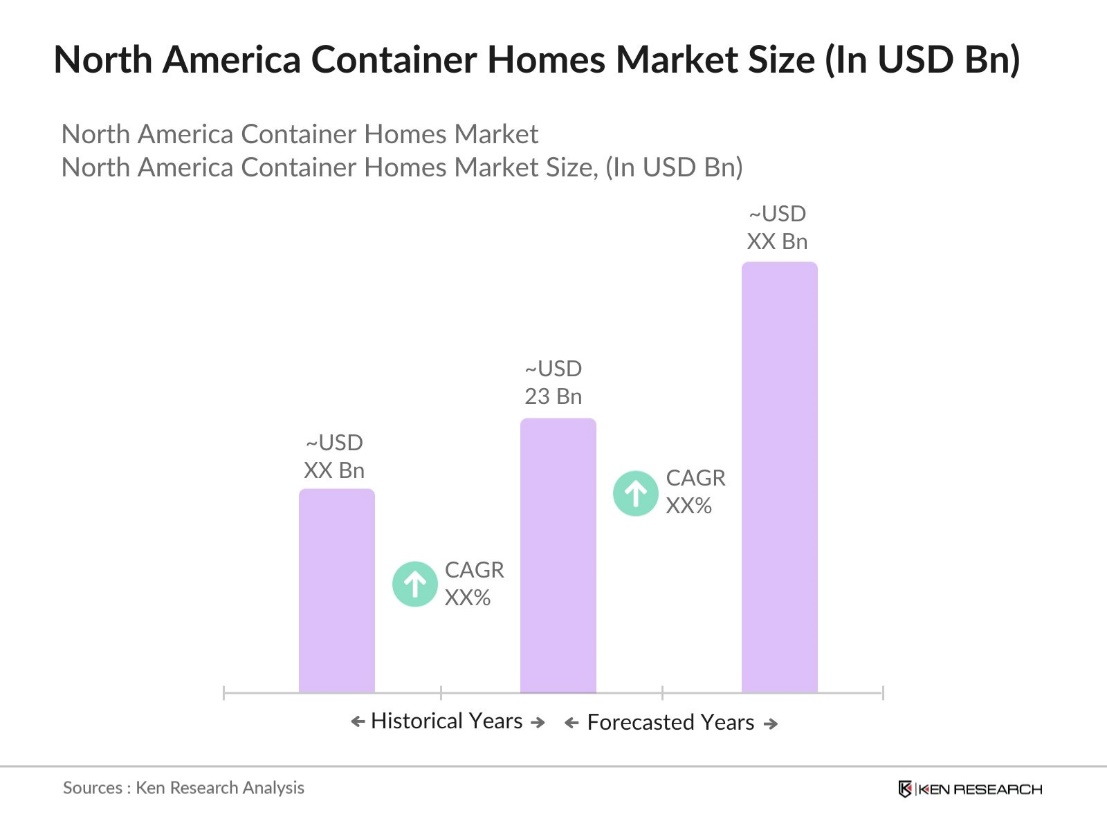
- The North America Container Homes Market is valued at USD 23 billion, based on a five-year historical analysis. This valuation reflects the growing demand for sustainable, affordable housing solutions driven by rising real estate costs and urbanization trends across major cities. Container homes have gained popularity due to their lower construction costs, faster build times, and adaptability to various climates.
- In North America, cities like Los Angeles, Portland, and Austin dominate the container homes market due to their progressive urban planning policies, which support innovative housing solutions. These cities have adopted container homes as part of their broader initiatives to address housing shortages and promote sustainable living. Additionally, Canada's Vancouver leads the container home movement due to its stringent environmental laws and demand for green housing solutions.
- Incentives for sustainable construction are driving the growth of the container home market in North America. The DOE has established various programs under the Inflation Reduction Act, which allocates approximately $8.8 billion for home energy efficiency projects, encouraging the adoption of container homes. These financial incentives make container homes a more attractive option for environmentally conscious consumers, particularly in regions like California, which offers additional state-level tax breaks for sustainable housing developments.
North America Container Homes Market Segmentation
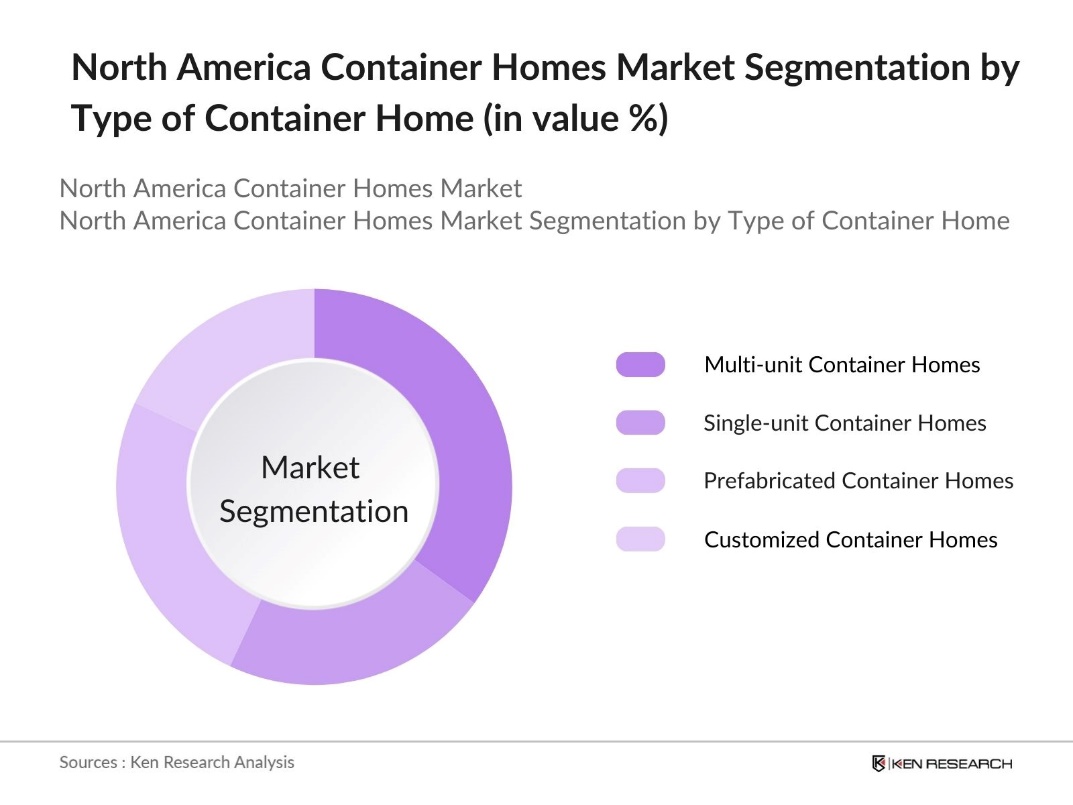
By Type of Container Home: The North America container homes market is segmented by type of container home into single-unit container homes, multi-unit container homes, customized container homes, and prefabricated container homes. Recently, multi-unit container homes have a dominant market share in North America. This is primarily due to their scalability and adaptability for both residential and commercial use. Multi-unit container homes provide flexible living or working spaces, making them suitable for apartment complexes, co-working spaces, and mixed-use developments.
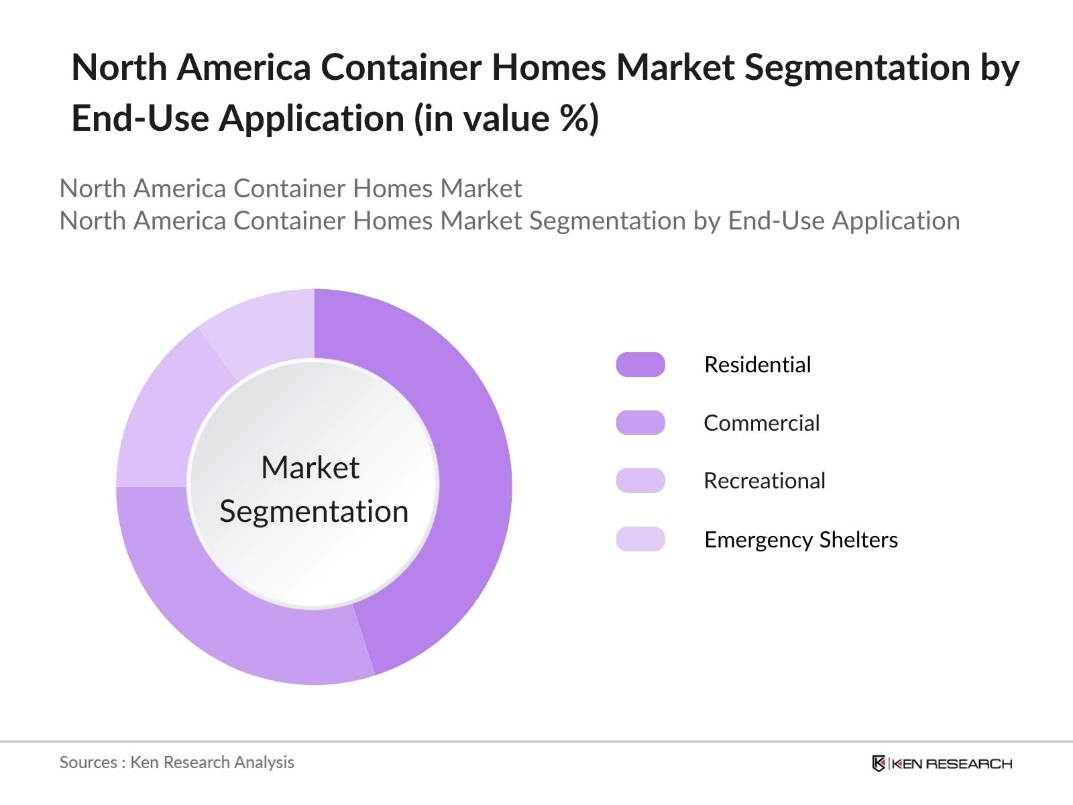
By End-Use Application: The North America container homes market is segmented by end-use application into residential, commercial, recreational (vacation homes, resorts), and emergency shelters. Residential applications currently dominate the market share due to the growing demand for affordable housing solutions. As housing prices rise in metropolitan areas, more individuals are turning to container homes as a cost-effective alternative. Container homes offer customization, quick construction timelines, and eco-friendliness, making them particularly appealing to younger, environmentally conscious buyers.
North America Container Homes Market Competitive Landscape
The market is dominated by a mix of local and international players, many of whom have established a strong presence through innovation in design and strategic partnerships. Major players like SG Blocks and Honomobo have set industry standards with their extensive portfolios of prefabricated and customized container homes. Additionally, companies like Giant Containers are recognized for their ability to cater to both residential and commercial demands, offering flexibility in design and installation.
|
Company Name |
Established |
Headquarters |
Market Reach |
Product Range |
Sustainability Certifications |
Revenue |
Key Clients |
Regional Focus |
Employee Strength |
|
SG Blocks, Inc. |
2007 |
Brooklyn, USA |
|||||||
|
Honomobo |
2016 |
Alberta, Canada |
|||||||
|
Giant Containers |
2010 |
Toronto, Canada |
|||||||
|
Montainer Homes |
2015 |
Missoula, USA |
|||||||
|
Rhino Cubed |
2013 |
Colorado, USA |
North America Container Homes Industry Analysis
Growth Drivers
- Urbanization and Rising Land Costs: Urbanization in North America is accelerating, the U.S. population living in urban areas, according to the World Bank. This shift has led to escalating land costs, particularly in metropolitan regions. For instance, In Los Angeles, the average home value has increased by only 3.6% over the past year, with current values around $941,784 as of August 2024, making affordable housing options like container homes a viable alternative.
- Demand for Sustainable and Affordable Housing Solutions: Container homes are gaining traction due to rising demand for sustainable housing in North America. For instance, recycling a single 40-foot shipping container can save approximately 3,500 kilograms of steel from being melted down. This affordability crisis has driven alternative housing solutions such as container homes, which offer the reduction in material usage compared to traditional homes.
- Faster Construction Time (Relevant to Container Home Technology): Container homes offer significantly faster construction times compared to traditional homes due to their prefabricated structure. While conventional homes require several months to build, container homes can be completed in just a fraction of that time. This speed in construction not only lowers labor costs but also addresses the growing need for rapid housing solutions, especially in areas facing housing shortages.
Market Challenges
- Limited Awareness and Adoption Rates: Despite the benefits of container homes, general awareness of this housing option remains limited. Many people are still unfamiliar with container homes as a viable alternative to traditional housing, which has slowed their adoption. Although efforts are being made to promote container homes, the adoption rates remain low, particularly in rural and suburban areas where conventional homebuilding methods dominate. Increasing awareness through educational initiatives and showcasing successful container home projects is crucial for driving greater acceptance and growth in this market.
- Regulatory Barriers (Building Codes and Zoning Regulations): Building codes and zoning regulations present significant challenges for the container home market. In many regions, existing regulations are not designed to accommodate alternative construction methods like container homes. These barriers can make it difficult to obtain necessary approvals for container home construction, particularly in states and municipalities with more stringent zoning laws. To promote broader adoption of container homes, updates to building codes and zoning regulations are needed, allowing for greater flexibility in the use of non-traditional housing solutions.
North America Container Homes Market Future Outlook
Over the next five years, the North America Container Homes market is expected to experience significant growth driven by increased awareness of sustainable living, government incentives promoting green building, and rising real estate prices in urban centers. The demand for alternative housing solutions, particularly in cities experiencing housing shortages, is expected to grow. Additionally, technological advancements in container home customization and integration with smart home systems will likely drive market expansion.
Market Opportunities
- Expansion into Low-income Housing Projects: Container homes offer a promising solution for addressing the increasing demand for low-income housing in North America. With their lower construction costs compared to traditional housing, container homes are an ideal choice for affordable housing projects. Several cities have begun exploring the use of container home communities to address homelessness and housing shortages, demonstrating the potential of this innovative approach.
- Technological Advancements (Smart Home Integration): Technological advancements, particularly in smart home integration, provide exciting growth opportunities for container homes. Features like automated lighting, climate control, and other smart technologies can be easily incorporated into container homes, making them highly appealing to tech-savvy buyers. As consumer demand for sustainable, energy-efficient, and technology-enhanced living solutions grows, container homes can capitalize on this trend.
Scope of the Report
|
By Type of Container Home |
Single-unit Container Homes Multi-unit Container Homes Customized Container Homes Prefabricated Container Homes |
|
By End-Use Application |
Residential Commercial Recreational Emergency Shelters |
|
By Construction Method |
Prefabricated Construction On-site Construction Modular Construction |
|
By Size of Container |
20-foot Containers 40-foot Containers Custom Sizes |
|
By Region |
United States Canada Mexico |
Products
Key Target Audience
Residential and Commercial Construction Companies
Architects and Design Firms
Modular Home Construction Companies
Government and Regulatory Bodies (U.S. Department of Housing and Urban Development, Canada Mortgage and Housing Corporation)
Banks and Financial Institutions
Investors and Venture Capitalist Firms
Companies
Major Players
SG Blocks, Inc.
Honomobo
Giant Containers
Montainer Homes
Rhino Cubed
Custom Container Living
Alternative Living Spaces
Backcountry Containers
BMarko Structures
MODS International
Falcon Structures
Conexwest
G-Pod Americas
Kubed Living
Alternative Spaces
Table of Contents
1. North America Container Homes Market Overview
1.1. Definition and Scope
1.2. Market Taxonomy
1.3. Market Growth Rate
1.4. Market Segmentation Overview
2. North America Container Homes Market Size (In USD Mn)
2.1. Historical Market Size
2.2. Year-On-Year Growth Analysis
2.3. Key Market Developments and Milestones
3. North America Container Homes Market Analysis
3.1. Growth Drivers
3.1.1. Demand for Sustainable and Affordable Housing Solutions
3.1.2. Urbanization and Rising Land Costs
3.1.3. Government Incentives for Eco-friendly Construction
3.1.4. Faster Construction Time (Relevant to Container Home Technology)
3.2. Market Challenges
3.2.1. Limited Awareness and Adoption Rates
3.2.2. Regulatory Barriers (Building Codes and Zoning Regulations)
3.2.3. Structural Limitations (In comparison to traditional homes)
3.2.4. Financing Challenges (Due to non-traditional construction methods)
3.3. Opportunities
3.3.1. Expansion into Low-income Housing Projects
3.3.2. Technological Advancements (Smart Home Integration)
3.3.3. Potential for Modular Construction Integration
3.3.4. Growing Demand for Off-grid Living
3.4. Trends
3.4.1. Increasing Popularity in Remote and Off-the-Grid Locations
3.4.2. Customization of Shipping Containers for Luxury Homes
3.4.3. Rise in Eco-friendly and Energy-efficient Designs
3.4.4. Use of Recycled Materials for Construction
3.5. Government Regulations
3.5.1. Green Building Certifications (LEED, BREEAM)
3.5.2. Local and Federal Zoning Codes for Container Homes
3.5.3. Environmental Impact Regulations
3.5.4. Incentives for Sustainable Construction
3.6. SWOT Analysis
3.7. Stakeholder Ecosystem
3.8. Porters Five Forces Analysis
3.9. Competition Ecosystem
4. North America Container Homes Market Segmentation
4.1. By Type of Container Home (In Value %)
4.1.1. Single-unit Container Homes
4.1.2. Multi-unit Container Homes
4.1.3. Customized Container Homes
4.1.4. Prefabricated Container Homes
4.2. By End-Use Application (In Value %)
4.2.1. Residential
4.2.2. Commercial
4.2.3. Recreational (Vacation Homes, Resorts)
4.2.4. Emergency Shelters
4.3. By Construction Method (In Value %)
4.3.1. Prefabricated Construction
4.3.2. On-site Construction
4.3.3. Modular Construction
4.4. By Size of Container (In Value %)
4.4.1. 20-foot Containers
4.4.2. 40-foot Containers
4.4.3. Other Custom Sizes
4.5. By Region (In Value %)
4.5.1. United States
4.5.2. Canada
4.5.3. Mexico
5. North America Container Homes Market Competitive Analysis
5.1 Detailed Profiles of Major Companies
5.1.1. SG Blocks, Inc.
5.1.2. Giant Containers
5.1.3. Container Homes USA
5.1.4. Honomobo
5.1.5. Montainer Homes
5.1.6. Custom Container Living
5.1.7. BMarko Structures
5.1.8. Alternative Living Spaces
5.1.9. Backcountry Containers
5.1.10. Kubed Living
5.1.11. Rhino Cubed
5.1.12. Falcon Structures
5.1.13. Conexwest
5.1.14. MODS International
5.1.15. G-Pod Americas
5.2 Cross Comparison Parameters (No. of Employees, Headquarters, Year Established, Revenue, Regional Presence, Product Range, Certifications, Client Base)
5.3. Market Share Analysis
5.4. Strategic Initiatives (Partnerships, Collaborations, Expansions)
5.5. Mergers and Acquisitions
5.6. Investment Analysis (Private Investments, Venture Capital)
5.7. Government Grants and Funding Support
6. North America Container Homes Market Regulatory Framework
6.1. Building Code Compliance (Federal and State Level)
6.2. Green Construction Regulations
6.3. Licensing Requirements
6.4. Safety and Structural Standards
7. North America Container Homes Future Market Size (In USD Mn)
7.1. Market Size Projections
7.2. Key Factors Driving Future Market Growth
8. North America Container Homes Future Market Segmentation
8.1. By Type of Container Home (In Value %)
8.2. By End-Use Application (In Value %)
8.3. By Construction Method (In Value %)
8.4. By Size of Container (In Value %)
8.5. By Region (In Value %)
9. North America Container Homes Market Analysts Recommendations
9.1. TAM/SAM/SOM Analysis
9.2. Marketing Strategy Recommendations
9.3. Customer Cohort Analysis
9.4. White Space Opportunity Analysis
Research Methodology
Step 1: Identification of Key Variables
The initial phase involves constructing an ecosystem map that includes all major stakeholders within the North America Container Homes Market. This step is supported by desk research utilizing a combination of secondary and proprietary databases to gather comprehensive industry-level information. The primary objective is to identify and define critical variables influencing market dynamics, such as environmental regulations and consumer demand for sustainable housing.
Step 2: Market Analysis and Construction
In this phase, we compile and analyze historical data for the North America Container Homes Market, including market penetration and revenue generation. A thorough evaluation of container home developments and their impact on the housing market is conducted. This assessment also includes a comparison of housing alternatives and the cost-effectiveness of container homes.
Step 3: Hypothesis Validation and Expert Consultation
Market hypotheses will be validated through consultations with industry experts, utilizing computer-assisted telephone interviews (CATI). Insights from key industry professionals will help refine the market estimates and projections for container home adoption, particularly in residential and commercial sectors.
Step 4: Research Synthesis and Final Output
The final phase involves synthesizing research data, including direct engagement with container home manufacturers. This step ensures a comprehensive understanding of market trends, consumer preferences, and sales performance. The data collected will provide a validated analysis of the North America Container Homes Market.
Frequently Asked Questions
01 How big is the North America Container Homes Market?
The North America Container Homes Market is valued at USD 23 billion, driven by the rising demand for sustainable, affordable housing and faster construction times.
02 What are the challenges in the North America Container Homes Market?
Challenges in North America Container Homes Market include regulatory barriers, limited awareness, and financing difficulties due to non-traditional construction methods. The structural limitations of container homes compared to conventional homes also pose challenges.
03 Who are the major players in the North America Container Homes Market?
Key players in North America Container Homes Market include SG Blocks, Inc., Honomobo, Giant Containers, Rhino Cubed, and Montainer Homes. These companies dominate the market through innovation, sustainability, and strategic partnerships.
04 What are the growth drivers of the North America Container Homes Market?
Growth is driven in North America Container Homes Market by increasing urbanization, rising real estate costs, and government incentives promoting eco-friendly housing solutions. The growing consumer preference for sustainable living also contributes to market expansion.
Why Buy From Us?

What makes us stand out is that our consultants follows Robust, Refine and Result (RRR) methodology. i.e. Robust for clear definitions, approaches and sanity checking, Refine for differentiating respondents facts and opinions and Result for presenting data with story

We have set a benchmark in the industry by offering our clients with syndicated and customized market research reports featuring coverage of entire market as well as meticulous research and analyst insights.

While we don't replace traditional research, we flip the method upside down. Our dual approach of Top Bottom & Bottom Top ensures quality deliverable by not just verifying company fundamentals but also looking at the sector and macroeconomic factors.

With one step in the future, our research team constantly tries to show you the bigger picture. We help with some of the tough questions you may encounter along the way: How is the industry positioned? Best marketing channel? KPI's of competitors? By aligning every element, we help maximize success.

Our report gives you instant access to the answers and sources that other companies might choose to hide. We elaborate each steps of research methodology we have used and showcase you the sample size to earn your trust.

If you need any support, we are here! We pride ourselves on universe strength, data quality, and quick, friendly, and professional service.