















North America Container Transshipment Market Outlook to 2030
Region:North America
Author(s):Shubham Kashyap
Product Code:KROD5558
November 2024
80
About the Report
North America Container Transshipment Market Overview
- The North America Container Transshipment market is valued at USD 2.1 billion, driven by increasing international trade volumes and the expansion of major transshipment hubs. The market growth is supported by advancements in port infrastructure, the adoption of automated handling systems, and robust supply chain logistics that enhance efficiency and reduce turnaround times.
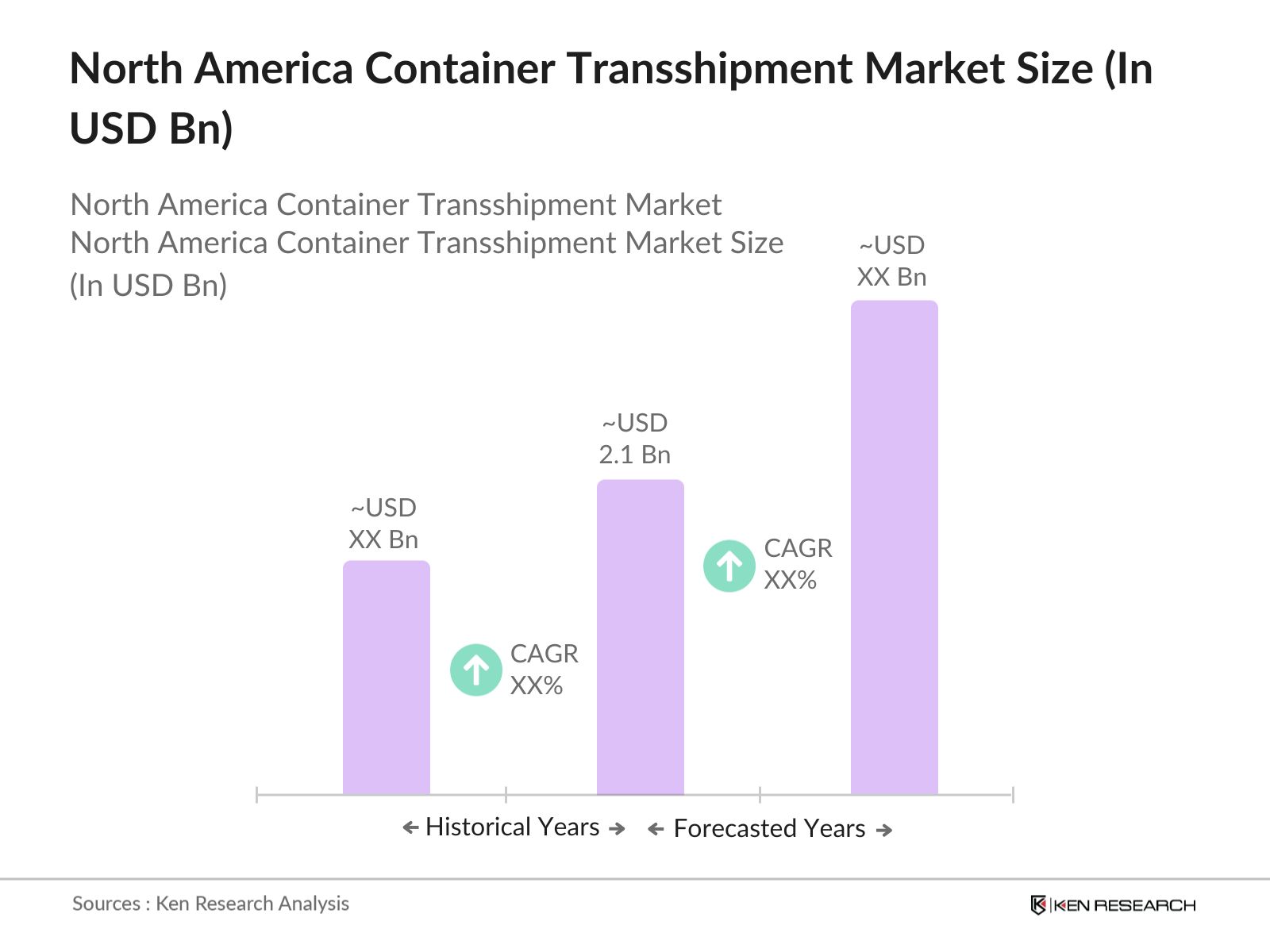
- Major demand centers for container transshipment in North America include Los Angeles, Long Beach, and New YorkNew Jersey. Los Angeles and Long Beach collectively handle more than half of the regions container traffic due to their strategic locations and capacity to manage large vessel sizes. The New YorkNew Jersey port remains pivotal because of its extensive connectivity to inland transportation networks and its role as a major entry point for goods entering the United States.
- The United States enforces the Jones Act, mandating that goods transported between U.S. ports be carried on ships built, owned, and operated by U.S. citizens or permanent residents. This policy aims to protect the domestic shipping industry but can limit the availability of vessels for transshipment services. Additionally, the Maritime Transportation Security Act of 2002 requires ports to develop and implement security plans, impacting operational procedures and costs for transshipment activities.
North America Container Transshipment Market Segmentation
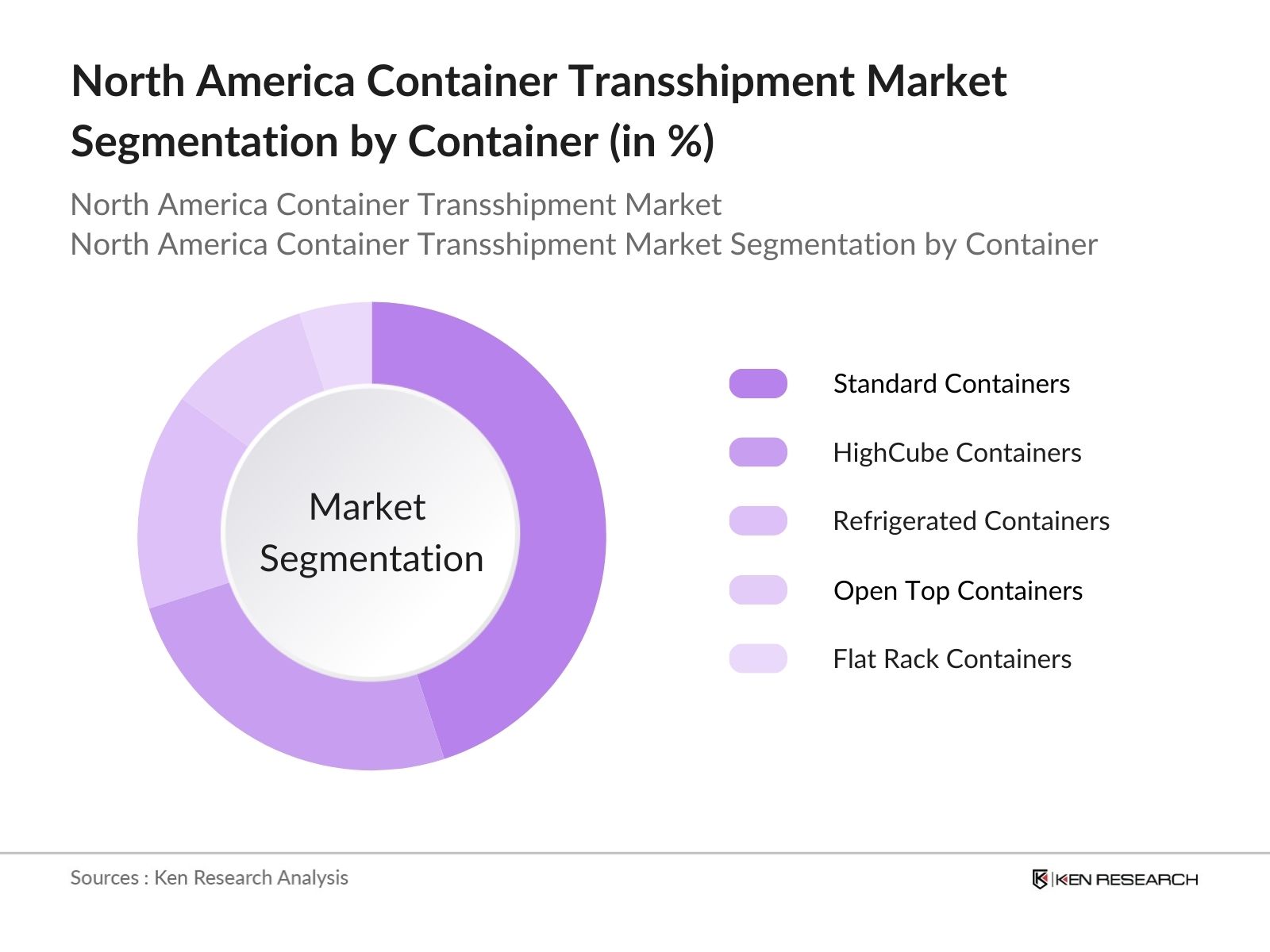
- By Container Type: The market is segmented by container type into Standard Containers, HighCube Containers, Refrigerated Containers, Open Top Containers, and Flat Rack Containers. Recently, Standard Containers have a dominant market share within this segmentation. This trend can be attributed to their versatility and widespread adoption across various industries. Major shipping lines favor Standard Containers for their compatibility with different modes of transport and ease of handling, making them the preferred choice for transshipment activities.
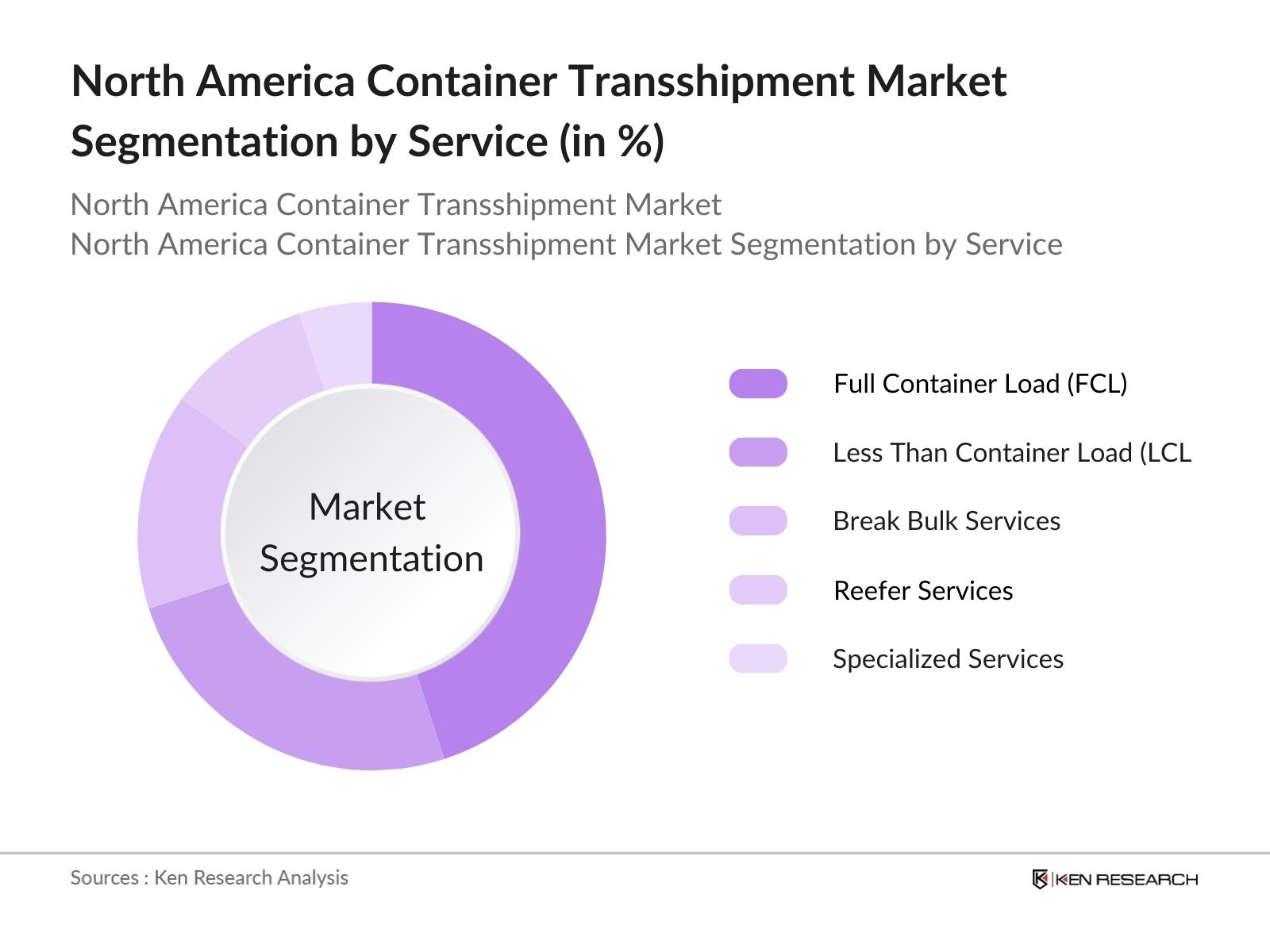
- By Service Type: The market is also segmented by service type into Full Container Load (FCL), Less Than Container Load (LCL), Break Bulk Services, Reefer Services, and Specialized Services. Full Container Load (FCL) services dominate the North America Container Transshipment market, accounting for 50% of the market share in 2023. FCL is preferred by large exporters and importers who require dedicated space for their shipments, ensuring faster transit times and reduced handling risks. The efficiency and reliability of FCL services make them the backbone of transshipment operations, especially for highvolume cargo movements.
North America Container Transshipment Market Competitive Landscape
The North America Container Transshipment market is dominated by a few major players, including Maersk Line, MSC (Mediterranean Shipping Company), CMA CGM Group, HapagLloyd, and Evergreen Marine Corporation. This consolidation highlights the significant influence of these key companies, which leverage extensive global networks, advanced technological capabilities, and comprehensive service offerings to maintain their competitive edge in the market. 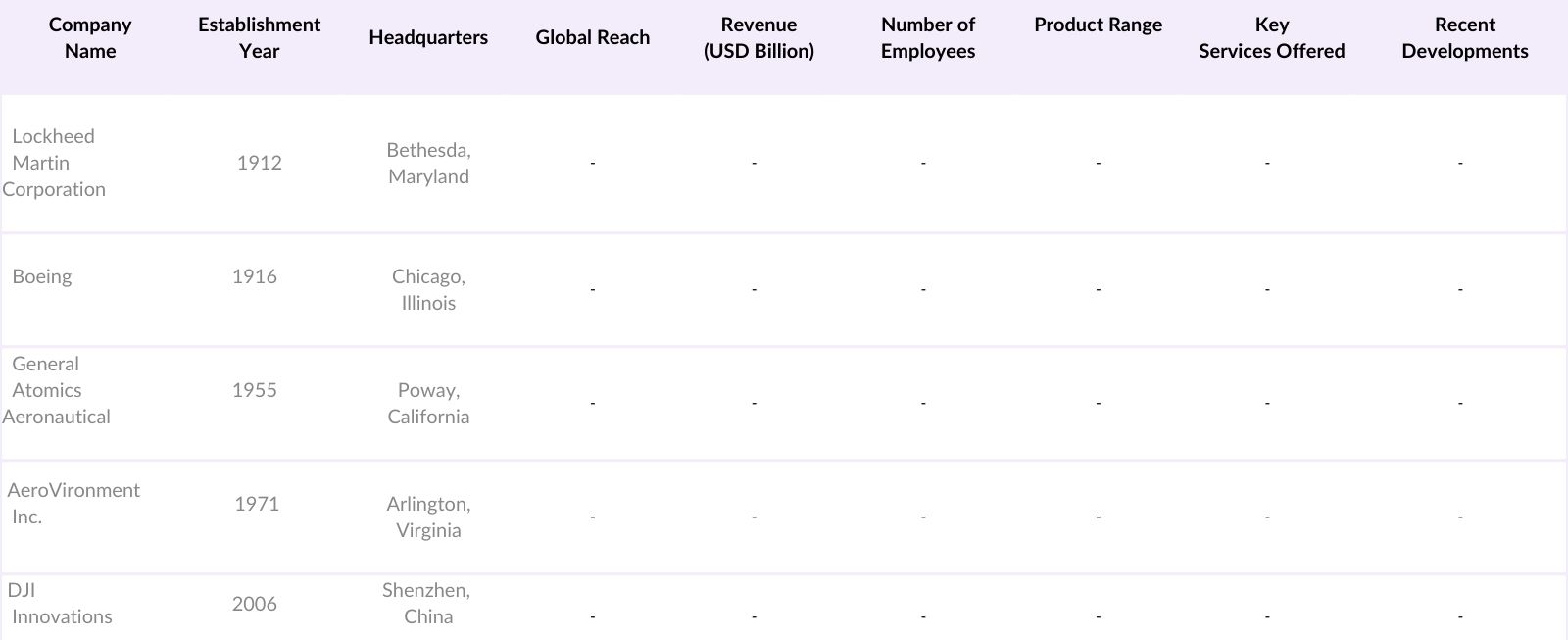
North America Container Transshipment Market Analysis
Growth Drivers
- Expansion of International Trade: The North American container transshipment market is experiencing significant growth due to increased trade volumes. In 2023, the United States' total merchandise trade amounted to USD 5.6 trillion, with imports at USD 3.6 trillion and exports at USD 3.0 trillion. This surge in trade necessitates efficient transshipment services to handle the escalating container traffic. The expansion of the Panama Canal has further facilitated larger vessel transits, enhancing trade flow between the Atlantic and Pacific Oceans. Consequently, North American ports are witnessing higher container throughput, bolstering the transshipment market.
- Infrastructure Development: Substantial investments in port infrastructure are propelling the North American container transshipment market. In 2023, the U.S. Department of Transportation allocated USD 450 million through the Port Infrastructure Development Program to modernize coastal and inland ports. These funds aim to enhance capacity, reduce congestion, and improve intermodal connectivity. The Port of Los Angeles handled 9.2 million TEUs in 2023, underscoring the need for continuous infrastructure upgrades to accommodate growing container volumes.
- Technological Advancements: The adoption of cuttingedge technologies such as automation, digitalization, and IoT in port operations significantly boosts market growth. Automated cranes, smart tracking systems, and integrated supply chain management platforms improve operational efficiency, reduce turnaround times, and minimize human error. These technological improvements attract major shipping lines to utilize North American transshipment ports, further fueling market expansion.
Challenges
- Port Congestion: One of the primary challenges facing the North America Container Transshipment market is port congestion. High volumes of container traffic can lead to delays, increased operational costs, and reduced efficiency. Congestion issues are particularly prevalent in major ports like Los Angeles and Long Beach, where limited infrastructure struggles to keep pace with the growing demand for transshipment services.
- Environmental Regulations: Stringent environmental regulations pose a significant challenge to the container transshipment market. Ports are required to implement measures to reduce emissions, manage waste, and adopt sustainable practices. Compliance with these regulations often necessitates substantial investments in green technologies and infrastructure upgrades, which can strain the financial resources of transshipment operators.
North America Container Transshipment Market Future Outlook
Over the next five years, the North America Container Transshipment market is expected to show significant growth driven by continuous advancements in port infrastructure, increased adoption of green logistics practices, and the expansion of global trade networks. Innovations in automation and digitalization are set to enhance operational efficiencies, while strategic investments in sustainable technologies will address environmental concerns. Additionally, the rising demand for ecommerce and the integration of multimodal transportation solutions will further propel market expansion.
Future Market Opportunities
- Integration of Green Logistics Practices: The North America Container Transshipment market is witnessing a growing emphasis on sustainability. Ports are increasingly adopting green logistics practices such as electrification of equipment, use of renewable energy sources, and implementation of waste management systems. These initiatives not only help in complying with environmental regulations but also attract environmentally conscious clients, presenting significant growth opportunities for transshipment operators.
- Expansion of Multimodal Transportation Solutions: The integration of multimodal transportation solutions is becoming a key trend in the North America Container Transshipment market. Combining sea, rail, and road transport enhances the flexibility and efficiency of logistics operations, reducing transit times and costs. This seamless connectivity supports the growing demand for faster and more reliable shipping services, driving the adoption of multimodal solutions among major shipping lines and logistics providers.
Scope of the Report
|
By Container Type |
Standard Containers |
|
By Service Type |
Full Container Load (FCL) |
|
By Mode of Transport |
Sea Transport |
|
By End-user Industry |
Automotive |
|
By Region |
USA |
Products
Key Target Audience
Investors and Venture Capitalist Firms
Banks and Financial Institutions
Government and Regulatory Bodies (U.S. Department of Transportation, Canada Border Services Agency)
Port Authorities (Port of Los Angeles, Port of Long Beach)
Shipping Companies
Logistics and Supply Chain Managers
Freight Forwarders
Trade Associations (American Association of Port Authorities)
Companies
Players Mentioned in the Report
Maersk Line
MSC (Mediterranean Shipping Company)
CMA CGM Group
HapagLloyd
Evergreen Marine Corporation
COSCO Shipping Lines
ONE (Ocean Network Express)
Hanjin Shipping
Yang Ming Marine Transport Corp.
ZIM Integrated Shipping Services
PIL (Pacific International Lines)
Hyundai Merchant Marine
Wan Hai Lines
NYK Line
K Line
Table of Contents
North America Container Transshipment Market Overview
1.1. Definition and Scope
1.2. Market Taxonomy
1.3. Market Growth Rate
1.4. Market Segmentation Overview
North America Container Transshipment Market Size (In USD Bn)
2.1. Historical Market Size
2.2. Year-On-Year Growth Analysis
2.3. Key Market Developments and Milestones
North America Container Transshipment Market Analysis
3.1. Growth Drivers
3.1.1. Trade Volume Increase
3.1.2. Infrastructure Development
3.1.3. Technological Advancements
3.1.4. Regulatory Support
3.2. Market Challenges
3.2.1. Port Congestion
3.2.2. High Operational Costs
3.2.3. Environmental Regulations
3.3. Opportunities
3.3.1. Expansion of Major Ports
3.3.2. Adoption of Automation
3.3.3. E-commerce Growth
3.4. Trends
3.4.1. Digitalization of Supply Chain
3.4.2. Sustainable Transshipment Practices
3.4.3. Integration with Multimodal Transport
3.5. Government Regulation
3.5.1. Maritime Policies
3.5.2. Trade Agreements
3.5.3. Environmental Standards
3.5.4. Security Regulations
3.6. SWOT Analysis
3.7. Stakeholder Ecosystem
3.8. Porters Five Forces
3.9. Competition Ecosystem
North America Container Transshipment Market Segmentation
4.1. By Container Type (In Value %)
4.1.1. Standard Containers
4.1.2. High-Cube Containers
4.1.3. Refrigerated Containers
4.1.4. Open Top Containers
4.1.5. Flat Rack Containers
4.2. By Service Type (In Value %)
4.2.1. Full Container Load (FCL)
4.2.2. Less Than Container Load (LCL)
4.2.3. Break Bulk Services
4.2.4. Reefer Services
4.2.5. Specialized Services
4.3. By Mode of Transport (In Value %)
4.3.1. Sea Transport
4.3.2. Rail Transport
4.3.3. Road Transport
4.3.4. Air Transport
4.3.5. Inland Waterways
4.4. By End-User Industry (In Value %)
4.4.1. Automotive
4.4.2. Electronics
4.4.3. Retail & E-commerce
4.4.4. Agriculture & Food
4.4.5. Pharmaceuticals
4.5. By Region (In Value %)
4.5.1. USA
4.5.2. Canada
4.5.3. Mexico
4.5.4. Gulf of Mexico
4.5.5. Great Lakes Region
North America Container Transshipment Market Competitive Analysis
5.1. Detailed Profiles of Major Companies
5.1.1. Maersk Line
5.1.2. MSC (Mediterranean Shipping Company)
5.1.3. CMA CGM Group
5.1.4. Hapag-Lloyd
5.1.5. Evergreen Marine Corporation
5.1.6. COSCO Shipping Lines
5.1.7. ONE (Ocean Network Express)
5.1.8. Hanjin Shipping
5.1.9. Yang Ming Marine Transport Corp.
5.1.10. ZIM Integrated Shipping Services
5.1.11. PIL (Pacific International Lines)
5.1.12. Hyundai Merchant Marine
5.1.13. Wan Hai Lines
5.1.14. NYK Line
5.1.15. K Line
5.2. Cross Comparison Parameters (Fleet Size, Network Coverage, Revenue, Market Share, Service Offerings, Technological Capabilities, Sustainability Initiatives, Strategic Partnerships)
5.3. Market Share Analysis
5.4. Strategic Initiatives
5.5. Mergers And Acquisitions
5.6. Investment Analysis
5.7. Venture Capital Funding
5.8. Government Grants
5.9. Private Equity Investments
North America Container Transshipment Market Regulatory Framework
6.1. Maritime Laws and Regulations
6.2. Environmental Compliance
6.3. Security Standards
6.4. Trade Policies
6.5. Customs Regulations
North America Container Transshipment Market Future Market Size (In USD Bn)
7.1. Future Market Size Projections
7.2. Key Factors Driving Future Market Growth
North America Container Transshipment Market Future Segmentation
8.1. By Container Type (In Value %)
8.2. By Service Type (In Value %)
8.3. By Mode of Transport (In Value %)
8.4. By End-User Industry (In Value %)
8.5. By Region (In Value %)
North America Container Transshipment Market Analysts Recommendations
9.1. TAM/SAM/SOM Analysis
9.2. Customer Cohort Analysis
9.3. Marketing Initiatives
9.4. White Space Opportunity Analysis
Disclaimer Contact UsResearch Methodology
Step 1: Identification of Key Variables
The initial phase involves constructing an ecosystem map encompassing all major stakeholders within the North America Container Transshipment Market. This step is underpinned by extensive desk research, utilizing a combination of secondary and proprietary databases to gather comprehensive industrylevel information. The primary objective is to identify and define the critical variables that influence market dynamics.
Step 2: Market Analysis and Construction
In this phase, we compile and analyze historical data pertaining to the North America Container Transshipment Market. This includes assessing market penetration, the ratio of marketplaces to service providers, and the resultant revenue generation. Furthermore, an evaluation of service quality statistics is conducted to ensure the reliability and accuracy of the revenue estimates.
Step 3: Hypothesis Validation and Expert Consultation
Market hypotheses are developed and subsequently validated through computerassisted telephone interviews (CATIs) with industry experts representing a diverse array of companies. These consultations provide valuable operational and financial insights directly from industry practitioners, which are instrumental in refining and corroborating the market data.
Step 4: Research Synthesis and Final Output
The final phase involves direct engagement with multiple container transshipment operators to acquire detailed insights into service segments, operational performance, client preferences, and other pertinent factors. This interaction serves to verify and complement the statistics derived from the bottomup approach, thereby ensuring a comprehensive, accurate, and validated analysis of the North America Container Transshipment market.
Frequently Asked Questions
01. How big is the North America Container Transshipment Market?
The North America Container Transshipment market is valued at USD 2.1 billion, driven by increasing international trade volumes and the expansion of major transshipment hubs.
02. What are the challenges in the North America Container Transshipment Market?
Challenges in the North America Container Transshipment market include port congestion, high operational costs, stringent environmental regulations, and the need for continuous technological upgrades to maintain efficiency.
03. Who are the major players in the North America Container Transshipment Market?
Key players in the North America Container Transshipment market include Maersk Line, MSC (Mediterranean Shipping Company), CMA CGM Group, HapagLloyd, and Evergreen Marine Corporation. These companies dominate due to their extensive global networks and advanced technological capabilities.
04. What are the growth drivers of the North America Container Transshipment Market?
The North America Container Transshipment market is propelled by factors such as increasing international trade volumes, advancements in port infrastructure, adoption of automated handling systems, and the rise of ecommerce driving demand for efficient transshipment services.
Why Buy From Us?

What makes us stand out is that our consultants follows Robust, Refine and Result (RRR) methodology. i.e. Robust for clear definitions, approaches and sanity checking, Refine for differentiating respondents facts and opinions and Result for presenting data with story

We have set a benchmark in the industry by offering our clients with syndicated and customized market research reports featuring coverage of entire market as well as meticulous research and analyst insights.

While we don't replace traditional research, we flip the method upside down. Our dual approach of Top Bottom & Bottom Top ensures quality deliverable by not just verifying company fundamentals but also looking at the sector and macroeconomic factors.

With one step in the future, our research team constantly tries to show you the bigger picture. We help with some of the tough questions you may encounter along the way: How is the industry positioned? Best marketing channel? KPI's of competitors? By aligning every element, we help maximize success.

Our report gives you instant access to the answers and sources that other companies might choose to hide. We elaborate each steps of research methodology we have used and showcase you the sample size to earn your trust.

If you need any support, we are here! We pride ourselves on universe strength, data quality, and quick, friendly, and professional service.