















North America Cooking Range Market Outlook to 2030
Region:North America
Author(s):Meenakshi Bisht
Product Code:KROD8972
December 2024
97
About the Report
North America Cooking Range Market Overview
- The North America Cooking Range Market is valued at USD 10.7 billion, based on a five-year historical analysis. This market is driven by increasing consumer demand for smart kitchen appliances, alongside the rise in home remodeling activities, particularly in urban areas. The demand for energy-efficient and multi-functional cooking ranges has also surged, driven by the awareness of energy conservation and government regulations for energy efficiency standards.
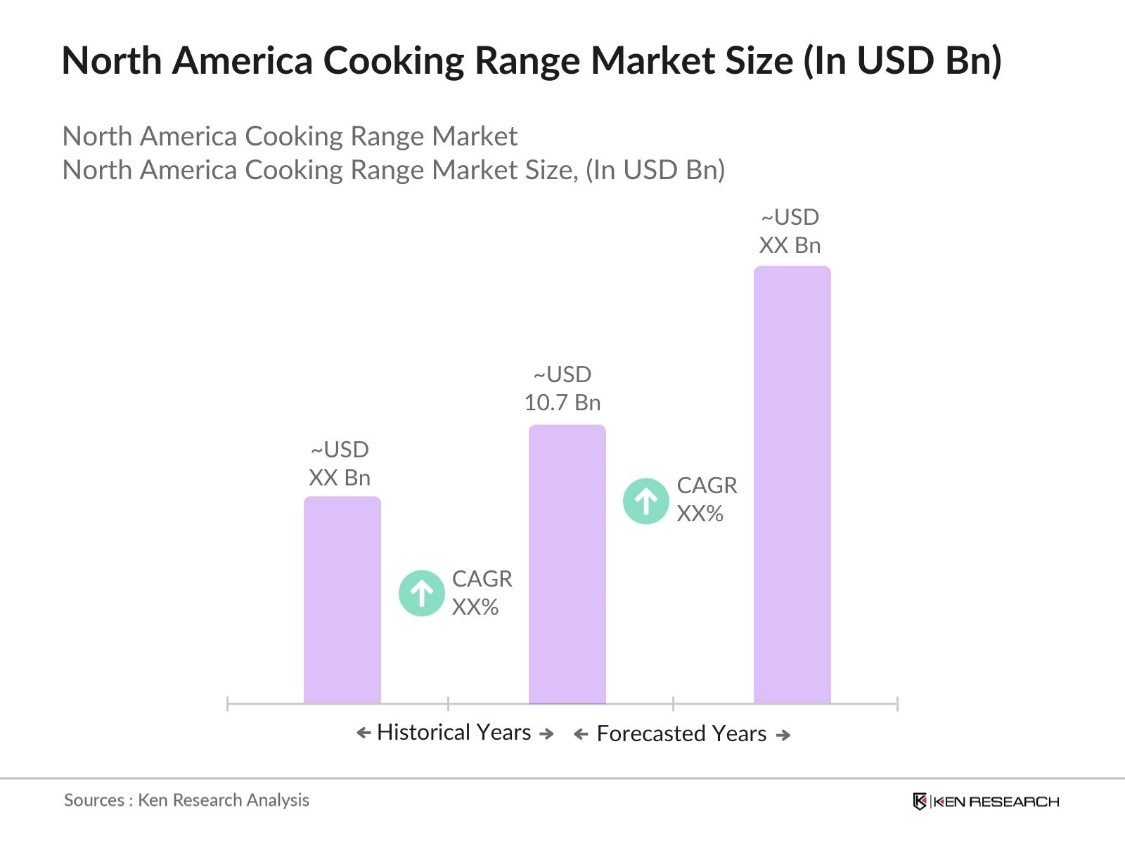
- Key cities in the USA, such as New York, Los Angeles, and Chicago, dominate the market due to their large populations and high household income levels, driving demand for premium kitchen appliances. Additionally, states like California and Texas show significant market activity due to extensive urbanization, a high rate of residential construction, and a preference for technologically advanced appliances.
- In 2022, California enacted the Plastic Pollution Prevention and Packaging Producer Responsibility Act (SB 54), which officially began implementation in 2023. This law mandates that manufacturers of single-use packaging and food service ware take responsibility for the recycling of their products at the end of their life cycle. The law is part of a broader trend in various states aiming to shift the burden of recycling from consumers to producers, thereby increasing operational costs for companies involved in manufacturing and distributing these products.
North America Cooking Range Market Segmentation
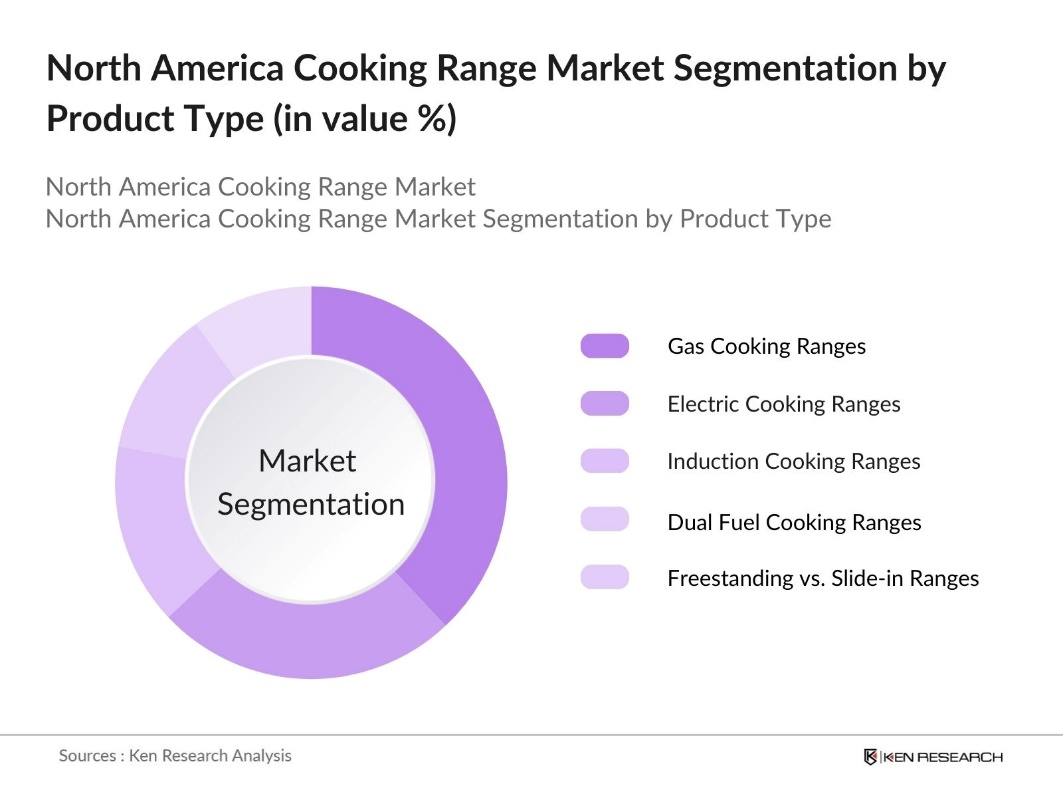
By Product Type: The North America Cooking Range market is segmented by product type into gas cooking ranges, electric cooking ranges, induction cooking ranges, dual fuel cooking ranges, and freestanding vs. slide-in cooking ranges. Recently, gas cooking ranges have a dominant market share in North America under the segmentation by product type. This dominance is due to their versatility and preference among consumers for traditional cooking methods. Gas ranges are often favored for their precise temperature control, making them a preferred choice among professional chefs and culinary enthusiasts.
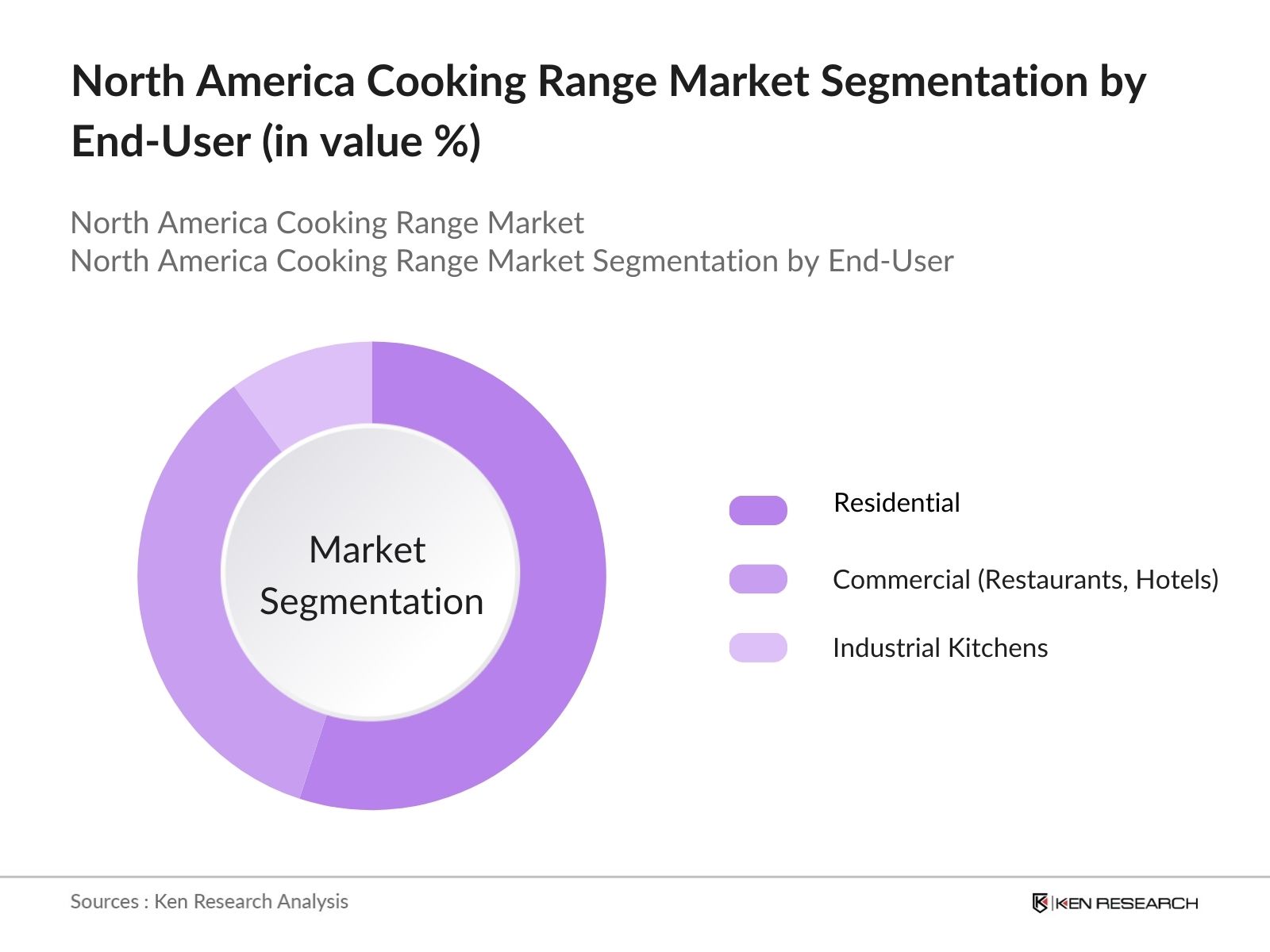
By End-User: The North America Cooking Range market is segmented by end-user into residential, commercial (restaurants, hotels, catering services), and industrial kitchens. The residential segment has a significant share due to the rising trend of home improvement and kitchen remodeling activities. Consumers are increasingly investing in high-quality and energy-efficient cooking appliances to upgrade their kitchens. The preference for cooking at home, driven by factors like food safety and the popularity of cooking shows, also bolsters this segment's growth.
North America Cooking Range Market Competitive Landscape
The market is dominated by a few major players, including global brands such as Whirlpool Corporation, Electrolux AB, and Samsung Electronics Co., Ltd. This consolidation highlights the significant influence of these key companies, characterized by their extensive distribution networks and continued investment in R&D. Their focus on smart technology integration and energy-efficient product lines further solidifies their strong market positions.
|
Company Name |
Established |
Headquarters |
Product Line Breadth |
R&D Investments (USD Mn) |
Patents Filed |
Manufacturing Facilities |
Distribution Channels |
Annual Revenue (USD Bn) |
|
Whirlpool Corporation |
1911 |
Benton Harbor, MI |
||||||
|
Electrolux AB |
1919 |
Stockholm, Sweden |
||||||
|
Samsung Electronics Co., Ltd. |
1969 |
Suwon, South Korea |
||||||
|
LG Electronics Inc. |
1958 |
Seoul, South Korea |
||||||
|
General Electric Company |
1892 |
Boston, MA |
North America Cooking Range Industry Analysis
Growth Drivers
- Increase in Smart Kitchen Appliance Adoption (Smart Connectivity, IoT Integration): The adoption of smart kitchen appliances, including cooking ranges with IoT integration, has been rising in North America. Around 65% of Americans have at least one smart home device, indicating a substantial adoption rate within the regio. This growth is partly due to the push for interconnected home systems that offer convenience through smart connectivity features. Additionally, North America's focus on technological advancements in the home appliance sector is further driving the demand for smart cooking ranges.
- Surge in Residential and Commercial Construction: The residential building permits in the United States, indicating a steady demand for new homes, which boosts the demand for kitchen appliances, including cooking ranges. The urbanization rate in Canada reached 81.86%, leading to a higher concentration of residential and commercial construction in urban centers like Toronto and Vancouver. This surge supports the growing demand for premium cooking appliances in newly built properties, offering a stable market for cooking range manufacturers.
- Energy Efficiency Trends (Energy Star Certifications, Regulatory Compliance): Energy efficiency is a key driver in the North American cooking range market, with manufacturers focusing on developing appliances that meet regulatory standards like Energy Star certifications. This trend aligns with energy conservation mandates, encouraging the production of appliances designed to reduce power consumption. Compliance with these regulations is crucial for maintaining market competitiveness, as consumers increasingly prefer products that offer both energy savings and lower environmental impact.
Market Challenges
- High Cost of Technologically Advanced Cooking Ranges (Price Elasticity, Consumer Purchasing Power): Advanced technological features in modern cooking ranges, such as smart connectivity and induction technology, have led to higher upfront costs. This increase makes price-sensitive consumers more hesitant to upgrade to newer models, especially in regions with lower median household incomes. As a result, the price elasticity of demand plays a crucial role, as consumers weigh the benefits of advanced features against the higher purchase costs, influencing their purchasing decisions.
- Supply Chain Disruptions (Raw Material Shortage, Global Trade Issues): The cooking range market in North America has been challenged by global supply chain disruptions, affecting the availability of key raw materials like steel and electronic components. These issues, along with geopolitical tensions, have caused delays in obtaining crucial components such as semiconductors for smart appliances. These disruptions have not only raised production costs but also delayed product availability, impacting manufacturers' ability to meet market demand efficiently.
North America Cooking Range Market Future Outlook
The North America Cooking Range market is expected to continue its upward trajectory, driven by growing consumer interest in smart kitchen solutions and an increasing focus on energy-efficient appliances. The introduction of AI-powered cooking ranges and seamless integration with smart home systems are anticipated to be key factors in the market's expansion. Additionally, the rise in residential construction, especially in urban areas, coupled with favorable government incentives for energy-saving appliances, is likely to sustain market growth. The shift towards home-cooked meals and kitchen remodeling trends will further support demand over the coming years.
Market Opportunities
- Growing Consumer Interest in Energy-Efficient Appliances: The shift towards energy-efficient appliances presents growth opportunities for the cooking range market in North America. Consumer interest is increasingly focused on products that reduce energy consumption and align with sustainability goals. Government initiatives and incentives further support this shift, encouraging consumers to opt for energy-efficient models. This trend creates a favorable environment for manufacturers offering appliances that meet energy-saving standards, aligning with the broader demand for eco-friendly living solutions.
- Expansion in Modular Kitchen Designs: The rise in modular kitchen designs has increased the demand for customizable cooking ranges that integrate seamlessly into modern kitchen layouts. As more homeowners opt for space-efficient and aesthetically designed kitchens, there is a growing market for compact cooking ranges that can be tailored to individual preferences. This trend provides opportunities for manufacturers to develop product lines that cater to the evolving needs of homeowners, emphasizing flexibility and design compatibility in modern kitchen spaces.
Scope of the Report
|
Product Type |
Gas Cooking Ranges Electric Cooking Range Induction Cooking Ranges Dual Fuel Cooking Ranges Freestanding vs. Slide-in Cooking Ranges |
|
End-User |
Residential Commercial (Restaurants, Hotels, Catering Services) Industrial Kitchens |
|
Distribution Channel |
Online Retail Offline Retail (Specialty Stores, Hypermarkets), OEM Sales |
|
Installation Type |
Built-in Portable |
|
Region |
USA Canada Mexico |
Products
Key Target Audience
Home Automation Companies
Utility Companies
Kitchen Remodeling Companies
Hospitality Industry (Restaurants, Hotels)
Government and Regulatory Bodies (Energy Information Administration, Environmental Protection Agency)
Investors and venture capital Firms
Banks and Financial Institutions
Companies
Players Mentioned in the Report
Whirlpool Corporation
Electrolux AB
Samsung Electronics Co., Ltd.
LG Electronics Inc.
General Electric Company
Bosch Home Appliances
Miele & Cie. KG
Haier Group Corporation
Sub-Zero Group, Inc.
BlueStar
Table of Contents
1. North America Cooking Range Market Overview
1.1. Definition and Scope
1.2. Market Taxonomy
1.3. Market Growth Rate
1.4. Market Segmentation Overview
2. North America Cooking Range Market Size (In USD Bn)
2.1. Historical Market Size
2.2. Year-On-Year Growth Analysis
2.3. Key Market Developments and Milestones
3. North America Cooking Range Market Analysis
3.1. Growth Drivers
3.1.1. Increase in Smart Kitchen Appliance Adoption (Smart Connectivity, IOT Integration)
3.1.2. Surge in Residential and Commercial Construction (Residential Building Permits, Urbanization Rates)
3.1.3. Energy Efficiency Trends (Energy Star Certifications, Regulatory Compliance)
3.1.4. Demand for Multi-Functional Cooking Ranges (Cooking Efficiency, Oven Capacity, Integrated Features)
3.2. Market Challenges
3.2.1. High Cost of Technologically Advanced Cooking Ranges (Price Elasticity, Consumer Purchasing Power)
3.2.2. Supply Chain Disruptions (Raw Material Shortage, Global Trade Issues)
3.2.3. Complexity in Retrofitting with Smart Home Systems (Integration Complexity, Compatibility Issues)
3.3. Opportunities
3.3.1. Growing Consumer Interest in Energy-Efficient Appliances (Green Energy Adoption, Subsidies for Energy-Efficient Purchases)
3.3.2. Expansion in Modular Kitchen Designs (Modular Design Penetration, Home Remodeling Trends)
3.3.3. Demand Surge in the Commercial Segment (Restaurants, Hotels, Hospitality Sector Growth)
3.4. Trends
3.4.1. Growing Adoption of Induction and Hybrid Cooking Ranges (Induction Technology, Hybrid Models)
3.4.2. Integration of AI and Smart Technology (Voice Commands, Machine Learning)
3.4.3. Customization Options for Consumers (Personalized Features, Modular Components)
3.5. Government Regulation
3.5.1. Energy Consumption Standards (EPA Regulations, Energy Efficiency Mandates)
3.5.2. Import Tariffs on Kitchen Appliances (Trade Policies, Impact on Price Volatility)
3.5.3. Recycling and Sustainability Policies (Extended Producer Responsibility, Appliance Disposal Laws)
3.6. SWOT Analysis
3.7. Stakeholder Ecosystem
3.8. Porters Five Forces
3.9. Competition Ecosystem
4. North America Cooking Range Market Segmentation
4.1. By Product Type (In Value %)
4.1.1. Gas Cooking Ranges
4.1.2. Electric Cooking Ranges
4.1.3. Induction Cooking Ranges
4.1.4. Dual Fuel Cooking Ranges
4.1.5. Freestanding vs. Slide-in Cooking Ranges
4.2. By End-User (In Value %)
4.2.1. Residential
4.2.2. Commercial (Restaurants, Hotels, Catering Services)
4.2.3. Industrial Kitchens
4.3. By Distribution Channel (In Value %)
4.3.1. Online Retail
4.3.2. Offline Retail (Specialty Stores, Hypermarkets)
4.3.3. OEM Sales
4.4. By Installation Type (In Value %)
4.4.1. Built-in
4.4.2. Portable
4.5. By Region (In Value %)
4.5.1. USA
4.5.2. Canada
4.5.3. Mexico
5. North America Cooking Range Market Competitive Analysis
5.1 Detailed Profiles of Major Companies
5.1.1. Whirlpool Corporation
5.1.2. Electrolux AB
5.1.3. Samsung Electronics Co., Ltd.
5.1.4. LG Electronics Inc.
5.1.5. General Electric Company
5.1.6. Bosch Home Appliances
5.1.7. Miele & Cie. KG
5.1.8. Haier Group Corporation
5.1.9. Sub-Zero Group, Inc.
5.1.10. BlueStar
5.1.11. Viking Range, LLC
5.1.12. Bertazzoni SpA
5.1.13. SMEG S.p.A.
5.1.14. Fisher & Paykel Appliances Holdings Ltd.
5.1.15. Kenmore
5.2 Cross Comparison Parameters (Headquarters, Revenue, Product Line, Market Penetration, R&D Investments, Patent Filings, Distribution Networks, Brand Equity)
5.3. Market Share Analysis
5.4. Strategic Initiatives
5.5. Mergers And Acquisitions
5.6. Investment Analysis
5.7. Venture Capital Funding
5.8. Government Grants
5.9. Private Equity Investments
6. North America Cooking Range Market Regulatory Framework
6.1. Energy Efficiency Standards
6.2. Compliance Requirements for Manufacturers
6.3. Environmental Certification Processes
7. North America Cooking Range Future Market Size (In USD Bn)
7.1. Future Market Size Projections
7.2. Key Factors Driving Future Market Growth
8. North America Cooking Range Future Market Segmentation
8.1. By Product Type (In Value %)
8.2. By End-User (In Value %)
8.3. By Distribution Channel (In Value %)
8.4. By Installation Type (In Value %)
8.5. By Region (In Value %)
9. North America Cooking Range Market Analysts Recommendations
9.1. TAM/SAM/SOM Analysis
9.2. Customer Cohort Analysis
9.3. Marketing Initiatives
9.4. White Space Opportunity Analysis
Disclaimer Contact UsResearch Methodology
Step 1: Identification of Key Variables
The initial phase involves constructing an ecosystem map encompassing all major stakeholders within the North America Cooking Range Market. This step is underpinned by extensive desk research, utilizing a combination of secondary and proprietary databases to gather comprehensive industry-level information. The primary objective is to identify and define the critical variables that influence market dynamics.
Step 2: Market Analysis and Construction
In this phase, we will compile and analyze historical data pertaining to the North America Cooking Range Market. This includes assessing market penetration, the ratio of product types to end-users, and the resultant revenue generation. Furthermore, an evaluation of product quality statistics will be conducted to ensure the reliability and accuracy of the revenue estimates.
Step 3: Hypothesis Validation and Expert Consultation
Market hypotheses will be developed and subsequently validated through computer-assisted telephone interviews (CATIs) with industry experts representing a diverse array of companies. These consultations will provide valuable operational and financial insights directly from industry practitioners, which will be instrumental in refining and corroborating the market data.
Step 4: Research Synthesis and Final Output
The final phase involves direct engagement with multiple cooking range manufacturers to acquire detailed insights into product segments, sales performance, consumer preferences, and other pertinent factors. This interaction will serve to verify and complement the statistics derived from the bottom-up approach, thereby ensuring a comprehensive, accurate, and validated analysis of the North America Cooking Range market.
Frequently Asked Questions
01. How big is the North America Cooking Range Market?
The North America Cooking Range Market is valued at USD 10.7 billion, based on a five-year historical analysis. This market is driven by the growing adoption of smart home technologies and the rise in residential construction activities.
02. What are the challenges in the North America Cooking Range Market?
Challenges in North America Cooking Range Market include high manufacturing costs associated with technologically advanced cooking ranges and the complexity of integrating these appliances with existing smart home systems. Supply chain disruptions and fluctuating raw material costs also pose significant hurdles.
03. Who are the major players in the North America Cooking Range Market?
Key players in the North America Cooking Range Market include Whirlpool Corporation, Electrolux AB, Samsung Electronics Co., Ltd., LG Electronics Inc., and General Electric Company. These companies dominate due to their extensive distribution networks, strong brand presence, and continuous innovation.
04. What are the growth drivers of the North America Cooking Range Market?
The North America Cooking Range Market is propelled by factors such as the growing demand for energy-efficient appliances, increased urbanization, and the popularity of home-cooked meals. Technological advancements, including smart connectivity and voice-controlled appliances, further contribute to market growth.
Why Buy From Us?

What makes us stand out is that our consultants follows Robust, Refine and Result (RRR) methodology. i.e. Robust for clear definitions, approaches and sanity checking, Refine for differentiating respondents facts and opinions and Result for presenting data with story

We have set a benchmark in the industry by offering our clients with syndicated and customized market research reports featuring coverage of entire market as well as meticulous research and analyst insights.

While we don't replace traditional research, we flip the method upside down. Our dual approach of Top Bottom & Bottom Top ensures quality deliverable by not just verifying company fundamentals but also looking at the sector and macroeconomic factors.

With one step in the future, our research team constantly tries to show you the bigger picture. We help with some of the tough questions you may encounter along the way: How is the industry positioned? Best marketing channel? KPI's of competitors? By aligning every element, we help maximize success.

Our report gives you instant access to the answers and sources that other companies might choose to hide. We elaborate each steps of research methodology we have used and showcase you the sample size to earn your trust.

If you need any support, we are here! We pride ourselves on universe strength, data quality, and quick, friendly, and professional service.