















North America Dehumidifier Market Outlook to 2030
Region:North America
Author(s):Vijay Kumar
Product Code:KROD11302
November 2024
87
About the Report
North America Dehumidifier Market Overview
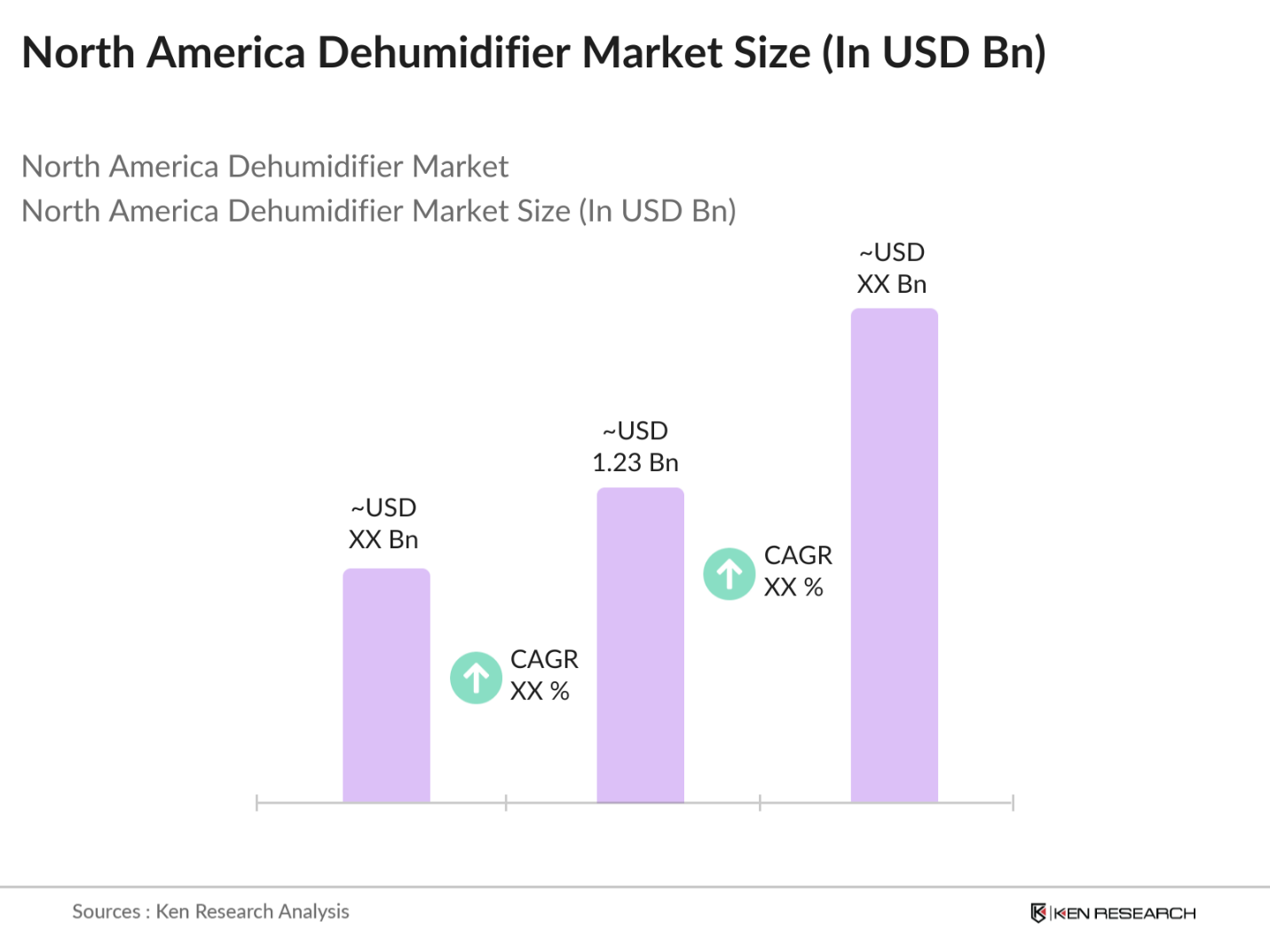
- The North American dehumidifier market is valued at USD 1.23 billion, based on a five-year historical analysis. This valuation is driven by factors such as increasing awareness of indoor air quality, rising concerns about mold and allergens, and technological advancements in dehumidification systems. The expansion of the construction and real estate sectors further contributes to the market's growth.
- The United States leads the North American dehumidifier market, primarily due to its large population, high levels of industrialization, and significant residential construction activities. Canada and Mexico also contribute to the market, with growing awareness of indoor air quality and increasing adoption of dehumidifiers in residential and commercial spaces.
- Government regulations in North America have established stringent environmental standards for dehumidifiers to promote energy efficiency and reduce environmental impact. The U.S. Department of Energy (DOE) has implemented energy conservation standards for dehumidifiers, which manufacturers must comply with to ensure their products meet specific energy efficiency criteria. These standards are designed to reduce energy consumption and greenhouse gas emissions, contributing to environmental sustainability.
North America Dehumidifier Market Segmentation
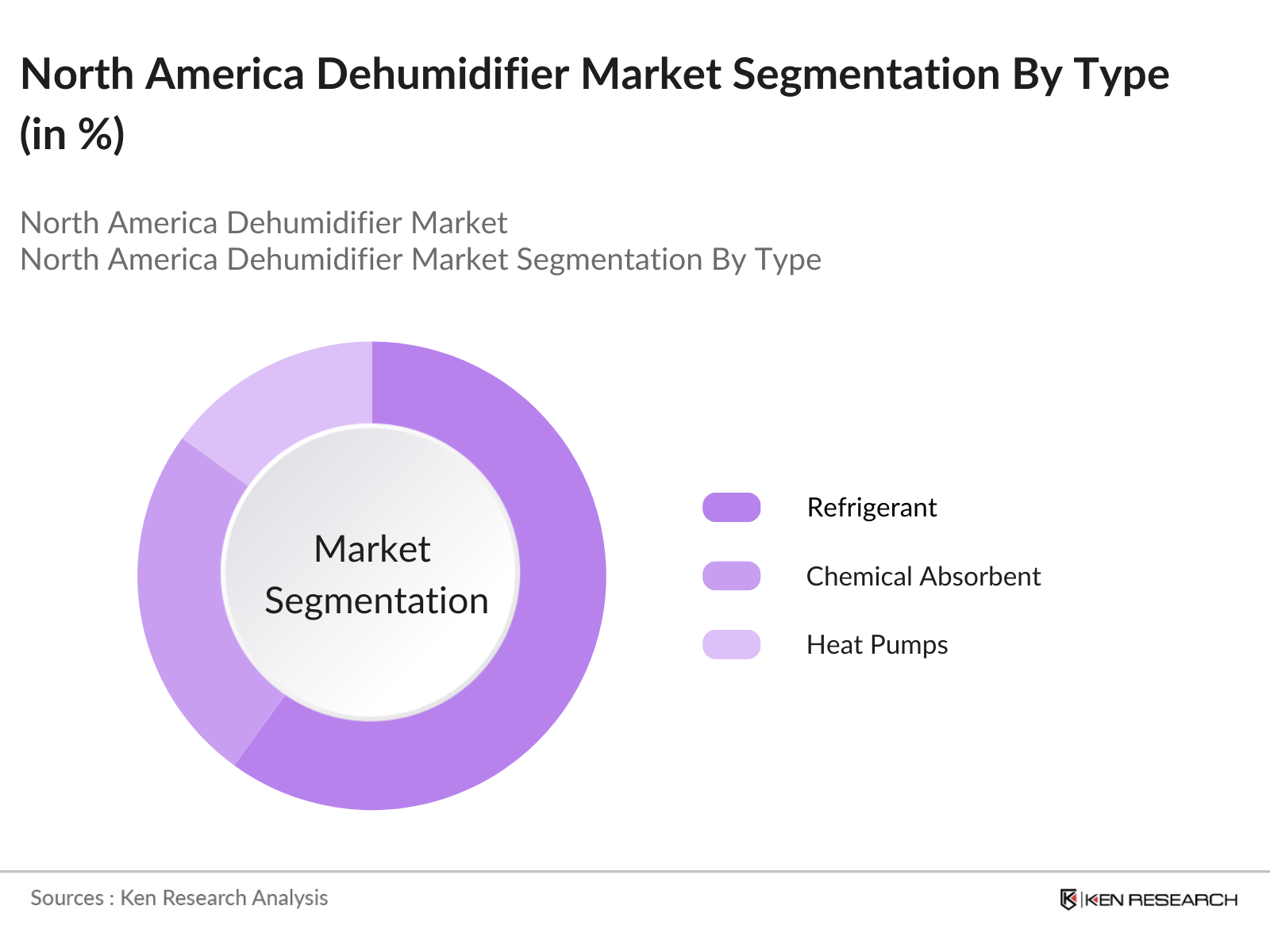
By Type: The market is segmented by type into chemical absorbent, refrigerant, and heat pumps. Refrigerant dehumidifiers hold a dominant market share in this segment, attributed to their efficiency in removing moisture from the air and widespread use in residential and commercial applications. Their ability to operate effectively in various temperature ranges makes them a preferred choice among consumers.
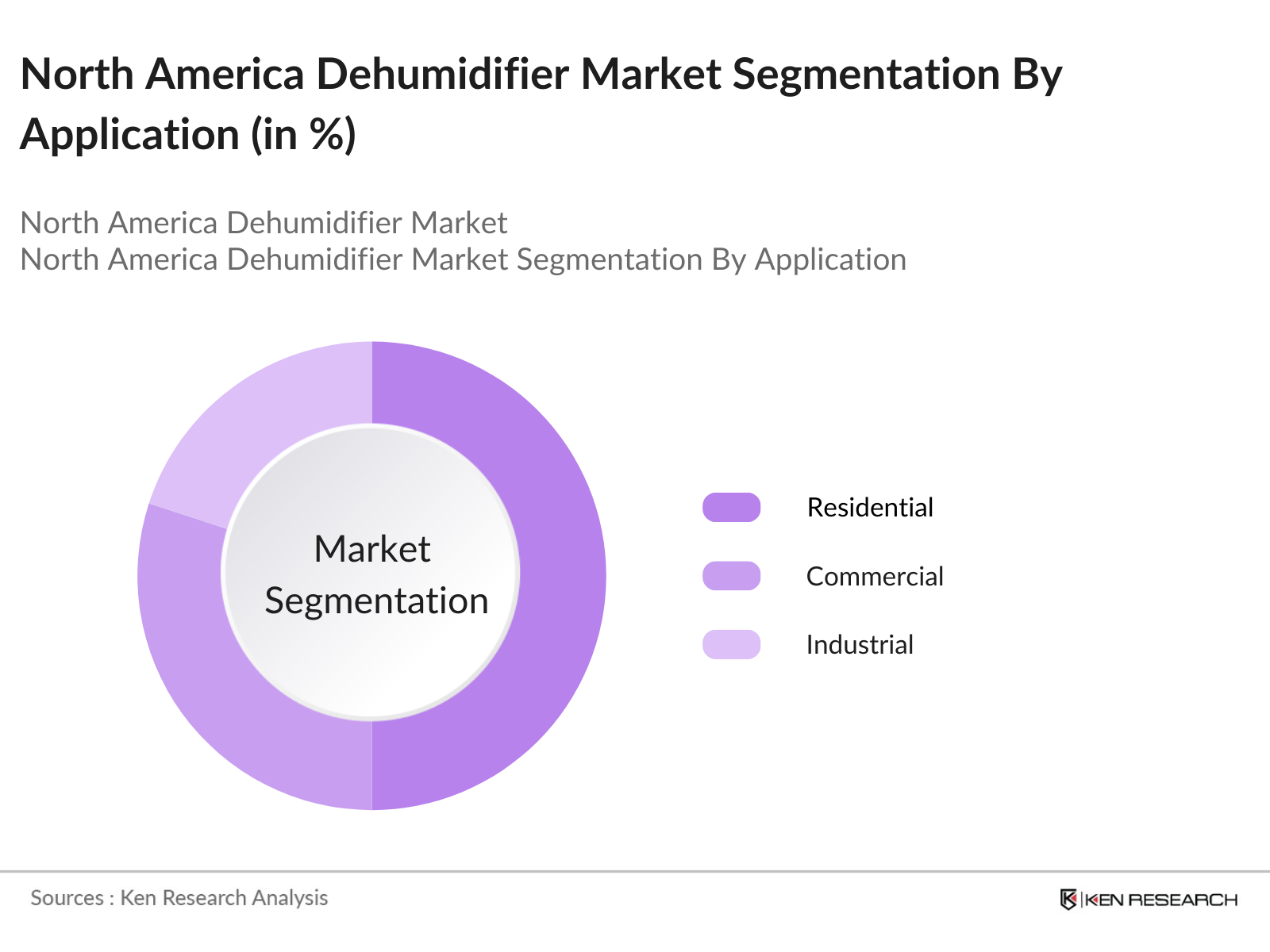
By Application: The market is further segmented by application into industrial, commercial, and residential sectors. The residential segment dominates the market share, driven by increasing consumer awareness of indoor air quality and the health benefits of maintaining optimal humidity levels. The rise in residential construction and renovation projects also contributes to the growth of this segment.
North America Dehumidifier Market Competitive Landscape
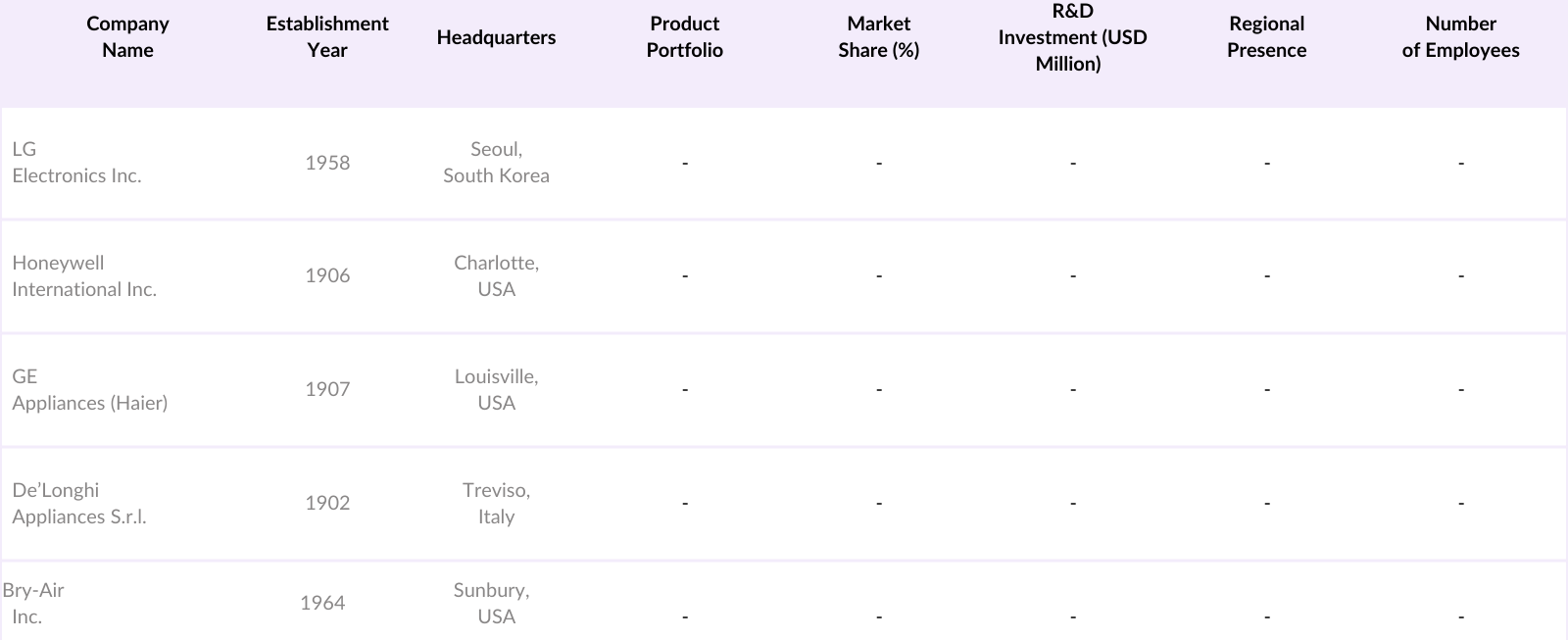
The North American dehumidifier market is characterized by the presence of several key players, including LG Electronics Inc., Honeywell International Inc., GE Appliances (a Haier Company), DeLonghi Appliances S.r.l., and Bry-Air Inc. These companies have established strong market positions through extensive product portfolios, technological innovations, and strategic partnerships.
North America Dehumidifier Industry Analysis
Growth Drivers
- Increasing Awareness of Indoor Air Quality: In North America, heightened awareness of indoor air quality has led to a surge in dehumidifier adoption. The U.S. Environmental Protection Agency (EPA) reports that Americans spend approximately 90% of their time indoors, where certain pollutants can be 2 to 5 times higher than outdoor levels. This awareness has driven demand for dehumidifiers to mitigate indoor pollutants. Additionally, the Centers for Disease Control and Prevention (CDC) highlights that controlling indoor humidity is crucial in preventing mold growth, which can exacerbate respiratory issues.
- Rising Concerns About Mold and Allergens: Mold and allergens pose significant health risks, prompting North American consumers to seek solutions like dehumidifiers. The Asthma and Allergy Foundation of America (AAFA) indicates that over 50 million Americans experience various types of allergies each year, with mold being a common trigger. The U.S. Department of Housing and Urban Development (HUD) emphasizes that maintaining indoor humidity levels below 60% can prevent mold proliferation. This data underscores the critical role of dehumidifiers in reducing mold-related health issues, thereby driving market growth.
- Technological Advancements: Technological innovations have enhanced dehumidifier efficiency and user experience. The U.S. Department of Energy (DOE) has established energy efficiency standards for dehumidifiers, leading manufacturers to develop models that consume less energy while maintaining performance. Features such as smart controls and integration with home automation systems have also become prevalent, catering to tech-savvy consumers and contributing to market expansion.
Market Challenges
- High Initial Costs: The upfront cost of dehumidifiers can be a barrier for some consumers. The U.S. Bureau of Labor Statistics (BLS) reports that the average American household expenditure on appliances was $379 in 2022, indicating that high-priced dehumidifiers may be considered a significant investment. This financial consideration can deter potential buyers, especially in lower-income brackets.
- Energy Consumption Concerns: While dehumidifiers improve indoor air quality, they also contribute to household energy consumption. The U.S. Energy Information Administration (EIA) states that residential electricity consumption in the U.S. was approximately 1,460 billion kilowatt-hours in 2022. Consumers are increasingly conscious of energy usage and may hesitate to purchase appliances that could significantly increase their electricity bills.
North America Dehumidifier Market Future Outlook
Over the next five years, the North American dehumidifier market is expected to show significant growth driven by continuous technological advancements, increasing consumer demand for energy-efficient appliances, and the expansion of the construction and real estate sectors. The growing awareness of indoor air quality and health benefits associated with optimal humidity levels will further propel market growth.
Market Opportunities
- Technological Advancements: Advancements in dehumidifier technology present significant growth opportunities. The integration of Internet of Things (IoT) capabilities allows for remote monitoring and control, enhancing user convenience. The National Institute of Standards and Technology (NIST) supports the development of smart home technologies, which can be leveraged to create more efficient and user-friendly dehumidifiers.
- International Collaborations: Collaborations between North American manufacturers and international partners can lead to the development of innovative dehumidifier solutions. The U.S. International Trade Commission (USITC) reports that imports of household appliances, including dehumidifiers, totaled $23.5 billion in 2022. Such partnerships can facilitate the exchange of technology and best practices, enhancing product offerings in the market.
Scope of the Report
|
Type |
Chemical Absorbent |
|
Application |
Industrial |
|
Industrial Type |
Food & Beverage Industry |
|
Product |
Fixed |
|
Country |
U.S. |
Products
Key Target Audience
Dehumidifier Manufacturers
HVAC System Integrators
Residential and Commercial Builders
Facility Management Companies
Retailers and Distributors
Investment and Venture Capitalist Firms
Government and Regulatory Bodies (e.g., Environmental Protection Agency)
Healthcare Facilities
Companies
Players Mentioned in the Report
LG Electronics Inc.
Honeywell International Inc.
GE Appliances (a Haier Company)
DeLonghi Appliances S.r.l.
Bry-Air Inc.
Danby Products Ltd
Whirlpool Corporation
Munters Group
STULZ Air Technology Systems, Inc.
CondAir Group
Table of Contents
1. North America Dehumidifier Market Overview
1.1. Definition and Scope
1.2. Market Taxonomy
1.3. Market Growth Rate
1.4. Market Segmentation Overview
2. North America Dehumidifier Market Size (In USD Billion)
2.1. Historical Market Size
2.2. Year-On-Year Growth Analysis
2.3. Key Market Developments and Milestones
3. North America Dehumidifier Market Analysis
3.1. Growth Drivers
3.1.1. Increasing Awareness of Indoor Air Quality
3.1.2. Rising Concerns About Mold and Allergens
3.1.3. Technological Advancements
3.1.4. Expansion of Construction and Real Estate Sectors
3.2. Market Challenges
3.2.1. High Initial Costs
3.2.2. Energy Consumption Concerns
3.2.3. Technical Challenges
3.3. Opportunities
3.3.1. Technological Advancements
3.3.2. International Collaborations
3.3.3. Expansion into Rural Areas
3.4. Trends
3.4.1. Adoption of IoT
3.4.2. Integration with Smart Home Systems
3.4.3. Increased Use of Energy-Efficient Models
3.5. Government Regulation
3.5.1. Environmental Standards
3.5.2. Compliance Requirements
3.5.3. Certification Processes
3.6. SWOT Analysis
3.7. Stakeholder Ecosystem
3.8. Porters Five Forces
3.9. Competition Ecosystem
4. North America Dehumidifier Market Segmentation
4.1. By Type (In Value %)
4.1.1. Chemical Absorbent
4.1.2. Refrigerant
4.1.3. Heat Pumps
4.2. By Application (In Value %)
4.2.1. Industrial
4.2.2. Commercial
4.2.3. Residential
4.3. By Industrial Type (In Value %)
4.3.1. Food & Beverage Industry
4.3.2. Cold Storage
4.3.3. Construction
4.3.4. Others
4.4. By Product (In Value %)
4.4.1. Fixed
4.4.2. Portable
4.5. By Country (In Value %)
4.5.1. U.S.
4.5.2. Canada
4.5.3. Mexico
4.5.4. Rest of North America
5. North America Dehumidifier Market Competitive Analysis
5.1. Detailed Profiles of Major Companies
5.1.1. LG Electronics Inc.
5.1.2. Honeywell International Inc.
5.1.3. GE Appliances, a Haier Company
5.1.4. DeLonghi Appliances S.r.l.
5.1.5. Bry-Air Inc.
5.1.6. Danby Products Ltd
5.1.7. Whirlpool Corporation
5.1.8. Munters Group
5.1.9. STULZ Air Technology Systems, Inc.
5.1.10. CondAir Group
5.1.11. Therma-Stor LLC
5.1.12. Resideo Technologies, Inc.
5.1.13. Electrolux AB
5.1.14. Haier Group Corporation
5.1.15. Sunpentown International Inc.
5.2. Cross Comparison Parameters (No. of Employees, Headquarters, Inception Year, Revenue, Product Portfolio, Market Share, R&D Investment, Regional Presence)
5.3. Market Share Analysis
5.4. Strategic Initiatives
5.5. Mergers and Acquisitions
5.6. Investment Analysis
5.6.1. Venture Capital Funding
5.6.2. Government Grants
5.6.3. Private Equity Investments
6. North America Dehumidifier Market Regulatory Framework
6.1. Environmental Standards
6.2. Compliance Requirements
6.3. Certification Processes
7. North America Dehumidifier Future Market Size (In USD Billion)
7.1. Future Market Size Projections
7.2. Key Factors Driving Future Market Growth
8. North America Dehumidifier Future Market Segmentation
8.1. By Type (In Value %)
8.2. By Application (In Value %)
8.3. By Industrial Type (In Value %)
8.4. By Product (In Value %)
8.5. By Country (In Value %)
9. North America Dehumidifier Market Analysts Recommendations
9.1. TAM/SAM/SOM Analysis
9.2. Customer Cohort Analysis
9.3. Marketing Initiatives
9.4. White Space Opportunity Analysis
Disclaimer Contact UsResearch Methodology
Step 1: Identification of Key Variables
The initial phase involves constructing an ecosystem map encompassing all major stakeholders within the North American dehumidifier market. This step is underpinned by extensive desk research, utilizing a combination of secondary and proprietary databases to gather comprehensive industry-level information. The primary objective is to identify and define the critical variables that influence market dynamics.
Step 2: Market Analysis and Construction
In this phase, we compile and analyze historical data pertaining to the North American dehumidifier market. This includes assessing market penetration, the ratio of marketplaces to service providers, and the resultant revenue generation. Furthermore, an evaluation of service quality statistics is conducted to ensure the reliability and accuracy of the revenue estimates.
Step 3: Hypothesis Validation and Expert Consultation
Market hypotheses are developed and subsequently validated through computer-assisted telephone interviews (CATIs) with industry experts representing a diverse array of companies. These consultations provide valuable operational and financial insights directly from industry practitioners, which are instrumental in refining and corroborating the market data.
Step 4: Research Synthesis and Final Output
The final phase involves direct engagement with multiple dehumidifier manufacturers to acquire detailed insights into product segments, sales performance, consumer preferences, and other pertinent factors. This interaction serves to verify and complement the statistics derived from the bottom-up approach, thereby ensuring a comprehensive, accurate, and validated analysis of the North American dehumidifier market.
Frequently Asked Questions
01. How big is the North America Dehumidifier Market?
The North American dehumidifier market is valued at USD 1.23 billion, based on a five-year historical analysis. This valuation is driven by factors such as increasing awareness of indoor air quality, rising concerns about mold and allergens, and technological advancements in dehumidification systems.
02. What are the challenges in the North America Dehumidifier Market?
Challenges include high initial costs, energy consumption concerns, and technical challenges associated with the operation of dehumidifiers. Additionally, regulatory compliance and the cost of maintaining efficient humidity levels in larger facilities add to the market's challenges.
03. Who are the major players in the North America Dehumidifier Market?
Key players in the market include LG Electronics Inc., Honeywell International Inc., GE Appliances (a Haier Company), DeLonghi Appliances S.r.l., and Bry-Air Inc. These companies dominate due to their extensive product portfolios, strong brand presence, and innovative solutions tailored to diverse applications.
04. What are the growth drivers of the North America Dehumidifier Market?
The market is driven by increasing awareness of indoor air quality, rising concerns about mold and allergens, and technological advancements in energy-efficient dehumidifiers. Additionally, growth in the residential construction and real estate sectors supports market expansion.
Why Buy From Us?

What makes us stand out is that our consultants follows Robust, Refine and Result (RRR) methodology. i.e. Robust for clear definitions, approaches and sanity checking, Refine for differentiating respondents facts and opinions and Result for presenting data with story

We have set a benchmark in the industry by offering our clients with syndicated and customized market research reports featuring coverage of entire market as well as meticulous research and analyst insights.

While we don't replace traditional research, we flip the method upside down. Our dual approach of Top Bottom & Bottom Top ensures quality deliverable by not just verifying company fundamentals but also looking at the sector and macroeconomic factors.

With one step in the future, our research team constantly tries to show you the bigger picture. We help with some of the tough questions you may encounter along the way: How is the industry positioned? Best marketing channel? KPI's of competitors? By aligning every element, we help maximize success.

Our report gives you instant access to the answers and sources that other companies might choose to hide. We elaborate each steps of research methodology we have used and showcase you the sample size to earn your trust.

If you need any support, we are here! We pride ourselves on universe strength, data quality, and quick, friendly, and professional service.