
North America Digital Asset Management (DAM) Market Outlook to 2030
Region:Mexico
Author(s):Shreya Garg
Product Code:KROD9510
Region:Mexico
Author(s):Shreya Garg
Product Code:KROD9510
November 2024
85
North America Digital Asset Management (DAM) Market Segmentation
By Deployment Type: The market is segmented by deployment type into cloud-based and on-premise solutions. Cloud-based DAM solutions hold a dominant market share in this segment due to their flexibility, ease of access, and reduced need for IT infrastructure. Businesses are increasingly opting for cloud-based DAM systems as they can easily scale with organizational growth and integrate with other digital tools and systems such as Customer Relationship Management (CRM) and Enterprise Resource Planning (ERP) platforms. 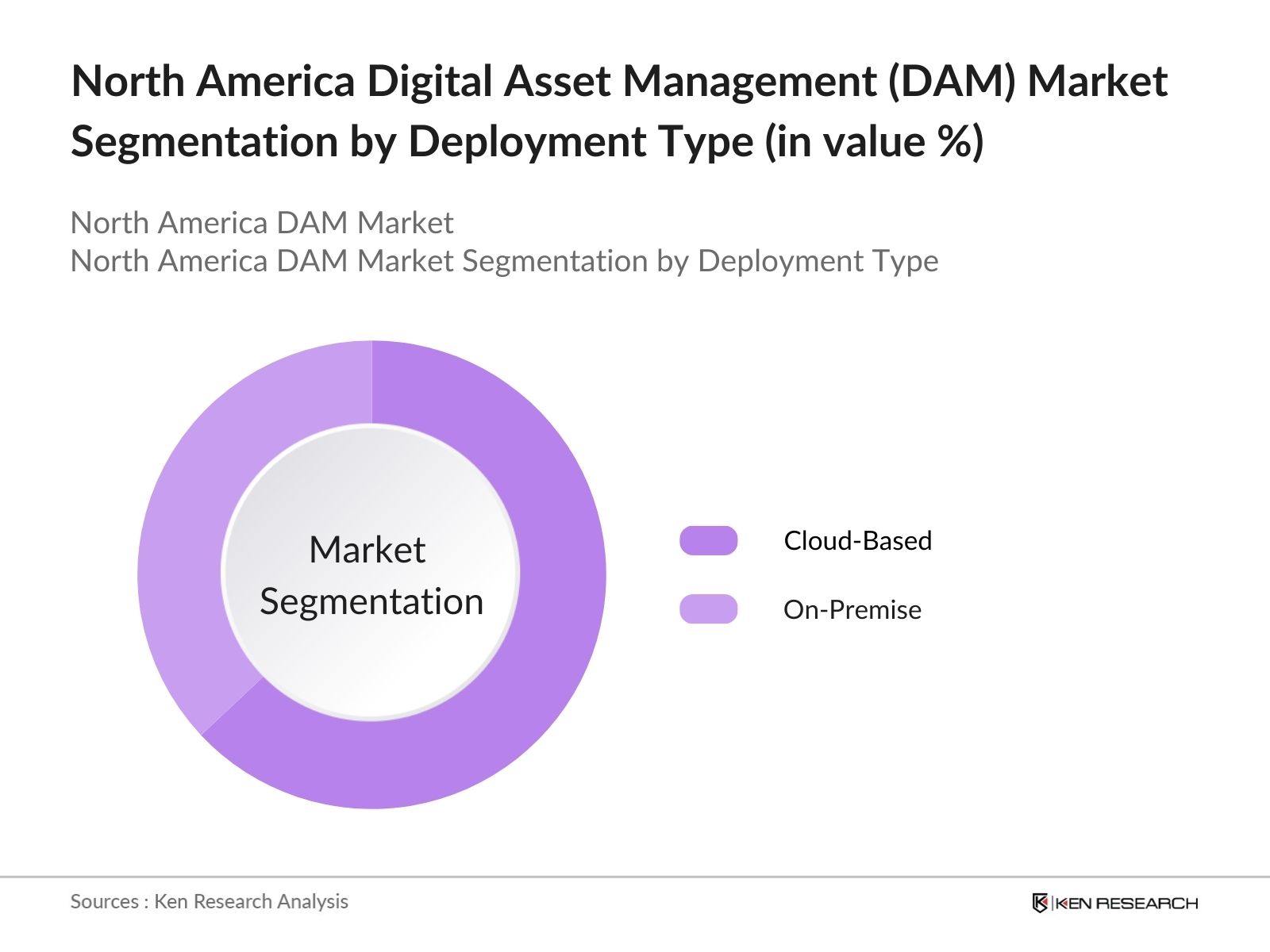
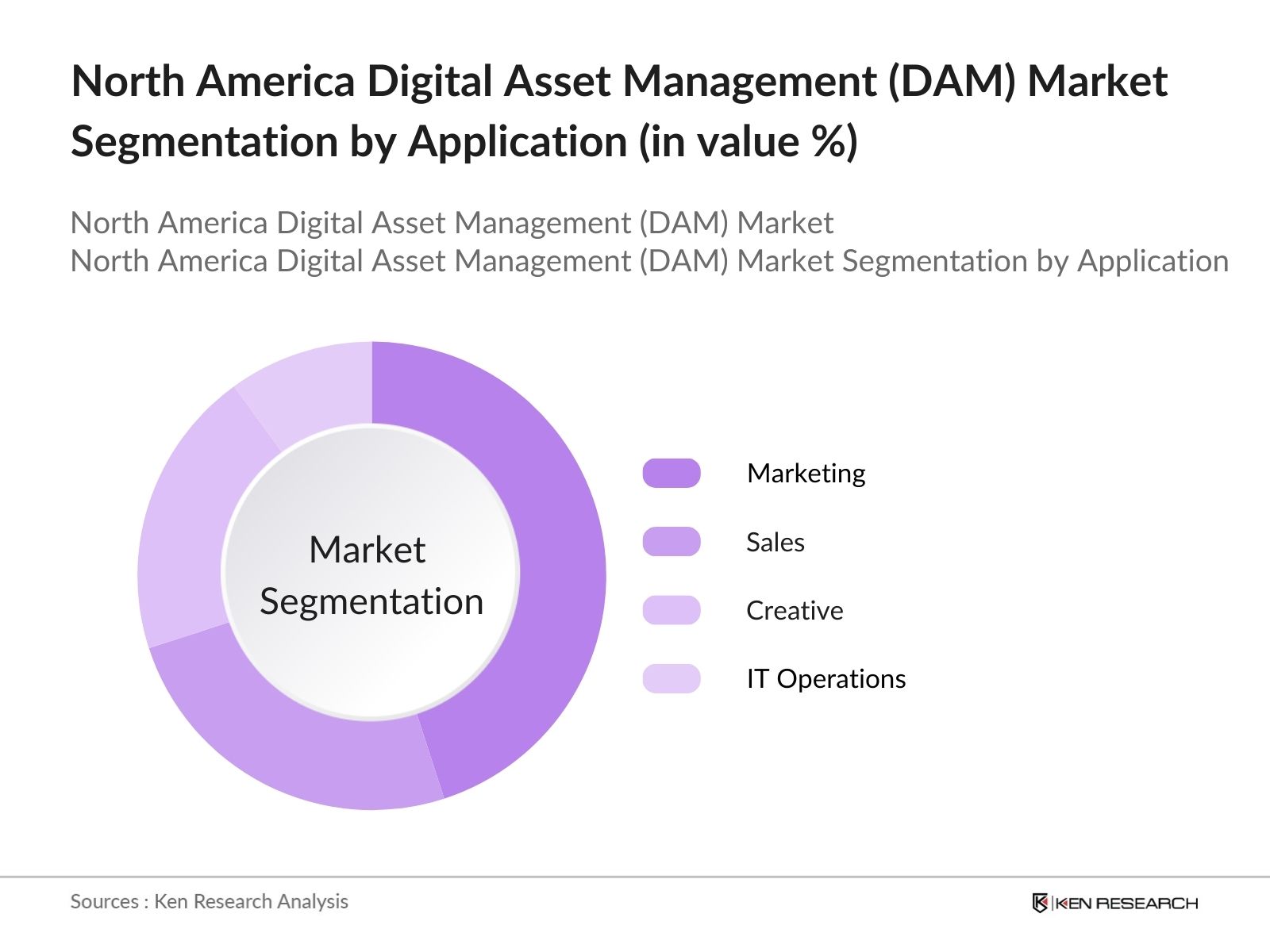
By Application: The market is segmented into marketing, sales, creative, and IT operations. The marketing application segment holds the largest share, driven by the increasing importance of digital marketing and the need to manage large volumes of media content efficiently. Marketing teams use DAM systems to streamline the creation, distribution, and management of digital assets across various channels, ensuring brand consistency and quicker time-to-market for campaigns.
The North American DAM market is characterized by intense competition, with both global tech giants and niche players vying for market share. The market is dominated by a few key players, including Adobe, OpenText, and IBM, who offer comprehensive DAM solutions that cater to large enterprises. These companies are noted for their continuous innovation and integration of advanced technologies such as AI and machine learning, enabling automated tagging and efficient management of digital assets. Additionally, cloud-based DAM platforms have seen increasing popularity due to their lower cost of implementation and scalability.
|
Company |
Established |
Headquarters |
Revenue (USD Mn) |
No. of Employees |
Market Share (%) |
DAM Solutions |
Cloud Offering |
Industry Coverage |
Integration Capabilities |
Partnerships |
|
Adobe Inc. |
1982 |
San Jose, USA |
||||||||
|
OpenText Corporation |
1991 |
Ontario, Canada |
||||||||
|
IBM Corporation |
1911 |
New York, USA |
||||||||
|
Bynder |
2013 |
Amsterdam, NL |
||||||||
|
Widen (Acquia) |
1948 |
Madison, USA |
Over the next several years, the North American Digital Asset Management market is expected to experience steady growth, driven by increasing digitalization across industries and the growing adoption of cloud-based solutions. The proliferation of digital content, particularly in sectors such as media, entertainment, retail, and e-commerce, will continue to fuel demand for DAM systems. Moreover, advancements in AI and machine learning technology will enhance the capabilities of DAM solutions, making them more efficient in managing and retrieving digital assets.
|
By Deployment Type |
On-Premise Cloud-Based |
|
By Application |
Marketing Sales Creative IT Operations |
|
By Organization Size |
Small and Medium-Sized Enterprises (SMEs) Large Enterprises |
|
By Industry Vertical |
Media & Entertainment BFSI Retail & E-commerce IT & Telecommunications Healthcare |
|
By Region |
United States Canada Mexico |
1.1. Definition and Scope
1.2. Market Taxonomy
1.3. Market Growth Rate
1.4. Market Segmentation Overview
2.1. Historical Market Size
2.2. Year-On-Year Growth Analysis
2.3. Key Market Developments and Milestones
3.1. Growth Drivers
3.1.1. Rising Adoption of Cloud-Based DAM Solutions
3.1.2. Integration of DAM with Marketing Technologies (MarTech)
3.1.3. Need for Streamlined Digital Asset Management in Large Enterprises
3.1.4. Increase in Remote Work and Digital Workflows
3.2. Market Challenges
3.2.1. High Initial Deployment Costs for DAM Solutions
3.2.2. Complex Integration with Legacy Systems
3.2.3. Data Security and Privacy Concerns
3.3. Opportunities
3.3.1. Growth of AI-Powered DAM Tools for Automated Tagging
3.3.2. Expansion of DAM Market in SMBs (Small and Medium Businesses)
3.3.3. Increasing Focus on Digital Transformation in North America
3.4. Trends
3.4.1. Use of AI and Machine Learning for Metadata Tagging and Asset Search
3.4.2. Integration of DAM with Customer Experience Management (CXM)
3.4.3. Adoption of DAM in Creative Workflow Automation
3.5. Government Regulations (Data Privacy, Intellectual Property)
3.5.1. Compliance with GDPR, CCPA, and Other Data Protection Regulations
3.5.2. Digital Copyrights and Intellectual Property Management
3.6. SWOT Analysis
3.7. Stake Ecosystem (Vendors, Integrators, End-Users)
3.8. Porters Five Forces (Buyer Power, Supplier Power, Competition Intensity)
3.9. Competitive Landscape
4.1. By Deployment Type (In Value %)
4.1.1. On-Premise DAM
4.1.2. Cloud-Based DAM
4.2. By Application (In Value %)
4.2.1. Marketing
4.2.2. Sales
4.2.3. Creative
4.2.4. IT Operations
4.3. By Organization Size (In Value %)
4.3.1. Small and Medium-Sized Enterprises (SMEs)
4.3.2. Large Enterprises
4.4. By Industry Vertical (In Value %)
4.4.1. Media & Entertainment
4.4.2. BFSI (Banking, Financial Services, and Insurance)
4.4.3. Retail & E-commerce
4.4.4. IT & Telecommunications
4.4.5. Healthcare
4.5. By Region (In Value %)
4.5.1. United States
4.5.2. Canada
4.5.3. Mexico
5.1. Detailed Profiles of Major Companies
5.1.1. Adobe Inc.
5.1.2. OpenText Corporation
5.1.3. IBM Corporation
5.1.4. Cognizant Technology Solutions
5.1.5. Oracle Corporation
5.1.6. Widen (Acquia)
5.1.7. MediaBeacon (Esko)
5.1.8. Bynder
5.1.9. Northplains Systems Corp.
5.1.10. Aprimo
5.1.11. Canto
5.1.12. Nuxeo (Hyland Software)
5.1.13. Brandfolder
5.1.14. Veeva Systems Inc.
5.1.15. Extensis
5.2. Cross Comparison Parameters
5.2.1. No. of Employees
5.2.2. Headquarters Location
5.2.3. Inception Year
5.2.4. Revenue (In USD Mn)
5.2.5. DAM Product Offerings
5.2.6. Market Share (In %)
5.2.7. Integration Capabilities (CRM, CMS, MarTech)
5.2.8. User Interface/Experience (UI/UX) Features
5.3. Market Share Analysis (By Deployment Type, By Industry Vertical)
5.4. Strategic Initiatives
5.5. Mergers and Acquisitions
5.6. Investment Analysis
5.7. Venture Capital Funding
5.8. Government Grants
5.9. Private Equity Investments
6.1. Compliance Requirements (Data Storage, Processing Standards)
6.2. Certification Processes for DAM Software (ISO, SOC2)
6.3. DAM Vendor Certification Standards
7.1. Market Size Projections
7.2. Key Factors Driving Future Growth (Cloud Adoption, AI Implementation)
8.1. By Deployment Type (In Value %)
8.2. By Application (In Value %)
8.3. By Industry Vertical (In Value %)
8.4. By Organization Size (In Value %)
8.5. By Region (In Value %)
9.1. TAM/SAM/SOM Analysis
9.2. Customer Cohort Analysis
9.3. Marketing Initiatives for DAM Solution Providers
9.4. White Space Opportunity Analysis
In this step, we map out the ecosystem of the North America Digital Asset Management market, identifying key stakeholders such as software vendors, end-users, and integration service providers. Extensive desk research is performed to gather insights on critical market drivers, barriers, and trends.
We analyze historical data for the North America DAM market, assessing penetration rates of cloud-based vs. on-premise DAM solutions, market demand across verticals like media, retail, and manufacturing, and revenue trends. The analysis includes examination of digital asset volume growth across these sectors.
We conduct expert interviews with DAM professionals and industry experts via CATIs to validate market trends and revenue estimates. These consultations also provide real-world insights into customer pain points and the competitive landscape.
The final phase of the research process involves synthesizing data from primary and secondary sources to produce comprehensive insights into market segmentation, growth drivers, and challenges. This step ensures the accuracy and reliability of market forecasts.
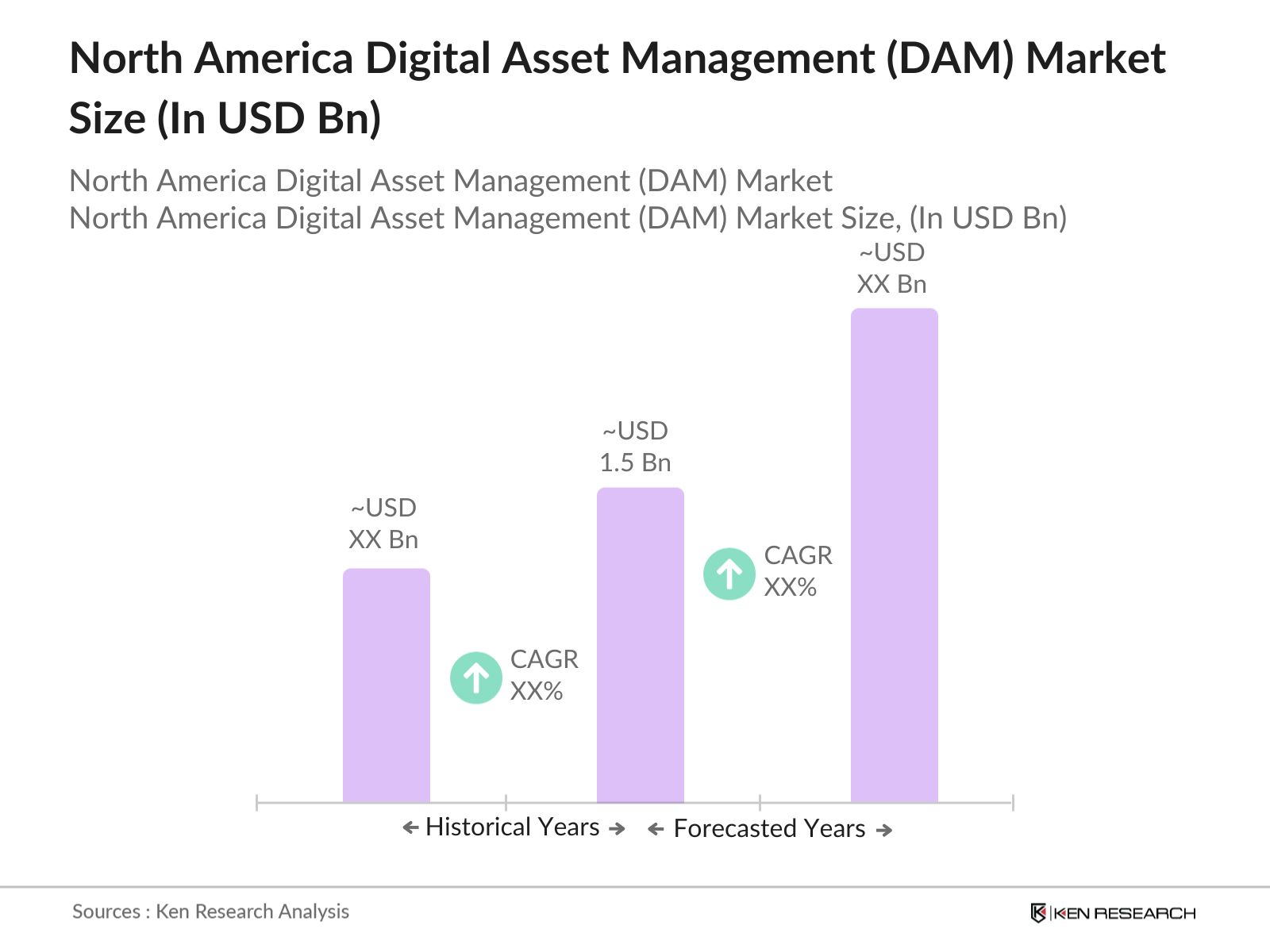
The North America Digital Asset Management market is valued at USD 1.5 billion. It is driven by the increasing need for efficient digital content management across multiple industries.
Challenges in the North America Digital Asset Management market include high deployment costs, complex integration with legacy systems, and concerns related to data security and privacy. These barriers hinder market expansion, especially for SMEs.
Key players in the North America Digital Asset Management market include Adobe Inc., OpenText Corporation, IBM Corporation, Widen (Acquia), and Bynder. These companies lead due to their innovative solutions and strong cloud offerings.
Growth drivers in the North America Digital Asset Management market include increasing digital content, demand for cloud-based DAM solutions, and technological advancements such as AI-powered asset management and automated metadata tagging.
The United States leads the North America Digital Asset Management market due to its large enterprise base and strong focus on technological innovation. Canada follows closely, driven by its growing retail and media sectors.

What makes us stand out is that our consultants follows Robust, Refine and Result (RRR) methodology. i.e. Robust for clear definitions, approaches and sanity checking, Refine for differentiating respondents facts and opinions and Result for presenting data with story

We have set a benchmark in the industry by offering our clients with syndicated and customized market research reports featuring coverage of entire market as well as meticulous research and analyst insights.

While we don't replace traditional research, we flip the method upside down. Our dual approach of Top Bottom & Bottom Top ensures quality deliverable by not just verifying company fundamentals but also looking at the sector and macroeconomic factors.

With one step in the future, our research team constantly tries to show you the bigger picture. We help with some of the tough questions you may encounter along the way: How is the industry positioned? Best marketing channel? KPI's of competitors? By aligning every element, we help maximize success.

Our report gives you instant access to the answers and sources that other companies might choose to hide. We elaborate each steps of research methodology we have used and showcase you the sample size to earn your trust.

If you need any support, we are here! We pride ourselves on universe strength, data quality, and quick, friendly, and professional service.