
North America Door Handle Market Outlook to 2030
Region:North America
Author(s):Meenakshi Bisht
Product Code:KROD6868
December 2024
88
About the Report
North America Door Handle Market Overview
- The North America Door Handle Market is valued at USD 3 billion, based on a five-year historical analysis. This market is primarily driven by the surge in real estate development, rapid urbanization, and rising demand for advanced security features. A significant factor contributing to market growth is the increasing focus on smart home solutions, where technologically integrated door handles are becoming more prevalent.
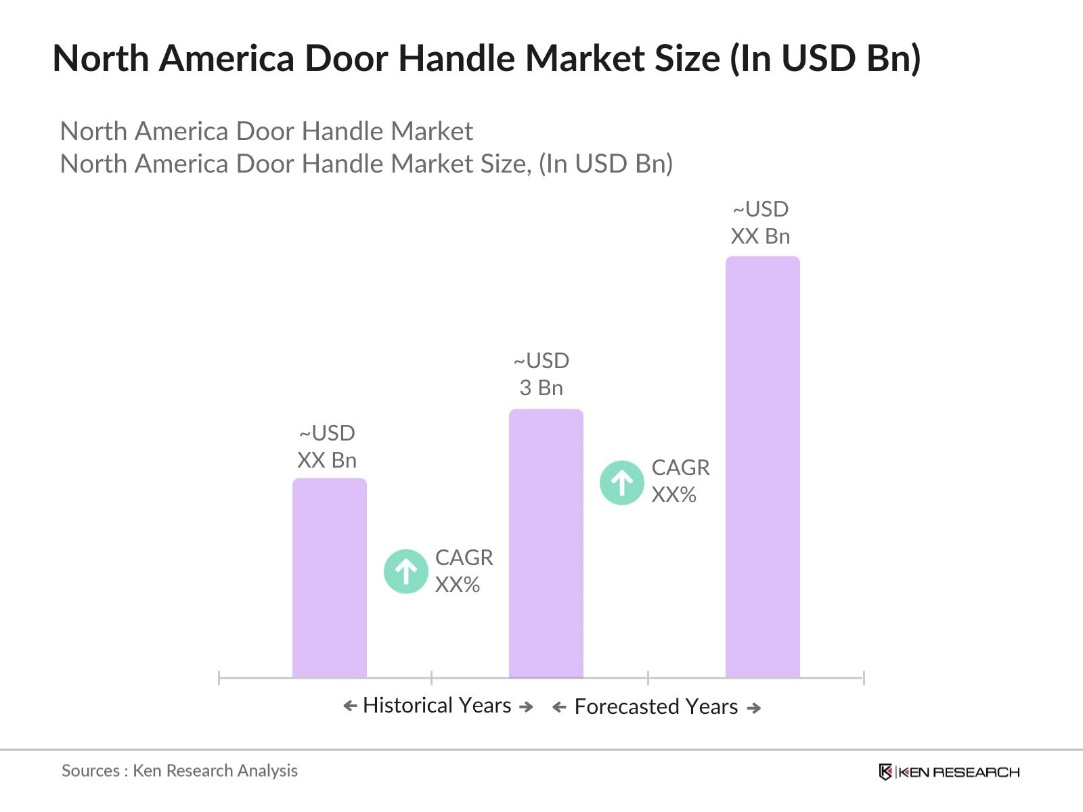
- The market is dominated by cities such as New York, Los Angeles, and Toronto, along with key states like California and Texas. These regions are home to rapidly expanding real estate sectors, urban development initiatives, and high-end residential construction. Additionally, Canada's focus on green building practices and the U.S.'s technological advancements in smart home solutions contribute to their market dominance.
- Compliance with regional building codes is essential for door handle manufacturers in North America. In the U.S., the International Building Code (IBC) sets strict guidelines for hardware used in both residential and commercial construction. For instance, door handles must meet specific criteria for accessibility under the Americans with Disabilities Act (ADA). The IBC also mandates durability and safety standards, particularly for fire-rated doors. These regulations ensure that manufacturers adhere to stringent safety and performance criteria, influencing design and material choices.
North America Door Handle Market Segmentation
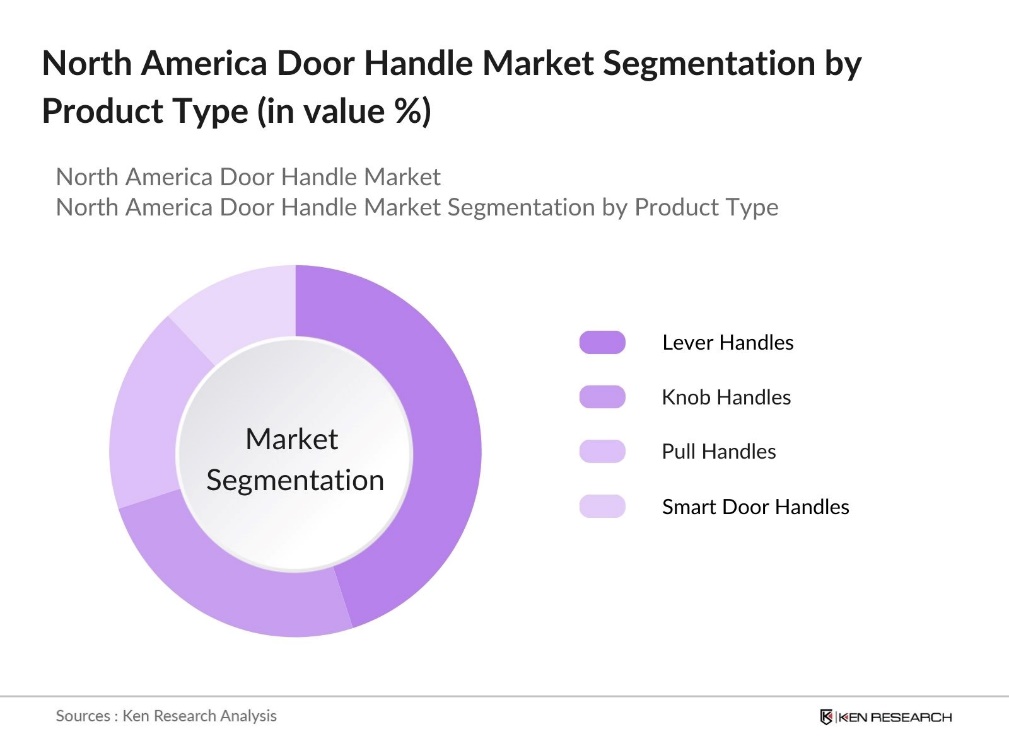
By Product Type: The North America Door Handle Market is segmented by product type into lever handles, knob handles, pull handles, and smart door handles. Lever handles dominate the market, owing to their ease of use, especially in residential applications. These handles offer better ergonomics, making them accessible for people of all ages and abilities. Lever handles are also preferred due to their durability and wide range of available designs, which appeal to homeowners looking to improve the aesthetic quality of their homes. In commercial settings, lever handles are favored due to the strict safety standards, as they are easier to operate during emergencies.
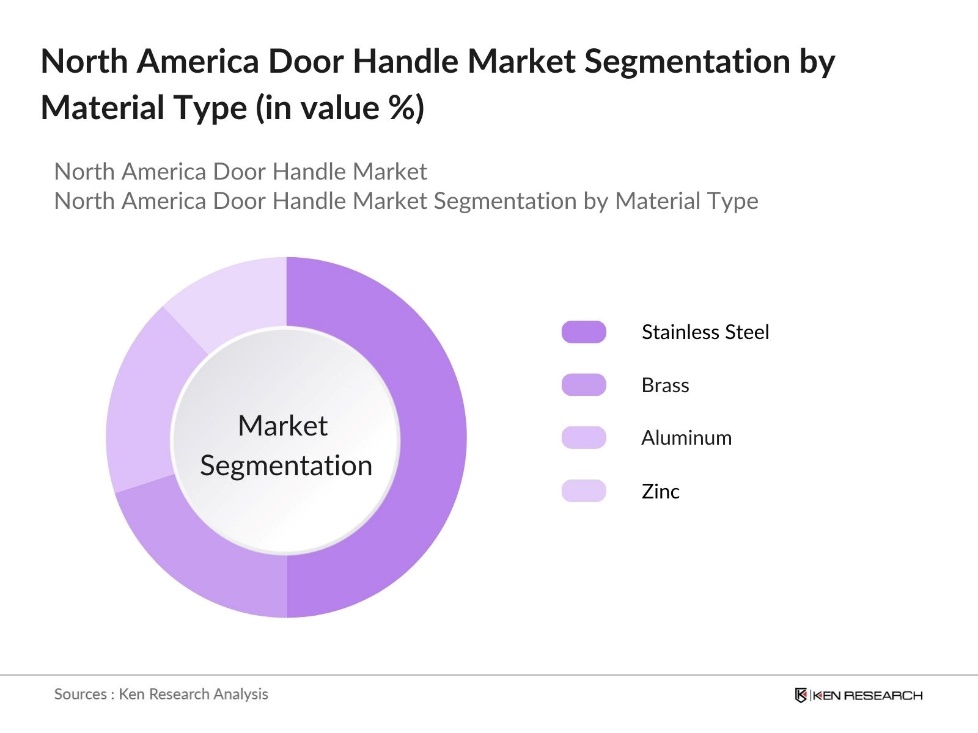
By Material Type: The market is also segmented by material type, including stainless steel, brass, aluminum, and zinc. Stainless steel holds the dominant market share due to its superior durability, resistance to corrosion, and low maintenance, making it the material of choice for both residential and commercial door handles. Stainless steel is particularly favored in coastal areas where humidity and salt air can lead to corrosion. Additionally, its sleek appearance makes it popular in modern architectural designs, contributing to its leading position in the market.
North America Door Handle Market Competitive Landscape
The market is dominated by several key players, which include both global and regional companies. These players have established strong brand loyalty and extensive distribution networks, allowing them to maintain a significant market presence. The competition is driven by factors such as product innovation, quality, design variety, and after-sales services.
|
Company |
Establishment Year |
Headquarters |
Revenue (USD Mn) |
No. of Employees |
Product Portfolio |
Technology Integration |
Regional Presence |
R&D Investment |
Sustainability Initiatives |
|
ASSA ABLOY |
1994 |
Stockholm, Sweden |
|||||||
|
Allegion PLC |
2013 |
Dublin, Ireland |
|||||||
|
Dormakaba Holding AG |
1862 |
Rmlang, Switzerland |
|||||||
|
Kwikset |
1946 |
Lake Forest, USA |
|||||||
|
Baldwin Hardware |
1946 |
Reading, USA |
North America Door Handle Industry Analysis
Growth Drivers
- Urbanization and Commercial Construction: The rapid urbanization in North America has significantly driven the demand for door handles. In 2023, the urban population in the USA is increased and fueling growth in construction activities. Commercial construction, such as office buildings, schools, and healthcare centers, has also expanded due to increased economic activity. According to the U.S. Census Bureau, total construction spending for 2023 is estimated to be around $2.0 trillion.
- Smart Home Adoption: Smart homes are becoming more widespread across North America, contributing to the increased demand for technologically integrated door handles. The smart lock market has been experiencing significant growth, with estimates suggesting that 30 to 40 million smart locks are sold annually in the U.S. With smart homes expected to increase further, innovative door handle solutions integrated with IoT technologies are gaining traction. The U.S. Department of Energy emphasizes the potential for smart home technologies to enhance energy efficiency, creating additional demand for energy-conscious door hardware.
- Infrastructure Development Initiatives: Government infrastructure initiatives in North America, such as the U.S. Infrastructure Investment and Jobs Act (IIJA), are driving growth in the door handle market. These projects focus on modernizing public buildings, housing, and transportation, leading to increased demand for door hardware. Refurbishing older structures also boosts the need for compliant, durable products. Similarly, Canadas focus on infrastructure upgrades supports growth across residential and commercial sectors.
Market Challenges
- Price Fluctuations of Raw Materials (Metal, Zinc, Aluminum): Fluctuating raw material prices, including metal, zinc, and aluminum, pose a significant challenge for the North American door handle market. These variations can complicate cost management for manufacturers, making it difficult to maintain consistent pricing for consumers. Factors like supply chain disruptions and changing tariffs further impact the production and procurement process. As a result, manufacturers must navigate these unpredictable costs while ensuring product quality and competitiveness.
- Competition from Low-Cost Imports: The North American door handle market faces stiff competition from low-cost imports, especially from Asia. These imported products, often manufactured with lower labor costs, put pressure on domestic manufacturers to remain competitive without sacrificing quality. The dominance of countries like China, Vietnam, and Mexico in the low-cost sector creates additional challenges for local producers, who must find ways to differentiate their products in a highly competitive environment.
North America Door Handle Market Future Outlook
Over the next five years, the North America Door Handle Market is expected to show steady growth driven by technological advancements, particularly in smart home solutions, along with an increase in renovation and construction activities. The growing popularity of smart door handles integrated with IoT and touchless technology is set to enhance market growth further. Additionally, increasing demand for premium and custom-made door handles due to rising disposable incomes will also contribute to the markets expansion.
Market Opportunities
- Smart Door Handle Integration with IoT: The integration of smart door handles with IoT technology presents a major opportunity for manufacturers in North America. Smart door handles that provide features like remote access, enhanced security, and connectivity with other smart home devices are becoming increasingly popular in both residential and commercial settings. As home automation continues to grow, IoT-enabled door handles are well-positioned to meet the demands of modern consumers seeking convenience and advanced security solutions.
- Demand for Customized and Premium Handles: The rising demand for customized and premium door handles is creating lucrative opportunities for manufacturers in North America. Consumers are increasingly looking for high-end, personalized door hardware that reflects their style and home aesthetic. Manufacturers that provide options such as unique finishes, bespoke designs, and customizable features are poised to capture this growing market. The trend toward luxury home renovations further drives demand for premium-grade door handles, supporting market growth.
Scope of the Report
|
Product Type |
Lever Handles Knob Handles Pull Handles Smart Door Handles |
|
Material Type |
Stainless Steel Brass Aluminum Zinc |
|
End-user |
Residential Commercial Industrial |
|
Technology Integration |
Manual Automatic (Smart Lock Systems) |
|
Distribution Channel |
Retail (Physical Stores, E-commerce) Wholesale Direct Sales |
Products
Key Target Audience
Door Handle Manufacturers
Building and Construction Companies
Architectural Firms
Smart Home Technology Providers
Government and Regulatory Bodies (U.S. Department of Housing and Urban Development, Canadian Housing and Mortgage Corporation)
Investors and venture capital Firms
Banks and Financial Institutions
Companies
Players Mentioned in the Report
ASSA ABLOY
Allegion PLC
Dormakaba Holding AG
Kwikset
Baldwin Hardware
Hafele America Co.
Schlage Lock Company LLC
Emtek Products, Inc.
HOPPE North America, Inc.
Rocky Mountain Hardware
Table of Contents
1. North America Door Handle Market Overview
1.1. Definition and Scope
1.2. Market Taxonomy
1.3. Market Growth Rate
1.4. Market Segmentation Overview
2. North America Door Handle Market Size (In USD Bn)
2.1. Historical Market Size
2.2. Year-On-Year Growth Analysis
2.3. Key Market Developments and Milestones (Technological advancements, Industry Standards, Certifications)
3. North America Door Handle Market Analysis
3.1. Growth Drivers
3.1.1. Urbanization and Commercial Construction
3.1.2. Smart Home Adoption
3.1.3. Infrastructure Development Initiatives
3.1.4. Rising Consumer Aesthetic Demand
3.2. Market Challenges
3.2.1. Price Fluctuations of Raw Materials (Metal, Zinc, Aluminum)
3.2.2. Competition from Low-Cost Imports
3.2.3. Environmental Regulations
3.2.4. Durability and Performance Standards
3.3. Opportunities
3.3.1. Smart Door Handle Integration with IoT
3.3.2. Demand for Customized and Premium Handles
3.3.3. Energy-efficient Door Handle Mechanisms
3.4. Trends
3.4.1. Minimalist and Modern Design Preferences
3.4.2. Expansion of E-commerce Sales Channels
3.4.3. Sustainable Material Use in Production
3.4.4. Anti-bacterial Coating for Handles (Post-pandemic Demand)
3.5. Government Regulations (Safety and Standards in Construction)
3.5.1. Regional Building Codes
3.5.2. Green Building Certifications
3.5.3. Import Tariffs and Duties
3.6. SWOT Analysis
3.7. Stakeholder Ecosystem (Manufacturers, Distributors, Retailers)
3.8. Porters Five Forces Analysis (Supplier Bargaining Power, Competitive Rivalry, etc.)
3.9. Competition Ecosystem (Key Market Players, Market Share)
4. North America Door Handle Market Segmentation
4.1. By Product Type (In Value %)
4.1.1. Lever Handles
4.1.2. Knob Handles
4.1.3. Pull Handles
4.1.4. Smart Door Handles
4.2. By Material Type (In Value %)
4.2.1. Stainless Steel
4.2.2. Brass
4.2.3. Aluminum
4.2.4. Zinc
4.3. By End-user (In Value %)
4.3.1. Residential
4.3.2. Commercial
4.3.3. Industrial
4.4. By Technology Integration (In Value %)
4.4.1. Manual
4.4.2. Automatic (Smart Lock Systems)
4.5. By Distribution Channel (In Value %)
4.5.1. Retail (Physical Stores, E-commerce)
4.5.2. Wholesale
4.5.3. Direct Sales to Builders
5. North America Door Handle Market Competitive Analysis
5.1. Detailed Profiles of Major Companies
5.1.1. ASSA ABLOY
5.1.2. Allegion PLC
5.1.3. Dormakaba Holding AG
5.1.4. Kwikset
5.1.5. Baldwin Hardware
5.1.6. Spectrum Brands Holdings, Inc.
5.1.7. Hafele America Co.
5.1.8. Emtek Products, Inc.
5.1.9. Schlage Lock Company LLC
5.1.10. HOPPE North America, Inc.
5.1.11. Roto Frank AG
5.1.12. ITALBRASS Group
5.1.13. Codelocks Inc.
5.1.14. SARGENT Manufacturing Company
5.1.15. Rocky Mountain Hardware
5.2. Cross Comparison Parameters (Market Share, Product Portfolio, Revenue, Regional Presence, Technology Integration, Product Customization, Certification Standards, Distribution Network)
5.3. Market Share Analysis
5.4. Strategic Initiatives (Product Launches, Expansions)
5.5. Mergers and Acquisitions
5.6. Investment Analysis
5.7. Government Grants
5.8. Private Equity Investments
6. North America Door Handle Market Regulatory Framework
6.1. Building Codes and Certification Standards
6.2. Compliance Requirements (Safety, Durability)
6.3. Environmental Standards (Green Building Regulations)
7. North America Door Handle Future Market Size (In USD Bn)
7.1. Future Market Size Projections
7.2. Key Factors Driving Future Market Growth (Smart Home Adoption, Architectural Trends)
8. North America Door Handle Future Market Segmentation
8.1. By Product Type (In Value %)
8.2. By Material Type (In Value %)
8.3. By End-user (In Value %)
8.4. By Technology Integration (In Value %)
8.5. By Distribution Channel (In Value %)
9. North America Door Handle Market Analysts' Recommendations
9.1. TAM/SAM/SOM Analysis
9.2. Strategic Growth Roadmap for Manufacturers
9.3. Market Penetration Strategies
9.4. White Space Opportunity Analysis
Disclaimer Contact UsResearch Methodology
Step 1: Identification of Key Variables
The first step involves constructing an ecosystem map encompassing all the major stakeholders within the North America Door Handle Market. Extensive desk research was conducted using both secondary and proprietary databases to gather detailed industry-level information. The primary objective of this phase was to identify and define the key variables influencing market dynamics.
Step 2: Market Analysis and Construction
In this phase, we compiled and analyzed historical data related to the North America Door Handle Market. This included evaluating market penetration rates and the revenue generated by key players. Additionally, service quality statistics were analyzed to ensure the reliability of the revenue estimates and market insights.
Step 3: Hypothesis Validation and Expert Consultation
Market hypotheses were formulated and validated through interviews with industry experts. These consultations provided insights into operational efficiencies, market performance, and upcoming industry trends. This step helped in refining the initial market data and enhancing the accuracy of projections.
Step 4: Research Synthesis and Final Output
The final phase involved engaging directly with manufacturers and distributors to gather insights on product segments, sales performance, and consumer preferences. This interaction, combined with desk research, helped ensure that the final report presented a comprehensive and validated analysis of the North America Door Handle Market.
Frequently Asked Questions
01. How big is the North America Door Handle Market?
The North America Door Handle Market is valued at USD 3 billion, driven by real estate development, increasing demand for smart home solutions, and growing renovation projects across the region.
02. What are the key challenges in the North America Door Handle Market?
Challenges in North America Door Handle Market include fluctuating raw material prices, competition from low-cost imports, and the need to meet strict environmental and safety standards. Additionally, the market faces challenges in adopting sustainable production practices.
03. Who are the major players in the North America Door Handle Market?
Key players in North America Door Handle Market include ASSA ABLOY, Allegion PLC, Dormakaba Holding AG, Kwikset, and Baldwin Hardware. These companies dominate the market due to their extensive product portfolios, strong distribution networks, and technological innovation.
04. What is driving the growth of the North America Door Handle Market?
The North America Door Handle Market growth is propelled by rising construction and renovation activities, increased consumer demand for premium and customizable door handles, and the growing adoption of smart door handle solutions.
Why Buy From Us?

What makes us stand out is that our consultants follows Robust, Refine and Result (RRR) methodology. i.e. Robust for clear definitions, approaches and sanity checking, Refine for differentiating respondents facts and opinions and Result for presenting data with story

We have set a benchmark in the industry by offering our clients with syndicated and customized market research reports featuring coverage of entire market as well as meticulous research and analyst insights.

While we don't replace traditional research, we flip the method upside down. Our dual approach of Top Bottom & Bottom Top ensures quality deliverable by not just verifying company fundamentals but also looking at the sector and macroeconomic factors.

With one step in the future, our research team constantly tries to show you the bigger picture. We help with some of the tough questions you may encounter along the way: How is the industry positioned? Best marketing channel? KPI's of competitors? By aligning every element, we help maximize success.

Our report gives you instant access to the answers and sources that other companies might choose to hide. We elaborate each steps of research methodology we have used and showcase you the sample size to earn your trust.

If you need any support, we are here! We pride ourselves on universe strength, data quality, and quick, friendly, and professional service.