
North America Dropshipping Market Outlook to 2030
Region:United States
Author(s):Vijay Kumar
Product Code:KROD9441
Region:United States
Author(s):Vijay Kumar
Product Code:KROD9441
November 2024
90
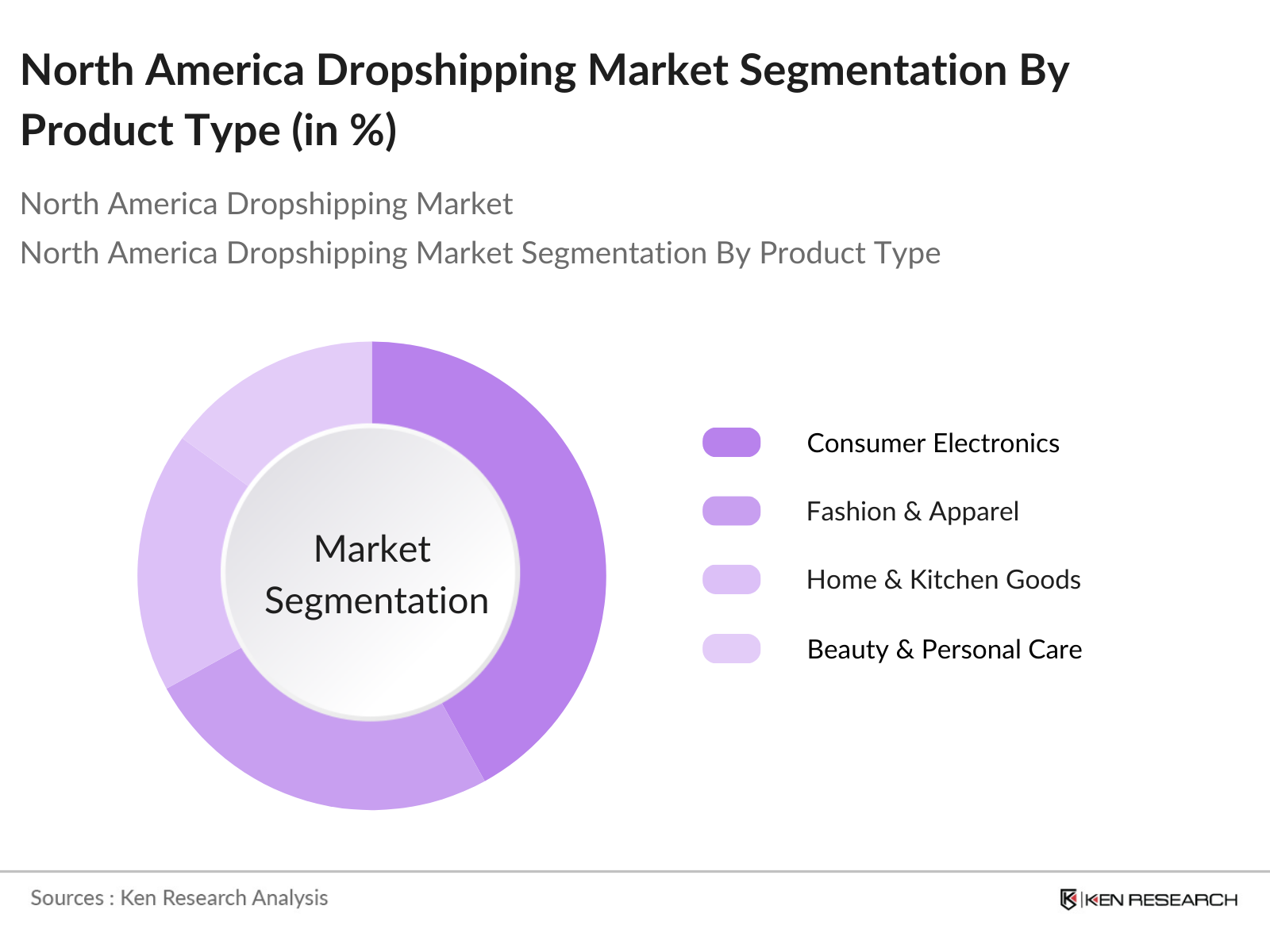
By Product Type: The North America Dropshipping Market is segmented by product type into Consumer Electronics, Fashion & Apparel, Home & Kitchen Goods, Beauty & Personal Care, and Health & Wellness Products. Consumer Electronics holds the largest market share due to ongoing demand for gadgets and accessories. Brands capitalizing on consumer electronics have seen significant growth, as these items are widely sought after by a diverse audience looking for cost-effective, convenient shopping options.
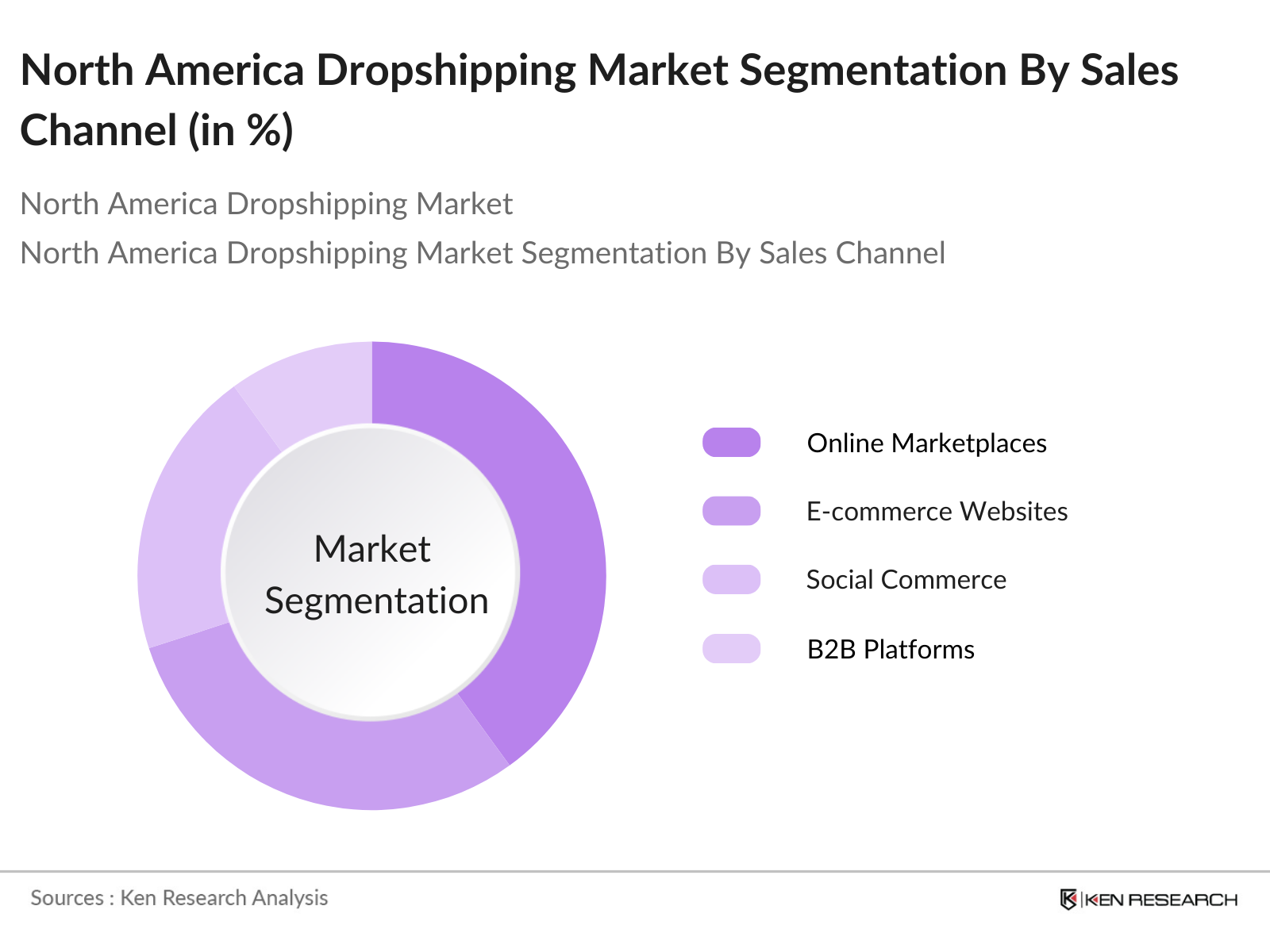
By Sales Channel: The market is segmented by sales channel into Online Marketplaces, E-commerce Websites, Social Commerce, and B2B Platforms. Online marketplaces, such as Amazon and eBay, dominate the segment, offering high visibility and established user trust, which benefits dropshippers. These platforms allow dropshipping businesses to connect seamlessly with a massive customer base, thereby driving the high market share of this sub-segment.
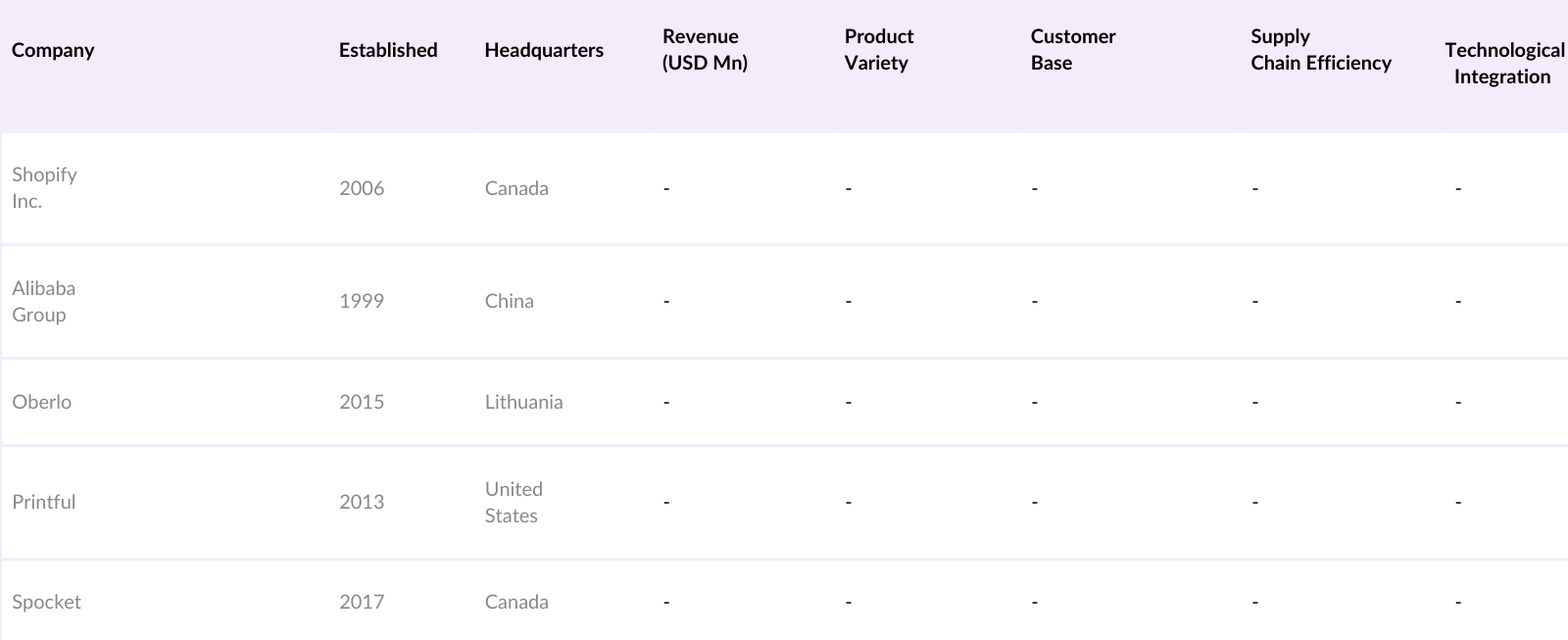
The North America Dropshipping Market is dominated by a mix of established e-commerce platforms and specialized dropshipping solution providers. Major players have developed strong logistics networks and partnerships with manufacturers to ensure fast and reliable product delivery, which is critical in the dropshipping model.
The North America Dropshipping Market is expected to experience strong growth driven by evolving consumer preferences, enhanced digital payment infrastructure, and improved logistics networks. Key industry trends, such as the integration of AI for personalized shopping and the adoption of green logistics, are expected to further enhance market appeal and attract a broader consumer base.
|
Product Type |
Consumer Electronics Fashion and Apparel Home and Kitchen Goods Beauty and Personal Care Health and Wellness Products |
|
Sales Channel |
Online Marketplaces E-commerce Websites Social Commerce B2B Platforms |
|
End-User Type |
Individual Retailers SMEs Large Enterprises |
|
Application |
Discounted Pricing Competitive Pricing Premium Pricing Bundled Pricing |
|
Region |
United States Canada Mexico |
1.1. Definition and Scope
1.2. Market Taxonomy
1.3. Market Growth Rate
1.4. Market Segmentation Overview
2.1. Historical Market Size
2.2. Year-On-Year Growth Analysis
2.3. Key Market Developments and Milestones
3.1. Growth Drivers
3.1.1. E-commerce Expansion (Market Adoption Rate)
3.1.2. Increase in Mobile Commerce (Device Penetration)
3.1.3. Consumer Demand for Low-cost Products (Cost Sensitivity)
3.1.4. Rising Internet Penetration (Digital Accessibility)
3.2. Market Challenges
3.2.1. Supply Chain Disruptions (Operational Resilience)
3.2.2. Competitive Pricing Pressure (Profit Margin)
3.2.3. Vendor Reliability Issues (Vendor Trustworthiness)
3.2.4. Regulatory Compliance for E-commerce (Legal Requirements)
3.3. Opportunities
3.3.1. Expansion into Untapped Markets (Geographic Penetration)
3.3.2. Adoption of Automation Tools (Process Efficiency)
3.3.3. Personalized Shopping Experiences (Customer Retention)
3.3.4. Social Media Integration (Digital Marketing Impact)
3.4. Trends
3.4.1. AI and ML Integration (Technology Evolution)
3.4.2. Shift towards Sustainable Dropshipping (Environmental Impact)
3.4.3. Data Analytics for Customer Insights (Customer Analytics)
3.4.4. Direct-to-Consumer Model Growth (Sales Channel Optimization)
3.5. Government Regulations
3.5.1. E-commerce Compliance Standards
3.5.2. Trade Policies Impacting Imports
3.5.3. Consumer Data Protection (Data Privacy Regulations)
3.5.4. Tax and Tariff Regulations
3.6. SWOT Analysis
3.7. Stakeholder Ecosystem
3.8. Porters Five Forces Analysis
3.9. Competition Ecosystem
4.1. By Product Type (in Value %)
4.1.1. Consumer Electronics
4.1.2. Fashion and Apparel
4.1.3. Home and Kitchen Goods
4.1.4. Beauty and Personal Care
4.1.5. Health and Wellness Products
4.2. By Sales Channel (in Value %)
4.2.1. Online Marketplaces
4.2.2. E-commerce Websites
4.2.3. Social Commerce
4.2.4. B2B Platforms
4.3. By End-User Type (in Value %)
4.3.1. Individual Retailers
4.3.2. SMEs (Small and Medium Enterprises)
4.3.3. Large Enterprises
4.4. By Pricing Strategy (in Value %)
4.4.1. Discounted Pricing
4.4.2. Competitive Pricing
4.4.3. Premium Pricing
4.4.4. Bundled Pricing
4.5. By Region (in Value %)
4.5.1. United States
4.5.2. Canada
4.5.3. Mexico
5.1. Detailed Profiles of Major Companies
5.1.1. Shopify Inc.
5.1.2. Alibaba Group
5.1.3. Oberlo
5.1.4. SaleHoo
5.1.5. Printful
5.1.6. Spocket
5.1.7. Printify
5.1.8. Doba
5.1.9. Wholesale2B
5.1.10. Modalyst
5.1.11. Megagoods
5.1.12. Sunrise Wholesale
5.1.13. AliExpress Dropshipping
5.1.14. Inventory Source
5.1.15. EPROLO
5.2. Cross Comparison Parameters
- Revenue (USD Mn)
- Market Share (Percentage)
- Service Offerings (Product Variety)
- Customer Satisfaction (CSAT Scores)
- Global Reach (Number of Countries Served)
- Supply Chain Efficiency (Delivery Lead Time)
- Average Product Turnover Time
- Technological Integration Level
5.3. Market Share Analysis
5.4. Strategic Initiatives
5.5. Mergers and Acquisitions
5.6. Investment and Funding Overview
5.7. Venture Capital and Private Equity Activity
5.8. Partnership Landscape
5.9. Government Grants and Subsidies
6.1. Compliance with E-commerce Standards
6.2. Data Privacy and Protection Regulations
6.3. Import and Export Tariff Regulations
6.4. Vendor and Product Liability Compliance
7.1. Future Market Size Projections
7.2. Key Factors Driving Future Growth
8.1. By Product Type
8.2. By Sales Channel
8.3. By End-User Type
8.4. By Pricing Strategy
8.5. By Region
9.1. TAM/SAM/SOM Analysis
9.2. Customer Cohort Analysis
9.3. Marketing and Positioning Strategies
9.4. White Space and Market Gap Analysis
In the initial phase, key variables such as consumer demand trends, sales channels, and e-commerce platform usage rates were identified to outline the market structure. Desk research was conducted, utilizing proprietary databases to capture industry dynamics and influential factors.
Historical data and market penetration rates were analyzed, focusing on shifts in consumer purchasing patterns and the growth of mobile commerce. This phase involved extensive data collection to support revenue forecasts and validate market distribution ratios.
Market hypotheses were refined through expert interviews with e-commerce and supply chain stakeholders. These discussions yielded valuable insights into market challenges, operational efficiencies, and consumer engagement strategies.
The final phase involved cross-verifying data with major dropshipping firms and industry experts to ensure reliability. This iterative process facilitated a comprehensive market assessment and validation of all market dynamics.
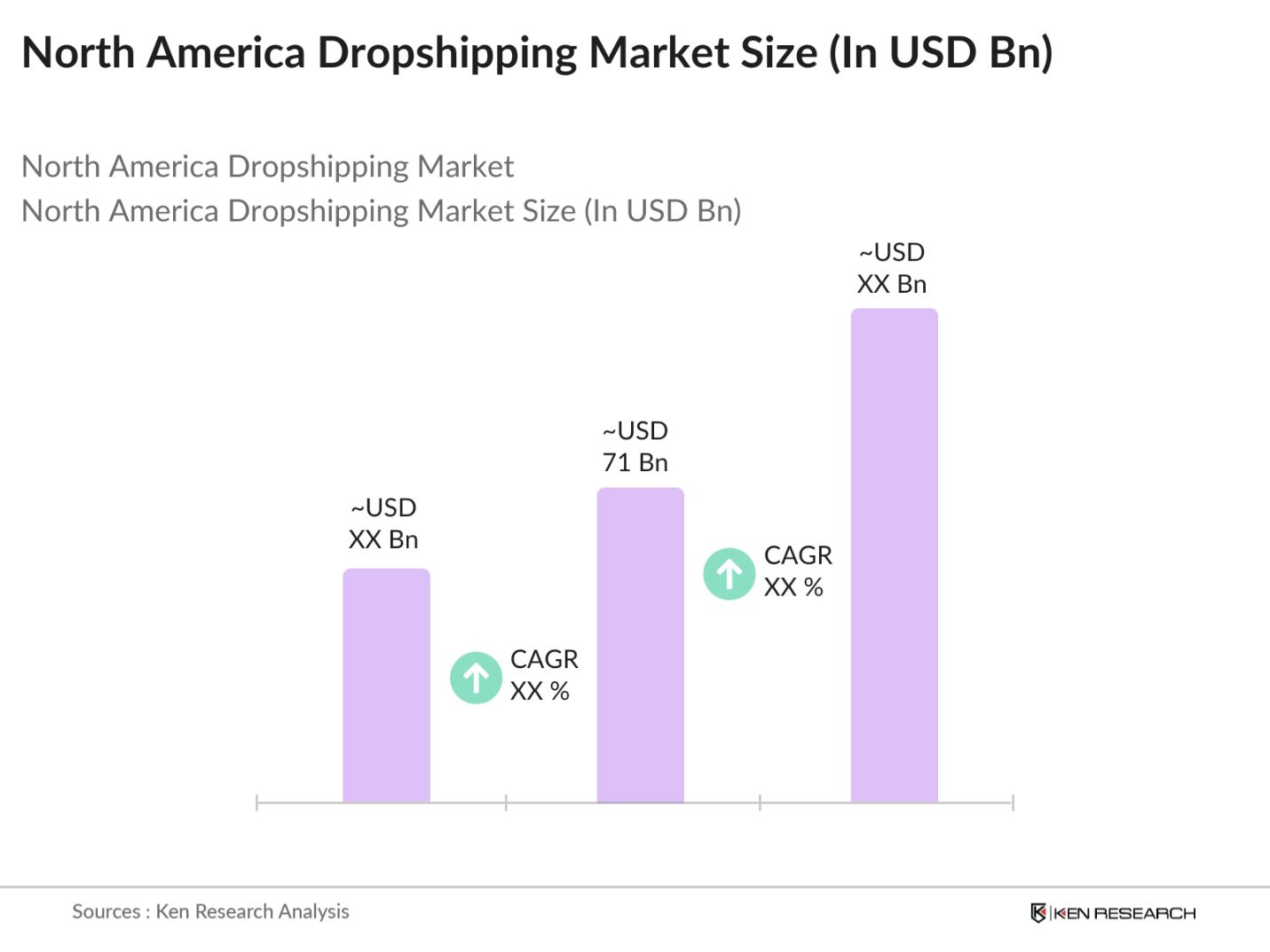
The North America Dropshipping Market is valued at USD 71 billion, based on a five-year historical analysis. This market is largely driven by the rapid growth of e-commerce, increased consumer preference for online shopping, and the rising popularity of cost-effective inventory models among retailers.
Major challenges include supply chain disruptions, high competition in pricing, and regulatory requirements, which pose hurdles for both new and established market entrants.
Key players include Shopify Inc., Alibaba Group, Oberlo, Printful, and Spocket, each leveraging unique strengths in technology integration, vendor partnerships, and product offerings.
The market is driven by increased mobile commerce, high consumer demand for affordable products, and innovative digital marketing, particularly via social media platforms.

What makes us stand out is that our consultants follows Robust, Refine and Result (RRR) methodology. i.e. Robust for clear definitions, approaches and sanity checking, Refine for differentiating respondents facts and opinions and Result for presenting data with story

We have set a benchmark in the industry by offering our clients with syndicated and customized market research reports featuring coverage of entire market as well as meticulous research and analyst insights.

While we don't replace traditional research, we flip the method upside down. Our dual approach of Top Bottom & Bottom Top ensures quality deliverable by not just verifying company fundamentals but also looking at the sector and macroeconomic factors.

With one step in the future, our research team constantly tries to show you the bigger picture. We help with some of the tough questions you may encounter along the way: How is the industry positioned? Best marketing channel? KPI's of competitors? By aligning every element, we help maximize success.

Our report gives you instant access to the answers and sources that other companies might choose to hide. We elaborate each steps of research methodology we have used and showcase you the sample size to earn your trust.

If you need any support, we are here! We pride ourselves on universe strength, data quality, and quick, friendly, and professional service.