
North America E-Sports Market Outlook to 2030
Region:Mexico
Author(s):Shreya Garg
Product Code:KROD4662
Region:Mexico
Author(s):Shreya Garg
Product Code:KROD4662
November 2024
83
Listen to the audio summary
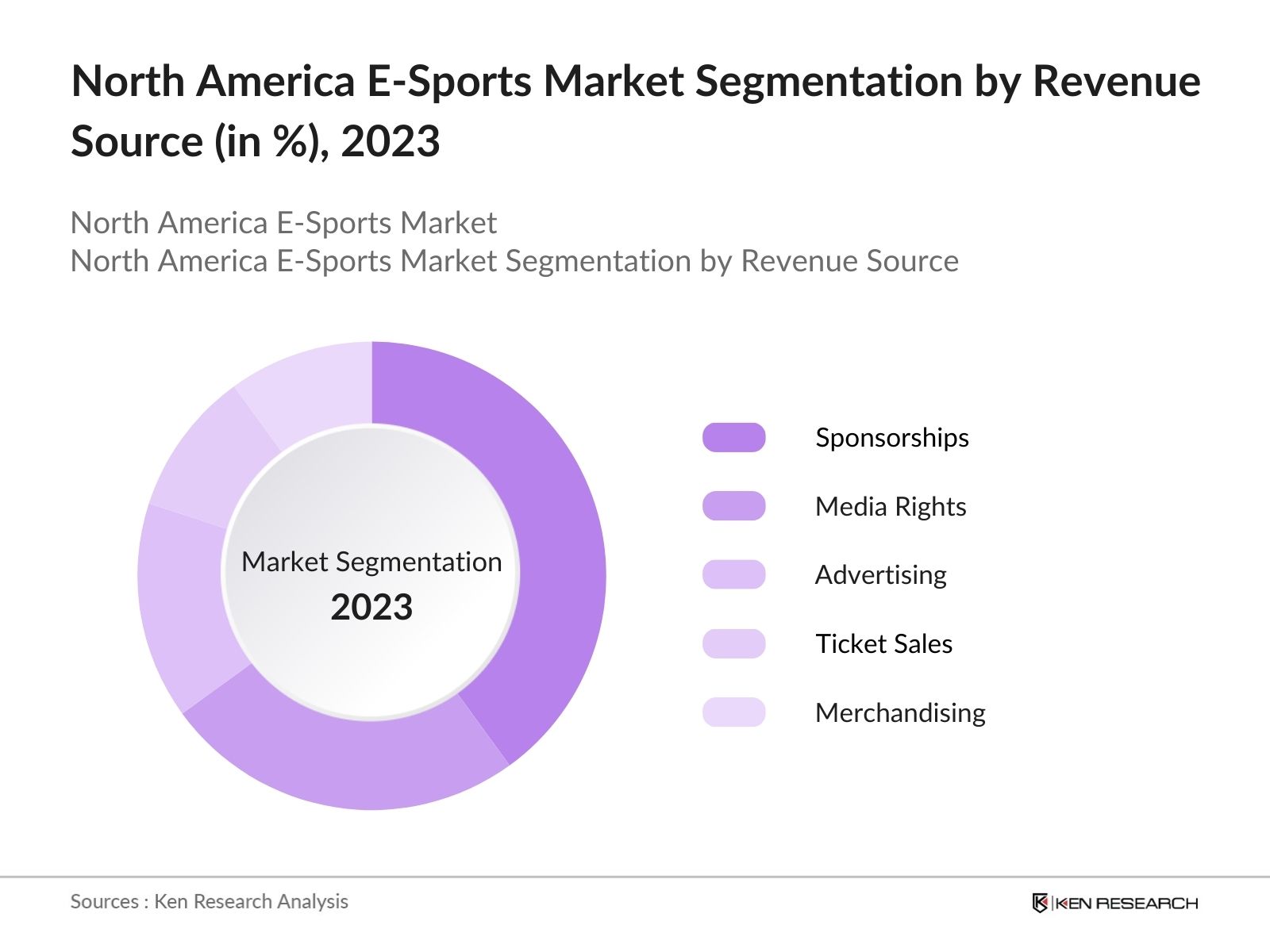
By Revenue Source: The market is segmented by revenue source into sponsorships, media rights, advertising, ticket sales, and merchandising. Sponsorships hold a dominant market share within this segment. The dominance of sponsorship revenue is due to the substantial investments from both endemic and non-endemic brands. Major corporations, including tech giants and consumer goods companies, are keen on associating their brands with the dynamic and youthful e-sports audience. The direct brand exposure that sponsors receive through digital streaming platforms further fuels this segment's growth, making it the most lucrative revenue stream.
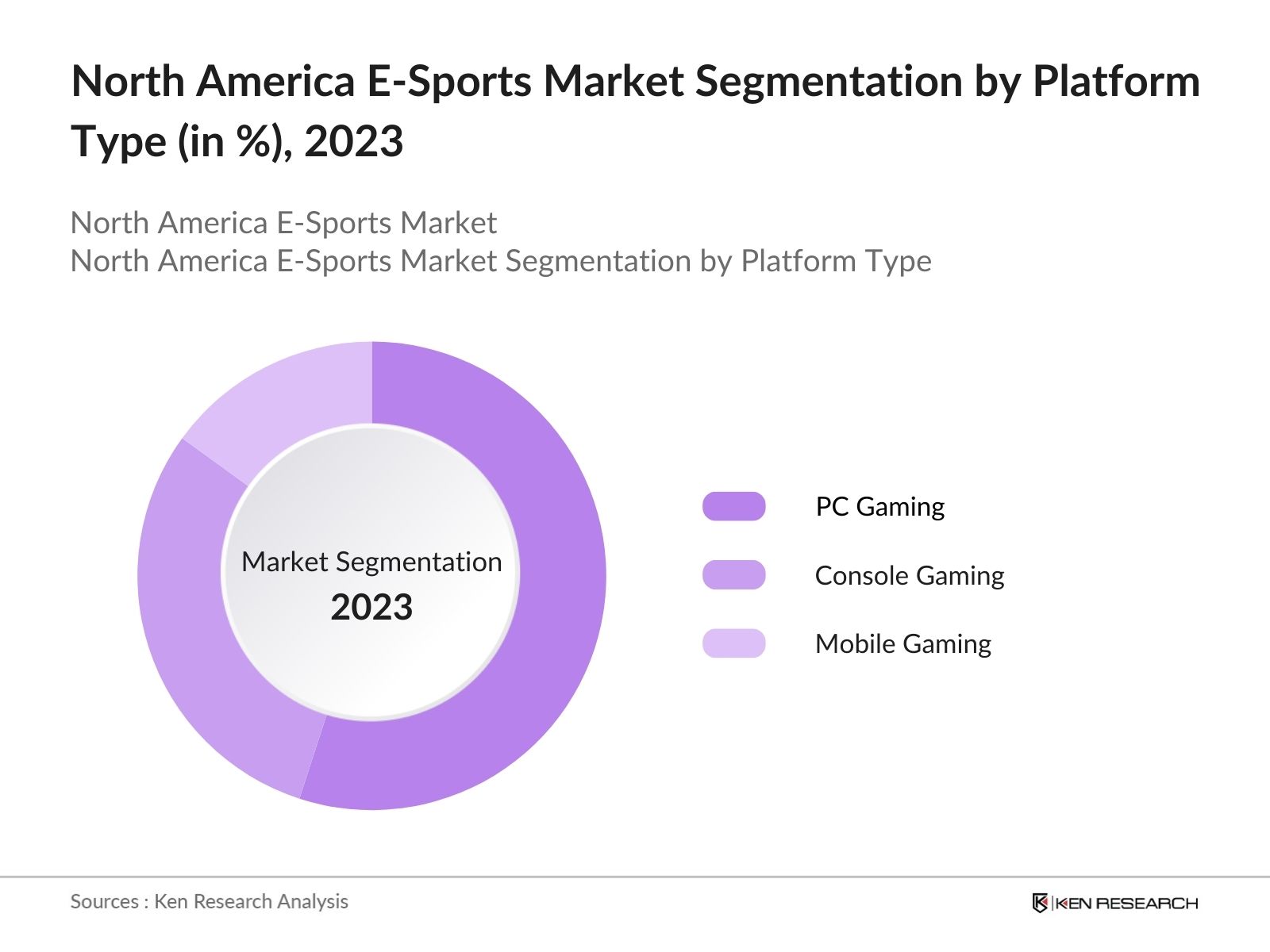
 By Platform Type: The market is segmented by platform type into PC gaming, console gaming, and mobile gaming. PC gaming holds the largest market share in this segment, driven by the presence of popular e-sports titles like League of Legends, Dota 2, and Counter-Strike: Global Offensive. These games are highly optimized for PC platforms, and their dedicated fan bases contribute to the dominance of PC gaming. The superior hardware capabilities of PCs allow for smoother gameplay, higher graphical fidelity, and easier customization, making this segment a favorite among professional gamers.
 North America E-Sports Market Competitive Landscape
The North American E-Sports market is dominated by several key players that shape the competitive landscape. The consolidation of this market can be attributed to strategic investments, mergers and acquisitions, and a significant focus on brand partnerships. For instance, Activision Blizzard and Riot Games play critical roles in developing top-tier e-sports leagues and tournaments. Meanwhile, major streaming platforms like Twitch and YouTube Gaming are crucial for distributing e-sports content to global audiences.
|
Company |
Establishment Year |
Headquarters |
Key Metrics |
Game Portfolio |
Streaming Deals |
Sponsorship Revenue |
Audience Reach |
Team Partnerships |
Key E-Sports Leagues |
|
Activision Blizzard |
1979 |
Santa Monica, USA |
|||||||
|
Riot Games |
2006 |
Los Angeles, USA |
|||||||
|
Valve Corporation |
1996 |
Bellevue, USA |
|||||||
|
Electronic Arts (EA) |
1982 |
Redwood City, USA |
|||||||
|
Twitch (Amazon) |
2011 |
San Francisco, USA |
The North America E-Sports market is expected to see continuous growth driven by increasing investment in e-sports leagues, greater audience engagement through streaming platforms, and innovative content formats. The collaboration between traditional media companies and gaming firms will help expand the reach of e-sports to mainstream audiences. The rise of mobile e-sports in North America, particularly through casual gaming communities, will provide further opportunities for revenue generation, especially in advertising and sponsorships.
|
Revenue Source |
Sponsorships Media Rights Advertising Ticket Sales Merchandising |
|
Platform Type |
PC Gaming Console Gaming Mobile Gaming |
|
Genre |
MOBA FPS Battle Royale Sports Simulation Fighting Games |
|
Audience Type |
Professional E-Sports Audience Casual Audience College and Amateur Players |
|
Region |
United States Canada Mexico |
1.1 Definition and Scope
1.2 Market Taxonomy
1.3 Market Growth Rate
1.4 Market Segmentation Overview
2.1 Historical Market Size
2.2 Year-On-Year Growth Analysis
2.3 Key Market Developments and Milestones
3.1 Growth Drivers (Adoption rate, Audience Growth, Streaming Platforms Penetration)
3.1.1 Increasing Digital Infrastructure
3.1.2 Rise of Streaming Platforms and Influencers
3.1.3 Technological Advancements (AR, VR Integration)
3.1.4 Growing Sponsorship and Advertising Revenues
3.2 Market Challenges (Fragmentation, Regulatory Environment, Data Privacy Concerns)
3.2.1 Lack of Standardized Regulations
3.2.2 Cybersecurity and Cheating Issues
3.2.3 High Operational Costs for Tournament Hosting
3.3 Opportunities (Partnerships, Franchising, Cross-Industry Collaborations)
3.3.1 Growth in Mobile E-Sports
3.3.2 Expansion into Non-Endemic Markets
3.3.3 Increased Investments from Media and Entertainment Firms
3.4 Trends (Cloud Gaming, Cross-Platform Integration, Female Gamers Engagement)
3.4.1 Integration with Cloud Gaming Platforms
3.4.2 Rise of Collegiate E-Sports
3.4.3 Increasing Diversity in E-Sports Talent and Audience
3.5 Government Regulation (In-Game Transactions, Gambling Laws, Sponsorships)
3.5.1 Regional Compliance on Sponsorships and Partnerships
3.5.2 Regulatory Oversight on Prize Pools
3.5.3 Restrictions on Gambling and Betting in E-Sports
3.6 SWOT Analysis
3.7 Stake Ecosystem (Tournament Organizers, Streaming Platforms, Game Developers)
3.8 Porters Five Forces (Entry Barriers, Buyer Power, Threat of Substitutes)
3.9 Competition Ecosystem
4.1 By Revenue Source (In Value %)
4.1.1 Sponsorships
4.1.2 Media Rights
4.1.3 Advertising
4.1.4 Ticket Sales
4.1.5 Merchandising
4.2 By Platform Type (In Value %)
4.2.1 PC Gaming
4.2.2 Console Gaming
4.2.3 Mobile Gaming
4.3 By Genre (In Value %)
4.3.1 MOBA (Multiplayer Online Battle Arena)
4.3.2 FPS (First-Person Shooter)
4.3.3 Battle Royale
4.3.4 Sports Simulation
4.3.5 Fighting Games
4.4 By Audience Type (In Value %)
4.4.1 Professional E-Sports Audience
4.4.2 Casual Audience
4.4.3 College and Amateur Players
4.5 By Region (In Value %)
4.5.1 United States
4.5.2 Canada
4.5.3 Mexico
5.1 Detailed Profiles of Major Companies
5.1.1 Activision Blizzard
5.1.2 Riot Games
5.1.3 Valve Corporation
5.1.4 Epic Games
5.1.5 Electronic Arts
5.1.6 Microsoft Corporation
5.1.7 Twitch (Amazon)
5.1.8 YouTube Gaming (Google)
5.1.9 Facebook Gaming
5.1.10 ESL Gaming
5.1.11 DreamHack
5.1.12 TSM
5.1.13 Cloud9
5.1.14 Team Liquid
5.1.15 FaZe Clan
5.2 Cross Comparison Parameters (Revenue, Active Players, Partnerships, Market Share, Content Monetization, Viewer Engagement, Sponsorship Deals, Streaming Platform Partnerships)
5.3 Market Share Analysis
5.4 Strategic Initiatives
5.5 Mergers and Acquisitions
5.6 Investment Analysis
5.7 Venture Capital Funding
5.8 Government Grants
5.9 Private Equity Investments
6.1 E-Sports Licensing
6.2 Compliance for Streaming and Broadcasting
6.3 Intellectual Property Laws in E-Sports
6.4 Data Privacy and Player Protection
7.1 Future Market Size Projections
7.2 Key Factors Driving Future Market Growth
8.1 By Revenue Source (In Value %)
8.2 By Platform Type (In Value %)
8.3 By Genre (In Value %)
8.4 By Audience Type (In Value %)
8.5 By Region (In Value %)
9.1 TAM/SAM/SOM Analysis
9.2 Customer Cohort Analysis
9.3 Marketing Initiatives
9.4 White Space Opportunity Analysis
The initial phase focuses on identifying the essential market variables influencing the North American E-Sports market, such as audience demographics, tournament revenues, and streaming platform penetration. This step is carried out using extensive desk research, drawing from both proprietary and secondary databases to ensure reliable data sources.
This step involves analyzing historical data, tracking e-sports tournament growth, media rights deals, and viewer engagement rates. The market structure is further assessed by examining sponsorship revenues, ticket sales for live events, and digital content consumption patterns on various streaming platforms.
Industry experts from game publishers, e-sports organizations, and media platforms are engaged via in-depth interviews. Their insights on operational challenges and strategic initiatives help refine market estimates and growth trajectories, enhancing the accuracy of the overall market analysis.
This final phase consolidates primary and secondary research findings to develop a comprehensive market report. Detailed interactions with key market players enable us to validate data and projections, resulting in a final output that accurately captures the market's current and outlook.
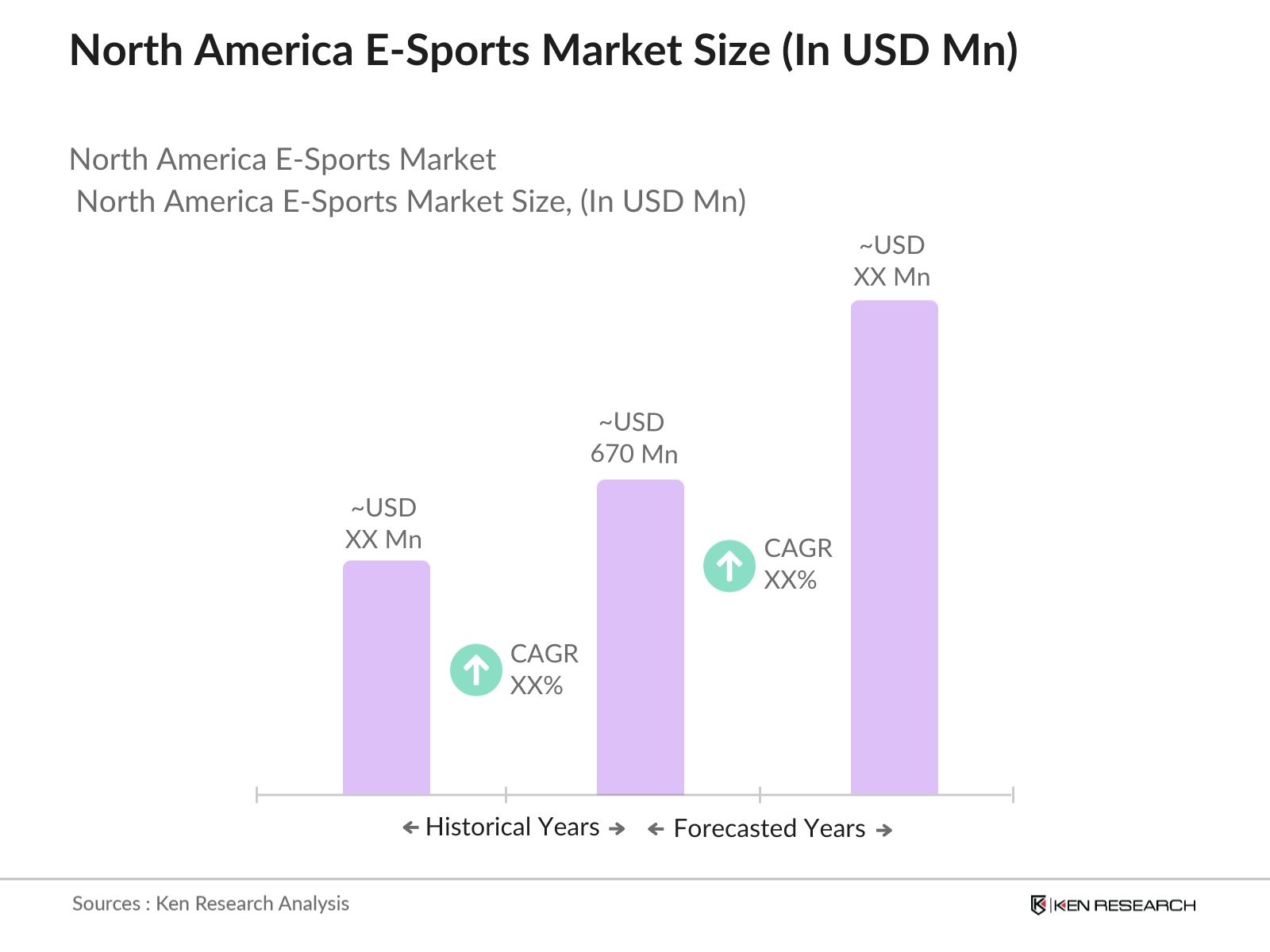
The North America E-Sports market is currently valued at USD 670 million, driven by strong investments in gaming tournaments, streaming platforms, and sponsorships.
The major challenges in the North America E-Sports market include lack of standardized regulations, high operational costs for hosting large tournaments, and cybersecurity concerns related to online gaming platforms.
Key players in the North America E-Sports market include Activision Blizzard, Riot Games, Valve Corporation, Microsoft Corporation, and Electronic Arts (EA), all of whom dominate through their game development and league operations.
Growth drivers in the North America E-Sports market include the increasing popularity of streaming platforms like Twitch and YouTube Gaming, growing investment from non-endemic brands in sponsorship deals, and the rise of mobile e-sports.
Mobile gaming is gaining traction due to the rise of accessible and high-quality mobile games, engaging a more casual e-sports audience and offering new advertising and sponsorship opportunities in the North America E-Sports market.

What makes us stand out is that our consultants follows Robust, Refine and Result (RRR) methodology. i.e. Robust for clear definitions, approaches and sanity checking, Refine for differentiating respondents facts and opinions and Result for presenting data with story

We have set a benchmark in the industry by offering our clients with syndicated and customized market research reports featuring coverage of entire market as well as meticulous research and analyst insights.

While we don't replace traditional research, we flip the method upside down. Our dual approach of Top Bottom & Bottom Top ensures quality deliverable by not just verifying company fundamentals but also looking at the sector and macroeconomic factors.

With one step in the future, our research team constantly tries to show you the bigger picture. We help with some of the tough questions you may encounter along the way: How is the industry positioned? Best marketing channel? KPI's of competitors? By aligning every element, we help maximize success.

Our report gives you instant access to the answers and sources that other companies might choose to hide. We elaborate each steps of research methodology we have used and showcase you the sample size to earn your trust.

If you need any support, we are here! We pride ourselves on universe strength, data quality, and quick, friendly, and professional service.