















North America Edge Analytics Market Outlook to 2030
Region:North America
Author(s):Paribhasha Tiwari
Product Code:KROD3219
November 2024
90
About the Report
North America Edge Analytics Market Overview
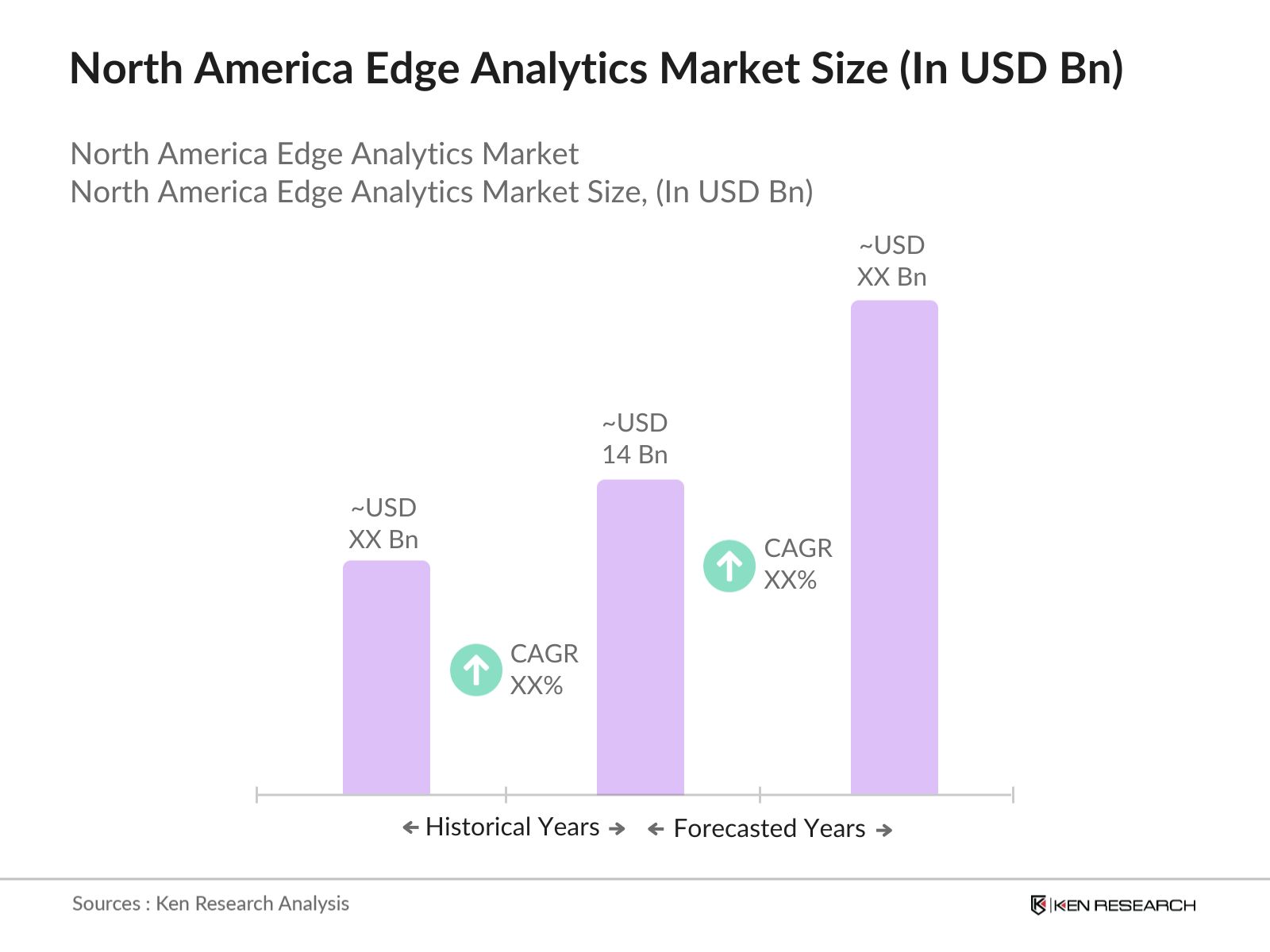
- The North America Edge Analytics market is valued at USD 14 billion, based on a five-year historical analysis. This market is primarily driven by the increasing adoption of IoT devices across industries and the demand for real-time processing capabilities. As businesses seek to process and analyze data closer to the source, edge analytics solutions have become crucial for reducing latency and improving operational efficiency. The integration of 5G networks has further accelerated this market, enabled faster data transmission and enhancing edge processing capabilities.
- Major cities like New York, San Francisco, and Toronto dominate the North American Edge Analytics market due to their robust digital infrastructures, advanced IoT deployments, and strong presence of technology firms. These cities have become innovation hubs, with businesses heavily investing in edge solutions to gain a competitive edge. The high level of industrialization and the presence of key industries such as manufacturing, retail, and healthcare also contribute to the dominance of these regions.
- The U.S. and Canadian governments have made significant investments in 5G infrastructure to support the growth of edge analytics. In 2024, the U.S. government allocated $15 billion to expand 5G coverage in rural and urban areas, facilitating the deployment of edge analytics solutions in sectors like manufacturing and agriculture. This investment aims to bridge the digital divide and enable businesses to harness the benefits of low-latency edge computing.
North America Edge Analytics Market Segmentation
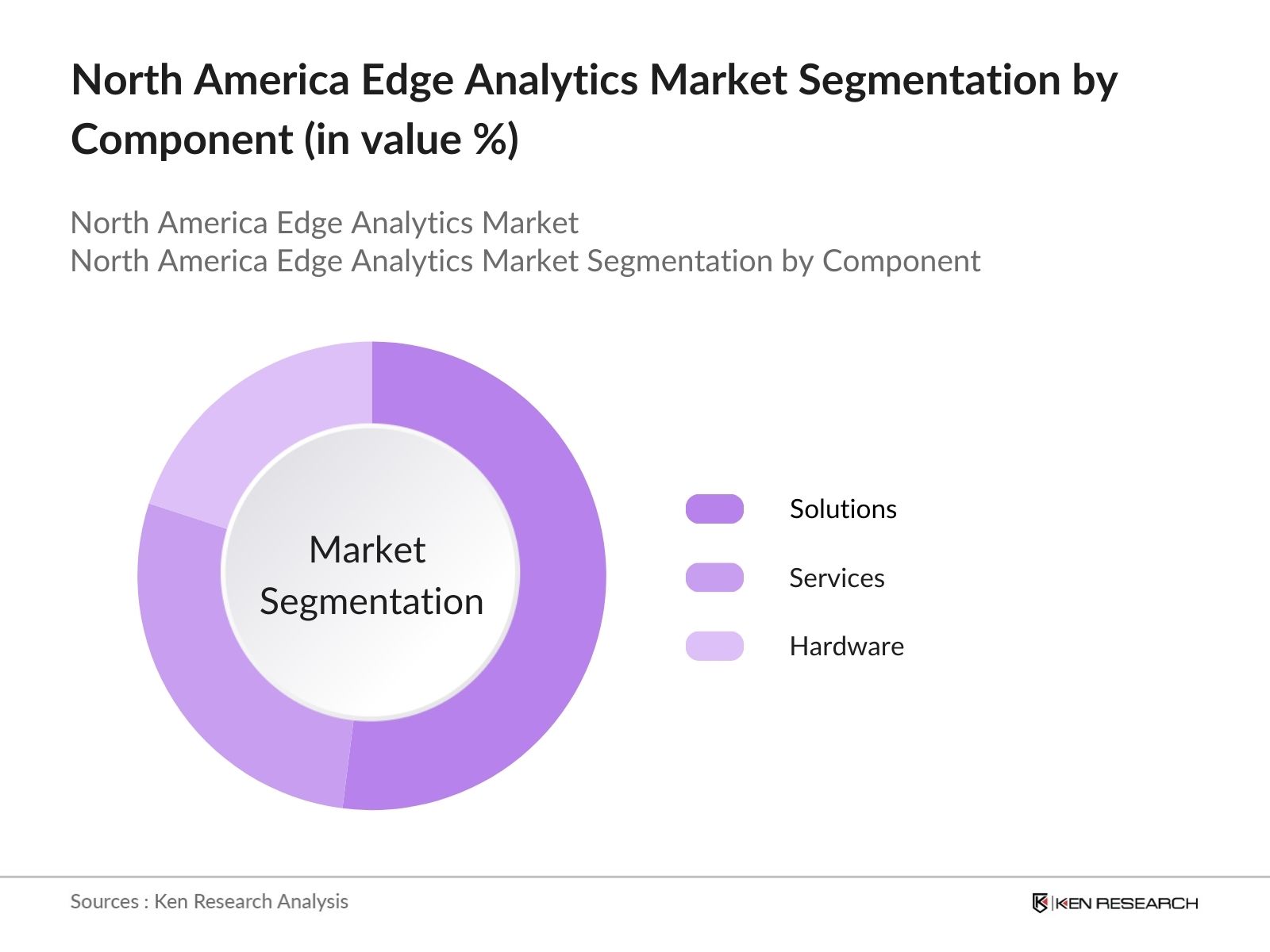
By Component: The North America Edge Analytics market is segmented by component into solutions, services, and hardware. Recently, solutions have taken the lead in market share within the segmentation by component. This is largely due to their critical role in enabling businesses to extract actionable insights from data generated by IoT devices in real-time. Edge analytics solutions offer advanced capabilities, including AI-powered data processing, which helps organizations improve decision-making processes and operational efficiencies.
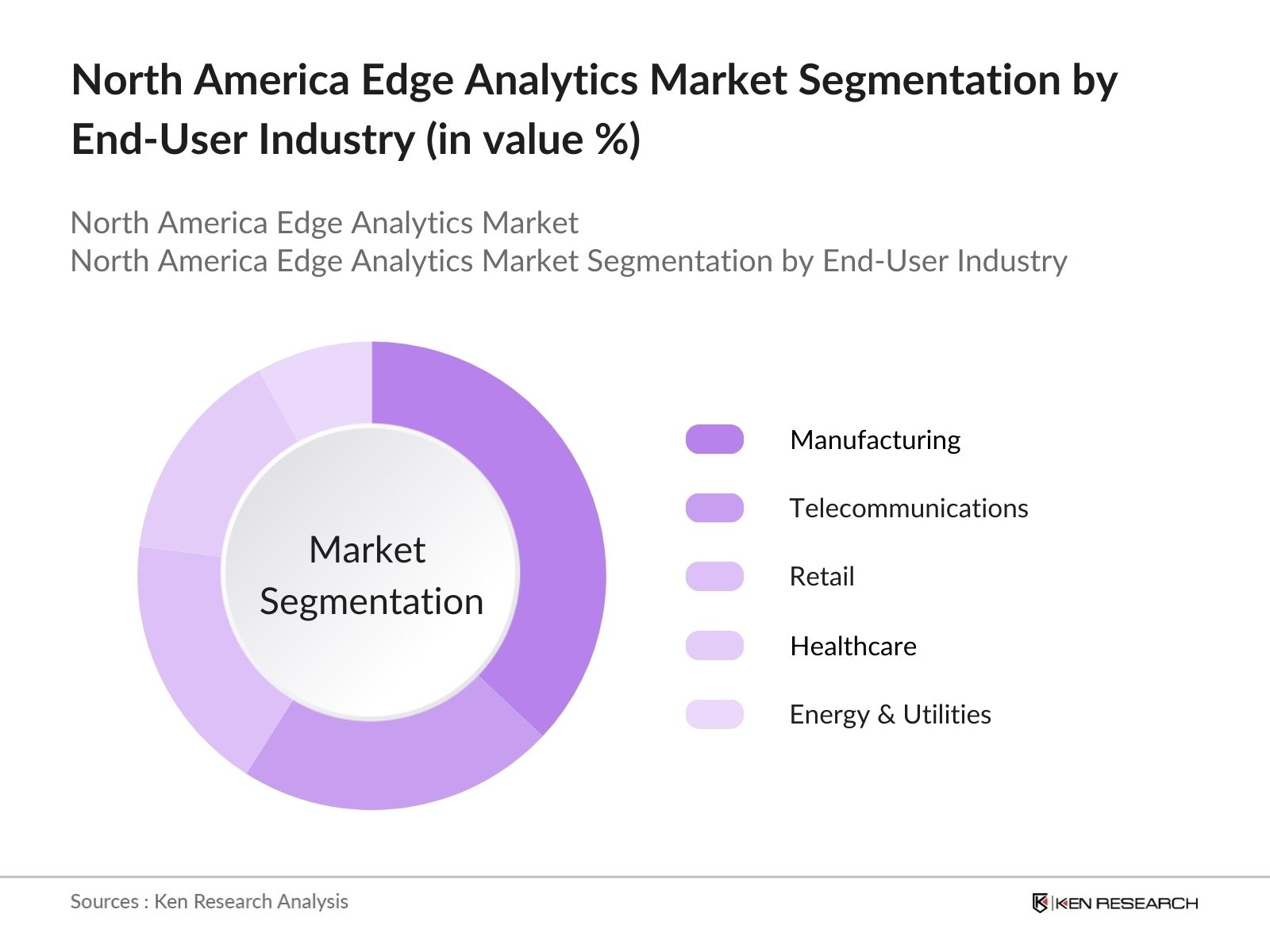
By End-User Industry: The market is also segmented by end-user industries, including manufacturing, telecommunications, retail, healthcare, and energy & utilities. Manufacturing dominates this segmentation due to its reliance on real-time data processing for predictive maintenance, asset management, and process optimization. The adoption of edge analytics in smart factories has enabled manufacturers to minimize downtime and improve production efficiencies, contributing to this segments lead.
North America Edge Analytics Market Competitive Landscape
The North America Edge Analytics market is dominated by several key players, including technology giants and specialized firms offering advanced edge computing and analytics solutions. This consolidation of market power emphasizes the influence of these companies in driving innovation and shaping the industry landscape. Companies such as Cisco Systems Inc. and IBM Corporation are at the forefront of the market due to their established portfolios, partnerships, and innovative edge analytics platforms.
|
Company |
Establishment Year |
Headquarters |
Patents |
Cloud-Edge Integration |
IoT Solutions |
Revenue |
AI & ML Integration |
Strategic Partnerships |
|---|---|---|---|---|---|---|---|---|
|
Cisco Systems Inc. |
1984 |
San Jose, California |
- | - | - | - | - | - |
|
IBM Corporation |
1911 |
Armonk, New York |
- | - | - | - | - | - |
|
Microsoft Corporation |
1975 |
Redmond, Washington |
- | - | - | - | - | - |
|
Amazon Web Services (AWS) |
2006 |
Seattle, Washington |
- | - | - | - | - | - |
|
Dell Technologies |
1984 |
Round Rock, Texas |
- | - | - | - | - | - |
North America Edge Analytics Market Analysis
Growth Drivers
- Edge Computing Integration: The integration of edge computing into analytics systems in North America has accelerated, driven by demand from industries like manufacturing and transportation. As of 2024, companies in these sectors are deploying edge analytics solutions to reduce latency and enhance decision-making processes. The demand for edge analytics systems, especially in manufacturing, grew substantially, with investment in industrial edge computing technologies exceeding $6 billion in 2024, driven by operational efficiency goals. The shift to real-time decision-making in logistics has also played a critical role in the rise of edge analytics across North America.
- Real-Time Data Processing Demand: The need for real-time data processing has become essential for industries like autonomous vehicles, logistics, and healthcare. In 2024, around 60% of healthcare facilities in North America are using real-time analytics to monitor patient data, leading to more accurate and efficient care. Similarly, logistics companies process vast amounts of operational data at the edge to optimize routes and reduce delivery times, with the North American logistics industry investing over $3.5 billion in edge analytics technologies.
- 5G Network Expansion: The ongoing rollout of 5G networks across North America is creating massive opportunities for edge analytics systems. 5G networks provide the low latency required for edge devices to communicate effectively with central analytics platforms. In 2024, over 90% of urban areas in North America have access to 5G, and industries like telecommunications and energy are investing heavily in edge solutions to leverage this enhanced connectivity. The North American telecom sector alone spent over $10 billion in 2024 on infrastructure that supports edge computing initiatives.
Market Challenges
- Data Security Concerns: The proliferation of edge analytics systems in North America has raised significant concerns regarding data security. In 2024, over 70% of enterprises deploying edge analytics cited security breaches as a primary challenge, particularly in sectors like healthcare and finance where sensitive data is processed. This has led to increased demand for robust cybersecurity solutions designed for edge environments, though the costs associated with securing distributed data remain a key challenge.
- Limited Edge Infrastructure: Although 5G has supported edge analytics growth, many rural and underserved regions in North America still face infrastructure limitations, hindering edge deployment. In 2024, over 20 million households in remote areas still lack sufficient network infrastructure to support advanced edge analytics. This gap in infrastructure poses significant challenges for industries like agriculture and logistics that operate in rural settings.
North America Edge Analytics Market Future Outlook
Over the next five years, the North America Edge Analytics market is expected to experience significant growth. This is driven by continuous advancements in IoT and AI technologies, the proliferation of 5G networks, and increasing demand for real-time data analytics. Businesses across various sectors are likely to invest more in edge computing solutions to enhance operational efficiencies, reduce latency, and improve decision-making capabilities at the edge. Moreover, regulatory pressure to ensure data privacy and security will play a critical role in shaping the future of this market.
Market Opportunities
- AI and ML Integration: The integration of artificial intelligence (AI) and machine learning (ML) technologies into edge analytics systems is expected to create significant growth opportunities. In 2024, North American companies invested over $4 billion in AI-powered edge solutions, particularly in sectors like retail and energy. AI models trained at the edge are being used to enhance predictive analytics, optimize operations, and provide real-time decision-making capabilities, creating new revenue streams for technology providers.
- Increased Adoption in Retail and Healthcare: The retail and healthcare sectors are increasingly adopting edge analytics systems to enhance customer experiences and improve patient care. In 2024, over 15,000 retail stores in North America utilized edge analytics for inventory management, customer tracking, and personalized marketing. Similarly, over 1,000 hospitals across the region implemented edge solutions to monitor patient vitals in real-time, driving a growing market for specialized edge computing platforms.
Scope of the Report
|
By Component |
Solutions Services Hardware |
|
By Deployment Mode |
Cloud On-Premise |
|
By Organization Size |
SMEs Large Enterprises |
|
By Application |
Predictive Maintenance Real-Time Data Analysis Asset Performance Management |
|
By End-User Industry |
Manufacturing Telecommunications Retail, Healthcare Energy & Utilities |
Products
Key Target Audience
Investors and Venture Capitalist Firms
Government and Regulatory Bodies (e.g., Federal Communications Commission)
Technology Solution Providers
Cloud Service Providers
Telecommunication Companies
Manufacturing Enterprises
Healthcare Institutions
Energy & Utility Firms
Companies
Players Mentioned in the Report:
Cisco Systems Inc.
IBM Corporation
Microsoft Corporation
Amazon Web Services (AWS)
Dell Technologies
Hewlett Packard Enterprise (HPE)
Intel Corporation
Oracle Corporation
SAS Institute Inc.
General Electric
Table of Contents
1. North America Edge Analytics Market Overview
1.1. Definition and Scope
1.2. Market Taxonomy
1.3. Market Growth Rate
1.4. Market Segmentation Overview
2. North America Edge Analytics Market Size (In USD Bn)
2.1. Historical Market Size
2.2. Year-On-Year Growth Analysis
2.3. Key Market Developments and Milestones
3. North America Edge Analytics Market Analysis
3.1. Growth Drivers
3.1.1 Edge Computing Integration
3.1.2 Real-Time Data Processing
3.1.3 5G Adoption
3.1.4 Industrial IoT Expansion
3.2. Market Challenges
3.2.1 Data Security Concerns
3.2.2 Limited Edge Infrastructure
3.2.3 High Initial Setup Costs
3.2.4 Integration Complexities
3.3. Opportunities
3.31 AI and ML Integration
3.3.2 Increased Adoption in Retail and Healthcare
3.3.3 Demand for Real-Time Analytics
3.3.4 Decentralized Data Storage Solutions
3.4. Trends
3.4.1 Hybrid Cloud Architectures
3.4.2 Expansion of Edge Devices
3.4.3 AI-Driven Edge Analytics
3.4.4 Rise of Edge Analytics-as-a-Service
3.5. Government Regulation
3.5.1 Data Privacy Laws
3.5.2 Cybersecurity Standards
3.5.3 Industry-Specific Compliance
3.5.4 Cross-Border Data Regulations
3.6. SWOT Analysis
3.7. Stakeholder Ecosystem
3.8. Porters Five Forces Analysis
3.9. Competitive Ecosystem
4. North America Edge Analytics Market Segmentation
4.1. By Component (In Value %)
4.1.1. Solutions
4.1.2. Services
4.1.3. Hardware
4.2. By Deployment Mode (In Value %)
4.2.1. Cloud
4.2.2. On-Premise
4.3. By Organization Size (In Value %)
4.3.1. SMEs
4.3.2. Large Enterprises
4.4. By Application (In Value %)
4.4.1. Predictive Maintenance
4.4.2. Real-Time Data Analysis
4.4.3. Asset Performance Management
4.5. By End-User Industry (In Value %)
4.5.1. Manufacturing
4.5.2. Telecommunications
4.5.3. Retail
4.5.4. Healthcare
4.5.5. Energy & Utilities
5. North America Edge Analytics Market Competitive Analysis
5.1. Detailed Profiles of Major Companies
5.1.1. Cisco Systems Inc.
5.1.2. IBM Corporation
5.1.3. Microsoft Corporation
5.1.4. Amazon Web Services (AWS)
5.1.5. Dell Technologies
5.1.6. Hewlett Packard Enterprise (HPE)
5.1.7. General Electric
5.1.8. SAS Institute Inc.
5.1.9. Oracle Corporation
5.1.10. Intel Corporation
5.1.11. SAP SE
5.1.12. Foghorn Systems
5.1.13. EdgeIQ
5.1.14. VMWare Inc.
5.1.15. Huawei Technologies Co. Ltd.
5.2. Cross Comparison Parameters (No. of Patents, AI & ML Integration, IoT Solutions, Data Privacy Compliance, Cloud-Edge Integration, Revenue, Industry Vertical Focus, Strategic Partnerships)
5.3. Market Share Analysis
5.4. Strategic Initiatives (Partnerships, Mergers and Acquisitions, Expansion Strategies)
5.5. Investment and Funding Analysis
5.6. Government Grants and Incentives
5.7. Innovation and Technology Advancements
6. North America Edge Analytics Market Regulatory Framework
6.1. Data Protection and Privacy Standards
6.2. Industry-Specific Compliance (Healthcare, Financial Services)
6.3. Security Protocols for Edge Devices
6.4. Regional and Cross-Border Regulations
7. North America Edge Analytics Future Market Size (In USD Bn)
7.1. Future Market Size Projections
7.2. Key Factors Driving Future Growth
8. North America Edge Analytics Future Market Segmentation
8.1. By Component (In Value %)
8.2. By Deployment Mode (In Value %)
8.3. By Organization Size (In Value %)
8.4. By Application (In Value %)
8.5. By End-User Industry (In Value %)
9. North America Edge Analytics Market Analysts Recommendations
9.1. TAM/SAM/SOM Analysis
9.2. Marketing and Strategic Initiatives
9.3. White Space Opportunity Analysis
9.4. Customer Acquisition Strategies
Research Methodology
Step 1: Identification of Key Variables
The initial phase of research involves creating a comprehensive ecosystem map of the North America Edge Analytics market. This step includes identifying and defining the critical variables, such as key market drivers, technological trends, and regulatory frameworks, using extensive desk research supported by proprietary databases and secondary data sources.
Step 2: Market Analysis and Construction
In this phase, we analyze historical data related to edge analytics adoption in various sectors such as manufacturing, telecommunications, and healthcare. This includes analyzing deployment rates, investment in IoT infrastructure, and market penetration. Revenue generation statistics will also be compiled to estimate the market size accurately.
Step 3: Hypothesis Validation and Expert Consultation
To validate the initial findings, we conduct interviews with industry experts and practitioners from leading companies in the edge analytics domain. These consultations help refine our hypotheses and confirm market estimates, providing valuable insights into industry dynamics.
Step 4: Research Synthesis and Final Output
Finally, we synthesize the findings and data gathered from both primary and secondary research. This stage includes producing a detailed analysis of the North America Edge Analytics market, including segmentation, key growth drivers, challenges, opportunities, and future trends.
Frequently Asked Questions
01. How big is the North America Edge Analytics Market?
The North America Edge Analytics market is valued at USD 14 billion, driven by the growing adoption of IoT devices and real-time data processing capabilities.
02. What are the challenges in the North America Edge Analytics Market?
Key challenges in the North America Edge Analytics market include data security concerns, integration complexities, and the high costs associated with edge infrastructure deployment.
03. Who are the major players in the North America Edge Analytics Market?
Major players in the North America Edge Analytics market include Cisco Systems Inc., IBM Corporation, Microsoft Corporation, Amazon Web Services, and Dell Technologies.
04. What are the growth drivers of the North America Edge Analytics Market?
The North America Edge Analytics market is propelled by the increasing demand for real-time analytics, advancements in AI and IoT technologies, and the deployment of 5G networks across the region.
Why Buy From Us?

What makes us stand out is that our consultants follows Robust, Refine and Result (RRR) methodology. i.e. Robust for clear definitions, approaches and sanity checking, Refine for differentiating respondents facts and opinions and Result for presenting data with story

We have set a benchmark in the industry by offering our clients with syndicated and customized market research reports featuring coverage of entire market as well as meticulous research and analyst insights.

While we don't replace traditional research, we flip the method upside down. Our dual approach of Top Bottom & Bottom Top ensures quality deliverable by not just verifying company fundamentals but also looking at the sector and macroeconomic factors.

With one step in the future, our research team constantly tries to show you the bigger picture. We help with some of the tough questions you may encounter along the way: How is the industry positioned? Best marketing channel? KPI's of competitors? By aligning every element, we help maximize success.

Our report gives you instant access to the answers and sources that other companies might choose to hide. We elaborate each steps of research methodology we have used and showcase you the sample size to earn your trust.

If you need any support, we are here! We pride ourselves on universe strength, data quality, and quick, friendly, and professional service.