
North America Electric Car Market Outlook to 2030
Region:North America
Author(s):Paribhasha Tiwari
Product Code:KROD3427
Region:North America
Author(s):Paribhasha Tiwari
Product Code:KROD3427
November 2024
83
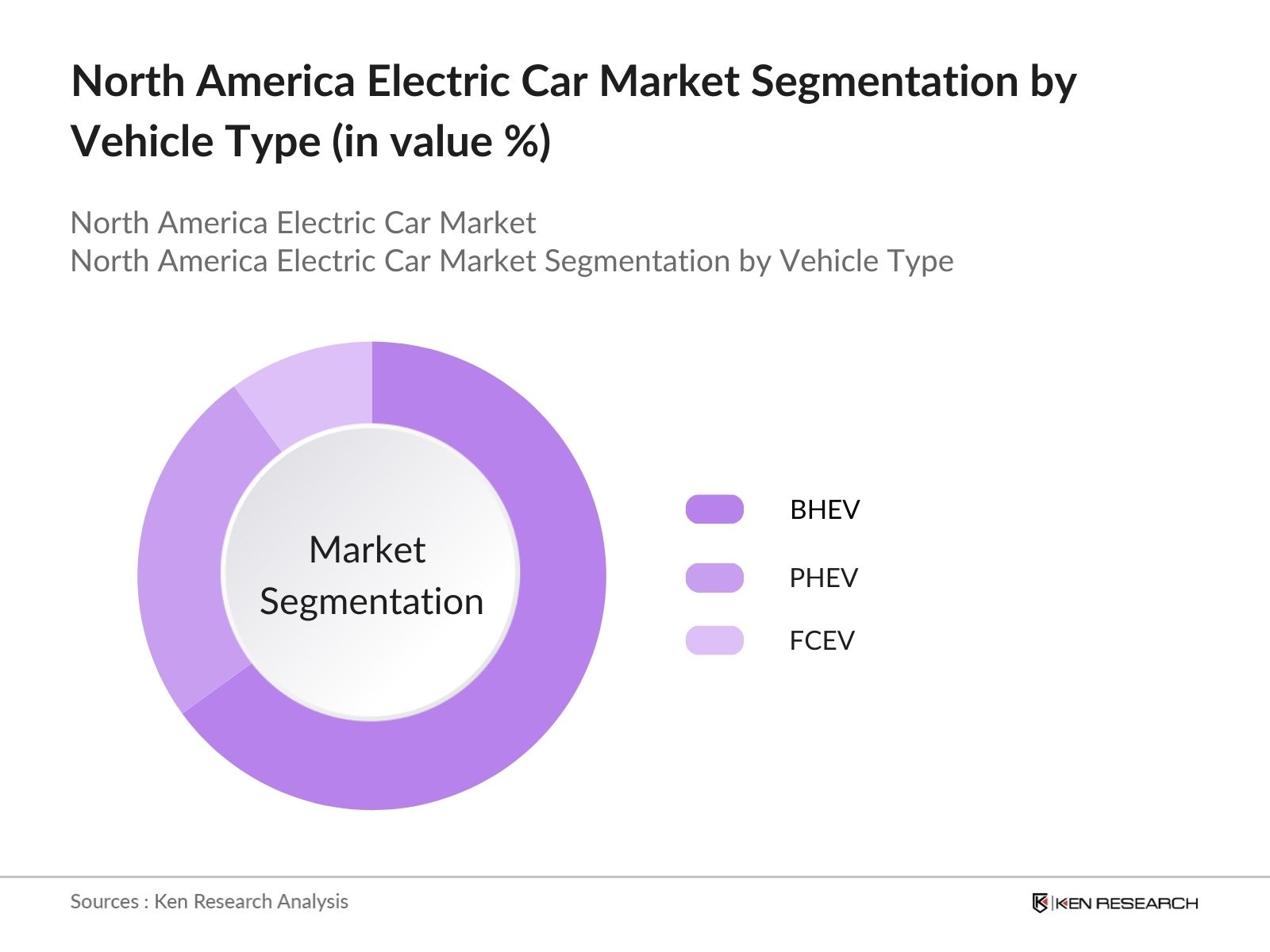
By Vehicle Type: The North America Electric Car market is segmented by vehicle type into Battery Electric Vehicles (BEV), Plug-in Hybrid Electric Vehicles (PHEV), and Fuel Cell Electric Vehicles (FCEV). Currently, BEVs hold the dominant market share due to their simplicity in design, lower maintenance costs, and advancements in battery technology, which have led to increased driving range and reduced charging time. Prominent automakers, such as Tesla, General Motors, and Ford, are heavily focused on expanding their BEV portfolio to cater to growing consumer preferences for zero-emission transportation, further bolstering this segment's dominance.
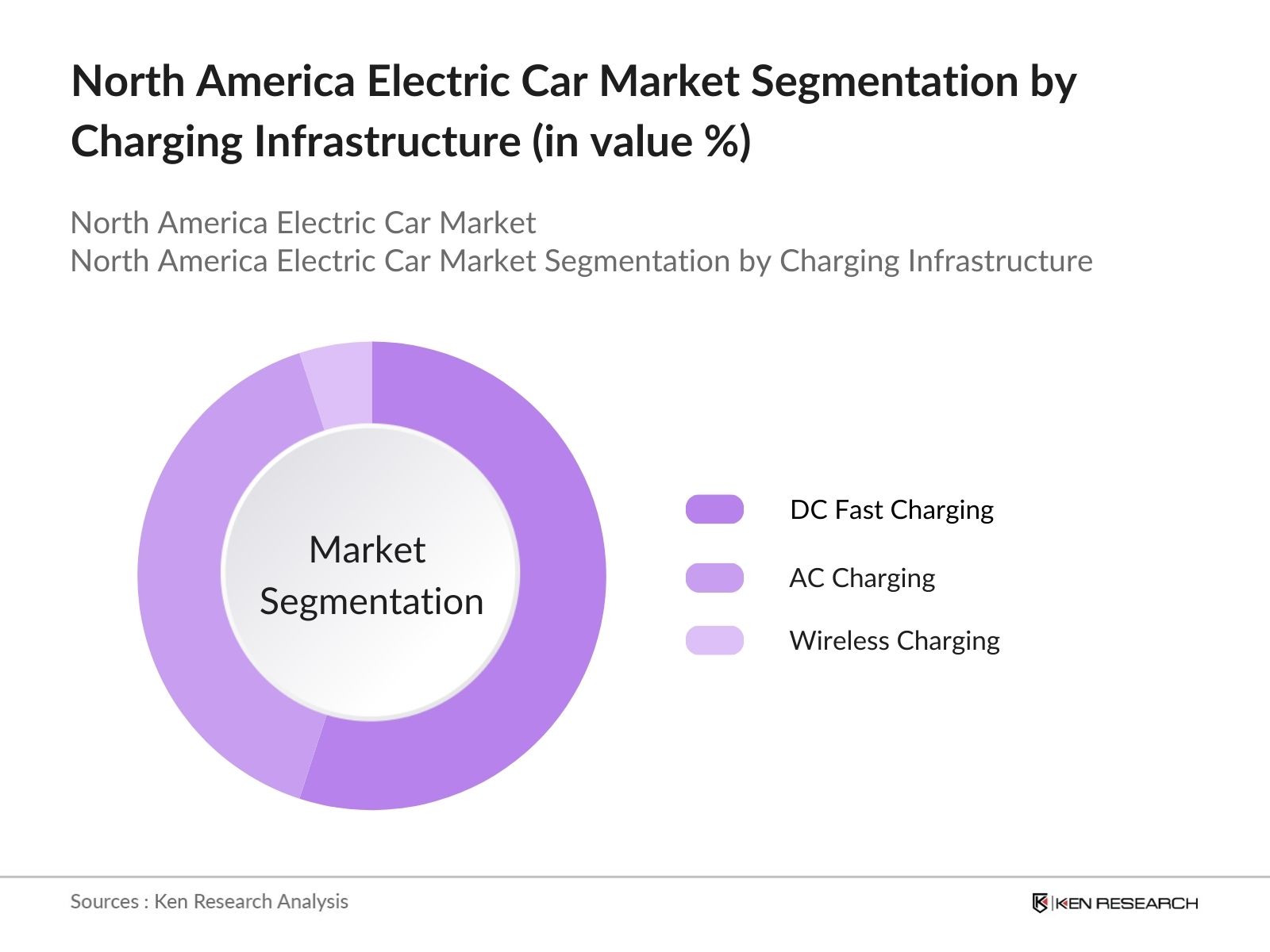
By Charging Infrastructure: The market is also segmented by charging infrastructure into AC Charging, DC Fast Charging, and Wireless Charging. DC Fast Charging currently dominates the market due to its ability to significantly reduce charging times, making it more convenient for consumers and fleet operators. The growing installation of fast-charging stations by companies like Electrify America, ChargePoint, and Tesla has accelerated the adoption of this infrastructure. Governments in the U.S. and Canada have also invested heavily in expanding DC fast-charging networks as part of their clean energy initiatives, further driving its growth.
The North America Electric Car market is dominated by key global and regional players that have established a strong foothold through innovation, strategic partnerships, and investments in sustainable energy solutions. These companies lead in R&D, production capacity, and the development of advanced battery technologies, positioning them to capitalize on the growing EV market.
|
Company |
Year Established |
Headquarters |
Production Capacity |
R&D Investment |
EV Models |
Battery Technology |
Charging Partnerships |
Market Penetration |
Sustainability Initiatives |
|
Tesla, Inc. |
2003 |
Palo Alto, USA |
- |
- |
- |
- |
- |
- |
- |
|
General Motors (GM) |
1908 |
Detroit, USA |
- |
- |
- |
- |
- |
- |
- |
|
Ford Motor Company |
1903 |
Dearborn, USA |
- |
- |
- |
- |
- |
- |
- |
|
Rivian Automotive |
2009 |
Irvine, USA |
- |
- |
- |
- |
- |
- |
- |
|
Volkswagen AG |
1937 |
Wolfsburg, Germany |
- |
- |
- |
- |
- |
- |
- |
The North American electric car market is expected to witness significant growth over the next five years, driven by continuous government support, advancements in EV technology, and rising consumer demand for eco-friendly transportation solutions. Investment in infrastructure expansion, particularly fast-charging networks, will further enhance the convenience of EVs, while innovations in battery technology will increase range and reduce costs. As automakers expand their electric vehicle portfolios and governments push for zero-emission targets, the market is set to experience substantial growth and market diversification.
|
By Vehicle Type |
Battery Electric Vehicles (BEV) Plug-in Hybrid Electric Vehicles (PHEV) Fuel Cell Electric Vehicles (FCEV) |
|
By Charging Infrastructure |
AC Charging DC Fast Charging Wireless Charging |
|
By End-user Application |
Private Consumers Corporate Fleets, Public Transportation |
|
By Battery Type |
Lithium-ion Batteries Solid-State Batteries Nickel-Metal Hydride Batteries |
|
By Region |
United States Canada |
1.1. Definition and Scope
1.2. Market Taxonomy
1.3. Market Growth Rate (Annual Growth Rate, CAGR)
1.4. Market Segmentation Overview
2.1. Historical Market Size
2.2. Year-On-Year Growth Analysis
2.3. Key Market Developments and Milestones
3.1. Growth Drivers
3.1.1. Government Policies and Incentives (EV tax credits, subsidies)
3.1.2. Rising Fuel Prices (Impact of oil market volatility)
3.1.3. Environmental Regulations (Emission reduction targets)
3.1.4. Technological Advancements (Battery efficiency, Charging infrastructure)
3.2. Market Challenges
3.2.1. High Initial Costs of Electric Vehicles (Manufacturing and battery costs)
3.2.2. Charging Infrastructure Limitations (Network density and reliability)
3.2.3. Consumer Perception and Range Anxiety
3.3. Opportunities
3.3.1. Expansion in Ride-sharing and Car Subscription Services (Electric fleet adoption)
3.3.2. Advances in Solid-state Battery Technology (Range, energy density improvements)
3.3.3. Growth of Second-Life Battery Market (Recycling and reuse)
3.4. Trends
3.4.1. Increasing Penetration of Autonomous Electric Vehicles
3.4.2. Partnerships for Charging Infrastructure Expansion (Automaker and energy provider collaborations)
3.4.3. Adoption of Vehicle-to-Grid (V2G) Technologies
3.5. Government Regulation
3.5.1. Zero-Emission Vehicle Mandates (Federal and state-level targets)
3.5.2. Infrastructure Investment Programs (Charging network subsidies)
3.5.3. Fuel Economy Standards and Regulations
3.6. SWOT Analysis
3.6.1. Strengths
3.6.2. Weaknesses
3.6.3. Opportunities
3.6.4. Threats
3.7. Stakeholder Ecosystem
3.7.1. Automakers
3.7.2. Battery Suppliers
3.7.3. Charging Network Operators
3.7.4. Government Agencies
3.8. Porters Five Forces Analysis
3.9. Competition Ecosystem
4.1. By Vehicle Type (In Value %)
4.1.1. Battery Electric Vehicles (BEV)
4.1.2. Plug-in Hybrid Electric Vehicles (PHEV)
4.1.3. Fuel Cell Electric Vehicles (FCEV)
4.2. By Charging Infrastructure (In Value %)
4.2.1. AC Charging
4.2.2. DC Fast Charging
4.2.3. Wireless Charging
4.3. By End-user Application (In Value %)
4.3.1. Private Consumers
4.3.2. Corporate Fleets
4.3.3. Public Transportation
4.4. By Battery Type (In Value %)
4.4.1. Lithium-ion Batteries
4.4.2. Solid-State Batteries
4.4.3. Nickel-Metal Hydride Batteries
4.5. By Region (In Value %)
4.5.1. United States
4.5.2. Canada
4.5.3. Mexico
5.1. Detailed Profiles of Major Companies
5.1.1. Tesla, Inc.
5.1.2. General Motors (GM)
5.1.3. Ford Motor Company
5.1.4. Nissan Motor Co., Ltd.
5.1.5. BMW Group
5.1.6. Rivian Automotive, Inc.
5.1.7. Lucid Motors
5.1.8. Volkswagen AG
5.1.9. Audi AG
5.1.10. Volvo Car Corporation
5.1.11. Polestar
5.1.12. Hyundai Motor Group
5.1.13. Kia Motors Corporation
5.1.14. Mercedes-Benz Group AG
5.1.15. Stellantis N.V.
5.2. Cross Comparison Parameters (Market Share, R&D Investment, EV Models, Charging Partnerships, Revenue, Production Capacity, Expansion Strategy, Manufacturing Locations)
5.3. Market Share Analysis
5.4. Strategic Initiatives
5.5. Mergers and Acquisitions
5.6. Investment Analysis
5.7. Venture Capital Funding
5.8. Government Grants
5.9. Private Equity Investments
6.1. EV Incentive Programs
6.2. Emissions Regulations
6.3. Charging Infrastructure Guidelines
6.4. Compliance Requirements
6.5. Certification Processes
7.1. Future Market Size Projections
7.2. Key Factors Driving Future Market Growth
8.1. By Vehicle Type (In Value %)
8.2. By Charging Infrastructure (In Value %)
8.3. By End-user Application (In Value %)
8.4. By Battery Type (In Value %)
8.5. By Region (In Value %)
9.1. TAM/SAM/SOM Analysis
9.2. Customer Cohort Analysis
9.3. Marketing Initiatives
9.4. White Space Opportunity Analysis
The initial phase involves constructing an ecosystem map encompassing all major stakeholders within the North America Electric Car Market. This step is supported by comprehensive desk research, leveraging secondary and proprietary databases to gather industry-level information. The objective is to identify critical variables, including market drivers, barriers, and opportunities.
This step compiles and analyzes historical data to assess the market's growth trajectory. Analysis covers market penetration, production capacity, and sales performance. The data helps evaluate the revenue generation and cost-effectiveness of different market segments, providing insights into the demand for various electric vehicle types and charging infrastructure.
Market hypotheses are developed and validated through expert consultations via computer-assisted telephone interviews (CATIs) with industry stakeholders. These consultations offer valuable insights into operational challenges, financial models, and market dynamics, further refining the overall research output.
The final phase involves synthesizing data and insights collected through primary and secondary research to generate accurate market forecasts. Engaging directly with EV manufacturers and suppliers ensures a comprehensive and validated analysis of key market trends, competitive landscape, and future growth potential.
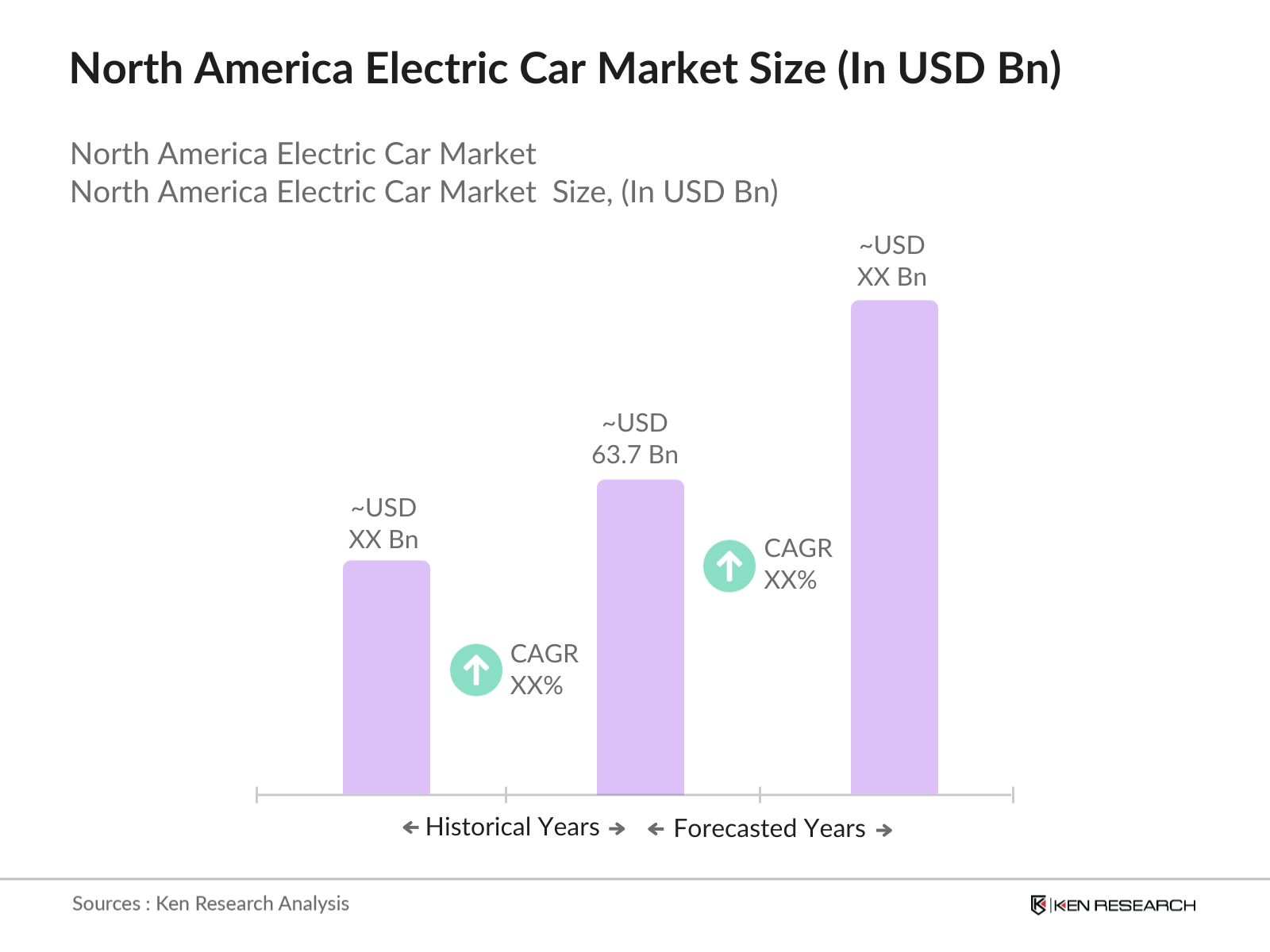
The North America Electric Car Market is valued at USD 63.7 billion, driven by consumer demand for sustainable transportation solutions and government incentives.
Key challenges include the high cost of electric vehicle production, limited charging infrastructure in certain regions, and consumer range anxiety. These factors may slow down widespread adoption.
Major players include Tesla, Inc., General Motors, Ford Motor Company, Rivian Automotive, and Volkswagen AG, all of which lead in innovation and market penetration.
Growth is driven by government policies favoring zero-emission vehicles, increasing fuel prices, advancements in battery technology, and the development of robust charging infrastructure.

What makes us stand out is that our consultants follows Robust, Refine and Result (RRR) methodology. i.e. Robust for clear definitions, approaches and sanity checking, Refine for differentiating respondents facts and opinions and Result for presenting data with story

We have set a benchmark in the industry by offering our clients with syndicated and customized market research reports featuring coverage of entire market as well as meticulous research and analyst insights.

While we don't replace traditional research, we flip the method upside down. Our dual approach of Top Bottom & Bottom Top ensures quality deliverable by not just verifying company fundamentals but also looking at the sector and macroeconomic factors.

With one step in the future, our research team constantly tries to show you the bigger picture. We help with some of the tough questions you may encounter along the way: How is the industry positioned? Best marketing channel? KPI's of competitors? By aligning every element, we help maximize success.

Our report gives you instant access to the answers and sources that other companies might choose to hide. We elaborate each steps of research methodology we have used and showcase you the sample size to earn your trust.

If you need any support, we are here! We pride ourselves on universe strength, data quality, and quick, friendly, and professional service.