
North America Facial Recognition Market Outlook to 2030
Region:Mexico
Author(s):Shreya Garg
Product Code:KROD1396
Region:Mexico
Author(s):Shreya Garg
Product Code:KROD1396
November 2024
96
The North America Facial Recognition Market has witnessed growth over the last five years. By 2023, this market size reached to USD 1.3 billion. This rapid growth is driven by increased adoption across various sectors such as security, retail, and healthcare, where the need for enhanced security and customer experience is paramount. The rising demand for contactless biometric solutions in the post-COVID-19 era has further propelled the market growth.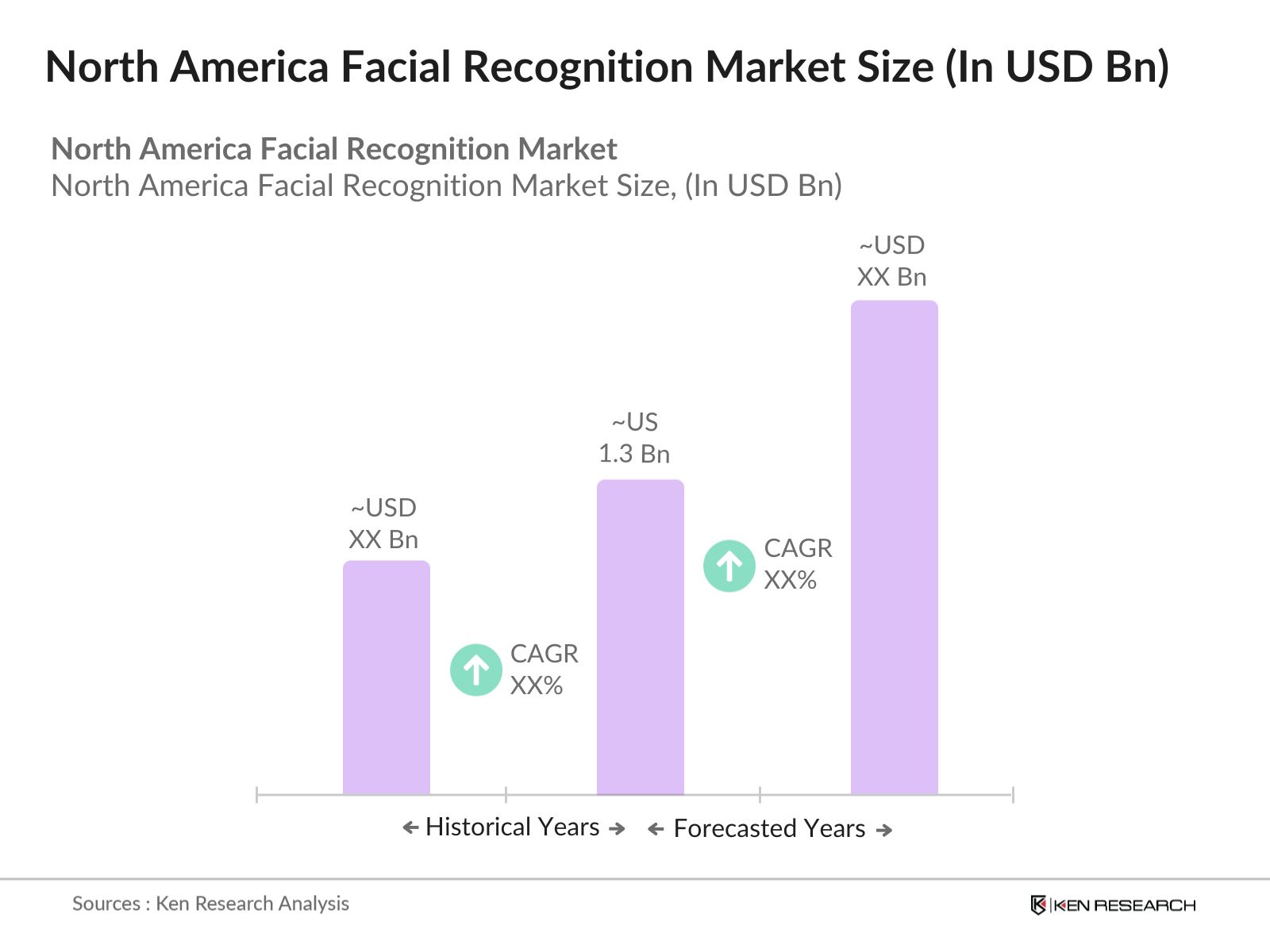
Several key players dominate the North America Facial Recognition Market, including companies like NEC Corporation, IBM Corporation, and Microsoft Corporation. These companies are continuously innovating and developing new technologies to maintain their market position. Their strong R&D capabilities and strategic partnerships are factors that contribute to their dominance.
In 2024, Microsoft Corporation expanded its facial recognition solutions into the healthcare sector with the launch of a new AI-driven patient identification system. This system, which has already been adopted by over 200 hospitals across the U.S., is designed to enhance patient safety by reducing identification errors during medical procedures, demonstrating its potential to revolutionize patient care in the healthcare industry.
California remains the dominant market for facial recognition technology in 2023. The state's technology-driven economy and the presence of tech giants like Apple and Google have created a conducive environment for the development and adoption of this technology, with investments in smart city projects and law enforcement applications.
By Component: The market is segmented by component into Software, Hardware, and Services. In 2023, the Software segment held a dominant market share. This dominance is due to the increasing demand for AI-driven facial recognition solutions that offer superior accuracy and real-time processing capabilities. The continuous updates and integration with other security systems also contribute to the strong performance of this segment.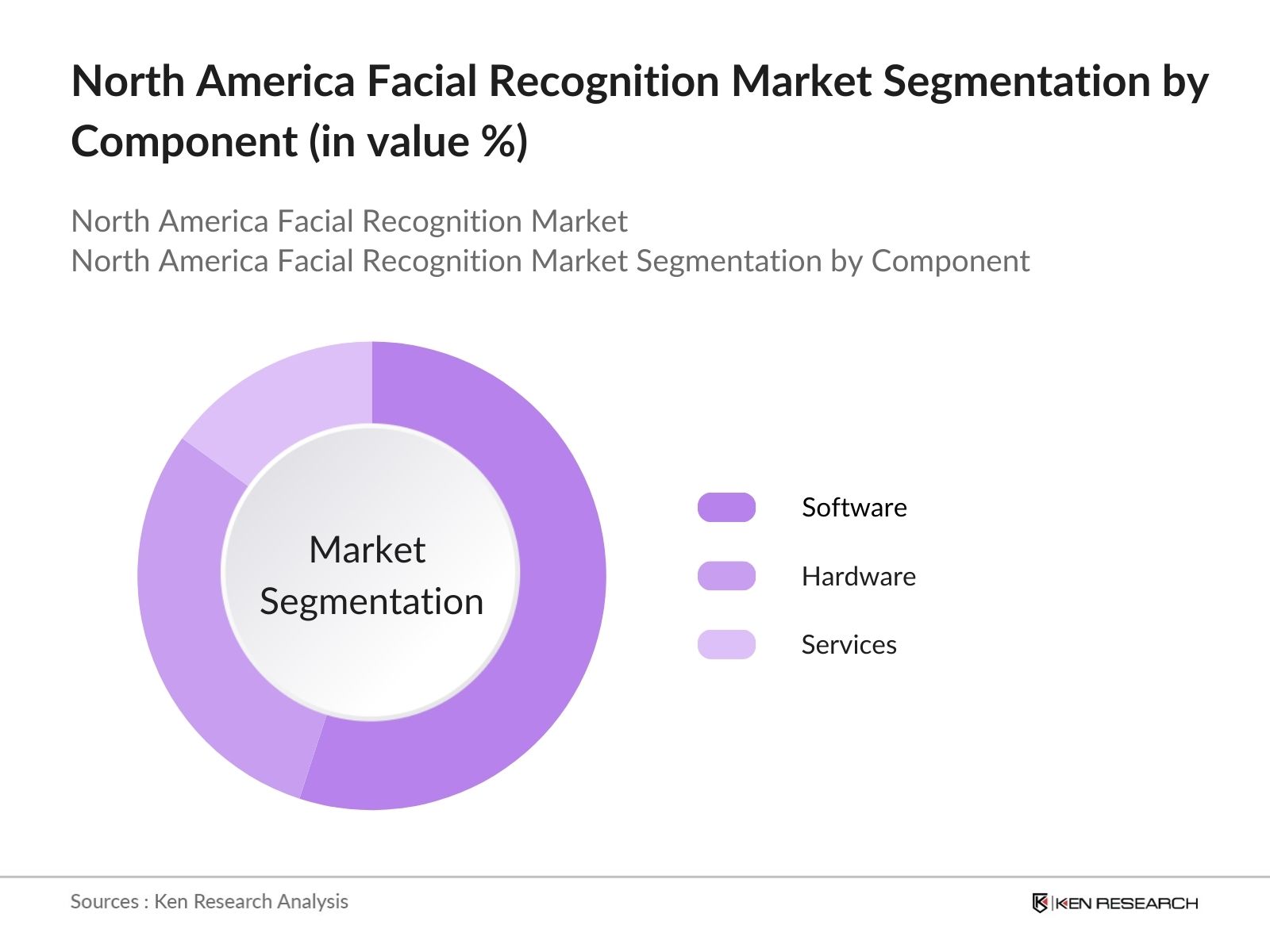
By Application: The market is also segmented by application into Security & Surveillance, Retail, and Healthcare. In 2023, the Security & Surveillance segment's dominance is attributed to the increasing investments by government and private entities in advanced security systems to combat rising crime rates and ensure public safety. 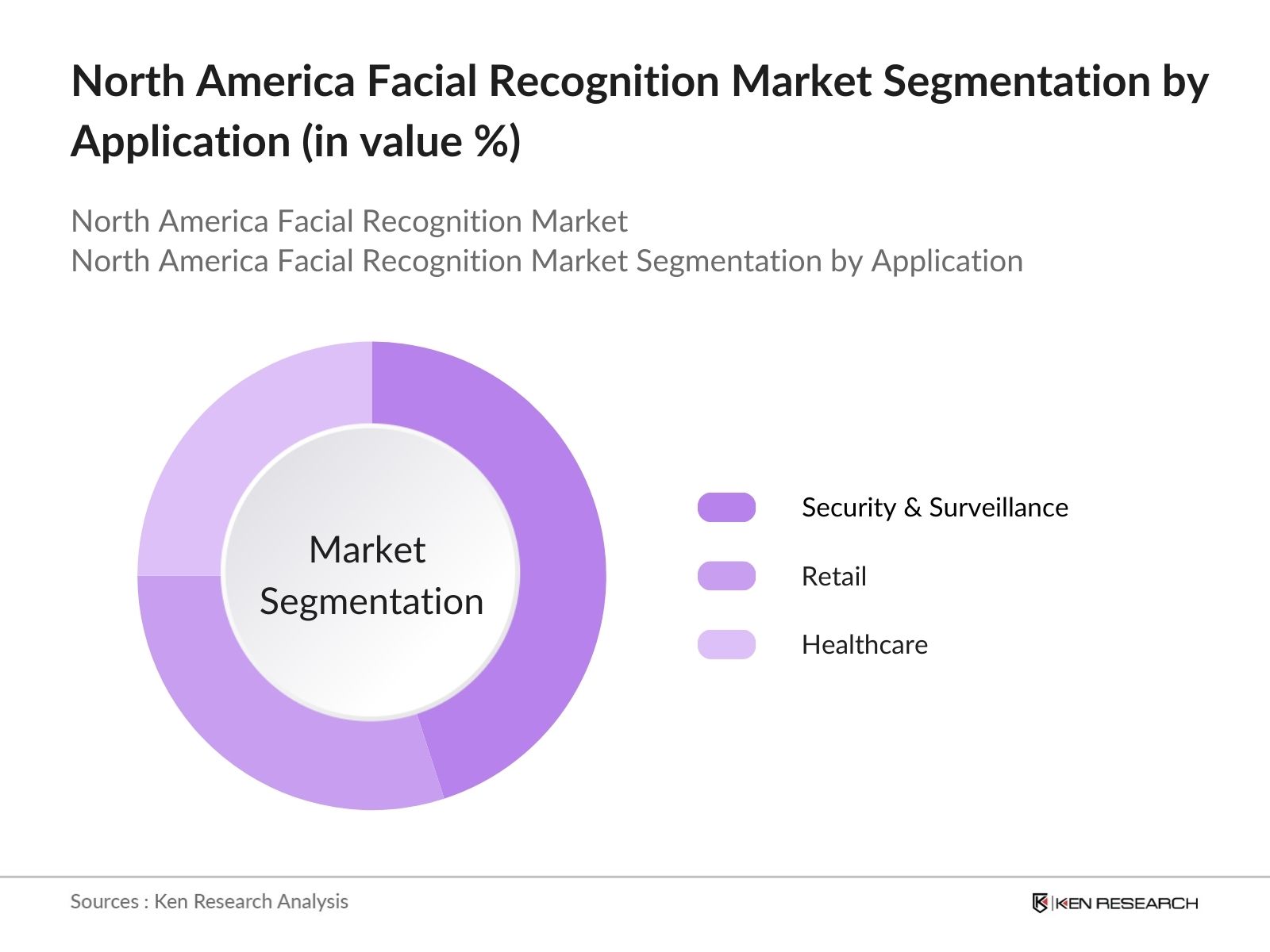
By Region: The regional segmentation of the market includes USA and Canada. USA dominance in 2023 is due to its technology-centric economy and the early adoption of facial recognition systems in various applications, including law enforcement and retail. The state's strong emphasis on innovation and technological development contributes to its leading position.
|
Company Name |
Establishment Year |
Headquarters |
|---|---|---|
|
NEC Corporation |
1899 |
Tokyo, Japan |
|
IBM Corporation |
1911 |
Armonk, USA |
|
Microsoft Corporation |
1975 |
Redmond, USA |
|
Cognitec Systems |
2002 |
Dresden, Germany |
|
Clearview AI |
2017 |
New York, USA |
Clearview AIs Data Privacy Settlement: In 2024, Clearview AI reached a USD 20 million settlement in a high-profile lawsuit related to data privacy violations. The company faced allegations of improperly collecting and storing biometric data, leading to significant public and legal scrutiny. As part of the settlement, Clearview AI agreed to implement stricter data protection measures and limit the use of its facial recognition technology.
NECs AI-Powered Surveillance Launch: NEC Corporation made headlines in 2024 with the launch of its new AI-powered surveillance system that integrates facial recognition technology with advanced behavioral analytics. This system, which has already been deployed in over 100 locations across North America, is designed to detect suspicious activities in real-time, enhancing public safety in high-risk areas such as airports and government buildings.
Over the next few years, the North America Facial Recognition Market is expected to witness significant growth. Key factors contributing to this growth include rising investments in biometric security across sectors, advancements in AI technology, and increasing government support for national security measures. Furthermore, the integration of facial recognition into everyday devices such as smartphones and smart home systems is anticipated to drive consumer adoption.
|
By Component |
Software Hardware Services |
|
By Application |
Security & Surveillance Retail Healthcare |
|
By Region |
USA Canada |
1.1. Definition and Scope
1.2. Market Taxonomy
1.3. Market Growth Rate
1.4. Market Segmentation Overview
2.1. Historical Market Size
2.2. Year-On-Year Growth Analysis
2.3. Key Market Developments and Milestones
3.1. Growth Drivers (Adoption in Security, Border Control, Smart Cities, Law Enforcement)
3.1.1. Increased Government Adoption
3.1.2. Integration with AI and IoT Technologies
3.1.3. Growing Need for Enhanced Security Solutions
3.1.4. Expanding Application in Retail and Marketing
3.2. Market Challenges (Data Privacy, Accuracy, Ethical Concerns)
3.2.1. Privacy Regulations and Legal Barriers
3.2.2. System Performance Issues in Real-time Scenarios
3.2.3. Public Backlash Against Facial Surveillance
3.2.4. High Implementation Costs
3.3. Opportunities (Technological Advancements, Cloud-based Solutions, Smartphone Integration)
3.3.1. Growth of Cloud-based Recognition Solutions
3.3.2. Expansion into Financial Services for Authentication
3.3.3. Collaboration with Edge Computing Providers
3.3.4. Personalized Marketing and Customer Analytics
3.4. Trends (Ethical AI, Hybrid Models, Increasing Government Contracts)
3.4.1. Development of Ethical AI Guidelines
3.4.2. Growth of Hybrid Cloud Models
3.4.3. Rise in Government and Defense Contracts
3.4.4. Integration with Smart City Infrastructure
3.5. Government Regulations (North America Data Protection Laws, Standards, Compliance)
3.5.1. U.S. Biometric Information Privacy Act (BIPA)
3.5.2. Canadas Personal Information Protection and Electronic Documents Act (PIPEDA)
3.5.3. California Consumer Privacy Act (CCPA)
3.5.4. General Data Protection Regulation (GDPR) Compliance Impacts
3.6. SWOT Analysis (Facial Recognition Capabilities vs. Privacy Concerns)
3.7. Stake Ecosystem (Component Suppliers, Integrators, End-users)
3.8. Porters Five Forces (Supply Chain, Competition, Bargaining Power)
3.9. Competition Ecosystem (Top Competitors, Innovations, Market Positioning)
4.1. By Component (In Value %)
4.1.1. Software
4.1.2. Hardware
4.1.3. Services
4.2. By Technology (In Value %)
4.2.1. 2D Facial Recognition
4.2.2. 3D Facial Recognition
4.2.3. Emotion Detection and Behavioral Analytics
4.3. By Application (In Value %)
4.3.1. Surveillance and Security
4.3.2. Access Control
4.3.3. Attendance Tracking
4.3.4. Marketing and Advertising
4.4. By End-user (In Value %)
4.4.1. Government and Defense
4.4.2. Retail and E-commerce
4.4.3. Healthcare
4.4.4. BFSI (Banking, Financial Services, and Insurance)
4.4.5. Education
4.5. By Region (In Value %)
4.5.1. United States
4.5.2. Canada
4.5.3. Mexico
5.1. Detailed Profiles of Major Companies
5.1.1. NEC Corporation
5.1.2. IDEMIA
5.1.3. Cognitec Systems
5.1.4. Aware, Inc.
5.1.5. Thales Group
5.1.6. Gemalto NV
5.1.7. Animetrics, Inc.
5.1.8. Microsoft Corporation
5.1.9. FaceFirst, Inc.
5.1.10. Clearview AI
5.1.11. Stereovision Imaging
5.1.12. Nuance Communications
5.1.13. Face++ (Megvii)
5.1.14. Safran Group
5.1.15. Crossmatch Technologies
5.2. Cross Comparison Parameters (Revenue, No. of Employees, Market Reach, Technology Integration, Patents, AI Integration, Market Share, Partnerships)
5.3. Market Share Analysis (Top Players by Region and Segment)
5.4. Strategic Initiatives (Joint Ventures, Strategic Partnerships, Product Launches)
5.5. Mergers and Acquisitions (Recent Deals and Future Expectations)
5.6. Investment Analysis (Venture Capital, Private Equity)
5.7. Venture Capital Funding (Top VC Investors in Facial Recognition Market)
5.8. Government Grants (Grants for AI and Facial Recognition Projects)
5.9. Private Equity Investments
6.1. Data Privacy and Biometric Information Laws
6.2. Compliance Requirements (GDPR, CCPA, BIPA)
6.3. Certification Processes (Security Certifications, ISO Standards)
7.1. Future Market Size Projections
7.2. Key Factors Driving Future Market Growth
8.1. By Component (In Value %)
8.2. By Technology (In Value %)
8.3. By Application (In Value %)
8.4. By End-user (In Value %)
8.5. By Region (In Value %)
9.1. TAM/SAM/SOM Analysis
9.2. Customer Cohort Analysis
9.3. Marketing Initiatives
9.4. White Space Opportunity Analysis
Ecosystem creation for all the major entities and referring to multiple secondary and proprietary databases to perform desk research around market to collate industry level information.
Collating statistics on North America Facial Recognition Market over the years, penetration of marketplaces and service providers ratio to compute revenue generated for North America Facial Recognition Market. We will also review service quality statistics to understand revenue generated which can ensure accuracy behind the data points shared.
Building market hypothesis and conducting CATIs with industry experts belonging to different companies to validate statistics and seek operational and financial information from company representatives.
Our team will approach facial recognition companies and understand nature of product segments and sales, consumer preference and other parameters, which will support us validate statistics derived through bottom to top approach from facial recognition industry.
The North America Facial Recognition Market, valued at USD 1.3 billion in 2023, is driven by the increasing demand for advanced security systems, rising investments in AI-driven technologies, and the growing adoption of facial recognition in sectors such as retail, healthcare, and law enforcement.
Challenges in the North America Facial Recognition Market include privacy concerns and regulatory scrutiny, high implementation costs, ethical issues surrounding the use of biometric data, and technological limitations such as accuracy and bias in facial recognition systems.
Key players in the North America Facial Recognition Market include NEC Corporation, IBM Corporation, Microsoft Corporation, Cognitec Systems, and Clearview AI. These companies lead the market due to their extensive R&D capabilities, strategic partnerships, and robust portfolios of AI-driven facial recognition solutions.
The North America Facial Recognition Market is propelled by increased investments in security infrastructure, expansion in retail applications, advancements in AI integration, and the growing adoption of facial recognition technology in the healthcare sector to improve patient safety and operational efficiency.

What makes us stand out is that our consultants follows Robust, Refine and Result (RRR) methodology. i.e. Robust for clear definitions, approaches and sanity checking, Refine for differentiating respondents facts and opinions and Result for presenting data with story

We have set a benchmark in the industry by offering our clients with syndicated and customized market research reports featuring coverage of entire market as well as meticulous research and analyst insights.

While we don't replace traditional research, we flip the method upside down. Our dual approach of Top Bottom & Bottom Top ensures quality deliverable by not just verifying company fundamentals but also looking at the sector and macroeconomic factors.

With one step in the future, our research team constantly tries to show you the bigger picture. We help with some of the tough questions you may encounter along the way: How is the industry positioned? Best marketing channel? KPI's of competitors? By aligning every element, we help maximize success.

Our report gives you instant access to the answers and sources that other companies might choose to hide. We elaborate each steps of research methodology we have used and showcase you the sample size to earn your trust.

If you need any support, we are here! We pride ourselves on universe strength, data quality, and quick, friendly, and professional service.