
North America Fast Food Market Outlook to 2030
Region:North America
Author(s):Mukul
Product Code:KROD4955
October 2024
82
About the Report
North America Fast Food Market Overview
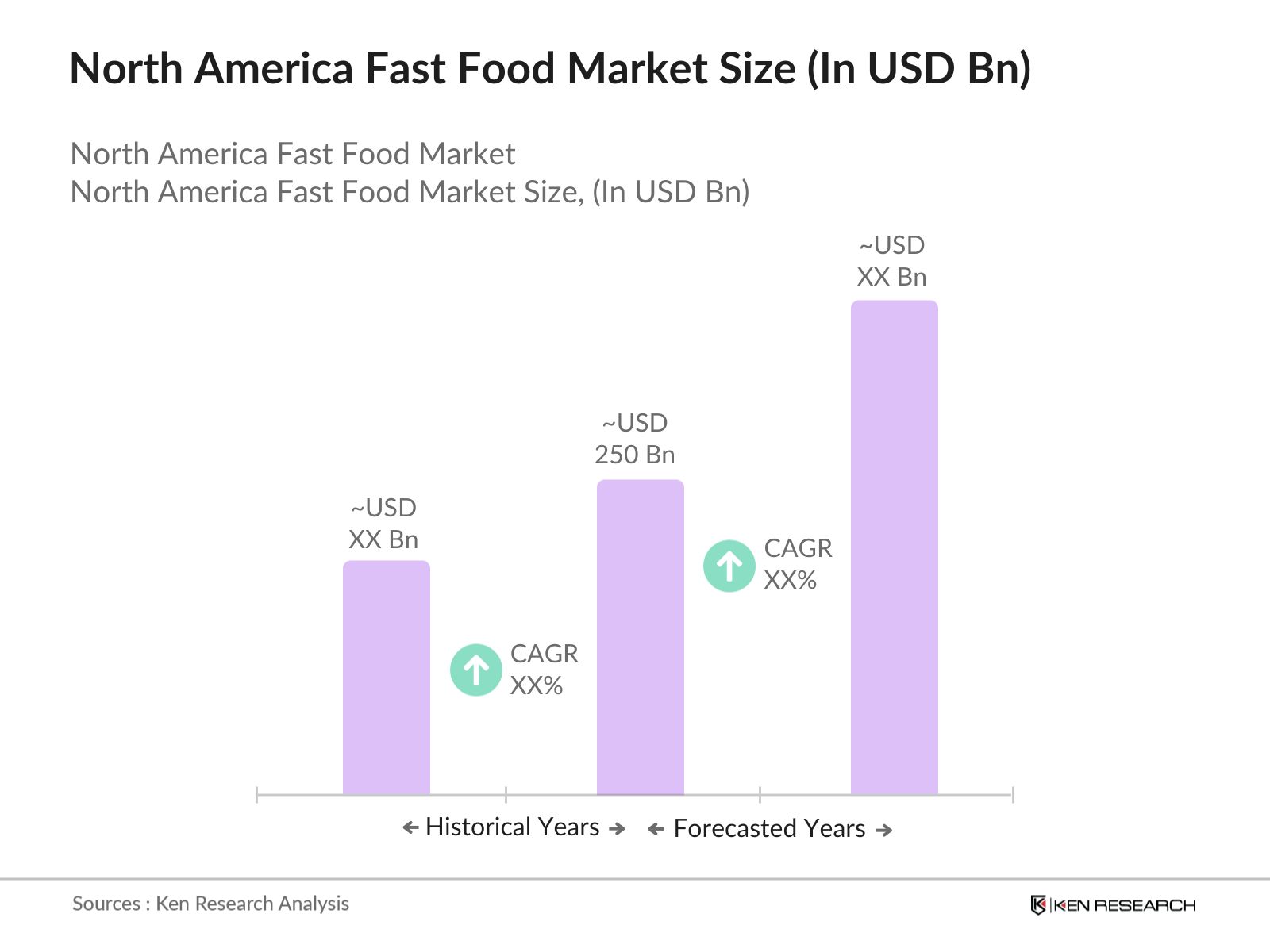
- The North America Fast Food Market size USD 250 billion, driven by consumer demand for convenience and the rise of digital ordering platforms. This growth is supported by an increasing number of dual-income households, along with the popularity of quick-service restaurants (QSRs). Over the past five years, the market has seen robust performance, reflecting the continued preference for affordable, convenient dining options in urban and suburban settings. The rise of food delivery apps such as DoorDash and UberEats has also played a pivotal role in propelling growth.
- The North America Fast Food Market is dominated by major metropolitan areas, particularly cities like New York, Los Angeles, and Chicago. These cities have high population densities, significant disposable income, and strong tourist inflows, creating a substantial demand for quick, affordable dining options. Furthermore, states such as California, Texas, and Florida have become hubs for fast food chains due to their large, diverse populations and strong infrastructure for food delivery services.
- The UAEs Emirates Energy Strategy aims to cut fossil fuel use by 50% by 2050, focusing on a shift to renewable energy sources. This has led to stricter regulations on the use of diesel generators. By 2023, all new diesel generator installations were required to meet energy efficiency standards set by the government, reducing reliance on high-emission models.
North America Fast Food Market Segmentation
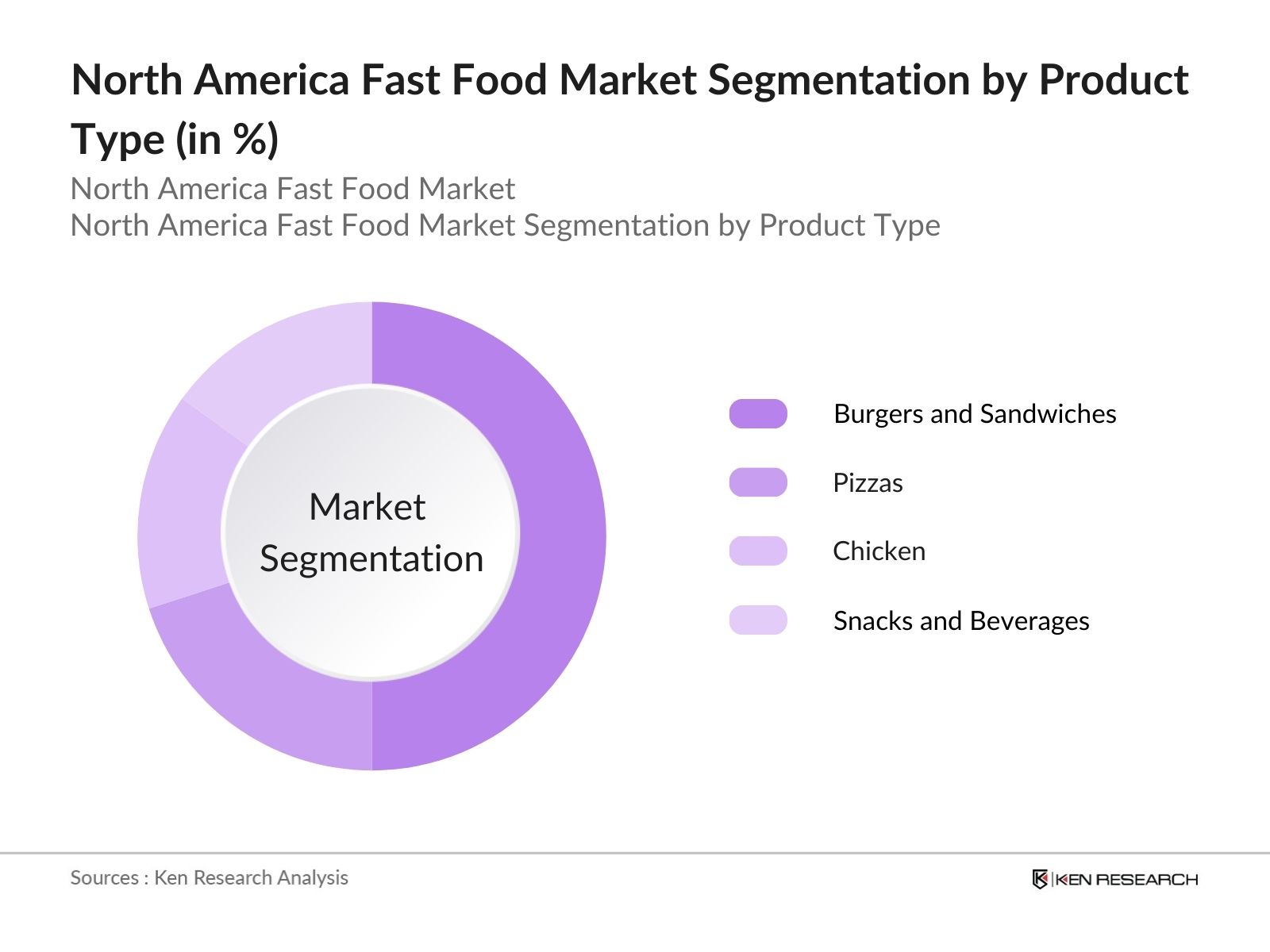
- By Product Type: The North America Fast Food Market is segmented by product type into burgers and sandwiches, pizzas, chicken, snacks and beverages, and desserts and ice cream. Among these, burgers and sandwiches dominate the market due to the longstanding cultural affinity towards burger chains like McDonald's, Wendys, and Burger King. Their extensive menu options, convenience, and continuous innovation through plant-based and healthier menu choices have maintained their popularity. Additionally, the increasing trend of premium burgers from brands like Shake Shack has sustained their market position.
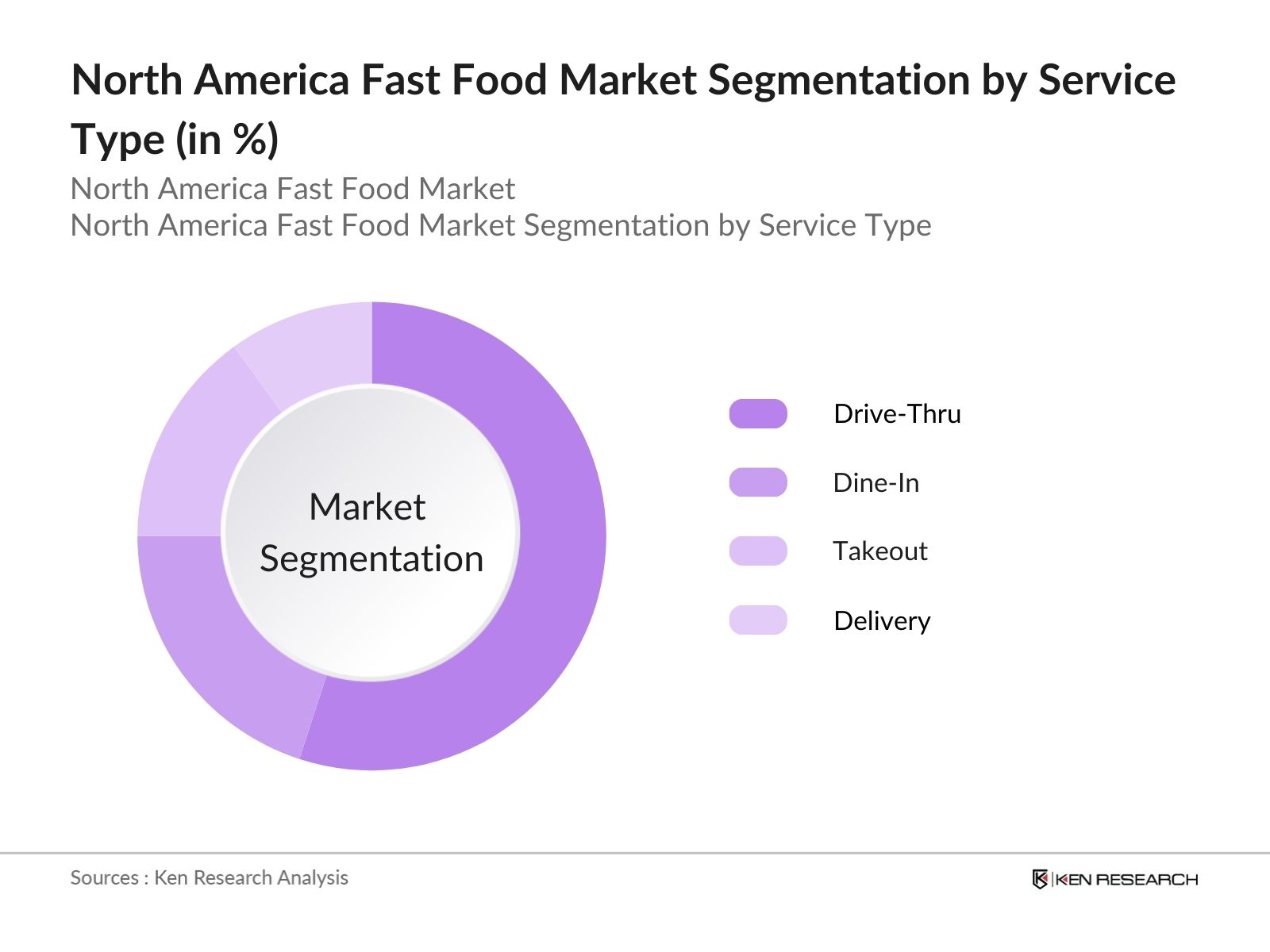
- By Service Type: The North America Fast Food Market is also segmented by service type into drive-thru, dine-in, takeout, and delivery. The drive-thru service dominates the market, capturing a significant share due to its convenience and efficiency. This is particularly prevalent in suburban and rural areas where customers prefer quick meals without leaving their vehicles. The pandemic has further accelerated the drive-thru model, making it the go-to option for many consumers wary of in-store dining.
North America Fast Food Market Competitive Landscape
The North America Fast Food Market is highly competitive and dominated by several key players, many of which are multinational corporations. These companies continue to innovate with new menu offerings and service delivery mechanisms such as mobile apps, loyalty programs, and sustainability initiatives. The market has also seen increased investment in technology, with brands focusing on AI-powered ordering systems, digital kiosks, and automated kitchens to streamline operations.
|
Company Name |
Establishment Year |
Headquarters |
No. of Employees |
Revenue |
Franchise Model |
Global Reach |
Key Innovation |
No. of Outlets |
Sustainability Initiatives |
|
McDonald's Corporation |
1940 |
Chicago, Illinois |
|||||||
|
Yum! Brands (KFC, Pizza Hut) |
1997 |
Louisville, Kentucky |
|||||||
|
Restaurant Brands International (Burger King, Popeyes) |
2014 |
Toronto, Canada |
|||||||
|
Starbucks Corporation |
1971 |
Seattle, Washington |
|||||||
|
Chipotle Mexican Grill |
1993 |
Newport Beach, California |
UAE Diesel Generator Industry Analysis
Market Growth Drivers
- Infrastructure Development: The UAEs infrastructure projects, fueled by Vision 2030 and Dubai Expo 2020's residual demand, continue to drive power needs. Construction alone consumed over 20 TWh of electricity in 2022, with large-scale projects like the Etihad Rail and Al Maktoum International Airport expansion demanding stable power backup from diesel generators. The UAE government allocated over AED 80 billion towards infrastructure in 2023 to support ongoing real estate and industrial developments.
- Government Investment in Energy Security: Energy security is a priority for the UAE, as demonstrated by their AED 600 billion strategy for 2050. This involves securing reliable energy sources, including backup power. Diesel generators serve as a stopgap to ensure power availability during grid failures. In 2023, government spending on energy infrastructure totaled over AED 100 billion, underlining the importance of energy reliability.
- Increasing Backup Power Demand from the Commercial Sector: The UAEs commercial sector, particularly retail and hospitality, is a major consumer of power. In 2022, commercial buildings accounted for more than 35% of the UAE's total electricity consumption, increasing the demand for backup solutions. Major malls like The Dubai Mall and global hotel chains require continuous power to operate 24/7. With the commercial real estate market projected to see significant expansion through new developments such as Dubai's One Zaabeel, demand for diesel generators as a reliable power backup has surged
Market Restraints
- Stringent Emission Regulations: The UAEs commitment to reducing carbon emissions has put pressure on diesel generator manufacturers. The Emirates Energy Strategy aims to cut fossil fuel consumption by 50% by 2050, prompting stricter regulations on emissions from industrial equipment. By 2023, diesel generators had to comply with Euro 5 emissions standards, reducing the demand for older, less efficient models.
- Competition from Alternative Power Solutions: As renewable energy sources gain traction, diesel generators face stiff competition. The UAE installed over 3 GW of solar power capacity by the end of 2023, with major solar farms such as the Noor Abu Dhabi and Mohammed bin Rashid Al Maktoum Solar Park contributing to grid stability. This shift towards renewable energy is reducing the reliance on diesel generators for backup power, especially in regions where solar energy is a viable alternative
North America Fast Food Market Future Outlook
Over the next five years, the North America Fast Food Market is expected to see moderate growth, driven by continuous demand for convenience, enhanced digital experiences, and innovations in sustainable and plant-based food offerings. Brands are expected to focus on enhancing their sustainability efforts, with a strong emphasis on reducing carbon footprints and using eco-friendly packaging. Additionally, the adoption of automation and AI to streamline operations, particularly in high-volume outlets, will also be a significant driver of future market expansion.
Market Opportunities
- Technological Advancements: The diesel generator market in the UAE is experiencing a shift towards hybrid systems, combining diesel with renewable energy sources like solar power. In 2023, hybrid generator installations increased by 15%, driven by technological advancements that improve fuel efficiency and reduce emissions. These systems are particularly attractive for industries looking to balance reliability with sustainability. Hybrid generators also reduce the operational cost per kWh, making them a preferred choice for sectors like healthcare and commercial real estate that require uninterrupted power supply.
- Export Potential to Other Middle Eastern and African Markets: The UAE serves as a key export hub for diesel generators, with growing demand from neighboring Middle Eastern and African markets. In 2023, the UAE exported AED 2.5 billion worth of diesel generators to countries like Oman, Saudi Arabia, and Egypt. The increased focus on infrastructure development in these countries creates opportunities for UAE-based diesel generator manufacturers to expand their market presence. This export potential is further supported by trade agreements and free zones, enabling smoother export processes.
Scope of the Report
|
Segment |
Sub-Segments |
|
By Product Type |
Burgers and Sandwiches, Pizzas, Chicken, Snacks and Beverages, Desserts and Ice Cream |
|
By Service Type |
Drive-Thru, Dine-In, Takeout, Delivery |
|
By Distribution Channel |
Quick Service Restaurants (QSRs), Food Trucks, Online Food Delivery Platforms, Fast Casual |
|
By Ingredient Type |
Plant-Based, Animal-Based, Organic |
|
By Region |
Northeast, Midwest, South, West |
Products
Key Target Audience
Quick Service Restaurant (QSR) Operators
Food & Beverage Manufacturers
Investment and Venture Capitalist Firms
Government and Regulatory Bodies (FDA, USDA)
Technology Providers for Fast Food Industry
Restaurant Supply Chain Managers
Franchise Owners and Operators
Food Delivery Platforms
Companies
Players Mentioned in the Report:
McDonald's Corporation
Yum! Brands (Taco Bell, Pizza Hut, KFC)
Restaurant Brands International (Burger King, Popeyes)
Chipotle Mexican Grill
Dominos Pizza, Inc.
Subway
Wendys
Dunkin' Brands Group
Starbucks Corporation
Chick-fil-A
Panera Bread
Sonic Drive-In
Jack in the Box
Five Guys
Arbys
Table of Contents
1. North America Fast Food Market Overview
1.1. Definition and Scope
1.2. Market Taxonomy
1.3. Market Growth Rate
1.4. Market Segmentation Overview
2. North America Fast Food Market Size (In USD Bn)
2.1. Historical Market Size
2.2. Year-on-Year Growth Analysis
2.3. Key Market Developments and Milestones
3. North America Fast Food Market Analysis
3.1. Growth Drivers
3.1.1. Changing Consumer Preferences (e.g., increased demand for convenience food)
3.1.2. Expansion of Quick-Service Restaurant Chains
3.1.3. Increased Focus on Digital and Delivery Platforms
3.1.4. Competitive Pricing Strategies
3.2. Market Challenges
3.2.1. Rising Health Consciousness (shift towards healthy eating habits)
3.2.2. Regulatory Challenges (FDA regulations on nutritional content)
3.2.3. Labor Shortages and Wage Inflation (increased labor costs)
3.2.4. Environmental Concerns (sustainability and packaging)
3.3. Opportunities
3.3.1. Expansion into Plant-Based and Health-Conscious Offerings
3.3.2. Integration of AI and Automation in Operations
3.3.3. Growth of Delivery-Only (Ghost) Kitchens
3.3.4. International Market Expansion for US Brands
3.4. Trends
3.4.1. Rise of Plant-Based Alternatives (vegan fast food)
3.4.2. Mobile App and Online Ordering Adoption
3.4.3. Sustainability Initiatives (eco-friendly packaging, sourcing)
3.4.4. Customization and Personalized Menu Options
3.5. Government Regulations
3.5.1. Nutritional Labeling Standards (FDA calorie count regulations)
3.5.2. Minimum Wage Legislation Impact
3.5.3. Health and Safety Compliance (OSHA, FDA)
3.5.4. Green and Sustainability Policies (plastic reduction mandates)
3.6. SWOT Analysis
3.7. Stakeholder Ecosystem
3.8. Porters Five Forces
3.9. Competition Ecosystem
4. North America Fast Food Market Segmentation
4.1. By Product Type (In Value %)
4.1.1. Burgers and Sandwiches
4.1.2. Pizzas
4.1.3. Chicken
4.1.4. Snacks and Beverages
4.1.5. Desserts and Ice Cream
4.2. By Service Type (In Value %)
4.2.1. Drive-Thru
4.2.2. Dine-In
4.2.3. Takeout
4.2.4. Delivery
4.3. By Distribution Channel (In Value %)
4.3.1. Quick Service Restaurants (QSRs)
4.3.2. Food Trucks
4.3.3. Online Food Delivery Platforms
4.3.4. Fast Casual
4.4. By Ingredient Type (In Value %)
4.4.1. Plant-Based
4.4.2. Animal-Based
4.4.3. Organic
4.5. By Region (In Value %)
4.5.1. Northeast
4.5.2. Midwest
4.5.3. South
4.5.4. West
5. North America Fast Food Market Competitive Analysis
5.1. Detailed Profiles of Major Companies
5.1.1. McDonalds Corporation
5.1.2. Yum! Brands (Taco Bell, Pizza Hut, KFC)
5.1.3. Restaurant Brands International (Burger King, Popeyes)
5.1.4. Chipotle Mexican Grill
5.1.5. Dominos Pizza, Inc.
5.1.6. Subway
5.1.7. Wendys
5.1.8. Dunkin' Brands Group
5.1.9. Starbucks Corporation
5.1.10. Chick-fil-A
5.1.11. Panera Bread
5.1.12. Sonic Drive-In
5.1.13. Jack in the Box
5.1.14. Five Guys
5.1.15. Arbys
5.2. Cross Comparison Parameters (No. of Employees, Headquarters, Inception Year, Revenue, Franchise Model, Menu Customization, Global Reach, Tech Innovation)
5.3. Market Share Analysis
5.4. Strategic Initiatives
5.5. Mergers and Acquisitions
5.6. Investment Analysis
5.7. Venture Capital Funding
5.8. Government Grants
5.9. Private Equity Investments
6. North America Fast Food Market Regulatory Framework
6.1. Food Safety Regulations (FDA)
6.2. Labor Laws and Compliance (Fair Labor Standards Act)
6.3. Environmental Regulations
6.4. Nutritional Standards Compliance
7. USA Fast Food Future Market Size (In USD Bn)
7.1. Future Market Size Projections
7.2. Key Factors Driving Future Market Growth
8. USA Fast Food Future Market Segmentation
8.1. By Product Type (In Value %)
8.2. By Service Type (In Value %)
8.3. By Distribution Channel (In Value %)
8.4. By Ingredient Type (In Value %)
8.5. By Region (In Value %)
9. North America Fast Food Market Analysts Recommendations
9.1. TAM/SAM/SOM Analysis
9.2. Customer Cohort Analysis
9.3. Marketing Initiatives
9.4. White Space Opportunity Analysis
Research Methodology
Step 1: Identification of Key Variables
The initial step involved mapping the entire ecosystem of the North America Fast Food Market, including major stakeholders such as fast food chains, franchise owners, and supply chain entities. Data was gathered from reputable databases and sources to identify variables influencing market growth, such as consumer preferences, technological advancements, and labor costs.
Step 2: Market Analysis and Construction
In this phase, historical market data from multiple fast food chains was analyzed, including financial performance, market penetration, and service preferences. Revenue generation patterns were analyzed to understand consumer spending behavior and its impact on the market.
Step 3: Hypothesis Validation and Expert Consultation
Key market assumptions were validated through direct consultations with industry experts, including fast food franchise operators and delivery platform executives. These interviews provided first-hand insights into operational challenges and opportunities, which informed the final report.
Step 4: Research Synthesis and Final Output
Engagement with fast food brands was conducted to acquire detailed insights into product segments, service models, and customer behavior. The data gathered was validated through a bottom-up approach, ensuring the accuracy and reliability of market projections and trends.
Frequently Asked Questions
1. How big is the North America Fast Food Market?
The North America Fast Food Market USD 250 billion, driven by the increasing popularity of digital ordering, delivery services, and consumer demand for quick, affordable meals.
2. What are the challenges in the North America Fast Food Market?
Challenges include rising health consciousness among consumers, labor shortages, regulatory pressure from FDA nutritional guidelines, and environmental concerns surrounding packaging waste.
3. Who are the major players in the North America Fast Food Market?
Key players include McDonald's, Yum! Brands, Restaurant Brands International (Burger King, Popeyes), Chipotle Mexican Grill, and Starbucks Corporation, dominating due to extensive distribution networks and continuous innovation in service and product offerings.
4. What are the growth drivers of the North America Fast Food Market?
Growth drivers include consumer demand for convenience, the rise of digital ordering platforms, menu innovation (particularly plant-based options), and robust franchise models that ensure scalability.
Why Buy From Us?

What makes us stand out is that our consultants follows Robust, Refine and Result (RRR) methodology. i.e. Robust for clear definitions, approaches and sanity checking, Refine for differentiating respondents facts and opinions and Result for presenting data with story

We have set a benchmark in the industry by offering our clients with syndicated and customized market research reports featuring coverage of entire market as well as meticulous research and analyst insights.

While we don't replace traditional research, we flip the method upside down. Our dual approach of Top Bottom & Bottom Top ensures quality deliverable by not just verifying company fundamentals but also looking at the sector and macroeconomic factors.

With one step in the future, our research team constantly tries to show you the bigger picture. We help with some of the tough questions you may encounter along the way: How is the industry positioned? Best marketing channel? KPI's of competitors? By aligning every element, we help maximize success.

Our report gives you instant access to the answers and sources that other companies might choose to hide. We elaborate each steps of research methodology we have used and showcase you the sample size to earn your trust.

If you need any support, we are here! We pride ourselves on universe strength, data quality, and quick, friendly, and professional service.