
North America Fencing Market Outlook to 2030
Region:Mexico
Author(s):Shubham
Product Code:KROD5825
Region:Mexico
Author(s):Shubham
Product Code:KROD5825
November 2024
84
North America Fencing Market Overview
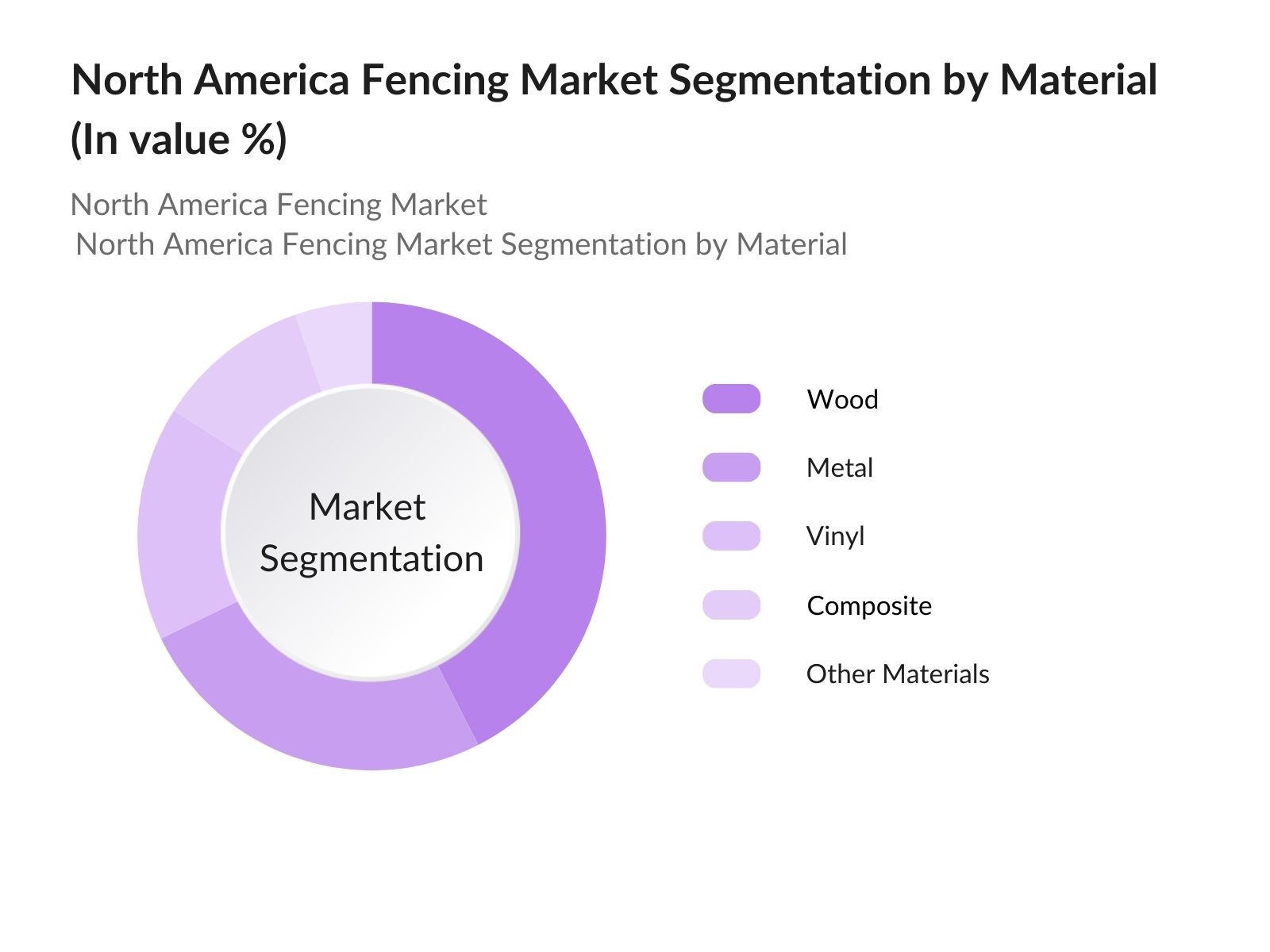
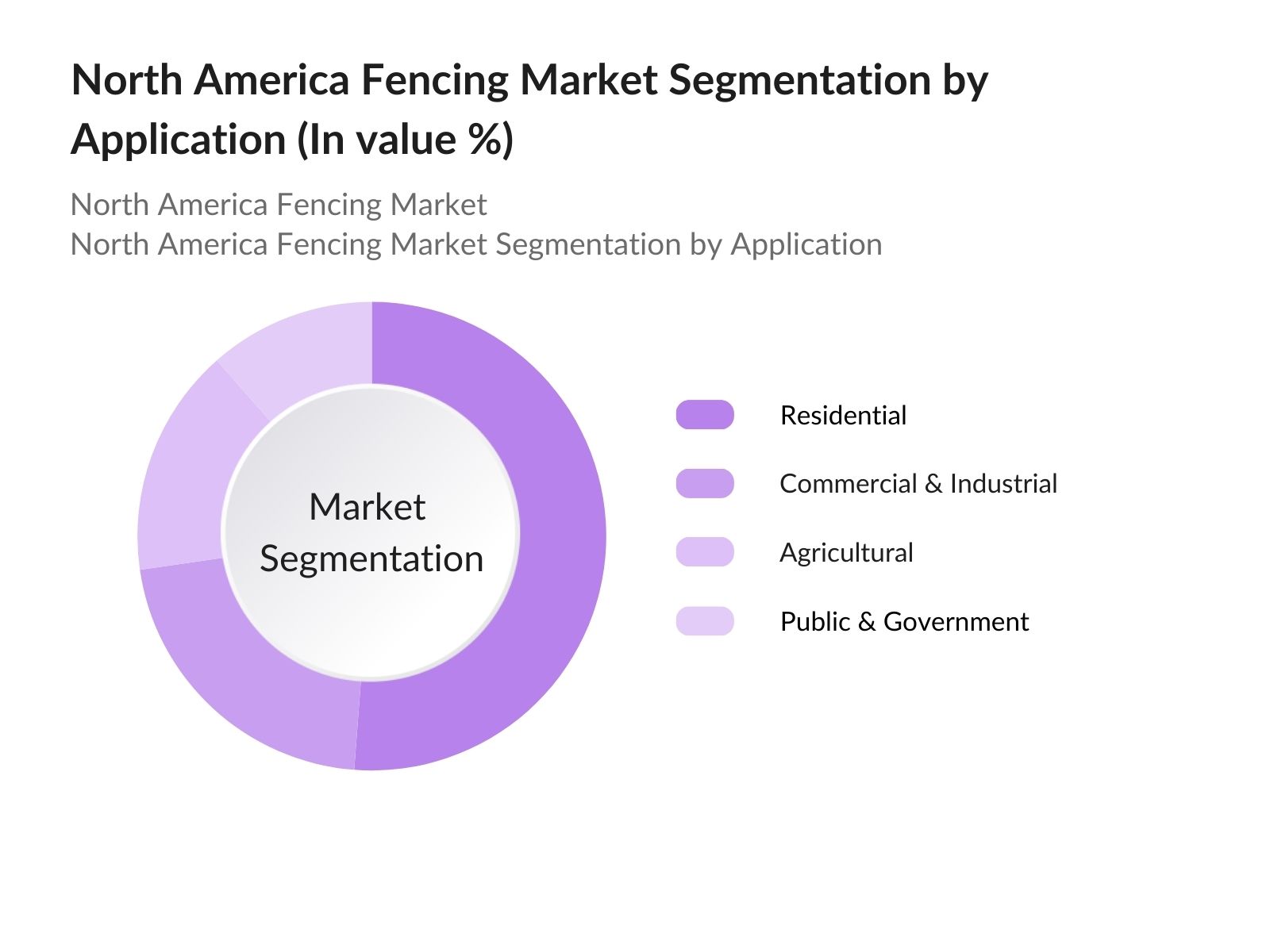
North America Fencing Market Segmentation
North America Fencing Market Competitive Landscape
The North America Fencing Market is characterized by a mix of leading regional and international players, which focus on offering a broad product portfolio, investing in innovative materials, and developing strategic partnerships to maintain their competitive advantage. The competitive dynamics in this market reflect a high level of consolidation, where major players capitalize on market demand through strong distribution networks and sustainable production initiatives. 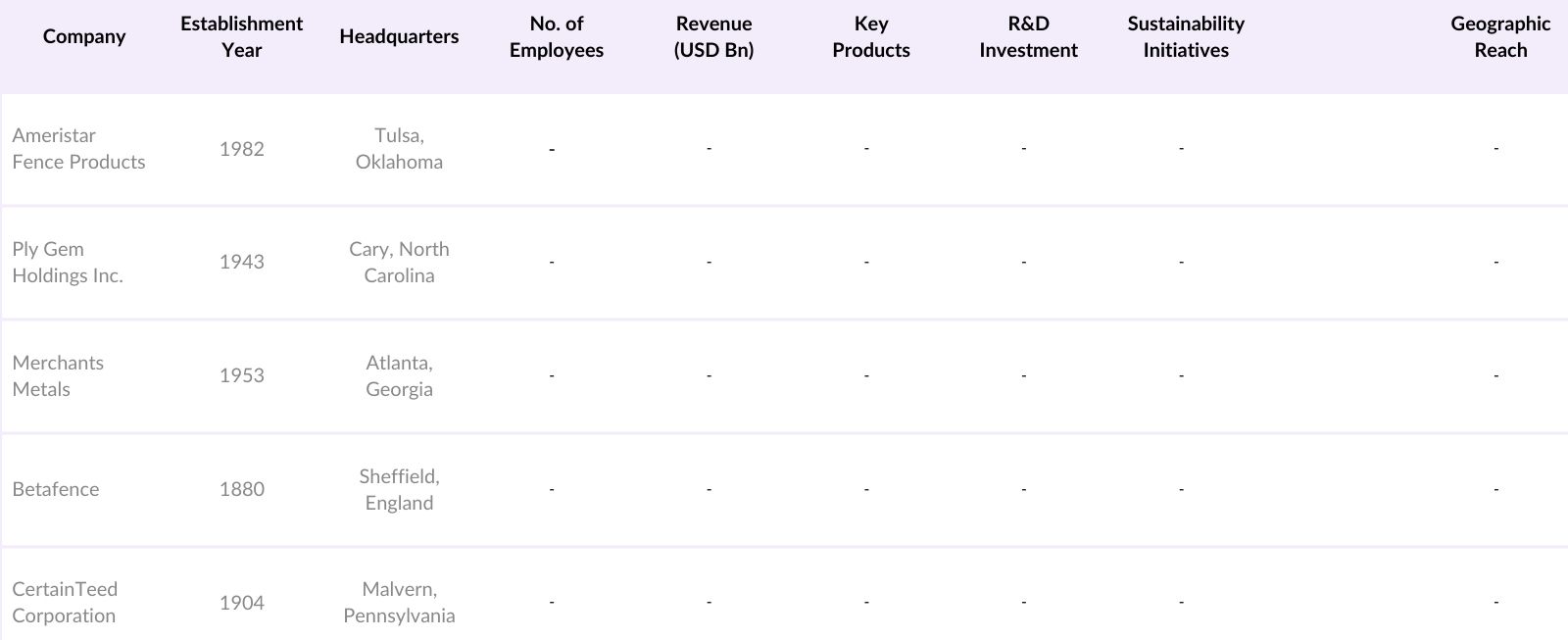
North America Fencing Market Industry Analysis
Growth Drivers
Market Challenges
North America Fencing Market Future Outlook
The North America Fencing Market is expected to maintain strong growth through 2028, supported by ongoing investments in infrastructure and rising consumer preference for property enhancement. Innovations in eco-friendly materials, alongside the adoption of smart fencing solutions, will continue to drive the market. The increasing popularity of e-commerce and direct-to-consumer sales channels further positions the market for expansion, as these avenues simplify access to a wide range of fencing products for consumers.
Future Market Opportunities
|
By Material |
Wood Fencing Metal Fencing (Aluminum, Steel, Iron) Vinyl Fencing Composite Fencing Others |
|
By Application |
Residential Commercial and Industrial Agricultural Public and Government Spaces |
|
By Distribution Channel |
Retail Online |
|
By Product Type |
Privacy Fencing Decorative Fencing Pool Fencing Boundary Fencing |
|
By Region |
United States Canada Mexico |
Key Target Audience
Players Mentioned in the Report
1.1 Definition and Scope
1.2 Market Taxonomy
1.3 Market Growth Rate
1.4 Market Segmentation Overview
2.1 Historical Market Size
2.2 Year-On-Year Growth Analysis
2.3 Key Market Developments and Milestones
3.1 Growth Drivers
3.1.1 Urbanization and Infrastructure Development
3.1.2 Rise in Residential and Commercial Construction
3.1.3 Advancements in Fence Materials and Technology
3.1.4 Regulatory Compliance for Safety and Security
3.2 Market Challenges
3.2.1 High Cost of Raw Materials (Steel, Vinyl)
3.2.2 Regional Climate Adaptation Issues
3.2.3 Environmental Regulations
3.3 Opportunities
3.3.1 Growth in Home Improvement Projects
3.3.2 Expanding Landscape of Green Fencing Solutions
3.3.3 Customization Demand for Aesthetic Fencing
3.4 Trends
3.4.1 Increase in Demand for Privacy and Security Fencing
3.4.2 Adoption of Smart Fencing Solutions
3.4.3 Focus on Sustainable and Eco-Friendly Fencing
3.5 Regulatory Overview
3.5.1 Zoning and Permit Regulations
3.5.2 Environmental Compliance Standards
3.5.3 Federal and State Construction Safety Standards
3.6 SWOT Analysis
3.7 Stakeholder Ecosystem
3.8 Porters Five Forces Analysis
3.9 Competition Ecosystem
4.1 By Material (in Value %)
4.1.1 Wood Fencing
4.1.2 Metal Fencing (Aluminum, Steel, Iron)
4.1.3 Vinyl Fencing
4.1.4 Composite Fencing
4.1.5 Others (Concrete, Bamboo)
4.2 By Application (in Value %)
4.2.1 Residential
4.2.2 Commercial and Industrial
4.2.3 Agricultural
4.2.4 Public and Government Spaces
4.3 By Distribution Channel (in Value %)
4.3.1 Retail
4.3.2 Online
4.4 By Product Type (in Value %)
4.4.1 Privacy Fencing
4.4.2 Decorative Fencing
4.4.3 Pool Fencing
4.4.4 Boundary Fencing
4.5 By Region (in Value %)
4.5.1 United States
4.5.2 Canada
4.5.3 Mexico
5.1 Detailed Profiles of Major Companies
5.1.1. Ameristar Fence Products
5.1.2. Allied Tube & Conduit
5.1.3. Jerith Manufacturing Company
5.1.4. Ply Gem Holdings Inc.
5.1.5. Long Fence Company
5.1.6. Poly Vinyl Creations Inc.
5.1.7. Merchants Metals
5.1.8. Betafence
5.1.9. CertainTeed Corporation
5.1.10. Associated Materials LLC
5.1.11. Gregory Industries Inc.
5.1.12. Stephens Pipe & Steel LLC
5.1.13. U.S. Fence Corporation
5.1.14. Superior Fence & Rail
5.1.15. Ideal Aluminum Products
5.2 Cross-Comparison Parameters
(No. of Employees, Headquarters, Inception Year, Revenue, Manufacturing Facilities, Distribution Network, Product Portfolio, Market Share)
5.3 Market Share Analysis
5.4 Strategic Initiatives
5.5 Mergers and Acquisitions
5.6 Investment Analysis
5.7 Private Equity Investments
6.1 Environmental Standards
6.2 Compliance and Safety Certifications
6.3 Industry Guidelines and Codes
7.1 Future Market Size Projections
7.2 Key Factors Driving Future Market Growth
8.1 By Material (in Value %)
8.2 By Application (in Value %)
8.3 By Distribution Channel (in Value %)
8.4 By Product Type (in Value %)
8.5 By Region (in Value %)
9.1 TAM/SAM/SOM Analysis
9.2 Key Customer Segment Analysis
9.3 Market Penetration Strategies
9.4 Emerging Opportunities Analysis
The initial step includes mapping key stakeholders within the North America Fencing Market. A combination of proprietary and secondary databases was used to extract critical data, focusing on material preferences, application sectors, and regional demand dynamics.
In this phase, historical data on fencing materials, consumer demand trends, and geographical segmentation was assessed. Analysis of production costs, material durability statistics, and product innovation trends ensured accurate market estimations.
Market assumptions were validated through structured interviews with industry experts, including manufacturers and suppliers. These consultations provided operational insights, verifying estimates on material demand, product preferences, and the impact of regulatory factors.
Data synthesis involved integrating expert insights with quantitative analysis. Final calculations were corroborated through a bottom-up approach, aligning findings with industry standards and recent market developments to provide a comprehensive analysis of the North America Fencing Market.
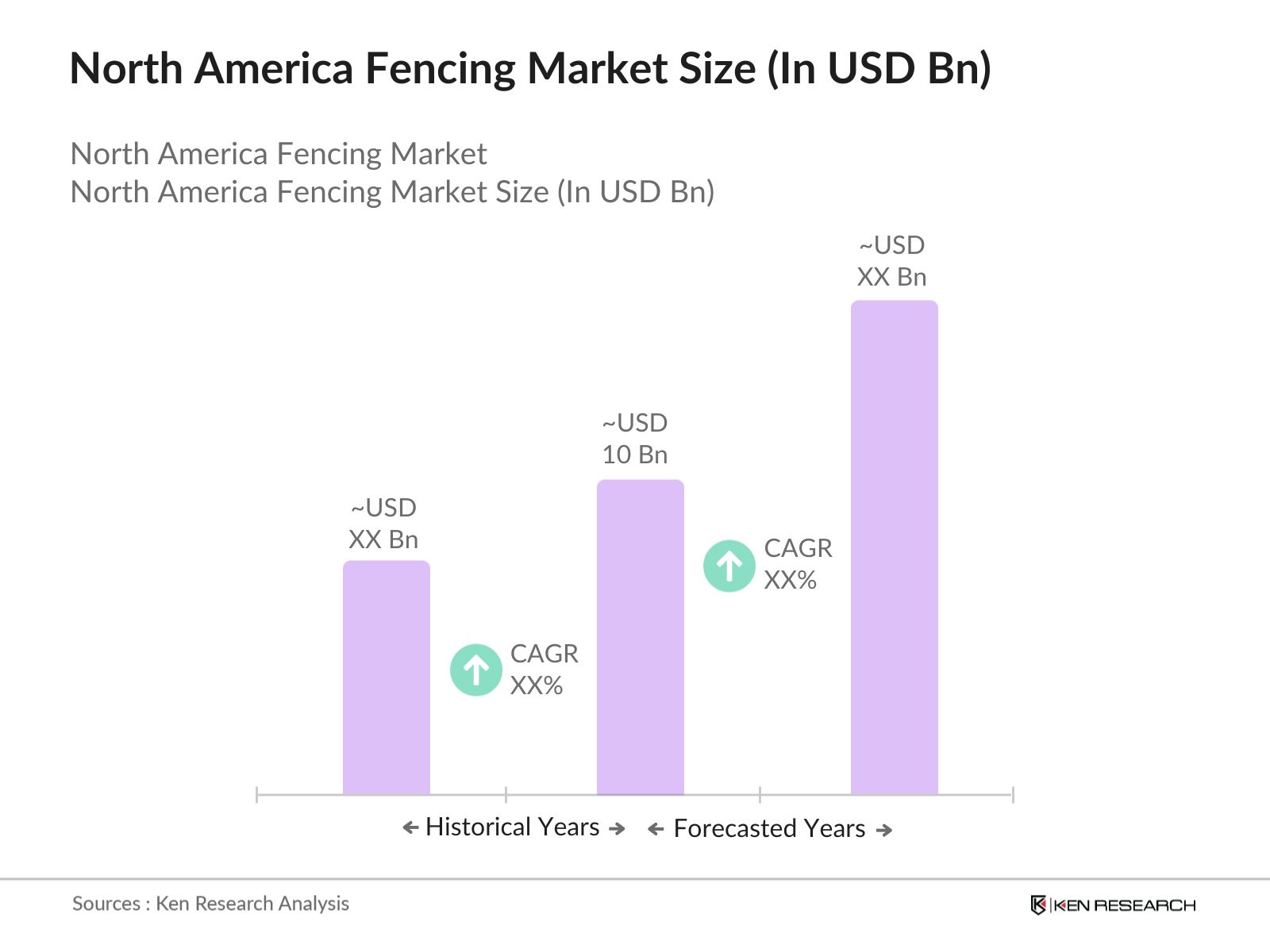
The North America fencing market is valued at USD 10 Bn, largely driven by residential demand and increased infrastructure projects.
The North America fencing market growth is driven by increasing construction activities, home improvement trends, and advancements in fencing materials that offer enhanced durability and security.
Challenges in the North America fencing market include fluctuating raw material prices, stringent environmental regulations, and high installation costs for premium fencing options.
Key players in the North America fencing market include Ameristar Fence Products, Ply Gem Holdings Inc., Merchants Metals, Betafence, and CertainTeed Corporation, who dominate with extensive product lines and strong distribution networks.

What makes us stand out is that our consultants follows Robust, Refine and Result (RRR) methodology. i.e. Robust for clear definitions, approaches and sanity checking, Refine for differentiating respondents facts and opinions and Result for presenting data with story

We have set a benchmark in the industry by offering our clients with syndicated and customized market research reports featuring coverage of entire market as well as meticulous research and analyst insights.

While we don't replace traditional research, we flip the method upside down. Our dual approach of Top Bottom & Bottom Top ensures quality deliverable by not just verifying company fundamentals but also looking at the sector and macroeconomic factors.

With one step in the future, our research team constantly tries to show you the bigger picture. We help with some of the tough questions you may encounter along the way: How is the industry positioned? Best marketing channel? KPI's of competitors? By aligning every element, we help maximize success.

Our report gives you instant access to the answers and sources that other companies might choose to hide. We elaborate each steps of research methodology we have used and showcase you the sample size to earn your trust.

If you need any support, we are here! We pride ourselves on universe strength, data quality, and quick, friendly, and professional service.