
North America Fraud Detection and Prevention Market Outlook to 2030
Region:North America
Author(s):Meenakshi Bisht
Product Code:KROD8127
Region:North America
Author(s):Meenakshi Bisht
Product Code:KROD8127
December 2024
93
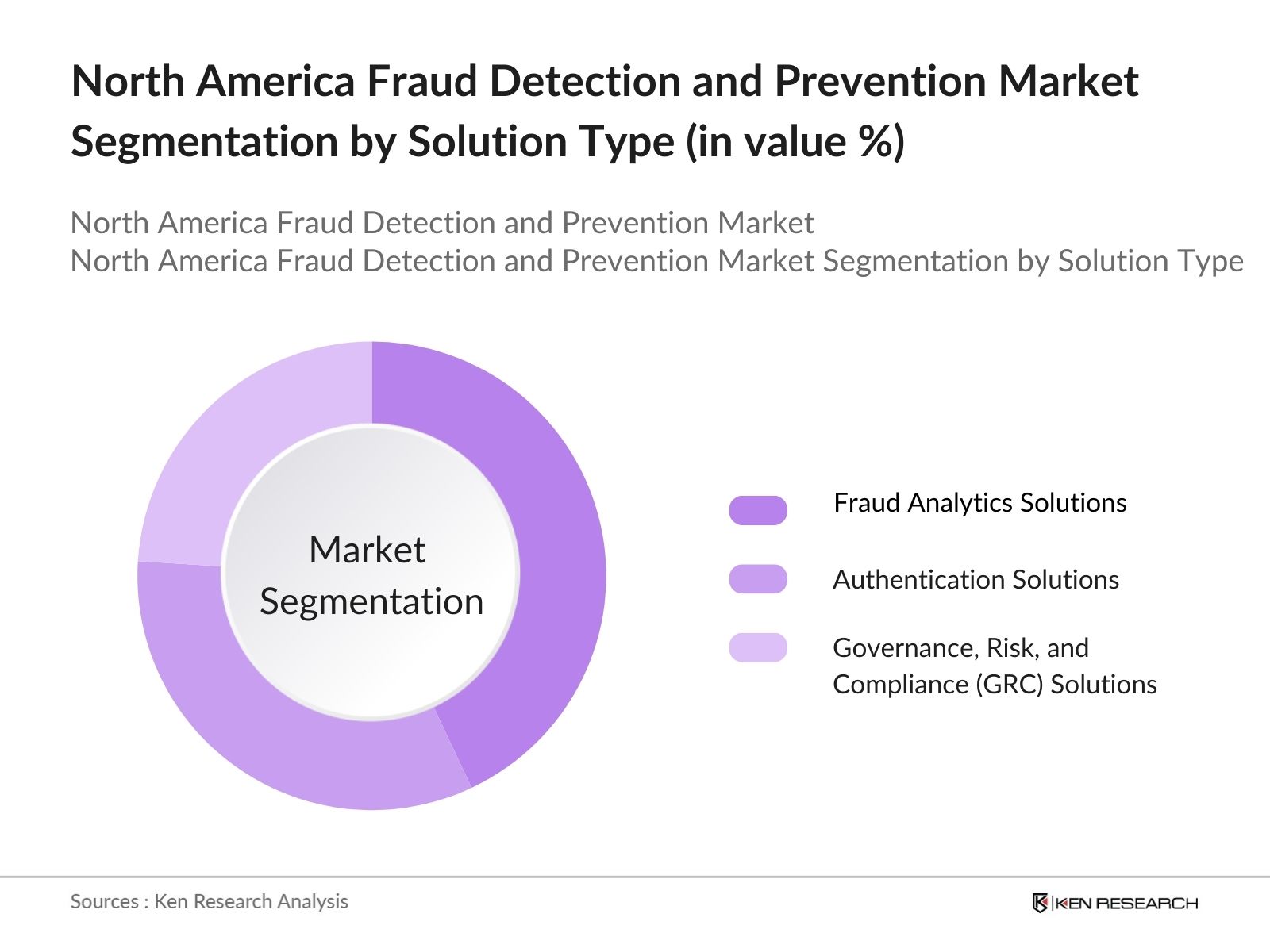
By Solution Type: The North America Fraud Detection and Prevention market is segmented by solution type into fraud analytics solutions, authentication solutions, and governance, risk, and compliance (GRC) solutions. Recently, fraud analytics solutions have dominated the market share within this segment. The dominance is due to the increasing reliance on predictive analytics to identify and mitigate fraud risks in real time. These solutions leverage big data, AI, and ML to analyze transactional patterns and detect anomalies that might indicate fraudulent activities. The ability to provide actionable insights has made fraud analytics solutions crucial for organizations aiming to strengthen their security infrastructure.
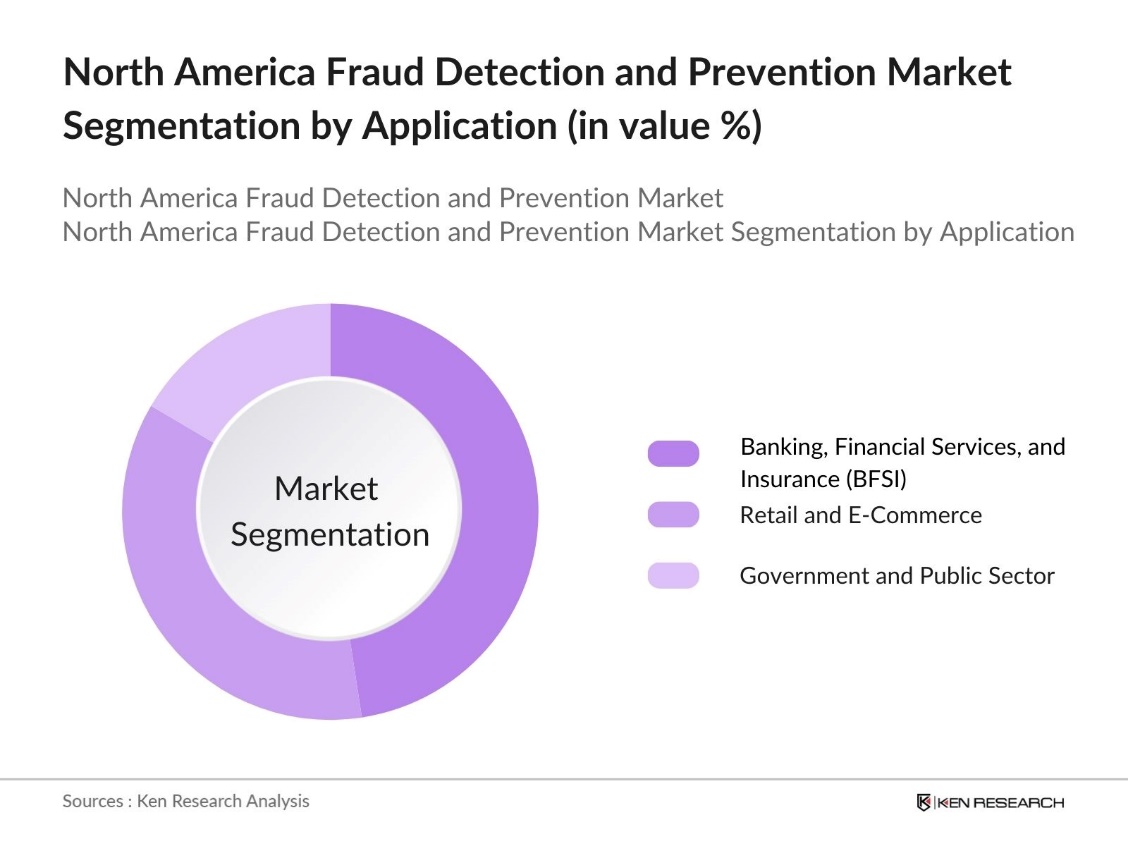
By Application: The North America Fraud Detection and Prevention market is segmented by application into Banking, Financial Services, and Insurance (BFSI), retail and e-commerce, and government and public sector. The Banking, Financial Services, and Insurance (BFSI) sector holds the largest market share in this category due to the critical need to protect sensitive financial data and transactions. The BFSI sector is highly targeted by cybercriminals, and as a result, companies in this sector have heavily invested in robust fraud detection systems. These solutions help banks and financial institutions comply with strict regulatory requirements such as anti-money laundering (AML) and know your customer (KYC) mandates.
The market is characterized by the presence of several key players that have a strong influence on market trends and innovations. These players are focusing on expanding their technological capabilities and offering more sophisticated solutions to meet the growing demand for fraud prevention.
|
Company Name |
Establishment Year |
Headquarters |
Revenue (USD) |
R&D Investment |
Product Offerings |
Key Customers |
Technology Innovations |
Global Presence |
Strategic Alliances |
|
IBM Corporation |
1911 |
Armonk, New York |
|||||||
|
FICO |
1956 |
San Jose, California |
|||||||
|
SAS Institute |
1976 |
Cary, North Carolina |
|||||||
|
Palantir Technologies |
2003 |
Denver, Colorado |
|||||||
|
Pindrop |
2011 |
Atlanta, Georgia |
Over the next few years, the North America Fraud Detection and Prevention market is expected to witness substantial growth. This expansion will be driven by increasing digital transformation across industries, advancements in fraud detection technologies, and heightened regulatory requirements for data protection. Organizations are expected to continue investing in advanced solutions such as AI, machine learning, and blockchain to detect fraud more efficiently and reduce financial losses.
|
Solution Type |
Fraud Analytics Solutions Authentication Solutions Governance, Risk, and Compliance |
|
Services |
Managed Services Professional Services |
|
Application |
Banking, Financial Services, Insurance (BFSI) Retail and E-Commerce Government and Public Sector |
|
Deployment |
Cloud-Based On-Premise |
|
Region |
United States Canada Mexico |
1.1 Definition and Scope
1.2 Market Taxonomy
1.3 Market Growth Rate
1.4 Market Segmentation Overview
2.1 Historical Market Size
2.2 Year-On-Year Growth Analysis
2.3 Key Market Developments and Milestones
3.1 Growth Drivers (Technological Advancements, Regulatory Compliance, Financial Loss Mitigation)
3.1.1 Rise in Cybercrime
3.1.2 Stringent Government Regulations
3.1.3 Adoption of AI and Machine Learning in Fraud Detection
3.1.4 Increased Digital Payments and E-Commerce Transactions
3.2 Market Challenges (Scalability, Security Concerns, Integration Issues)
3.2.1 High Implementation Costs
3.2.2 Lack of Skilled Workforce
3.2.3 Privacy Concerns in Data Sharing
3.3 Opportunities (Cloud-Based Solutions, Cross-Industry Collaboration)
3.3.1 Growth in Mobile Payments
3.3.2 Expansion of Small and Medium Enterprises (SMEs) into Digital Platforms
3.4 Trends (AI, Predictive Analytics, Biometric Authentication)
3.4.1 Increasing Use of Predictive Analytics in Fraud Detection
3.4.2 Integration of Biometric Authentication in Fraud Prevention Systems
3.4.3 Growing Adoption of Cloud-Based Fraud Detection Solutions
3.5 Government Regulations (Data Privacy Laws, Financial Regulations)
3.5.1 GDPR Compliance in Fraud Detection Solutions
3.5.2 Know Your Customer (KYC) and Anti-Money Laundering (AML) Regulations
3.6 SWOT Analysis
3.7 Stakeholder Ecosystem
3.8 Porters Five Forces
3.9 Competition Ecosystem
4.1 By Solution Type (In Value %)
4.1.1 Fraud Analytics Solutions
4.1.2 Authentication Solutions
4.1.3 Governance, Risk, and Compliance (GRC) Solutions
4.2 By Services (In Value %)
4.2.1 Managed Services
4.2.2 Professional Services
4.3 By Application (In Value %)
4.3.1 Banking, Financial Services, and Insurance (BFSI)
4.3.2 Retail and E-Commerce
4.3.3 Government and Public Sector
4.4 By Deployment (In Value %)
4.4.1 Cloud-Based
4.4.2 On-Premise
4.5 By Region (In Value %)
4.5.1 United States
4.5.2 Canada
4.5.3 Mexico
5.1 Detailed Profiles of Major Companies
5.1.1 IBM Corporation
5.1.2 FICO
5.1.3 SAS Institute
5.1.4 NICE Systems
5.1.5 ACI Worldwide
5.1.6 BAE Systems
5.1.7 LexisNexis Risk Solutions
5.1.8 TransUnion
5.1.9 Oracle Corporation
5.1.10 Experian
5.1.11 Fiserv, Inc.
5.1.12 Palantir Technologies
5.1.13 Pindrop
5.1.14 CyberSource Corporation (Visa Inc.)
5.1.15 ThreatMetrix
5.2 Cross Comparison Parameters (Revenue, Number of Employees, Geographical Reach, Technology Adoption, Innovation Score, Compliance Expertise, Market Presence, Customer Base)
5.3 Market Share Analysis
5.4 Strategic Initiatives
5.5 Mergers and Acquisitions
5.6 Investment Analysis
5.7 Venture Capital Funding
5.8 Government Grants
5.9 Private Equity Investments
6.1 Data Protection and Privacy Regulations
6.2 Financial Services Compliance
6.3 Certification and Compliance Standards
7.1 Future Market Size Projections
7.2 Key Factors Driving Future Market Growth
8.1 By Solution Type (In Value %)
8.2 By Services (In Value %)
8.3 By Application (In Value %)
8.4 By Deployment (In Value %)
8.5 By Region (In Value %)
9.1 TAM/SAM/SOM Analysis
9.2 Customer Cohort Analysis
9.3 Marketing Initiatives
9.4 White Space Opportunity Analysis
Disclaimer Contact UsThe first step in the research process involved identifying the key factors driving the North America Fraud Detection and Prevention market. This step required extensive desk research, leveraging both secondary and proprietary databases. The objective was to map out the ecosystem and pinpoint variables such as technological adoption, regulatory frameworks, and industry growth patterns.
In this step, historical market data was analyzed to gain insights into the markets growth trajectory and penetration rates. The analysis focused on market dynamics, including the relationship between market participants and service providers, as well as revenue generation trends. Data was compiled to ensure the accuracy of revenue estimates across the fraud detection landscape.
The research hypotheses developed in the earlier phases were validated through consultations with industry experts. These consultations, conducted via computer-assisted telephone interviews (CATIs), provided operational insights into product performance, market needs, and competitive positioning, which helped refine the final analysis.
The final phase synthesized the findings from the research, combining qualitative insights from expert consultations with quantitative data from desk research. This step also involved obtaining detailed insights from industry players to ensure that all market data was accurate and reflective of actual market conditions.
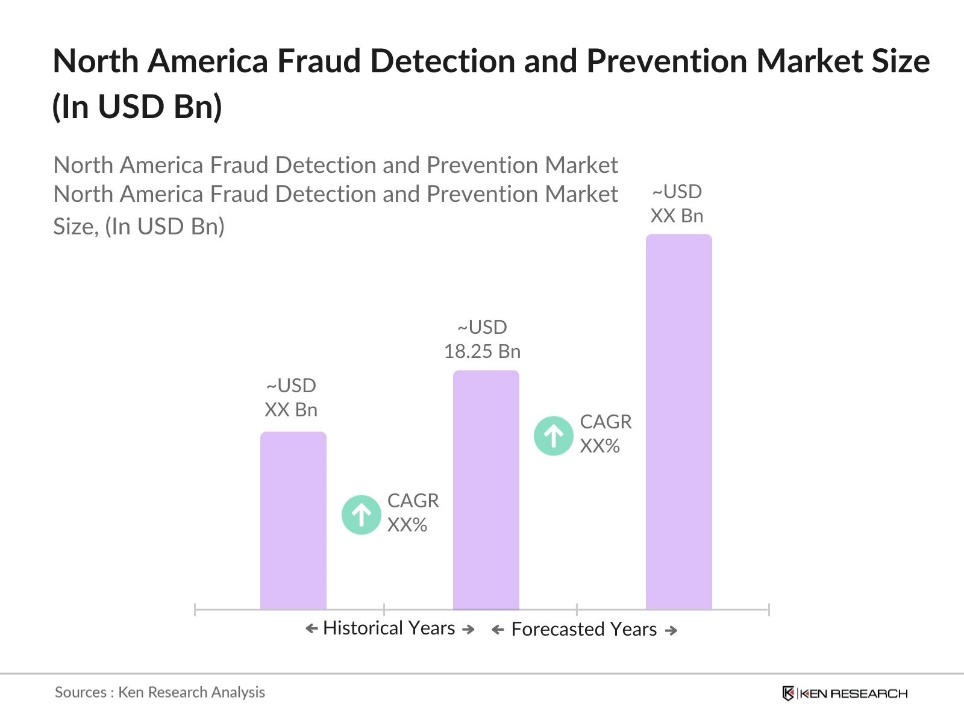
The North America Fraud Detection and Prevention Market is valued at USD 18.25 billion. The markets rapid growth is attributed to the increasing digitalization of businesses and rising fraud risks in sectors like financial services and retail.
The North America Fraud Detection and Prevention Market faces challenges such as high implementation costs, a shortage of skilled professionals, and concerns over privacy in data sharing. Companies are also grappling with the complexities of integrating fraud detection systems into existing infrastructure.
Key players in the North America Fraud Detection and Prevention Market include IBM Corporation, FICO, SAS Institute, NICE Systems, and ACI Worldwide. These companies lead the market due to their technological expertise and strong presence in the financial sector.
The North America Fraud Detection and Prevention Market is driven by factors such as the increasing incidence of fraud, the growing adoption of AI and machine learning technologies, and the rise of digital transactions. Additionally, stricter regulations around data protection are encouraging companies to invest in fraud detection solutions.

What makes us stand out is that our consultants follows Robust, Refine and Result (RRR) methodology. i.e. Robust for clear definitions, approaches and sanity checking, Refine for differentiating respondents facts and opinions and Result for presenting data with story

We have set a benchmark in the industry by offering our clients with syndicated and customized market research reports featuring coverage of entire market as well as meticulous research and analyst insights.

While we don't replace traditional research, we flip the method upside down. Our dual approach of Top Bottom & Bottom Top ensures quality deliverable by not just verifying company fundamentals but also looking at the sector and macroeconomic factors.

With one step in the future, our research team constantly tries to show you the bigger picture. We help with some of the tough questions you may encounter along the way: How is the industry positioned? Best marketing channel? KPI's of competitors? By aligning every element, we help maximize success.

Our report gives you instant access to the answers and sources that other companies might choose to hide. We elaborate each steps of research methodology we have used and showcase you the sample size to earn your trust.

If you need any support, we are here! We pride ourselves on universe strength, data quality, and quick, friendly, and professional service.