















North America Games Market Outlook to 2030
Region:North America
Author(s):Shreya Garg
Product Code:KROD9286
December 2024
93
About the Report
North America Games Market Overview
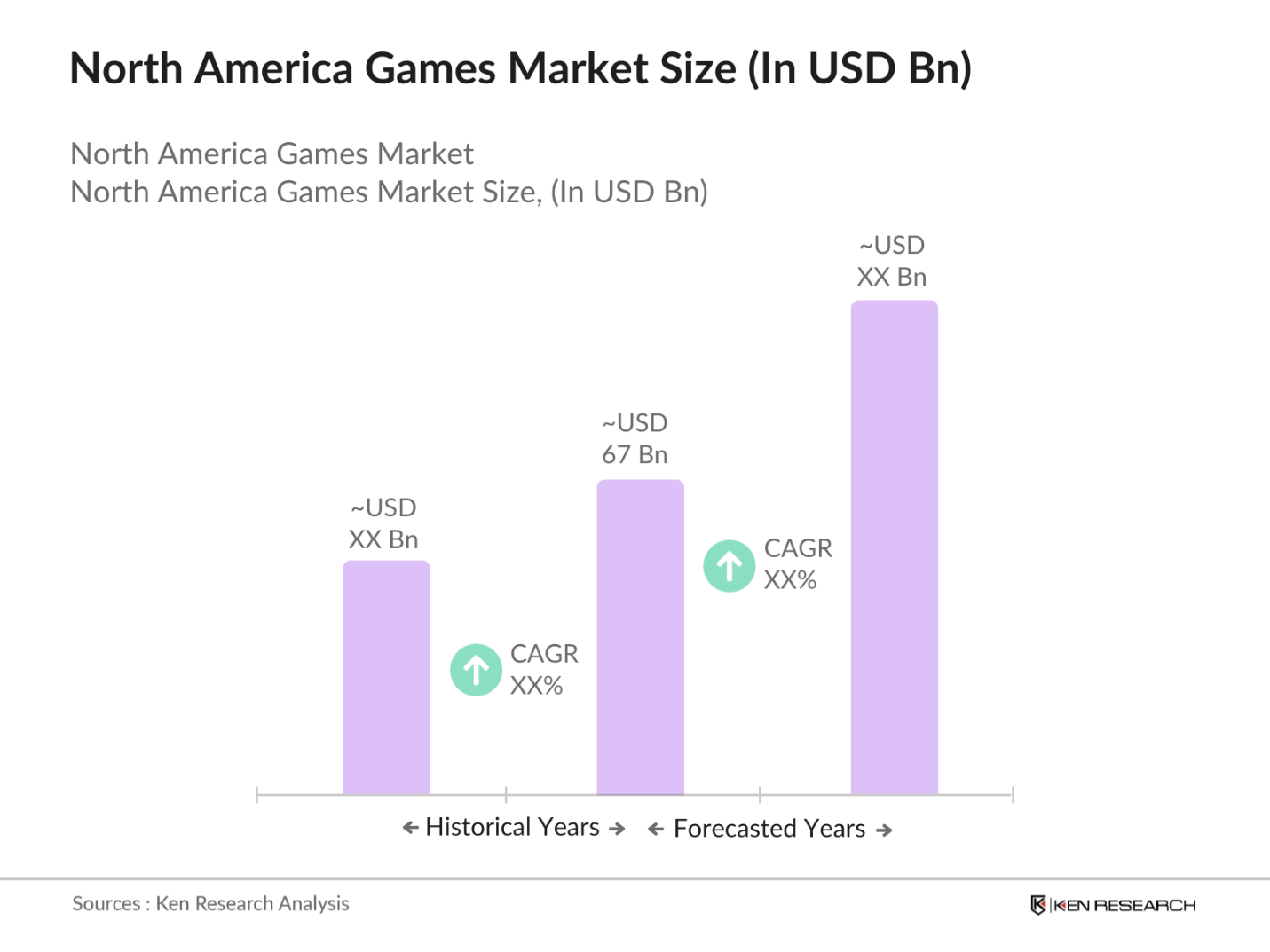
- The North America games market is valued at USD 67 billion, driven by multiple factors including the surge in mobile gaming, the expansion of eSports, and the increased penetration of cloud gaming platforms. This market has evolved rapidly due to the rise of subscription-based models like Xbox Game Pass and PlayStation Plus, which offer extensive game libraries to users at a monthly fee. The significant contribution of in-game purchases and microtransactions further fuels the market, making North America a critical hub for game revenue growth.
- The United States and Canada dominate the North American games market due to a combination of factors such as technological infrastructure, large player base, and high consumer spending on gaming. Major metropolitan areas like Los Angeles, New York, and Toronto have become hubs for game developers and publishers, supporting a strong ecosystem of talent and investment. In the U.S., high broadband penetration and the prevalence of mobile devices have further contributed to market dominance, making these regions critical to the industry's growth.
- North American gaming faces varied regulations on loot boxes, seen by some as a form of gambling. In 2024, several U.S. states, including Hawaii and Minnesota, enacted legislation limiting or banning loot boxes in games aimed at minors. Canada has followed suit with similar restrictions in Ontario and Quebec. Legal reforms aim to protect younger audiences from potential exploitation, with penalties for non-compliance. These restrictions have led game developers to re-evaluate their monetization strategies in affected regions.
North America Games Market Segmentation
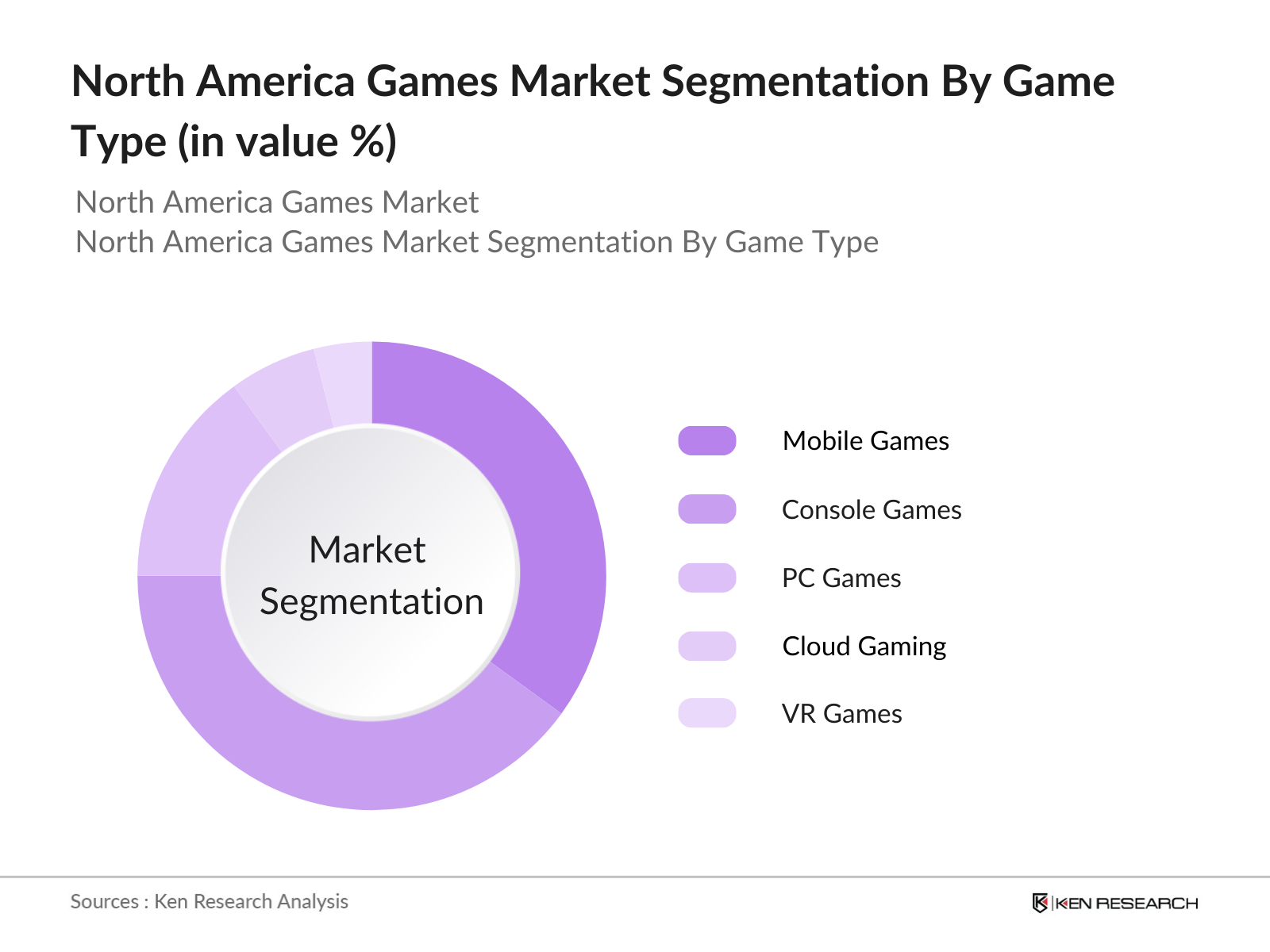
By Game Type: The market is segmented by game type into mobile games, console games, PC games, cloud gaming, and virtual reality games. Console games, especially titles released by top publishers like Activision Blizzard and Sony, maintain a dominant share in this segment. This is largely due to the established player base and strong loyalty to gaming consoles like PlayStation and Xbox. The availability of exclusive titles also contributes to this segment's dominance, attracting gamers who are willing to invest in hardware and in-game purchases to access premium content.
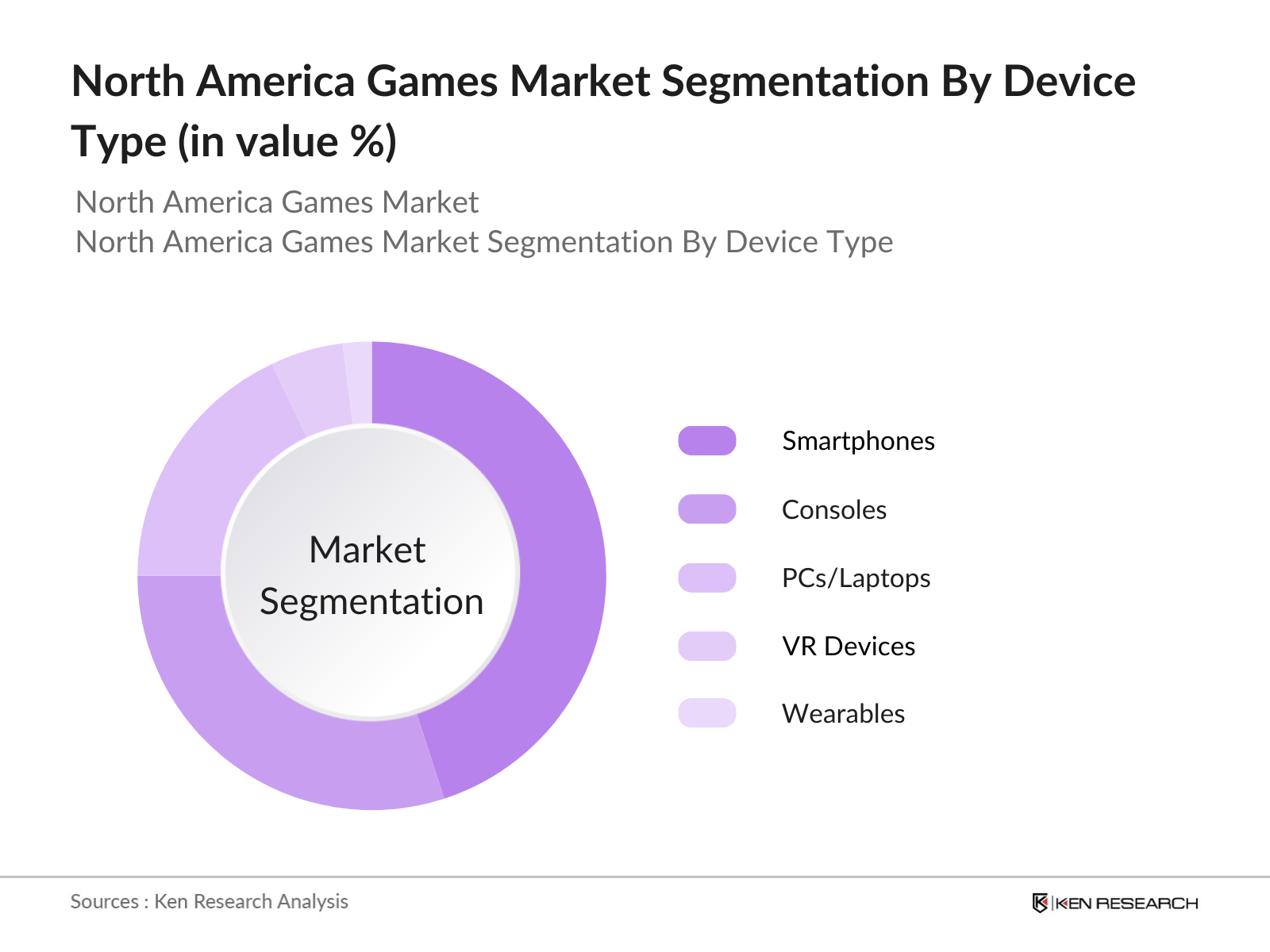
By Device Type: The market is segmented by device type into smartphones, consoles, PCs/laptops, VR devices, and wearables. Smartphones lead this category due to the growing prevalence of mobile gaming. With over 90% of the population owning a smartphone, mobile games are easily accessible, and game developers frequently release mobile versions of popular console and PC games, thereby expanding the user base. Games like "Call of Duty: Mobile" and "PUBG Mobile" have particularly captured a large market share through free-to-play models, which also include in-app purchases for monetization.
North America Games Market Competitive Landscape
The North America games market is characterized by a few dominant players, most of whom are global giants with deep investments in the gaming ecosystem. These companies focus on a variety of strategies, including mergers and acquisitions, investment in cloud gaming technologies, and partnerships with streaming platforms. The market remains highly competitive, with companies constantly vying for exclusivity over game titles and innovative technologies like virtual reality.
|
Company |
Establishment Year |
Headquarters |
Revenue (USD) |
Number of Employees |
Key Products |
In-App Purchases |
Subscription Models |
Esports Involvement |
Cloud Gaming Services |
|
Electronic Arts |
1982 |
Redwood City, CA |
|||||||
|
Activision Blizzard |
2008 |
Santa Monica, CA |
|||||||
|
Take-Two Interactive |
1993 |
New York, NY |
|||||||
|
Microsoft (Xbox) |
1975 |
Redmond, WA |
|||||||
|
Sony (PlayStation) |
1946 |
Tokyo, Japan |
North America Games Industry Analysis
Growth Drivers
- Expansion of eSports: The North American eSports market has seen significant growth driven by increased fan engagement, sponsorships, and tournament viewership. In 2024, the eSports industry generated over USD 1 billion in revenue, with the U.S. leading the charge. The total fan base has surpassed 40 million, largely fueled by sponsorship deals from major brands such as Coca-Cola and Intel, which contributed to a substantial portion of this revenue. The rise in eSports betting and the integration of online tournaments have solidified its position as a major revenue stream in the gaming market.
- Increased Mobile Game Adoption: Mobile gaming in North America has surged with approximately 210 million mobile gamers recorded in 2024. This growth has been propelled by increased smartphone penetration, with 84% of the U.S. population owning a smartphone, allowing widespread access to mobile games. In-app purchases have become a dominant revenue stream, contributing over USD 15 billion annually. The rise of hyper-casual games and innovations in mobile hardware continue to enhance the mobile gaming experience, driving user engagement and spending.
- Streaming Platforms Growth: Streaming platforms such as Twitch and YouTube have revolutionized the gaming ecosystem, with Twitch amassing over 45 million unique monthly viewers in North America alone in 2024. The increasing adoption of subscription models like YouTube Premium and Twitch Prime has provided new monetization opportunities for content creators. This has led to significant content expansion, attracting advertisers and further cementing the role of streaming in the gaming market. Subscription models now contribute a large portion of platform revenues, estimated at over USD 2.5 billion in 2024.
Market Challenges
- Regulatory Challenges: The North American gaming industry faces complex regulatory environments, particularly in monetization and gambling laws. In 2024, the U.S. government introduced stricter regulations on loot boxes, viewing them as a form of gambling. States like California and Washington now impose fines on game developers that include predatory monetization strategies, impacting game revenues. Furthermore, content restrictions, especially related to violence in video games, have created barriers for publishers looking to release games without modifications. These regulations have forced developers to alter their strategies to comply with legal requirements.
- Cybersecurity Concerns: The rise in online gaming has made cybersecurity a major concern, with North American gaming platforms reporting over 600 significant data breaches in 2023 alone. Large publishers such as EA and Activision have been targeted by DDoS attacks, resulting in server outages and compromised user data. Privacy laws like the California Consumer Privacy Act (CCPA) have placed additional pressure on companies to safeguard personal data, as failure to comply can lead to substantial fines. These security issues present ongoing challenges for maintaining user trust and platform stability.
North America Games Market Future Outlook
The North America games market is projected to continue growing, driven by technological advancements, increasing adoption of mobile and cloud gaming, and greater investment in eSports. The expanding integration of virtual and augmented reality technologies is expected to open up new avenues for immersive gaming experiences. Furthermore, the rise of blockchain-based games and NFT integration could create entirely new ecosystems for game monetization, pushing the industry forward. The next few years are expected to see significant growth in subscription services, with companies like Microsoft and Sony competing to dominate the cloud gaming space.
Future Market Opportunities
- Virtual Reality and Augmented Reality Expansion: The adoption of Virtual Reality (VR) and Augmented Reality (AR) in North America has seen a notable rise, with VR headset shipments reaching 10 million units by 2024. Platforms like Metas Quest 2 have led the charge, enhancing user experiences in gaming. Game developers are now investing more in creating immersive VR environments, with over 1,000 new VR/AR games introduced in the past year. This market shift has provided substantial opportunities for innovation in gameplay and storytelling, positioning VR/AR as a growing trend in the gaming industry.
- Increasing Subscription-Based Models: Subscription-based gaming models have gained traction in North America, with platforms like Xbox Game Pass and PlayStation Plus boasting over 60 million subscribers combined as of 2024. Cloud gaming services, such as NVIDIAs GeForce Now, have enabled users to stream high-quality games without expensive hardware, democratizing access to top-tier titles. This shift toward subscription models provides developers with more consistent revenue streams while offering consumers affordable, flexible access to vast game libraries. These platforms have generated over USD 4 billion in annual revenues.
Scope of the Report
|
By Game Type |
Mobile Games Console Games PC Games Cloud Gaming VR Games |
|
By Device Type |
Smartphones Consoles PCs/Laptops VR Devices Wearables |
|
By Revenue Model |
In-Game Purchases Paid Games Subscription Models Ad-Supported Games |
|
By Player Demographics |
Gender Age Group Geographic Region Income Level |
|
By Genre |
Action Adventure Puzzle Role-Playing, Sports |
Products
Key Target Audience
Game Publishers
Game Developers
Cloud Gaming Service Providers
E-sports Organizations
Mobile Device Manufacturers
Government and Regulatory Bodies (Entertainment Software Association, Federal Trade Commission)
Investors and Venture Capital Firms
Game Streaming Platforms
Companies
Major Players
Electronic Arts
Activision Blizzard
Take-Two Interactive
Epic Games
Microsoft (Xbox)
Sony (PlayStation)
Nintendo
Ubisoft
Square Enix
Zynga
Valve Corporation
Bandai Namco
CD Projekt Red
Roblox Corporation
Take-Two Interactive
Table of Contents
1. North America Games Market Overview
1.1. Definition and Scope
1.2. Market Taxonomy
1.3. Market Growth Rate
1.4. Market Segmentation Overview
2. North America Games Market Size (In USD Bn)
2.1. Historical Market Size
2.2. Year-On-Year Growth Analysis
2.3. Key Market Developments and Milestones
3. North America Games Market Analysis
3.1. Growth Drivers
3.1.1. Expansion of eSports (Revenue Growth, Fan Base, Sponsorships)
3.1.2. Increased Mobile Game Adoption (Mobile Gaming Penetration, In-App Purchases)
3.1.3. Streaming Platforms Growth (Impact of Twitch, YouTube, Subscription Models)
3.1.4. Rise of Cross-Platform Gaming (Technological Advancements, Market Share Shifts)
3.2. Market Challenges
3.2.1. Regulatory Challenges (Monetization, Gambling Regulation, Content Restrictions)
3.2.2. Cybersecurity Concerns (Data Breaches, Privacy Issues, DDoS Attacks)
3.2.3. High Development Costs (AAA Games, Cost-Per-Game Production)
3.3. Opportunities
3.3.1. Virtual Reality and Augmented Reality Expansion (Headset Adoption, Game Development, User Experience)
3.3.2. Increasing Subscription-Based Models (Cloud Gaming, Xbox Game Pass, PlayStation Plus)
3.3.3. Gamification in Non-Gaming Sectors (Education, Healthcare, Retail)
3.4. Trends
3.4.1. NFT Integration in Games (In-Game Assets, Decentralized Ownership)
3.4.2. Rise of Indie Developers (Low-Cost Development, Crowdfunding Platforms)
3.4.3. Growing Focus on Accessibility (Inclusivity Features, ADA Compliance in Games)
3.5. Government Regulation
3.5.1. Gambling and Loot Box Regulations (Regional Differences, Legal Reforms)
3.5.2. Data Privacy Laws (GDPR, CCPA, COPPA)
3.5.3. Digital Content Rating and Age Restrictions (ESRB, PEGI Ratings)
3.5.4. Tax Incentives for Game Development (Regional Tax Credits, Impact on Studio Locations)
3.6. SWOT Analysis
3.7. Stakeholder Ecosystem (Publishers, Developers, Distributors, Players)
3.8. Porters Five Forces
3.9. Competition Ecosystem
4. North America Games Market Segmentation
4.1. By Game Type (In Value %)
4.1.1. Mobile Games
4.1.2. Console Games
4.1.3. PC Games
4.1.4. Cloud Gaming
4.1.5. Virtual Reality Games
4.2. By Device Type (In Value %)
4.2.1. Smartphones
4.2.2. Consoles
4.2.3. PCs/Laptops
4.2.4. VR Devices
4.2.5. Wearables
4.3. By Revenue Model (In Value %)
4.3.1. In-Game Purchases
4.3.2. Paid Games
4.3.3. Subscription Models
4.3.4. Ad-Supported Games
4.4. By Player Demographics (In Value %)
4.4.1. Gender
4.4.2. Age Group
4.4.3. Geographic Region (North America Breakdown: US, Canada, Mexico)
4.4.4. Income Level
4.5. By Genre (In Value %)
4.5.1. Action
4.5.2. Adventure
4.5.3. Puzzle
4.5.4. Role-Playing
4.5.5. Sports
5. North America Games Market Competitive Analysis
5.1. Detailed Profiles of Major Companies
5.1.1. Electronic Arts
5.1.2. Activision Blizzard
5.1.3. Take-Two Interactive
5.1.4. Epic Games
5.1.5. Microsoft (Xbox)
5.1.6. Sony (PlayStation)
5.1.7. Nintendo
5.1.8. Ubisoft
5.1.9. Square Enix
5.1.10. Zynga
5.1.11. Valve Corporation
5.1.12. Bandai Namco
5.1.13. CD Projekt Red
5.1.14. Roblox Corporation
5.1.15. Take-Two Interactive
5.2. Cross Comparison Parameters (Revenue, Game Portfolio, Monthly Active Users, Headquarters, No. of Employees, Game Engine Use, Streaming Partnerships, In-Game Monetization Models)
5.3. Market Share Analysis
5.4. Strategic Initiatives
5.5. Mergers And Acquisitions
5.6. Investment Analysis
5.7. Venture Capital Funding
5.8. Government Grants
5.9. Private Equity Investments
6. North America Games Market Regulatory Framework
6.1. Data Privacy Regulations (GDPR, CCPA Compliance)
6.2. Licensing and IP Protection (Copyrights, Trademarks)
6.3. Digital Payment Regulations (In-App Purchases, Microtransactions)
6.4. E-Sports Regulations (Player Contracts, Betting Regulations)
7. North America Games Future Market Size (In USD Bn)
7.1. Future Market Size Projections
7.2. Key Factors Driving Future Market Growth
8. North America Games Future Market Segmentation
8.1. By Game Type (In Value %)
8.2. By Device Type (In Value %)
8.3. By Revenue Model (In Value %)
8.4. By Player Demographics (In Value %)
8.5. By Genre (In Value %)
9. North America Games Market Analysts Recommendations
9.1. TAM/SAM/SOM Analysis
9.2. Customer Cohort Analysis
9.3. Marketing Initiatives
9.4. White Space Opportunity Analysis
Disclaimer Contact UsResearch Methodology
Step 1: Identification of Key Variables
The research begins with the identification of key variables influencing the North America games market. This includes studying the impact of mobile gaming penetration, in-game monetization methods, and technological advancements such as cloud gaming and VR.
Step 2: Market Analysis and Construction
The next phase involves collecting and analyzing historical market data from credible sources. The data is used to map the market's structure, focusing on revenue trends, market penetration, and competitive positioning.
Step 3: Hypothesis Validation and Expert Consultation
Market hypotheses are developed and validated through interviews with industry experts and game developers. These consultations help refine market estimates and provide real-world insights into operational trends.
Step 4: Research Synthesis and Final Output
All data points are synthesized to create a comprehensive market report. The final output is verified with primary research insights and secondary data from reliable sources like Newzoo, Statista, and NPD Group.
Frequently Asked Questions
01 How big is the North America Games Market?
The North America games market is valued at USD 67 billion, driven by increasing mobile gaming penetration and rising investments in eSports and cloud gaming services.
02 What are the challenges in the North America Games Market?
Challenges in the North America games market include high competition among key players, regulatory concerns regarding in-game monetization, and the rising costs of game development, especially for AAA titles.
03 Who are the major players in the North America Games Market?
Major players in the North America games market include Electronic Arts, Activision Blizzard, Microsoft, Sony, and Take-Two Interactive. These companies have a significant impact on the gaming landscape due to their extensive game libraries and loyal user bases.
04 What are the growth drivers of the North America Games Market?
Key growth drivers in the North America games market include the proliferation of mobile gaming, the rise of cloud gaming services, and the increasing popularity of eSports. Advancements in VR and AR technology are also expected to fuel future growth.
05 Which regions dominate the North America Games Market?
The United States dominates the North America games market due to its advanced technological infrastructure, strong gaming culture, and high consumer spending on gaming products and services. Canada follows closely behind due to favorable tax incentives for game developers.
Why Buy From Us?

What makes us stand out is that our consultants follows Robust, Refine and Result (RRR) methodology. i.e. Robust for clear definitions, approaches and sanity checking, Refine for differentiating respondents facts and opinions and Result for presenting data with story

We have set a benchmark in the industry by offering our clients with syndicated and customized market research reports featuring coverage of entire market as well as meticulous research and analyst insights.

While we don't replace traditional research, we flip the method upside down. Our dual approach of Top Bottom & Bottom Top ensures quality deliverable by not just verifying company fundamentals but also looking at the sector and macroeconomic factors.

With one step in the future, our research team constantly tries to show you the bigger picture. We help with some of the tough questions you may encounter along the way: How is the industry positioned? Best marketing channel? KPI's of competitors? By aligning every element, we help maximize success.

Our report gives you instant access to the answers and sources that other companies might choose to hide. We elaborate each steps of research methodology we have used and showcase you the sample size to earn your trust.

If you need any support, we are here! We pride ourselves on universe strength, data quality, and quick, friendly, and professional service.