
North America Head Mounted Display Market Outlook to 2030
Region:United States
Author(s):Vijay Kumar
Product Code:KROD8961
Region:United States
Author(s):Vijay Kumar
Product Code:KROD8961
November 2024
94
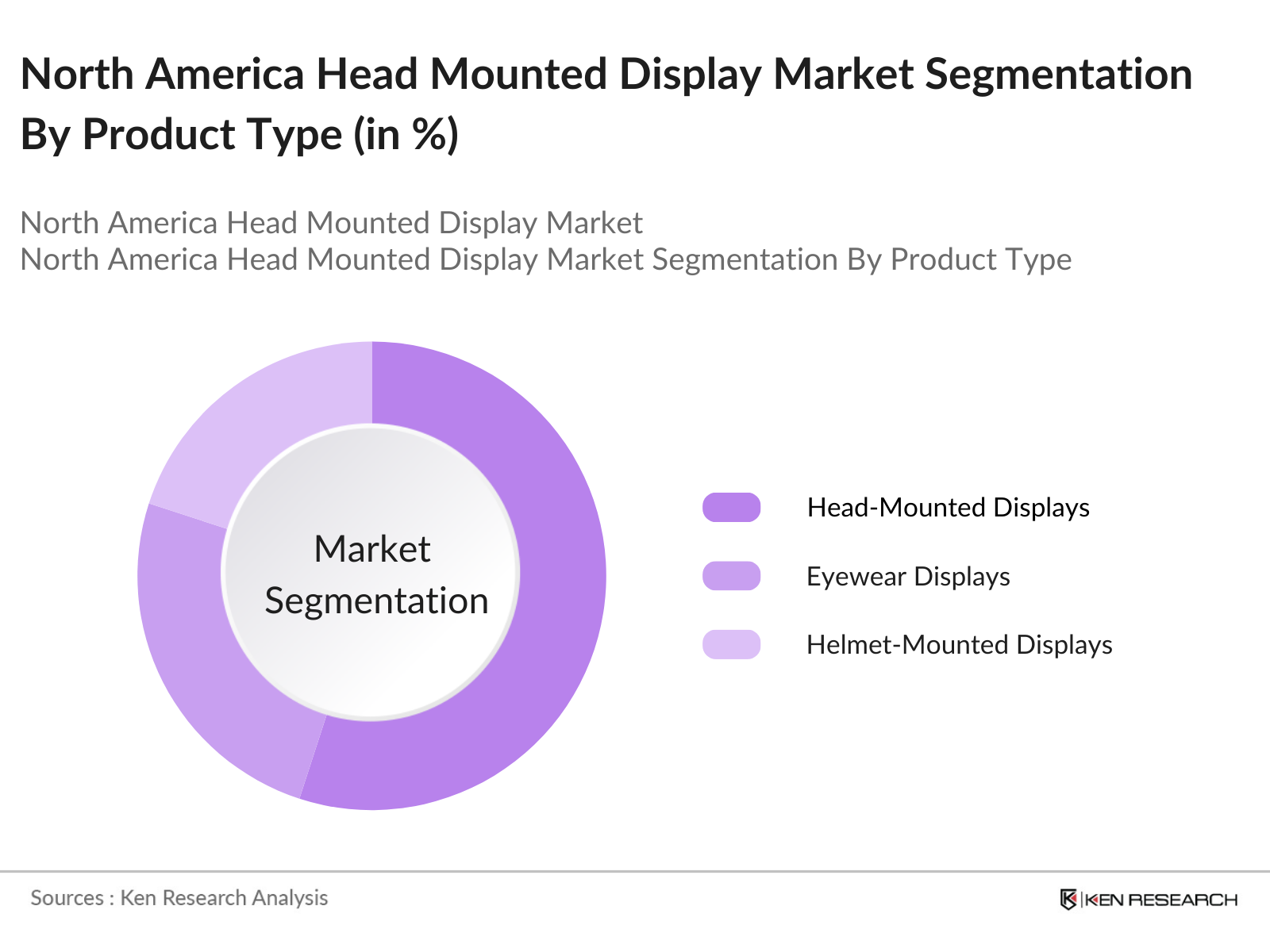
By Product Type: The market is segmented by product type into head-mounted displays, eyewear displays, and helmet-mounted displays. Currently, head-mounted displays (HMDs) hold a dominant share in the market due to their versatility across applications such as gaming and healthcare. The high adoption rate is largely due to the affordability and increasing accessibility of HMD devices for individual and commercial users.
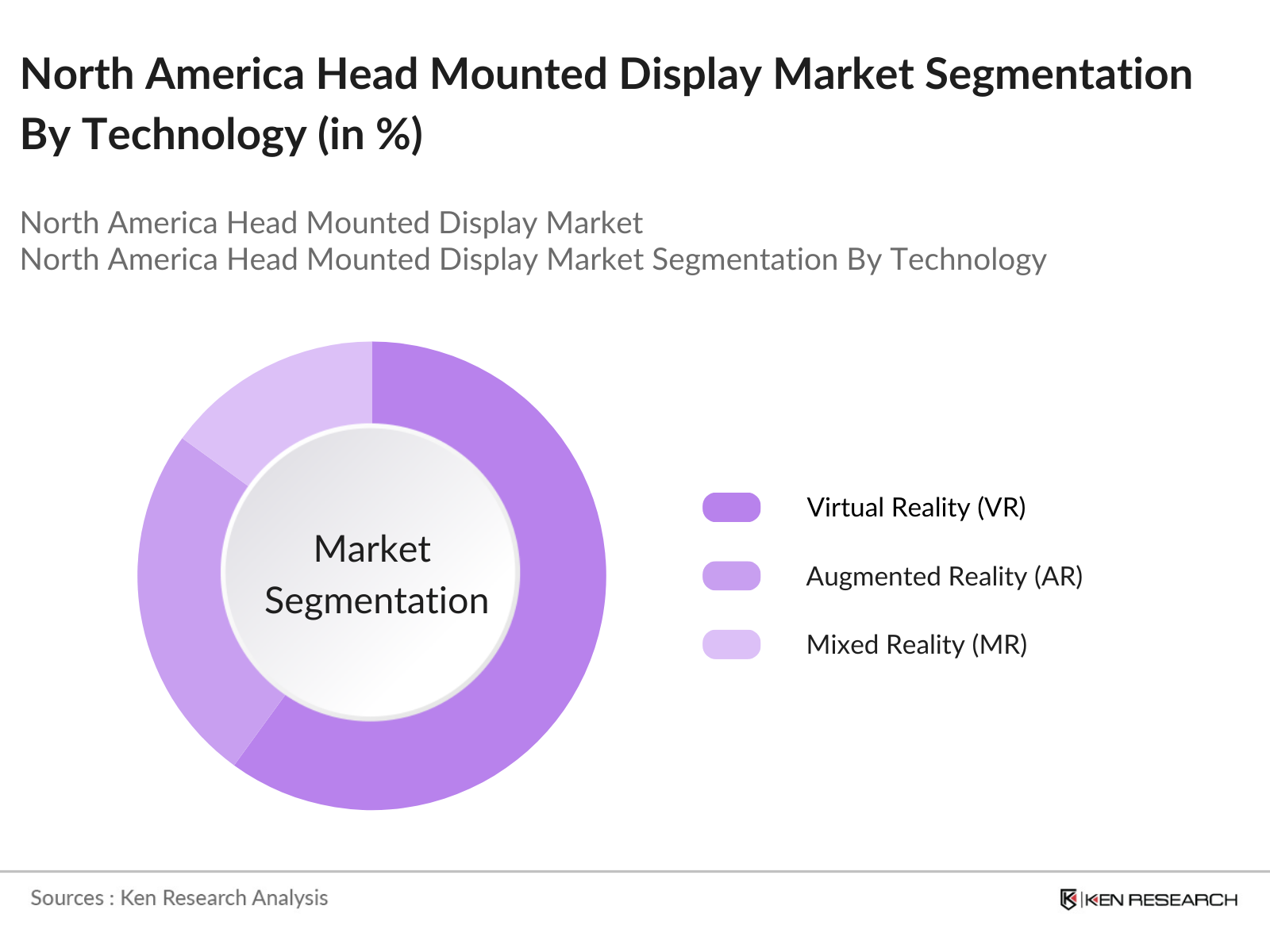
By Technology: The HMD market is categorized by technology into augmented reality (AR), virtual reality (VR), and mixed reality (MR). Virtual reality (VR) dominates this segment due to its significant presence in gaming and training applications. VR technology provides a completely immersive experience, which has proven highly popular, especially in gaming and entertainment.
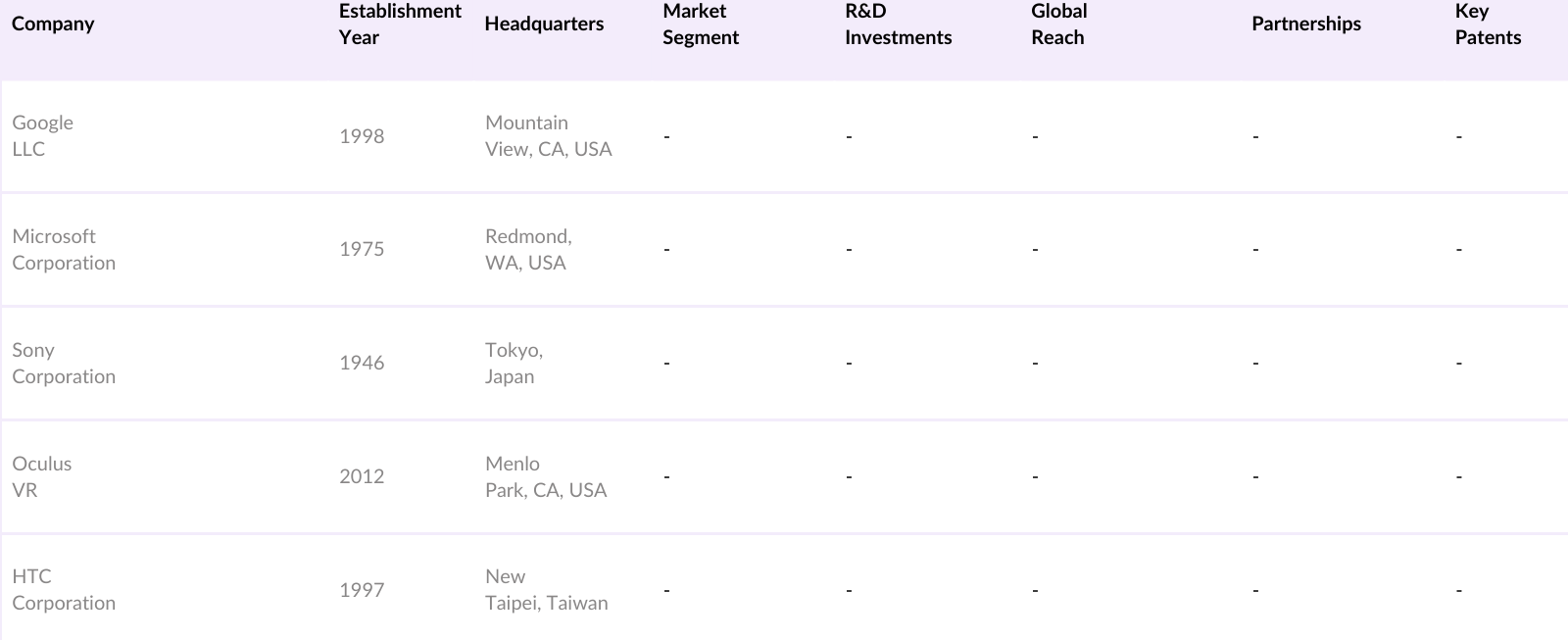
The North America Head Mounted Display market is dominated by major players, creating a competitive landscape shaped by technological innovation, strategic partnerships, and a focus on diversified applications.
Over the next few years, the North America Head Mounted Display market is projected to experience substantial growth, driven by advancements in augmented reality, widespread VR adoption, and cross-industry applications. Increased investment in technology and partnerships with educational institutions, defense, and healthcare sectors are expected to further enhance market growth.
|
Product Type |
Head-Mounted Displays (HMD) |
|
Technology |
Augmented Reality (AR) |
|
Application |
Gaming & Entertainment |
|
Connectivity |
Wired |
|
Component |
Displays |
|
Region |
United States |
1.1. Definition and Scope
1.2. Market Taxonomy
1.3. Market Growth Rate
1.4. Market Segmentation Overview
2.1. Historical Market Size
2.2. Year-On-Year Growth Analysis
2.3. Key Market Developments and Milestones
3.1. Growth Drivers
3.1.1. Rising Adoption in Healthcare and Education Sectors
3.1.2. Increasing Demand for Immersive Gaming Experiences
3.1.3. Technological Advancements in AR/VR Technologies
3.1.4. Expansion of Remote Work Culture
3.2. Market Challenges
3.2.1. High Device and Maintenance Costs
3.2.2. Technical Issues (Latency, Field of View Limitations)
3.2.3. Concerns Over User Fatigue and Health Impacts
3.3. Opportunities
3.3.1. Integration with 5G Technology
3.3.2. Growth in Augmented Reality (AR) Applications
3.3.3. Increased Adoption in Automotive & Manufacturing Sectors
3.4. Trends
3.4.1. Rise of Wireless and Lightweight HMD Devices
3.4.2. Enhanced Customization and Personalization
3.4.3. Growing Use in Military Training and Simulation
3.5. Government Regulations
3.5.1. FDA Regulations for Medical HMDs
3.5.2. Data Privacy and Security Standards
3.5.3. Export Controls and Trade Policies
3.6. SWOT Analysis
3.7. Stakeholder Ecosystem
3.8. Porters Five Forces Analysis
3.9. Competitive Ecosystem
4.1. By Product Type (in Value %)
4.1.1. Head-Mounted Displays (HMD)
4.1.2. Eyewear Displays
4.1.3. Helmet-Mounted Displays
4.2. By Technology (in Value %)
4.2.1. Augmented Reality (AR)
4.2.2. Virtual Reality (VR)
4.2.3. Mixed Reality (MR)
4.3. By End-User (in Value %)
4.3.1. Gaming & Entertainment
4.3.2. Healthcare
4.3.3. Aerospace & Defense
4.3.4. Industrial
4.3.5. Education & Training
4.4. By Connectivity Type (in Value %)
4.4.1. Wired
4.4.2. Wireless
4.5. By Component (in Value %)
4.5.1. Displays
4.5.2. Cameras
4.5.3. Sensors
4.5.4. Processors
4.5.5. Memory Modules
5.1. Detailed Profiles of Major Companies
5.1.1. Google LLC
5.1.2. Microsoft Corporation
5.1.3. Sony Corporation
5.1.4. Oculus VR (Facebook Technologies)
5.1.5. HTC Corporation
5.1.6. Samsung Electronics Co., Ltd.
5.1.7. Lenovo Group Limited
5.1.8. Vuzix Corporation
5.1.9. Magic Leap, Inc.
5.1.10. RealWear, Inc.
5.1.11. Apple Inc.
5.1.12. Seiko Epson Corporation
5.1.13. Pimax Technology Co., Ltd.
5.1.14. Optinvent SA
5.1.15. Kopin Corporation
5.2. Cross-Comparison Parameters (Number of Employees, Revenue, Technology Portfolio, Regional Presence, Product Launch Frequency, R&D Investments, Strategic Partnerships, Patent Holdings)
5.3. Market Share Analysis
5.4. Strategic Initiatives
5.5. Mergers and Acquisitions
5.6. Investment Analysis
5.7. Venture Capital Funding
5.8. Government Grants
5.9. Private Equity Investments
6.1. Safety and Compliance Standards for Wearable Devices
6.2. Data Security and Privacy Regulations
6.3. Certification Requirements for Medical Applications
7.1. Future Market Size Projections
7.2. Key Factors Influencing Future Market Growth
8.1. By Product Type (in Value %)
8.2. By Technology (in Value %)
8.3. By End-User (in Value %)
8.4. By Connectivity Type (in Value %)
8.5. By Component (in Value %)
9.1. TAM/SAM/SOM Analysis
9.2. Customer Cohort Analysis
9.3. Marketing Initiatives
9.4. White Space Opportunity Analysis
Disclaimer Contact UsThe first step involved identifying primary market influencers across the North America Head Mounted Display ecosystem. Through a mix of secondary data sources and proprietary industry databases, we determined the critical factors impacting market growth, such as technological advancements, regulatory changes, and economic drivers.
Using historical data, we examined the Head Mounted Display market's development. This stage focused on calculating market penetration across key sectors, resulting in comprehensive revenue generation and performance evaluations for each segment.
Hypotheses on market trends and dynamics were validated through interviews with industry professionals across technology, healthcare, and defense sectors. These discussions provided direct insights into operational and financial patterns, contributing to accurate market estimates.
The final stage entailed synthesizing insights from both primary and secondary sources, followed by cross-referencing with industry reports. This rigorous approach ensured a well-rounded, validated understanding of the North America Head Mounted Display market.
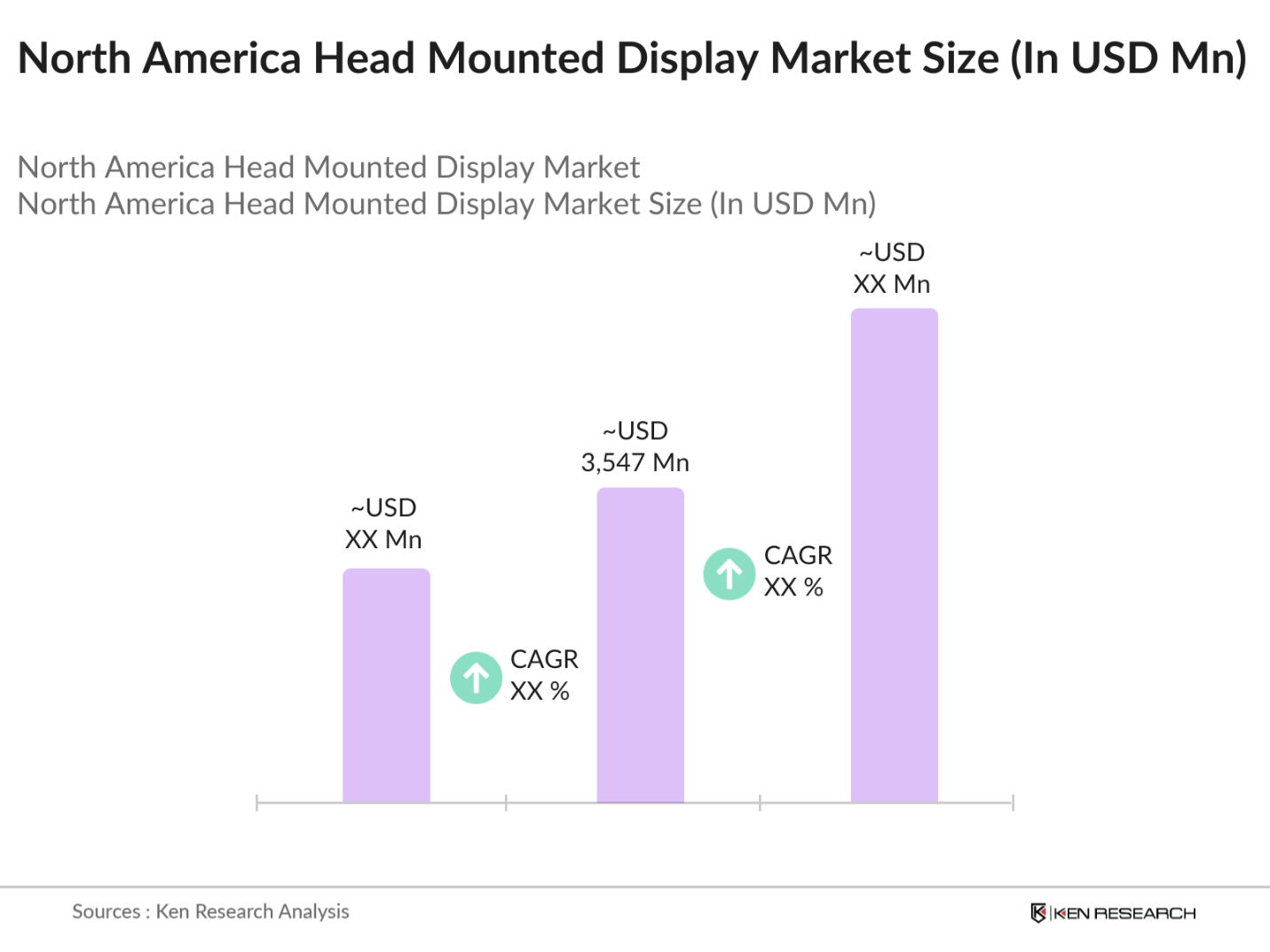
The North America Head Mounted Display market is valued at USD 3,547 million, based on a five-year historical analysis. This growth is driven by advancements in augmented and virtual reality technologies, particularly for applications in gaming, healthcare, and defense.
Key challenges include high device costs, concerns over user fatigue, and data privacy issues, which could limit broader adoption in certain sectors.
Major players include Google LLC, Microsoft Corporation, Oculus VR, Sony Corporation, and HTC Corporation, known for their innovation in AR/VR technologies.
Growth drivers include advancements in immersive technology, increased applications in defense and healthcare, and the integration of 5G, enhancing device connectivity and performance.

What makes us stand out is that our consultants follows Robust, Refine and Result (RRR) methodology. i.e. Robust for clear definitions, approaches and sanity checking, Refine for differentiating respondents facts and opinions and Result for presenting data with story

We have set a benchmark in the industry by offering our clients with syndicated and customized market research reports featuring coverage of entire market as well as meticulous research and analyst insights.

While we don't replace traditional research, we flip the method upside down. Our dual approach of Top Bottom & Bottom Top ensures quality deliverable by not just verifying company fundamentals but also looking at the sector and macroeconomic factors.

With one step in the future, our research team constantly tries to show you the bigger picture. We help with some of the tough questions you may encounter along the way: How is the industry positioned? Best marketing channel? KPI's of competitors? By aligning every element, we help maximize success.

Our report gives you instant access to the answers and sources that other companies might choose to hide. We elaborate each steps of research methodology we have used and showcase you the sample size to earn your trust.

If you need any support, we are here! We pride ourselves on universe strength, data quality, and quick, friendly, and professional service.