
North America Hoverboard Scooter Market Outlook to 2030
Region:North America
Author(s):Sanjana Verma
Product Code:KROD8954
December 2024
97
About the Report
North America Hoverboard Scooter Market Overview
- The North America hoverboard scooter market is valued at USD 380 million, based on a comprehensive analysis of market activity over the last five years. The market is primarily driven by the growing demand for eco-friendly personal transportation solutions, especially among urban consumers. The increased focus on sustainable transport options, paired with advancements in battery technology, has further fueled the demand for hoverboards.
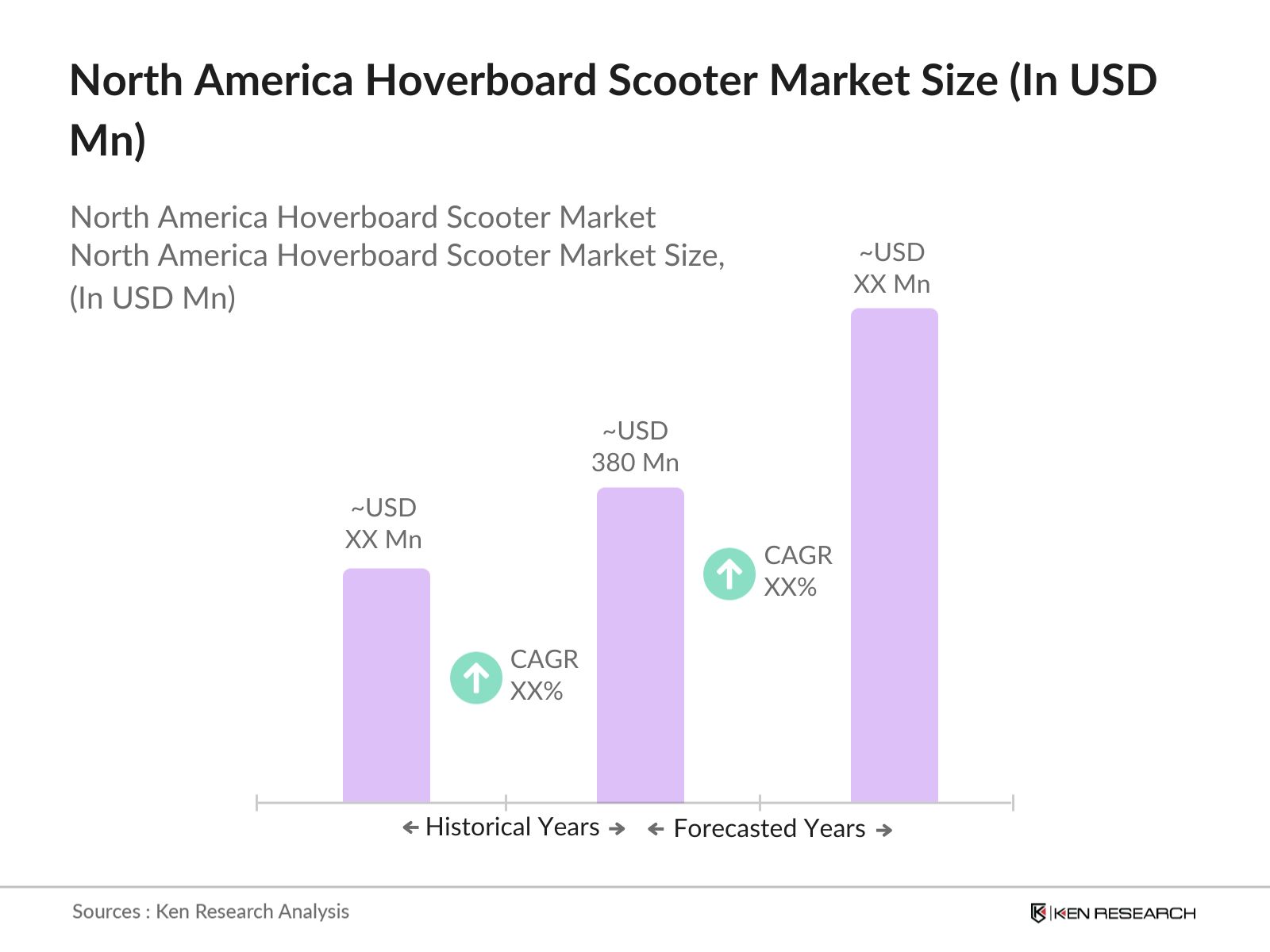
- In terms of regional dominance, the United States and Canada lead the market, largely due to their strong infrastructure for electric vehicle adoption and the presence of key manufacturers. The U.S., being home to several major cities with high urban density and mobility challenges, has seen higher adoption rates of hoverboards. Canada follows closely due to growing urbanization and increasing demand for personal mobility devices. In both countries, favorable government regulations and increasing consumer awareness about environmentally sustainable options have also contributed to their dominance in the market.
- In 2023, hoverboard manufacturers in North America were required to comply with stringent safety certifications like UL 2272, which ensures hoverboards meet electrical and fire safety standards. According to the U.S. Consumer Product Safety Commission, the number of hoverboards certified under UL 2272 grew by 45% between 2022 and 2023, reflecting the industry's commitment to safety. This certification has become mandatory for all hoverboards sold in the U.S., following numerous incidents of battery malfunctions and fire hazards in previous years.
North America Hoverboard Scooter Market Segmentation
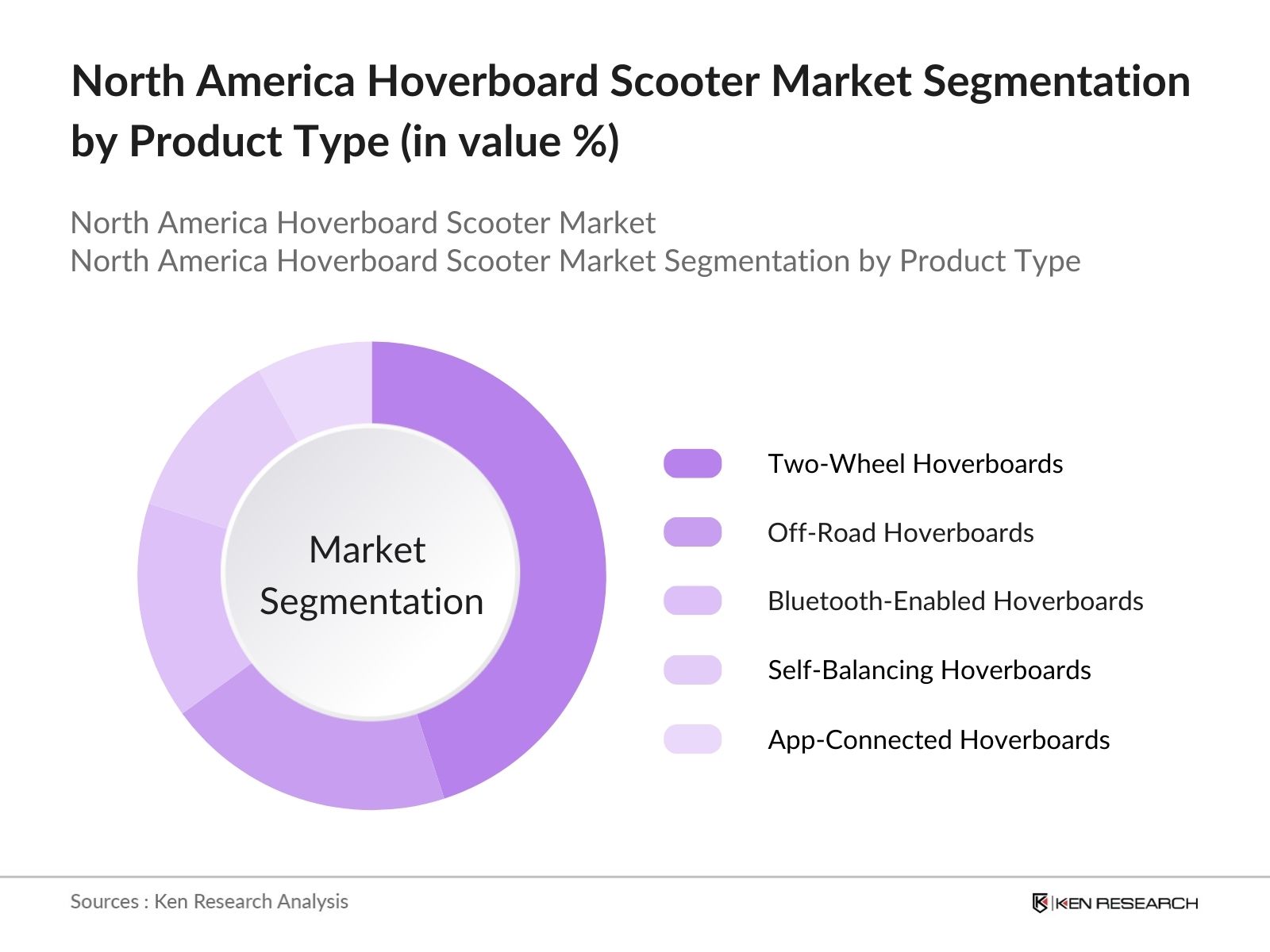
By Product Type: The North America hoverboard scooter market is segmented by product type into Two-Wheel Hoverboards, Off-Road Hoverboard, Bluetooth-Enabled Hoverboards, Self-Balancing Hoverboards and App-Connected Hoverboards. Among these, two-wheel hoverboards dominate the market share due to their widespread consumer preference for daily commuting and recreational activities. These hoverboards offer versatility in urban environments and are considered a convenient solution for short-distance travel. Moreover, their affordability compared to other electric mobility devices makes them a popular choice among consumers in North America.
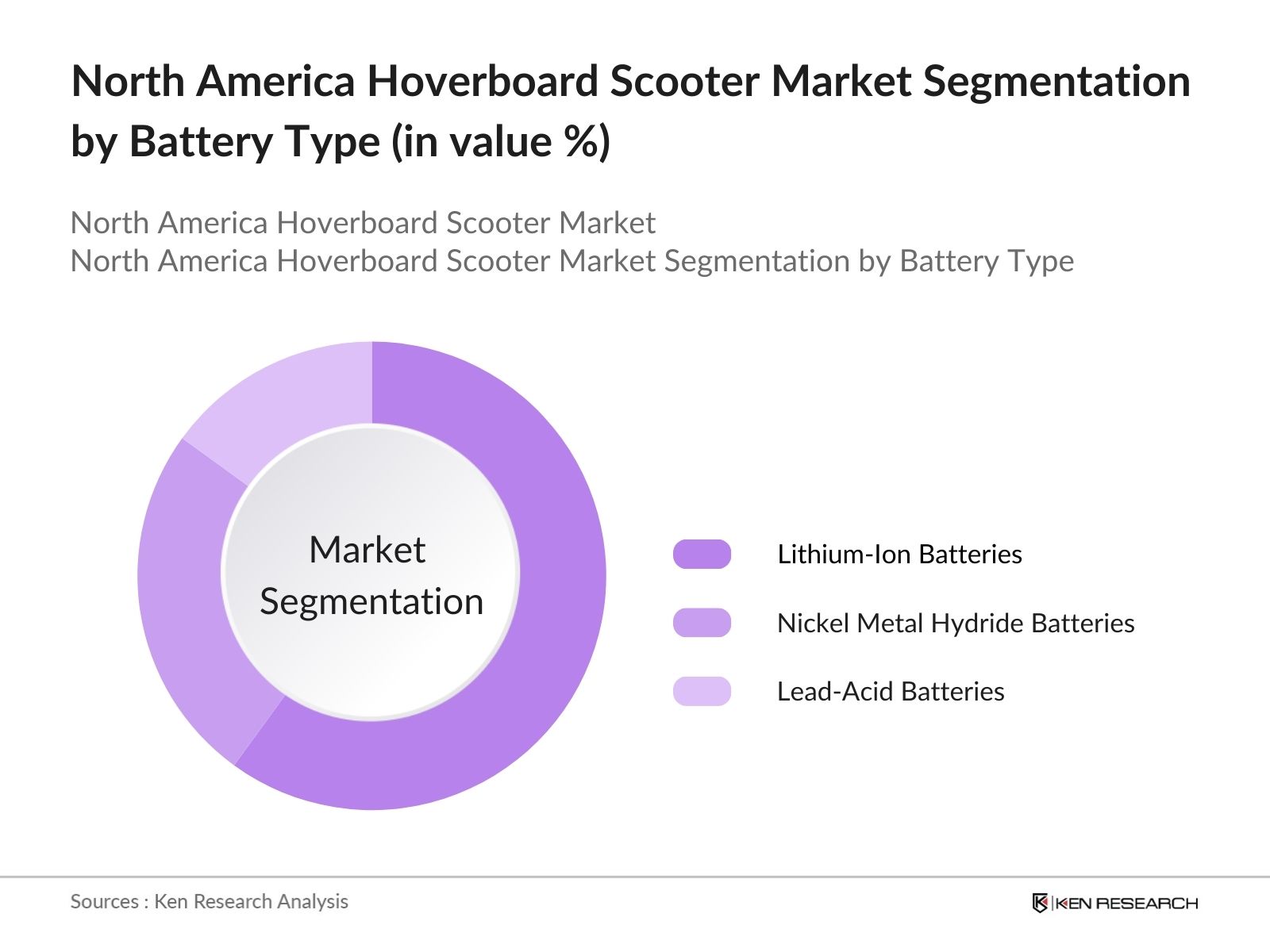
By Battery Type: The North America hoverboard scooter market is also segmented by battery type into Lithium-Ion Batteries, Nickel Metal Hydride Batteries and Lead-Acid Batteries. Among these, lithium-ion batteries are dominant in the market. Their higher energy density, lighter weight, and longer lifespan compared to other battery types make them the preferred choice for hoverboard manufacturers. Lithium-ion batteries are well-suited for high-performance hoverboards due to their ability to provide extended riding time, which is particularly important for consumers using these devices for commuting in urban environments.
 North America Hoverboard Scooter Market Competitive Landscape
The North American hoverboard scooter market is characterized by the presence of a few key players that dominate through product innovation, strategic partnerships, and strong distribution networks. Companies such as Razor USA and Segway have established themselves as household names by consistently offering high-quality products. In addition, smaller, agile companies like Swagtron and Gotrax continue to carve out niche markets by catering to specific consumer preferences such as off-road hoverboards and app-integrated devices.
|
Company Name |
Establishment Year |
Headquarters |
Product Range |
Technology Focus |
Distribution Network |
Certifications |
Sustainability Initiatives |
Revenue (2023) |
|
Razor USA LLC |
2000 |
California, USA |
- |
- |
- |
- |
- |
- |
|
Segway Inc. |
1999 |
New Hampshire, USA |
- |
- |
- |
- |
- |
- |
|
Swagtron |
2016 |
Indiana, USA |
- |
- |
- |
- |
- |
- |
|
Gotrax |
2017 |
Texas, USA |
- |
- |
- |
- |
- |
- |
|
EPIKGO |
2015 |
California, USA |
- |
- |
- |
- |
- |
- |
North America Hoverboard Scooter Market Analysis
Growth Drivers
- Shift Toward Electric Vehicles: The North American hoverboard scooter market is benefiting from the growing shift toward electric vehicles (EVs). In 2023, new electric car registrations in the United States totaled approximately1.4 million, reflecting an increase of over40%compared to 2022. Hoverboard scooters align with this trend as compact, electric-powered transportation solutions. As consumers increasingly embrace green transport options to reduce carbon emissions, hoverboards serve as an eco-friendly alternative to traditional vehicles, particularly for short-distance travel.
- Increasing Demand for Last-Mile Connectivity: Urban mobility in North America is seeing a growing need for efficient last-mile connectivity solutions. Hoverboards have emerged as a key option due to their small size and electric propulsion. In 2023, North American cities, particularly in the U.S. and Canada, have invested over $10 billion in micro-mobility infrastructure such as dedicated lanes and parking stations for electric scooters and hoverboards. This demand is driven by urban planners prioritizing reduced congestion and greener transport options.
- Expansion of E-Commerce for Electric Mobility Devices: The rise of e-commerce platforms specializing in electric mobility devices has bolstered the hoverboard market. In 2023, online sales of electric scooters, including hoverboards, saw a 30% increase in North America, as reported by U.S. Census Bureau data on retail e-commerce. Platforms such as Amazon and Walmart play a significant role in the distribution of these products, with free delivery and competitive pricing making hoverboards more accessible. E-commerce is crucial in making hoverboards available to a broader audience, including suburban and rural consumers.
Challenges
- Regulatory Compliance on Safety: Hoverboard scooters in North America face strict safety regulations. The U.S. Consumer Product Safety Commission reported a significant rise in hoverboard recalls in 2022, particularly due to safety non-compliance issues such as overheating and fire risks. In 2023, the introduction of new UL 2272 certification standards for hoverboards has mandated stricter compliance, requiring manufacturers to meet specific safety standards related to electrical and fire hazards.
- Battery Overheating and Fire Risks: Battery overheating, leading to potential fire hazards, continues to challenge the hoverboard industry. The National Fire Protection Association (NFPA) reported over 50 hoverboard-related fire incidents across the U.S. in 2023, most of which were linked to poor-quality or counterfeit batteries. The cost of replacing and certifying safer lithium-ion batteries further raises the production cost for hoverboards, limiting the ability of some manufacturers to offer affordable products while ensuring safety.
North America Hoverboard Scooter Market Future Outlook
North America hoverboard scooter market is expected to continue expanding, driven by increasing consumer demand for eco-friendly and cost-effective urban mobility solutions. Growing investments in smart city projects and advancements in battery technology will likely contribute to the rising adoption of hoverboard scooters. Moreover, regulatory frameworks are likely to become more favorable, as governments push for sustainable transportation options to reduce traffic congestion and lower carbon emissions.
Future Market Opportunities
- Integration with Urban Smart City Projects: Smart city projects across North America are creating opportunities for hoverboard adoption. As of 2023, over 50 U.S. cities, including New York and San Francisco, have invested in smart city infrastructure, which includes integrating micro-mobility solutions into urban planning. This integration opens the door for hoverboards to become a regular mode of transport, supported by dedicated lanes, IoT-based traffic management systems, and smart parking solutions.
- Growing Demand in Suburban and Rural Markets: While hoverboards have been popular in urban areas, there is increasing demand from suburban and rural regions. Data from the U.S. Department of Agriculture shows that electric vehicle adoption in rural areas grew by 8% between 2022 and 2023, suggesting similar growth potential for smaller, more affordable electric vehicles like hoverboards. Suburban consumers are turning to hoverboards as an alternative to cars for short-distance travel, driven by rising fuel prices and increasing traffic congestion.
Scope of the Report
|
Product Type |
Two-Wheel Hoverboard Scooters Off-Road Hoverboard Scooters Bluetooth-Enabled Hoverboards Self-Balancing Electric Hoverboards App-Connected Hoverboards |
|
Battery Type |
Lithium-Ion Batteries Nickel Metal Hydride Batteries Lead-Acid Batteries |
|
Distribution Channel |
Online Retail Offline Retail (Specialty Stores, Consumer Electronics Stores, Mass Merchants), Leasing and Rental Platforms |
|
End-User |
Individual Consumers Commercial (Delivery, Entertainment, Tourism) Institutional (Schools, Universities, Corporate Campuses) |
|
Region |
United States Canada Mexico |
Products
Key Target Audience
Hoverboard Manufacturers
Battery Manufacturers
Retailers (Consumer Electronics Stores, E-commerce Platforms)
Ride-Sharing and Rental Companies
Urban Mobility Startups
Smart City Solution Providers
Investors and Venture Capital Firms
Government and Regulatory Bodies (U.S. Department of Transportation, Transport Canada)
Companies
Players Mentioned in the Report
Razor USA LLC
Segway Inc.
Swagtron
Gotrax
EPIKGO
Hover-1
Halo Board
TOMOLOO
Gyroor
Koowheel
Table of Contents
North America Hoverboard Scooter Market Overview
1.1. Definition and Scope
1.2. Market Taxonomy
1.3. Key Market Growth Rate
1.4. Market Segmentation Overview
North America Hoverboard Scooter Market Size (In USD Mn)
2.1. Historical Market Size
2.2. Year-On-Year Growth Analysis
2.3. Key Market Developments and Milestones
North America Hoverboard Scooter Market Analysis
3.1. Growth Drivers (Rising Disposable Income, Urban Mobility, Sustainable Transport Solutions, Consumer Tech Demand)
3.1.1. Shift Toward Electric Vehicles
3.1.2. Increasing Demand for Last-Mile Connectivity
3.1.3. Expansion of E-Commerce for Electric Mobility Devices
3.1.4. Technological Innovations in Battery and Smart Features
3.2. Market Challenges (Safety Regulations, Battery Issues, Lack of Infrastructure, Consumer Education)
3.2.1. Regulatory Compliance on Safety
3.2.2. Battery Overheating and Fire Risks
3.2.3. Limited Charging and Parking Infrastructure
3.2.4. Consumer Perception of Hoverboards as Non-Essential
3.3. Opportunities (Rising Smart Cities, Expansion in Suburban Areas, Leasing and Rental Models, Innovative Materials)
3.3.1. Integration with Urban Smart City Projects
3.3.2. Growing Demand in Suburban and Rural Markets
3.3.3. Leasing and Subscription Models for Hoverboards
3.3.4. Use of Lightweight, Sustainable Materials
3.4. Trends (Self-Balancing Technology, Integration with IoT, Partnerships with Ride-Sharing Platforms, Green Mobility Trends)
3.4.1. Integration of IoT and App Connectivity
3.4.2. Self-Balancing Hoverboards for Enhanced Stability
3.4.3. Ride-Sharing Collaborations for Hoverboard Rentals
3.4.4. Emphasis on Eco-Friendly and Green Mobility
3.5. Government Regulations (Transportation and Safety Standards, Environmental Regulations, Certification and Licensing, Battery Recycling Initiatives)
3.5.1. Certification Requirements for Safety Standards
3.5.2. Environmental Impact Regulations for Lithium Batteries
3.5.3. Mandatory Helmet and Safety Gear Laws
3.5.4. Battery Recycling Programs and Policies
3.6. SWOT Analysis
3.7. Stake Ecosystem (Manufacturers, Suppliers, Distribution Channels, End-Users)
3.8. Porters Five Forces (Market Competition, Buyer Power, Supplier Power, Threat of Substitution, Threat of New Entrants)
3.9. Competition Ecosystem (Market Share by Major Companies, Innovation Strategies, Pricing Competition, Brand Positioning)
North America Hoverboard Scooter Market Segmentation
4.1. By Product Type (In Value %)
4.1.1. Two-Wheel Hoverboard Scooters
4.1.2. Off-Road Hoverboard Scooters
4.1.3. Bluetooth-Enabled Hoverboards
4.1.4. Self-Balancing Electric Hoverboards
4.1.5. App-Connected Hoverboards
4.2. By Battery Type (In Value %)
4.2.1. Lithium-Ion Batteries
4.2.2. Nickel Metal Hydride Batteries
4.2.3. Lead-Acid Batteries
4.3. By Distribution Channel (In Value %)
4.3.1. Online Retail
4.3.2. Offline Retail (Specialty Stores, Consumer Electronics Stores, Mass Merchants)
4.3.3. Leasing and Rental Platforms
4.4. By End-User (In Value %)
4.4.1. Individual Consumers
4.4.2. Commercial (Delivery, Entertainment, Tourism)
4.4.3. Institutional (Schools, Universities, Corporate Campuses)
4.5. By Region (In Value %)
4.5.1. United States
4.5.2. Canada
4.5.3. Mexico
North America Hoverboard Scooter Market Competitive Analysis
5.1. Detailed Profiles of Major Companies
5.1.1. Razor USA LLC
5.1.2. Segway Inc.
5.1.3. Hover-1
5.1.4. Swagtron
5.1.5. EPIKGO
5.1.6. Gotrax
5.1.7. Halo Board
5.1.8. TOMOLOO
5.1.9. Gyroor
5.1.10. Koowheel
5.2. Cross Comparison Parameters (Revenue, Headquarters, No. of Employees, Product Range, Certifications, Technology, Innovation, Market Reach)
5.3. Market Share Analysis (In Value % and Units Sold)
5.4. Strategic Initiatives (Product Innovations, Partnerships, Expansion Strategies)
5.5. Mergers And Acquisitions
5.6. Investment Analysis (Private Equity, Venture Capital, Public Funding)
5.7. Government Grants (Sustainability, Innovation, Safety Compliance)
5.8. Private Equity Investments
North America Hoverboard Scooter Market Regulatory Framework
6.1. Transportation Safety Standards
6.2. Certification Requirements
6.3. Compliance with Environmental Standards
6.4. Licensing and Distribution Regulations
North America Hoverboard Scooter Future Market Size (In USD Bn)
7.1. Future Market Size Projections
7.2. Key Factors Driving Future Market Growth
North America Hoverboard Scooter Future Market Segmentation
8.1. By Product Type (In Value %)
8.2. By Battery Type (In Value %)
8.3. By Distribution Channel (In Value %)
8.4. By End-User (In Value %)
8.5. By Region (In Value %)
North America Hoverboard Scooter Market Analysts Recommendations
9.1. TAM/SAM/SOM Analysis
9.2. Consumer Insights and Trends
9.3. Marketing and Product Positioning Recommendations
9.4. White Space Opportunity Analysis
Research Methodology
Step 1: Identification of Key Variables
In the first stage, we constructed a comprehensive ecosystem map of all key stakeholders in the North America hoverboard scooter market. Using a combination of proprietary databases and publicly available sources, we gathered detailed market information to define critical market variables, including battery technology, urban mobility trends, and government regulations.
Step 2: Market Analysis and Construction
Historical market data on hoverboard adoption was compiled, focusing on sales penetration across urban and suburban areas. Revenue generation from different distribution channels (online, offline, leasing) was also analyzed to construct accurate market projections.
Step 3: Hypothesis Validation and Expert Consultation
To validate our market insights, we conducted expert interviews with representatives from major hoverboard manufacturers, battery suppliers, and urban mobility platforms. These interviews helped refine the revenue estimates and market trends derived from the data.
Step 4: Research Synthesis and Final Output
The final phase of the research process involved synthesizing the collected data and expert opinions. By integrating manufacturer insights and consumer preferences, we ensured that our analysis was accurate, up-to-date, and reflective of the current market landscape.
Frequently Asked Questions
01. How big is the North America Hoverboard Scooter Market?
The North America hoverboard scooter market is valued at USD 380 million, primarily driven by the growing need for eco-friendly transportation solutions, urbanization, and advancements in battery technology.
02. What are the challenges in the North America Hoverboard Scooter Market?
The primary challenges of North America hoverboard scooter market include strict safety regulations, battery overheating issues, and a lack of infrastructure for charging and parking hoverboards. These challenges hinder the overall market growth.
03. Who are the major players in the North America Hoverboard Scooter Market?
Key players of North America hoverboard scooter market include Razor USA LLC, Segway Inc., Swagtron, Gotrax, and EPIKGO, known for their innovation and dominance in battery technology and safety standards.
04. What are the growth drivers of the North America Hoverboard Scooter Market?
North America hoverboard scooter market is propelled by factors such as increasing demand for sustainable mobility solutions, technological advancements in battery life, and growing urbanization, which boosts the need for efficient last-mile transportation.
Why Buy From Us?

What makes us stand out is that our consultants follows Robust, Refine and Result (RRR) methodology. i.e. Robust for clear definitions, approaches and sanity checking, Refine for differentiating respondents facts and opinions and Result for presenting data with story

We have set a benchmark in the industry by offering our clients with syndicated and customized market research reports featuring coverage of entire market as well as meticulous research and analyst insights.

While we don't replace traditional research, we flip the method upside down. Our dual approach of Top Bottom & Bottom Top ensures quality deliverable by not just verifying company fundamentals but also looking at the sector and macroeconomic factors.

With one step in the future, our research team constantly tries to show you the bigger picture. We help with some of the tough questions you may encounter along the way: How is the industry positioned? Best marketing channel? KPI's of competitors? By aligning every element, we help maximize success.

Our report gives you instant access to the answers and sources that other companies might choose to hide. We elaborate each steps of research methodology we have used and showcase you the sample size to earn your trust.

If you need any support, we are here! We pride ourselves on universe strength, data quality, and quick, friendly, and professional service.