















North America Ice Cream Market Outlook to 2030
Region:North America
Author(s):Sanjna
Product Code:KROD11042
December 2024
81
About the Report
North America Ice Cream Market Overview
- The North America Ice Cream market is valued at USD 22 billion, driven by evolving consumer preferences for premium, artisanal flavors and the rapid rise in demand for plant-based and low-sugar alternatives. A growing inclination towards unique and seasonal flavors has further propelled growth. Major ice cream brands are enhancing their offerings, catering to health-conscious consumers through reduced-sugar, dairy-free, and high-protein options, supported by the regions well-established cold chain infrastructure.
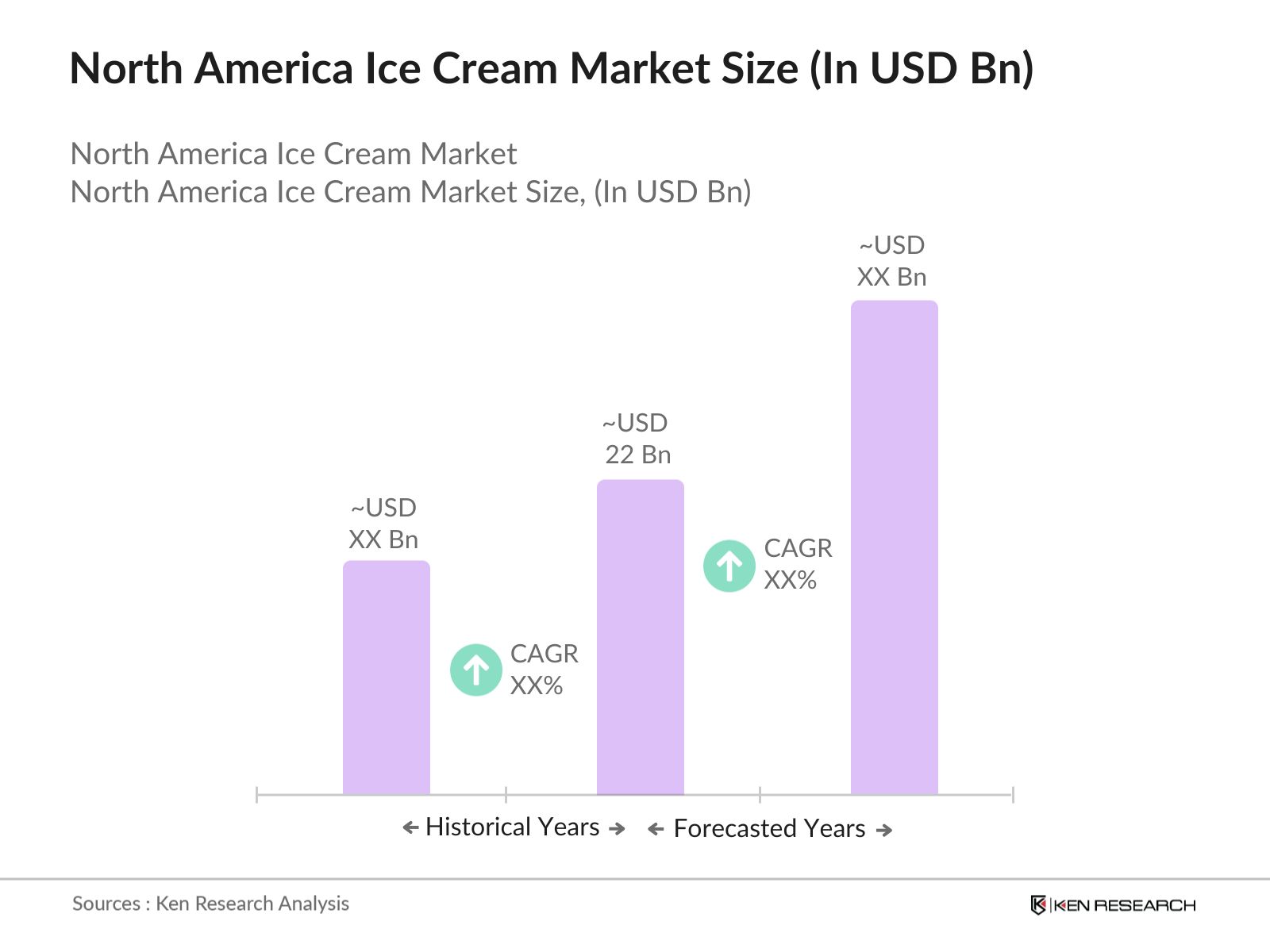
- In North America, the United States holds a leading position due to its diverse consumer base, strong brand presence, and increasing consumer interest in health-focused frozen desserts. Large urban centers such as New York, Los Angeles, and Chicago, with their high demand for unique, gourmet ice cream flavors, significantly contribute to the market. Additionally, the Canadian market has seen a rise in premium and artisanal ice cream consumption, attributed to higher disposable incomes and an expanding taste for premium dessert options.
- FDA regulations mandate strict controls on ingredients and additives in ice cream to ensure consumer safety. In 2023, the FDA introduced updated labeling requirements affecting over 50% of ice cream brands, which must now provide more detailed allergen and additive information. Compliance with these requirements impacts production processes, with the USDA noting a 12% increase in labeling costs industry-wide.
North America Ice Cream Market Segmentation
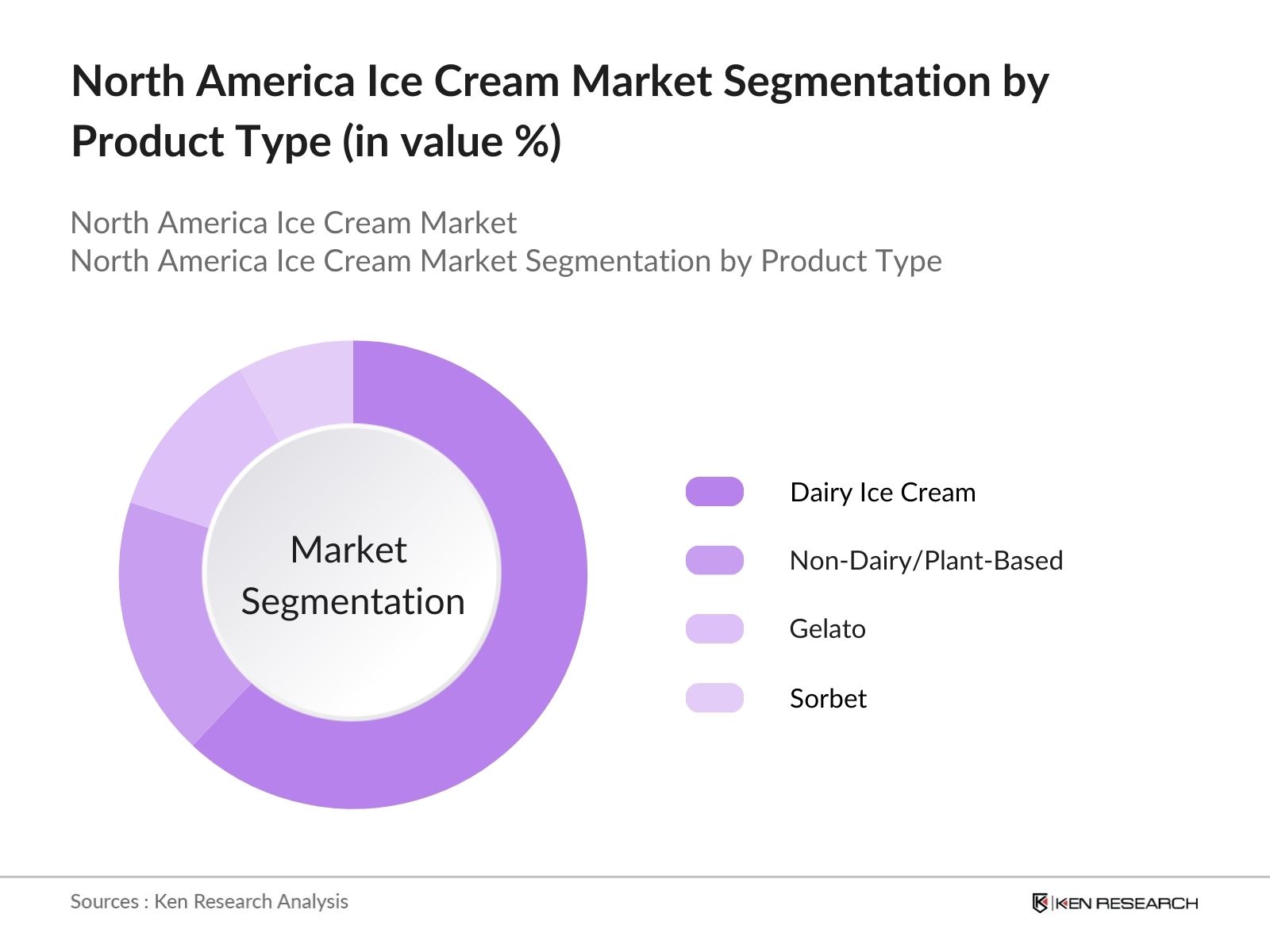
By Product Type: The North America Ice Cream market is segmented by product type into dairy ice cream, non-dairy/plant-based ice cream, gelato, and sorbet. Dairy ice cream continues to dominate this segment due to the established consumer preference for traditional milk-based products, offering a wide variety of flavors and textures. Brands like Hagen-Dazs and Blue Bell have solidified consumer loyalty through their long-standing presence, further reinforcing the dominance of this sub-segment.
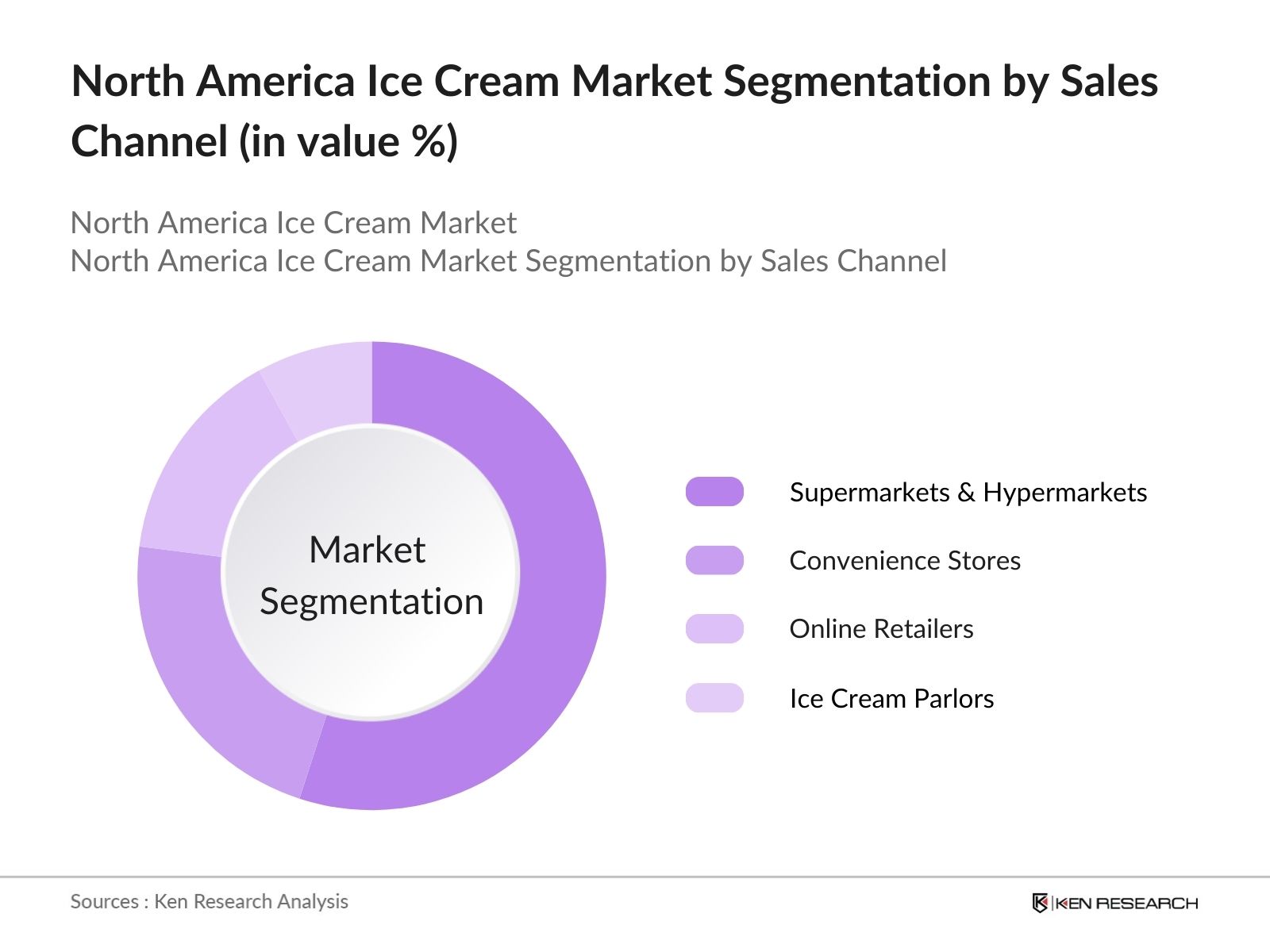
By Sales Channel: The market is segmented by sales channel into supermarkets & hypermarkets, convenience stores, online retailers, and ice cream parlors. Supermarkets & hypermarkets lead the sales channel segmentation as they offer consumers a convenient, one-stop destination with a broad selection of flavors, brands, and premium options. With the rise of frozen aisle space and the availability of diverse products, this channel continues to attract the majority of consumers.
 North America Ice Cream Market Competitive Landscape
The North America Ice Cream market is concentrated, with major players focusing on innovation, sustainability, and market expansion to maintain their competitive edge. Key companies in the region include Nestl, Unilever, Blue Bell Creameries, and Tillamook, which leverage extensive distribution networks and a deep understanding of consumer preferences to sustain dominance.

North America Ice Cream Market Analysis
Growth Drivers
- Increasing Demand for Dairy-Free and Plant-Based Options: In 2024, approximately 39 million Americans identify as lactose intolerant, with a notable increase in demand for dairy-free alternatives, according to the U.S. Department of Health and Human Services. The World Bank reports a 6% rise in agriculture investments across North America aimed at enhancing plant-based food production, aligning with the demand for plant-based ice creams. The USDA notes that almond and oat milk, popular bases for dairy-free ice cream, saw production increases of 20 million gallons in 2023, demonstrating the growing inclination toward plant-based alternatives source link.
- Rise in Seasonal and Limited-Edition Flavors: Limited-edition and seasonal flavors have increasingly appealed to North American consumers, with approximately 55% of ice cream purchases in the U.S. made during seasonal promotions, according to the USDA. This demand is fueled by consumers seeking unique, time-sensitive flavors, contributing to greater product differentiation. For instance, seasonal flavors accounted for nearly 30% of specialty sales in 2023. U.S. Census data reveals that spending on discretionary food items, including specialty ice creams, grew by 1.2 billion USD in the past year, showcasing consumer interest in flavor diversity.
- Growth in Online Sales Channels: E-commerce has become a vital distribution channel, with online sales of ice cream in the U.S. reaching 300 million USD in 2023, as reported by the U.S. Census Bureau. The increasing reliance on digital platforms has been driven by convenience and ease of access, especially among younger demographics. USDA data indicates that consumers between ages 25-40, who account for 40% of online food purchases, are particularly inclined to buy frozen desserts online. This shift underscores the need for ice cream manufacturers to strengthen their digital sales and fulfillment capabilities.
Challenges
- Cold Chain and Distribution Logistics: Maintaining efficient cold-chain logistics remains a significant challenge, as the North American refrigerated transport sector faces rising operational costs. The U.S. Department of Transportation reported a 7% increase in logistics costs for temperature-sensitive goods in 2023, with refrigerated transport demand at an all-time high of 80 million metric tons. The USDA highlights that over 60% of ice cream requires multi-state cold chain logistics, necessitating robust infrastructure and investments to prevent spoilage and ensure timely delivery.
- Fluctuating Costs of Dairy and Sugar: The costs of essential ingredients like dairy and sugar have seen considerable fluctuations due to agricultural supply constraints. In 2023, the USDA noted that dairy production costs rose by 5% due to extreme weather affecting feed crops. Similarly, sugar imports were reduced by approximately 200,000 metric tons, according to the U.S. International Trade Commission, impacting availability and costs for ice cream producers. This volatility in raw material prices strains profit margins and limits pricing flexibility for manufacturers.
North America Ice Cream Market Future Outlook
North America Ice Cream market is expected to witness robust growth due to advancements in product innovation, rising demand for healthier options, and strategic expansions by leading brands. Increasing consumer inclination towards organic and plant-based ice cream products, along with strong promotional efforts, will further stimulate market growth. Additionally, the adoption of sustainable packaging and production practices by major players aligns with consumer expectations, ensuring continued market expansion.
Market Opportunities
- Health-Oriented and Functional Ice Cream Options: Consumer health trends continue to shape demand, with 35% of Americans actively seeking low-calorie or low-sugar ice cream options as reported by the U.S. Census Bureau in 2023. Functional ingredients, such as probiotics and added fiber, are increasingly popular, with USDA statistics indicating a 20% rise in products marketed as "functional foods." This focus on health-oriented formulations presents ice cream manufacturers with a strategic opportunity to cater to wellness-conscious consumers
- Collaborations with Local Dairies and Farms: Collaborations with local farms have become advantageous for brands aiming to offer fresher, sustainably sourced products. In 2023, around 10% of North American dairy producers engaged in direct supply agreements with regional brands, according to USDA data. Such partnerships enable a shortened supply chain, enhancing product quality and reducing carbon footprint. The initiative aligns with the USDA's goal to boost local food production networks, providing ice cream companies with opportunities to align with regional sourcing trends.
Scope of the Report
|
Segment |
Sub-Segments |
|
By Product Type |
Dairy Ice Cream Non-Dairy Ice Cream Gelato Sorbet |
|
By Flavor Type |
Vanilla Chocolate Fruit Flavors Specialty & Exotic Flavors |
|
By Sales Channel |
Supermarkets & Hypermarkets Convenience Stores Online Retailers Ice Cream Parlors |
|
By Packaging Type |
Tubs Cones Sticks Cups |
|
By Region |
United States Canada Mexico |
Products
Key Target Audience
Ice Cream Manufacturers
Cold Chain and Logistics Providers
Dairy and Food Processing Companies
Food and Beverage Technology Providers
Packaging and Sustainable Material Providers
Government and Regulatory Bodies (FDA, USDA)
Investors and Venture Capitalist Firms
Companies
Players Mentioned in the Report
Nestl
Unilever
Blue Bell Creameries
Tillamook
General Mills (Hagen-Dazs)
Yasso Inc.
Wells Enterprises (Blue Bunny)
Baskin Robbins
Lotte Confectionery
Halo Top Creamery
Table of Contents
1. North America Ice Cream Market Overview
1.1 Definition and Scope
1.2 Market Taxonomy
1.3 Market Dynamics Overview
1.4 Market Segmentation Overview
2. North America Ice Cream Market Size (In USD Mn) 2.1 Historical Market Size
2.2 Year-On-Year Growth Analysis
2.3 Key Market Developments and Milestones
3. North America Ice Cream Market Analysis
3.1 Growth Drivers (Consumer Preferences, Flavor Innovation, Premiumization)
3.1.1 Increasing Demand for Dairy-Free and Plant-Based Options
3.1.2 Rise in Seasonal and Limited-Edition Flavors
3.1.3 Growth in Online Sales Channels
3.2 Market Challenges (Distribution Network, Raw Material Costs, Storage Needs)
3.2.1 Cold Chain and Distribution Logistics
3.2.2 Fluctuating Costs of Dairy and Sugar
3.2.3 Stringent Regulatory Standards for Quality and Safety
3.3 Opportunities (Product Innovation, Niche Targeting, Regional Expansion)
3.3.1 Health-Oriented and Functional Ice Cream Options
3.3.2 Collaborations with Local Dairies and Farms
3.3.3 Scope for Expansion in Untapped Rural Markets
3.4 Trends (Sustainable Sourcing, Consumer Health Trends, Digital Marketing)
3.4.1 Focus on Low-Calorie, Keto-Friendly, and Low-Sugar Options
3.4.2 Adoption of Sustainable Packaging and Ingredients
3.4.3 Brand Loyalty through Interactive Digital Campaigns
3.5 Government Regulation (Food Labeling, Dairy Standards, Import Tariffs)
3.5.1 FDA Regulations on Ingredients and Additives
3.5.2 Import and Export Tariffs on Dairy Products
3.5.3 Compliance with Clean Label Standards
3.6 SWOT Analysis
3.7 Stakeholder Ecosystem (Dairy Farmers, Retailers, Cold Chain Providers)
3.8 Porters Five Forces
3.9 Competitive Landscape
4. North America Ice Cream Market Segmentation
4.1 By Product Type (In Value %)
4.1.1 Dairy Ice Cream
4.1.2 Non-Dairy/Plant-Based Ice Cream
4.1.3 Gelato
4.1.4 Sorbet
4.2 By Flavor Type (In Value %)
4.2.1 Vanilla
4.2.2 Chocolate
4.2.3 Fruit Flavors
4.2.4 Specialty and Exotic Flavors
4.3 By Sales Channel (In Value %)
4.3.1 Supermarkets & Hypermarkets
4.3.2 Convenience Stores
4.3.3 Online Retailers
4.3.4 Ice Cream Parlors
4.4 By Packaging Type (In Value %)
4.4.1 Tubs
4.4.2 Cones
4.4.3 Sticks
4.4.4 Cups
4.5 By Region (In Value %)
4.5.1 United States
4.5.2 Canada
4.5.3 Mexico
5. North America Ice Cream Market Competitive Analysis
5.1 Detailed Profiles of Major Companies
5.1.1 Unilever
5.1.2 Nestl
5.1.3 Blue Bell Creameries
5.1.4 General Mills (Haagen-Dazs)
5.1.5 Baskin Robbins
5.1.6 Tillamook
5.1.7 Ben & Jerry's
5.1.8 Yasso Inc.
5.1.9 Lotte Confectionery
5.1.10 Wells Enterprises (Blue Bunny)
5.2 Cross-Comparison Parameters (Flavor Portfolio, Production Facilities, Market Reach, Revenue, R&D Investments, Sustainability Initiatives, Marketing Spend, Product Range)
5.3 Market Share Analysis
5.4 Strategic Initiatives
5.5 Mergers and Acquisitions
5.6 Investment Analysis
5.7 Brand and Product Line Extensions
5.8 Private Label Competition
5.9 Marketing & Advertising Spend
6. North America Ice Cream Market Regulatory Framework
6.1 FDA Standards for Dairy Products
6.2 Compliance Requirements for Labeling and Packaging
6.3 Nutritional Claims and Guidelines
6.4 Import and Export Regulations for Dairy Ingredients
6.5 Food Safety and Hygiene Regulations
7. North America Ice Cream Future Market Size (In USD Mn)
7.1 Market Growth Projections
7.2 Key Factors Influencing Future Demand
8. North America Ice Cream Future Market Segmentation
8.1 By Product Type (In Value %)
8.2 By Flavor Type (In Value %)
8.3 By Sales Channel (In Value %)
8.4 By Packaging Type (In Value %)
8.5 By Region (In Value %)
North America Ice Cream Market Analysts Recommendations
9.1 TAM/SAM/SOM Analysis
9.2 Consumer Cohort Analysis
9.3 Marketing Strategy Proposals
9.4 White Space and Innovation Opportunity Analysis
Disclaimer Contact UsResearch Methodology
Step 1: Identification of Key Variables
The research commenced with identifying critical variables shaping the North America Ice Cream market, including consumer preferences, regulatory influences, and competitive dynamics. Secondary databases and desk research were utilized to establish the foundational elements influencing market growth.
Step 2: Market Analysis and Construction
In this stage, historical data regarding ice cream consumption, production capabilities, and distribution channels were compiled to create a comprehensive market profile. Analytical tools assessed the prevalence of various product types and channels.
Step 3: Hypothesis Validation and Expert Consultation
To refine insights, market hypotheses were validated through interviews with industry experts. Feedback from ice cream manufacturers and distributors provided context on operational challenges, market trends, and consumer demands.
Step 4: Research Synthesis and Final Output
The final report synthesis involved corroborating findings with recent industry developments and consumer preference trends, ensuring an in-depth, accurate analysis of the North America Ice Cream market.
Frequently Asked Questions
01. How big is the North America Ice Cream Market?
The North America Ice Cream market is valued at USD 22 billion, driven by growing demand for premium and innovative flavors across diverse consumer segments.
02. What are the key challenges in the North America Ice Cream Market?
Challenges in North America Ice Cream market include maintaining consistent cold chain logistics, fluctuations in dairy prices, and navigating stringent quality regulations that impact product formulation and packaging.
03. Who are the major players in the North America Ice Cream Market?
Major players in North America Ice Cream market include Nestl, Unilever, Blue Bell Creameries, Tillamook, and General Mills (Hagen-Dazs), all of which leverage established brands, extensive distribution networks, and premium product lines.
04. What are the primary growth drivers of the North America Ice Cream Market?
North America Ice Cream market is primarily driven by the increasing popularity of health-focused ice cream products, the rise of plant-based options, and the ongoing innovation in unique and seasonal flavors.
Why Buy From Us?

What makes us stand out is that our consultants follows Robust, Refine and Result (RRR) methodology. i.e. Robust for clear definitions, approaches and sanity checking, Refine for differentiating respondents facts and opinions and Result for presenting data with story

We have set a benchmark in the industry by offering our clients with syndicated and customized market research reports featuring coverage of entire market as well as meticulous research and analyst insights.

While we don't replace traditional research, we flip the method upside down. Our dual approach of Top Bottom & Bottom Top ensures quality deliverable by not just verifying company fundamentals but also looking at the sector and macroeconomic factors.

With one step in the future, our research team constantly tries to show you the bigger picture. We help with some of the tough questions you may encounter along the way: How is the industry positioned? Best marketing channel? KPI's of competitors? By aligning every element, we help maximize success.

Our report gives you instant access to the answers and sources that other companies might choose to hide. We elaborate each steps of research methodology we have used and showcase you the sample size to earn your trust.

If you need any support, we are here! We pride ourselves on universe strength, data quality, and quick, friendly, and professional service.