
North America Industrial Automation Market Outlook to 2030
Region:Mexico
Author(s):Mukul
Product Code:KROD3712
Region:Mexico
Author(s):Mukul
Product Code:KROD3712
October 2024
92
The North American industrial automation market is characterized by the presence of a few dominant players, most of whom are multinational companies with large global footprints. These companies are instrumental in shaping the future of automation, offering a wide range of solutions from robotics to software integration. The competitive landscape is further consolidated by strategic partnerships and acquisitions within the sector.
|
Company Name |
Establishment Year |
Headquarters |
Global Reach |
R&D Expenditure |
Robotics Innovation |
Sustainability Initiatives |
Revenue (USD Bn) |
Patents Filed |
|
Siemens AG |
1847 |
Munich, Germany |
||||||
|
Rockwell Automation |
1903 |
Milwaukee, USA |
||||||
|
Honeywell International |
1906 |
Charlotte, USA |
||||||
|
ABB Ltd. |
1988 |
Zurich, Switzerland |
||||||
|
Mitsubishi Electric |
1921 |
Tokyo, Japan |
Over the next five years, the North America industrial automation market is expected to grow at an accelerated pace, driven by the increasing adoption of artificial intelligence (AI) in manufacturing, the expansion of industrial IoT (IIoT) solutions, and continued government support for smart factory initiatives. Technological advancements in areas such as robotics, machine learning, and cloud computing will further catalyze the automation revolution in North America, leading to increased operational efficiency, reduced costs, and enhanced product quality across industries. As manufacturers seek to maintain competitiveness on a global scale, investment in automation will be critical to their success.
|
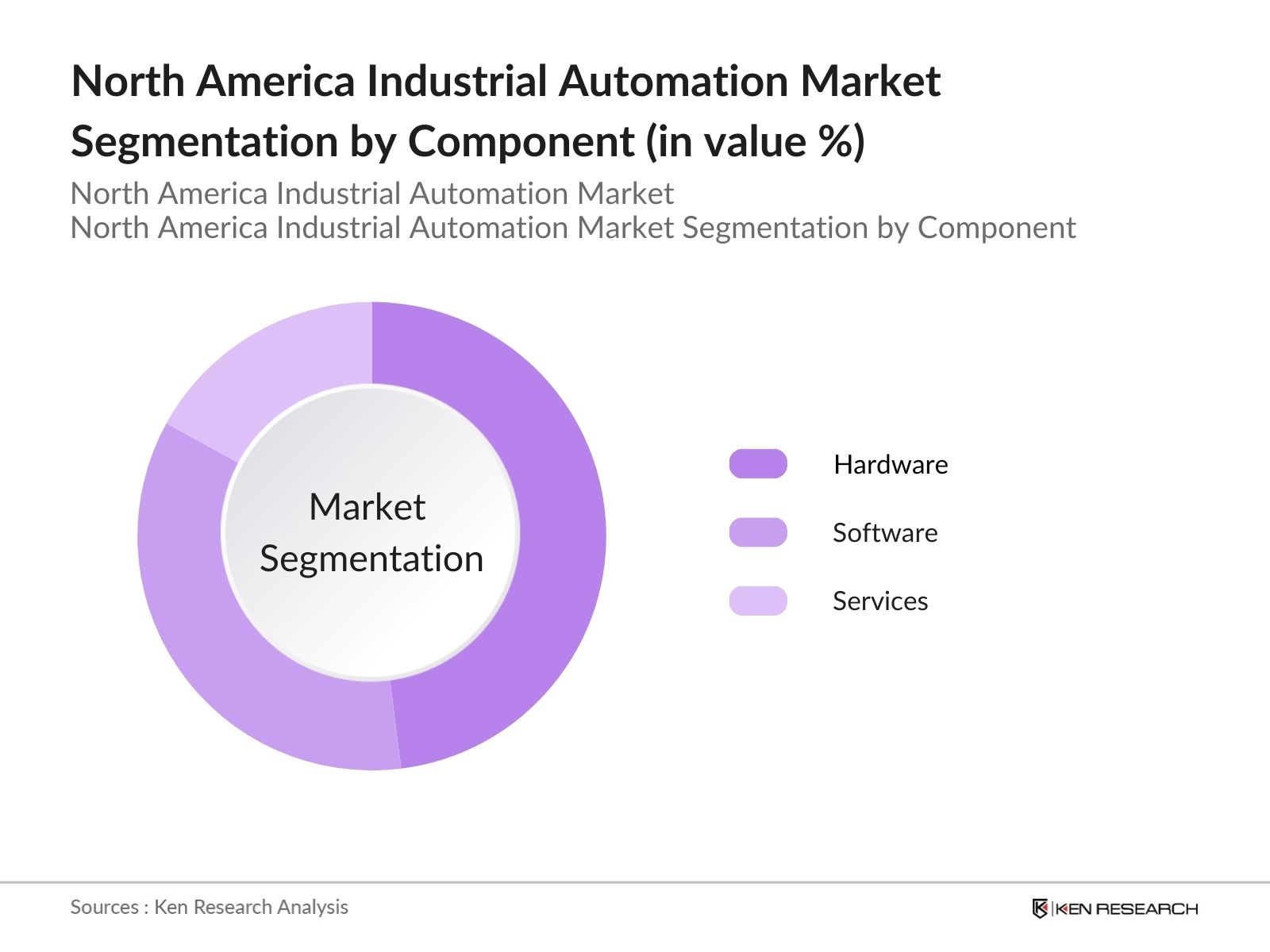
By Component |
- Hardware |
|
- Software |
|
|
- Services |
|
|
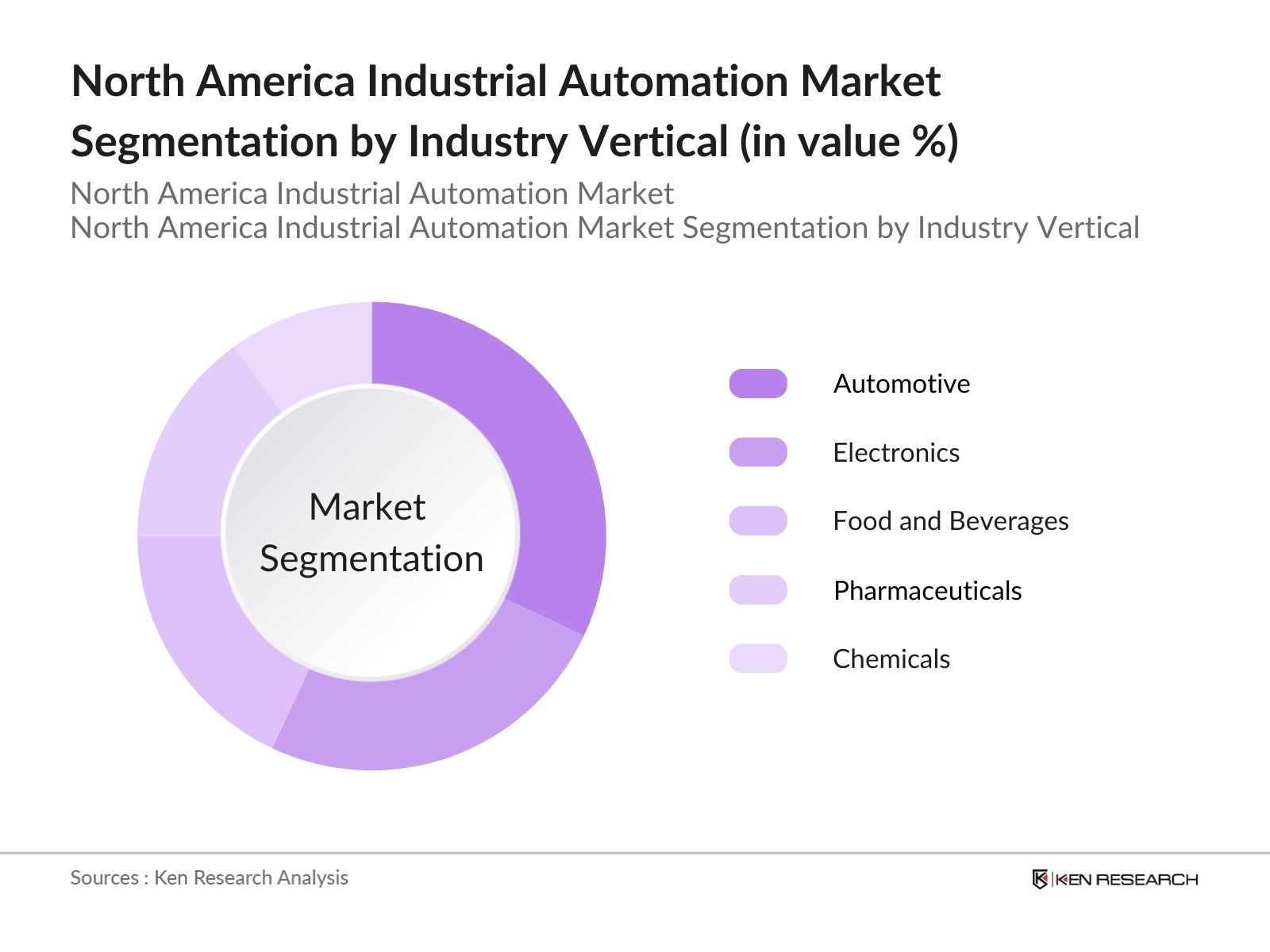
By Industry Vertical |
- Automotive |
|
- Chemicals |
|
|
- Food and Beverages |
|
|
- Electronics and Semiconductor |
|
|
- Pharmaceuticals |
|
|
By Technology |
- Distributed Control System (DCS) |
|
- Supervisory Control and Data Acquisition (SCADA) |
|
|
- Programmable Logic Controller (PLC) |
|
|
- Human-Machine Interface (HMI) |
|
|
By End-Use |
- Discrete Manufacturing |
|
- Process Manufacturing |
|
|
- Hybrid Manufacturing |
|
|
By Region |
- United States |
|
- Canada |
|
|
- Mexico |
1.1. Definition and Scope
1.2. Market Taxonomy
1.3. Market Growth Rate
1.4. Market Segmentation Overview
2.1. Historical Market Size
2.2. Year-On-Year Growth Analysis
2.3. Key Market Developments and Milestones
3.1. Growth Drivers
3.1.1. Increasing Adoption of Smart Manufacturing (Industry 4.0 Integration)
3.1.2. Demand for Industrial Robots and Cobots (Robotics Penetration)
3.1.3. Government Support for Automation and Efficiency (Government Incentives)
3.1.4. Rising Focus on Energy Efficiency (Energy Optimization)
3.2. Market Challenges
3.2.1. High Initial Capital Investment
3.2.2. Cybersecurity Concerns in Automated Systems
3.2.3. Lack of Skilled Workforce for Advanced Automation
3.3. Opportunities
3.3.1. Expansion of Industrial IoT (Internet of Things Integration)
3.3.2. Rise of Artificial Intelligence and Machine Learning in Automation
3.3.3. Automation in Green Manufacturing Initiatives
3.4. Trends
3.4.1. Growing Use of Predictive Maintenance (Predictive Analytics)
3.4.2. Cloud-Based Automation Solutions (Cloud Integration)
3.4.3. Autonomous Mobile Robots (AMR) and AGVs (Automated Guided Vehicles)
3.5. Government Regulations
3.5.1. North American Standards for Industrial Automation
3.5.2. Safety and Compliance Requirements (ISO and OSHA)
3.5.3. Environmental Regulations and Sustainable Practices
3.6. SWOT Analysis
3.7. Stakeholder Ecosystem
3.8. Porter’s Five Forces
3.9. Competitive Ecosystem
4.1. By Component (In Value %)
4.1.1. Hardware
4.1.2. Software
4.1.3. Services
4.2. By Industry Vertical (In Value %)
4.2.1. Automotive
4.2.2. Chemicals
4.2.3. Food and Beverages
4.2.4. Electronics and Semiconductor
4.2.5. Pharmaceuticals
4.3. By Technology (In Value %)
4.3.1. Distributed Control System (DCS)
4.3.2. Supervisory Control and Data Acquisition (SCADA)
4.3.3. Programmable Logic Controller (PLC)
4.3.4. Human-Machine Interface (HMI)
4.4. By End-Use (In Value %)
4.4.1. Discrete Manufacturing
4.4.2. Process Manufacturing
4.4.3. Hybrid Manufacturing
4.5. By Region (In Value %)
4.5.1. United States
4.5.2. Canada
4.5.3. Mexico
5.1. Detailed Profiles of Major Companies
5.1.1. Siemens AG
5.1.2. ABB Ltd.
5.1.3. Emerson Electric Co.
5.1.4. Honeywell International Inc.
5.1.5. Rockwell Automation
5.1.6. Schneider Electric SE
5.1.7. Mitsubishi Electric Corporation
5.1.8. Yokogawa Electric Corporation
5.1.9. Omron Corporation
5.1.10. FANUC Corporation
5.1.11. KUKA AG
5.1.12. General Electric Company
5.1.13. Bosch Rexroth AG
5.1.14. ABB Robotics
5.1.15. Parker Hannifin Corporation
5.2. Cross Comparison Parameters (Number of Patents, Robotics Deployment Rate, Automation Software Licensing, Employee Count in Automation, Global Reach, Revenue from Automation, Sustainability Initiatives, R&D Expenditure)
5.3. Market Share Analysis
5.4. Strategic Initiatives
5.5. Mergers and Acquisitions
5.6. Investment Analysis
5.7. Government Grants
5.8. Private Equity Investments
6.1. Automation Compliance Standards
6.2. Certification Requirements
6.3. Safety Protocols for Automation Systems
7.1. Future Market Size Projections
7.2. Key Factors Driving Future Market Growth
8.1. By Component (In Value %)
8.2. By Industry Vertical (In Value %)
8.3. By Technology (In Value %)
8.4. By End-Use (In Value %)
8.5. By Region (In Value %)
9.1. TAM/SAM/SOM Analysis
9.2. Customer Cohort Analysis
9.3. Marketing Initiatives
9.4. White Space Opportunity Analysis
The first step involves developing a comprehensive ecosystem map of the North American industrial automation market, which includes key players, end-users, and technology providers. This step requires extensive desk research, utilizing a mix of secondary databases and proprietary research tools to gather industry-specific data.
In this step, historical data on market penetration, the adoption rate of automation technologies, and revenue generation metrics are analyzed. Additionally, the quality of automation solutions and their role in the overall market performance is examined to ensure reliable revenue estimates.
In this phase, market hypotheses are formulated and validated through direct interviews and consultations with industry professionals. These consultations provide key insights into real-world challenges and opportunities, ensuring accurate data validation.
The final step involves direct engagement with companies across various industry verticals to capture a detailed view of the market, including product preferences, usage statistics, and future outlook. The integration of this data ensures the accuracy of the market forecast and analysis.
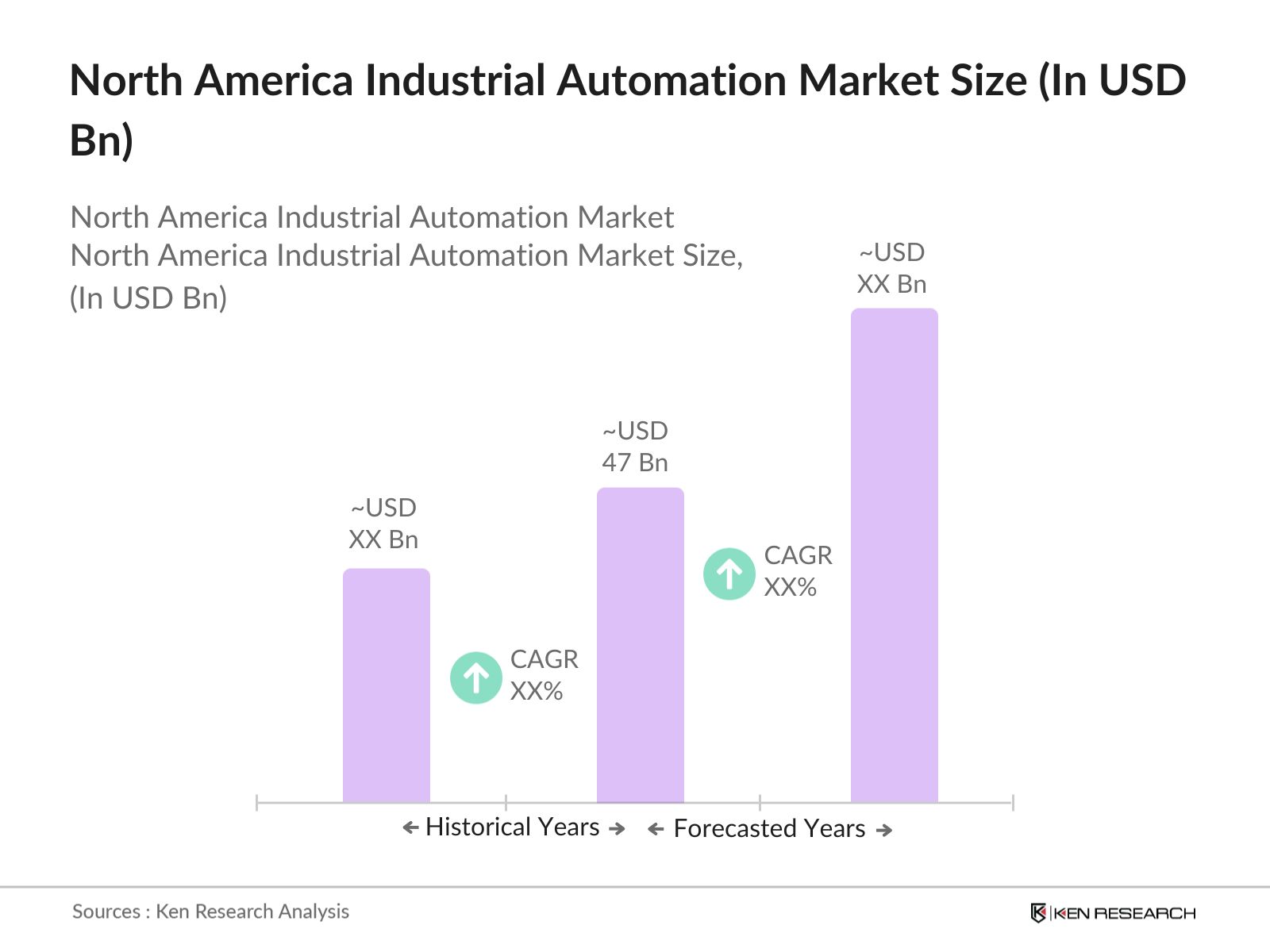
The North America industrial automation market is valued at USD 47 billion, driven by the adoption of robotics, Industry 4.0 technologies, and government support for manufacturing automation.
Key challenges include high initial capital expenditure, cybersecurity risks in connected industrial systems, and a lack of skilled professionals capable of managing advanced automated systems.
The major players include Siemens AG, ABB Ltd., Honeywell International, Rockwell Automation, and Mitsubishi Electric. These companies lead the market due to their extensive product portfolios, global reach, and significant R&D investments.
Growth is propelled by technological advancements in robotics, IoT integration, and AI-driven process optimization. Additionally, government incentives and demand for operational efficiency further accelerate market growth.

What makes us stand out is that our consultants follows Robust, Refine and Result (RRR) methodology. i.e. Robust for clear definitions, approaches and sanity checking, Refine for differentiating respondents facts and opinions and Result for presenting data with story

We have set a benchmark in the industry by offering our clients with syndicated and customized market research reports featuring coverage of entire market as well as meticulous research and analyst insights.

While we don't replace traditional research, we flip the method upside down. Our dual approach of Top Bottom & Bottom Top ensures quality deliverable by not just verifying company fundamentals but also looking at the sector and macroeconomic factors.

With one step in the future, our research team constantly tries to show you the bigger picture. We help with some of the tough questions you may encounter along the way: How is the industry positioned? Best marketing channel? KPI's of competitors? By aligning every element, we help maximize success.

Our report gives you instant access to the answers and sources that other companies might choose to hide. We elaborate each steps of research methodology we have used and showcase you the sample size to earn your trust.

If you need any support, we are here! We pride ourselves on universe strength, data quality, and quick, friendly, and professional service.