
North America Industrial Filtration Market Outlook to 2030
Region:United States
Author(s):Vijay Kumar
Product Code:KROD4968
Region:United States
Author(s):Vijay Kumar
Product Code:KROD4968
December 2024
92
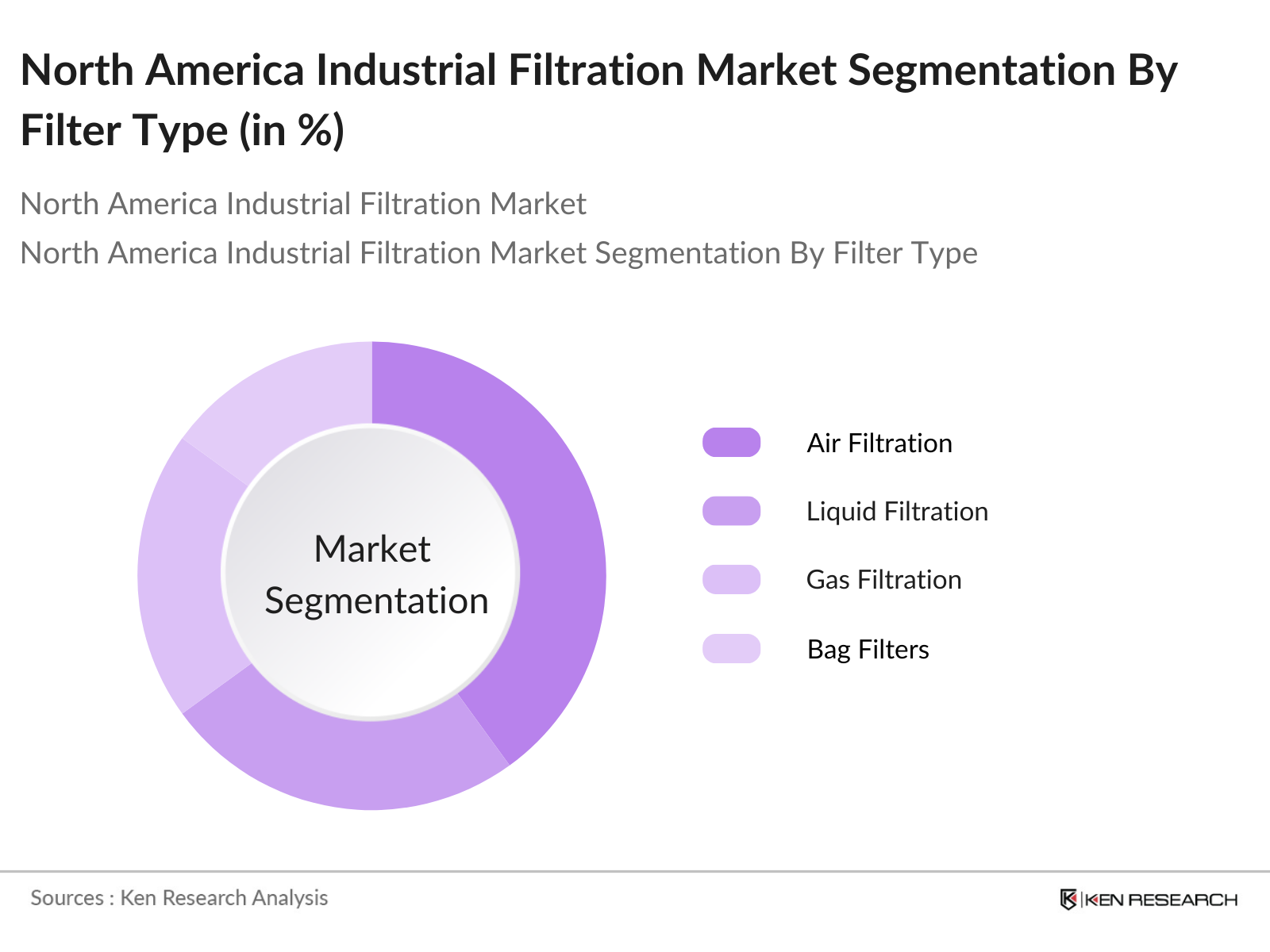
By Filter Type: The North America Industrial Filtration Market is segmented by filter type into air filtration, liquid filtration, gas filtration, and bag filters. Among these, air filtration dominates the market due to its widespread application in power generation, HVAC systems, and industrial manufacturing. This segment's growth is supported by stringent environmental regulations, particularly in the United States, which require industries to reduce airborne pollutants.
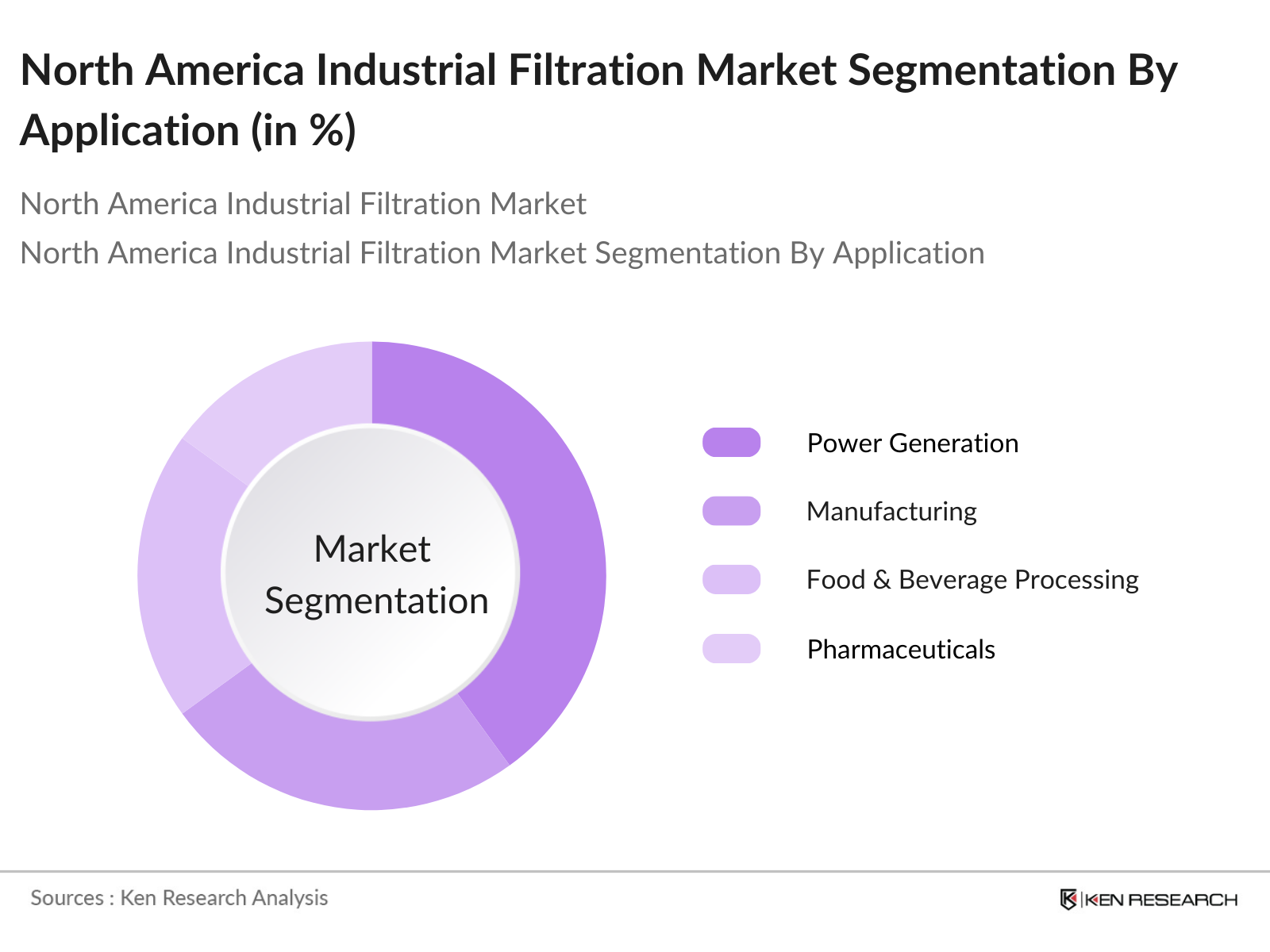
By Application: The market is also segmented by application into power generation, manufacturing, food & beverage processing, pharmaceuticals, and oil & gas. The power generation sector holds the largest market share due to the increased need for filtration solutions to manage emissions and maintain the efficiency of power plants. This dominance is further driven by the sector's adoption of filtration systems to comply with strict environmental regulations, particularly regarding air pollution.
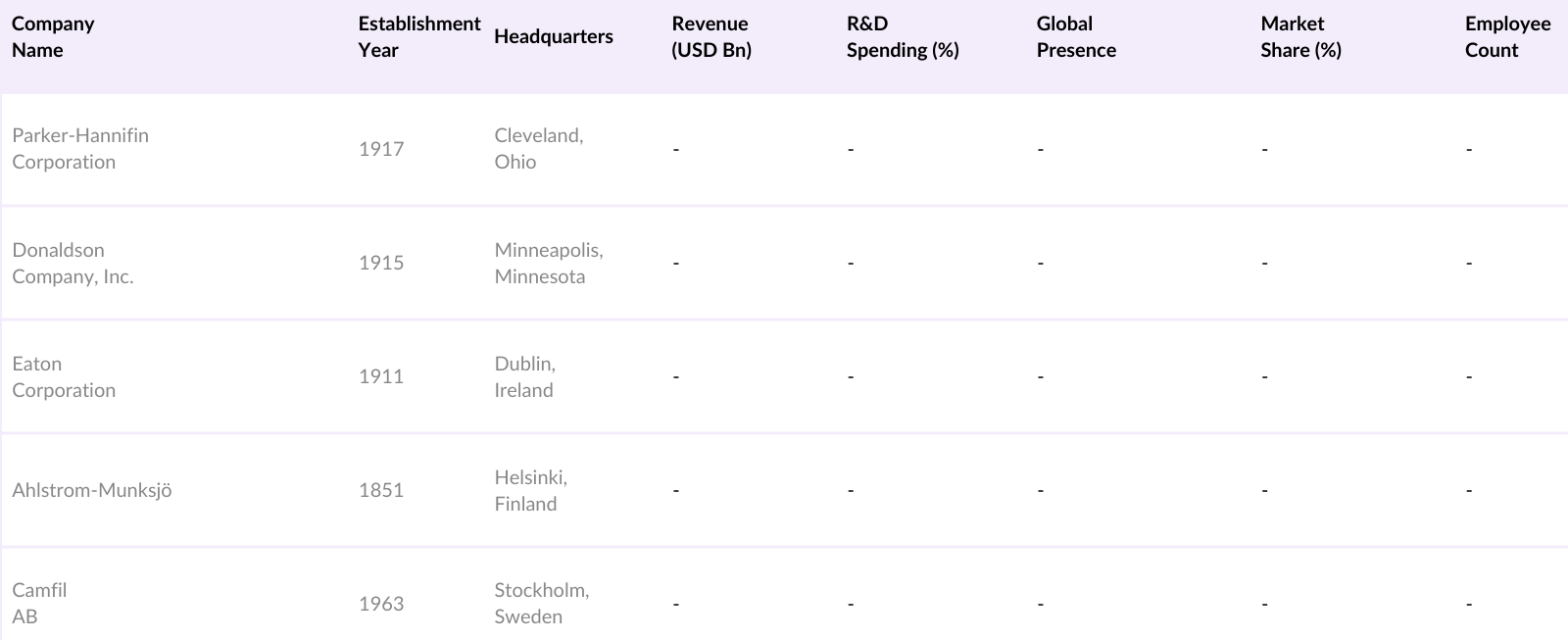
The North America Industrial Filtration Market is dominated by a few key players with significant market presence and advanced product portfolios. These companies leverage their scale, technological innovations, and strong distribution networks to maintain competitive advantages. The North American market for industrial filtration is led by major players like Parker-Hannifin Corporation, Donaldson Company, and Eaton Corporation.
Over the next five years, the North America Industrial Filtration Market is expected to experience significant growth, driven by increasing industrialization, stricter environmental regulations, and advancements in filtration technology. The shift towards more energy-efficient and sustainable filtration solutions will be a major trend, as industries look to reduce operational costs while meeting regulatory standards. Moreover, technological innovations, such as IoT-enabled filtration systems and smart monitoring devices, will further fuel market expansion by improving operational efficiency and enabling predictive maintenance.
|
Filter Type |
Air Filtration Liquid Filtration Gas Filtration Bag Filters Cartridge Filters |
|
Application |
Power Generation Manufacturing Food & Beverage Processing Pharmaceuticals Oil & Gas |
|
Technology |
Mechanical Filtration Electrostatic Filtration Membrane Filtration Gravity Filtration |
|
Material Type |
Metal Polymer Ceramic Fiber |
|
Region |
United States Canada Mexico |
1.1. Definition and Scope
1.2. Market Taxonomy
1.3. Market Growth Rate
1.4. Market Segmentation Overview
2.1. Historical Market Size
2.2. Year-On-Year Growth Analysis
2.3. Key Market Developments and Milestones
3.1. Growth Drivers
3.1.1. Growth in Industrialization (Manufacturing, Power Generation, Oil & Gas)
3.1.2. Stringent Environmental Regulations (EPA Standards, Clean Air Act)
3.1.3. Increasing Focus on Industrial Sustainability (Waste Management, Water Reuse)
3.1.4. Technological Advancements (Smart Filtration Systems, IoT Integration)
3.2. Market Challenges
3.2.1. High Capital Investment (Cost of Implementation, R&D Expenditure)
3.2.2. Complexity in Filtration Process (Cross-Contamination, Filtration Efficacy)
3.2.3. Maintenance and Downtime Issues (Operational Efficiency, Equipment Durability)
3.3. Opportunities
3.3.1. Growing Demand for Clean Water (Water Treatment Plants, Zero-Liquid Discharge)
3.3.2. Adoption of Energy-Efficient Filtration Solutions (Low-Energy Filters, Smart Filter Media)
3.3.3. Expansion into Emerging Markets (Mexico, Canada)
3.4. Trends
3.4.1. Adoption of Hybrid Filtration Technologies (Electrostatic, Membrane Filtration)
3.4.2. Rise of Smart Filtration Solutions (Predictive Maintenance, Automated Systems)
3.4.3. Increased Focus on Sustainability (Reusable Filters, Waste Minimization)
3.5. Government Regulations
3.5.1. Clean Water Act (Water Treatment Compliance)
3.5.2. Emission Control Standards (Air Quality Control)
3.5.3. Industrial Waste Management Policies (Wastewater, Solid Waste)
3.5.4. Government Incentives (Energy-Saving Initiatives)
3.6. SWOT Analysis
3.7. Stakeholder Ecosystem (End-Users, Suppliers, Manufacturers)
3.8. Porters Five Forces
3.9. Competitive Ecosystem
4.1. By Filter Type (In Value %)
4.1.1. Air Filtration
4.1.2. Liquid Filtration
4.1.3. Gas Filtration
4.1.4. Bag Filters
4.1.5. Cartridge Filters
4.2. By Application (In Value %)
4.2.1. Power Generation
4.2.2. Manufacturing
4.2.3. Food & Beverage Processing
4.2.4. Pharmaceuticals
4.2.5. Oil & Gas
4.3. By Technology (In Value %)
4.3.1. Mechanical Filtration
4.3.2. Electrostatic Filtration
4.3.3. Membrane Filtration
4.3.4. Gravity Filtration
4.4. By Material Type (In Value %)
4.4.1. Metal
4.4.2. Polymer
4.4.3. Ceramic
4.4.4. Fiber
4.5. By Region (In Value %)
4.5.1. United States
4.5.2. Canada
4.5.3. Mexico
5.1. Detailed Profiles of Major Companies
5.1.1. Parker-Hannifin Corporation
5.1.2. Donaldson Company, Inc.
5.1.3. Ahlstrom-Munksj
5.1.4. Eaton Corporation
5.1.5. Camfil AB
5.1.6. Pall Corporation
5.1.7. MANN+HUMMEL Group
5.1.8. Filtration Group Corporation
5.1.9. 3M
5.1.10. Lenntech BV
5.1.11. Lydall, Inc.
5.1.12. Cummins Filtration
5.1.13. Freudenberg Filtration Technologies
5.1.14. Pentair
5.1.15. Koch Filter Corporation
5.2. Cross Comparison Parameters (Market Share, Headquarters, Product Portfolio, Revenue, Employee Count, Manufacturing Capabilities, Global Presence, R&D Expenditure)
5.3. Market Share Analysis
5.4. Strategic Initiatives
5.5. Mergers And Acquisitions
5.6. Investment Analysis
5.7. Venture Capital Funding
5.8. Government Grants
5.9. Private Equity Investments
6.1. Environmental Standards (EPA Compliance, State Regulations)
6.2. Compliance Requirements (ISO Standards, OSHA Guidelines)
6.3. Certification Processes (Energy Star, LEED Certification)
7.1. Future Market Size Projections
7.2. Key Factors Driving Future Market Growth
8.1. By Filter Type (In Value %)
8.2. By Application (In Value %)
8.3. By Technology (In Value %)
8.4. By Material Type (In Value %)
8.5. By Region (In Value %)
9.1. TAM/SAM/SOM Analysis
9.2. Customer Cohort Analysis
9.3. Marketing Initiatives
9.4. White Space Opportunity Analysis
The first phase involves creating an ecosystem map of the North America Industrial Filtration Market. This process includes detailed desk research and analysis of multiple secondary sources, such as company reports, industry databases, and governmental publications. The key objective is to identify the primary variables influencing market growth, such as filtration efficiency, regulatory compliance, and energy consumption.
This phase involves compiling historical data on market penetration rates, revenue generation, and sales volume across various segments. The focus is on assessing key performance indicators, including the operational efficiency of filtration systems and their adoption rates across industrial sectors.
Industry hypotheses regarding market dynamics and growth drivers are developed based on the analysis. These hypotheses are then validated through expert consultations, particularly with senior executives from major filtration companies and industry experts, to ensure data accuracy.
Finally, a combination of top-down and bottom-up approaches is applied to ensure the accuracy of the data. This phase includes direct engagement with filtration manufacturers, distributors, and other stakeholders to refine and validate the findings, which will be presented as part of the final market report.
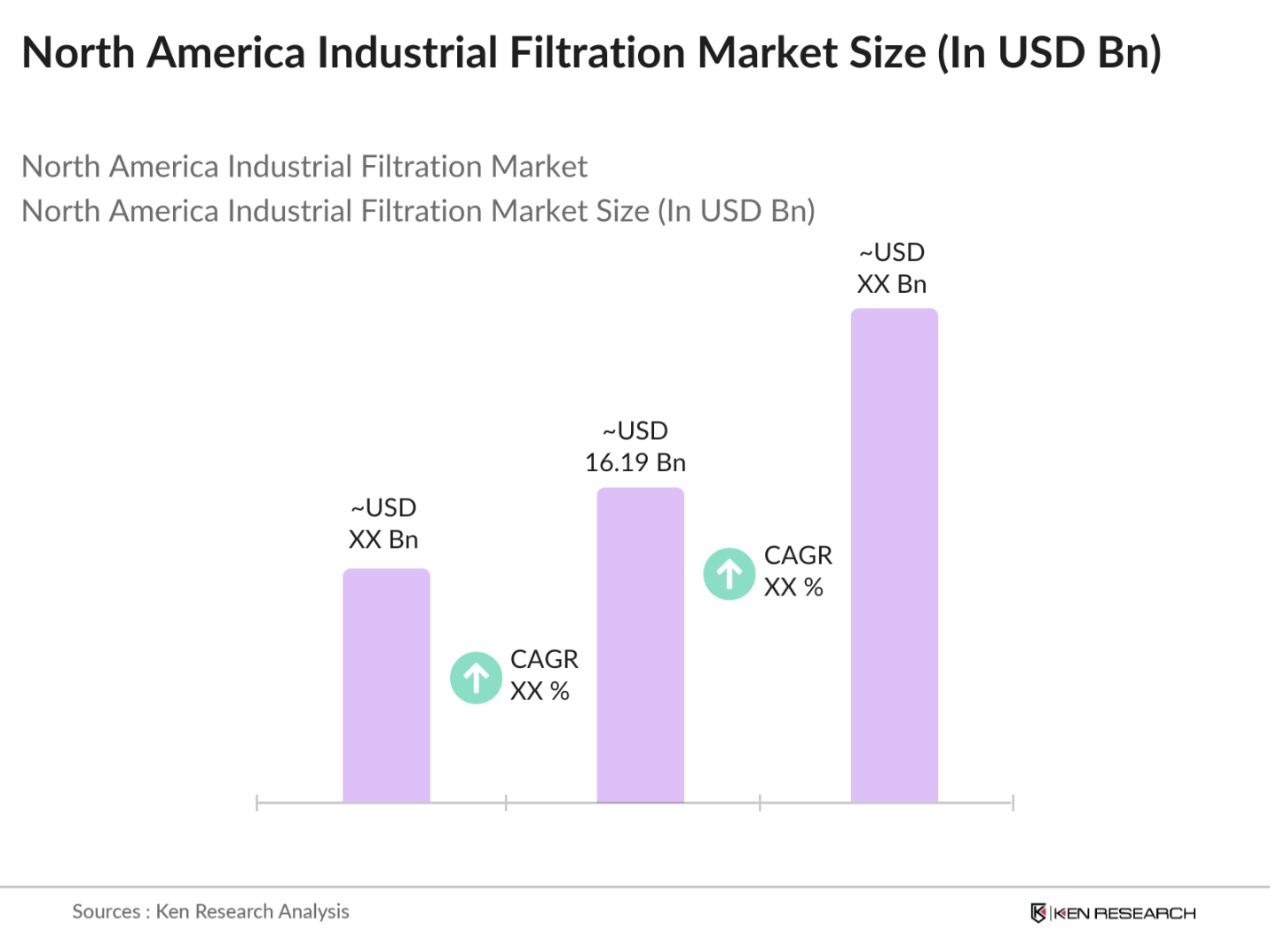
The North America Industrial Filtration market is valued at USD 16.19 billion, based on a five-year historical analysis. This market growth is primarily driven by the increasing demand for efficient filtration systems across industries such as manufacturing, power generation, and oil & gas.
Challenges include the high capital investment required for advanced filtration systems, complexities in managing filtration processes, and maintaining operational efficiency in harsh industrial environments.
Key players in the market include Parker-Hannifin Corporation, Donaldson Company, Eaton Corporation, and Camfil AB, among others, who dominate due to their strong distribution networks and advanced technology.
The market is driven by the growing need for efficient filtration systems across industries such as power generation, manufacturing, and food & beverage, along with stricter environmental regulations enforced by the EPA.

What makes us stand out is that our consultants follows Robust, Refine and Result (RRR) methodology. i.e. Robust for clear definitions, approaches and sanity checking, Refine for differentiating respondents facts and opinions and Result for presenting data with story

We have set a benchmark in the industry by offering our clients with syndicated and customized market research reports featuring coverage of entire market as well as meticulous research and analyst insights.

While we don't replace traditional research, we flip the method upside down. Our dual approach of Top Bottom & Bottom Top ensures quality deliverable by not just verifying company fundamentals but also looking at the sector and macroeconomic factors.

With one step in the future, our research team constantly tries to show you the bigger picture. We help with some of the tough questions you may encounter along the way: How is the industry positioned? Best marketing channel? KPI's of competitors? By aligning every element, we help maximize success.

Our report gives you instant access to the answers and sources that other companies might choose to hide. We elaborate each steps of research methodology we have used and showcase you the sample size to earn your trust.

If you need any support, we are here! We pride ourselves on universe strength, data quality, and quick, friendly, and professional service.