
North America Kombucha Market Outlook to 2030
Region:North America
Author(s):Shreya Garg
Product Code:KROD6681
December 2024
92
About the Report
North America Kombucha Market Overview
- The North American Kombucha market is valued at USD 1.02 billion, based on a five-year historical analysis. This market is driven by a combination of rising health consciousness and consumer preferences shifting towards functional beverages. Kombuchas unique probiotic benefits, linked to gut health and digestion, make it a popular choice. Additionally, the expansion of distribution channels, including major retail chains and e-commerce platforms, has significantly bolstered market growth.
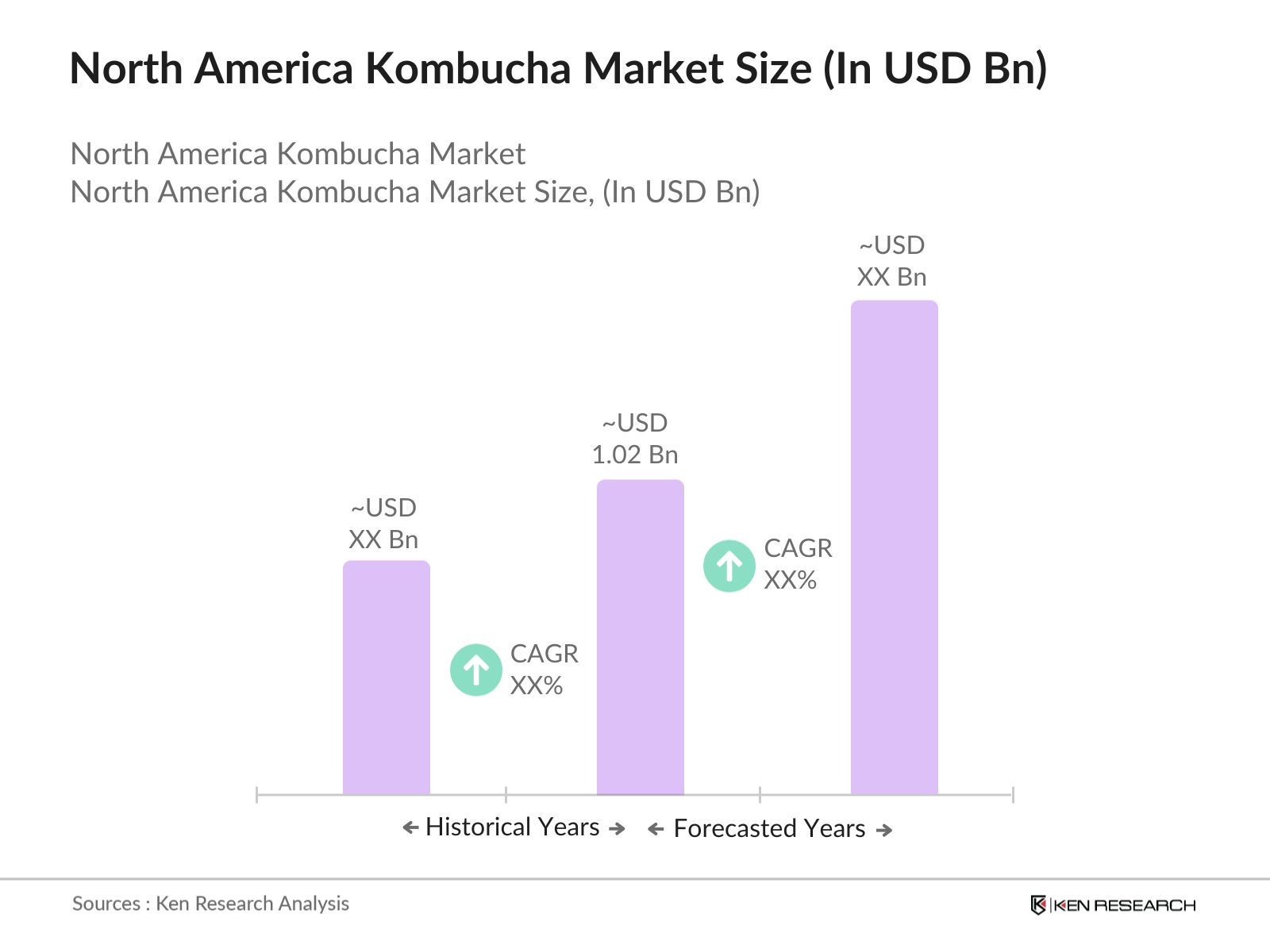
- The USA dominates the North American Kombucha market, primarily due to the strong presence of established kombucha brands and an expansive consumer base. The growing trend towards organic and health-focused beverages, coupled with the presence of multiple manufacturing facilities and distribution networks in key urban centers like New York and Los Angeles, has solidified the USA's dominance in this space. Canada is also emerging as a growing market due to its increasing focus on wellness products and sustainable beverage options.
- The FDA has strict labeling requirements for kombucha, particularly regarding claims related to health benefits and ingredients. Kombucha products must accurately reflect their contents, and misleading health claims, especially those concerning probiotics or gut health, are heavily regulated. In 2023, the Federal Trade Commission (FTC) fined several kombucha brands for false advertising, primarily related to exaggerated health benefits. These regulations make it critical for companies to ensure that all marketing materials and labels comply with federal standards, including accurate ingredient lists and proper health claims. Non-compliance can lead to costly penalties
North America Kombucha Market Segmentation
By Product Type: The market is segmented by product type into organic kombucha and non-organic kombucha. Organic kombucha holds a dominant market share due to increasing consumer awareness regarding health benefits associated with organic and natural products. Consumers are becoming more conscious of product ingredients and sourcing, driving demand for organically produced kombucha, which is free from synthetic pesticides and chemicals. The growing trend towards clean labels and sustainability further propels the preference for organic kombucha over its non-organic counterparts. 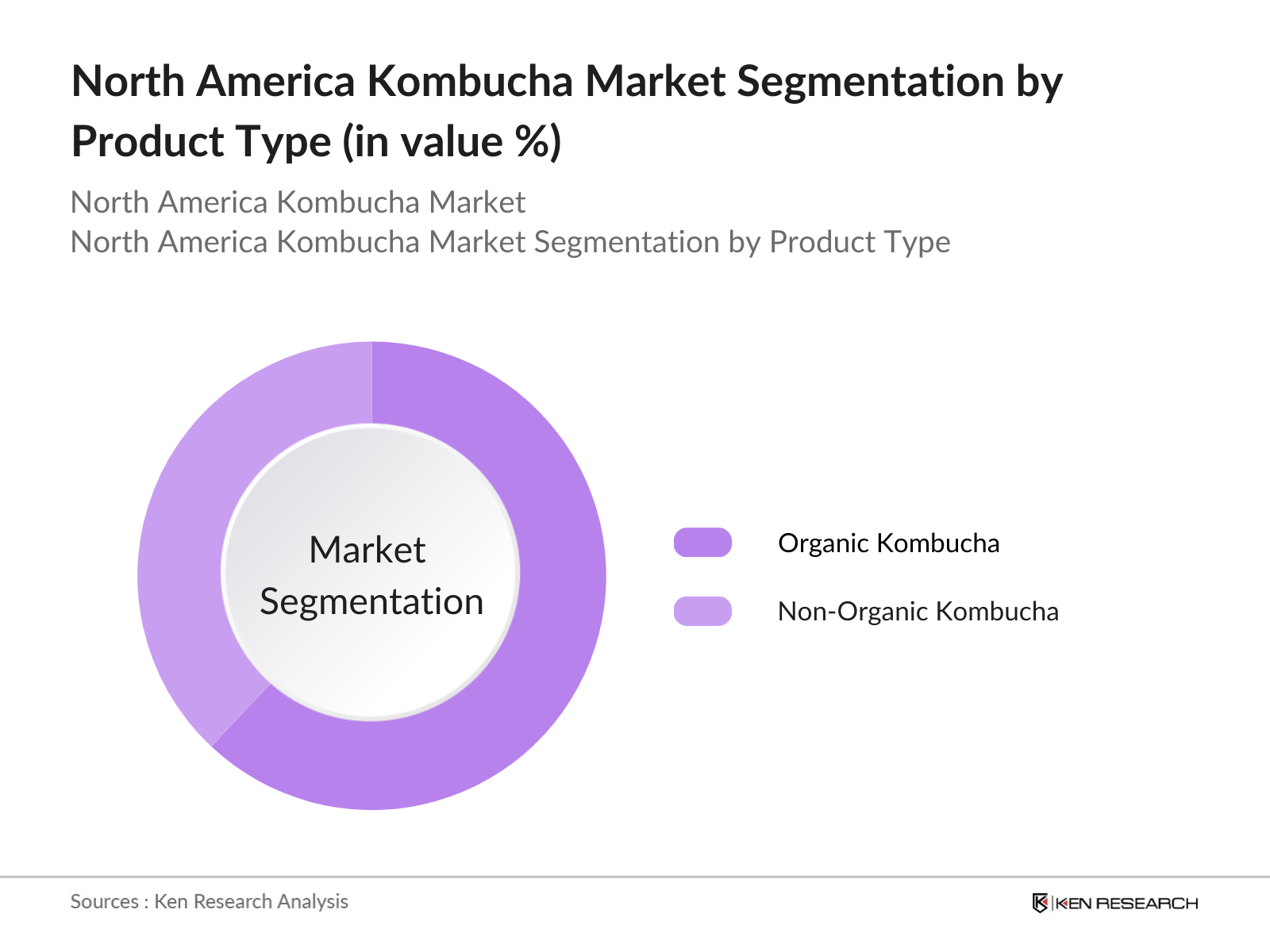
By Distribution Channel: The market is segmented by distribution channel into supermarkets & hypermarkets, specialty stores, online retail, and convenience stores. Supermarkets & hypermarkets dominate the market share in this category, as they provide the broadest distribution network for kombucha products. Consumers prefer these channels due to the convenience and variety offered, with major chains like Walmart and Kroger stocking a wide selection of kombucha brands. The rise of large-scale retail partnerships has made kombucha more accessible to mainstream consumers. 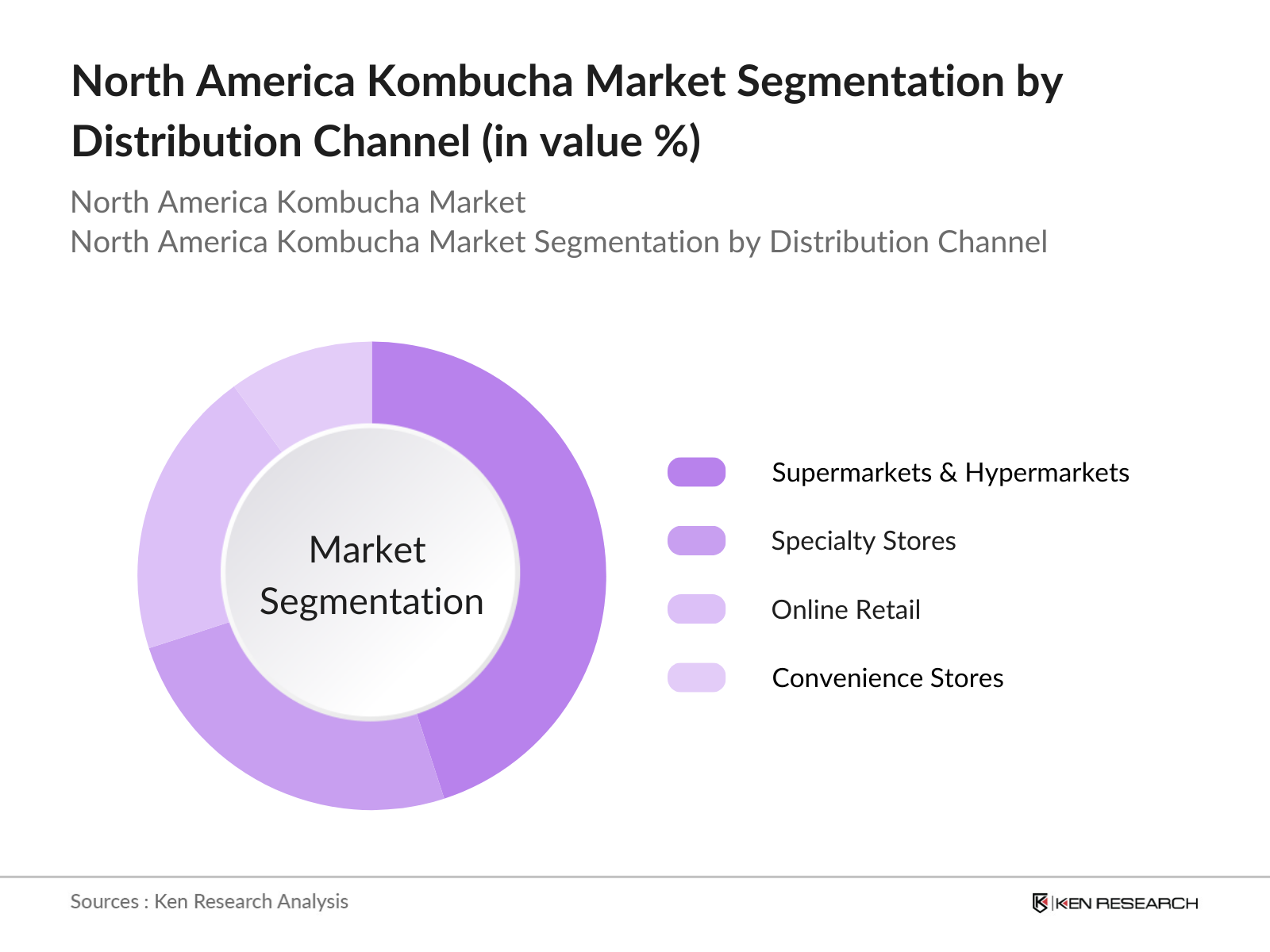
North America Kombucha Market Competitive Landscape
The North American kombucha market is dominated by several key players, each bringing their unique strengths to the market. GTs Living Foods remains the leader in terms of brand recognition and product variety, while other players like Health-Ade Kombucha and Brew Dr. Kombucha continue to expand their reach through strong distribution networks and innovative flavors. The markets competitive landscape is further shaped by the increasing interest in sustainable and organic production methods, which cater to environmentally conscious consumers.
|
Company Name |
Establishment Year |
Headquarters |
Annual Revenue |
Product Range |
Number of Employees |
Geographic Reach |
Sustainability Initiatives |
R&D Investment |
Market Share |
|
GTs Living Foods |
1995 |
Los Angeles, USA |
|||||||
|
Health-Ade Kombucha |
2012 |
Los Angeles, USA |
|||||||
|
Brew Dr. Kombucha |
2008 |
Portland, USA |
|||||||
|
KeVita (PepsiCo) |
2009 |
Oxnard, USA |
|||||||
|
Humm Kombucha |
2009 |
Bend, USA |
North America Kombucha Industry Analysis
Growth Drivers
- Increasing Health Consciousness: The rise in health consciousness across North America has contributed to the growing popularity of kombucha. In 2023, surveys show that nearly 75% of American consumers were actively trying to improve their health through dietary changes, focusing on natural and functional foods. Kombucha, known for its probiotic content and gut health benefits, aligns well with this shift. Its appeal is particularly strong among younger demographics, with over 60 million U.S. millennials engaging in health-related dietary habits. Data from the U.S. Department of Agriculture in 2024 supports this trend, noting an increase in organic and fermented beverage consumption in urban areas.
- Growing Demand for Functional Beverages: Probiotic and gut-health-centric beverages are driving the functional beverage market, with kombucha emerging as a key player. A 2023 report from the U.S. Centers for Disease Control (CDC) highlights a rise in digestive health issues, with nearly 30 million Americans diagnosed with gut-related disorders, leading to increased interest in probiotic drinks like kombucha. The demand for gut-friendly beverages is further fueled by the rise in digestive health awareness campaigns across North America. As a fermented beverage rich in probiotics, kombucha fits well within this growing market segment.
- Expansion of Distribution Channels: Kombucha has seen a expansion in distribution across mainstream and specialty stores in North America. By 2024, major U.S. grocery chains, including Walmart and Kroger, increased their shelf space for fermented beverages like kombucha by 30%, reflecting heightened consumer interest. Specialty health food stores also reported a 20% increase in kombucha sales. According to the U.S. Bureau of Economic Analysis, the beverage sector's focus on health and wellness products in 2023 saw a significant shift, with kombucha becoming widely accessible, even in smaller regional markets.
Market Challenges
- High Product Development Costs: The innovation of new flavors and packaging for kombucha presents a significant financial challenge for producers. Research and development (R&D) costs have risen sharply, with a 20% increase reported by kombucha companies in 2022, according to data from the U.S. Department of Labor. Developing low-sugar or alternative sweetener variants requires additional resources, as does meeting the demand for eco-friendly packaging. The high costs associated with continuous innovation, particularly for smaller kombucha producers, make it difficult to compete with larger beverage companies.
- Competition from Other Health Beverages: Kombucha faces strong competition from other health beverages such as cold-pressed juices, functional waters, and herbal teas. The U.S. Beverage Association reported in 2024 that while kombucha is gaining popularity, functional waters have experienced a 10% higher growth rate. Consumers are increasingly seeking out beverages with lower sugar content and added functional benefits like electrolytes and vitamins, which some other health drinks provide. As these products become more prevalent, kombucha manufacturers must differentiate their offerings to maintain market share.
North America Kombucha Market Future Outlook
The North American Kombucha market is expected to experience substantial growth in the coming years, driven by factors such as increasing consumer demand for probiotic-rich, functional beverages, as well as ongoing product innovation. The rise of low-sugar and CBD-infused kombucha variants is set to attract new demographics, while expanding distribution channels through online platforms and mainstream retailers will further support market penetration. Additionally, as sustainability becomes a crucial factor in consumer purchasing decisions, kombucha brands focusing on eco-friendly production and packaging practices are likely to see higher adoption rates.
Future Market Opportunities
- E-commerce Penetration: The growth of e-commerce has provided an avenue for kombucha brands to reach a wider audience through direct-to-consumer sales. In 2023, data from the U.S. Department of Commerce showed that online beverage sales in North America increased by 18%, with functional beverages like kombucha experiencing particularly strong growth. Kombucha companies have been able to leverage digital platforms to offer subscription models and limited-edition flavors directly to consumers, increasing brand loyalty. This shift toward online purchasing is likely to continue, providing a sustained opportunity for market expansion.
- Rising Consumer Focus on Sustainability: With an increasing focus on environmental sustainability, there is a significant opportunity for kombucha brands to capitalize on consumer preferences for organic ingredients and eco-friendly packaging. In 2023, the U.S. Environmental Protection Agency (EPA) reported a 25% increase in consumer demand for sustainably packaged products. Kombucha brands that emphasize recyclable or biodegradable packaging, along with organic and locally sourced ingredients, are well-positioned to appeal to environmentally conscious consumers. This trend is particularly pronounced in urban areas, where consumers are willing to pay more for sustainable products.
Scope of the Report
|
By Product Type |
Organic Kombucha Non-Organic Kombucha |
|
By Flavor Type |
Original/Unflavored Fruit Flavored Herb & Spice Infusions |
|
By Distribution Channel |
Supermarkets & Hypermarkets Specialty Stores Online Retail Convenience Stores |
|
By Packaging Type |
Glass Bottles Cans PET Bottles |
|
By Region |
USA Canada Mexico |
Products
Key Target Audience
Kombucha Manufacturers
Beverage Distributors
Retail Chains & Supermarkets
Organic Product Stores
E-commerce Platforms
Investor and Venture Capitalist Firms
Government and Regulatory Bodies (FDA, USDA)
Sustainable Packaging Suppliers
Companies
Major Players
GTs Living Foods
Health-Ade Kombucha
Brew Dr. Kombucha
KeVita (PepsiCo)
Humm Kombucha
Revive Kombucha
The Kombucha Shop
Rowdy Mermaid
Wild Tonic
Kombucha Wonder Drink
Suja Life
Fermented Tea Company
Pure Steeps Beverage
Remedy Kombucha
Flying Embers
Table of Contents
1. North America Kombucha Market Overview
1.1. Definition and Scope
1.2. Market Taxonomy
1.3. Market Growth Rate
1.4. Market Segmentation Overview
2. North America Kombucha Market Size (In USD Mn)
2.1. Historical Market Size
2.2. Year-On-Year Growth Analysis
2.3. Key Market Developments and Milestones
3. North America Kombucha Market Analysis
3.1. Growth Drivers
3.1.1. Increasing Health Consciousness (Kombucha's appeal as a health beverage)
3.1.2. Growing Demand for Functional Beverages (Rise of probiotics and gut health)
3.1.3. Expansion of Distribution Channels (Availability in mainstream and specialty stores)
3.1.4. Premiumization of Non-Alcoholic Beverages (Shift towards craft and artisanal drinks)
3.2. Market Challenges
3.2.1. Regulatory Hurdles (Alcohol content regulation for fermented beverages)
3.2.2. High Product Development Costs (Cost of R&D for new flavors and packaging)
3.2.3. Competition from Other Health Beverages (Juices, functional waters, etc.)
3.3. Opportunities
3.3.1. New Product Development (Introduction of unique flavors, low-sugar variants)
3.3.2. E-commerce Penetration (Growth in direct-to-consumer sales)
3.3.3. Rising Consumer Focus on Sustainability (Organic and eco-friendly packaging)
3.4. Trends
3.4.1. Infusion with CBD and Other Functional Ingredients
3.4.2. Alcoholic Kombucha as a Growing Sub-Segment
3.4.3. Increased Focus on Fermentation Process Transparency (Consumer desire for clean labels)
3.5. Regulatory Environment
3.5.1. FDA Regulations for Fermented Beverages
3.5.2. Alcohol Content Compliance (ABV requirements for kombucha brands)
3.5.3. Labeling and Marketing Guidelines
3.6. SWOT Analysis
3.7. Stakeholder Ecosystem (Raw material suppliers, manufacturers, distributors, end-users)
3.8. Porters Five Forces Analysis
3.9. Competitive Ecosystem (Market rivalry, new entrants, etc.)
4. North America Kombucha Market Segmentation
4.1. By Product Type (In Value %)
4.1.1. Organic Kombucha
4.1.2. Non-Organic Kombucha
4.2. By Flavor Type (In Value %)
4.2.1. Original/Unflavored
4.2.2. Fruit Flavored
4.2.3. Herb & Spice Infusions
4.3. By Distribution Channel (In Value %)
4.3.1. Supermarkets & Hypermarkets
4.3.2. Specialty Stores
4.3.3. Online Retail
4.3.4. Convenience Stores
4.4. By Packaging Type (In Value %)
4.4.1. Glass Bottles
4.4.2. Cans
4.4.3. PET Bottles
4.5. By Region (In Value %)
4.5.1. USA
4.5.2. Canada
4.5.3. Mexico
5. North America Kombucha Market Competitive Analysis
5.1. Detailed Profiles of Major Competitors
5.1.1. GTs Living Foods
5.1.2. Health-Ade Kombucha
5.1.3. Brew Dr. Kombucha
5.1.4. KeVita (PepsiCo)
5.1.5. Humm Kombucha
5.1.6. Revive Kombucha
5.1.7. The Kombucha Shop
5.1.8. Rowdy Mermaid
5.1.9. Wild Tonic
5.1.10. Kombucha Wonder Drink
5.1.11. Suja Life
5.1.12. Fermented Tea Company
5.1.13. Pure Steeps Beverage
5.1.14. Remedy Kombucha
5.1.15. Flying Embers
5.2. Cross Comparison Parameters (No. of Employees, Headquarters, Kombucha Volume Sold, Revenue, Distribution Reach, Flavor Portfolio, Sustainability Initiatives, Fermentation Techniques)
5.3. Market Share Analysis
5.4. Strategic Initiatives (Collaborations, product launches, brand expansion)
5.5. Mergers and Acquisitions
5.6. Investment Analysis
5.7. Venture Capital Funding
5.8. Government Grants
5.9. Private Equity Investments
6. North America Kombucha Market Regulatory Framework
6.1. FDA Compliance for Kombucha Products
6.2. Permissible Alcohol Content
6.3. Certification Processes for Organic Kombucha
7. North America Kombucha Future Market Size (In USD Mn)
7.1. Future Market Size Projections
7.2. Key Factors Driving Future Market Growth
8. North America Kombucha Future Market Segmentation
8.1. By Product Type (In Value %)
8.2. By Flavor Type (In Value %)
8.3. By Distribution Channel (In Value %)
8.4. By Packaging Type (In Value %)
8.5. By Region (In Value %)
9. North America Kombucha Market Analysts Recommendations
9.1. TAM/SAM/SOM Analysis
9.2. Customer Cohort Analysis
9.3. Marketing Initiatives
9.4. White Space Opportunity Analysis
Research Methodology
Step 1: Identification of Key Variables
The initial phase involves identifying critical factors impacting the North American Kombucha Market. This process includes examining consumer preferences, ingredient sourcing, and market drivers like the health and wellness trend. Desk research and secondary data collection methods are used to gather key information from credible industry databases and market reports.
Step 2: Market Analysis and Construction
This step involves analyzing historical data and assessing market segmentation. It includes the evaluation of the various product types, distribution channels, and packaging options in the kombucha market. Additionally, qualitative and quantitative insights are compiled to create an accurate market structure and revenue estimations for each segment.
Step 3: Hypothesis Validation and Expert Consultation
Through interviews with key industry players, including kombucha manufacturers and distributors, the initial market data is validated. This provides a deeper understanding of market trends, consumer behavior, and future growth prospects. Experts also offer valuable input on challenges such as regulatory hurdles and ingredient sourcing.
Step 4: Research Synthesis and Final Output
The final phase involves synthesizing all the gathered data, resulting in a comprehensive market report. This includes cross-verifying data from manufacturers and retailers to ensure accuracy. The final output is a well-rounded market analysis with actionable insights and forecasts for the future growth of the North American Kombucha market.
Frequently Asked Questions
01. How big is the North America Kombucha Market?
The North American Kombucha market is valued at USD 1.02 billion. It is driven by increasing consumer demand for health-focused beverages and probiotic-rich drinks, with the USA being the leading market.
02. What are the challenges in the North America Kombucha Market?
The challenges in the North American Kombucha market include regulatory issues related to alcohol content in kombucha, high production costs due to fermentation processes, and competition from other health beverages like probiotic juices and functional waters.
03. Who are the major players in the North America Kombucha Market?
Key players in the North American Kombucha market include GTs Living Foods, Health-Ade Kombucha, Brew Dr. Kombucha, KeVita (PepsiCo), and Humm Kombucha. These companies dominate the market due to their established distribution networks and strong brand presence.
04. What are the growth drivers of the North America Kombucha Market?
Growth drivers in the North American Kombucha market include rising health consciousness, increased demand for organic and natural beverages, and the expanding availability of kombucha in mainstream retail and online platforms.
05. Which distribution channel is most dominant in the North America Kombucha Market?
Supermarkets & hypermarkets dominate the North American Kombucha market due to their wide product availability and consumer preference for one-stop shopping experiences.
Why Buy From Us?

What makes us stand out is that our consultants follows Robust, Refine and Result (RRR) methodology. i.e. Robust for clear definitions, approaches and sanity checking, Refine for differentiating respondents facts and opinions and Result for presenting data with story

We have set a benchmark in the industry by offering our clients with syndicated and customized market research reports featuring coverage of entire market as well as meticulous research and analyst insights.

While we don't replace traditional research, we flip the method upside down. Our dual approach of Top Bottom & Bottom Top ensures quality deliverable by not just verifying company fundamentals but also looking at the sector and macroeconomic factors.

With one step in the future, our research team constantly tries to show you the bigger picture. We help with some of the tough questions you may encounter along the way: How is the industry positioned? Best marketing channel? KPI's of competitors? By aligning every element, we help maximize success.

Our report gives you instant access to the answers and sources that other companies might choose to hide. We elaborate each steps of research methodology we have used and showcase you the sample size to earn your trust.

If you need any support, we are here! We pride ourselves on universe strength, data quality, and quick, friendly, and professional service.