
North America Learning Management Systems Market Outlook to 2030
Region:North America
Author(s):Shreya Garg
Product Code:KROD3846
November 2024
80
About the Report
North America Learning Management Systems Market Overview
- The North America Learning Management Systems (LMS) market is valued at USD 7.2 billion, based on a detailed analysis of market trends, historical data, and current demand for educational technology solutions. This market is driven by the increasing adoption of e-learning platforms across corporate enterprises and educational institutions. Companies are actively seeking solutions that streamline training processes and enhance employee skill development, while educational institutions are leveraging LMS to deliver flexible, online learning experiences to students. The growing demand for scalable, cloud-based LMS solutions has significantly contributed to the market's size.
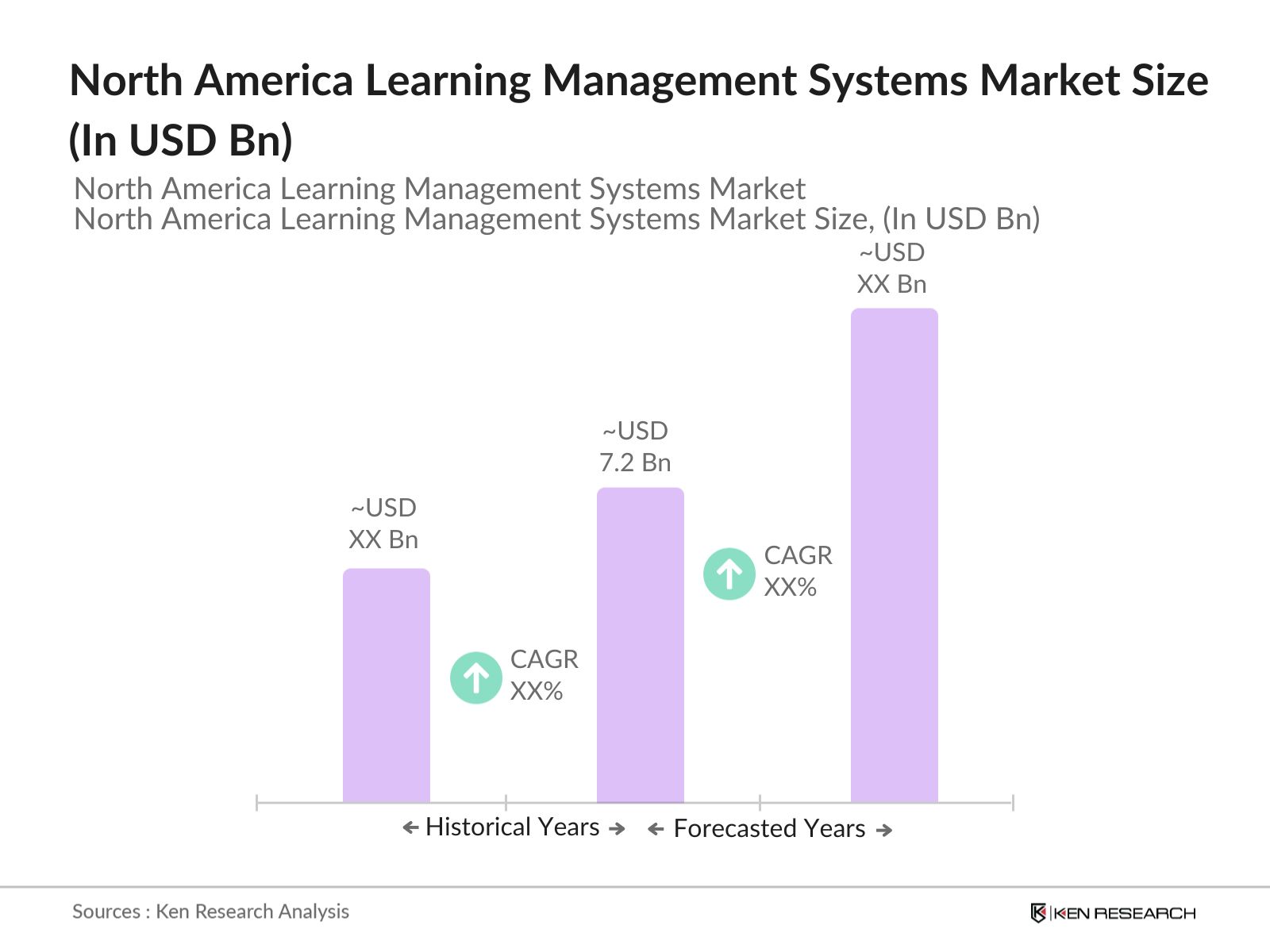
- Key countries such as the United States and Canada dominate the LMS market due to their strong infrastructure, technological innovation, and large user base. In the U.S., the demand is driven by the corporate sectors focus on employee upskilling, while Canadas educational institutions are rapidly adopting digital learning solutions to improve student engagement and learning outcomes. The presence of global tech giants and a tech-savvy workforce further amplifies the dominance of these regions.
- Federal funding has been a driver for the adoption of digital education platforms, including LMS, in North America. The U.S. Department of Education allocated more than USD 15 billion towards digital learning initiatives in 2023, aimed at supporting both public schools and higher education institutions. This funding has enabled over 30,000 schools to implement or upgrade their LMS platforms, ensuring that students have access to cutting-edge digital tools. Federal funding also supports training programs for educators to effectively use LMS platforms in their teaching methodologies.
North America Learning Management Systems Market Segmentation
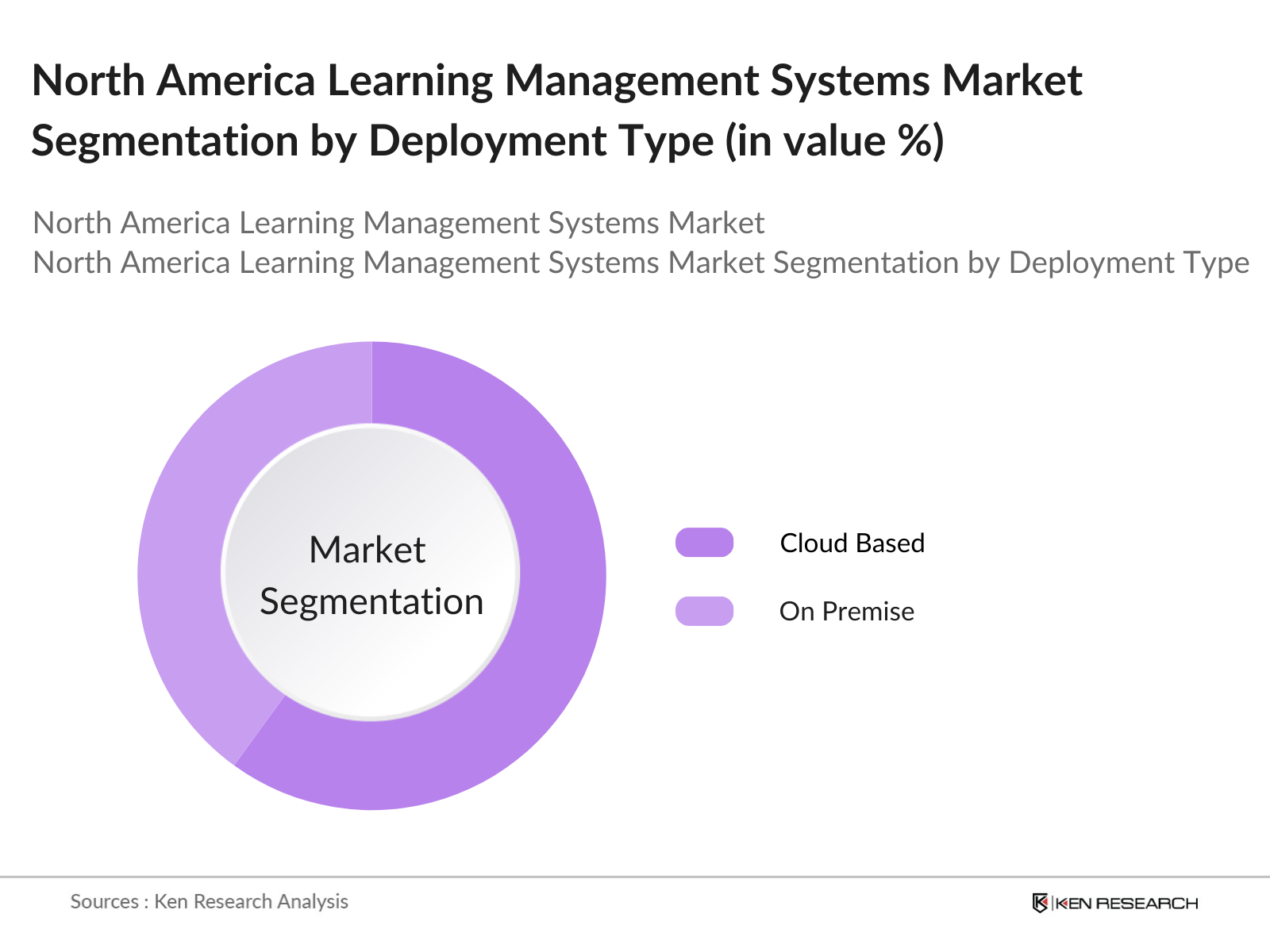
By Deployment Type: The market is segmented by deployment type into on-premise and cloud-based systems. Cloud-based solutions currently hold a dominant market share due to their flexibility, scalability, and cost-effectiveness. Many organizations, especially within the corporate sector, prefer cloud-based LMS platforms because they enable remote learning and easy integration with other software. Additionally, cloud solutions require less upfront investment and offer seamless updates and maintenance, making them the preferred choice for institutions and businesses seeking to minimize their IT infrastructure.
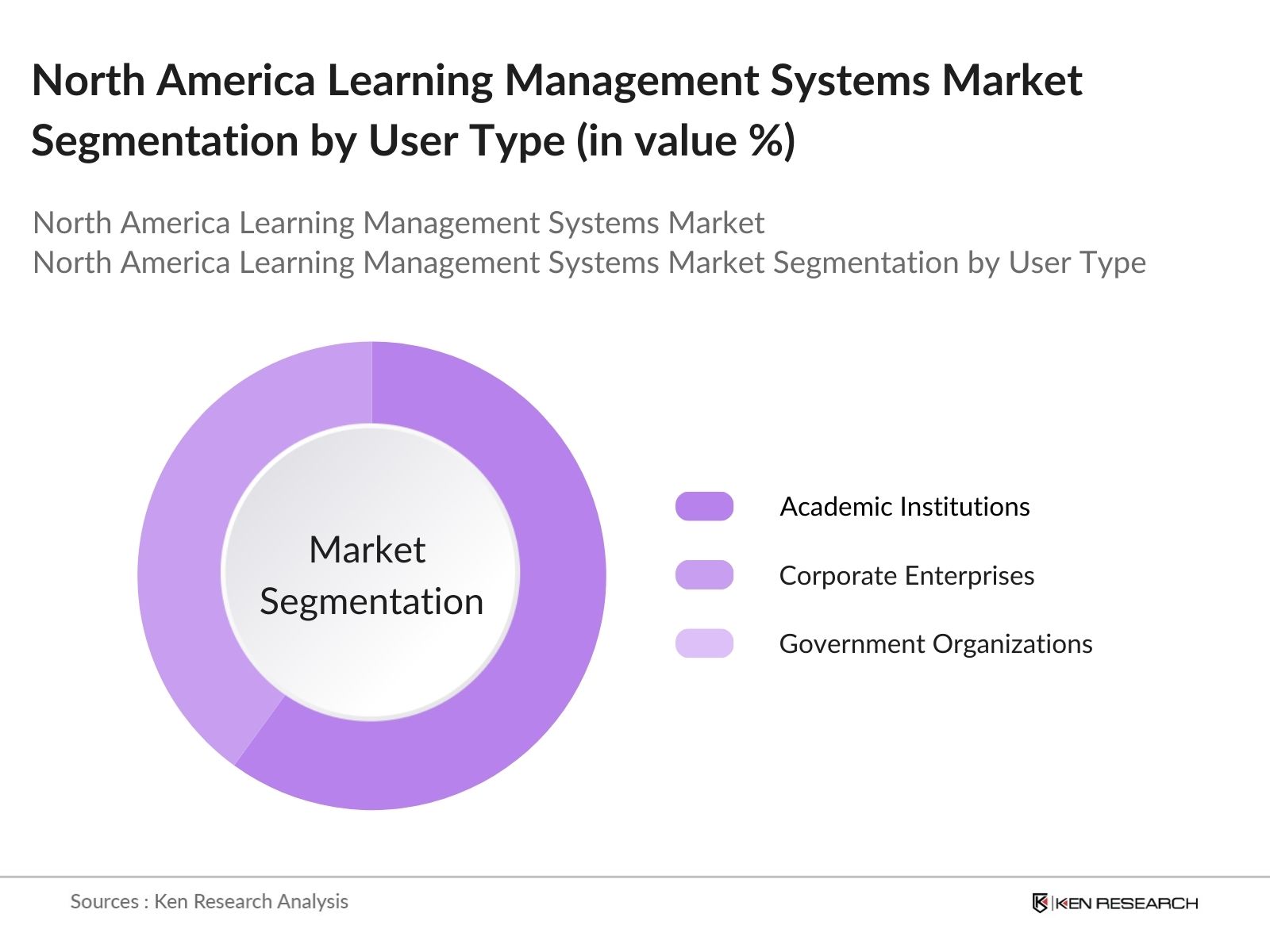
By User Type: The market is also segmented by user type into academic institutions, corporate enterprises, and government organizations. Corporate enterprises dominate the user segment due to the increasing need for continuous employee training and professional development. Many large organizations are investing heavily in LMS solutions to maintain competitive advantage, improve workforce efficiency, and ensure compliance with industry standards. This demand is particularly high in industries such as healthcare, IT, and manufacturing, where employee skill enhancement is critical.
North America Learning Management Systems Market Competitive Landscape
The North America LMS market is dominated by a few key players who control a portion of the market through continuous innovation, partnerships, and product expansions. These players are focusing on providing customized solutions to meet the diverse needs of corporate enterprises, educational institutions, and government agencies. The competition in the market is fierce, with companies adopting strategies like mergers and acquisitions to expand their market presence. The ability to offer cutting-edge solutions that incorporate features such as artificial intelligence, mobile learning, and gamification distinguishes leading companies.
|
Company |
Establishment Year |
Headquarters |
Market Penetration |
Cloud-Based Solutions |
Mobile Accessibility |
Integration with AI |
Customer Support |
Security Compliance |
Revenue (2023) |
|---|---|---|---|---|---|---|---|---|---|
|
Blackboard Inc. |
1997 |
Washington, D.C. |
|||||||
|
Instructure Inc. |
2008 |
Salt Lake City |
|||||||
|
D2L Corporation |
1999 |
Ontario, Canada |
|||||||
|
Cornerstone OnDemand Inc. |
1999 |
California |
|||||||
|
Adobe Inc. |
1982 |
California |
North America Learning Management Systems Industry Analysis
Growth Drivers
- Adoption of E-Learning Platforms in Educational Institutions: The growing emphasis on digital education has led to significant adoption of e-learning platforms across schools and universities in North America. According to UNESCO, more than 1,200 higher education institutions in the region incorporated some form of e-learning by 2023, driven by the need for flexible and accessible education. Public schools are also transitioning to hybrid models, with over 60,000 K-12 institutions in the U.S. adopting e-learning solutions as part of their curriculum. This shift is supported by the federal government, which allocated over USD 130 billion for educational technology under the American Rescue Plan.
- Corporate Sector Training Needs: The corporate sector in North America has shown a strong demand for learning management systems (LMS) to meet workforce training and development needs. The Bureau of Labor Statistics states that more than 52% of the companies with over 500 employees are now using LMS for training and compliance purposes. With over 10 million employees being trained annually in digital platforms, businesses are leveraging LMS to reduce costs and improve learning efficiency. This adoption is crucial as corporations face increased pressure to upskill employees amid rapid technological change.
- Rising Demand for Flexible Learning Models: The shift towards flexible learning models has been one of the most significant drivers for LMS adoption in North America. The National Center for Education Statistics reported that nearly 45 million students were engaged in some form of online or blended learning by 2023, representing over half of the total student population. Additionally, about 40% of professional learners in the corporate sector sought flexibility in their training schedules, pushing organizations to adopt LMS platforms offering anytime, anywhere access to learning content. This trend highlights the growing demand for learning personalization in both educational and corporate sectors.
Market Challenges
- High Initial Setup Costs: While LMS platforms offer long-term benefits, the high initial costs remain a barrier to adoption for smaller institutions and organizations. According to the U.S. Department of Education, the average setup cost for an LMS in educational institutions ranges from USD 30,000 to USD 100,000 depending on the platform and customization requirements. Similarly, small and medium enterprises (SMEs) find it difficult to invest heavily in training platforms. This challenge is compounded by ongoing costs for software upgrades and licensing fees, which further impact the decision to integrate LMS solutions.
- Resistance to Technology Adoption in Traditional Institutions: Traditional educational institutions, especially in rural areas, face significant challenges in adopting LMS platforms. The U.S. Department of Agriculture found that nearly 30% of rural schools have limited internet access, making it difficult to implement digital learning tools effectively. Furthermore, faculty members accustomed to traditional teaching methods are often resistant to transitioning to online platforms. Approximately 20,000 schools in rural North America have been slow to adopt LMS solutions, citing both technological and cultural barriers.
North America Learning Management Systems Market Future Outlook
Over the next five years, the North America LMS market is poised for significant growth, driven by the increasing need for flexible, scalable, and customized learning solutions. As businesses continue to embrace digital transformation, LMS platforms will play a crucial role in employee development and training programs. The rise in remote working, along with the demand for hybrid learning models, is expected to further fuel the adoption of LMS. In addition, advancements in artificial intelligence and machine learning are likely to enhance the personalization of learning experiences, making LMS platforms more effective and user-friendly.
Future Market Opportunities
- Expansion of Mobile Learning Solutions: The mobile learning market is expanding rapidly, with more than 75% of learners in North America accessing LMS through mobile devices, according to Pew Research Center. This expansion opens opportunities for the development of mobile-friendly learning platforms, particularly in higher education and corporate training. In 2023, the mobile learning market was valued at USD 45 billion in North America, with 18 million users actively engaging in mobile learning programs. Educational institutions are capitalizing on this trend by incorporating mobile-responsive content to cater to an increasingly mobile-savvy audience.
- Adoption of Microlearning: Microlearning is gaining traction in corporate training, with more than 50% of North American businesses now incorporating short, focused learning modules into their LMS platforms, according to the U.S. Chamber of Commerce. In 2023, over 10 million employees engaged in microlearning sessions designed to improve retention and reduce cognitive overload. The average session duration has been reduced to just 15 minutes, allowing employees to learn in smaller, more digestible formats. This method is proving effective in increasing engagement and knowledge retention, offering significant growth opportunities for LMS providers.
Scope of the Report
|
By Deployment Type |
On-Premise Cloud-Based |
|
By User Type |
Academic Institutions Corporate Enterprises Government Organizations |
|
By Industry |
Education Healthcare Retail Manufacturing IT & Telecommunications |
|
By Functionality |
Training & Development Course Management User Management Performance Tracking & Reporting |
|
By Region |
U.S. Canada Mexico |
Products
Key Target Audience
Corporate Enterprises
Government and Regulatory Bodies (U.S. Department of Education, Canadas Ministry of Education)
LMS Developers and Providers
IT Service Providers
EdTech Startups
Cloud Service Providers
Training and Development Agencies
Banks and Financial Institutes
Investment and Venture Capitalist Firm
Companies
Major Players in the North America LMS Market
Blackboard Inc.
Instructure Inc.
D2L Corporation
Cornerstone OnDemand Inc.
Adobe Inc.
SAP SE
Oracle Corporation
Microsoft Corporation
Google LLC
IBM Corporation
SumTotal Systems LLC
Moodle Pty Ltd
Schoology Inc.
TalentLMS
Absorb Software Inc.
Table of Contents
1. North America Learning Management Systems Market Overview
1.1. Definition and Scope
1.2. Market Taxonomy
1.3. Market Growth Rate (CAGR, Adoption Rates, New Implementations)
1.4. Market Segmentation Overview
2. North America Learning Management Systems Market Size (In USD Bn)
2.1. Historical Market Size
2.2. Year-On-Year Growth Analysis
2.3. Key Market Developments and Milestones (Platform Innovations, Integration of AI, Mobile Learning)
3. North America Learning Management Systems Market Analysis
3.1. Growth Drivers
3.1.1. Adoption of E-Learning Platforms in Educational Institutions
3.1.2. Corporate Sector Training Needs
3.1.3. Integration with Cloud-Based Solutions
3.1.4. Rising Demand for Flexible Learning Models
3.2. Market Challenges
3.2.1. High Initial Setup Costs
3.2.2. Cybersecurity Concerns
3.2.3. Resistance to Technology Adoption in Traditional Institutions
3.3. Opportunities
3.3.1. Expansion of Mobile Learning Solutions
3.3.2. Growing Demand for Personalized Learning Experiences
3.3.3. Integration of AI and Machine Learning
3.3.4. Adoption of Microlearning
3.4. Trends
3.4.1. Shift to SaaS-Based LMS Models
3.4.2. Increased Focus on User Experience (UX) and Learning Analytics
3.4.3. Gamification in Learning
3.4.4. Hybrid Learning Models (Combination of In-Person and Digital)
3.5. Government Regulation
3.5.1. Data Privacy Regulations (GDPR, CCPA Compliance)
3.5.2. Educational Standards Compliance
3.5.3. Certifications for Online Learning Programs
3.5.4. Federal Funding for Digital Education
3.6. SWOT Analysis
3.7. Stakeholder Ecosystem
3.8. Porters Five Forces Analysis
3.9. Competitive Ecosystem
4. North America Learning Management Systems Market Segmentation
4.1. By Deployment Type (In Value %)
4.1.1. On-Premise
4.1.2. Cloud-Based
4.2. By User Type (In Value %)
4.2.1. Academic Institutions
4.2.2. Corporate Enterprises
4.2.3. Government Organizations
4.3. By Industry (In Value %)
4.3.1. Education
4.3.2. Healthcare
4.3.3. Retail
4.3.4. Manufacturing
4.3.5. IT & Telecommunications
4.4. By Functionality (In Value %)
4.4.1. Training & Development
4.4.2. Course Management
4.4.3. User Management
4.4.4. Performance Tracking & Reporting
4.5. By Region (In Value %)
4.5.1. U.S.
4.5.2. Canada
5. North America Learning Management Systems Market Competitive Analysis
5.1 Detailed Profiles of Major Companies
5.1.1. Blackboard Inc.
5.1.2. Instructure Inc.
5.1.3. D2L Corporation
5.1.4. Cornerstone OnDemand Inc.
5.1.5. Adobe Inc.
5.1.6. SAP SE
5.1.7. Oracle Corporation
5.1.8. Microsoft Corporation
5.1.9. Google LLC
5.1.10. IBM Corporation
5.1.11. SumTotal Systems LLC
5.1.12. Moodle Pty Ltd
5.1.13. Schoology Inc.
5.1.14. TalentLMS
5.1.15. Absorb Software Inc.
5.2 Cross Comparison Parameters (Deployment Models, Features, Number of Integrations, User Base, Customer Support, Customization, Pricing Models, Security Features)
5.3 Market Share Analysis
5.4 Strategic Initiatives (Product Launches, Collaborations, Partnerships)
5.5 Mergers And Acquisitions
5.6 Investment Analysis
5.7 Venture Capital Funding
5.8 Government Grants and Incentives
5.9 Private Equity Investments
6. North America Learning Management Systems Market Regulatory Framework
6.1. Compliance with Educational Standards
6.2. Data Protection and Security Regulations
6.3. Certification and Accreditation Requirements
7. North America Learning Management Systems Future Market Size (In USD Bn)
7.1. Future Market Size Projections
7.2. Key Factors Driving Future Market Growth (Adoption Rate, Technological Advancements, Increase in Online Learners)
8. North America Learning Management Systems Future Market Segmentation
8.1. By Deployment Type (In Value %)
8.2. By User Type (In Value %)
8.3. By Industry (In Value %)
8.4. By Functionality (In Value %)
8.5. By Region (In Value %)
9. North America Learning Management Systems Market Analysts Recommendations
9.1 TAM/SAM/SOM Analysis
9.2 Customer Cohort Analysis
9.3 Marketing Initiatives
9.4 White Space Opportunity Analysis
Research Methodology
Step 1: Identification of Key Variables
The initial step involves mapping the ecosystem of the North America LMS market by identifying key stakeholders, including corporate enterprises, educational institutions, and LMS providers. Through extensive desk research and the use of proprietary databases, we identify the major variables that influence the market, such as deployment models, user preferences, and technological advancements.
Step 2: Market Analysis and Construction
In this phase, historical data related to market penetration and LMS adoption across sectors are compiled. Detailed analysis of deployment types and sub-segments is conducted to accurately estimate revenue streams and growth rates.
Step 3: Hypothesis Validation and Expert Consultation
To validate the market hypotheses, we engage in consultations with key industry players via interviews and surveys. These insights provide real-world perspectives on market trends, challenges, and opportunities, allowing us to refine the data and forecasts.
Step 4: Research Synthesis and Final Output
Finally, through direct engagement with LMS providers and industry experts, we synthesize all gathered data into a comprehensive report. This report includes detailed insights on the market's current state, future trends, and strategic recommendations.
Frequently Asked Questions
01 How big is the North America LMS Market?
The North America LMS market is valued at USD 7.2 billion, driven by the increasing demand for flexible learning platforms in corporate and educational sectors.
02 What are the challenges in the North America LMS Market?
Challenges include the high cost of implementation, data privacy concerns, and resistance to adopting new technologies, especially in traditional educational institutions.
03 Who are the major players in the North America LMS Market?
Key players include Blackboard Inc., Instructure Inc., D2L Corporation, Cornerstone OnDemand Inc., and Adobe Inc. These companies dominate due to their innovation, large customer base, and comprehensive LMS offerings.
04 What are the growth drivers of the North America LMS Market?
The market is propelled by increasing demand for online learning solutions, the growth of cloud-based technologies, and the rising need for employee training and compliance management in corporate sectors.
05 What are the emerging trends in the North America LMS Market?
Emerging trends include the adoption of artificial intelligence to enhance learning experiences, the rise of mobile-based learning platforms, and the integration of gamification into LMS solutions to boost engagement.
Why Buy From Us?

What makes us stand out is that our consultants follows Robust, Refine and Result (RRR) methodology. i.e. Robust for clear definitions, approaches and sanity checking, Refine for differentiating respondents facts and opinions and Result for presenting data with story

We have set a benchmark in the industry by offering our clients with syndicated and customized market research reports featuring coverage of entire market as well as meticulous research and analyst insights.

While we don't replace traditional research, we flip the method upside down. Our dual approach of Top Bottom & Bottom Top ensures quality deliverable by not just verifying company fundamentals but also looking at the sector and macroeconomic factors.

With one step in the future, our research team constantly tries to show you the bigger picture. We help with some of the tough questions you may encounter along the way: How is the industry positioned? Best marketing channel? KPI's of competitors? By aligning every element, we help maximize success.

Our report gives you instant access to the answers and sources that other companies might choose to hide. We elaborate each steps of research methodology we have used and showcase you the sample size to earn your trust.

If you need any support, we are here! We pride ourselves on universe strength, data quality, and quick, friendly, and professional service.