















North America Light Sensor Market Outlook to 2030
Region:North America
Author(s):Vijay Kumar
Product Code:KROD5739
December 2024
94
About the Report
North America Light Sensor Market Overview
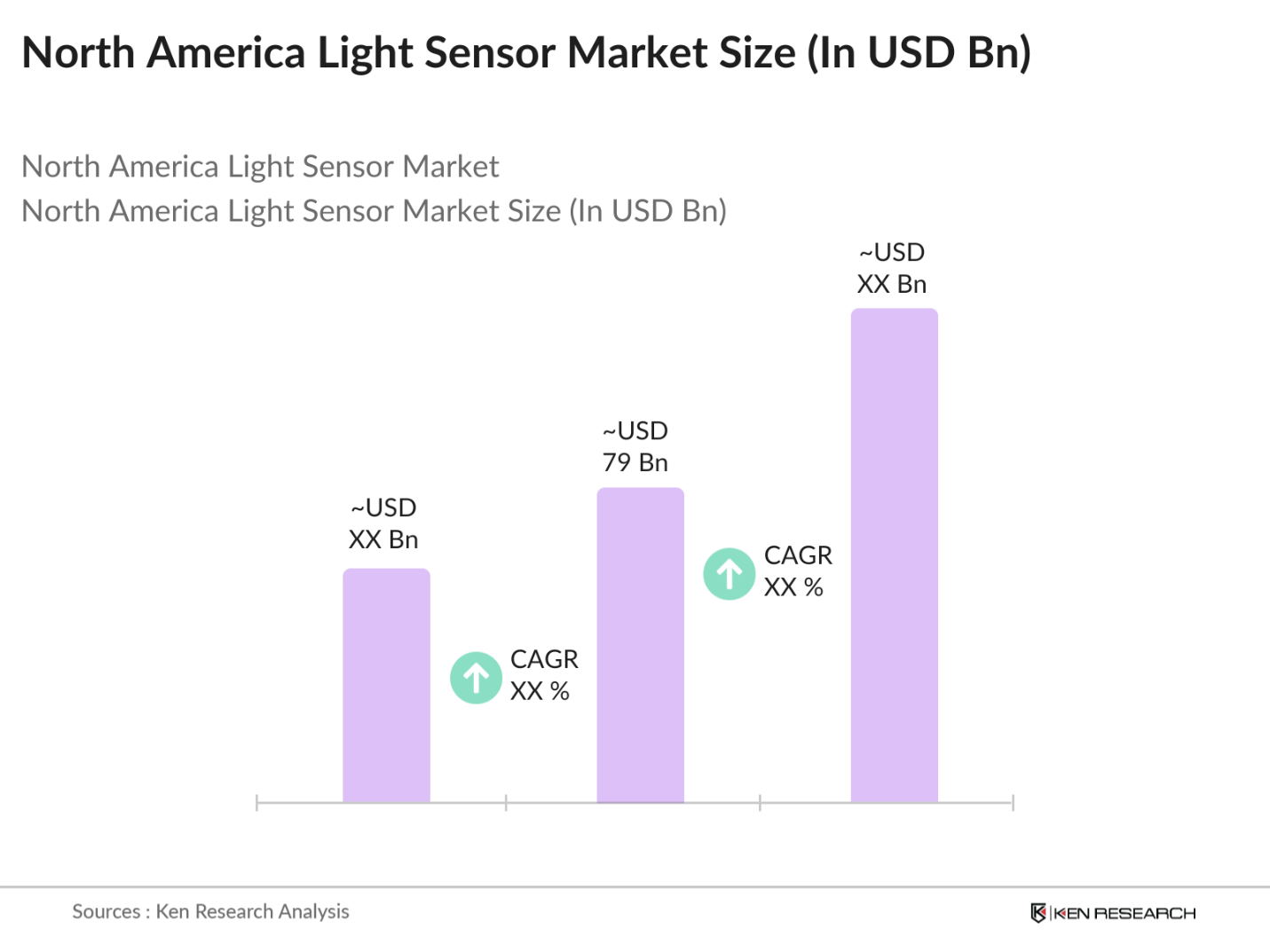
- The North America Light Sensor market is valued at USD 79 billion, based on a five-year historical analysis. This market's growth is primarily driven by the increasing integration of light sensors in smart home devices, consumer electronics, and automotive safety systems. As demand for energy-efficient solutions rises, these sensors are playing a pivotal role in optimizing power usage in devices and enhancing user experience through automated lighting controls and brightness adjustments in various smart applications.
- Cities and regions that dominate the North America light sensor market include major technology and automotive hubs such as the United States (Silicon Valley and Detroit) and Canada (Toronto and Montreal). These areas dominate due to their strong presence in the automotive, electronics, and technology industries, along with heavy investment in research and development (R&D) for smart technologies and IoT advancements. Proximity to key automotive and consumer electronics manufacturers further consolidates their market dominance.
- Automotive safety regulations set by the National Highway Traffic Safety Administration (NHTSA) are contributing to the growing use of light sensors in vehicles. In 2023, new regulations required that all vehicles equipped with ADAS systems must have automatic headlight controls, which rely on light sensors. This mandate is increasing the demand for light sensors in the automotive sector, as manufacturers work to comply with these safety standards aimed at improving road safety and reducing accidents caused by poor lighting conditions.
North America Light Sensor Market Segmentation
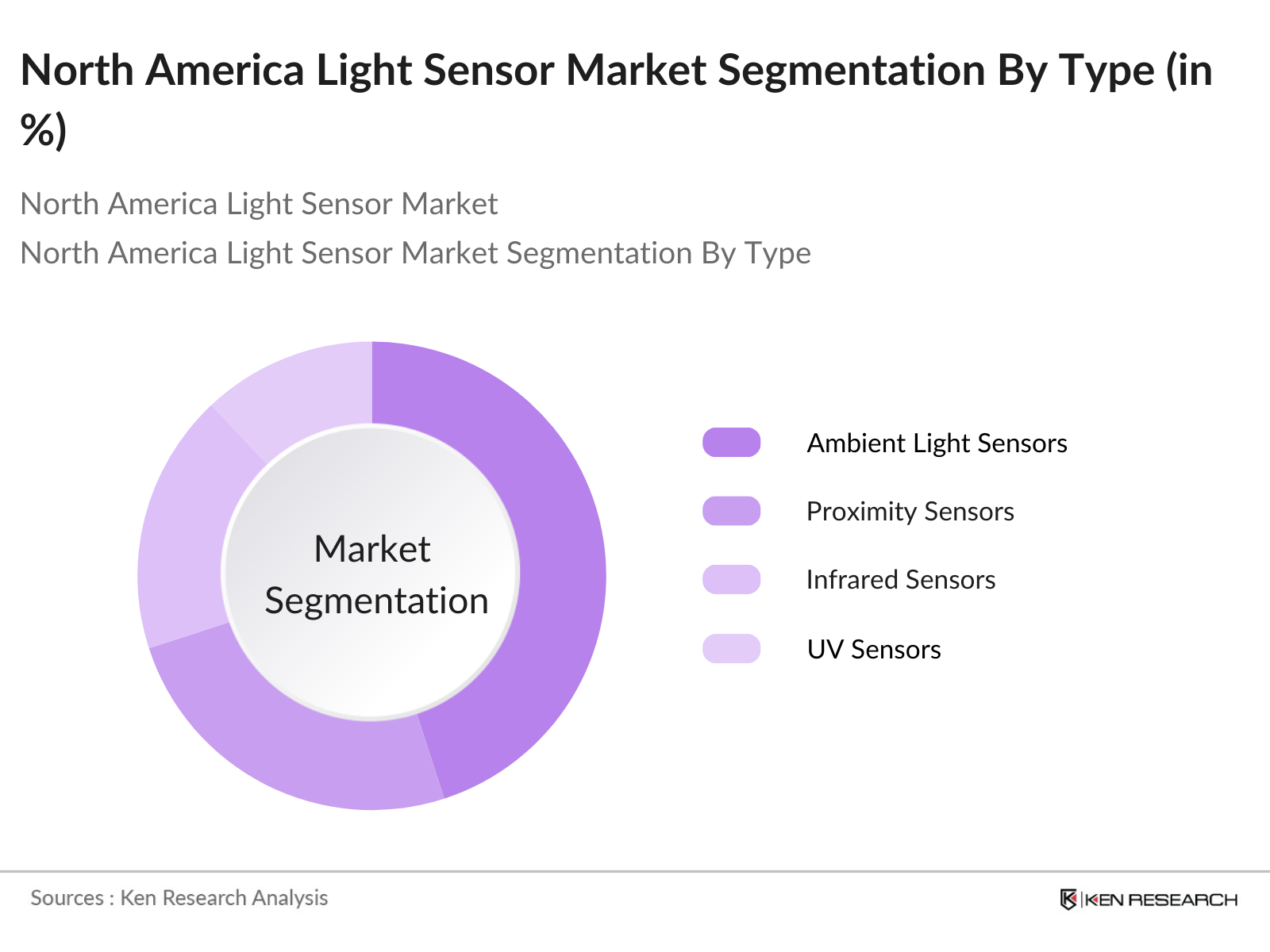
By Type: The market is segmented by type into ambient light sensors, proximity sensors, infrared sensors, UV sensors, and gesture recognition sensors. Ambient light sensors currently dominate the market due to their widespread use in mobile devices, smart homes, and automotive applications.
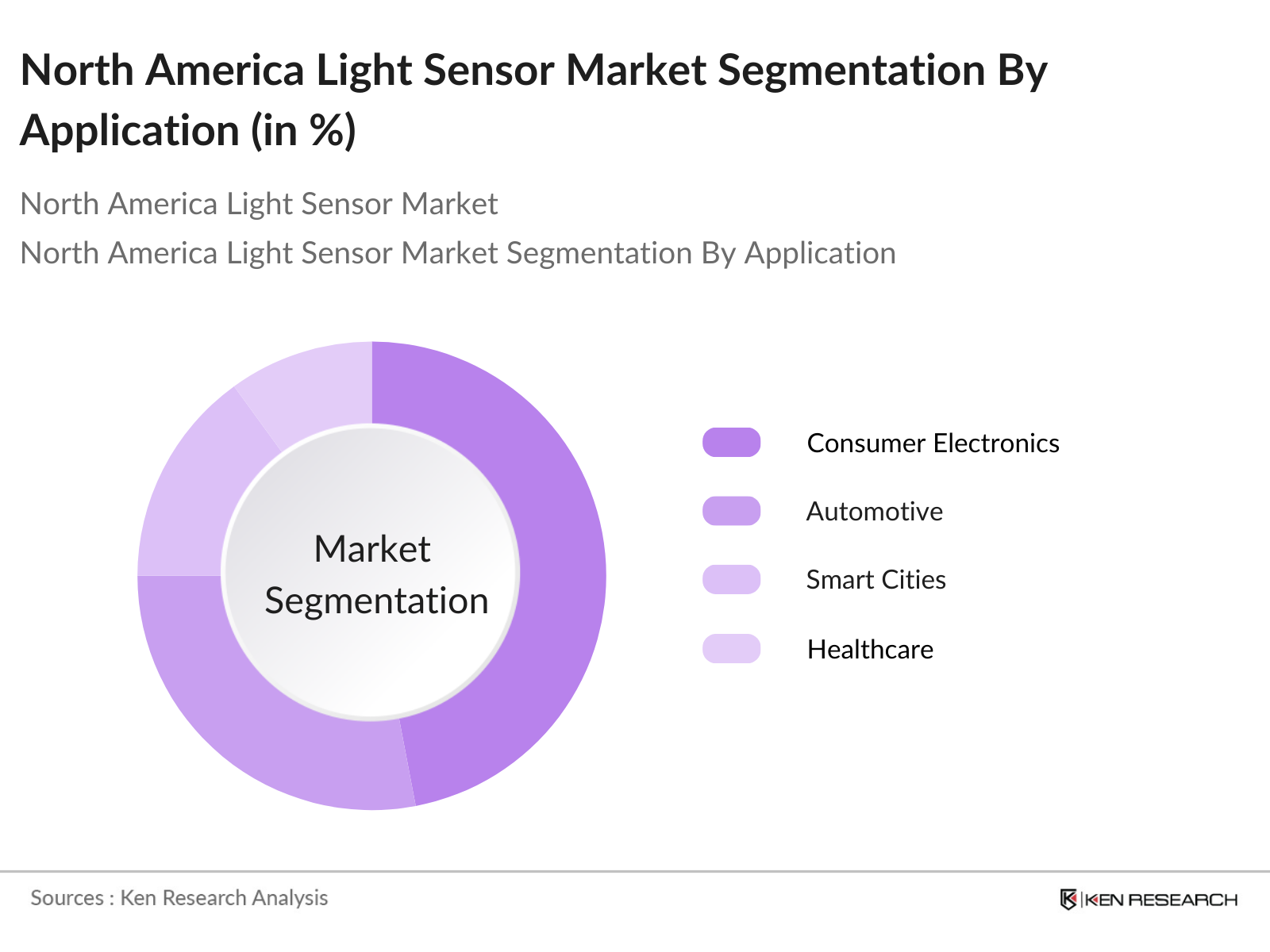
By Application: The market in North America is segmented by application into automotive, consumer electronics, healthcare, smart cities, and industrial automation. Consumer electronics lead the market in terms of application due to the increasing usage of light sensors in smartphones, laptops, wearables, and smart home devices.
North America Light Sensor Market Competitive Landscape
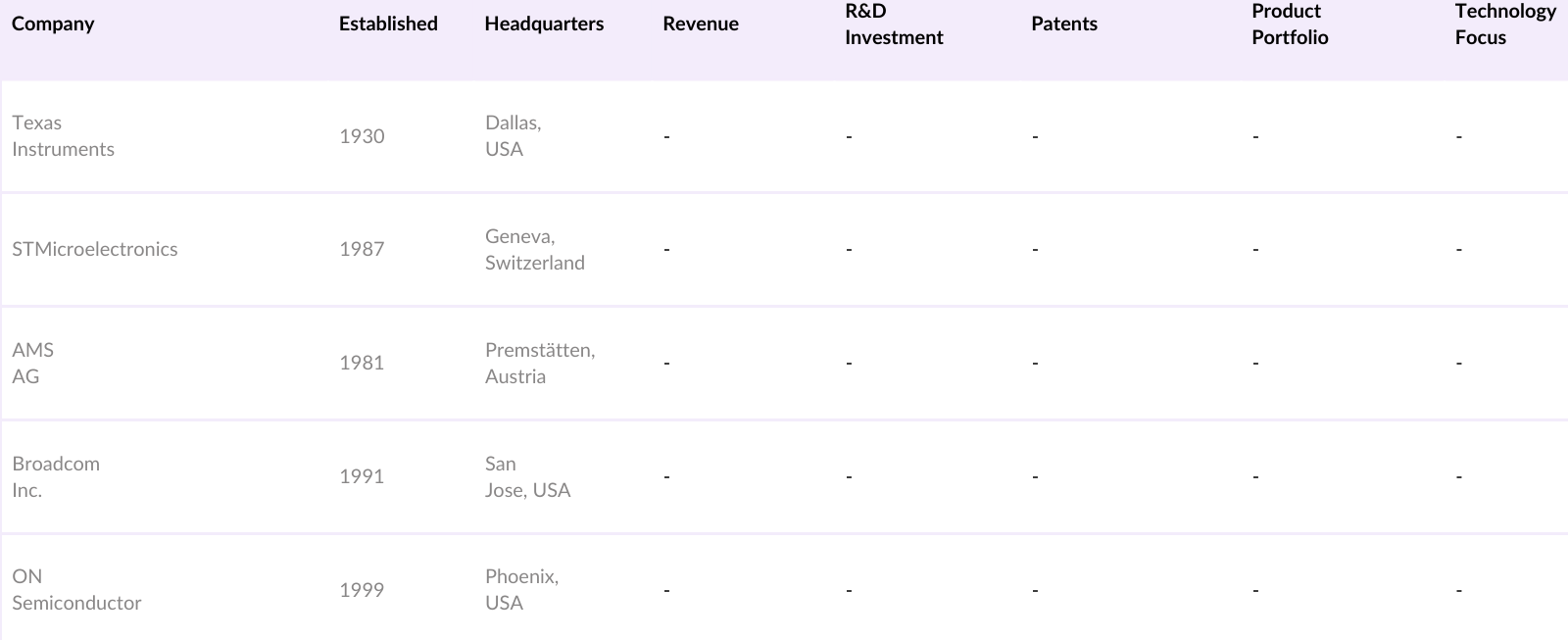
The North America light sensor market is dominated by several key players, many of which are major global brands with strong R&D capabilities and extensive distribution networks. These companies focus on innovation in sensor technology, including miniaturization, enhanced sensitivity, and integration with other smart devices and systems.
North America Light Sensor Industry Analysis
Growth Drivers
- Proliferation of Smart Homes (Smart Device Adoption Rate): The rise of smart homes in North America is a significant driver for the light sensor market. As of 2023, over 40 million households in the United States have adopted smart home technology, including light sensors for automation and energy management, according to Statista and government reports. This number reflects the growing demand for light sensors integrated with smart lighting systems, which promote energy efficiency and personalized user experiences.
- Expansion of IoT Ecosystem (IoT Device Penetration): The Internet of Things (IoT) ecosystem continues to expand across North America, with an estimated 25 billion IoT-connected devices in 2023, according to IoT Analytics. The light sensor market benefits directly from this growth as IoT-enabled devices increasingly rely on sensors to provide real-time data and automation features. Light sensors are integral to smart lighting systems that can adjust based on the ambient environment.
- Increasing Demand for Energy Efficiency (Energy Consumption Standards): Energy efficiency standards are driving the adoption of light sensors in North America. According to the U.S. Energy Information Administration (EIA), lighting accounts for nearly 10% of the total electricity consumption in the residential sector. The introduction of energy-efficient standards, such as Title 24 in California, requires automated lighting controls in buildings.
Market Challenges
- High Initial Costs of Advanced Sensors (Cost Barrier for Innovation): One of the significant challenges facing the North American light sensor market is the high initial cost of advanced sensors, especially those used in IoT applications and smart vehicles. According to a report from the U.S. Department of Commerce, the cost of integrating high-performance sensors, which can range from $50 to $200 per unit depending on the application, remains a barrier for widespread adoption, especially for smaller businesses and startups that lack the capital to invest in advanced sensor technology.
- Market Fragmentation (Vendor Concentration): The light sensor market in North America is highly fragmented, with numerous small vendors competing alongside larger players. According to a report by the U.S. Federal Trade Commission (FTC), approximately 70% of light sensor vendors hold less than 10% market share individually, creating intense competition and pricing pressure. This fragmentation is hampering innovation, as smaller companies struggle to invest in research and development.
North America Light Sensor Market Future Outlook
Over the next five years, the North America light sensor market is expected to experience substantial growth, driven by increasing demand for smart technologies across various industries. The integration of sensors into more consumer devices, such as wearables, smartphones, and smart lighting systems, will continue to drive market expansion.
Market Opportunities
- Advancements in Sensor Miniaturization (Miniaturization Trends): Technological advancements in sensor miniaturization present significant opportunities for the North American light sensor market. According to a report by the National Institute of Standards and Technology (NIST), sensor manufacturers are now capable of producing sensors that are as small as 1.5 mm. This miniaturization allows for greater integration into portable and wearable devices, driving growth in sectors such as healthcare and consumer electronics.
- Integration with Artificial Intelligence (AI Integration Rate): The integration of light sensors with artificial intelligence (AI) systems is a growing trend that offers new market opportunities. According to a report by the Brookings Institution, AI adoption in industries such as smart lighting, automotive, and healthcare is accelerating, with over 35% of organizations using AI-powered automation by 2023. Light sensors combined with AI can enable smarter, adaptive lighting systems that respond to real-time environmental conditions, reducing energy consumption and improving operational efficiency in commercial and residential settings.
Scope of the Report
|
By Type |
Ambient Light Sensors Proximity Sensors Infrared Sensors UV Sensors Gesture Recognition Sensors |
|
By Application |
Automotive Consumer Electronics Healthcare Smart Cities Industrial Automation |
|
By Connectivity |
Wired |
|
Technology |
Wireless |
|
By End-User |
Residential Commercial Industrial |
|
By Region |
United States Canada Mexico |
Products
Key Target Audience
Automotive Manufacturers (e.g., Tesla, General Motors)
Consumer Electronics Companies (e.g., Apple, Samsung)
Smart City Developers
Industrial Automation Companies
Healthcare Equipment Manufacturers
Investment and Venture Capitalist Firms
Government and Regulatory Bodies (e.g., U.S. Department of Energy, EPA)
IoT Technology Providers
Companies
Players Mentioned in the Report
Texas Instruments
STMicroelectronics
AMS AG
Broadcom Inc.
ON Semiconductor
Vishay Intertechnology
Samsung Electronics
Panasonic Corporation
Everlight Electronics
ROHM Semiconductor
Table of Contents
1. North America Light Sensor Market Overview
1.1. Definition and Scope
1.2. Market Taxonomy
1.3. Market Growth Rate
1.4. Market Segmentation Overview
2. North America Light Sensor Market Size (In USD Bn)
2.1. Historical Market Size
2.2. Year-On-Year Growth Analysis
2.3. Key Market Developments and Milestones
3. North America Light Sensor Market Analysis
3.1. Growth Drivers
3.1.1. Proliferation of Smart Homes (Smart Device Adoption Rate)
3.1.2. Expansion of IoT Ecosystem (IoT Device Penetration)
3.1.3. Increasing Demand for Energy Efficiency (Energy Consumption Standards)
3.1.4. Growing Automotive Sensor Integration (ADAS & Automotive Sensor Deployment)
3.2. Market Challenges
3.2.1. High Initial Costs of Advanced Sensors (Cost Barrier for Innovation)
3.2.2. Market Fragmentation (Vendor Concentration)
3.2.3. Supply Chain Disruptions (Component Shortages)
3.3. Opportunities
3.3.1. Advancements in Sensor Miniaturization (Miniaturization Trends)
3.3.2. Integration with Artificial Intelligence (AI Integration Rate)
3.3.3. Expanding Use in Wearable Technology (Wearable Sensor Adoption)
3.4. Trends
3.4.1. Adoption of Wireless Sensor Networks (Wireless Connectivity Trends)
3.4.2. Focus on Multi-sensor Fusion (Fusion Technology Adoption)
3.4.3. Increasing Usage in Smart Agriculture (Agritech Deployment of Light Sensors)
3.5. Government Regulations
3.5.1. Energy Efficiency Standards (Energy Regulations for Smart Devices)
3.5.2. Automotive Safety Regulations (ADAS & Light Sensor Standards)
3.5.3. Building Codes (Lighting Control Standards)
3.5.4. Environmental Standards for Light Pollution (Environmental Compliance)
3.6. SWOT Analysis
3.7. Stakeholder Ecosystem
3.8. Porters Five Forces
3.9. Competition Ecosystem
4. North America Light Sensor Market Segmentation
4.1. By Type (In Value %)
4.1.1. Ambient Light Sensors
4.1.2. Proximity Sensors
4.1.3. Infrared Sensors
4.1.4. UV Sensors
4.1.5. Gesture Recognition Sensors
4.2. By Application (In Value %)
4.2.1. Automotive
4.2.2. Consumer Electronics
4.2.3. Healthcare
4.2.4. Smart Cities
4.2.5. Industrial Automation
4.3. By Connectivity Technology (In Value %)
4.3.1. Wired
4.3.2. Wireless
4.4. By End-User (In Value %)
4.4.1. Residential
4.4.2. Commercial
4.4.3. Industrial
4.5. By Region (In Value %)
4.5.1. United States
4.5.2. Canada
4.5.3. Mexico
5. North America Light Sensor Market Competitive Analysis 5.1. Detailed Profiles of Major Companies
5.1.1. Texas Instruments
5.1.2. Vishay Intertechnology
5.1.3. STMicroelectronics
5.1.4. ON Semiconductor
5.1.5. AMS AG
5.1.6. Broadcom Inc.
5.1.7. Samsung Electronics
5.1.8. Panasonic Corporation
5.1.9. Everlight Electronics
5.1.10. ROHM Semiconductor
5.1.11. Hamamatsu Photonics
5.1.12. Analog Devices
5.1.13. Sharp Corporation
5.1.14. Sensirion AG
5.1.15. Renesas Electronics
5.2. Cross Comparison Parameters
5.2.1. Revenue
5.2.2. Number of Patents
5.2.3. Headquarters Location
5.2.4. Product Offerings
5.2.5. R&D Investments
5.2.6. Market Share
5.2.7. Strategic Partnerships
5.2.8. Technological Innovations
5.3. Market Share Analysis
5.4. Strategic Initiatives
5.5. Mergers and Acquisitions
5.6. Investment Analysis
5.7. Venture Capital Funding
5.8. Private Equity Investments
6. North America Light Sensor Market Regulatory Framework
6.1. Energy Consumption Regulations
6.2. Safety Certifications
6.3. Environmental Compliance
7. North America Light Sensor Future Market Size (In USD Bn)
7.1. Future Market Size Projections
7.2. Key Factors Driving Future Market Growth
8. North America Light Sensor Future Market Segmentation
8.1. By Type (In Value %)
8.2. By Application (In Value %)
8.3. By Connectivity Technology (In Value %)
8.4. By End-User (In Value %)
8.5. By Region (In Value %)
9. North America Light Sensor Market Analysts Recommendations
9.1. TAM/SAM/SOM Analysis
9.2. Customer Cohort Analysis
9.3. Marketing Initiatives
9.4. White Space Opportunity Analysis
Research Methodology
Step 1: Identification of Key Variables
This stage involves creating a comprehensive ecosystem map, identifying major stakeholders within the North America Light Sensor Market. Extensive desk research, relying on secondary data sources and proprietary databases, is conducted to gather relevant industry information. The focus here is on defining key market drivers, challenges, and trends that influence the market.
Step 2: Market Analysis and Construction
In this step, we compile and assess historical data related to the North America light sensor market, including product sales, technological advancements, and sector-specific revenues. Data analysis focuses on evaluating penetration rates and the relationship between market drivers and segment growth.
Step 3: Hypothesis Validation and Expert Consultation
Market hypotheses are developed based on data trends and patterns and are then validated through expert consultations. Industry experts from top companies are interviewed to ensure data accuracy and to provide additional insights that may not be available in secondary sources.
Step 4: Research Synthesis and Final Output
The final research phase focuses on synthesizing all gathered data to produce a detailed, comprehensive analysis of the light sensor market. This phase includes a bottom-up approach to validate revenue estimates and forecasts for the market, ensuring the reliability of the results.
Frequently Asked Questions
01. How big is the North America Light Sensor Market?
The North America Light Sensor market is valued at USD 79 billion, based on a five-year historical analysis. This market's growth is primarily driven by the increasing integration of light sensors in smart home devices, consumer electronics, and automotive safety systems.
02. What are the challenges in the North America Light Sensor Market?
The market faces challenges such as high production costs for advanced sensors, market fragmentation, and supply chain disruptions, especially for key components like semiconductors.
03. Who are the major players in the North America Light Sensor Market?
Key players include Texas Instruments, STMicroelectronics, AMS AG, Broadcom Inc., and ON Semiconductor, who lead due to their strong R&D investments and broad product portfolios.
04. What are the growth drivers of the North America Light Sensor Market?
The market is driven by the increasing use of sensors in automotive safety systems (ADAS), smart home devices, and consumer electronics. The expansion of IoT ecosystems also supports market growth.
Why Buy From Us?

What makes us stand out is that our consultants follows Robust, Refine and Result (RRR) methodology. i.e. Robust for clear definitions, approaches and sanity checking, Refine for differentiating respondents facts and opinions and Result for presenting data with story

We have set a benchmark in the industry by offering our clients with syndicated and customized market research reports featuring coverage of entire market as well as meticulous research and analyst insights.

While we don't replace traditional research, we flip the method upside down. Our dual approach of Top Bottom & Bottom Top ensures quality deliverable by not just verifying company fundamentals but also looking at the sector and macroeconomic factors.

With one step in the future, our research team constantly tries to show you the bigger picture. We help with some of the tough questions you may encounter along the way: How is the industry positioned? Best marketing channel? KPI's of competitors? By aligning every element, we help maximize success.

Our report gives you instant access to the answers and sources that other companies might choose to hide. We elaborate each steps of research methodology we have used and showcase you the sample size to earn your trust.

If you need any support, we are here! We pride ourselves on universe strength, data quality, and quick, friendly, and professional service.