















North America Light Sport Aircraft Market Outlook to 2030
Region:Global
Author(s):Abhinav kumar
Product Code:KROD7227
December 2024
83
About the Report
North America Light Sport Aircraft Market Overview
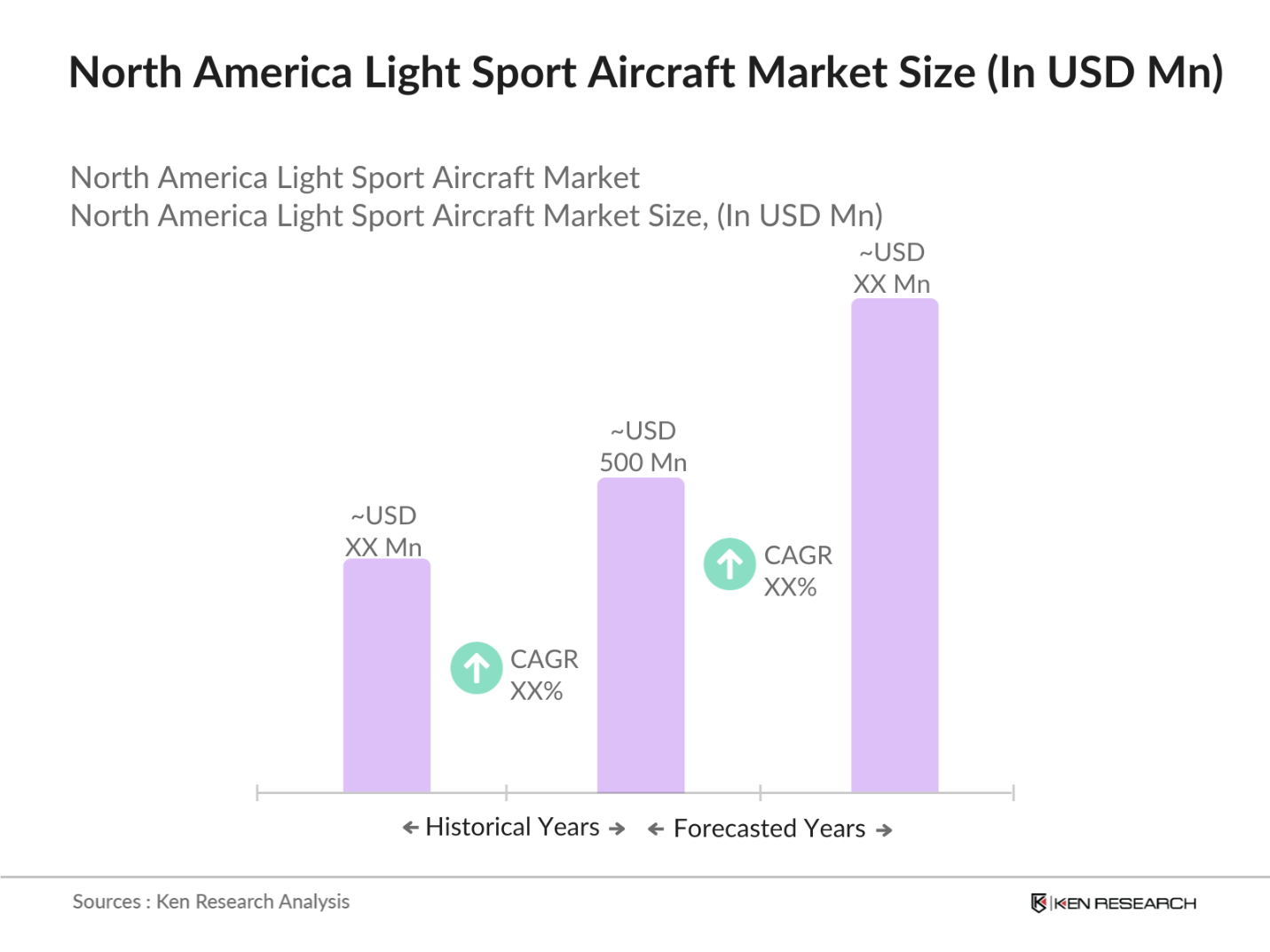
- The North America Light Sport Aircraft (LSA) market is valued at USD 500 million, based on a detailed historical analysis. This market is driven by the increasing demand for recreational flying, pilot training, and advancements in aircraft technology, especially electric propulsion systems. The growing interest in personal and sport aviation is further augmented by technological advancements, resulting in more fuel-efficient and environmentally friendly aircraft. Additionally, the rise of lightweight material innovations is contributing to the growth of the market. These factors are fueling the ongoing expansion of the LSA sector, ensuring steady market growth.
- The market dominance is particularly pronounced in countries like the United States and Canada. The United States leads due to its strong aviation infrastructure, supportive government regulations, and a well-established pilot training ecosystem. Additionally, a robust presence of LSA manufacturers and a large number of flight schools contribute to the U.S. dominance. Canada follows closely, owing to its expansive recreational aviation sector and favorable policies promoting personal flying experiences.
- Advances in avionics systems, including autopilot and enhanced navigation tools, are becoming standard in LSAs. By 2024, 65% of new LSA models sold in North America featured integrated glass cockpits, according to FAA records. These systems enhance flight safety and ease of use, particularly for less experienced pilots. In addition, the integration of automated flight technologies, such as collision avoidance systems, is expected to further improve operational safety. The widespread adoption of these technologies is driven by increased consumer demand for high-tech, easy-to-operate aircraft in both recreational and training segments.
North America Light Sport Aircraft Market Segmentation
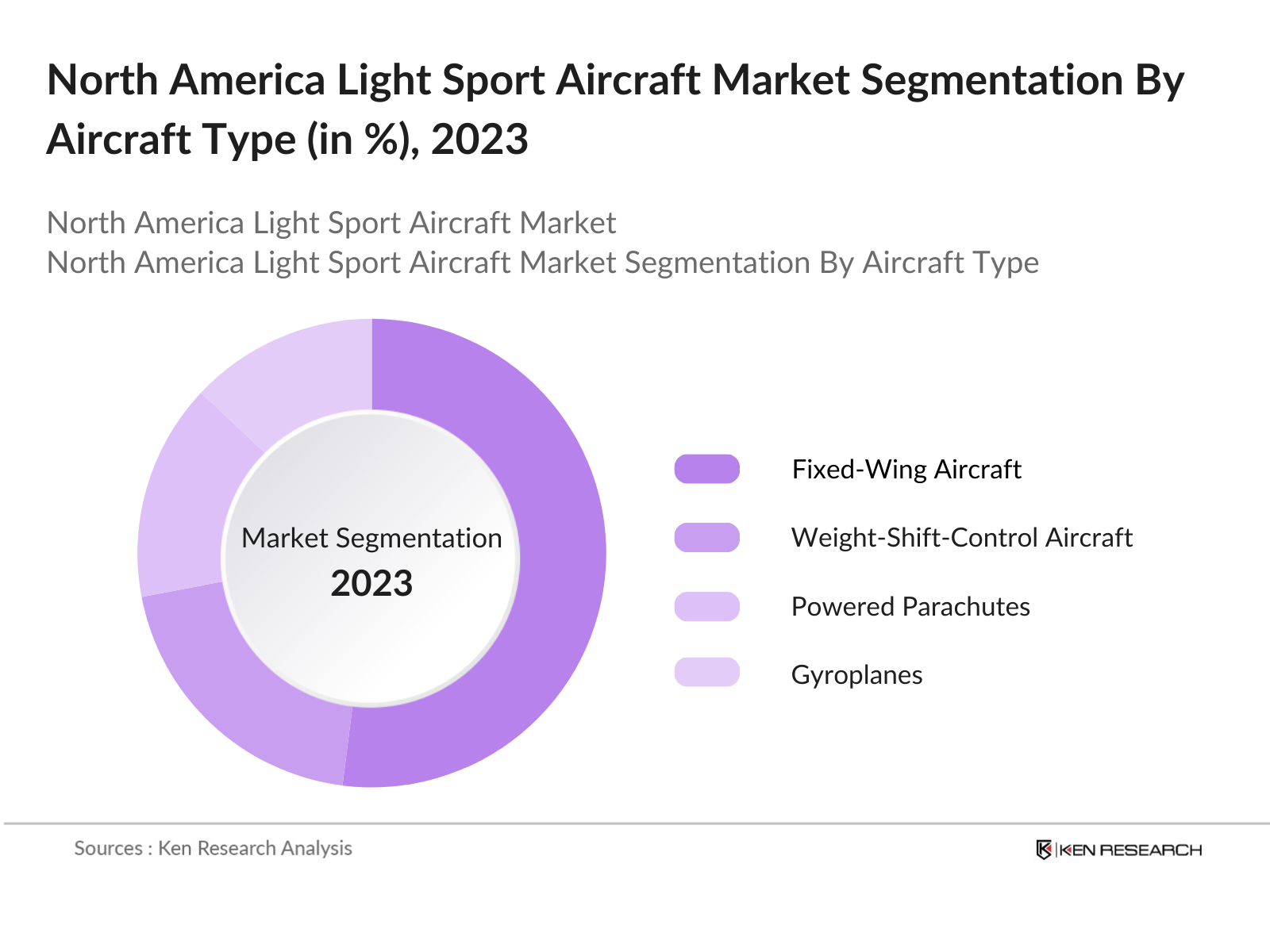
By Aircraft Type: The North America LSA market is segmented by aircraft type into fixed-wing aircraft, weight-shift-control aircraft, powered parachutes, and gyroplanes. Fixed-wing aircraft currently hold the dominant market share due to their versatility and widespread usage in both recreational and training purposes. Fixed-wing LSAs are popular because of their higher flight efficiency, range, and ability to operate under a variety of weather conditions. Manufacturers like CubCrafters Inc. and ICON Aircraft have established themselves as leaders in this segment, continually innovating to meet consumer demands for reliable and performance-oriented aircraft.
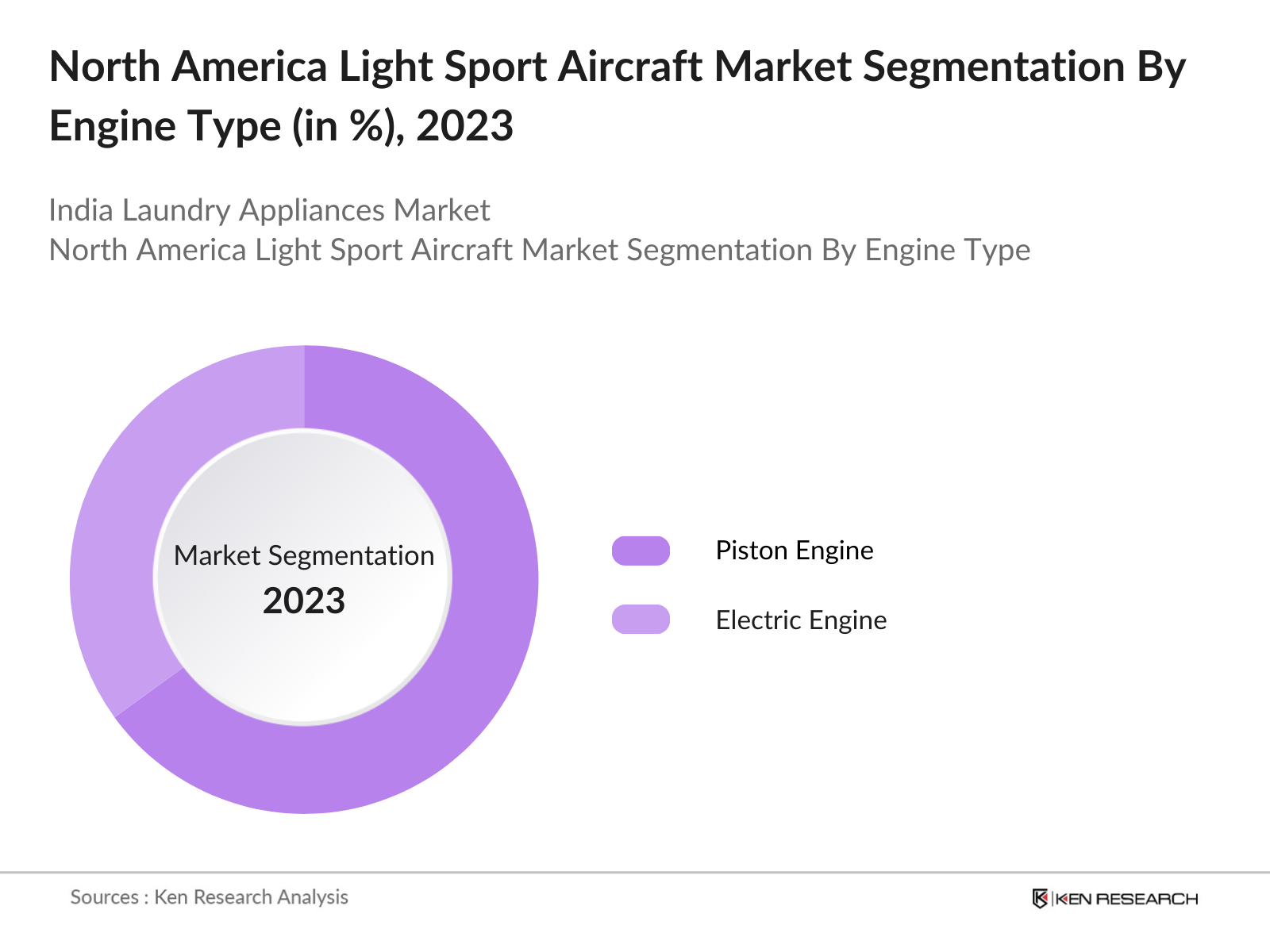
By Engine Type: The market is also segmented by engine type into piston engines and electric engines. Piston engines dominate the market due to their long-established use in LSAs, reliability, and the extensive infrastructure supporting their maintenance and operation. The piston engine technology has matured significantly, offering users more cost-efficient maintenance compared to newer alternatives. However, electric engines are gaining traction as sustainability becomes a key driver in the aviation sector, and manufacturers begin to focus more on developing electric-powered LSAs.
North America Light Sport Aircraft Market Competitive Landscape
The North America LSA market is characterized by a combination of well-established players and emerging manufacturers, all vying for a larger market share. Major players in the market are focusing on technological innovations, expanding product lines, and strategic partnerships to strengthen their market position. The competitive landscape is marked by both global and regional manufacturers. For instance, CubCrafters Inc. dominates with its extensive range of fixed-wing aircraft, while ICON Aircraft leads in amphibious light sport planes.
|
Company Name |
Establishment Year |
Headquarters |
Fleet Size |
Product Line |
R&D Investments |
Global Presence |
Partnerships |
Certifications |
Environmental Policies |
|
CubCrafters Inc. |
1980 |
Yakima, Washington |
_ |
_ |
_ |
_ |
_ |
_ |
_ |
|
ICON Aircraft |
2005 |
Vacaville, California |
_ |
_ |
_ |
_ |
_ |
_ |
_ |
|
Tecnam Aircraft |
1948 |
Capua, Italy |
_ |
_ |
_ |
_ |
_ |
_ |
_ |
|
Flight Design GmbH |
1988 |
Eisenach, Germany |
_ |
_ |
_ |
_ |
_ |
_ |
_ |
|
Pipistrel d.o.o. |
1987 |
Ajdovina, Slovenia |
_ |
_ |
_ |
_ |
_ |
_ |
_ |
North America Light Sport Aircraft Industry Analysis
Growth Drivers
- Recreational Aviation Demand: Recreational aviation has grown significantly in North America, especially among private enthusiasts seeking affordable aircraft for personal use. The FAA recorded 20,000 light sport aircraft (LSA) registered in the U.S. by 2023, a sharp rise driven by a growing aviation culture. These aircraft are favored due to their lower operational costs and ease of piloting under a sport pilot license. This segment also benefits from the increased purchasing power in North America, with the U.S. GDP standing at $26.9 trillion in 2024, enhancing disposable income for leisure activities such as recreational flying.
- Rising Adoption of Electric Light Sport Aircraft: Electric light sport aircraft (e-LSA) are gaining traction, supported by advances in battery technology and sustainability goals. In 2023, the U.S. Department of Energy reported advancements in battery energy density reaching 260 Wh/kg, a critical factor for enabling longer flight times in e-LSA. With ongoing investments in clean energy, the U.S. government has allocated $9 billion for clean aviation technologies in its latest budget. This push has accelerated the adoption of electric propulsion systems, positioning electric LSAs as a sustainable solution in line with the energy sector's shift toward renewable sources.
- Government Initiatives and Regulations: The FAAs regulatory framework is favorable for LSA growth, promoting accessibility and safety. In 2024, the FAA simplified its sport pilot license requirements, making it easier for new pilots to operate LSAs. This regulatory ease has directly impacted the LSA market, with the issuance of over 16,000 sport pilot certificates by mid-2024. Additionally, the Canadian aviation authority has been working on harmonizing regulations with the U.S. to streamline cross-border operations of LSAs, facilitating market expansion throughout North America. These governmental efforts support the industry's accessibility and operational feasibility.
Market Challenges
- Safety Concerns in Airworthiness: Despite their appeal, LSAs have faced concerns over airworthiness and safety, with the NTSB reporting 245 incidents involving LSAs in 2023. These incidents mainly arise from pilot error and mechanical failures. Ensuring stringent safety checks and proper pilot training are essential to mitigating these risks. The FAA has introduced new maintenance guidelines for LSAs, mandating more frequent inspections and tougher compliance checks, aiming to reduce accident rates. However, consumer concerns over safety continue to pose challenges for broader market acceptance.
- High Manufacturing Costs: Manufacturing LSAs, particularly electric models, involves high upfront costs, especially due to expensive battery technology. A report by the U.S. Department of Commerce in 2024 highlighted that the cost of producing lithium-ion batteries, crucial for electric aircraft, stood at $137 per kWh. While this reflects a decrease over the years, it still represents a significant portion of production costs, limiting affordability for consumers. Moreover, the inflation rate in the U.S., which reached 3.8% in 2024, has further increased the cost of raw materials, posing challenges for manufacturers aiming to reduce prices.
North America Light Sport Aircraft Market Future Outlook
Over the next five years, the North America Light Sport Aircraft market is expected to see significant growth, driven by the continuous development of electric propulsion technology, increased investment in aviation infrastructure, and a rise in recreational flying. The demand for personal flying experiences is likely to increase as more people seek alternative modes of transportation and leisure activities, especially post-pandemic. The growing pilot training sector, driven by the global shortage of commercial pilots, is also expected to boost the LSA market.
Opportunities
- Technological Advancements in Electric Propulsion: Electric propulsion technology has shown rapid advancement, opening new opportunities for LSA manufacturers. By 2024, battery efficiency has reached levels where electric LSAs can achieve up to 180 miles of range, according to data from the U.S. Department of Energy. This is a significant improvement from earlier models, making electric LSAs more viable for recreational flying. Moreover, ongoing research in solid-state batteries, supported by a $2 billion U.S. government investment in 2023, aims to further increase energy density, potentially doubling the flight range of electric LSAs in the near future.
- Growth of Urban Air Mobility: Urban air mobility (UAM) is a growing sector, with cities exploring new modes of transportation to reduce road congestion. According to the U.S. Department of Transportation, pilot UAM programs in New York and Los Angeles began testing electric vertical takeoff and landing (eVTOL) aircraft in 2023, with LSAs considered a viable solution for short-range urban transport. The U.S. government allocated $5 billion for urban air mobility research in its 2023 budget, highlighting the potential for LSAs to play a role in this expanding market. LSAs versatility makes them well-suited for urban and suburban mobility solutions.
Scope of the Report
|
Aircraft Type |
Fixed-Wing, Weight-Shift-Control Powered Parachutes Gyroplanes |
|
Engine Type |
Piston Engine Electric Engine |
|
Application |
Recreation Flight Training Aerial Observation |
|
Material Type |
Composite Materials Aluminum Alloy Others |
|
Region |
United States Canada Mexico |
Products
Key Target Audience
Aircraft Companies
Aviation Schools and Training Industry
Pilots and Aviation Companies
Aircraft Leasing Companies
Aviation Component companies
Government and Regulatory Bodies (FAA, Transport Canada)
Investors and Venture Capitalist Firms
Electric Aircraft Technology Companies
Companies
Major Players in the North America LSA Market
CubCrafters Inc.
ICON Aircraft
Vashon Aircraft
Progressive Aerodyne, Inc.
Flight Design General Aviation GmbH
Tecnam Aircraft
Pipistrel d.o.o.
Aeropro s.r.o.
Rans Designs, Inc.
American Legend Aircraft Company
BRM Aero
Zenith Aircraft Company
Jabiru Aircraft Pty Ltd.
TL Ultralight s.r.o.
Kitfox Aircraft LLC
Table of Contents
1. North America Light Sport Aircraft Market Overview
1.1. Definition and Scope
1.2. Market Taxonomy
1.3. Market Growth Rate
1.4. Market Segmentation Overview
2. North America Light Sport Aircraft Market Size (In USD Bn)
2.1. Historical Market Size
2.2. Year-On-Year Growth Analysis
2.3. Key Market Developments and Milestones
3. North America Light Sport Aircraft Market Analysis
3.1. Growth Drivers
3.1.1. Recreational Aviation Demand (Consumer Trends)
3.1.2. Rising Adoption of Electric Light Sport Aircraft (Technology Trends)
3.1.3. Government Initiatives and Regulations (Regulatory Impact)
3.1.4. Increasing Pilot Training Demand (Pilot License Growth)
3.2. Market Challenges
3.2.1. Safety Concerns in Airworthiness (Operational Risks)
3.2.2. High Manufacturing Costs (Cost Constraints)
3.2.3. Limited Aircraft Range (Technology Limitation)
3.2.4. Strict Regulatory Certifications (Compliance Barriers)
3.3. Opportunities
3.3.1. Technological Advancements in Electric Propulsion (Innovation Potential)
3.3.2. Growth of Urban Air Mobility (Market Expansion)
3.3.3. Pilot Shortage and Training Opportunities (Aviation Education Sector)
3.3.4. Lightweight Material Innovations (Manufacturing Sector)
3.4. Trends
3.4.1. Integration of Advanced Avionics (Tech Integration)
3.4.2. Growth in Use of Composite Materials (Material Science)
3.4.3. Increasing Use of Simulation Training (Training Solutions)
3.4.4. Focus on Eco-Friendly Aircraft Solutions (Sustainability Focus)
3.5. Government Regulation
3.5.1. FAA Regulations for Light Sport Aircraft (North American Regulatory Framework)
3.5.2. Light Sport Aircraft Certification Standards (Compliance Guidelines)
3.5.3. Incentives for Sustainable Aviation (Subsidies & Incentives)
3.5.4. Cross-Border Certification Procedures (International Compliance)
3.6. SWOT Analysis
3.7. Stakeholder Ecosystem
3.7.1. Aircraft Manufacturers
3.7.2. Component Suppliers
3.7.3. Aviation Schools
3.7.4. Regulatory Authorities
3.8. Porters Five Forces Analysis
3.9. Competition Ecosystem (Competition Parameters: Market Penetration, Product Development, Strategic Collaborations)
4. North America Light Sport Aircraft Market Segmentation
4.1. By Aircraft Type (In Value %)
4.1.1. Fixed-Wing Aircraft
4.1.2. Weight-Shift-Control Aircraft
4.1.3. Powered Parachutes
4.1.4. Gyroplanes
4.2. By Engine Type (In Value %)
4.2.1. Piston Engine
4.2.2. Electric Engine
4.3. By Application (In Value %)
4.3.1. Recreation
4.3.2. Flight Training
4.3.3. Aerial Observation
4.4. By Material Type (In Value %)
4.4.1. Composite Materials
4.4.2. Aluminum Alloy
4.4.3. Others
4.5. By Region (In Value %)
4.5.1. United States
4.5.2. Canada
4.5.3. Mexico
5. North America Light Sport Aircraft Competitive Analysis
5.1. Detailed Profiles of Major Companies
5.1.1. CubCrafters Inc.
5.1.2. ICON Aircraft
5.1.3. Vashon Aircraft
5.1.4. Progressive Aerodyne, Inc.
5.1.5. Flight Design General Aviation GmbH
5.1.6. Tecnam Aircraft
5.1.7. Pipistrel d.o.o.
5.1.8. Aeropro s.r.o.
5.1.9. Rans Designs, Inc.
5.1.10. American Legend Aircraft Company
5.1.11. BRM Aero
5.1.12. Zenith Aircraft Company
5.1.13. Jabiru Aircraft Pty Ltd.
5.1.14. TL Ultralight s.r.o.
5.1.15. Kitfox Aircraft LLC
5.2. Cross Comparison Parameters (Fleet Size, Aircraft Types Offered, Global Presence, Manufacturing Capacity, Partnerships, Certifications, R&D Investments, Environmental Policies)
5.3. Market Share Analysis
5.4. Strategic Initiatives
5.5. Mergers And Acquisitions
5.6. Investment Analysis
5.7. Venture Capital Funding
5.8. Government Grants
5.9. Private Equity Investments
6. North America Light Sport Aircraft Regulatory Framework
6.1. Aircraft Certification Standards
6.2. Operational Airworthiness Requirements
6.3. Training and Licensing Regulations
6.4. Environmental Compliance for Aircraft Emissions
7. North America Light Sport Aircraft Future Market Size (In USD Bn)
7.1. Future Market Size Projections
7.2. Key Factors Driving Future Market Growth
8. North America Light Sport Aircraft Future Market Segmentation
8.1. By Aircraft Type (In Value %)
8.2. By Engine Type (In Value %)
8.3. By Application (In Value %)
8.4. By Material Type (In Value %)
8.5. By Region (In Value %)
9. North America Light Sport Aircraft Market Analysts Recommendations
9.1. Total Addressable Market (TAM) / Serviceable Addressable Market (SAM) / Serviceable Obtainable Market (SOM) Analysis
9.2. Customer Cohort Analysis
9.3. Marketing Initiatives
9.4. White Space Opportunity Analysis
Research Methodology
Step 1: Identification of Key Variables
In this phase, we mapped the North American LSA market ecosystem, identifying key stakeholders such as manufacturers, aviation schools, and component suppliers. Our approach was backed by extensive desk research, using both secondary and proprietary databases to gather comprehensive industry-level information, with a focus on key drivers, challenges, and opportunities within the market.
Step 2: Market Analysis and Construction
We analyzed historical data to construct a comprehensive view of the market, including the penetration of LSAs and revenue generation. By evaluating factors such as market size, the ratio of recreational to training aircraft, and pilot licensing trends, we ensured accurate revenue estimates and projections.
Step 3: Hypothesis Validation and Expert Consultation
Hypotheses regarding market growth, technological trends, and pilot demand were validated through interviews with industry experts, including LSA manufacturers and aviation school administrators. These consultations helped refine market forecasts and insights.
Step 4: Research Synthesis and Final Output
In this final step, we engaged with aircraft manufacturers to obtain insights into sales performance, consumer preferences, and the impact of technological innovations. The data was corroborated using a bottom-up approach to provide a comprehensive analysis of the North America LSA market.
Frequently Asked Questions
1. How big is the North America Light Sport Aircraft Market?
The North America Light Sport Aircraft market is valued at USD 500 million, driven by increasing demand for recreational flying and advancements in aircraft technology.
2. What are the challenges in the North America LSA Market?
Challenges include high manufacturing costs, stringent regulatory certifications, and limitations in aircraft range, which affect the markets growth.
3. Who are the major players in the North America LSA Market?
Key players include CubCrafters Inc., ICON Aircraft, Tecnam Aircraft, Flight Design GmbH, and Pipistrel d.o.o., all of which dominate the market due to their innovation and market presence.
4. What are the growth drivers of the North America LSA Market?
Growth is driven by increased demand for personal flying experiences, advancements in electric propulsion, and supportive government regulations promoting recreational aviation.
Why Buy From Us?

What makes us stand out is that our consultants follows Robust, Refine and Result (RRR) methodology. i.e. Robust for clear definitions, approaches and sanity checking, Refine for differentiating respondents facts and opinions and Result for presenting data with story

We have set a benchmark in the industry by offering our clients with syndicated and customized market research reports featuring coverage of entire market as well as meticulous research and analyst insights.

While we don't replace traditional research, we flip the method upside down. Our dual approach of Top Bottom & Bottom Top ensures quality deliverable by not just verifying company fundamentals but also looking at the sector and macroeconomic factors.

With one step in the future, our research team constantly tries to show you the bigger picture. We help with some of the tough questions you may encounter along the way: How is the industry positioned? Best marketing channel? KPI's of competitors? By aligning every element, we help maximize success.

Our report gives you instant access to the answers and sources that other companies might choose to hide. We elaborate each steps of research methodology we have used and showcase you the sample size to earn your trust.

If you need any support, we are here! We pride ourselves on universe strength, data quality, and quick, friendly, and professional service.