
North America Luxury Goods Market Outlook to 2030
Region:North America
Author(s):Shreya Garg
Product Code:KROD8220
December 2024
88
About the Report
North America Luxury Goods Market Overview
- The North America luxury goods market is valued at USD 102 billion, based on a detailed five-year historical analysis. This market is driven by a rise in disposable incomes, a growing class of high-net-worth individuals, and increased spending on premium goods. The appeal of luxury brands is further amplified by the cultural integration of luxury into aspirational living, amplified by social medias influence on consumer behavior and the expansion of digital sales channels for luxury products. This has set a foundation for consistent growth in the luxury sector.
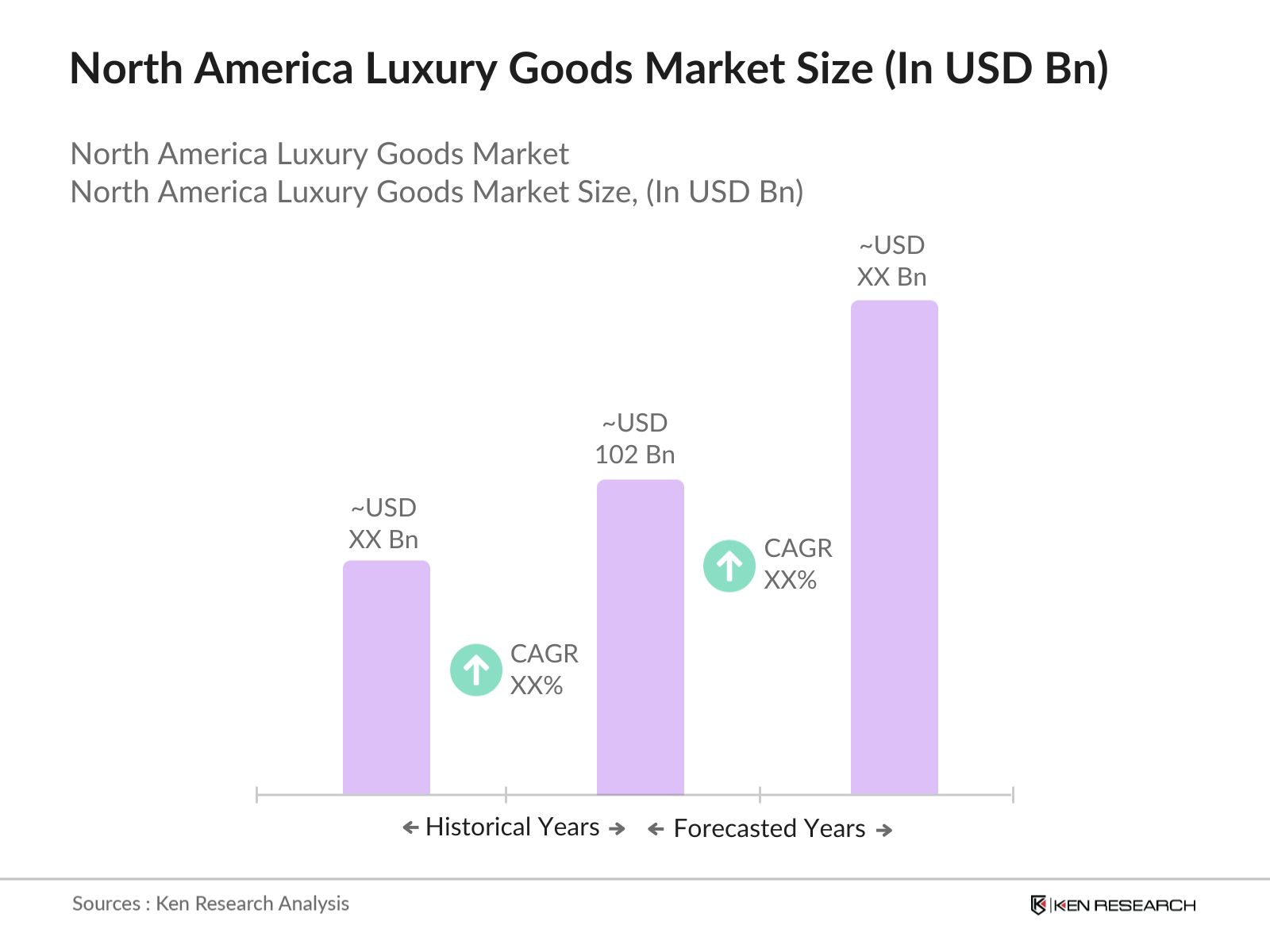
- The United States is the dominant region in North America's luxury goods market, primarily due to its large consumer base with high disposable income levels and a prominent culture of luxury consumption. Cities like New York and Los Angeles are major hubs, hosting flagship stores for globally recognized luxury brands and being prime locations for affluent consumers and tourists. Canada also holds a significant share, particularly in metropolitan areas like Toronto, where there is a rising demand for luxury products among high-net-worth individuals and a growing interest in sustainable luxury goods.
- Luxury goods in North America are subject to stringent import and export regulations, impacting pricing and supply chains. The U.S. Customs and Border Protection agency enforces compliance, with penalties for non-compliance reaching over $300 million in 2023 alone. This regulatory landscape requires luxury brands to manage complex logistics, ensuring that all products meet North American compliance standards, impacting operational costs and pricing strategies
North America Luxury Goods Market Segmentation
By Product Type: The market is segmented by product type into apparel and footwear, accessories, beauty and personal care, luxury vehicles, and home and lifestyle goods. Recently, luxury apparel and footwear hold a dominant market share in North America, supported by established brands like Gucci and Louis Vuitton, which have fostered high brand loyalty. These products enjoy substantial demand among younger, affluent consumers, driven by exclusive designs and limited-edition releases that heighten their appeal in the market. 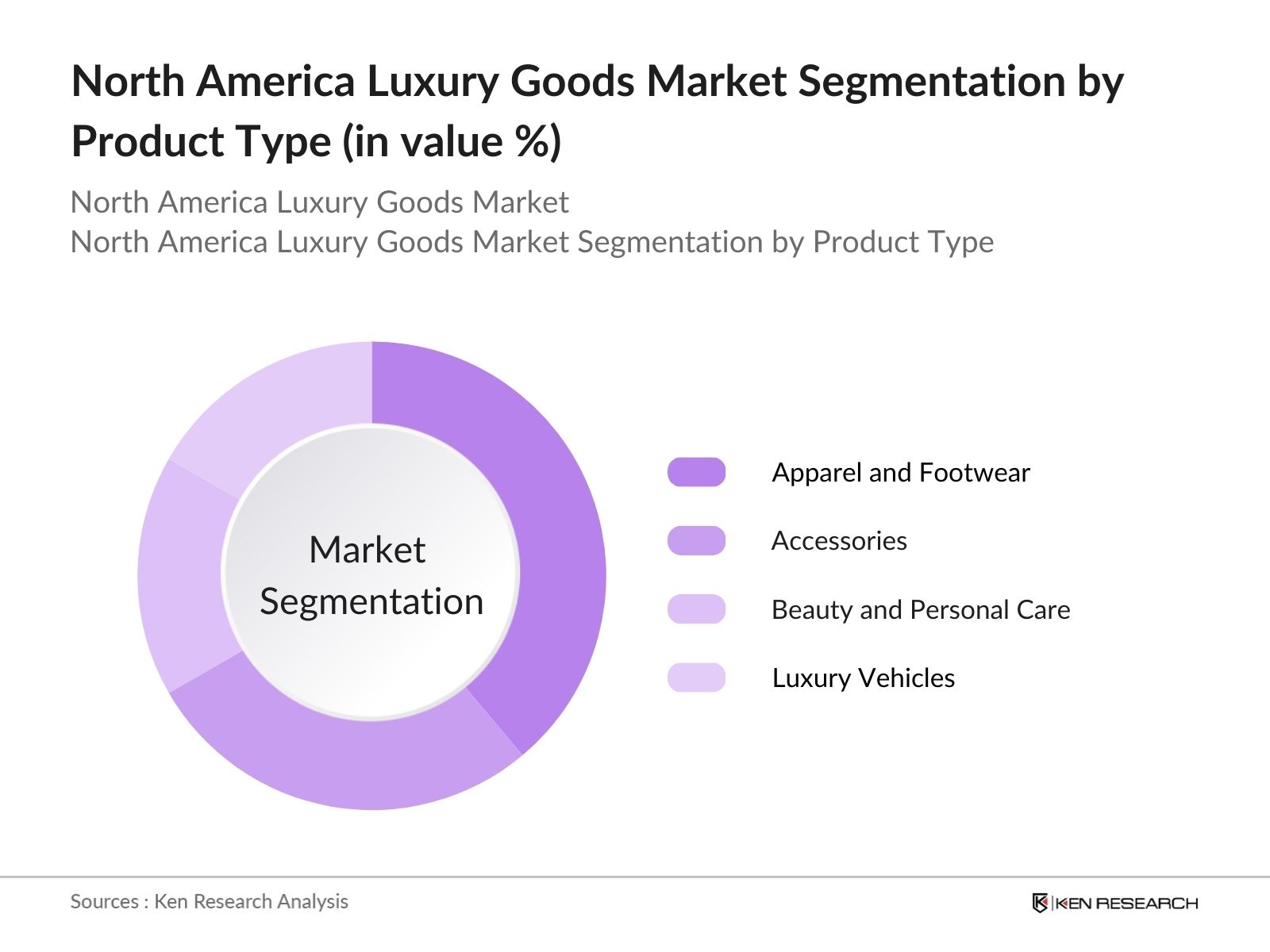
By Distribution Channel: The distribution channels are categorized into offline, online, and omnichannel. Offline channels, particularly luxury brand-owned flagship stores, continue to lead in market share. The immersive shopping experiences and personalized customer service offered at these physical locations strengthen brand identity and loyalty among consumers, which remains a crucial factor in the appeal of luxury goods despite the rise of e-commerce options. 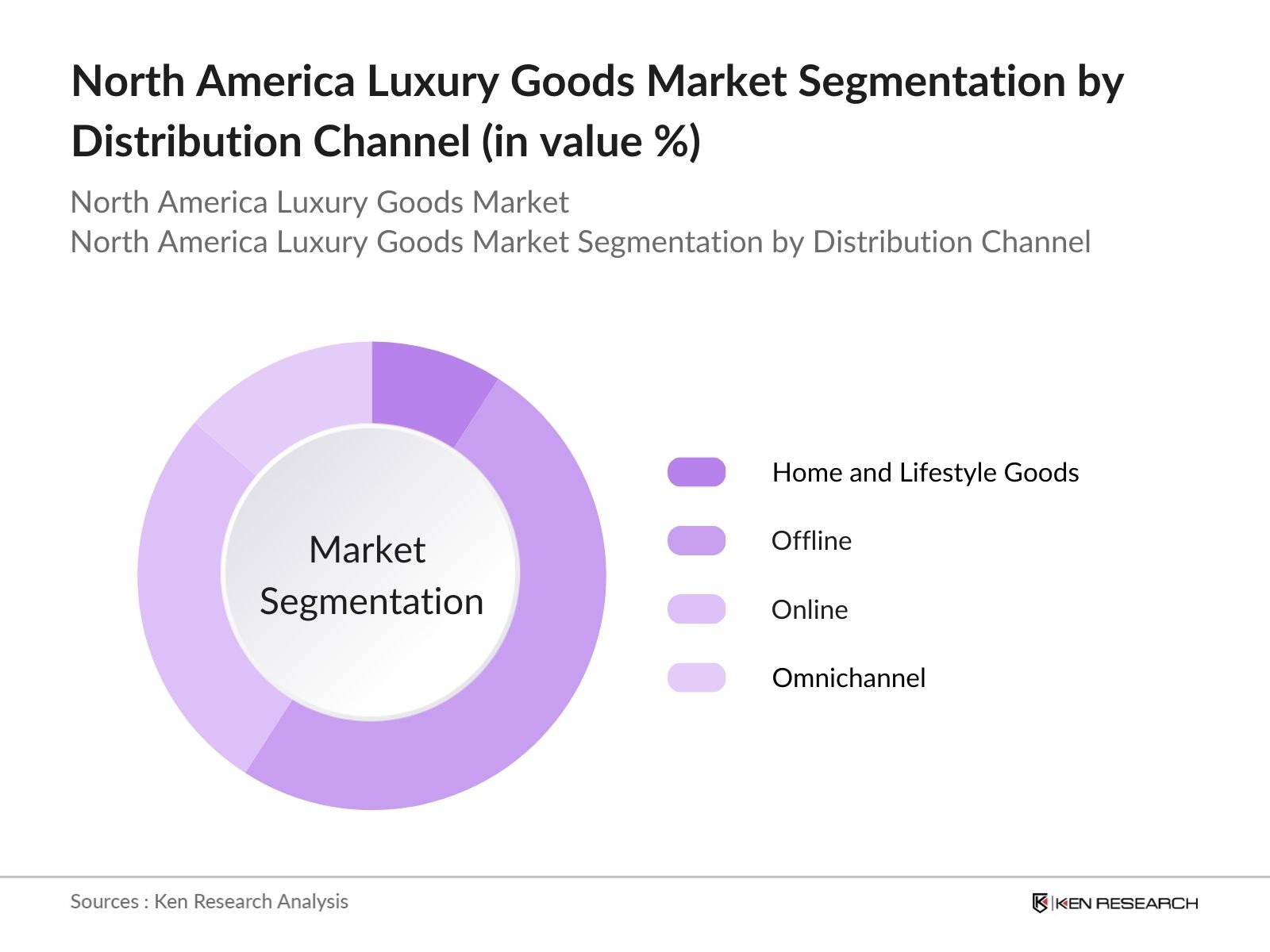
North America Luxury Goods Market Competitive Landscape
The North American luxury goods market is characterized by strong competition, with key players dominating through brand equity, extensive retail presence, and digital strategies. Luxury brands like LVMH and Chanel capitalize on brand heritage, exclusivity, and a robust omnichannel approach to maintain market positioning. High consumer loyalty and brand exclusivity have driven these brands to the forefront of the market.
|
Company |
Establishment Year |
Headquarters |
Market Focus |
Product Range |
Revenue (USD Mn) |
E-commerce Adoption |
Sustainability Initiatives |
Regional Presence |
|
LVMH |
1987 |
Paris, France |
||||||
|
Chanel |
1910 |
Paris, France |
||||||
|
Richemont |
1988 |
Geneva, Switzerland |
||||||
|
Gucci (Kering Group) |
1921 |
Florence, Italy |
||||||
|
Rolex |
1905 |
Geneva, Switzerland |
North America Luxury Goods Industry Analysis
Growth Drivers
- Increase in Disposable Income: The increase in disposable income across North America has significantly impacted the luxury goods market, with notable spending trends among high-income households. In the U.S., data from the Bureau of Economic Analysis indicates a 2.6% increase in real disposable personal income from 2022 to 2023, adding substantial purchasing power for luxury goods. This surge is driven by economic stability in regions like Canada and the U.S., where individual incomes have shown upward mobility, especially in the top 20% income bracket, which controls approximately 50% of total spending.
- Rise in High-Net-Worth Individuals: North America continues to host a growing base of high-net-worth individuals (HNWIs), intensifying demand for luxury goods. The U.S. Department of Treasury reports over 23 million HNWIs in 2023, driven by gains in the financial and technology sectors, which contributed over $3 trillion to individual wealth last year alone. The impact is apparent in luxury spending behaviors, with these individuals favoring high-end brands for exclusivity and social status. Canada has also seen HNWI growth, further solidifying North America as a core luxury market region.
- Digital Penetration: Luxury retail is embracing e-commerce, accelerated by the digital readiness in North America. The International Telecommunication Union (ITU) notes that in 2023, 92% of Americans and 90% of Canadians had internet access, allowing luxury brands to leverage e-commerce for reaching high-income consumers efficiently. The U.S. Census Bureau reports e-commerce sales of $1.03 trillion for 2023, marking a clear shift toward online luxury retail, especially in urban centers where digital transactions for high-end goods surged by 8.9% from 2022 to 2023.
Market Challenges
- Counterfeit Product Proliferation: Counterfeit luxury products pose a challenge, with U.S. Customs and Border Protection seizing over $1.1 billion worth of counterfeit goods in 2023 alone, a significant portion of which were luxury items. The influx of fake products, primarily from China and Southeast Asia, has pressured luxury brands to intensify anti-counterfeit measures. This issue not only affects brand reputation but also translates to substantial economic losses for legitimate luxury brands.
- Economic Downturn Impact: Economic fluctuations in North America can hinder luxury spending, with recent inflationary pressures impacting discretionary income levels. According to the Bureau of Economic Analysis, U.S. inflation reached 5.5% in 2023, reducing disposable income by 0.9% across middle-income households. This reduction influences luxury brands, as more consumers limit spending on non-essential high-end items during economic uncertainty.
North America Luxury Goods Market Future Outlook
The North America luxury goods market is poised for steady growth, driven by expanding disposable incomes, sustained demand from high-net-worth individuals, and the rise of eco-conscious luxury preferences. In addition, technological integration into luxury shopping, such as virtual stores and augmented reality for enhanced consumer experiences, is expected to redefine the market dynamics. The growing trend towards personalization and sustainable luxury practices is likely to shape consumer preferences in the years ahead.
Future Market Opportunities
- Expanding Online Luxury Shopping Platforms: Online luxury shopping is booming in North America, with the U.S. Census Bureau reporting a 9% growth in high-end e-commerce sales in 2023. Enhanced digital infrastructure, especially in urban hubs, facilitates this trend, allowing luxury brands to expand their reach beyond brick-and-mortar. Digital luxury sales are further propelled by the ease of cross-border transactions within North America, setting a foundation for continued growth in online luxury shopping.
- Sustainable and Ethical Luxury Demand: With a clear shift toward ethical and sustainable products, luxury brands now have a substantial opportunity to cater to eco-conscious consumers. A recent U.S. Environmental Protection Agency report shows that 74% of North American luxury consumers prefer brands with transparent sustainability practices, creating a growing niche for ethically produced luxury items. This aligns with the current demand for eco-friendly materials in luxury fashion and accessories, supporting market expansion among conscious consumers.
Scope of the Report
|
Product Category |
Apparel and Footwear Accessories (Watches, Jewelry) Beauty and Personal Care Products Luxury Vehicles Home and Lifestyle Goods |
|
Consumer Demographics |
High-Net-Worth Individuals Millennials Generation Z Digital Natives |
|
Distribution Channel |
Offline (Flagship Stores, Department Stores) Online (Brand Websites, E-commerce Platforms) Omnichannel Sales |
|
Region |
United States Canada Mexico Regional Hubs (Key Cities) |
|
Price Range |
Entry-Level Luxury Mid-Tier Luxury High-End Luxury Ultra-Luxury Segment |
Products
Key Target Audience
High-Net-Worth Individuals
Investor and Venture Capitalist Firms
Government and Regulatory Bodies (e.g., Department of Commerce, Federal Trade Commission)
Luxury Retailers and Boutiques
Online Luxury Platforms and E-commerce Providers
Hospitality Chains and Luxury Hotels
Digital and Social Media Marketing Firms
Environmental Advocacy Groups (focused on sustainable luxury)
Companies
Major Players
LVMH
Chanel
Richemont
Gucci (Kering Group)
Rolex
Tiffany & Co.
Prada Group
Burberry
Tesla, Inc.
Cartier
Herms
Ralph Lauren
Estee Lauder
Bvlgari
Ferrari
Table of Contents
North America Luxury Goods Market Overview
Definition and Scope
Market Taxonomy
Growth Rate and Forecasts
Overview of Market Segmentation
North America Luxury Goods Market Size (in USD Mn)
Historical Market Size Analysis
Year-on-Year Growth Analysis
Key Developments and Milestones in Market
North America Luxury Goods Market Analysis
Growth Drivers
Increase in Disposable Income
Rise in High-Net-Worth Individuals
Digital Penetration (E-commerce Dynamics)
Influence of Social Media on Brand Perception
Market Challenges
Counterfeit Product Proliferation
Economic Downturn Impact
High Import Duties
Evolving Consumer Preferences
Opportunities
Expanding Online Luxury Shopping Platforms
Sustainable and Ethical Luxury Demand
Cross-Border E-commerce Expansion
Trends
Demand for Limited-Edition and Customized Products
Growth in Pre-Owned Luxury Market
Shift towards Experiential Luxury (Travel, Wellness)
Government Regulations
Import and Export Compliance
Counterfeit Product Prevention Measures
Sustainable Practice Regulations
North America Luxury Goods Market Segmentation
By Product Category (in Value %)
Apparel and Footwear
Accessories (Watches, Jewelry)
Beauty and Personal Care Products
Luxury Vehicles
Home and Lifestyle Goods
By Consumer Demographics (in Value %)
High-Net-Worth Individuals
Millennials
Generation Z
Digital Natives
By Distribution Channel (in Value %)
Offline (Flagship Stores, Department Stores)
Online (Brand Websites, E-commerce Platforms)
Omnichannel Sales
By Region (in Value %)
United States
Canada
Mexico
Regional Hubs (Key Cities)
By Price Range (in Value %)
Entry-Level Luxury
Mid-Tier Luxury
High-End Luxury
Ultra-Luxury Segment
North America Luxury Goods Market Competitive Analysis
Detailed Profiles of Major Companies
LVMH
Kering
Richemont
Estee Lauder
Ralph Lauren
Chanel
Gucci
Burberry
Prada Group
Tesla, Inc.
Rolex
Tiffany & Co.
Herms
Bvlgari
Cartier
Cross Comparison Parameters (Revenue, Headquarters Location, Market Segment Focus, Product Innovation Score, Digital Transformation Score, Regional Presence, Corporate Social Responsibility Initiatives, Employee Size)
Market Share Analysis
Strategic Initiatives and Investments
Mergers and Acquisitions
Capital Expenditure Trends
Partnerships and Collaborations
North America Luxury Goods Market Regulatory Framework
Import and Export Duties on Luxury Goods
Advertising Standards and Consumer Protection
Counterfeit Prevention Policies
Regulations on Sustainable Luxury Practices
Future Market Size of North America Luxury Goods Market (in USD Mn)
Forecasted Market Size
Drivers of Future Growth
Future Segmentation of North America Luxury Goods Market
By Product Category
By Consumer Demographics
By Distribution Channel
By Region
By Price Range
North America Luxury Goods Market Analysts Recommendations
TAM/SAM/SOM Analysis
Brand Loyalty Programs and Retention Strategies
Marketing and Digital Campaign Insights
Opportunity for White Space and Untapped Markets
Disclaimer
Contact Us
Research Methodology
Step 1: Identification of Key Variables
The research process starts with constructing an ecosystem map of all stakeholders in the North America luxury goods market. This initial step employs comprehensive desk research using secondary databases to identify critical variables such as demand drivers, consumer demographics, and distribution channels.
Step 2: Market Analysis and Construction
The second phase involves compiling and analyzing historical data related to market penetration and sales distribution. This includes examining sales channels, brand positioning, and revenue streams, focusing on how these elements shape overall market dynamics.
Step 3: Hypothesis Validation and Expert Consultation
Market hypotheses are developed based on initial data and validated through consultations with industry experts. These interviews provide insights on consumer behavior, market challenges, and emerging trends, enhancing the reliability of the gathered data.
Step 4: Research Synthesis and Final Output
The final phase synthesizes data and findings from primary and secondary sources, providing a comprehensive and validated report. This phase involves close collaboration with luxury brands to gather insights on consumer engagement, sales strategies, and product preferences.
Frequently Asked Questions
01 How big is the North America luxury goods market?
The North America luxury goods market is valued at USD 102 billion, with demand driven by a combination of disposable income growth, high-net-worth individuals, and luxury lifestyle integration.
02 What are the challenges in the North America luxury goods market?
Challenges in the North America luxury goods market include counterfeit product issues, high tariffs on imports, and a need for constant innovation to appeal to changing consumer preferences in luxury.
03 Who are the major players in the North America luxury goods market?
Key players in the North America luxury goods market include LVMH, Chanel, Gucci (Kering Group), Rolex, and Cartier. These brands dominate due to their brand heritage, extensive product portfolios, and strong distribution networks.
04 What factors drive growth in the North America luxury goods market?
Growth in the North America luxury goods market is fueled by rising disposable incomes, increased digital penetration in luxury sales, and consumer interest in sustainability and high-quality experiences.
05 Which distribution channel holds the largest share in the North America luxury goods market?
Offline channels, particularly flagship stores, hold the largest market share in the North America luxury goods market due to their personalized shopping experience, which is essential in luxury retail.
Why Buy From Us?

What makes us stand out is that our consultants follows Robust, Refine and Result (RRR) methodology. i.e. Robust for clear definitions, approaches and sanity checking, Refine for differentiating respondents facts and opinions and Result for presenting data with story

We have set a benchmark in the industry by offering our clients with syndicated and customized market research reports featuring coverage of entire market as well as meticulous research and analyst insights.

While we don't replace traditional research, we flip the method upside down. Our dual approach of Top Bottom & Bottom Top ensures quality deliverable by not just verifying company fundamentals but also looking at the sector and macroeconomic factors.

With one step in the future, our research team constantly tries to show you the bigger picture. We help with some of the tough questions you may encounter along the way: How is the industry positioned? Best marketing channel? KPI's of competitors? By aligning every element, we help maximize success.

Our report gives you instant access to the answers and sources that other companies might choose to hide. We elaborate each steps of research methodology we have used and showcase you the sample size to earn your trust.

If you need any support, we are here! We pride ourselves on universe strength, data quality, and quick, friendly, and professional service.