
North America Luxury Tourism Market Outlook to 2030
Region:Mexico
Author(s):Paribhasha Tiwari
Product Code:KROD5026
Region:Mexico
Author(s):Paribhasha Tiwari
Product Code:KROD5026
December 2024
96
Listen to the audio summary
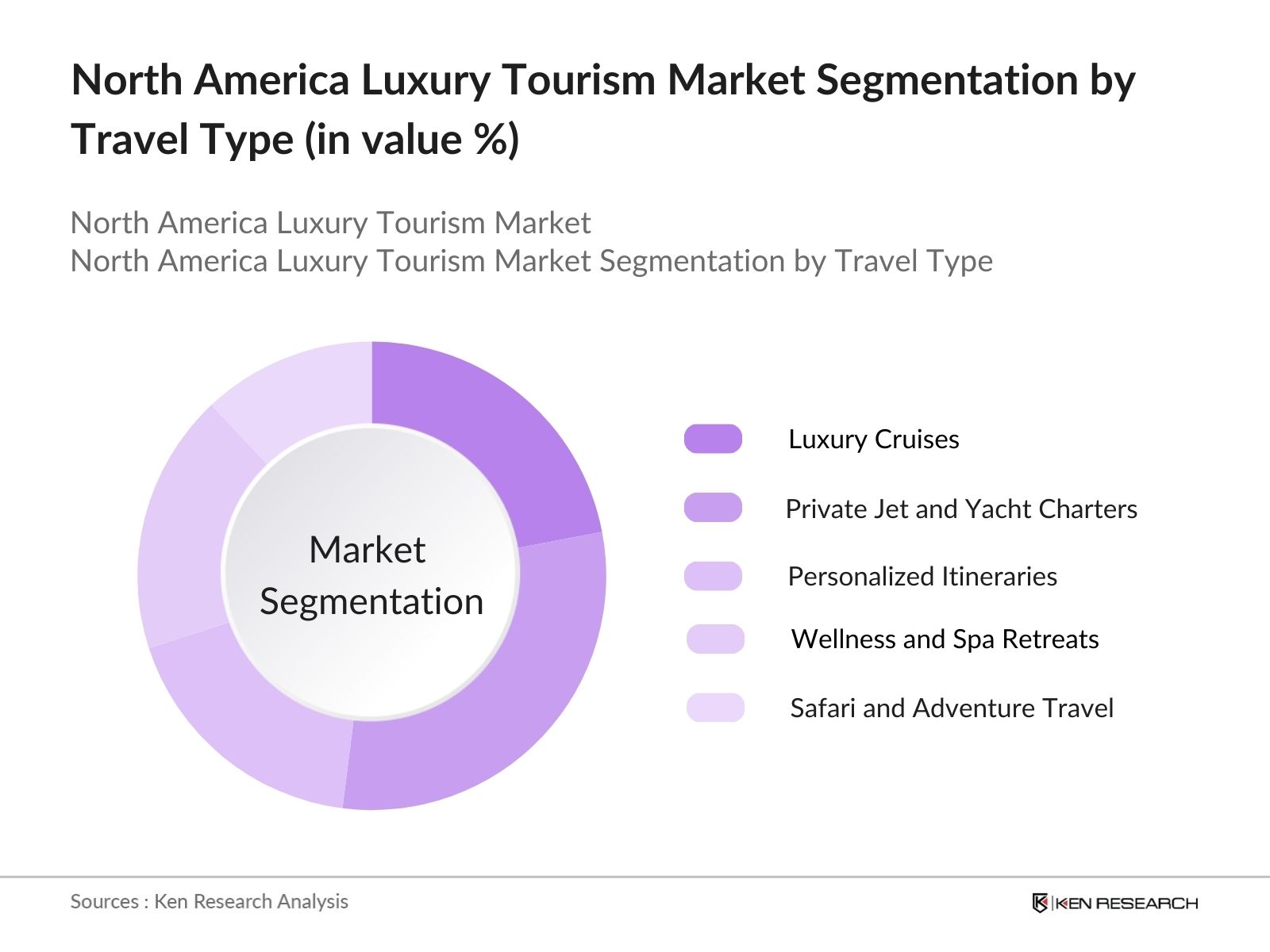
By Travel Type: The North America luxury tourism market is segmented by travel type into luxury cruises, private jet and yacht charters, personalized itineraries and custom tours, safari and adventure luxury travel, and wellness and spa retreats. Recently, private jet and yacht charters hold a dominant market share in North America under the segmentation of travel type. This is due to an increasing demand for privacy and exclusivity among affluent travelers. The convenience and comfort offered by private charters, along with tailored services such as onboard dining and bespoke travel itineraries, make this segment particularly attractive to ultra-high-net-worth individuals.
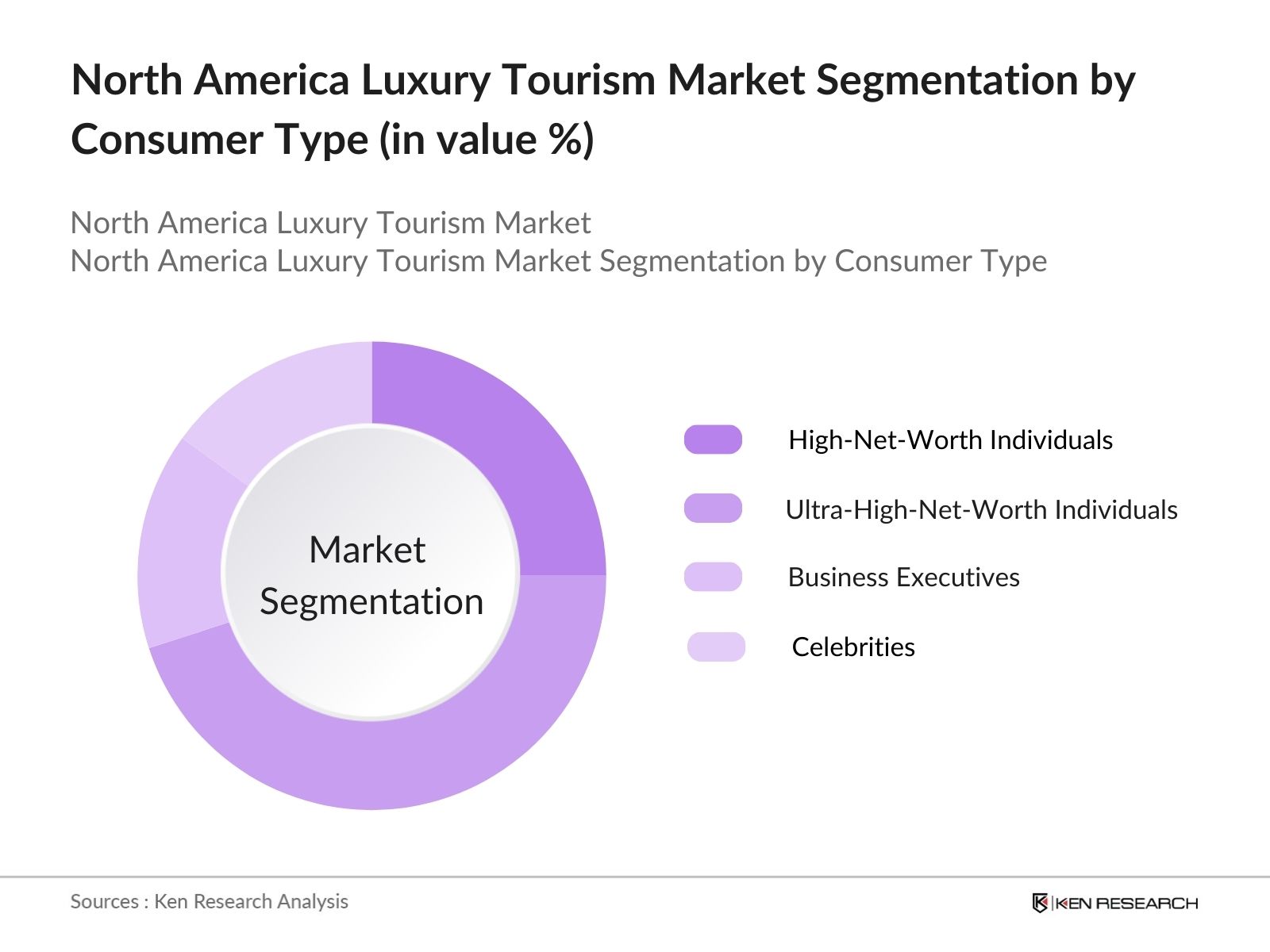
By Consumer Type: The market is also segmented by consumer type, which includes high-net-worth individuals (HNWIs), ultra-high-net-worth individuals (UHNWIs), business executives, and celebrities. Ultra-high-net-worth individuals dominate the market share under this segmentation, driven by their demand for hyper-personalized travel experiences, from exclusive resort stays to luxury safari tours. UHNWIs typically spend more on travel, seeking exclusivity, privacy, and highly tailored services. They are drawn to unique offerings such as private island rentals and bespoke travel experiences that are tailored to their specific preferences.
The North America luxury tourism market is dominated by a few key players, including global hotel chains, luxury travel agencies, and private jet charter companies. These companies focus on offering customized, high-end services to a wealthy clientele, and the market is highly competitive due to the demand for exclusivity and unique travel experiences.
|
Company Name |
Establishment Year |
Headquarters |
Luxury Properties |
No. of Employees |
Revenue (USD) |
Exclusive Partnerships |
Customer Retention Rate |
No. of Private Charters |
Personalized Concierge Services |
|
Marriott International |
1927 |
Maryland, USA |
- | - | - | - | - | - | - |
|
Four Seasons Hotels |
1960 |
Toronto, Canada |
- | - | - | - | - | - | - |
|
Aman Resorts |
1988 |
Singapore |
- | - | - | - | - | - | - |
|
NetJets |
1964 |
Columbus, USA |
- | - | - | - | - | - | - |
|
Abercrombie & Kent |
1962 |
Chicago, USA |
- | - | - | - | - | - | - |
The North America luxury tourism market is expected to experience robust growth in the coming years, driven by a rise in personalized travel experiences, increasing disposable incomes among HNWIs and UHNWIs, and the growing trend of wellness and eco-friendly tourism. Over the next five years, the industry is likely to expand further, with private jet and yacht charters continuing to grow due to the demand for privacy, exclusivity, and high-end tailored services.
|
By Travel Type |
Luxury Cruises Private Jet Charters Personalized Itineraries Safari Travel Wellness Retreats |
|
By Consumer Type |
High-Net-Worth Individuals Ultra-High-Net-Worth Individuals Business Executives Celebrities |
|
By Booking Channel |
Online Travel Agencies Direct Booking Travel Agents Mobile Applications |
|
By Destination Type |
Urban Luxury Island/Coastal Luxury Mountain/Adventure Luxury Cultural Destinations |
|
By Service Offering |
High-End Accommodations Personalized Concierge Private Transportation Exclusive Dining |
1.1. Definition and Scope
1.2. Market Taxonomy
1.3. Market Growth Rate
1.4. Market Segmentation Overview
2.1. Historical Market Size
2.2. Year-On-Year Growth Analysis
2.3. Key Market Developments and Milestones
3.1. Growth Drivers
3.1.1. Rising Disposable Income of High Net-Worth Individuals
3.1.2. Increasing Demand for Personalized Experiences
3.1.3. Expansion of Luxury Resorts and High-End Accommodations
3.1.4. Growth in Eco-Friendly and Sustainable Tourism
3.1.5. Partnerships with Global Luxury Brands
3.2. Market Challenges
3.2.1. High Operational Costs of Luxury Travel Services
3.2.2. Regulatory Challenges (Luxury Resort Zoning Laws)
3.2.3. Competition from Alternative Luxury Destinations (Europe, Asia)
3.2.4. Seasonal Fluctuations in Travel Demand
3.3. Opportunities
3.3.1. Growth of Experiential Travel (Adventure, Cultural, Culinary)
3.3.2. Technological Integration (Virtual Tours, Concierge Apps)
3.3.3. Expansion into Untapped Markets (Caribbean, Alaska)
3.3.4. Investment in Wellness and Retreat Tourism
3.4. Trends
3.4.1. Demand for Eco-Tourism and Sustainable Luxury Travel
3.4.2. Increased Focus on Privacy and Security for High-End Clients
3.4.3. Rise of Digital Nomads in the Luxury Segment
3.4.4. Customization and Hyper-Personalization of Travel Experiences
3.5. Government Regulation
3.5.1. Tourism Policies and Incentives
3.5.2. Visa Regulations for High-Spending Tourists
3.5.3. Environmental Regulations (Impact on Luxury Ecotourism)
3.6. SWOT Analysis
3.7. Stakeholder Ecosystem (Luxury Travel Agencies, Hotels, Airlines, Yacht Services)
3.8. Porters Five Forces
3.9. Competition Ecosystem
4.1. By Travel Type (In Value %)
4.1.1. Luxury Cruises
4.1.2. Private Jet and Yacht Charters
4.1.3. Personalized Itineraries and Custom Tours
4.1.4. Safari and Adventure Luxury Travel
4.1.5. Wellness and Spa Retreats
4.2. By Consumer Type (In Value %)
4.2.1. High-Net-Worth Individuals (HNWIs)
4.2.2. Ultra-High-Net-Worth Individuals (UHNWIs)
4.2.3. Business Executives
4.2.4. Celebrities and Influencers
4.3. By Booking Channel (In Value %)
4.3.1. Online Travel Agencies (OTAs)
4.3.2. Direct Booking (Luxury Hotel Websites, Concierge Services)
4.3.3. Travel Agents and Tour Operators
4.3.4. Mobile Applications
4.4. By Destination Type (In Value %)
4.4.1. Urban Luxury (New York, Los Angeles, Miami)
4.4.2. Island and Coastal Luxury (Caribbean, Hawaii)
4.4.3. Mountain and Adventure Luxury (Aspen, Rocky Mountains)
4.4.4. Historical and Cultural Destinations (Washington D.C., New Orleans)
4.5. By Service Offering (In Value %)
4.5.1. High-End Accommodations (5-Star Hotels, Luxury Villas)
4.5.2. Personalized Concierge Services
4.5.3. Private Transportation (Limousine, Helicopter Services)
4.5.4. Exclusive Dining and Culinary Experiences
5.1 Detailed Profiles of Major Companies
5.1.1. Marriott International
5.1.2. Four Seasons Hotels and Resorts
5.1.3. Aman Resorts
5.1.4. The Ritz-Carlton
5.1.5. Belmond
5.1.6. Rosewood Hotels & Resorts
5.1.7. Abercrombie & Kent
5.1.8. Virtuoso
5.1.9. Kensington Tours
5.1.10. NetJets
5.1.11. Inspirato
5.1.12. Onefinestay
5.1.13. Crystal Cruises
5.1.14. Seabourn Cruise Line
5.1.15. Viking Ocean Cruises
5.2 Cross Comparison Parameters
5.3. Market Share Analysis
5.4. Strategic Initiatives
5.5. Mergers and Acquisitions
5.6. Investment Analysis
5.7. Venture Capital Funding
6.1. Visa and Entry Regulations
6.2. Environmental Impact Standards (Luxury Resorts and Eco-Lodges)
6.3. Health and Safety Regulations (Luxury Cruises, Resorts)
7.1. Future Market Size Projections
7.2. Key Factors Driving Future Market Growth
8.1. By Travel Type (In Value %)
8.2. By Consumer Type (In Value %)
8.3. By Booking Channel (In Value %)
8.4. By Destination Type (In Value %)
8.5. By Service Offering (In Value %)
9.1. TAM/SAM/SOM Analysis
9.2. Customer Cohort Analysis
9.3. Marketing Initiatives
9.4. White Space Opportunity Analysis
The first step involves constructing an ecosystem map that includes all the stakeholders in the North America luxury tourism market. Extensive desk research is conducted using secondary and proprietary databases to gather key industry data, such as travel spending trends, consumer preferences, and growth drivers.
In this phase, historical market data is analyzed, including travel patterns, luxury accommodation occupancy rates, and travel expenditure by HNWIs and UHNWIs. Service quality statistics are also evaluated to ensure accurate revenue estimates for various segments of the market.
The hypotheses generated in the market analysis phase are validated through consultations with luxury travel agencies, hoteliers, and private jet companies. These interviews provide direct insights into operational dynamics, financial performance, and the preferences of high-end travelers.
The final step includes synthesizing the research findings through direct engagements with key players in the luxury tourism market. This interaction with stakeholders ensures that the final market analysis is accurate, comprehensive, and validated.
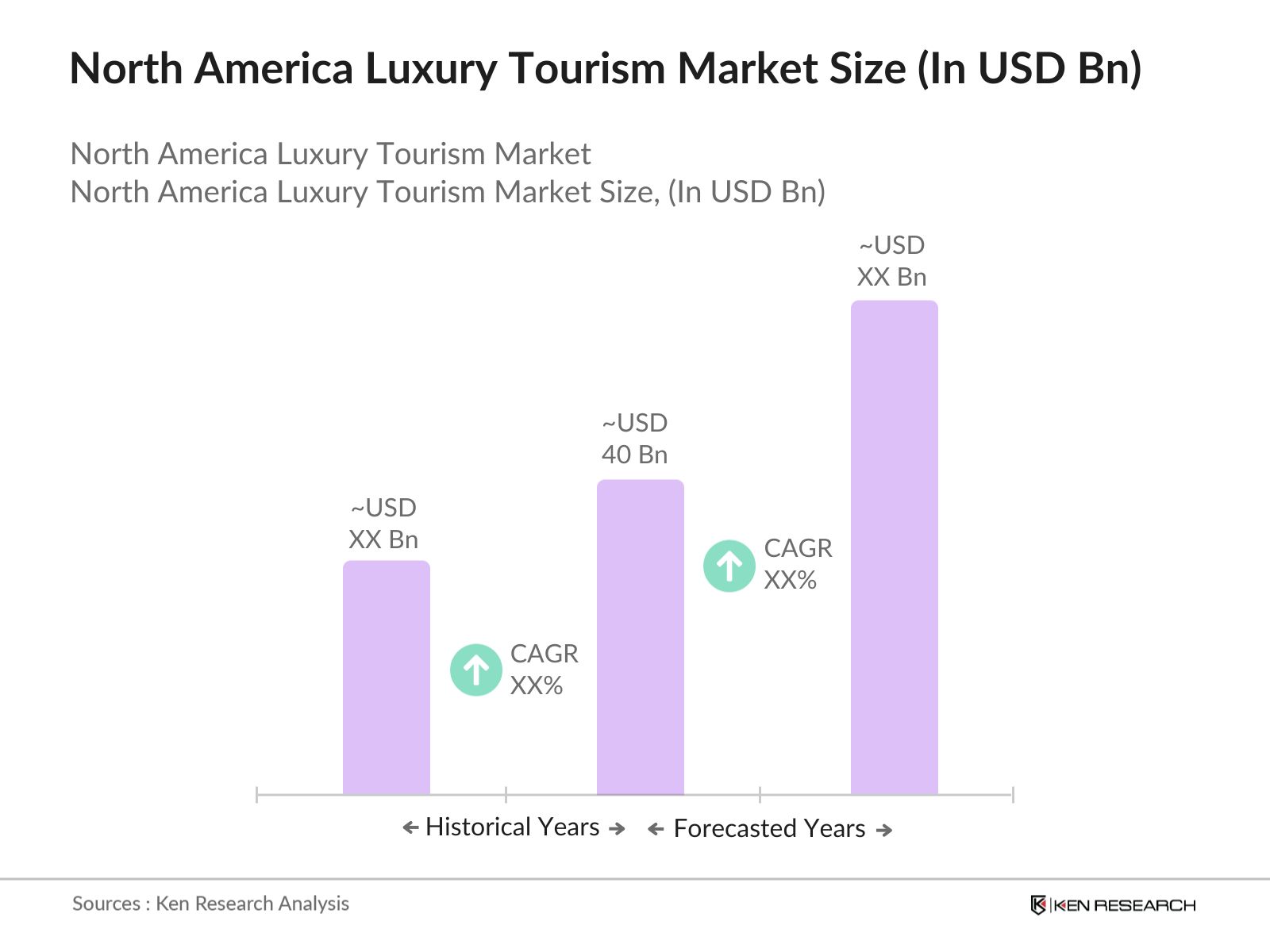
The North America luxury tourism market is valued at USD 40 billion, primarily driven by rising disposable incomes and an increasing demand for personalized travel experiences among affluent travelers.
Challenges in the North America luxury tourism market include high operational costs, regulatory issues concerning luxury resort developments, and intense competition from alternative luxury travel destinations such as Europe and the Asia-Pacific region.
Major players in the North America luxury tourism market include Marriott International, Four Seasons Hotels, Aman Resorts, NetJets, and Abercrombie & Kent. These companies dominate due to their extensive network of high-end properties, personalized services, and exclusive partnerships.
Growth drivers in the North America luxury tourism market include the increasing demand for bespoke travel experiences, technological advancements in travel services, and the growing trend of wellness and eco-friendly tourism among high-net-worth individuals.

What makes us stand out is that our consultants follows Robust, Refine and Result (RRR) methodology. i.e. Robust for clear definitions, approaches and sanity checking, Refine for differentiating respondents facts and opinions and Result for presenting data with story

We have set a benchmark in the industry by offering our clients with syndicated and customized market research reports featuring coverage of entire market as well as meticulous research and analyst insights.

While we don't replace traditional research, we flip the method upside down. Our dual approach of Top Bottom & Bottom Top ensures quality deliverable by not just verifying company fundamentals but also looking at the sector and macroeconomic factors.

With one step in the future, our research team constantly tries to show you the bigger picture. We help with some of the tough questions you may encounter along the way: How is the industry positioned? Best marketing channel? KPI's of competitors? By aligning every element, we help maximize success.

Our report gives you instant access to the answers and sources that other companies might choose to hide. We elaborate each steps of research methodology we have used and showcase you the sample size to earn your trust.

If you need any support, we are here! We pride ourselves on universe strength, data quality, and quick, friendly, and professional service.