















North America Macrolide Antibiotics Market Outlook to 2030
Region:North America
Author(s):Sanjna Verma
Product Code:KROD7257
December 2024
87
About the Report
North America Macrolide Antibiotics Market Overview
- The North America Macrolide Antibiotics market is valued at USD 22 billion, driven primarily by the increasing prevalence of respiratory infections and antibiotic-resistant bacterial strains. The demand for macrolide antibiotics is also fueled by their wide range of applications, from treating community-acquired pneumonia to skin infections. The market's growth is further bolstered by the development of novel macrolides, which cater to the rising demand for effective treatments against resistant bacterial strains.
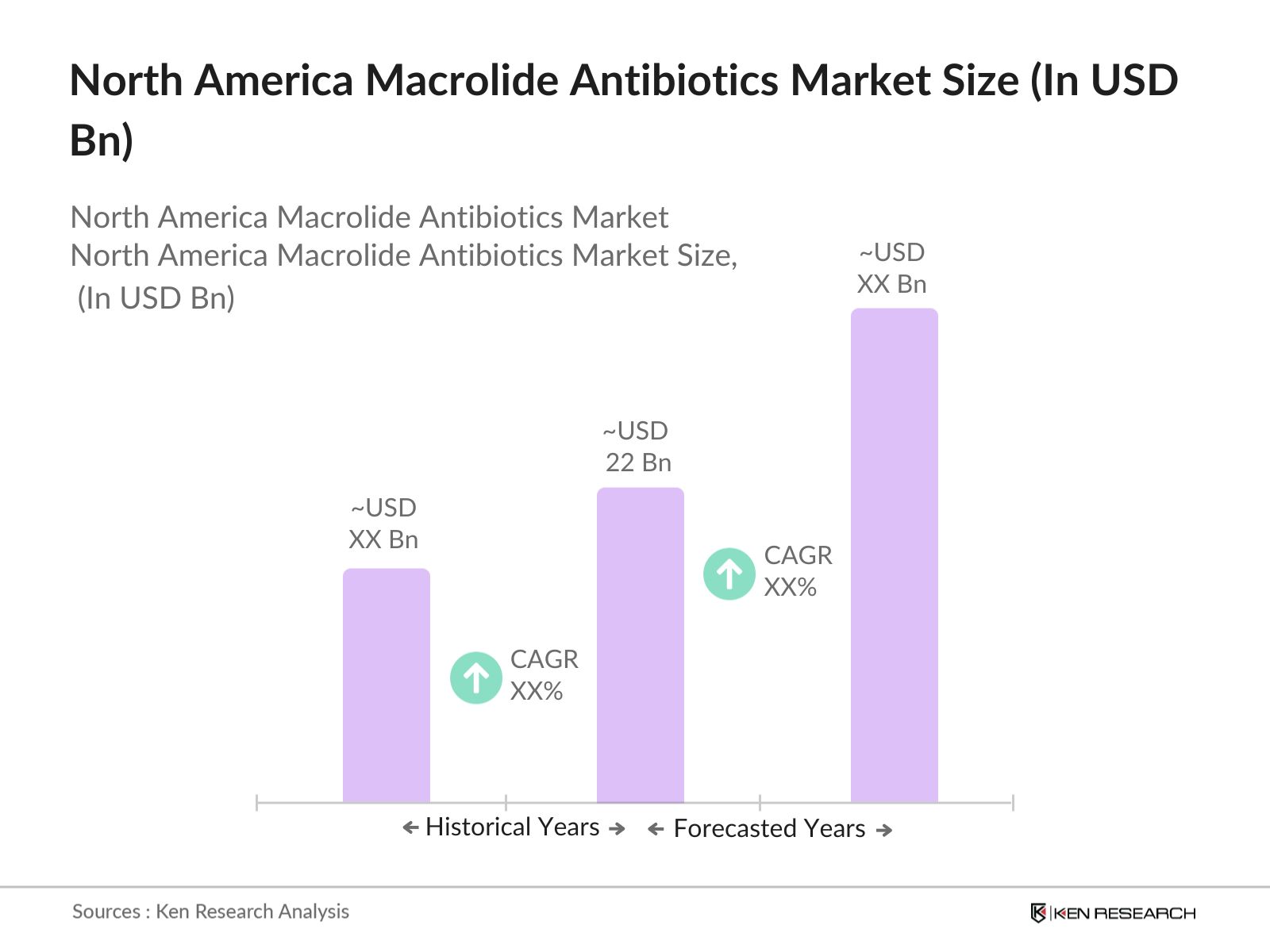
- The U.S. leads the North America macrolide antibiotics market, dominating due to its robust healthcare infrastructure, extensive research and development (R&D) activities, and strong pharmaceutical industry. Canada follows closely, driven by favorable healthcare policies and a growing focus on combatting antimicrobial resistance. The dominance of these regions can be attributed to the presence of well-established pharmaceutical manufacturers and their ability to innovate new treatments to address the evolving bacterial resistance.
- The FDA approval process for antibiotics remains rigorous, with a focus on safety, efficacy, and environmental impact. In 2023, the FDA approved only 12 new antibiotics out of 102 applications, reflecting the high bar for regulatory approval. The FDAs stringent requirements for clinical trials, which include extensive human and animal testing, can take up to 10 years and cost upwards of $1 billion. This rigorous process ensures that only the safest and most effective antibiotics, including macrolides, reach the market.
North America Macrolide Antibiotics Market Segmentation
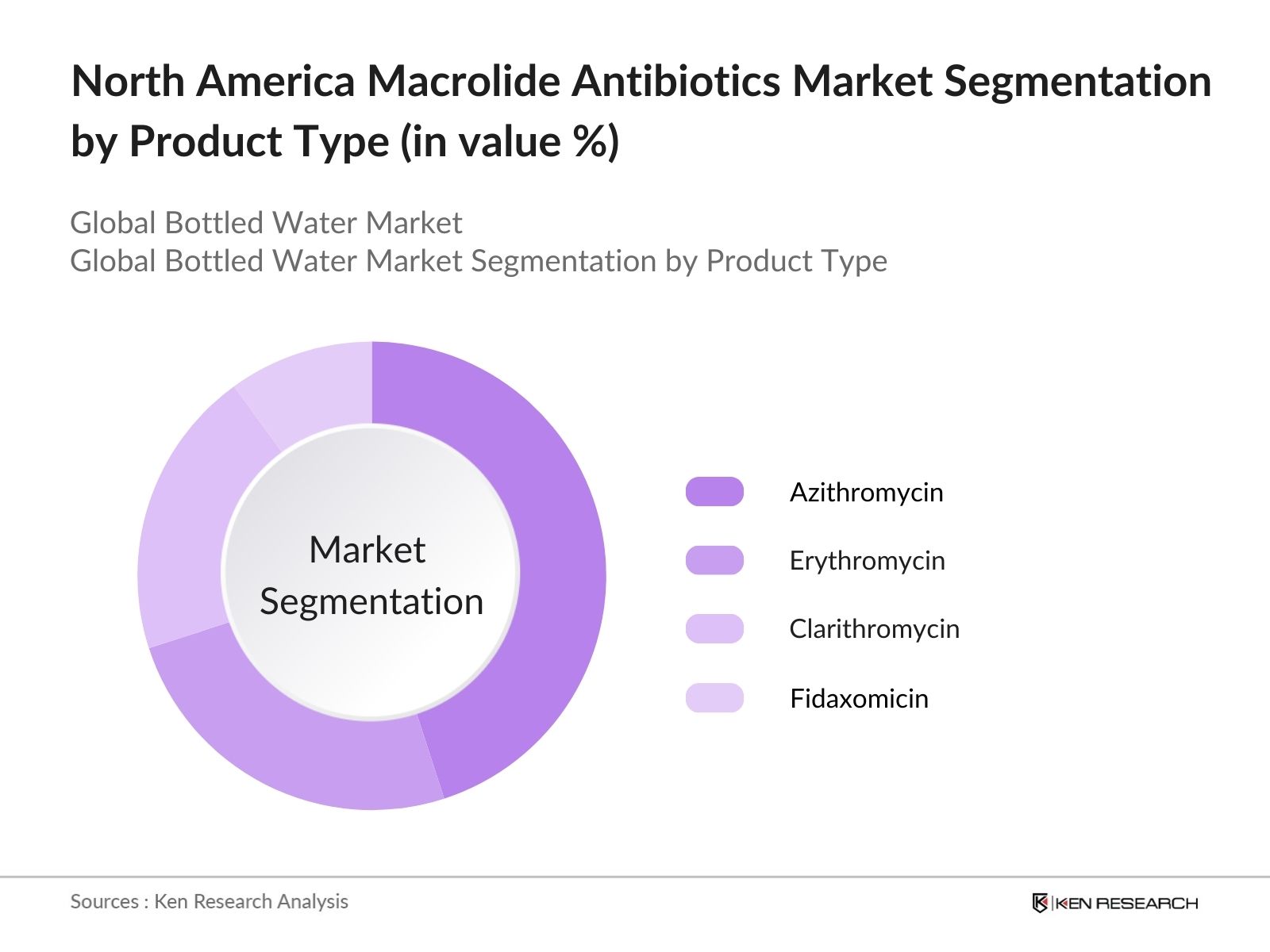
By Product Type: The North America Macrolide Antibiotics market is segmented by drug type into erythromycin, azithromycin, clarithromycin, and fidaxomicin. Azithromycin currently dominates this segment due to its broad-spectrum activity, longer half-life, and strong efficacy against respiratory and skin infections. Azithromycin's widespread use in treating conditions such as pneumonia and bronchitis, coupled with its relatively low incidence of side effects, has secured its leading position in this segment.
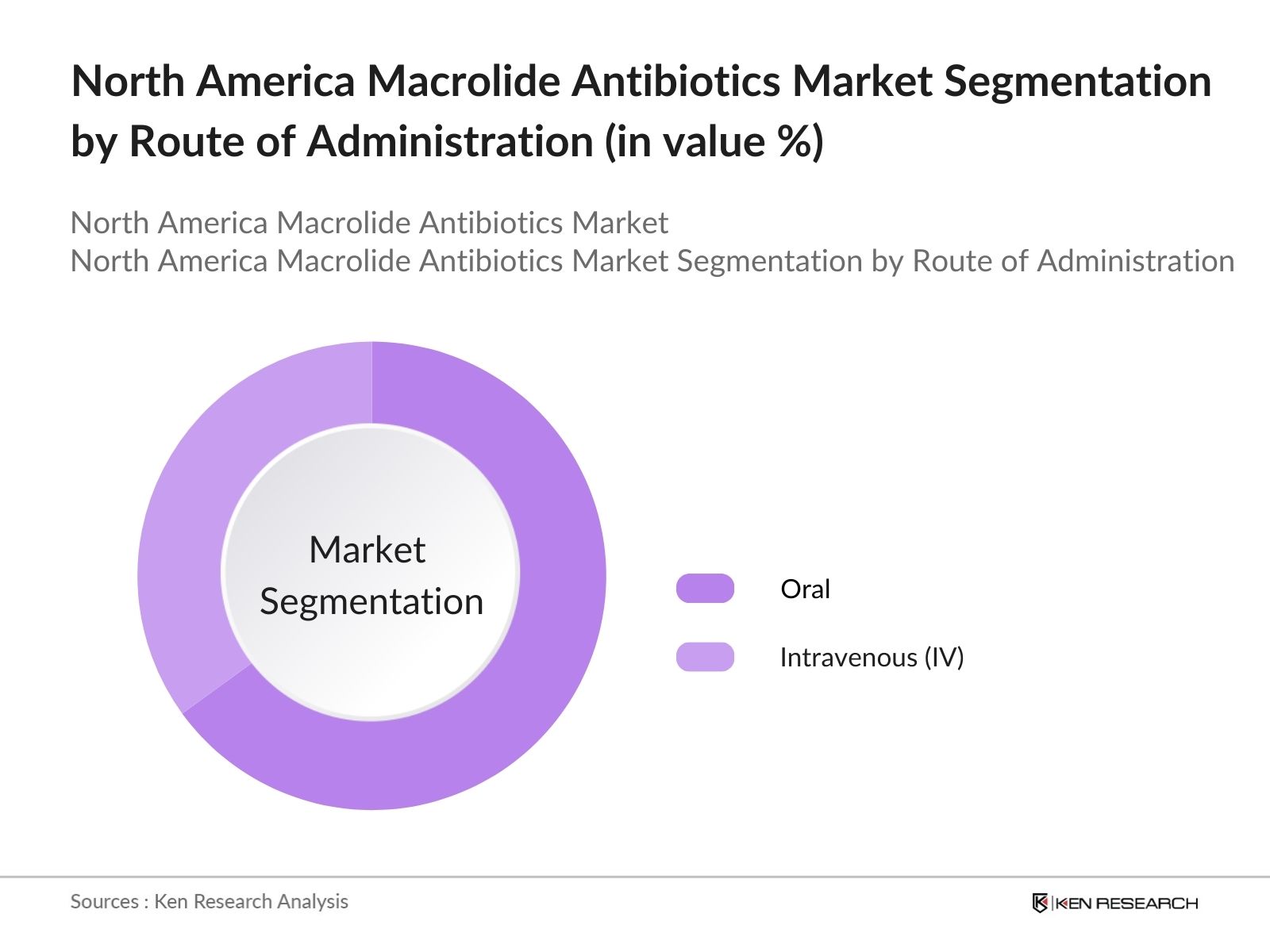
By Route of Administration: The market is also segmented by route of administration into oral and intravenous (IV) forms. The oral route holds a dominant market share due to its ease of administration, patient preference, and high compliance. Oral macrolides, particularly azithromycin and clarithromycin, are widely prescribed in outpatient settings, making them more accessible for non-hospitalized patients. The IV segment is reserved for more severe infections and inpatient care, yet its growth is driven by the rise in hospital admissions for complex infections and the need for immediate therapeutic intervention.
North America Macrolide Antibiotics Market Competitive Landscape
The North America Macrolide Antibiotics market is consolidated, with a few major players holding significant market power due to their strong R&D capabilities, product portfolio, and market penetration. The competitive landscape is characterized by frequent collaborations, acquisitions, and new product developments to combat the growing threat of antibiotic resistance. Key players are also focusing on expanding their manufacturing capacities to meet the rising demand for macrolide antibiotics across the region.
|
Company |
Establishment Year |
Headquarters |
Market Focus |
R&D Spending |
FDA Approvals |
Revenue (2023) |
No. of Employees |
Global Presence |
Recent Innovations |
|
Pfizer Inc. |
1849 |
New York, USA |
- |
- |
- |
- |
- |
- |
- |
|
Sanofi |
1973 |
Paris, France |
- |
- |
- |
- |
- |
- |
- |
|
Merck & Co. |
1891 |
Kenilworth, USA |
- |
- |
- |
- |
- |
- |
- |
|
GlaxoSmithKline (GSK) |
2000 |
Brentford, UK |
- |
- |
- |
- |
- |
- |
- |
|
Teva Pharmaceutical |
1901 |
Petah Tikva, Israel |
- |
- |
- |
- |
- |
- |
- |
North America Macrolide Antibiotics Market Analysis
Growth Drivers
- Rise in Respiratory Tract Infections: According to the U.S. Centers for Disease Control and Prevention (CDC), approximately 18.5 million medical visits were attributed to respiratory infections in the U.S. in 2023. Furthermore, macroeconomic data from the World Bank reveals that an aging population across North Americaexpected to reach 78 million individuals over the age of 65 in 2024is a key factor in increasing susceptibility to infections, bolstering the demand for antibiotics such as macrolides.
- Increasing Antibiotic Resistance: Antibiotic resistance is becoming a critical public health challenge in North America, with the CDC estimating that over 2.8 million antibiotic-resistant infections occur in the U.S. annually, resulting in more than 35,000 deaths. The increase in drug-resistant pathogens has amplified the need for next-generation antibiotics, particularly macrolides, which are effective against resistant strains of bacteria.
- Growing Demand for Generic Antibiotics: Generic antibiotics are gaining traction in North America as healthcare systems aim to reduce healthcare costs. As of 2023, nearly 90% of the U.S. population relies on generic drugs, according to data from the U.S. Food and Drug Administration (FDA). Macrolides, being a crucial class of antibiotics, are heavily utilized in their generic form, accounting for a significant portion of prescriptions.
Challenges
- Stringent Regulatory Requirements: The regulatory landscape for antibiotics in North America remains stringent, with drug approvals subject to extensive clinical trials and scrutiny. The FDA reported in 2023 that only 11% of antibiotics in the clinical pipeline receive final approval due to concerns over safety, efficacy, and environmental impact. The cost of conducting these trials is high, with estimates from the World Bank showing that clinical trials for new antibiotics can cost up to $2.6 billion, creating a significant barrier for market entrants.
- Generic Drug Penetration: The North American market is saturated with generic versions of macrolide antibiotics, exerting downward pricing pressure on branded drugs. In 2023, the FDA reported that 85% of antibiotic prescriptions in the U.S. were filled with generics, which has driven many pharmaceutical companies to shift focus away from branded antibiotics. This high penetration of generics has led to increased competition, limiting profitability for new drug entrants in the market.
North America Macrolide Antibiotics Market Future Outlook
The North America Macrolide Antibiotics market is projected to experience significant growth over the next five years. The rising threat of antibiotic resistance and an increasing prevalence of bacterial infections, especially respiratory illnesses, are driving the need for new macrolide formulations and advanced antibiotics. Additionally, ongoing R&D efforts by major pharmaceutical companies and increasing investments in healthcare infrastructure will further support the market's growth. Governments across the region are also investing in public health initiatives aimed at reducing antibiotic resistance, thus enhancing the market outlook.
Future Market Opportunities
- New Drug Delivery Systems: Innovations in drug delivery systems offer new growth opportunities in the macrolide antibiotics market. Novel systems such as nanoparticle-based drug delivery and inhalable antibiotics are improving the effectiveness of macrolides against drug-resistant infections. According to the World Health Organization, inhalable antibiotics are expected to reduce hospital stays by 20%, representing a significant cost-saving measure. These new delivery systems also enhance patient compliance, particularly in treating respiratory infections.
- Expansion in Developing Markets: The growing demand for antibiotics in developing markets such as Mexico and Brazil presents significant opportunities for North American pharmaceutical companies. According to World Bank data, healthcare spending in Latin America is projected to grow by $40 billion between 2023 and 2025, driven by increasing investments in healthcare infrastructure. North American manufacturers can tap into these markets by exporting generic and branded macrolide antibiotics, addressing the rising prevalence of respiratory infections and antibiotic-resistant bacteria in the region.
Scope of the Report
|
By Drug Type |
Erythromycin Azithromycin Clarithromycin Fidaxomicin |
|
By Route of Administration |
Oral Intravenous |
|
By Distribution Channel |
Hospital Pharmacies Retail Pharmacies Online Pharmacies |
|
By Application |
Respiratory Tract Infections Skin and Soft Tissue Infections Gastrointestinal Infections STDs |
|
By Region |
USA Canada Mexico |
Products
Key Target Audience
Pharmaceutical Manufacturers
Healthcare Providers (hospitals, clinics)
Government and Regulatory Bodies (FDA, Health Canada)
Investors and Venture Capitalist Firms
Hospital Procurement Departments
Public Health Organizations
Drug Research and Development Companies
Companies
Players Mentioned in the Report
Pfizer Inc.
Sanofi
Merck & Co.
GlaxoSmithKline (GSK)
Teva Pharmaceutical Industries Ltd.
Abbott Laboratories
Novartis AG
Eli Lilly and Company
Lupin Pharmaceuticals
Sandoz International GmbH
Table of Contents
North America Macrolide Antibiotics Market Overview
1.1. Definition and Scope
1.2. Market Taxonomy
1.3. Market Growth Rate
1.4. Market Segmentation Overview
North America Macrolide Antibiotics Market Size (In USD Bn)
2.1. Historical Market Size
2.2. Year-On-Year Growth Analysis
2.3. Key Market Developments and Milestones
North America Macrolide Antibiotics Market Analysis
3.1. Growth Drivers (FDA Approvals, Antibiotic Resistance Patterns, Medical Innovations, Prevalence of Respiratory Infections)
3.1.1. Rise in Respiratory Tract Infections
3.1.2. Increasing Antibiotic Resistance
3.1.3. Growing Demand for Generic Antibiotics
3.1.4. Innovation in Drug Formulations
3.2. Market Challenges (Drug Patent Expirations, Regulatory Hurdles, Competition from Alternative Therapies, Pricing Pressures)
3.2.1. Stringent Regulatory Requirements
3.2.2. Generic Drug Penetration
3.2.3. Resistance Development in Pathogens
3.2.4. Pricing and Reimbursement Challenges
3.3. Opportunities (Development of Next-Gen Macrolides, Emerging Markets, Partnerships in Drug Development, R&D Focus on Anti-Resistant Strains)
3.3.1. New Drug Delivery Systems
3.3.2. Expansion in Developing Markets
3.3.3. Strategic Collaborations for Drug Development
3.3.4. Focus on Anti-Microbial Resistance
3.4. Trends (Shifts Toward Shorter Antibiotic Courses, Precision Medicine, Oral Macrolides Demand, Sustainability in Drug Manufacturing)
3.4.1. Shift to Short-Course Antibiotic Therapy
3.4.2. Increasing Use of Oral Macrolides
3.4.3. Demand for Macrolides in Precision Medicine
3.4.4. Sustainability and Green Manufacturing in Antibiotic Production
3.5. Government Regulation (FDA Guidelines, Environmental Regulations, Import and Export Controls, Patent Policies)
3.5.1. FDA Approval Process for Antibiotics
3.5.2. Environmental Regulations on Antibiotic Manufacturing
3.5.3. Trade Policies Impacting Drug Import-Export
3.5.4. Patent Law and Drug Exclusivity Regulations
3.6. SWOT Analysis
3.7. Stake Ecosystem
3.8. Porters Five Forces
3.9. Competition Ecosystem
North America Macrolide Antibiotics Market Segmentation
4.1. By Drug Type (In Value %)
4.1.1. Erythromycin
4.1.2. Azithromycin
4.1.3. Clarithromycin
4.1.4. Fidaxomicin
4.2. By Route of Administration (In Value %)
4.2.1. Oral
4.2.2. Intravenous
4.3. By Distribution Channel (In Value %)
4.3.1. Hospital Pharmacies
4.3.2. Retail Pharmacies
4.3.3. Online Pharmacies
4.4. By Application (In Value %)
4.4.1. Respiratory Tract Infections
4.4.2. Skin and Soft Tissue Infections
4.4.3. Gastrointestinal Infections
4.4.4. STDs
4.5. By Region (In Value %)
4.5.1. USA
4.5.2. Canada
4.5.3. Mexico
North America Macrolide Antibiotics Market Competitive Analysis
5.1. Detailed Profiles of Major Companies
5.1.1. Pfizer Inc.
5.1.2. Sanofi
5.1.3. Merck & Co.
5.1.4. Abbott Laboratories
5.1.5. GlaxoSmithKline Plc
5.1.6. Novartis AG
5.1.7. Teva Pharmaceutical Industries Ltd.
5.1.8. Eli Lilly and Company
5.1.9. Sandoz International GmbH
5.1.10. Lupin Pharmaceuticals
5.2. Cross Comparison Parameters (Product Portfolio, Market Share, R&D Expenditure, FDA Approvals, Revenue, Global Presence, Supply Chain Integration, Partnerships)
5.3. Market Share Analysis
5.4. Strategic Initiatives
5.5. Mergers and Acquisitions
5.6. Investment Analysis
5.7. Venture Capital Funding
5.8. Government Grants
5.9. Private Equity Investments
North America Macrolide Antibiotics Market Regulatory Framework
6.1. FDA Approval Guidelines
6.2. Compliance with Environmental Standards
6.3. Patent and Intellectual Property Rights
6.4. Drug Pricing and Reimbursement Policies
North America Macrolide Antibiotics Future Market Size (In USD Bn)
7.1. Future Market Size Projections
7.2. Key Factors Driving Future Market Growth
North America Macrolide Antibiotics Future Market Segmentation
8.1. By Drug Type (In Value %)
8.2. By Route of Administration (In Value %)
8.3. By Distribution Channel (In Value %)
8.4. By Application (In Value %)
8.5. By Region (In Value %)
North America Macrolide Antibiotics Market Analysts Recommendations
9.1. TAM/SAM/SOM Analysis
9.2. Customer Cohort Analysis
9.3. Marketing Initiatives
9.4. White Space Opportunity Analysis
Research Methodology
Step 1: Identification of Key Variables
The research process begins by identifying key market variables influencing the North America Macrolide Antibiotics market. This involves a comprehensive ecosystem map that outlines major stakeholders, including pharmaceutical companies, healthcare providers, and regulatory bodies. Extensive desk research is conducted using secondary data sources and proprietary databases to collect relevant industry insights.
Step 2: Market Analysis and Construction
The market analysis is focused on gathering and analyzing historical data from various sources, including government healthcare statistics and industry reports. This data is used to evaluate market dynamics such as demand trends, distribution channels, and revenue generation patterns. Data integrity is ensured through cross-validation with credible sources.
Step 3: Hypothesis Validation and Expert Consultation
Market hypotheses are developed based on the initial analysis and subsequently validated through consultations with industry experts. These consultations are conducted via interviews and surveys, providing critical insights into the market's operational and financial aspects, ensuring the data's accuracy and relevance.
Step 4: Research Synthesis and Final Output
The final phase involves synthesizing the collected data into a coherent market report, which includes detailed analysis on market segmentation, competitive landscape, and growth drivers. This data is cross-verified through engagement with major pharmaceutical companies and healthcare institutions.
Frequently Asked Questions
01. How big is the North America Macrolide Antibiotics Market?
The North America Macrolide Antibiotics market is valued at USD 22 billion, driven by increasing demand for effective antibiotic treatments, particularly for respiratory infections and the rising threat of antimicrobial resistance.
02. What are the challenges in the North America Macrolide Antibiotics Market?
Challenges in North America Macrolide Antibiotics market include growing antibiotic resistance, stringent regulatory requirements for drug approvals, and increasing competition from generic drugs, which put pressure on pricing and market margins.
03. Who are the major players in the North America Macrolide Antibiotics Market?
Key players in North America Macrolide Antibiotics Market include Pfizer Inc., Sanofi, Merck & Co., GlaxoSmithKline, and Teva Pharmaceuticals, all of which dominate due to their extensive R&D capabilities and robust product portfolios.
04. What are the growth drivers of the North America Macrolide Antibiotics Market?
Growth drivers in North America Macrolide Antibiotics Market include the increasing prevalence of bacterial infections, especially respiratory illnesses, and the rise of antibiotic resistance, which is pushing the demand for novel macrolide formulations.
Why Buy From Us?

What makes us stand out is that our consultants follows Robust, Refine and Result (RRR) methodology. i.e. Robust for clear definitions, approaches and sanity checking, Refine for differentiating respondents facts and opinions and Result for presenting data with story

We have set a benchmark in the industry by offering our clients with syndicated and customized market research reports featuring coverage of entire market as well as meticulous research and analyst insights.

While we don't replace traditional research, we flip the method upside down. Our dual approach of Top Bottom & Bottom Top ensures quality deliverable by not just verifying company fundamentals but also looking at the sector and macroeconomic factors.

With one step in the future, our research team constantly tries to show you the bigger picture. We help with some of the tough questions you may encounter along the way: How is the industry positioned? Best marketing channel? KPI's of competitors? By aligning every element, we help maximize success.

Our report gives you instant access to the answers and sources that other companies might choose to hide. We elaborate each steps of research methodology we have used and showcase you the sample size to earn your trust.

If you need any support, we are here! We pride ourselves on universe strength, data quality, and quick, friendly, and professional service.