
North America Massage Equipment Market Outlook to 2030
Region:North America
Author(s):Shubham Kashyap
Product Code:KROD4313
December 2024
94
About the Report
North America Massage Equipment Market Overview
- The North America massage equipment market is witnessing substantial growth, driven by increasing consumer demand for wellness and relaxation products, currently valued at USD 2.80 billion. The growing awareness of health benefits associated with massage therapy, such as stress relief, muscle relaxation, and improved circulation, is driving the adoption of massage equipment across residential and commercial sectors. This surge in demand is particularly evident in countries like the United States and Canada, where wellness trends and fitness consciousness are becoming more mainstream.
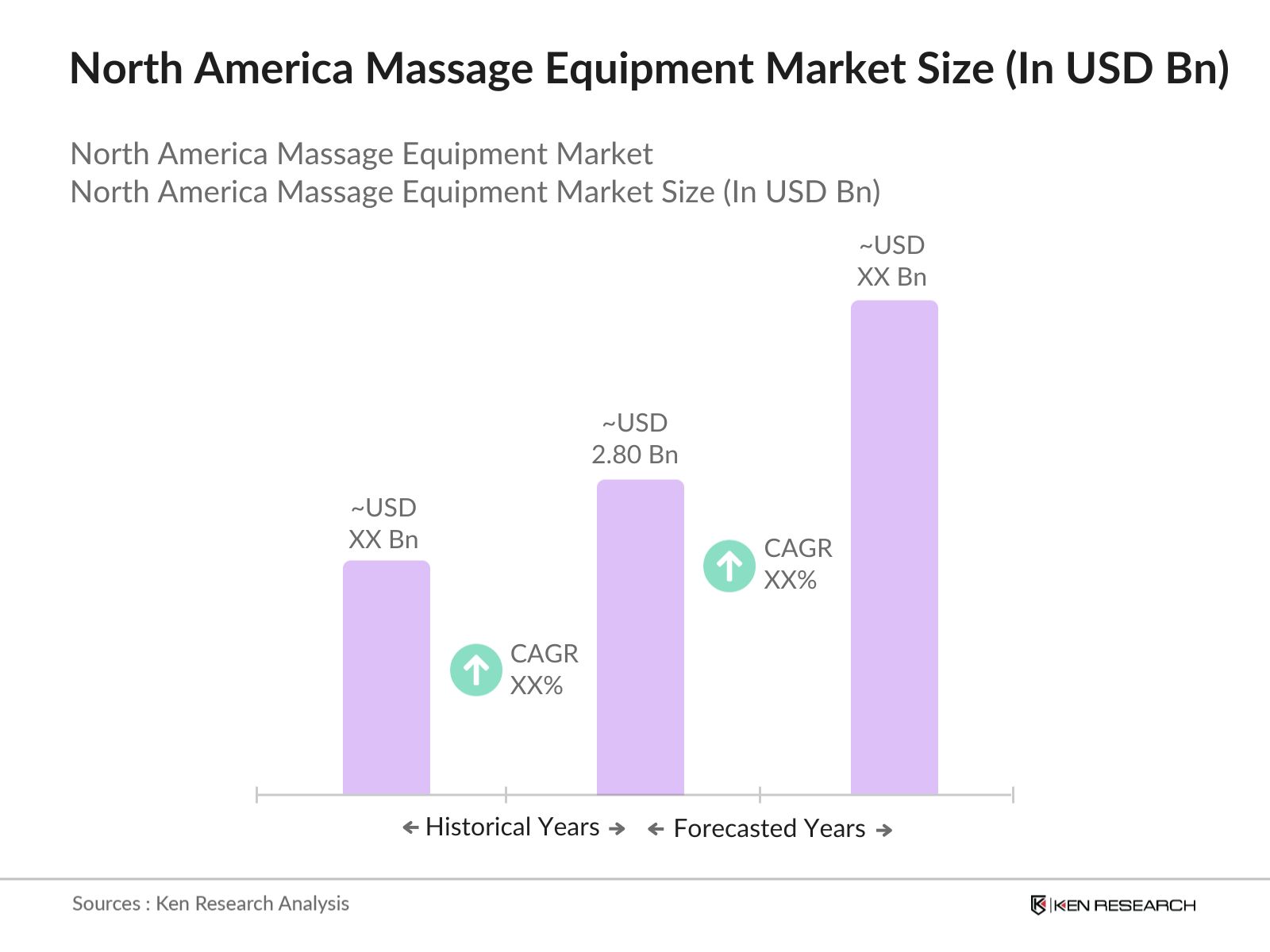
- The United States leads the North America massage equipment market due to its vast consumer base and growing preference for self-care and wellness products. The rise of home wellness solutions, especially in the wake of the COVID-19 pandemic, has significantly boosted the demand for massage chairs, portable massagers, and other related devices. Canada is also seeing an uptick in the adoption of massage equipment, supported by the increasing number of wellness centers and spas offering advanced massage solutions.
- Technological advancements, such as the integration of AI and IoT in massage equipment, are further fueling market growth. These technologies allow for personalized massage experiences, with smart devices offering customizable settings based on individual needs. Additionally, the rise of e-commerce platforms has made it easier for consumers to purchase massage equipment, contributing to increased market penetration in North America.
North America Massage Equipment Market Segmentation
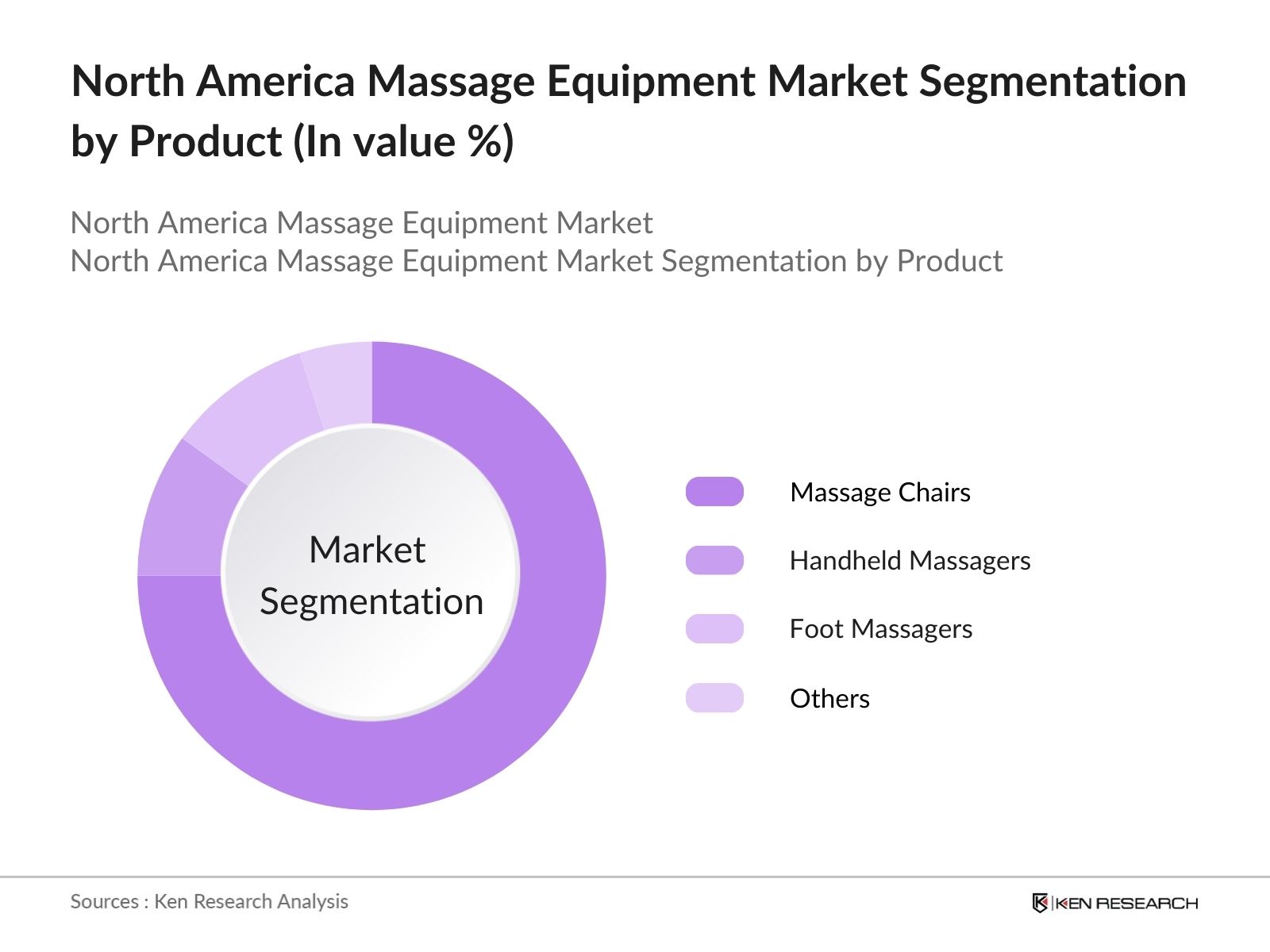
- By Product Type: The market in North America is segmented by product type into massage chairs, handheld massagers, foot massagers, and others. Massage chairs dominate the market due to their popularity in both residential and commercial settings. Consumers are increasingly opting for advanced massage chairs equipped with features like zero-gravity positioning, heated massage, and customizable massage modes. Handheld massagers are also gaining traction due to their portability and ease of use, particularly among consumers seeking quick relief from muscle tension. Foot massagers are commonly used for improving blood circulation and relieving foot pain, especially among the elderly population and individuals with specific health conditions like diabetes.
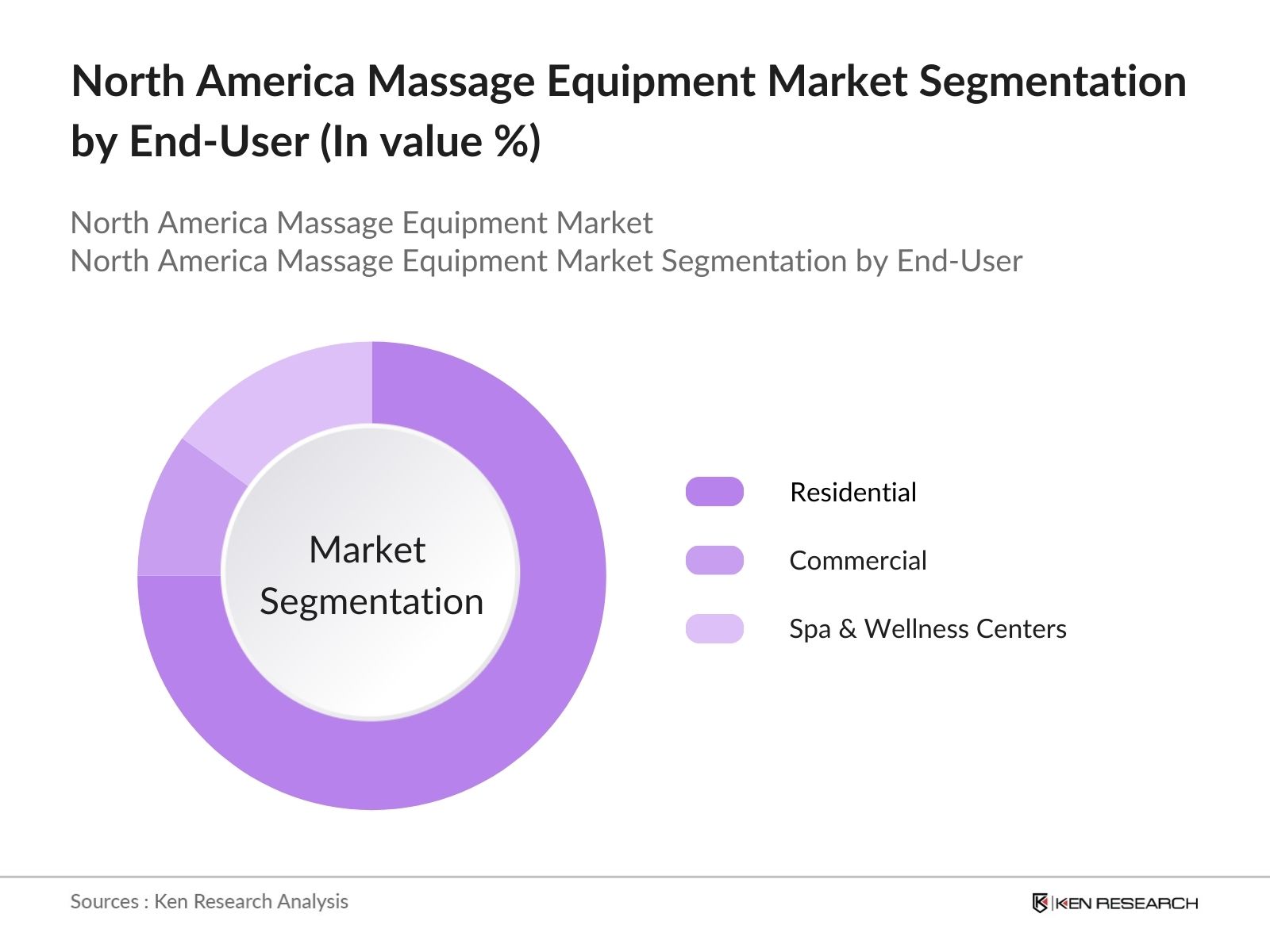
- By End-User: The market is segmented by end-user into residential, commercial, and spa & wellness centers. The residential segment leads the market due to the growing trend of at-home wellness routines. Consumers are increasingly investing in massage equipment to create personal wellness spaces at home. The commercial segment includes gyms, fitness centers, and physiotherapy clinics, where massage equipment is used as part of recovery and wellness programs. Spa and wellness centers are also significant contributors to market growth, with a focus on offering premium massage services using advanced equipment.
North America Massage Equipment Market Competitive Landscape
The North America massage equipment market is highly competitive, with several global and regional players focusing on innovation and technology to enhance their product offerings. Leading companies such as Panasonic Corporation, HoMedics, and OSIM International are dominating the market with their range of technologically advanced massage equipment. These companies are investing in research and development to introduce smart massagers with AI capabilities, offering a more personalized user experience.
|
Company Name |
Establishment Year |
Headquarters |
R&D Spending |
No. of Employees |
Product Innovation |
Global Presence |
Technology Adoption |
Distribution Channels |
Revenue (2023) |
|
Panasonic Corporation |
1918 |
Japan |
|||||||
|
HoMedics |
1987 |
USA |
|||||||
|
OSIM International |
1980 |
Singapore |
|||||||
|
Therabody |
2008 |
USA |
|||||||
|
Brookstone |
1965 |
USA |
North America Massage Equipment Industry Analysis
Growth Drivers
- Rising Consumer Interest in Wellness and Self-care: Consumer demand for wellness and self-care products in North America has surged, driven by rising health awareness. In 2022, U.S. consumers spent over USD 450 billion on wellness products, including massage equipment, as noted by the Bureau of Economic Analysis. This trend aligns with the growing awareness of stress management and relaxation techniques, increasing the demand for home-use massage devices. The wellness market is expected to maintain momentum, with key factors such as the increasing emphasis on mental well-being, backed by rising disposable incomes and health-focused consumer preferences.
- Increasing Popularity of At-Home Massage Devices: The adoption of at-home massage equipment has grown significantly, particularly since the COVID-19 pandemic. In 2023, the number of North American households owning massage devices surpassed 10 million, according to U.S. Census data. This growth is fueled by the convenience of having massage therapy at home without the need for spa visits, and the availability of affordable, advanced devices that provide professional-grade experience. This trend reflects a broader consumer shift towards personalized and accessible wellness solutions.
- Growth in Spa and Wellness Centers: The number of spas and wellness centers in North America has steadily increased, contributing to the growing demand for professional massage equipment. As of 2023, there were 20,000 registered spas in the United States alone, employing over thousands of individuals. This growth is supported by rising consumer interest in preventive health and wellness services, as well as a growing aging population seeking therapeutic treatments. As more wellness centers open, the demand for advanced massage equipment continues to rise.
Market Challenges
- High Initial Costs of Advanced Massage Equipment: One of the key challenges for businesses entering the massage equipment market is the high upfront investment required for advanced products. High-tech devices, especially those incorporating AI and IoT features, are expensive, and many small and mid-sized businesses struggle with these costs. This limits their ability to compete with larger players who can afford to invest in cutting-edge equipment. These high initial investments create barriers to market entry for smaller companies, as they often lack the capital to purchase or finance advanced massage technologies.
- Limited Availability of Skilled Technicians for Maintenance: The maintenance and repair of technologically advanced massage equipment require specialized skills, which are in short supply in North America. This shortage has led to increased downtime for businesses reliant on these devices, affecting service delivery in spas and wellness centers. As AI-driven equipment becomes more complex, the challenge of finding qualified technicians for maintenance and repair services is expected to become more significant, impacting the overall efficiency and performance of wellness centers.
North America Massage Equipment Market Future Outlook
The North America massage equipment market is expected to witness steady growth in the forecasted period, driven by continued consumer interest in wellness and advancements in product technology. The increasing integration of AI and IoT in massage devices is expected to revolutionize the industry, offering personalized and efficient solutions. As consumers become more health-conscious and prioritize self-care, the demand for massage equipment will likely remain strong. Additionally, the expansion of wellness centers and the growing trend of at-home wellness setups are expected to fuel market growth in the coming years.
Future Market Opportunities
- Expansion of E-commerce and Direct-to-Consumer Sales: E-commerce platforms have emerged as critical channels for the sale of massage equipment, with online sales accounting for over 50% of total sales in North America in 2023. This shift has opened new avenues for manufacturers to reach a broader audience through direct-to-consumer sales models, bypassing traditional retail channels. The expansion of e-commerce also enables businesses to offer a more extensive range of products, increasing consumer choice and accessibility.
- Integration with Fitness and Rehabilitation Centers: The integration of massage equipment into fitness and rehabilitation centers offers significant growth potential. As of 2023, there were over 40,000 fitness centers in North America, with many incorporating massage and recovery tools into their services. This integration aligns with the growing trend of holistic wellness, where physical fitness is complemented by therapies aimed at muscle recovery and stress relief. The inclusion of massage equipment in these facilities provides an additional revenue stream and enhances customer experience.
Scope of the Report
|
By Product Type |
Massage Chairs Handheld Massagers Foot Massagers Neck & Shoulder Massagers Other Types |
|
By End-User |
Residential Commercial Wellness & Spa Centers Fitness Centers |
|
By Distribution Channel |
E-commerce Retail Stores Specialty Stores Direct Sales |
|
By Technology |
AI-Powered Devices IoT-Enabled Devices Battery-Operated Devices Corded Electric Devices |
|
By Region |
United States Canada Mexico |
Products
Key Target Audience
Investors and Venture Capitalist Firms
Wellness & Spa Centers
Fitness Centers
Residential Consumers
E-commerce Platforms
Commercial Gyms
Government and Regulatory Bodies (FDA, Health Canada)
Equipment Manufacturers
Banks and Financial Institutions
Companies
Major Players Mentioned in the Report
Panasonic Corporation
HoMedics
OSIM International
Therabody
Brookstone
Beurer GmbH
Comfier
Wahl Clipper Corporation
Breo International
Human Touch
Zyllion
Inada
Relaxzen
Sharper Image
Belmint
Table of Contents
01 North America Massage Equipment Market Overview
1.1. Definition and Scope
1.2. Market Taxonomy
1.3. Market Growth Rate (Annual Growth Rate, Market Drivers, Influencing Factors)
1.4. Market Segmentation Overview (Product Type, End-User, Distribution Channel, Technology, Region)
02 North America Massage Equipment Market Size (In USD Mn)
2.1. Historical Market Size
2.2. Year-On-Year Growth Analysis
2.3. Key Market Developments and Milestones
03 North America Massage Equipment Market Analysis
3.1. Growth Drivers
3.1.1. Rising Consumer Demand for Wellness Products
3.1.2. Increasing Popularity of At-Home Massage Devices
3.1.3. Technological Advancements in Massage Equipment (AI, IoT Integration)
3.1.4. Increasing Number of Spas and Wellness Centers
3.2. Market Challenges
3.2.1. High Initial Investment Costs for Advanced Products
3.2.2. Limited Skilled Workforce for Equipment Maintenance
3.2.3. Technical Complexity in AI-Driven Massage Equipment
3.2.4. Consumer Price Sensitivity and Market Penetration
3.3. Opportunities
3.3.1. Growing Demand for Smart Wellness Products
3.3.2. Expansion of E-commerce and Direct-to-Consumer Sales
3.3.3. Integration with Fitness and Rehabilitation Centers
3.3.4. Increasing Consumer Focus on Posture Correction and Pain Relief
3.4. Trends
3.4.1. Adoption of AI and Machine Learning in Massage Devices
3.4.2. Rise of Compact, Portable, and Wireless Devices
3.4.3. Sustainability and Eco-Friendly Massage Equipment
3.4.4. Increased Adoption in Corporate Wellness Programs
3.5. Government Regulations
3.5.1. Health and Safety Standards for Massage Devices
3.5.2. Regulatory Compliance in Medical and Therapeutic Equipment
3.5.3. Import and Export Guidelines for Consumer Health Products
3.5.4. Certifications Required for Medical-Grade Devices
3.6. SWOT Analysis (Strengths, Weaknesses, Opportunities, Threats)
3.7. Stake Ecosystem (Manufacturers, Suppliers, Distributors, Consumers)
3.8. Porters Five Forces (Bargaining Power of Buyers, Suppliers, Threat of New Entrants, Substitutes, and Industry Rivalry)
3.9. Competition Ecosystem (Market Concentration, Competitive Strategies)
04 North America Massage Equipment Market Segmentation
4.1. By Product Type (In Value %)
4.1.1. Massage Chairs
4.1.2. Handheld Massagers
4.1.3. Foot Massagers
4.1.4. Neck & Shoulder Massagers
4.1.5. Other Types
4.2. By End-User (In Value %)
4.2.1. Residential
4.2.2. Commercial
4.2.3. Wellness & Spa Centers
4.2.4. Fitness Centers
4.3. By Distribution Channel (In Value %)
4.3.1. E-commerce
4.3.2. Retail Stores
4.3.3. Specialty Stores
4.3.4. Direct Sales
4.4. By Technology (In Value %)
4.4.1. AI-Powered Devices
4.4.2. IoT-Enabled Devices
4.4.3. Battery-Operated Devices
4.4.4. Corded Electric Devices
4.5. By Region (In Value %)
4.5.1. United States
4.5.2. Canada
4.5.3. Mexico
05 North America Massage Equipment Market Competitive Analysis
5.1. Detailed Profiles of Major Companies
5.1.1. Panasonic Corporation
5.1.2. HoMedics
5.1.3. OSIM International
5.1.4. Brookstone
5.1.5. Inada
5.1.6. Sharper Image
5.1.7. Therabody
5.1.8. Human Touch
5.1.9. Breo International
5.1.10. Comfier
5.1.11. Belmint
5.1.12. Wahl Clipper Corporation
5.1.13. Beurer GmbH
5.1.14. Relaxzen
5.1.15. Zyllion
5.2. Cross Comparison Parameters (Product Innovation, Price Range, Technology Adoption, Product Portfolio, Customer Base, R&D Investments, Global Presence, Distribution Channels)
5.3. Market Share Analysis
5.4. Strategic Initiatives
5.5. Mergers and Acquisitions
5.6. Investment Analysis
5.7. Venture Capital Funding
5.8. Government Grants
5.9. Private Equity Investments
06 North America Massage Equipment Market Regulatory Framework
6.1. Health and Safety Standards
6.2. Compliance Requirements for Consumer Health Products
6.3. Certification Processes (FDA Approval, CE Certification)
07 North America Massage Equipment Future Market Size (In USD Mn)
7.1. Future Market Size Projections
7.2. Key Factors Driving Future Market Growth (Technological Innovation, Wellness Trends, Demographic Shifts)
-08 North America Massage Equipment Future Market Segmentation
8.1. By Product Type (In Value %)
8.2. By End-User (In Value %)
8.3. By Distribution Channel (In Value %)
8.4. By Technology (In Value %)
8.5. By Region (In Value %)
09 North America Massage Equipment Market Analysts Recommendations
9.1. TAM/SAM/SOM Analysis
9.2. Customer Cohort Analysis
9.3. Marketing Initiatives
9.4. White Space Opportunity Analysis
Research Methodology
Step 1: Identification of Key Variables
The first step involves mapping the North America Massage Equipment market landscape, identifying key stakeholders, including manufacturers, suppliers, and end-users. Extensive desk research is conducted using a blend of secondary and proprietary databases to gather relevant market information.
Step 2: Market Analysis and Construction
In this phase, historical market data is compiled and analyzed to assess market penetration rates, demand patterns, and distribution channels. The goal is to create a robust market model based on actual performance and sales statistics of key market players.
Step 3: Hypothesis Validation and Expert Consultation
Industry hypotheses are developed and then validated through consultations with industry experts via phone interviews. This process helps refine and validate key market assumptions, ensuring that the market data is accurate and comprehensive.
Step 4: Research Synthesis and Final Output
This final step involves engaging directly with market players, including manufacturers and wellness centers, to gather detailed product and sales insights. The combination of bottom-up data collection with top-down market analysis ensures the final report is accurate and reflective of market conditions.
Frequently Asked Questions
01 How big is the North America Massage Equipment Market?
The North America massage equipment market is valued at USD 2.8 billion, driven by the increasing adoption of wellness products and advanced technology integration in massagers.
02 What are the challenges in the North America Massage Equipment Market?
Challenges in the North America massage equipment market include high initial costs for advanced massage chairs and the lack of skilled labor for equipment maintenance and repair. Additionally, the rising cost of raw materials impacts profitability for manufacturers.
03 Who are the major players in the North America Massage Equipment Market?
Key players in the North America massage equipment market include Panasonic Corporation, HoMedics, OSIM International, Therabody, and Brookstone. These companies lead the market due to their innovative product offerings and strong distribution networks.
04 What are the growth drivers of the North America Massage Equipment Market?
The North America massage equipment market is propelled by rising consumer demand for at-home wellness solutions, technological advancements in massage chairs, and an increase in wellness center establishments across North America.
Why Buy From Us?

What makes us stand out is that our consultants follows Robust, Refine and Result (RRR) methodology. i.e. Robust for clear definitions, approaches and sanity checking, Refine for differentiating respondents facts and opinions and Result for presenting data with story

We have set a benchmark in the industry by offering our clients with syndicated and customized market research reports featuring coverage of entire market as well as meticulous research and analyst insights.

While we don't replace traditional research, we flip the method upside down. Our dual approach of Top Bottom & Bottom Top ensures quality deliverable by not just verifying company fundamentals but also looking at the sector and macroeconomic factors.

With one step in the future, our research team constantly tries to show you the bigger picture. We help with some of the tough questions you may encounter along the way: How is the industry positioned? Best marketing channel? KPI's of competitors? By aligning every element, we help maximize success.

Our report gives you instant access to the answers and sources that other companies might choose to hide. We elaborate each steps of research methodology we have used and showcase you the sample size to earn your trust.

If you need any support, we are here! We pride ourselves on universe strength, data quality, and quick, friendly, and professional service.