
North America Medical Device Market Outlook to 2030
Region:North America
Author(s):Paribhasha Tiwari
Product Code:KROD2003
October 2024
94
About the Report
North America Medical Device Market Overview
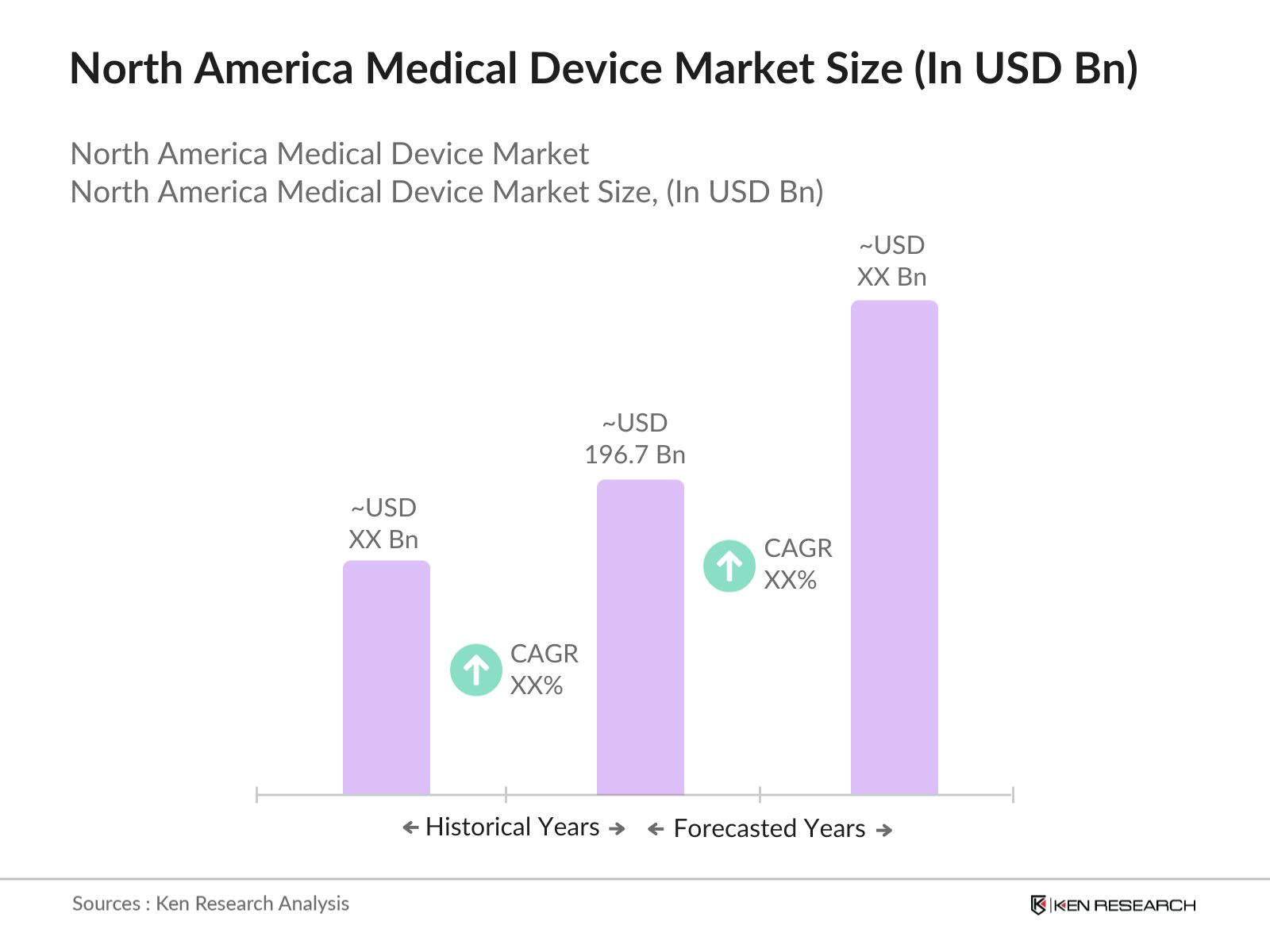
- The North America medical device market was valued at USD 196.7 billion in 2023, driven by the growing aging population, increased healthcare spending, and advancements in medical technologies. The increasing demand for diagnostic devices, patient monitoring systems, and minimally invasive devices contributes significantly to market growth. Major sectors such as cardiovascular devices, diagnostic imaging, and orthopedic devices are key drivers. Rising chronic diseases such as diabetes and heart diseases are further fueling the demand for innovative devices.
- The market is dominated by global and regional giants such as Medtronic, Johnson & Johnson, Abbott Laboratories, GE Healthcare, and Stryker Corporation. These companies are focusing on innovation, strategic mergers, and acquisitions to strengthen their position. Medtronic is a leader in cardiac and vascular devices, while Johnson & Johnsons medical devices segment focuses on orthopedics and surgical solutions. These key players have a large share of the North American market due to their established R&D and extensive distribution networks.
- In 2023, Medtronic launched its latest insulin pump system, MiniMed 780G, in the U.S., approved by the FDA. This is a significant development in diabetes care, allowing patients more flexibility in glucose management through advanced algorithms. Additionally, Abbott Laboratories received FDA clearance for its next-generation TAVI (transcatheter aortic valve implantation) device, ensuring better cardiovascular care for patients at risk of surgical complications.
- The cities of Boston, Massachusetts, and San Francisco, California, dominate the North American medical device market due to their strong presence in biotechnology and medical device manufacturing. Boston is home to several medical device companies and prestigious research institutions like Harvard Medical School, fostering an environment of innovation. Similarly, San Franciscos proximity to Silicon Valley ensures collaboration between tech and medical device sectors, driving advancements in wearable technologies and digital health.
North America Medical Device Market Segmentation
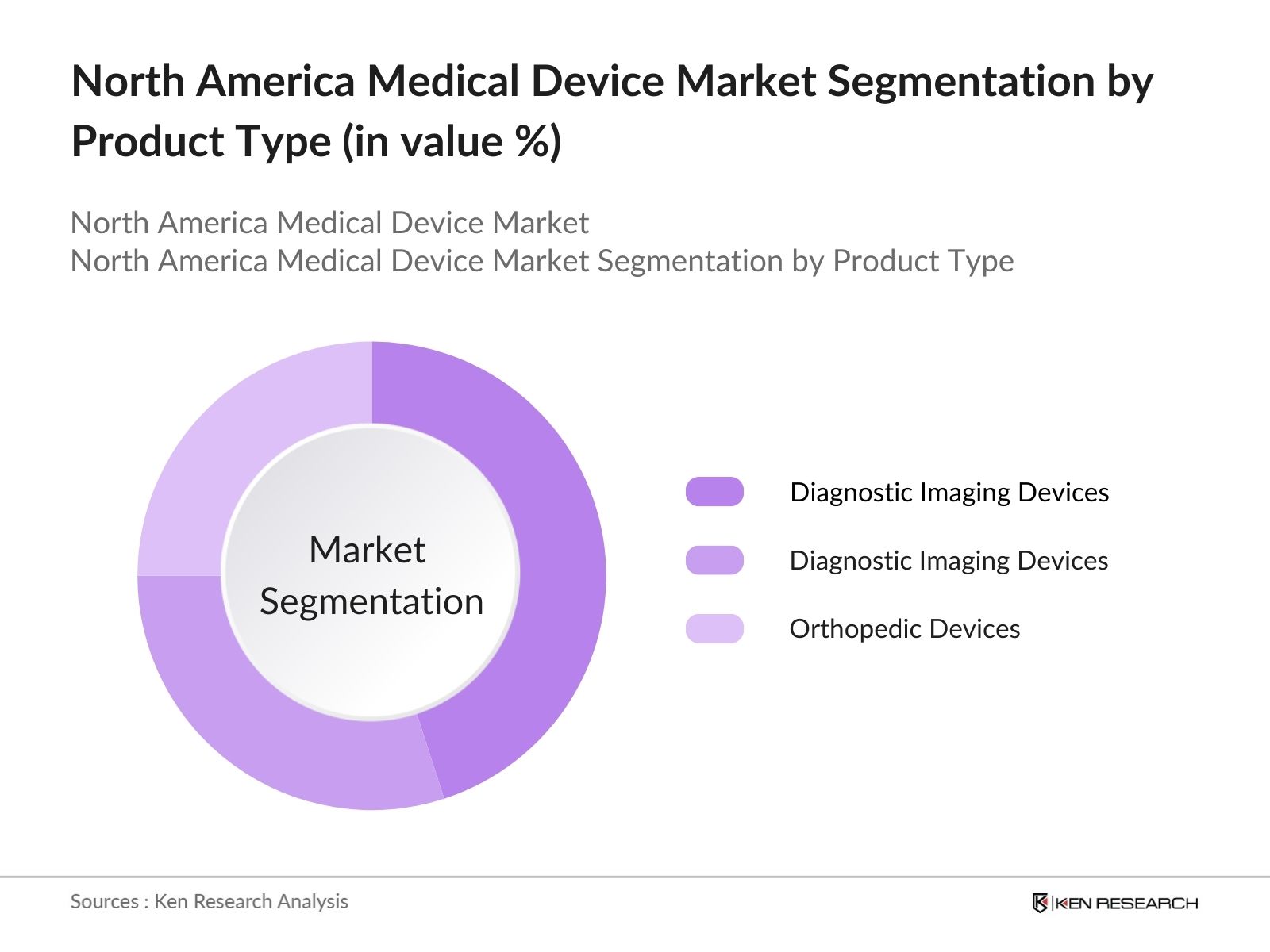
By Product Type: The North America medical device market is segmented by product type into diagnostic imaging devices, cardiovascular devices, and orthopedic devices. In 2023, diagnostic imaging devices held a dominant share of the market due to increased demand for MRI and CT scan systems. The rise in chronic diseases like cancer and the need for early diagnosis have spurred demand for these devices. Major companies like GE Healthcare and Siemens Healthineers are leading the segment, focusing on AI-enabled imaging solutions.
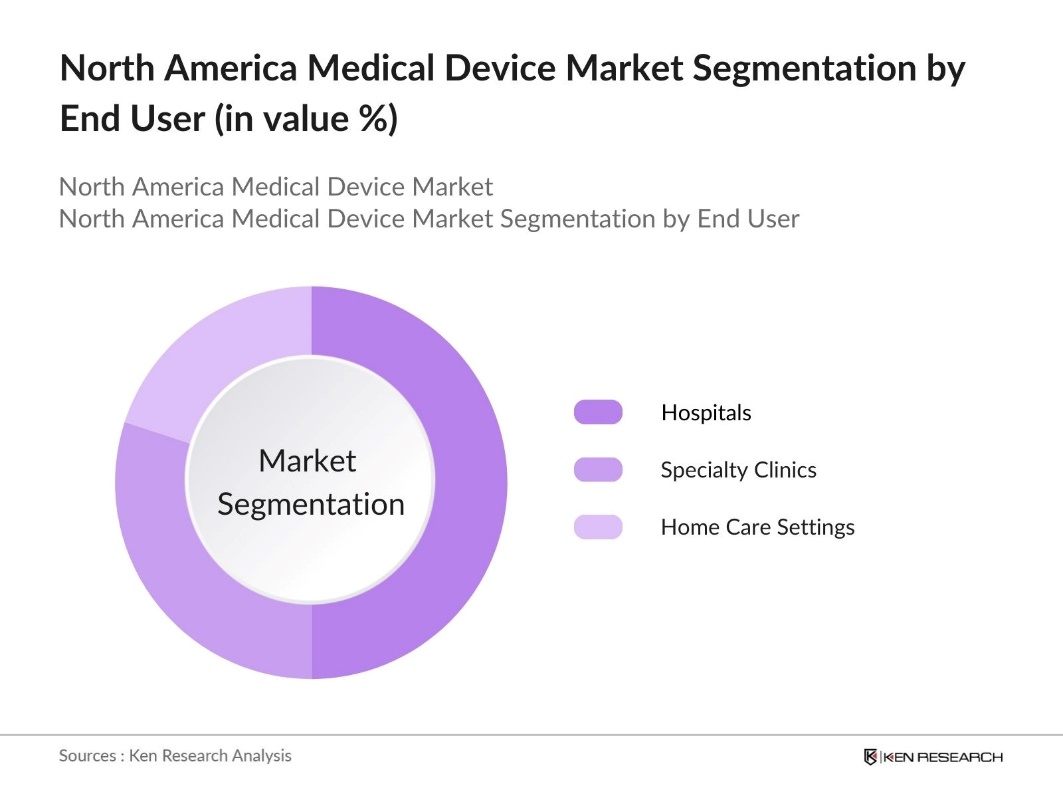
By End-User: By end-user, the market is segmented into hospitals, specialty clinics, and home care settings. In 2023, hospitals dominated the market, accounting for the largest share. This is primarily due to the high demand for advanced medical equipment and the increasing number of hospital admissions for surgeries and critical care. Hospitals invest heavily in upgrading their medical infrastructure to ensure the latest devices are available, which is a key factor in the growth of this segment
By Region: The market is segmented by region into the United States and Canada. In 2023, the United States held the dominant share of the market due to its well-established healthcare infrastructure and higher healthcare expenditure. The presence of numerous leading medical device companies in the U.S., coupled with robust government support for medical technology innovation, has ensured its leadership in the market.
North America Medical Device Market Competitive Landscape
|
Company |
Established Year |
Headquarters |
|
Medtronic |
1949 |
Dublin, Ireland |
|
Johnson & Johnson |
1886 |
New Brunswick, U.S. |
|
Abbott Laboratories |
1888 |
Illinois, U.S. |
|
GE Healthcare |
1892 |
Chicago, U.S. |
|
Stryker Corporation |
1941 |
Michigan, U.S. |
- Johnson & Johnson: In 2022, Johnson & Johnson announced the acquisition of Abiomed, a leading innovator in cardiovascular devices, for $16.6 billion. This acquisition strengthens its portfolio in minimally invasive heart treatments, specifically expanding its reach in high-growth areas like structural heart disease and heart failure treatments.
- Abbott Laboratories: In 2023, Abbott launched the FreeStyle Libre 3, its smallest and most accurate glucose monitoring system. The device offers real-time glucose readings through a mobile app, improving diabetes management. This development positions Abbott at the forefront of digital health solutions, with the product seeing rapid adoption in North America due to its affordability and ease of use.
North America Medical Device Market Analysis
Growth Drivers
- Aging Population and Increasing Prevalence of Chronic Diseases: The North America medical device market is significantly driven by the aging population, especially in the U.S. and Canada. In 2024, about 16% of the U.S. population was aged 65 years and above, a demographic expected to require more healthcare services and medical devices like diagnostic imaging and orthopedic devices. This demographic change has been a key driver for increased demand for devices that manage chronic conditions such as cardiovascular diseases and diabetes, further boosting market growth.
- Technological Advancements in Minimally Invasive Surgeries: In 2024, there was a significant rise in demand for minimally invasive surgical devices, especially in the cardiovascular and orthopedic sectors. Devices such as robotic surgical systems and laparoscopic devices are seeing greater adoption due to reduced recovery time and lower risk of complications. For example, the use of robotic-assisted surgery in the U.S. increased by 25% between 2022 and 2024, primarily in cardiac and neurosurgical procedures, reflecting the growing adoption of these advanced medical devices.
- Growing Investment in Healthcare Infrastructure: In 2023, both the U.S. and Canadian governments increased spending on healthcare infrastructure. The U.S. governments investment in digital health, including telemedicine and remote monitoring solutions, reached $6.5 billion in 2023, with substantial allocations for purchasing modern medical devices for hospitals. Canada also expanded its healthcare budget by $4 billion, with a focus on upgrading medical equipment and enhancing hospital capacities. This has fueled the demand for diagnostic and surgical devices across North America.
Challenges
- Regulatory Compliance and Approval Delays: The stringent regulations imposed by the U.S. Food and Drug Administration (FDA) have caused delays in the approval of new medical devices. Medical device manufacturers in North America faced prolonged approval timelines, impacting their market entry. The complex regulatory landscape, including clinical trials and product testing requirements, increases time-to-market, thus hindering the commercialization of innovative devices.
- High Cost of Advanced Medical Devices: Advanced devices like robotic surgical systems, diagnostic imaging systems, and implantable devices come with high procurement and maintenance costs. These high costs pose a significant challenge for hospitals and clinics, especially in rural areas, which may not have the financial capacity to invest in such high-end medical technology.
Government Initiative
- U.S. Department of Health and Human Services (HHS) Funding for Medical Devices: President Biden has granted the Department of Health and Human Services broader authority under the Defense Production Act to invest $35 million in domestic production of essential medicines in Nov 2023. This move is aimed at strengthening the U.S. pharmaceutical supply chain. The initiative includes investments in manufacturing sterile injectable medicines and appointing a coordinator to oversee supply chain resilience efforts. Additionally, the Department of Defense is set to release a report focused on further strengthening pharmaceutical supply chain resilience.
- FDAs Digital Health Center of Excellence: In 2023, the U.S. FDA launched its Digital Health Center of Excellence, a program aimed at fast-tracking the approval of software-driven medical devices. The initiative offers regulatory support and guidance to manufacturers of digital health tools, including wearable medical devices and AI-powered diagnostic systems. This government initiative has helped expedite the market entry of innovative devices and bolstered the growth of the digital health segment.
North America Medical Device Market Future Outlook
The North America Medical Device Market is projected to grow exponentially by 2028. This growth will be driven by aging population and increasing prevalence of chronic diseases, technological advancements in minimally invasive surgeries and growing investment in healthcare infrastructure.
Future Trends
- Expansion of AI and Machine Learning in Diagnostics and Imaging: By 2028, the use of AI and machine learning in medical diagnostics and imaging will see a massive expansion, driven by advancements in deep learning algorithms and the growing demand for more accurate diagnostic tools. AI-powered imaging systems are expected to account for a significant share of diagnostic devices, helping healthcare providers reduce diagnostic errors and improve patient outcomes. Major players like GE Healthcare will continue to lead the way in integrating AI across their product lines.
- Growth of Telemedicine and Remote Monitoring: The telemedicine segment will continue to grow over the next five years, driven by the increasing adoption of home healthcare solutions. Devices like wearable ECG monitors, continuous glucose monitors, and telehealth-enabled diagnostic systems will play a vital role in improving access to healthcare, especially for rural populations. The U.S. and Canadian governments are expected to invest more in telehealth infrastructure, further fueling this growth.
Scope of the Report
|
By Product Type |
Diagnostic imaging devices Cardiovascular devices Orthopedic devices |
|
By End-User |
Hospitals Specialty clinics Home care settings |
|
By Region |
USA Canada |
Products
Key Target Audience Organizations and Entities Who Can Benefit by Subscribing This Report:
Medical Device Manufacturers
Healthcare Providers (Hospitals, Clinics)
Medical Equipment Distributors
Healthcare IT and Telemedicine Providers
Home Healthcare Providers
Surgical Device Manufacturers
Health Insurance Companies
Diagnostics Laboratories
Government and Regulatory Bodies (U.S. FDA, Health Canada)
Investors and Venture Capitalist Firms
Companies
Players mentioned in the report:
Medtronic
Johnson & Johnson
Abbott Laboratories
GE Healthcare
Stryker Corporation
Siemens Healthineers
Boston Scientific Corporation
Becton, Dickinson and Company
Zimmer Biomet
Baxter International
Table of Contents
1. North America Medical Device Market Overview
1.1. Definition and Scope
1.2. Market Taxonomy
1.3. Market Growth Rate
1.4. Market Segmentation Overview
2. North America Medical Device Market Size (in USD Billion)
2.1. Historical Market Size
2.2. Year-on-Year Growth Analysis
2.3. Key Market Developments and Milestones
3. North America Medical Device Market Analysis
3.1. Growth Drivers
3.1.1. Aging Population
3.1.2. Prevalence of Chronic Diseases
3.1.3. Healthcare Infrastructure Investment
3.2. Restraints
3.2.1. Regulatory Compliance
3.2.2. High Costs of Advanced Devices
3.2.3. Skilled Workforce Shortage
3.3. Opportunities
3.3.1. Telemedicine and Remote Monitoring
3.3.2. Home Healthcare Devices
3.3.3. Wearable Medical Technologies
3.4. Trends
3.4.1. AI in Medical Devices
3.4.2. Robotics in Surgeries
3.4.3. Wearable Health Devices
3.5. Government Regulation
3.5.1. U.S. FDA Medical Device Classification
3.5.2. Health Canada Regulations
3.5.3. Post-Market Surveillance
3.6. SWOT Analysis
3.7. Stakeholder Ecosystem
3.8. Competition Ecosystem
4. North America Medical Device Market Segmentation
4.1. By Product Type (in Value %)
4.1.1. Diagnostic Imaging Devices
4.1.2. Cardiovascular Devices
4.1.3. Orthopedic Devices
4.2. By End-User (in Value %)
4.2.1. Hospitals
4.2.2. Specialty Clinics
4.2.3. Home Care Settings
4.3. By Region (in Value %)
4.3.1. United States
4.3.2. Canada
5. North America Medical Device Market Competitive Landscape
5.1. Market Share Analysis
5.2. Strategic Initiatives
5.3. Mergers and Acquisitions
5.4. Investment Analysis
6. North America Medical Device Market Regulatory Framework
6.1. Regulatory Bodies and Standards
6.2. Compliance Requirements
6.3. Certification Processes
7. North America Medical Device Future Market Size (in USD Billion)
7.1. Future Market Size Projections
7.2. Key Factors Driving Future Market Growth
8. North America Medical Device Market Future Segmentation
8.1. By Product Type (in Value %)
8.2. By End-User (in Value %)
8.3. By Application (in Value %)
8.4. By Technology (in Value %)
8.5. By Region (in Value %)
9. North America Medical Device Market Analysts Recommendations
9.1. TAM/SAM/SOM Analysis
9.2. Customer Cohort Analysis
9.3. Marketing Initiatives
9.4. White Space Opportunity Analysis
10. Key Competitors
10.1 Medtronic
10.2 Johnson & Johnson
10.3 Abbott Laboratories
10.4 GE Healthcare
10.5 Stryker Corporation
10.6 Siemens Healthineers
10.7 Boston Scientific
10.8 Becton Dickinson & Co.
10.9 Zimmer Biomet
10.10 Philips Healthcare
11. North America Medical Device Market Cross Comparison
11.1. Company Profiles and Financial Metrics
11.2. Market Share by Player
11.3. Innovation and R&D Focus
Disclaimer
Contact Us
Research Methodology
Step: 1 Identifying Key Variables:
Ecosystem creation for all the major entities and referring to multiple secondary and proprietary databases to perform desk research around market to collate industry level information.
Step: 2 Market Building:
Collating statistics on North America Medical Device Market over the years, penetration of marketplaces and service providers ratio to compute revenue generated for North America Medical Device Industry. We will also review service quality statistics to understand revenue generated which can ensure accuracy behind the data points shared.
Step: 3 Validating and Finalizing:
Building market hypothesis and conducting CATIs with industry experts belonging to different companies to validate statistics and seek operational and financial information from company representatives.
Step: 4 Research Output:
Our team will approach multiple healthcare companies and understand nature of product segments and sales, consumer preference and other parameters, which will support us validate statistics derived through bottom to top approach from healthcare companies.
Frequently Asked Questions
01. How big is the North America Medical Device Market?
The North America medical device market was valued at USD 196.7 billion in 2023, driven by advancements in medical technology, an aging population, and increasing healthcare expenditure in the U.S. and Canada.
02. What are the challenges in the North America Medical Device Market?
Challenges in the North America medical device market include stringent regulatory compliance, high costs of advanced devices, and a shortage of skilled healthcare professionals capable of operating sophisticated medical equipment.
03. Who are the major players in the North America Medical Device Market?
Key players in the North America medical device market include Medtronic, Johnson & Johnson, Abbott Laboratories, GE Healthcare, and Stryker Corporation, all of which maintain strong market positions through innovation and extensive distribution networks.
04. What are the growth drivers of the North America Medical Device Market?
The market is driven by the aging population, increased prevalence of chronic diseases, and the rise of minimally invasive surgery technologies. Growing investments in healthcare infrastructure are also boosting the demand for advanced medical devices.
Why Buy From Us?

What makes us stand out is that our consultants follows Robust, Refine and Result (RRR) methodology. i.e. Robust for clear definitions, approaches and sanity checking, Refine for differentiating respondents facts and opinions and Result for presenting data with story

We have set a benchmark in the industry by offering our clients with syndicated and customized market research reports featuring coverage of entire market as well as meticulous research and analyst insights.

While we don't replace traditional research, we flip the method upside down. Our dual approach of Top Bottom & Bottom Top ensures quality deliverable by not just verifying company fundamentals but also looking at the sector and macroeconomic factors.

With one step in the future, our research team constantly tries to show you the bigger picture. We help with some of the tough questions you may encounter along the way: How is the industry positioned? Best marketing channel? KPI's of competitors? By aligning every element, we help maximize success.

Our report gives you instant access to the answers and sources that other companies might choose to hide. We elaborate each steps of research methodology we have used and showcase you the sample size to earn your trust.

If you need any support, we are here! We pride ourselves on universe strength, data quality, and quick, friendly, and professional service.