















North America Medical Machines Market Outlook to 2030
Region:North America
Author(s):Shreya Garg
Product Code:KROD7296
November 2024
100
About the Report
North America Medical Machines Market Overview
The North America Medical Machines market is valued at USD 4.6 billion, driven by significant technological advancements and the expansion of healthcare infrastructure. The market growth is bolstered by increasing investments in research and development and the demand for improved patient care systems. The robust healthcare sector, supported by government initiatives, has further propelled the market, ensuring steady demand for medical machines across the region.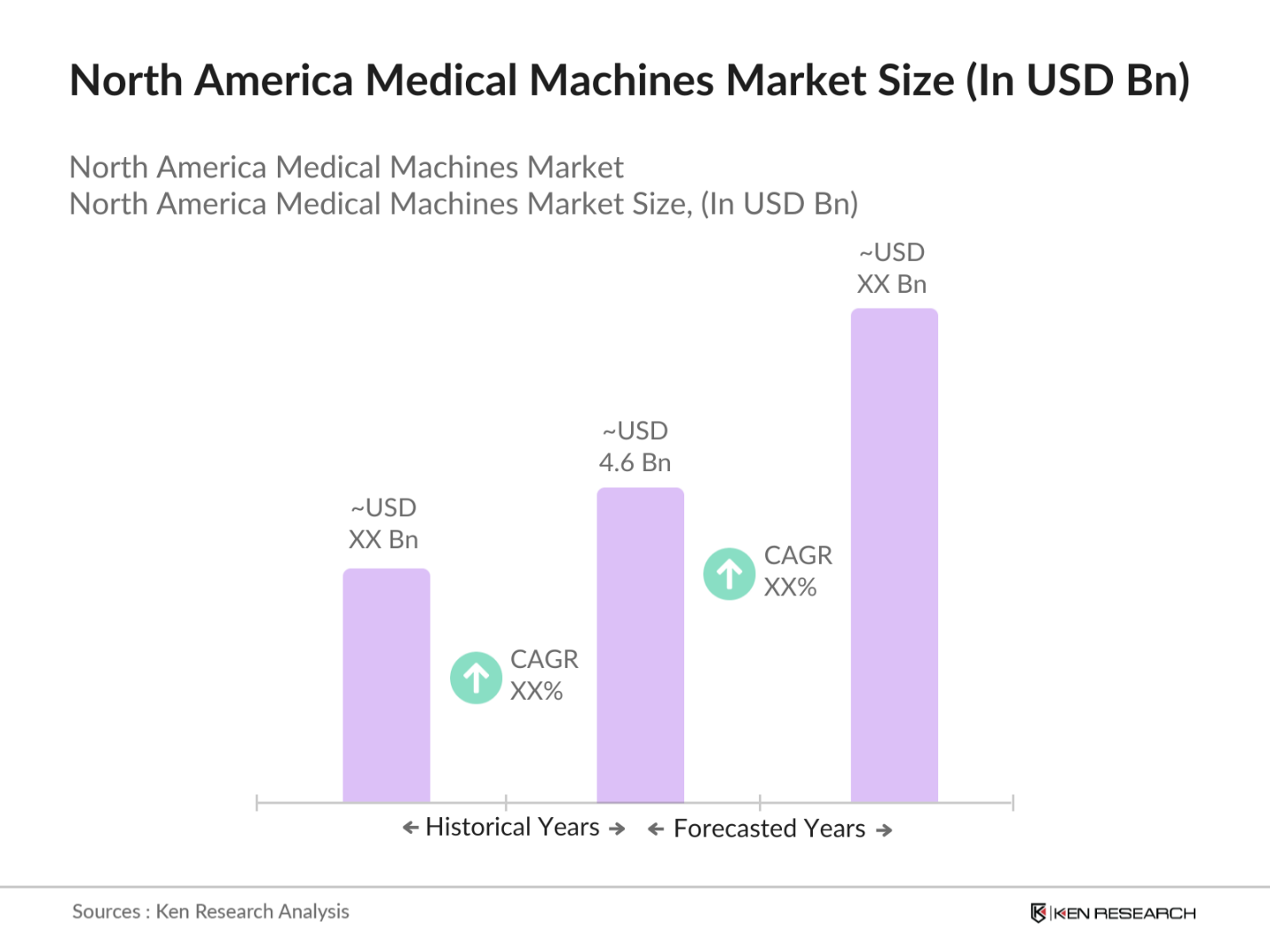
Major cities like New York, Los Angeles, and Chicago dominate the market due to their advanced healthcare facilities, high concentration of medical research institutions, and substantial patient populations. Additionally, countries such as the United States lead due to strong R&D capabilities and the presence of key industry players focusing on innovation and quality improvement.
The FDAs stringent approval processes are a critical regulatory aspect of the medical machines market. In 2024, the FDA reported that it handled over 9,000 device approvals and clearances, ensuring that each met safety and efficacy standards. This regulatory framework ensures that only reliable and safe equipment reaches healthcare providers but can extend the time required for new technology to enter the market. Continuous updates to approval processes reflect the evolving nature of medical device innovation.
North America Medical Machines Market Segmentation
By Machine Type: The North America Medical Machines market is segmented by machine type into diagnostic machines, therapeutic machines, monitoring devices, surgical equipment, and portable devices. Diagnostic machines hold a dominant share due to the widespread adoption of advanced imaging technologies and the increasing need for early and precise medical diagnosis. The availability of high-quality diagnostic tools and continuous innovation in imaging technologies reinforce this segment's leading position.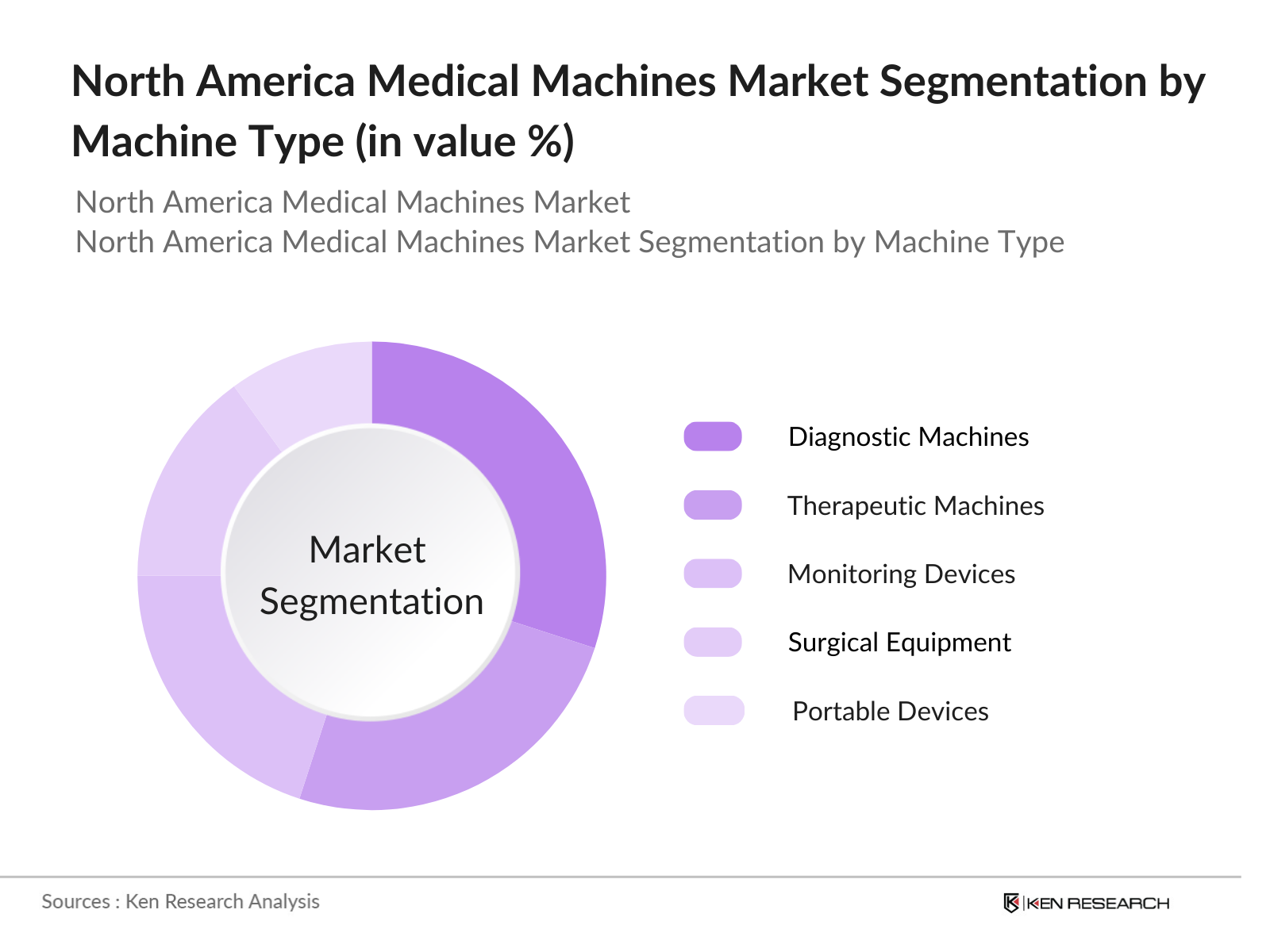
By Application: The market is also segmented by application into hospitals, clinics, home healthcare, and ambulatory surgical centers. Hospitals dominate due to their large-scale adoption of medical machines for a broad range of treatments and diagnostic purposes. The integration of sophisticated medical technology and continuous upgrades in hospital infrastructure contribute to this segment's prominence.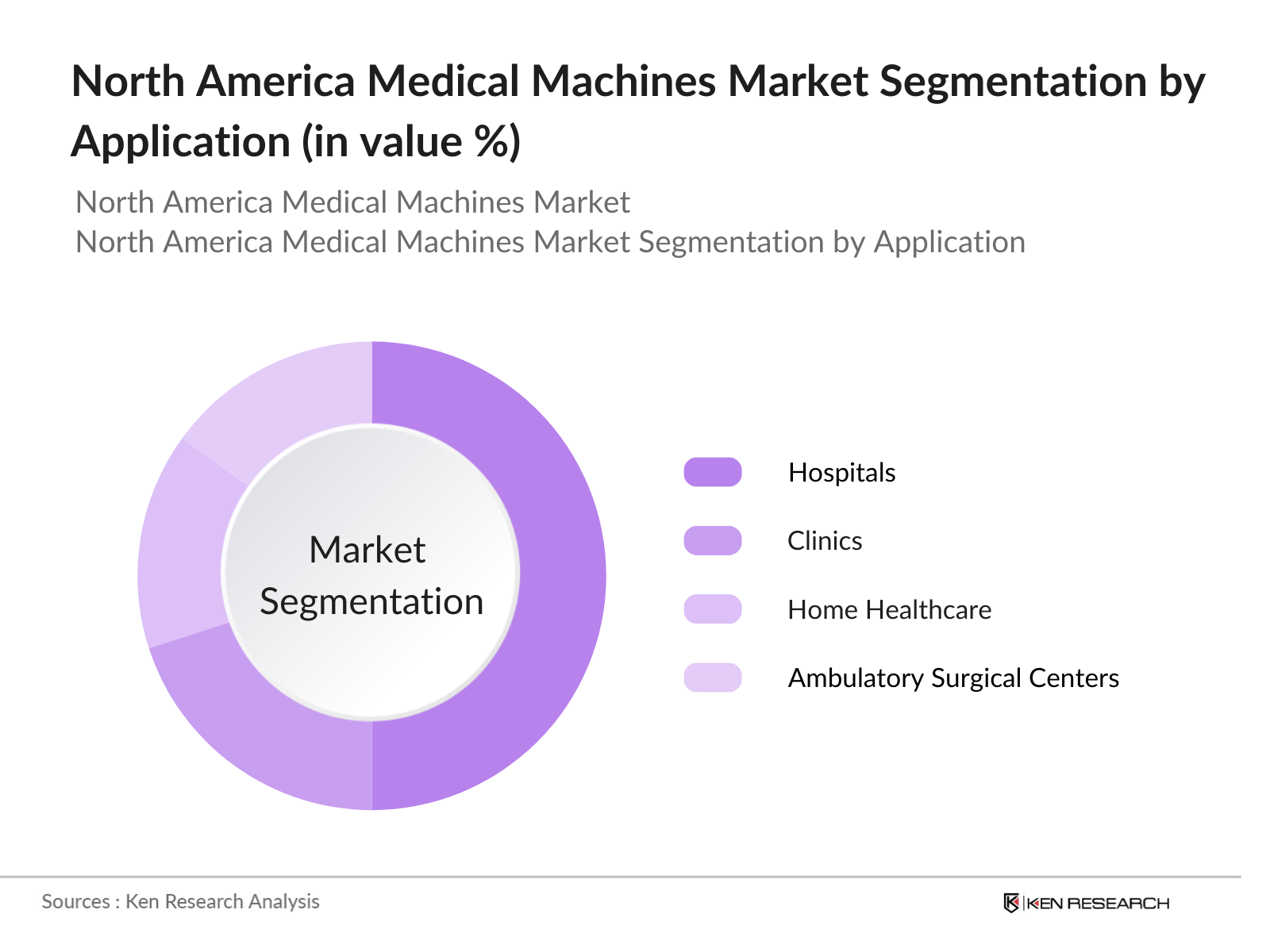
North America Medical Machines Market Competitive Landscape
The North America Medical Machines market is dominated by leading industry players with significant market influence. This consolidation underscores the role of innovation, strategic partnerships, and competitive product portfolios in maintaining market leadership.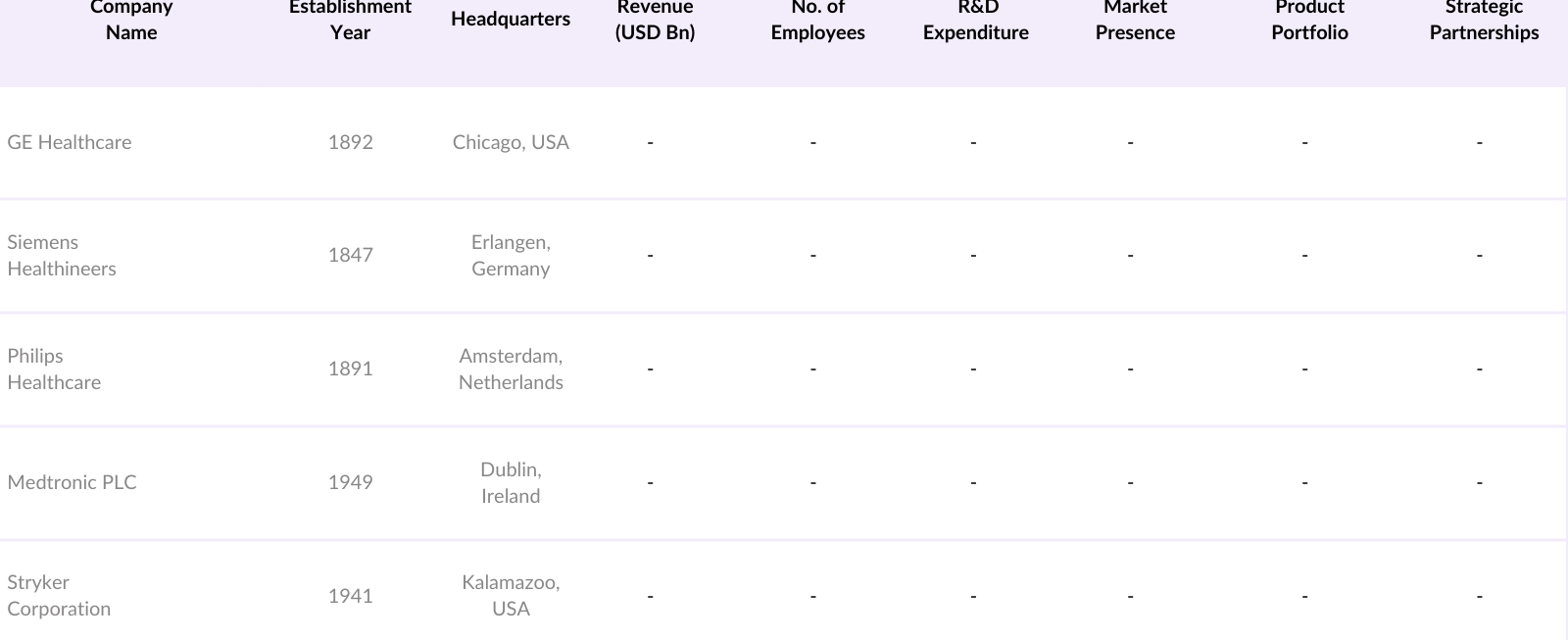
North America Medical Machines Industry Analysis
Growth Drivers
- Rising Prevalence of Chronic Diseases: The increasing prevalence of chronic diseases is a significant growth driver in the North America medical machines market. According to the U.S. Centers for Disease Control and Prevention (CDC), as of 2024, nearly 52 million adults in the U.S. suffer from arthritis, while approximately 37 million have diabetes. These statistics underline the high demand for medical diagnostic and treatment machines. Chronic diseases require continuous monitoring and treatment, bolstering the need for advanced medical machinery to manage patient care effectively. This ongoing demand supports the expansion of the medical machines sector.
- Technological Innovations Technological advancements are propelling the medical machines market forward. Innovations such as robotic-assisted surgery, AI-driven diagnostics, and advanced imaging technologies have been pivotal. The adoption of AI-based radiology tools in the U.S. has facilitated faster diagnostics, with reports indicating that AI can reduce diagnostic times by 30 minutes per patient on average in 2024. Such advancements have driven hospitals and clinics to invest in high-tech equipment to improve patient outcomes. This shift is supported by government-backed initiatives promoting research and development in medical technology.
- Expanding Healthcare Infrastructure: The expansion of healthcare infrastructure in North America contributes significantly to the growth of the medical machines market. In 2024, the U.S. government allocated $165 billion to improve healthcare facilities under the Infrastructure Investment and Jobs Act. This funding supports the acquisition of modern medical machines across hospitals and clinics, enhancing their diagnostic and treatment capabilities. The expansion of facilities in both urban and rural areas aims to ensure equitable healthcare access, which in turn boosts the demand for advanced medical equipment.
Market Challenges
- High Equipment Costs: The high cost of medical machinery poses a challenge to market growth. Advanced diagnostic equipment, such as MRI and CT scanners, can cost between $500,000 and $3 million, making them a substantial investment for healthcare facilities. Smaller clinics and rural hospitals often face budget constraints, limiting their ability to acquire such equipment. In 2024, nearly 30% of small healthcare centers in North America reported difficulties in funding new medical equipment purchases, according to government health statistics. This financial barrier impacts the market's overall growth.
- Stringent Regulatory Compliance: The medical machines market is heavily regulated, with strict compliance requirements affecting manufacturers and healthcare providers. The U.S. Food and Drug Administration (FDA) oversees rigorous approval processes, ensuring safety and efficacy. In 2024, the FDA reported that out of 1,200 new device applications, only 65% were approved within a standard review period due to stringent safety protocols. These regulatory hurdles can slow down the market entry of new technologies, delaying product launches and impacting revenue for manufacturers.
North America Medical Machines Market Future Outlook
Over the next five years, the North America Medical Machines market is poised to witness significant advancements driven by continuous investment in technology, rising healthcare expenditure, and the adoption of AI-powered solutions. Innovations in machine learning, telemedicine integration, and enhanced home healthcare services are expected to play pivotal roles in the growth trajectory of the market.
Future Market Opportunities
- Integration with Artificial Intelligence: The integration of AI with medical machines presents a significant opportunity for market expansion. AI algorithms enable faster data analysis and improved diagnostic accuracy, which is critical for patient outcomes. For example, in 2024, AI-enhanced CT scans were found to reduce false-negative rates by up to 18% in clinical studies. Hospitals are increasingly adopting such AI-integrated machines to enhance workflow efficiency and precision in patient care. This trend opens up avenues for partnerships between tech companies and medical equipment manufacturers.
- Expansion in Emerging Markets: Emerging markets in North America, such as rural and underdeveloped areas, represent potential growth avenues. Initiatives aimed at improving healthcare services in these regions, backed by government funding, are driving this expansion. In 2024, the U.S. Department of Agriculture announced $1.2 billion in grants to enhance medical facilities in underserved communities, leading to increased demand for medical machines. This opportunity is further supported by policies that facilitate public and private investments in healthcare technology.
Scope of the Report
|
Segment |
Sub-Segments |
|---|
|
Product Type |
Diagnostic Imaging Devices |
|
Application |
Diagnostic |
|
End User |
Hospitals |
|
Distribution Channel |
Direct Sales |
|
Country |
United States |
Products
Key Target Audience
Medical Machine Manufacturers
Hospital and Clinic Administrators
Healthcare Providers
Research Institutions
Rehabilitation Centers
Government and Regulatory Bodies (e.g., FDA, Health Canada)
Investor and Venture Capitalist Firms
Home Healthcare Service Providers
Companies
Major Players mentioned in the Report
GE Healthcare
Siemens Healthineers
Philips Healthcare
Medtronic PLC
Stryker Corporation
Becton, Dickinson and Company (BD)
Abbott Laboratories
Johnson & Johnson Medical Devices Companies
Hill-Rom Holdings, Inc.
Baxter International Inc.
Boston Scientific Corporation
Danaher Corporation
Intuitive Surgical, Inc.
Zimmer Biomet Holdings, Inc.
Cardinal Health
Table of Contents
1. Market Overview
1.1 Definition and Scope
1.2 Market Taxonomy
1.3 Market Growth Rate
1.4 Market Segmentation Overview
2. Market Size (In USD Billion)
2.1 Historical Market Size
2.2 Year-On-Year Growth Analysis
2.3 Key Market Developments and Milestones
3. Market Analysis
3.1 Growth Drivers
3.1.1 Technological Advancements
3.1.2 Aging Population
3.1.3 Prevalence of Chronic Diseases
3.1.4 Healthcare Expenditure
3.2 Market Challenges
3.2.1 Regulatory Compliance
3.2.2 High R&D Costs
3.2.3 Reimbursement Issues
3.3 Opportunities
3.3.1 Emerging Markets
3.3.2 Telemedicine Integration
3.3.3 Personalized Medicine
3.4 Trends
3.4.1 Wearable Medical Devices
3.4.2 AI and Machine Learning Applications
3.4.3 Home Healthcare Devices
3.5 Government Regulations
3.5.1 FDA Guidelines
3.5.2 Health Canada Regulations
3.5.3 Reimbursement Policies
3.6 SWOT Analysis
3.7 Stakeholder Ecosystem
3.8 Porters Five Forces Analysis
3.9 Competitive Landscape
4. Market Segmentation
4.1 By Product Type (In Value %)
4.1.1 Diagnostic Imaging Devices
4.1.2 Cardiovascular Devices
4.1.3 Orthopedic Devices
4.1.4 In Vitro Diagnostics (IVD)
4.1.5 Ophthalmic Devices
4.2 By Application (In Value %)
4.2.1 Diagnostic
4.2.2 Therapeutic
4.2.3 Surgical
4.2.4 Monitoring
4.3 By End User (In Value %)
4.3.1 Hospitals
4.3.2 Ambulatory Surgical Centers
4.3.3 Home Healthcare
4.3.4 Specialty Clinics
4.4 By Distribution Channel (In Value %)
4.4.1 Direct Sales
4.4.2 Distributors
4.4.3 Online Platforms
4.5 By Country (In Value %)
4.5.1 United States
4.5.2 Canada
4.5.3 Mexico
5. Competitive Analysis
5.1 Detailed Profiles of Major Companies
5.1.1 Medtronic
5.1.2 Johnson & Johnson
5.1.3 GE Healthcare
5.1.4 Siemens Healthineers
5.1.5 Abbott Laboratories
5.1.6 Boston Scientific
5.1.7 Stryker Corporation
5.1.8 Philips Healthcare
5.1.9 Becton, Dickinson and Company
5.1.10 Zimmer Biomet
5.1.11 Baxter International
5.1.12 3M Health Care
5.1.13 Danaher Corporation
5.1.14 Cardinal Health
5.1.15 Thermo Fisher Scientific
5.2 Cross Comparison Parameters (Revenue, Market Share, Product Portfolio, R&D Investment, Regional Presence, Strategic Initiatives, Mergers and Acquisitions, Technological Innovations)
5.3 Market Share Analysis
5.4 Strategic Initiatives
5.5 Mergers and Acquisitions
5.6 Investment Analysis
5.6.1 Venture Capital Funding
5.6.2 Government Grants
5.6.3 Private Equity Investments
6. Regulatory Framework
6.1 FDA Approval Process
6.2 Health Canada Approval Process
6.3 Compliance Requirements
6.4 Certification Processes
7. Future Market Size (In USD Billion)
7.1 Future Market Size Projections
7.2 Key Factors Driving Future Market Growth
8. Future Market Segmentation
8.1 By Product Type (In Value %)
8.2 By Application (In Value %)
8.3 By End User (In Value %)
8.4 By Distribution Channel (In Value %)
8.5 By Country (In Value %)
9. Market Analysts Recommendations
9.1 Total Addressable Market (TAM) Analysis
9.2 Serviceable Available Market (SAM) Analysis
9.3 Serviceable Obtainable Market (SOM) Analysis
9.4 Customer Cohort Analysis
9.5 Marketing Initiatives
9.6 White Space Opportunity Analysis
Disclaimer
Contact Us
Research Methodology
Step 1: Identification of Key Variables
The initial phase involves mapping out an ecosystem that includes all primary stakeholders in the North America Medical Machines market. This process is reinforced through thorough desk research using a blend of proprietary and secondary data sources to recognize the essential factors driving the market.
Step 2: Market Analysis and Construction
This stage compiles and scrutinizes historical data related to the market, including market size, distribution channels, and revenue streams. Additionally, performance metrics are evaluated to validate the reliability of revenue projections and industry dynamics.
Step 3: Hypothesis Validation and Expert Consultation
Hypotheses are established and validated using consultations with industry experts through structured interviews and surveys. These interactions provide firsthand market insights, ensuring the accuracy of collected data and reinforcing the findings with practical perspectives.
Step 4: Research Synthesis and Final Output
The final phase involves a comprehensive synthesis of primary and secondary data to confirm and substantiate market analysis. This step ensures that the findings are accurate, actionable, and aligned with market realities, delivering a well-rounded market overview.
Frequently Asked Questions
01 How big is the North America Medical Machines Market?
The North America Medical Machines market was valued at USD 4.6 billion, driven by technological advancements and rising healthcare expenditure.
02 What are the challenges in the North America Medical Machines Market?
Challenges in the North America Medical Machines market include high equipment costs, strict regulatory requirements, and limited access to advanced technology in remote areas.
03 Who are the major players in the North America Medical Machines Market?
Key players in the North America Medical Machines market include GE Healthcare, Siemens Healthineers, Philips Healthcare, Medtronic PLC, and Stryker Corporation, known for their strong market presence and innovative product lines.
04 What are the growth drivers of the North America Medical Machines Market?
Growth in the North America Medical Machines market is propelled by technological innovation, the increasing prevalence of chronic diseases, and the expansion of healthcare infrastructure.
05 Which segment dominates the North America Medical Machines Market?
The diagnostic machines segment holds a dominant share in the North America Medical Machines market due to advancements in imaging technology and the need for accurate and early diagnostics.
Why Buy From Us?

What makes us stand out is that our consultants follows Robust, Refine and Result (RRR) methodology. i.e. Robust for clear definitions, approaches and sanity checking, Refine for differentiating respondents facts and opinions and Result for presenting data with story

We have set a benchmark in the industry by offering our clients with syndicated and customized market research reports featuring coverage of entire market as well as meticulous research and analyst insights.

While we don't replace traditional research, we flip the method upside down. Our dual approach of Top Bottom & Bottom Top ensures quality deliverable by not just verifying company fundamentals but also looking at the sector and macroeconomic factors.

With one step in the future, our research team constantly tries to show you the bigger picture. We help with some of the tough questions you may encounter along the way: How is the industry positioned? Best marketing channel? KPI's of competitors? By aligning every element, we help maximize success.

Our report gives you instant access to the answers and sources that other companies might choose to hide. We elaborate each steps of research methodology we have used and showcase you the sample size to earn your trust.

If you need any support, we are here! We pride ourselves on universe strength, data quality, and quick, friendly, and professional service.