
North America Olive Market Outlook to 2030
Region:Mexico
Author(s):Shreya Garg
Product Code:KROD8934
Region:Mexico
Author(s):Shreya Garg
Product Code:KROD8934
December 2024
99
Listen to the audio summary
By Product Type: The Market is segmented by product type into table olives, olive oil, and olive paste. Recently, olive oil holds a dominant share due to its widespread use in culinary applications and increasing adoption in personal care products. Olive oils dominance is largely attributed to its reputation as a heart-healthy option, combined with its use in Mediterranean and health-focused diets across North America. Table olives also enjoy popularity but cater to a niche segment, primarily as a snack or addition to gourmet dishes. 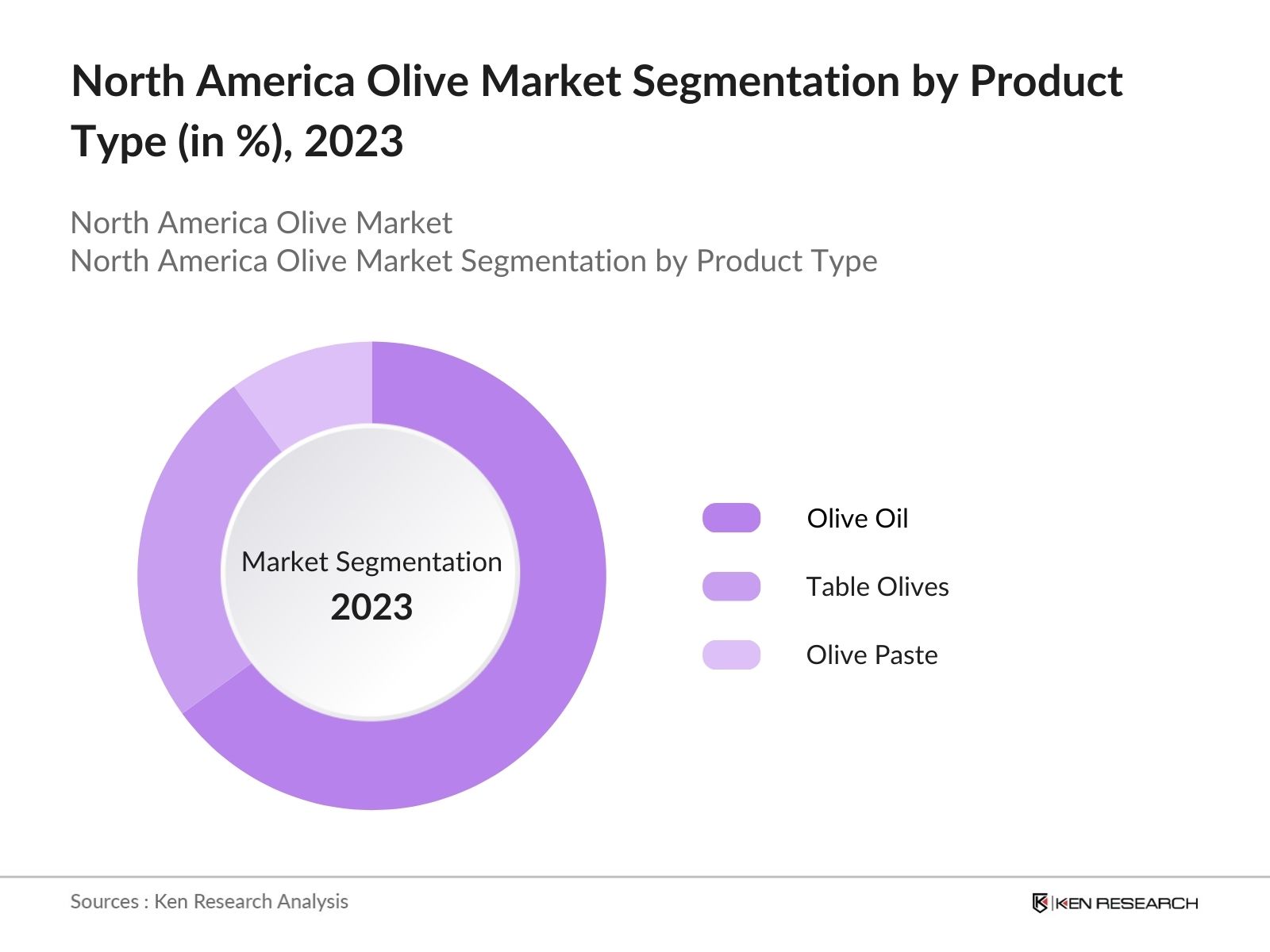
By Application: The Market, segmented by application, includes culinary, pharmaceuticals, personal care, and industrial uses. Culinary applications are predominant, driven by the essential role of olive oil in both home and commercial kitchens. The use of olive oil as a preferred cooking medium is reinforced by health-conscious consumers and is widely recommended for its nutritional value. The personal care segment is also gaining traction, with olive oil-based skincare products growing in demand due to natural ingredients benefits. 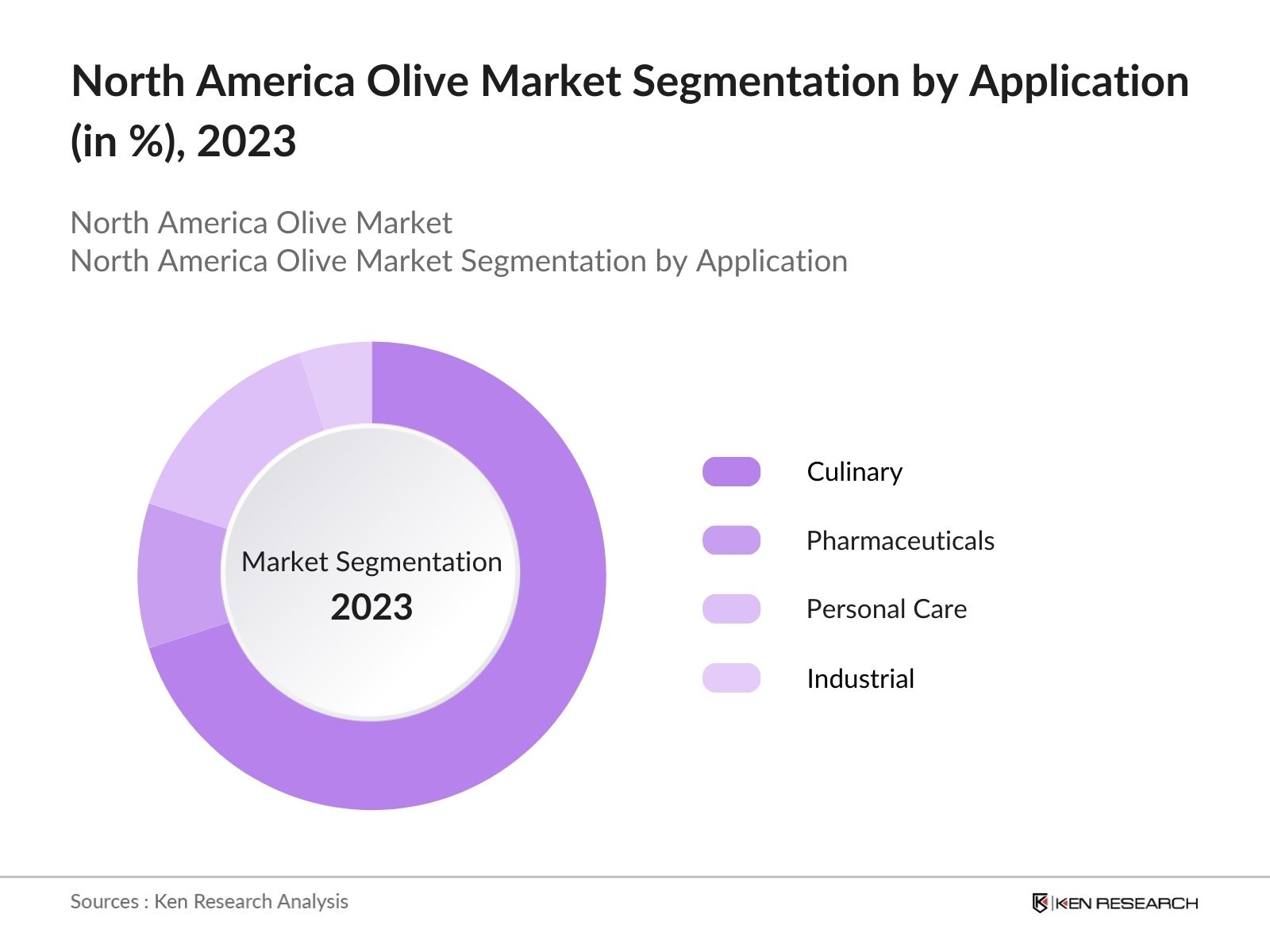
The North American Olive Market is dominated by several prominent companies, including both international and local players. The market leaders are typically known for their extensive product ranges, adherence to quality standards, and innovations in sustainable production practices. The North America Olive Market exhibits consolidation among these key players, reflecting the influence of well-established companies with extensive distribution networks and strong market share.
|
Company |
Establishment Year |
Headquarters |
Product Range |
R&D Investment |
Certifications |
Sustainability Initiatives |
Regional Presence |
Market Share |
|
Deoleo |
1955 |
Crdoba, Spain |
||||||
|
California Olive Ranch |
1998 |
Chico, California, USA |
||||||
|
Pompeian, Inc. |
1906 |
Baltimore, Maryland, USA |
||||||
|
Borges International |
1896 |
Reus, Spain |
||||||
|
Colavita |
1938 |
Molise, Italy |
Over the next few years, the North America Olive Market is expected to expand steadily, driven by increased consumer interest in health-focused foods, the growth of premium and organic olive products, and technological advancements in sustainable olive farming. The market is also anticipated to benefit from supportive regulatory frameworks that favor high-quality, certified imports and domestic production. With growing applications across food, nutraceuticals, and cosmetics sectors, the market is well-positioned for continued development and diversification.
|
By Product Type |
Table Olives |
|
By Application |
Culinary |
|
By Distribution Channel |
Online Retail |
|
By Variety |
Arbequina |
|
By Region |
United States |
1.1. Definition and Scope
1.2. Market Taxonomy
1.3. Market Dynamics Overview
1.4. Market Segmentation Overview
2.1. Historical Market Size
2.2. Year-on-Year Growth Analysis
2.3. Key Market Developments and Milestones
3.1. Growth Drivers
3.1.1. Rise in Health Awareness
3.1.2. Demand for Mediterranean Diet
3.1.3. Expansion in Food Processing Industry
3.1.4. Supportive Government Policies
3.2. Market Challenges
3.2.1. Climate Dependency (Impact of Climate Conditions)
3.2.2. High Production Costs
3.2.3. Trade Restrictions and Tariffs
3.3. Opportunities
3.3.1. Organic and Premium Product Demand
3.3.2. Expansion in Nutraceuticals
3.3.3. Technological Advancements in Cultivation
3.4. Trends
3.4.1. Adoption of Sustainable Farming
3.4.2. Olive Oil-Based Skincare Products
3.4.3. Increase in Private Label Olive Brands
3.5. Government Regulation
3.5.1. Import Standards
3.5.2. Subsidy Programs
3.5.3. Organic Certification Policies
3.6. SWOT Analysis
3.7. Stakeholder Ecosystem (Supply Chain and Distribution)
3.8. Porters Five Forces Analysis
3.9. Competition Ecosystem
4.1. By Product Type (In Value %)
4.1.1. Table Olives
4.1.2. Olive Oil
4.1.3. Olive Paste
4.2. By Application (In Value %)
4.2.1. Culinary
4.2.2. Pharmaceuticals
4.2.3. Personal Care
4.2.4. Industrial
4.3. By Distribution Channel (In Value %)
4.3.1. Online Retail
4.3.2. Supermarkets/Hypermarkets
4.3.3. Specialty Stores
4.3.4. Direct Sales
4.4. By Variety (In Value %)
4.4.1. Arbequina
4.4.2. Koroneiki
4.4.3. Manzanilla
4.4.4. Kalamata
4.5. By Region (In Value %)
4.5.1. United States
4.5.2. Canada
4.5.3. Mexico
5.1 Detailed Profiles of Major Companies
5.1.1. Deoleo
5.1.2. Pompeian, Inc.
5.1.3. California Olive Ranch
5.1.4. Agro Sevilla
5.1.5. Acesur North America
5.1.6. Borges International Group
5.1.7. Colavita USA
5.1.8. Gaea North America
5.1.9. Figaro USA
5.1.10. Sovena Group
5.1.11. OliveOilsLand
5.1.12. Yum Brands (Olive Garden Supplier)
5.1.13. The Olive Oil Source
5.1.14. Trieste Olive Oil Co.
5.1.15. Veronica Foods Company
5.2 Cross Comparison Parameters (Number of Employees, Headquarters, Revenue, R&D Investment, Product Portfolio, Sustainability Initiatives, Regional Presence, Certifications)
5.3. Market Share Analysis
5.4. Strategic Initiatives
5.5. Mergers and Acquisitions
5.6. Investment Analysis
5.7. Venture Capital Funding
5.8. Government Grants
5.9. Private Equity Investments
6.1. Import and Export Regulations
6.2. Health and Safety Standards
6.3. Organic Certification
6.4. Olive Oil Quality Grading Standards
6.5. Trade Tariffs and Quotas
7.1. Projected Market Size
7.2. Key Growth Factors
8.1. By Product Type (In Value %)
8.2. By Application (In Value %)
8.3. By Distribution Channel (In Value %)
8.4. By Variety (In Value %)
8.5. By Region (In Value %)
9.1. Market Entry Strategy
9.2. Positioning and Branding Initiatives
9.3. White Space Opportunities
9.4. Potential Partnerships and Alliances
Disclaimer Contact UsThe research begins with constructing a comprehensive ecosystem map covering all major stakeholders within the North America Olive Market. Extensive desk research is conducted using proprietary databases to identify key variables affecting market dynamics.
Historical data is compiled and analyzed, with emphasis on market penetration rates, major consumption hubs, and revenue generation within the North American olive industry. Service quality metrics are evaluated to ensure reliable revenue estimations.
Market hypotheses are developed and validated through structured interviews with industry experts across multiple firms. These insights provide firsthand information on operational trends, production costs, and market challenges.
The final stage involves engaging with olive oil producers to gather detailed data on consumer preferences and product segments. This synthesis is instrumental in verifying and refining the bottom-up analysis for a comprehensive report.
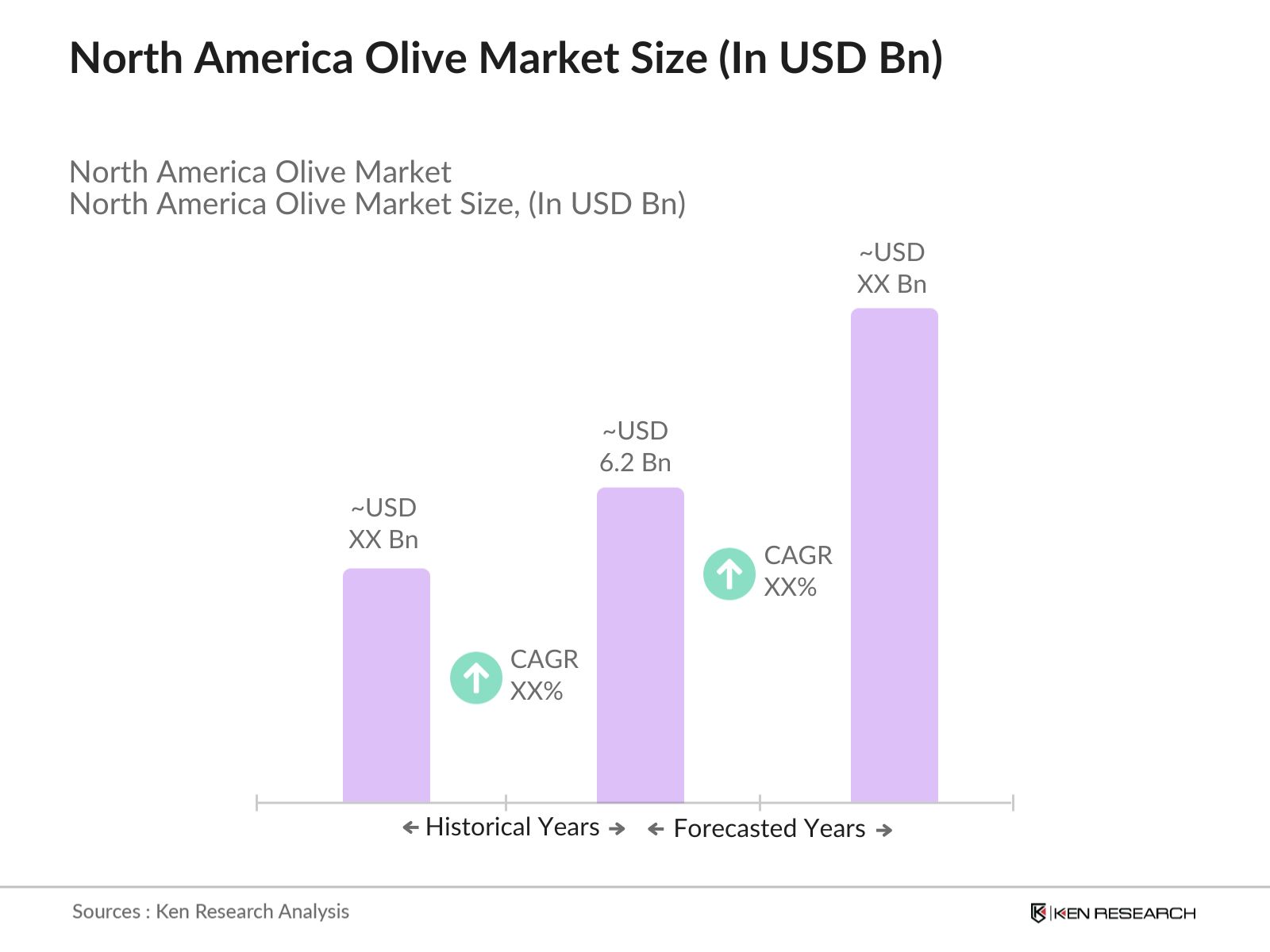
The North America Olive Market is valued at USD 6.2 billion, supported by increasing demand for olive oil in culinary and personal care applications. Health-conscious consumers and growing preference for Mediterranean diets contribute to the market size.
Key challenges in the North America Olive Market include climate dependency affecting crop yield, high production costs, and trade barriers like tariffs on imports. These factors impact production stability and cost-effectiveness across the supply chain.
Leading players in the North America Olive Market include Deoleo, California Olive Ranch, Pompeian, Inc., Borges International, and Colavita. These companies maintain strong positions due to product quality, certifications, and distribution networks.
Growth drivers in the North America Olive Market include increasing health awareness, demand for Mediterranean diets, and government support for high-quality imports. These factors encourage market expansion through heightened consumer demand.
California in the United States and parts of Mexico are key players in the North America Olive Market due to favorable climate conditions and established agricultural practices. These regions support extensive olive production, fulfilling both local and export demands.

What makes us stand out is that our consultants follows Robust, Refine and Result (RRR) methodology. i.e. Robust for clear definitions, approaches and sanity checking, Refine for differentiating respondents facts and opinions and Result for presenting data with story

We have set a benchmark in the industry by offering our clients with syndicated and customized market research reports featuring coverage of entire market as well as meticulous research and analyst insights.

While we don't replace traditional research, we flip the method upside down. Our dual approach of Top Bottom & Bottom Top ensures quality deliverable by not just verifying company fundamentals but also looking at the sector and macroeconomic factors.

With one step in the future, our research team constantly tries to show you the bigger picture. We help with some of the tough questions you may encounter along the way: How is the industry positioned? Best marketing channel? KPI's of competitors? By aligning every element, we help maximize success.

Our report gives you instant access to the answers and sources that other companies might choose to hide. We elaborate each steps of research methodology we have used and showcase you the sample size to earn your trust.

If you need any support, we are here! We pride ourselves on universe strength, data quality, and quick, friendly, and professional service.