
North America PCs Market Outlook to 2030
Region:United States
Author(s):Abhinav kumar
Product Code:KROD6682
Region:United States
Author(s):Abhinav kumar
Product Code:KROD6682
December 2024
94
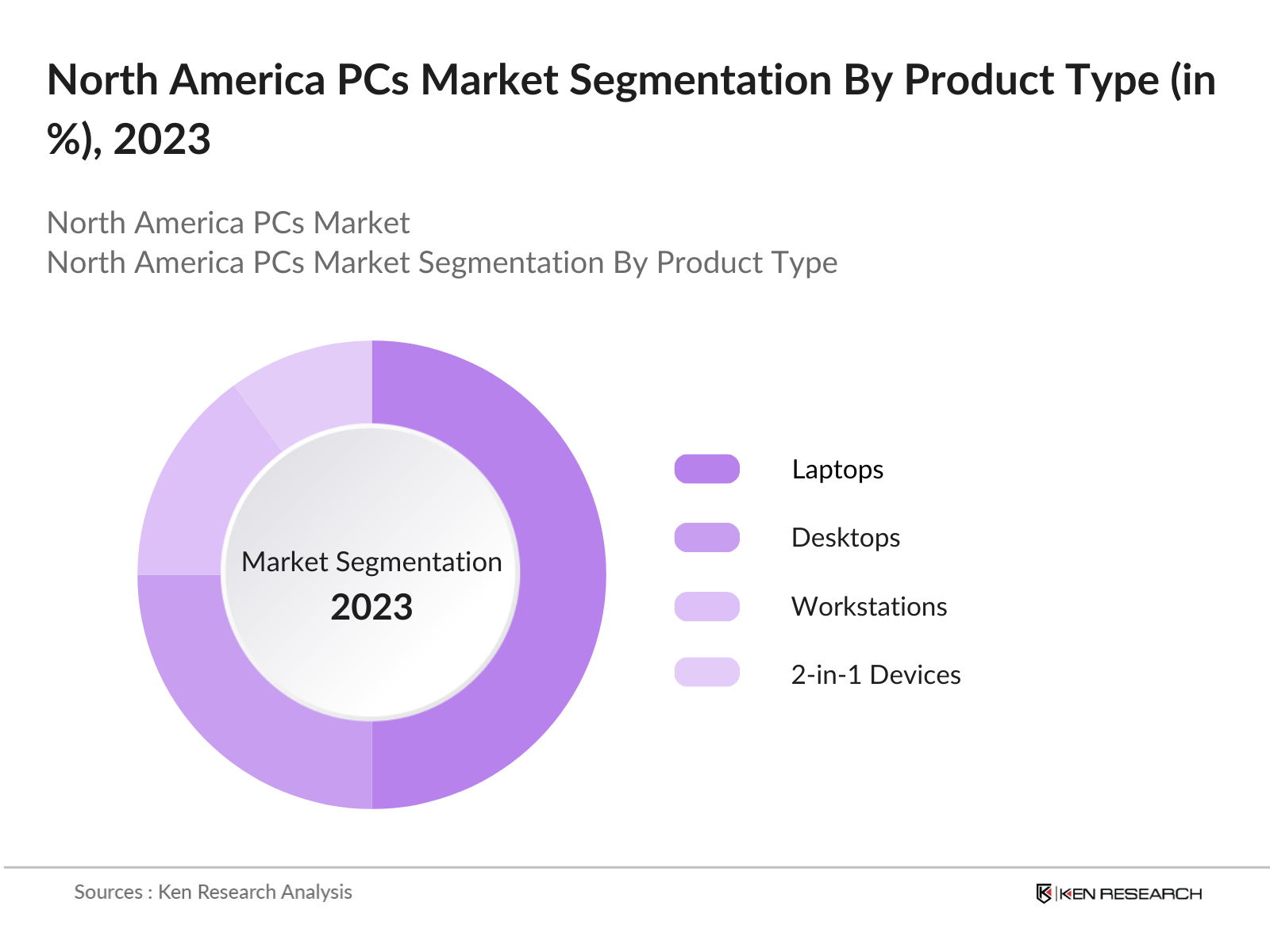
By Product Type: The North America PCs market is segmented by product type into desktops, laptops, workstations, and 2-in-1 devices. Desktops, while historically strong, have seen a decline in favor of more portable options. However, laptops have emerged as the dominant segment due to their versatility and portability. Laptops now dominate the market due to increased remote work and mobility needs. The widespread adoption of laptops is supported by advancements in battery life, processing power, and lightweight designs, making them the go-to choice for both consumers and businesses alike.
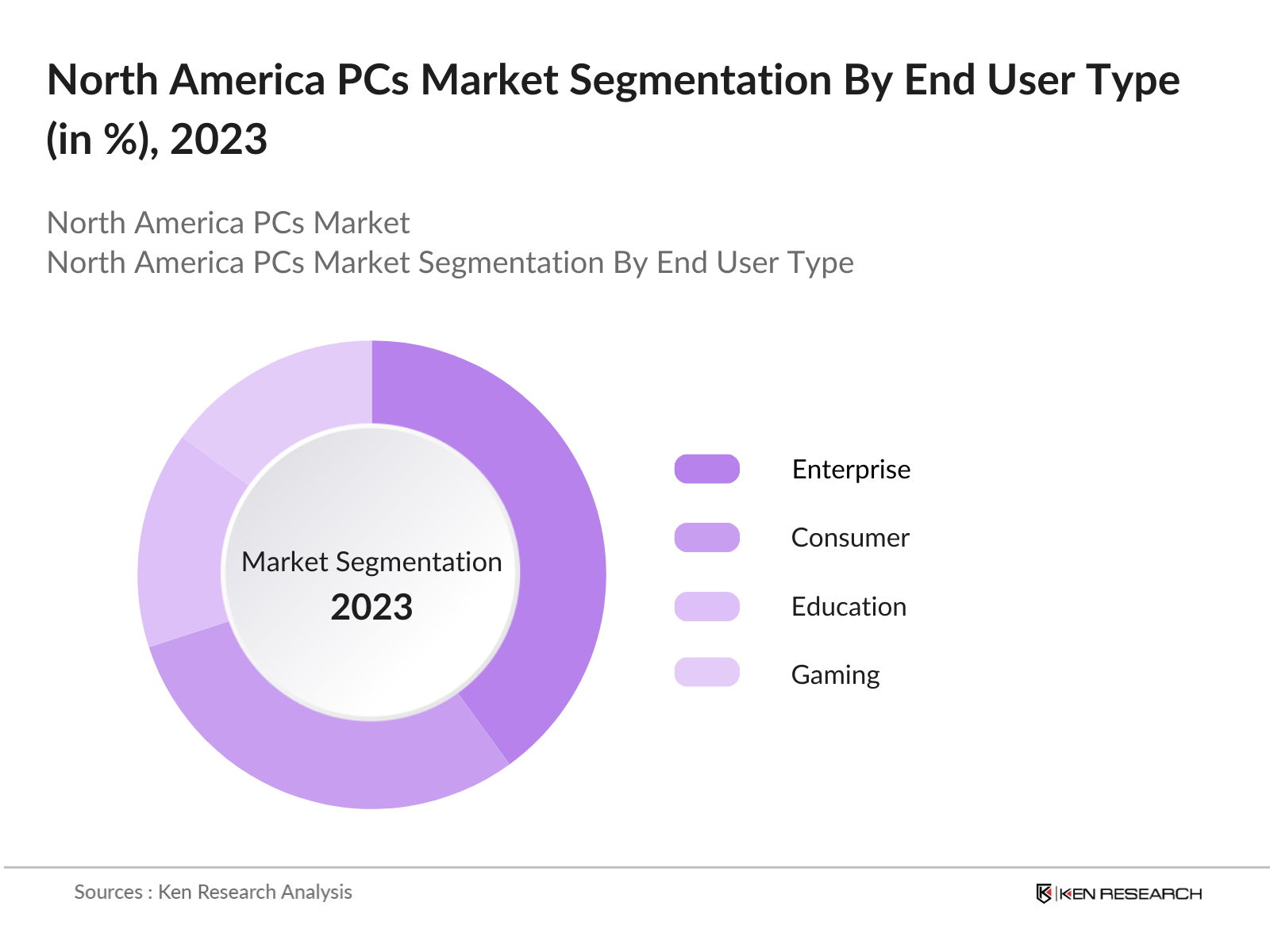
By End User: The market is segmented by end users into consumers, enterprises, education, and gaming. The enterprise segment holds a significant share due to continuous investments in corporate IT infrastructure. Large corporations and small businesses alike rely on high-performance PCs to support operations, with a focus on security, efficiency, and remote collaboration tools. The demand for business-grade PCs, particularly laptops with high-end security features and enhanced processing power, is driving this sub-segment's dominance in the market.
The North America PCs market is characterized by a few dominant players who control a significant portion of the market. These companies include tech giants such as Apple, Dell, HP, Lenovo, and Microsoft. The competitive landscape is shaped by constant innovation in hardware design, processing power, and consumer customization options. Companies like Apple and Dell lead the market by continuously evolving their product offerings with cutting-edge designs, while others like Microsoft and Lenovo excel in catering to enterprise users with high-end workstations and durable laptops designed for heavy workloads.
|
Company |
Establishment Year |
Headquarters |
No. of Employees |
Revenue |
R&D Expenditure |
Product Portfolio |
Sustainability Initiatives |
Customer Satisfaction |
|
Apple Inc. |
1976 |
Cupertino, CA, USA |
_ |
_ |
_ |
_ |
_ |
_ |
|
Dell Technologies |
1984 |
Round Rock, TX, USA |
_ |
_ |
_ |
_ |
_ |
_ |
|
Hewlett-Packard (HP) |
1939 |
Palo Alto, CA, USA |
_ |
_ |
_ |
_ |
_ |
_ |
|
Lenovo Group |
1984 |
Beijing, China; Morrisville, NC, USA |
_ |
_ |
_ |
_ |
_ |
_ |
|
Microsoft Corporation |
1975 |
Redmond, WA, USA |
_ |
_ |
_ |
_ |
_ |
_ |
Over the next few years, the North America PCs market is expected to demonstrate sustained growth, driven by increasing demand for high-performance devices across various sectors such as corporate, gaming, and education. The ongoing shift towards hybrid working models and the rising popularity of gaming are major factors that will continue to drive the market. Moreover, advancements in processors, memory technologies, and AI-driven applications will further enhance PC capabilities, maintaining steady demand from both enterprise and consumer markets.
|
By Product Type |
Desktops Laptops Workstations 2-in-1 Devices |
|
By End User |
Consumer Enterprise Education Gaming |
|
By Distribution Channel |
Online Retail Offline Retail Corporate Direct Sales IT Value-Added Resellers |
|
By Processor Type |
Intel AMD Apple Silicon |
|
By Region |
United States Canada Mexico |
1.1. Definition and Scope
1.2. Market Taxonomy
1.3. Market Growth Rate (YoY growth, average sales increase, consumption growth)
1.4. Market Segmentation Overview
2.1. Historical Market Size (Unit Shipments, Revenue)
2.2. Year-On-Year Growth Analysis (Sales Volume, Revenue Growth)
2.3. Key Market Developments and Milestones (Product Launches, Technological Advances)
3.1. Growth Drivers
3.1.1. Technological Innovation (Processor Evolution, GPU Advancements)
3.1.2. Increasing Digitalization (Remote Work, Education Trends)
3.1.3. Rising Gaming Industry (Esports Market, Demand for High-Performance PCs)
3.1.4. Corporate IT Infrastructure Investment (Enterprise Adoption of PCs)
3.2. Market Challenges
3.2.1. Supply Chain Disruptions (Semiconductor Shortages, Logistics Bottlenecks)
3.2.2. Rising Component Costs (Increased Prices of Processors, GPUs, etc.)
3.2.3. Market Saturation (Slowing Growth in Established Markets)
3.3. Opportunities
3.3.1. Expansion of Cloud Computing (Growth in Thin Clients, Virtual Desktops)
3.3.2. Growth in AR/VR Applications (PCs for Virtual Experiences, Developer Tools)
3.3.3. Increased Customization and Modular Designs (DIY PCs, Enthusiast Market)
3.4. Trends
3.4.1. Rise in Portable PCs (Laptops, 2-in-1 Devices)
3.4.2. Energy Efficiency and Sustainability (Green Computing Initiatives)
3.4.3. Integration of AI and Machine Learning (AI-enhanced PCs, Smarter Software)
3.5. Government Regulation
3.5.1. Import/Export Regulations (Tariffs, Trade Agreements Impacting PC Components)
3.5.2. Environmental Standards (E-Waste Management, Energy Star Ratings)
3.5.3. Data Privacy and Security Compliance (GDPR, CCPA, HIPAA)
3.6. SWOT Analysis
3.7. Stakeholder Ecosystem (OEMs, Component Suppliers, Retailers)
3.8. Porters Five Forces (Supplier Power, Buyer Power, New Entrants, Substitutes, Competitive Rivalry)
3.9. Competition Ecosystem (Direct Competition, Indirect Competition)
4.1. By Product Type (In Value %)
4.1.1. Desktops
4.1.2. Laptops
4.1.3. Workstations
4.1.4. 2-in-1 Devices
4.2. By End User (In Value %)
4.2.1. Consumer
4.2.2. Enterprise
4.2.3. Education
4.2.4. Gaming
4.3. By Distribution Channel (In Value %)
4.3.1. Online Retail
4.3.2. Offline Retail
4.3.3. Corporate Direct Sales
4.3.4. IT Value-Added Resellers (VARs)
4.4. By Processor Type (In Value %)
4.4.1. Intel
4.4.2. AMD
4.4.3. Apple Silicon
4.5. By Region (In Value %)
4.5.1. United States
4.5.2. Canada
4.5.3. Mexico
5.1 Detailed Profiles of Major Companies
5.1.1. Dell Technologies
5.1.2. Hewlett-Packard (HP)
5.1.3. Apple Inc.
5.1.4. Lenovo Group
5.1.5. Microsoft Corporation
5.1.6. ASUS
5.1.7. Acer Inc.
5.1.8. MSI (Micro-Star International)
5.1.9. Razer Inc.
5.1.10. Samsung Electronics
5.1.11. Alienware (Dell Subsidiary)
5.1.12. Fujitsu
5.1.13. Panasonic
5.1.14. Toshiba
5.1.15. Google (Chromebooks)
5.2 Cross Comparison Parameters (Revenue, Market Share, Units Sold, Innovation Focus, Sustainability Initiatives, Product Portfolio, Customer Satisfaction, Service Support)
5.3. Market Share Analysis (Percentage Market Control by Competitors)
5.4. Strategic Initiatives (Partnerships, Product Development, Market Expansion)
5.5. Mergers And Acquisitions
5.6. Investment Analysis
5.7 Venture Capital Funding
5.8. Government Grants
5.9. Private Equity Investments
6.1. Import and Export Regulations (PC Components, Finished Products)
6.2. Taxation Policies (Impact on PC Manufacturing)
6.3. Environmental Compliance (E-Waste Handling, Emissions from Manufacturing)
7.1. Future Market Size Projections
7.2. Key Factors Driving Future Market Growth
8.1. By Product Type (In Value %)
8.2. By End User (In Value %)
8.3. By Distribution Channel (In Value %)
8.4. By Processor Type (In Value %)
8.5. By Region (In Value %)
9.1. TAM/SAM/SOM Analysis
9.2. Customer Cohort Analysis
9.3. Marketing Initiatives
9.4. White Space Opportunity Analysis
In the initial phase, an ecosystem map was created to identify all major stakeholders in the North America PCs market. Comprehensive desk research, utilizing secondary databases, was conducted to gather information about key market dynamics such as product innovation and consumer demand trends. This step was essential in determining the factors driving market growth and challenges.
Historical data from leading market players and industry reports were compiled to analyze the market's performance over the past five years. The market size was calculated based on shipment volumes, unit sales, and revenue generation. This analysis helped to understand market penetration rates across various segments and provided insights into demand-supply dynamics.
Hypotheses regarding market trends and consumer behavior were validated through interviews with industry experts from top PC manufacturers. These consultations provided key insights into technological innovations and future market opportunities, allowing for a more accurate and reliable analysis.
The final stage involved synthesizing data from both primary and secondary research, including feedback from manufacturers and consumers. The output was cross-verified with industry benchmarks, ensuring that the report's findings are comprehensive, accurate, and reflective of the North America PCs market.
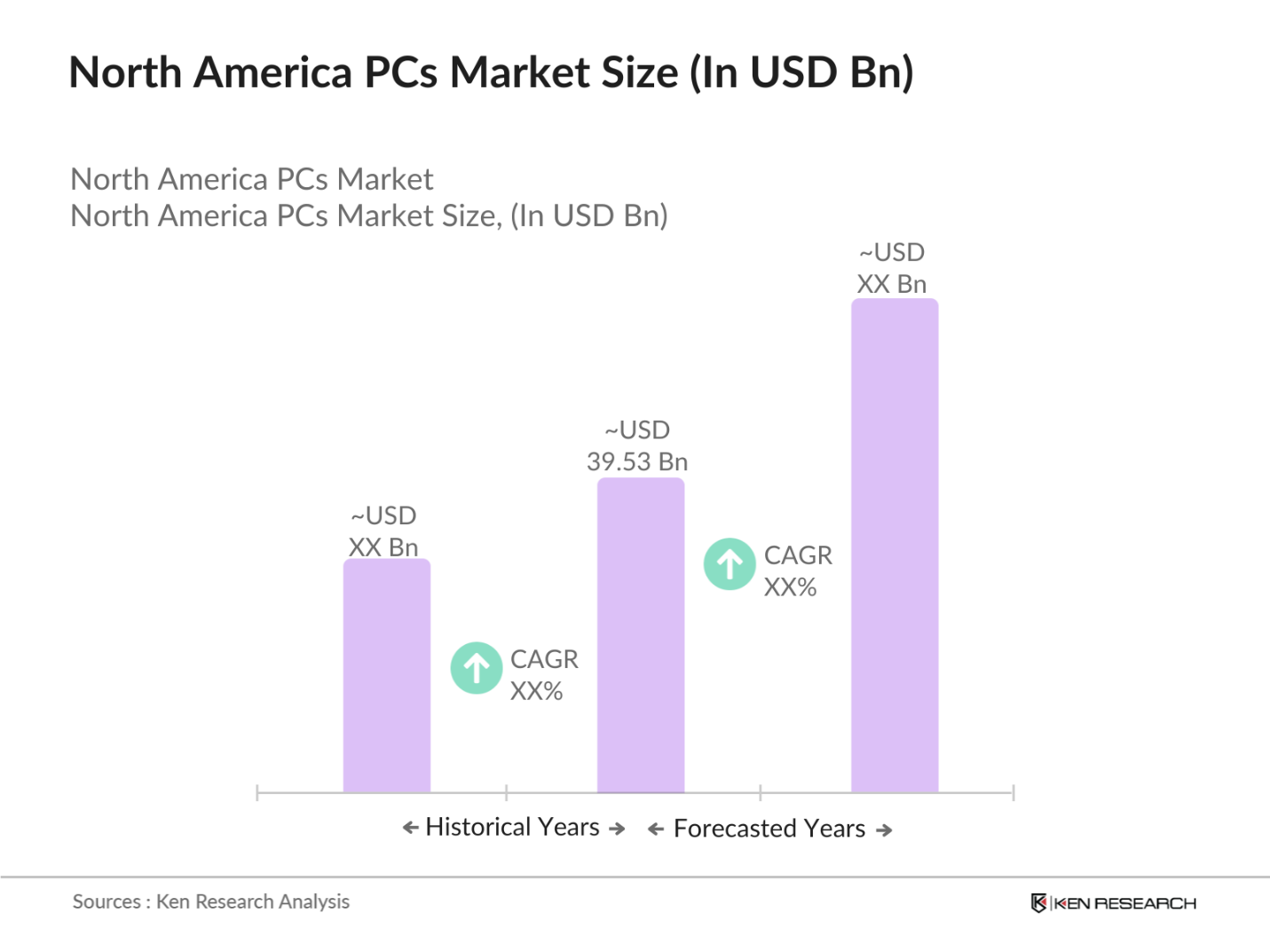
The North America PCs market is valued at USD 39.53 billion, primarily driven by increasing consumer demand for portable computing devices and enterprise needs for high-performance systems.
Challenges in the market include semiconductor shortages, rising costs of key components like GPUs and processors, and potential market saturation in mature regions.
Key players include Apple, Dell Technologies, HP, Lenovo, and Microsoft, who dominate the market through continuous innovation and widespread consumer trust.
The market is driven by remote work, the growing gaming industry, increased enterprise IT spending, and advancements in computing technologies such as AI integration and virtual reality.

What makes us stand out is that our consultants follows Robust, Refine and Result (RRR) methodology. i.e. Robust for clear definitions, approaches and sanity checking, Refine for differentiating respondents facts and opinions and Result for presenting data with story

We have set a benchmark in the industry by offering our clients with syndicated and customized market research reports featuring coverage of entire market as well as meticulous research and analyst insights.

While we don't replace traditional research, we flip the method upside down. Our dual approach of Top Bottom & Bottom Top ensures quality deliverable by not just verifying company fundamentals but also looking at the sector and macroeconomic factors.

With one step in the future, our research team constantly tries to show you the bigger picture. We help with some of the tough questions you may encounter along the way: How is the industry positioned? Best marketing channel? KPI's of competitors? By aligning every element, we help maximize success.

Our report gives you instant access to the answers and sources that other companies might choose to hide. We elaborate each steps of research methodology we have used and showcase you the sample size to earn your trust.

If you need any support, we are here! We pride ourselves on universe strength, data quality, and quick, friendly, and professional service.