















North America Pea Protein Market Outlook to 2030
Region:North America
Author(s):Yogita Sahu
Product Code:KROD9133
November 2024
99
About the Report
North America Pea Protein Market Overview
- The North America Pea Protein Market, was valued at USD 700 million, reflects a consistent increase attributed to rising demand for plant-based alternatives. This growth is primarily driven by a growing consumer base focused on health and wellness, particularly as awareness of dietary protein needs expands. Other drivers include increased adoption by food manufacturers and the appeal of pea proteins functional benefits, such as allergen-free, gluten-free, and non-GMO characteristics.
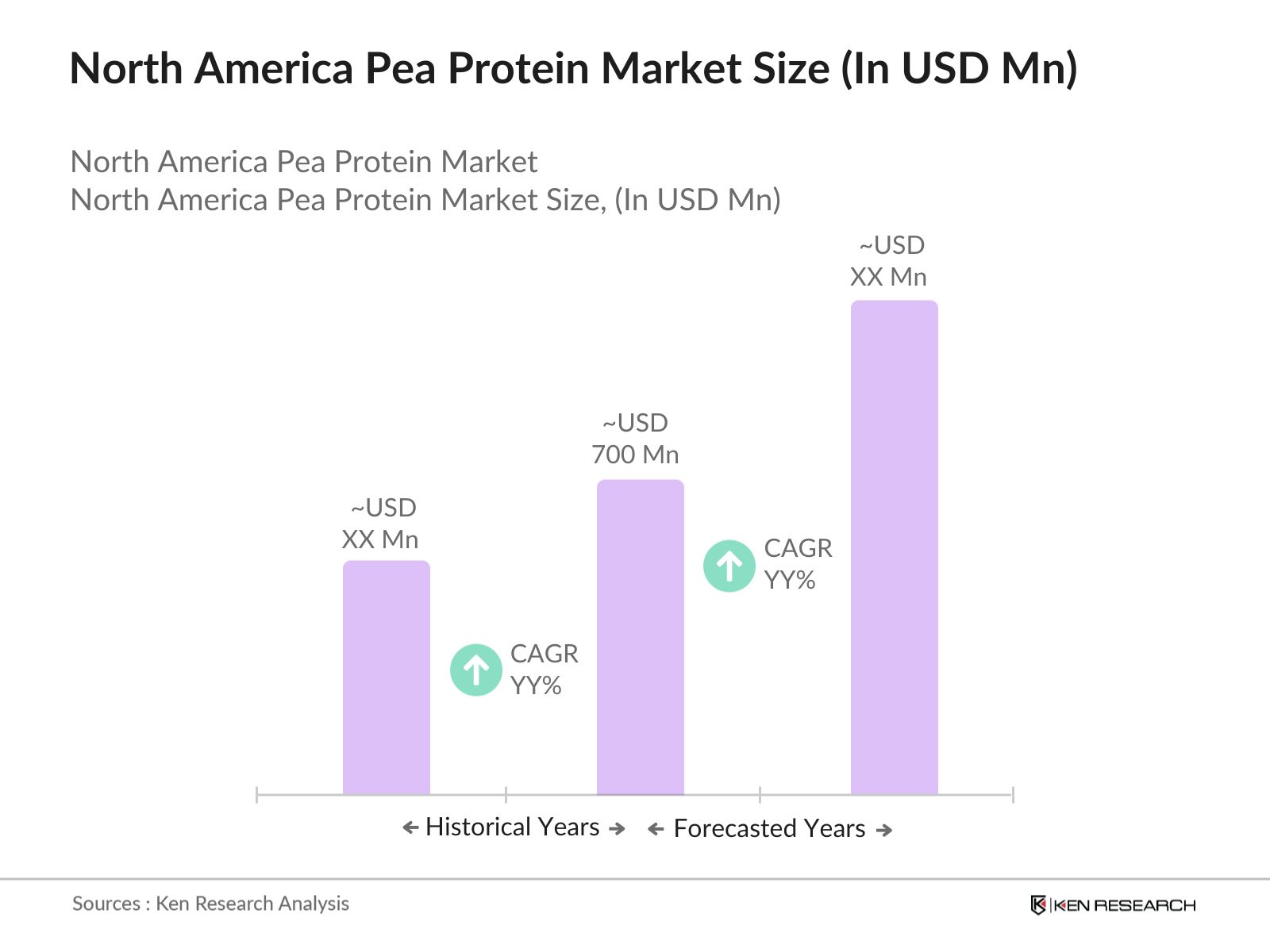
- The United States and Canada hold dominant positions in this market. This dominance is due to strong consumer demand for plant-based foods, extensive distribution networks, and advancements in processing technologies. The prevalence of large-scale food producers and investment in research further supports the leadership of these regions in the North American market.
- The North American governments, particularly the U.S. Department of Agriculture (USDA), have provided nearly $500 million in subsidies for pulse crop farmers in 2024. These subsidies support pea cultivation, increasing raw material availability for pea protein manufacturers, stabilizing supply, and reducing costs for producers.
North America Pea Protein Market Segmentation
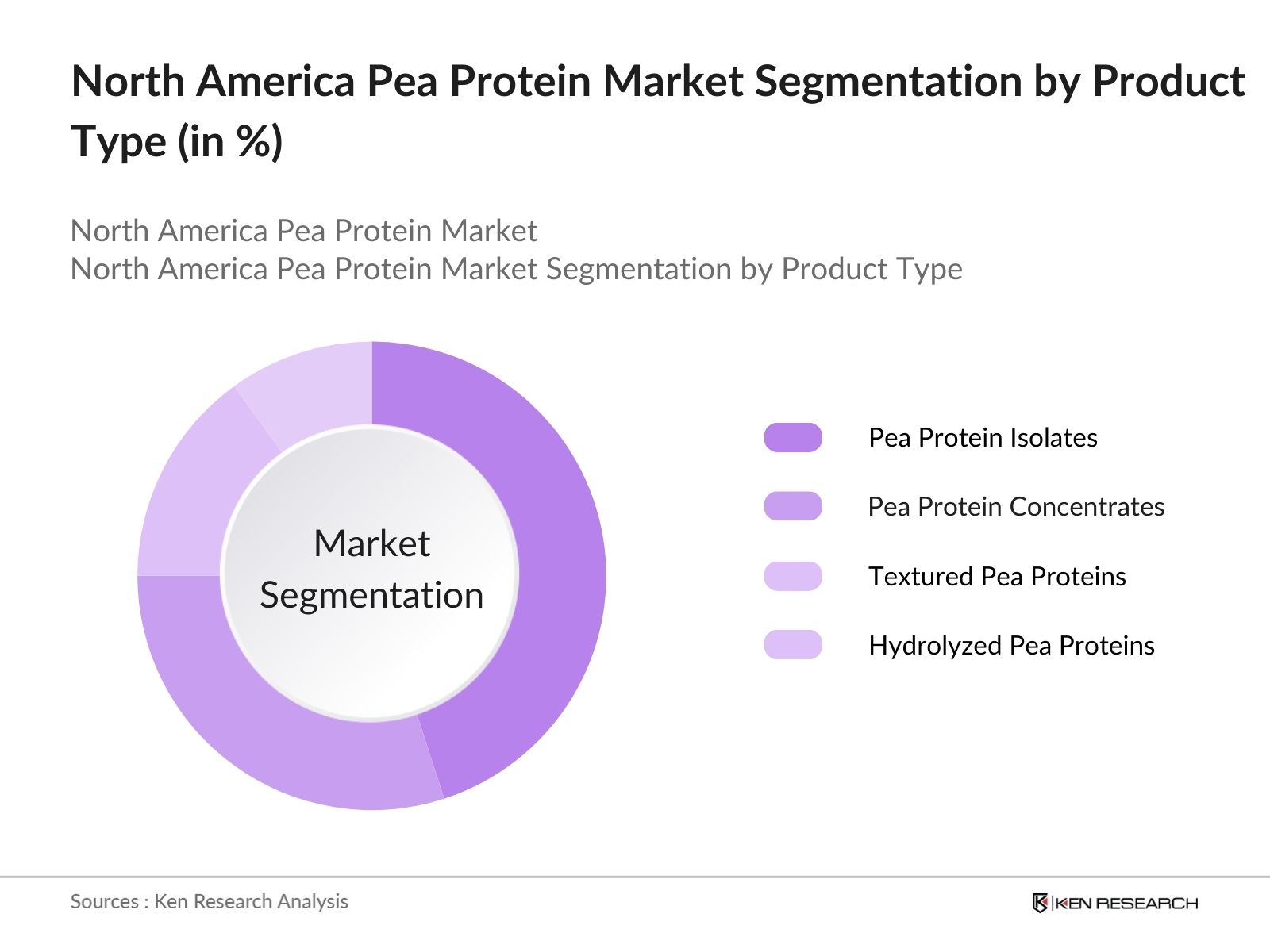
By Product Type: The market is segmented by product type into pea protein isolates, pea protein concentrates, textured pea proteins, and hydrolyzed pea proteins. Recently, pea protein isolates have dominated market share under this segmentation, owing to their high protein content and functional benefits in sports and health nutrition. This segment has gained traction among manufacturers for use in dairy alternatives, supplements, and meat analogs, which cater to health-conscious consumers.
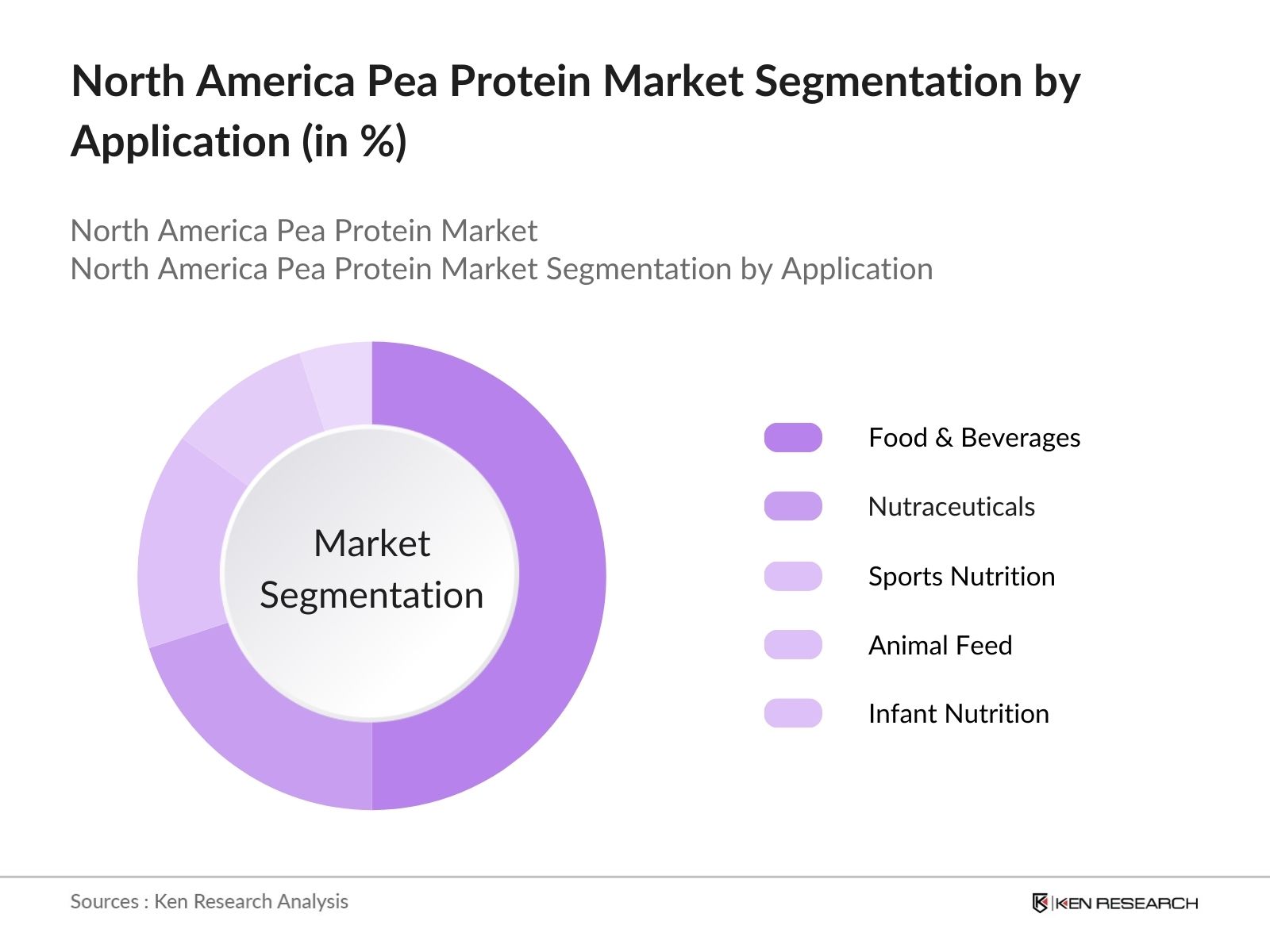
By Application: The market is segmented by application into food & beverages, nutraceuticals, animal feed, sports nutrition, and infant nutrition. Food & beverages dominate in this segment, driven by the demand for plant-based foods and beverages that cater to vegan, vegetarian, and health-conscious populations. This application segment benefits from innovative uses in dairy alternatives, protein shakes, and meat substitutes, fueling growth in demand for pea protein.
North America Pea Protein Market Competitive Landscape
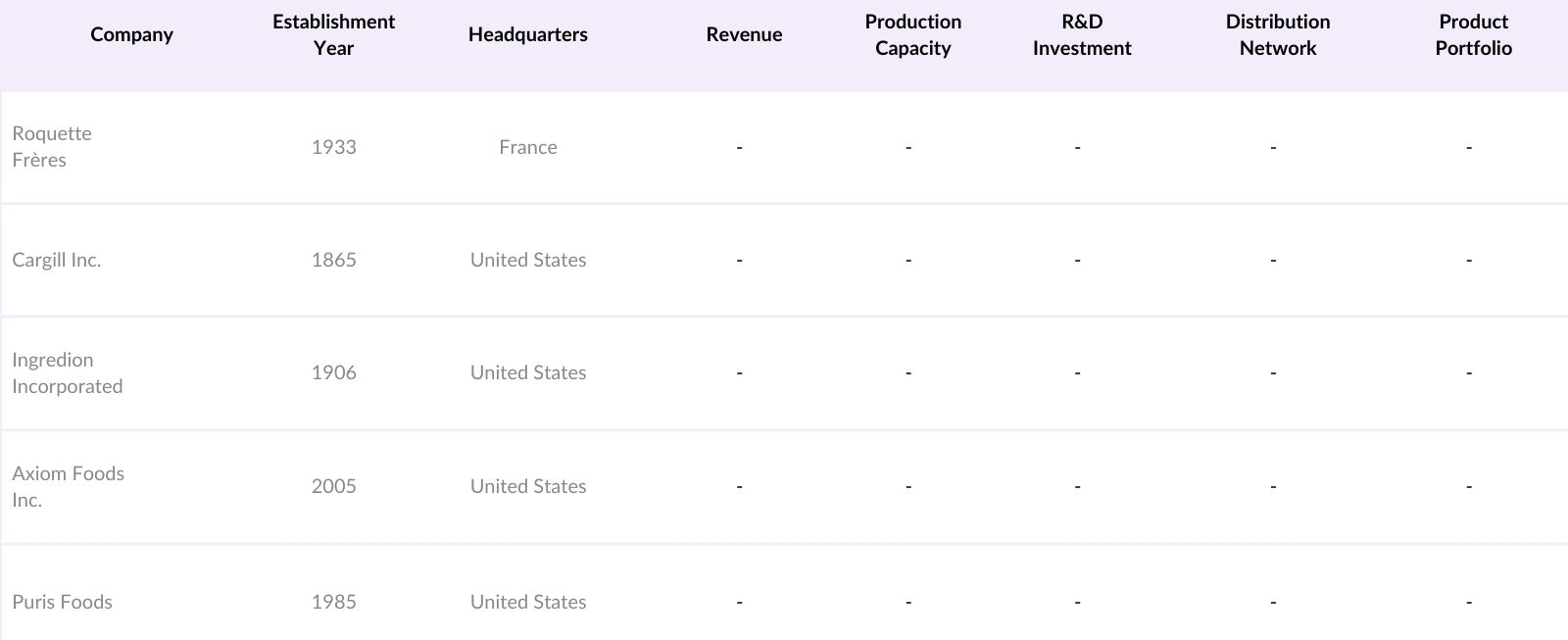
The market is dominated by key players who leverage advanced processing technologies and distribution networks. Leading companies maintain a competitive edge by investing in R&D and forming strategic partnerships with food and beverage manufacturers.
North America Pea Protein Market Analysis
Market Growth Drivers
- Increasing Demand for Plant-Based Protein Alternatives: The North America pea protein market is driven by rising demand for plant-based protein sources as consumers increasingly shift towards vegetarian and vegan diets. In 2024, over 25 million individuals in the U.S. are actively reducing animal product consumption, with more than 13 million committed to vegan diets, leading to a spike in demand for pea protein as a primary plant-based alternative.
- Rising Health Awareness and Protein Supplementation: The populations heightened focus on health and nutrition has spurred demand for protein supplementation. Reports indicate that in 2024, around 70 million people in North America actively consume protein supplements as part of their daily nutrition regimen, out of which nearly 30% prefer plant-based protein, translating to a significant market pull for pea protein products.
- Increased Application in Functional Foods and Beverages: Pea protein has found extensive applications across the food and beverage sector, particularly in sports nutrition, functional beverages, and dairy alternatives. As of 2024, the North American functional foods market generated nearly $50 billion in revenues, with pea protein products accounting for a substantial share of this market.
Market Challenges
- Taste and Texture Limitations: Consumers in North America continue to express concerns over the taste and texture of pea protein compared to animal-based and other plant-based proteins. Surveys from 2024 show that 40% of North American consumers find the flavor profile of pea protein unfavorable for some applications, impacting its adoption in mainstream food and beverage items.
- Supply Chain Constraints: Pea protein manufacturers face supply chain challenges, especially with raw pea crop shortages during seasonal changes. In 2024, North America saw a reduction of nearly 1 million tons in pea crop production due to droughts in key farming areas like the Midwest, affecting pea protein production and leading to increased raw material prices.
North America Pea Protein Market Future Outlook
The North America Pea Protein industry is anticipated to grow over the next five years, driven by increasing consumer demand for sustainable, plant-based protein options. Innovations in food processing and new applications for pea protein in a variety of food products are expected to support this growth trajectory, alongside favorable regulatory policies promoting alternative proteins.
Future Market Opportunities
- Growing Integration of Pea Protein in Mainstream Food Products: Over the next five years, pea protein is expected to be widely incorporated into mainstream food items, such as baked goods and breakfast cereals, increasing consumer exposure. Forecasts estimate that by 2029, over 35 million North American households will regularly consume products enriched with pea protein, creating new opportunities for market expansion.
- Development of Enhanced Pea Protein for Specialized Diets: Companies will likely introduce fortified versions of pea protein tailored to specific dietary needs, such as high-fiber and high-calcium formulations, meeting the nutritional requirements of targeted demographics. By 2029, it is projected that the demand for such specialized products will reach 7 million consumers in North America alone.
Scope of the Report
|
Product Type |
Pea Protein Isolates |
|
Form |
Dry Pea Protein |
|
Application |
Food & Beverages |
|
Processing Type |
Wet Processing |
|
Region |
United States |
Products
Key Target Audience Organizations and Entities Who Can Benefit by Subscribing This Report:
Pea Protein Manufacturers
Food & Beverage Companies
Nutraceutical Companies
Sports Nutrition Companies
Animal Feed Manufacturers
Investor and Venture Capitalist Firms
Government and Regulatory Bodies (e.g., USDA, FDA)
Retail Chains and Distributors
Companies
Roquette Frres
Cargill Inc.
Axiom Foods Inc.
Ingredion Incorporated
Kerry Group
Burcon NutraScience Corporation
Cosucra Groupe Warcoing
Farbest Brands
The Scoular Company
Shandong Jianyuan Foods
Table of Contents
1. North America Pea Protein Market Overview
1.1. Definition and Scope
1.2. Market Taxonomy
1.3. Growth Rate and Historical Trends
1.4. Segmentation Overview
2. North America Pea Protein Market Size (In USD Million)
2.1. Historical Market Size Analysis
2.2. Year-On-Year Growth Dynamics
2.3. Key Milestones and Recent Developments
3. North America Pea Protein Market Analysis
3.1. Growth Drivers
3.1.1. Rising Demand for Plant-Based Proteins
3.1.2. Increasing Health Consciousness
3.1.3. Expansion of Vegan and Vegetarian Demographics
3.1.4. Advancements in Pea Protein Extraction Technologies
3.2. Market Challenges
3.2.1. Price Volatility in Raw Materials
3.2.2. Limited Availability of High-Quality Peas
3.2.3. Regulatory Constraints
3.3. Opportunities
3.3.1. Growing Interest in Alternative Proteins
3.3.2. Expansion into Functional Foods and Beverages
3.3.3. Strategic Partnerships with Food Manufacturers
3.4. Trends
3.4.1. Clean Label Movement
3.4.2. Innovation in Product Formulations
3.4.3. Increased Application in Sports Nutrition
3.5. Government Regulations
3.5.1. Regulatory Standards for Food Safety
3.5.2. Labeling and Health Claims
3.5.3. Import and Export Tariffs
3.6. SWOT Analysis
3.7. Value Chain Analysis
3.8. Porters Five Forces
3.9. Competitive Ecosystem
4. North America Pea Protein Market Segmentation
4.1. By Product Type (In Value %)
4.1.1. Pea Protein Isolates
4.1.2. Pea Protein Concentrates
4.1.3. Textured Pea Proteins
4.1.4. Hydrolyzed Pea Proteins
4.2. By Form (In Value %)
4.2.1. Dry Pea Protein
4.2.2. Liquid Pea Protein
4.3. By Application (In Value %)
4.3.1. Food & Beverages
4.3.2. Nutraceuticals
4.3.3. Animal Feed
4.3.4. Sports Nutrition
4.3.5. Infant Nutrition
4.4. By Processing Type (In Value %)
4.4.1. Wet Processing
4.4.2. Dry Processing
4.5. By Region (In Value %)
4.5.1. United States
4.5.2. Canada
4.5.3. Mexico
5. North America Pea Protein Market Competitive Analysis
5.1. Detailed Profiles of Major Companies
5.1.1. Roquette Frres
5.1.2. Cargill Inc.
5.1.3. Ingredion Incorporated
5.1.4. Axiom Foods Inc.
5.1.5. Emsland Group
5.1.6. Burcon NutraScience Corporation
5.1.7. Puris Foods
5.1.8. Kerry Group
5.1.9. Cosucra Groupe Warcoing
5.1.10. Farbest Brands
5.1.11. Greenway Food Ingredients
5.1.12. The Scoular Company
5.1.13. Shandong Jianyuan Foods
5.1.14. Sotexpro
5.1.15. Vestkorn Milling AS
5.2. Cross Comparison Parameters (Revenue, Product Portfolio, Market Share, R&D Investment, Distribution Network, Sustainability Initiatives, Manufacturing Capacity, Customer Base)
5.3. Market Share Analysis
5.4. Strategic Initiatives
5.5. Mergers and Acquisitions
5.6. Investment Analysis
5.7. Government Grants and Support
5.8. Private Equity and Venture Capital Investments
6. North America Pea Protein Market Regulatory Framework
6.1. Food Safety and Compliance Standards
6.2. Nutritional Labeling Requirements
6.3. Organic and Non-GMO Certifications
7. North America Pea Protein Future Market Size (In USD Million)
7.1. Projected Market Size
7.2. Key Growth Determinants
8. North America Pea Protein Future Market Segmentation
8.1. By Product Type (In Value %)
8.2. By Form (In Value %)
8.3. By Application (In Value %)
8.4. By Processing Type (In Value %)
8.5. By Region (In Value %)
9. North America Pea Protein Market Analysts Recommendations
9.1. TAM/SAM/SOM Analysis
9.2. Emerging Market Opportunities
9.3. Product Positioning and Branding
9.4. Distribution Strategy Optimization
Disclaimer Contact UsResearch Methodology
Step 1: Identification of Key Variables
This stage involves creating a framework for the North America Pea Protein Market, analyzing major industry stakeholders. Through extensive desk research, key variables impacting market dynamics are identified and defined.
Step 2: Market Analysis and Data Construction
Historical data, product penetration, and revenue generation trends are compiled to analyze market growth. The data is cross-referenced with industry reports and validated through secondary research sources.
Step 3: Hypothesis Validation and Expert Consultation
Key market assumptions are validated through consultations with industry experts, leveraging insights from key company stakeholders to refine data accuracy and reliability.
Step 4: Research Synthesis and Final Output
Primary data is corroborated through direct engagement with pea protein manufacturers, ensuring a comprehensive and accurate analysis of the North America Pea Protein Market.
Frequently Asked Questions
01. How big is the North America Pea Protein Market?
The North America Pea Protein Market was valued at USD 700 million, with growth driven by rising consumer demand for plant-based proteins and innovations in food technology.
02. What are the challenges in the North America Pea Protein Market?
Challenges in the North America Pea Protein Market include price volatility in raw materials and regulatory requirements for plant-based protein labeling, which could impact profitability.
03. Who are the major players in the North America Pea Protein Market?
Key players in the North America Pea Protein Market include Roquette Frres, Cargill Inc., and Axiom Foods Inc., dominating the market with extensive distribution networks and innovative product portfolios.
04. What are the growth drivers of the North America Pea Protein Market?
The North America Pea Protein Market is driven by consumer health trends, demand for sustainable food sources, and the increasing popularity of vegan and vegetarian diets.
Why Buy From Us?

What makes us stand out is that our consultants follows Robust, Refine and Result (RRR) methodology. i.e. Robust for clear definitions, approaches and sanity checking, Refine for differentiating respondents facts and opinions and Result for presenting data with story

We have set a benchmark in the industry by offering our clients with syndicated and customized market research reports featuring coverage of entire market as well as meticulous research and analyst insights.

While we don't replace traditional research, we flip the method upside down. Our dual approach of Top Bottom & Bottom Top ensures quality deliverable by not just verifying company fundamentals but also looking at the sector and macroeconomic factors.

With one step in the future, our research team constantly tries to show you the bigger picture. We help with some of the tough questions you may encounter along the way: How is the industry positioned? Best marketing channel? KPI's of competitors? By aligning every element, we help maximize success.

Our report gives you instant access to the answers and sources that other companies might choose to hide. We elaborate each steps of research methodology we have used and showcase you the sample size to earn your trust.

If you need any support, we are here! We pride ourselves on universe strength, data quality, and quick, friendly, and professional service.