
North America Pet Food Market Outlook to 2030
Region:North America
Author(s):Sanjna
Product Code:KROD5125
Region:North America
Author(s):Sanjna
Product Code:KROD5125
November 2024
90
Listen to the audio summary
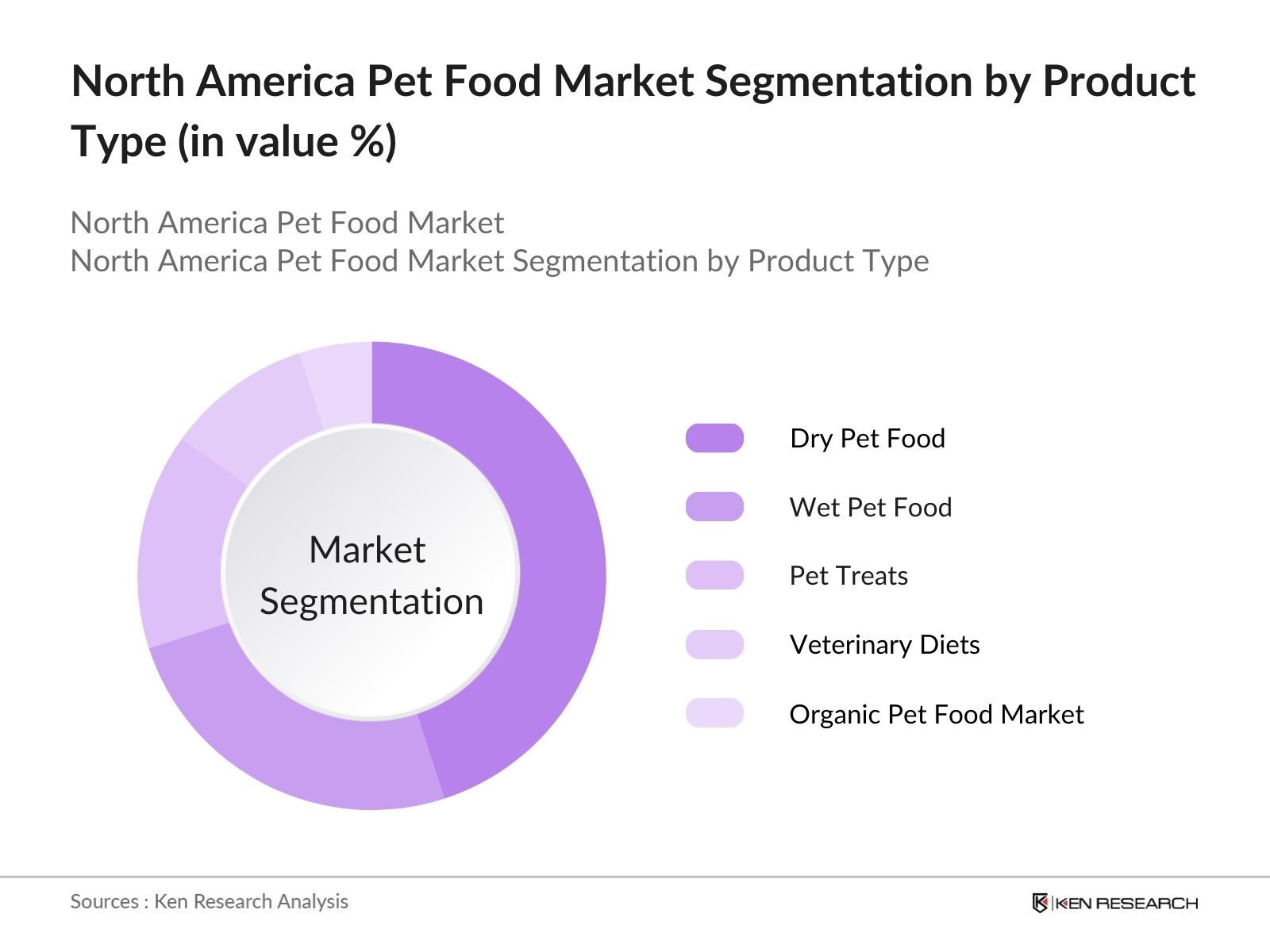
By Product Type: The North America pet food market is segmented by product type into dry pet food, wet pet food, pet treats, veterinary diets, and organic pet food. Recently, dry pet food has held a dominant market share under the product type segmentation, driven by its convenience, longer shelf life, and cost-effectiveness. Pet owners, particularly those with large dogs, prefer dry food as it is easier to store and can be bought in bulk. Brands like Purina, Blue Buffalo, and Pedigree offer a wide variety of dry pet food options catering to various nutritional needs.
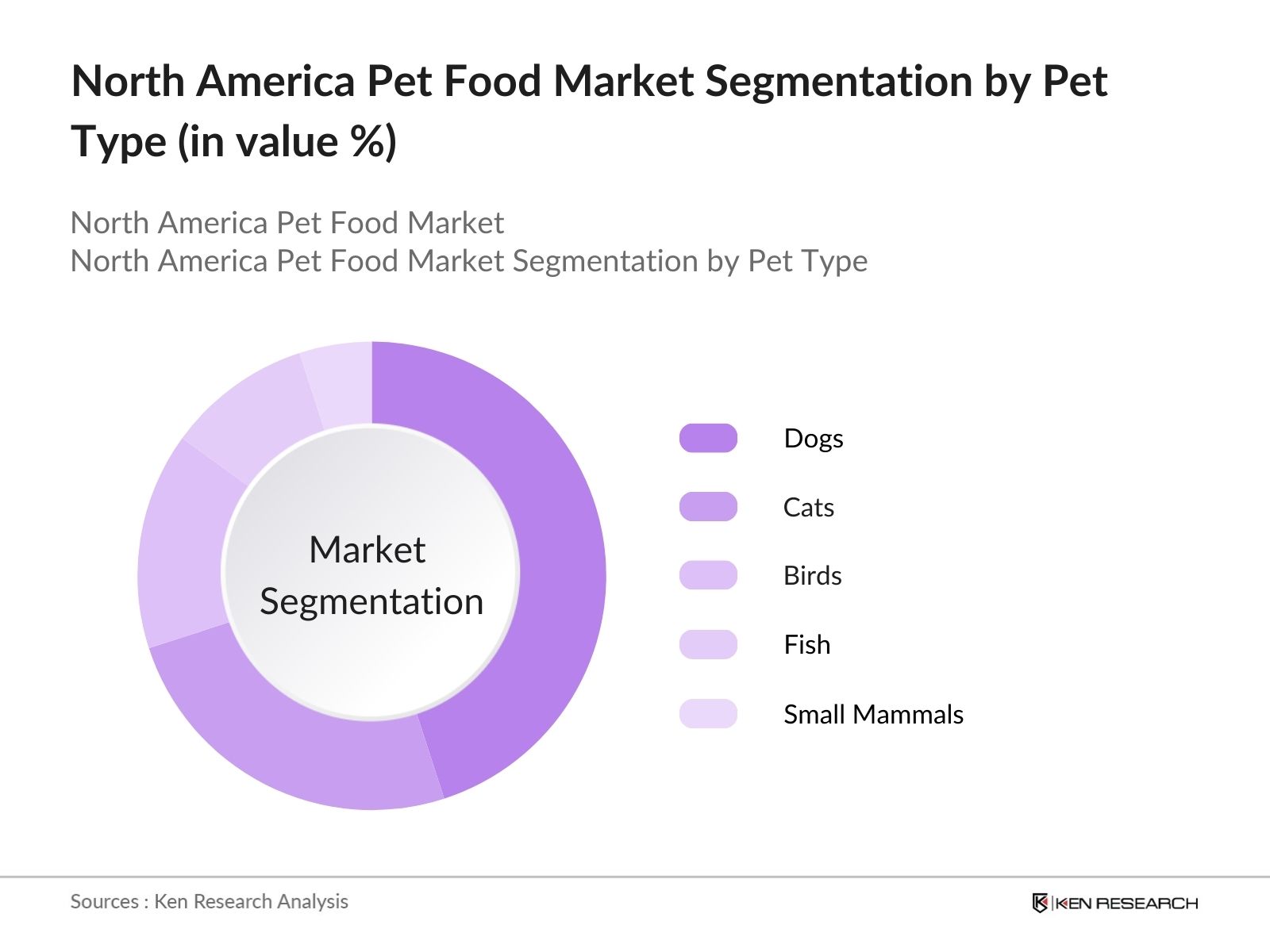
By Pet Type: The North America pet food market is further segmented by pet type into dogs, cats, birds, fish, and small mammals. The dog segment dominates the market, with a substantial share due to the higher number of households owning dogs compared to other pets. Dogs also have greater dietary requirements and consume more food, which is a significant driver of this segment. Pet owners are increasingly opting for specialized diets, which has led to a higher demand for premium and organic dog food.
The North America pet food market is characterized by a mix of global conglomerates and local brands. The industry has seen increasing consolidation, with major companies dominating the market through acquisitions and product innovation. Brands such as Mars Petcare and Nestl Purina hold significant market shares due to their diverse portfolios and strong distribution networks.
|
Company Name |
Establishment Year |
Headquarters |
Revenue |
R&D Investment |
Product Portfolio |
Employee Count |
Global Presence |
Innovation Index |
Market Share |
|
Mars Petcare |
1935 |
McLean, Virginia |
- |
- |
- |
- |
- |
- |
- |
|
Nestl Purina PetCare |
1894 |
St. Louis, Missouri |
- |
- |
- |
- |
- |
- |
- |
|
Hills Pet Nutrition |
1939 |
Topeka, Kansas |
- |
- |
- |
- |
- |
- |
- |
|
Blue Buffalo Co., Ltd. |
2003 |
Wilton, Connecticut |
- |
- |
- |
- |
- |
- |
- |
|
J.M. Smucker (Big Heart) |
1897 |
Orrville, Ohio |
- |
- |
- |
- |
- |
- |
- |
The consolidation in the pet food industry is primarily driven by major players acquiring smaller, niche brands that focus on natural and organic pet food options. This strategy allows companies to tap into the growing demand for premium products and expand their product portfolios to include specialized dietary options for pets.
Growth Drivers
Challenges
Over the next five years, the North America pet food market is expected to experience substantial growth due to continued product innovation, the rising trend of pet humanization, and increased awareness about pet health and nutrition. E-commerce is likely to play a pivotal role in driving sales, with more consumers opting to purchase pet food online due to convenience and a wider product selection. Additionally, sustainability initiatives and eco-friendly packaging will become important differentiators for pet food brands, as consumers become more environmentally conscious in their purchasing decisions.
Market Opportunities
|
Segment |
Sub-Segments |
|
By Product Type |
Dry Pet Food |
|
Wet Pet Food |
|
|
Pet Treats |
|
|
Veterinary Diets |
|
|
Organic Pet Food |
|
|
By Pet Type |
Dogs |
|
Cats |
|
|
Birds |
|
|
Fish |
|
|
Small Mammals |
|
|
By Ingredient |
Animal Derivatives |
|
Plant-Based Ingredients |
|
|
Insects |
|
|
Grains |
|
|
Others |
|
|
By Distribution Channel |
Specialty Pet Stores |
|
Supermarkets and Hypermarkets |
|
|
Online Retailers |
|
|
Veterinary Clinics |
|
|
Others |
|
|
By Region |
USA |
|
Canada |
|
|
Mexico |
1.1. Definition and Scope
1.2. Market Taxonomy
1.3. Market Growth Rate
1.4. Market Segmentation Overview
2.1. Historical Market Size
2.2. Year-On-Year Growth Analysis
2.3. Key Market Developments and Milestones
3.1. Growth Drivers
3.1.1. Pet Humanization (Pet ownership trends)
3.1.2. Demand for Premium and Organic Pet Foods (Consumer preferences)
3.1.3. Increased Pet Adoption Rates (Pet adoption statistics)
3.1.4. E-commerce Expansion (Online pet food sales data)
3.2. Market Challenges
3.2.1. Regulatory Hurdles (FDA regulations, labeling, safety standards)
3.2.2. Rising Raw Material Costs (Ingredients prices, supply chain issues)
3.2.3. Supply Chain Disruptions (Logistics and delivery challenges)
3.3. Opportunities
3.3.1. Growth of Customizable and Specialized Pet Diets (Breed-specific foods)
3.3.2. Increasing Demand for Functional Pet Foods (Foods targeting health benefits)
3.3.3. International Market Penetration (Export potential for North America brands)
3.4. Trends
3.4.1. Grain-Free and Raw Pet Foods (Dietary preferences)
3.4.2. Environmentally Friendly Packaging (Sustainability efforts)
3.4.3. Rise of Pet Treats and Supplements (Nutrition enhancements)
3.5. Government Regulations
3.5.1. FDA Regulations on Pet Food (Compliance with AAFCO standards)
3.5.2. Pet Food Safety Standards (Quality control measures)
3.5.3. Labelling and Ingredient Transparency (Labeling mandates)
3.6. SWOT Analysis
3.7. Stakeholder Ecosystem
3.8. Porters Five Forces Analysis
3.9. Competition Ecosystem
4.1. By Product Type (In Value %)
4.1.1. Dry Pet Food
4.1.2. Wet Pet Food
4.1.3. Pet Treats
4.1.4. Veterinary Diets
4.1.5. Organic Pet Food
4.2. By Pet Type (In Value %)
4.2.1. Dogs
4.2.2. Cats
4.2.3. Birds
4.2.4. Fish
4.2.5. Small Mammals
4.3. By Ingredient (In Value %)
4.3.1. Animal Derivatives
4.3.2. Plant-Based Ingredients
4.3.3. Insects
4.3.4. Grains
4.3.5. Others
4.4. By Distribution Channel (In Value %)
4.4.1. Specialty Pet Stores
4.4.2. Supermarkets and Hypermarkets
4.4.3. Online Retailers
4.4.4. Veterinary Clinics
4.4.5. Others
4.5. By Region (In Value %)
4.5.1. USA
4.5.2. Canada
4.5.3. Mexico
5.1. Detailed Profiles of Major Competitors
5.1.1. Mars Petcare
5.1.2. Nestl Purina PetCare
5.1.3. Hills Pet Nutrition
5.1.4. Blue Buffalo Co., Ltd.
5.1.5. J.M. Smucker (Big Heart Pet Brands)
5.1.6. Diamond Pet Foods
5.1.7. Spectrum Brands (United Pet Group)
5.1.8. WellPet LLC
5.1.9. Champion Petfoods
5.1.10. Natures Variety
5.1.11. Freshpet, Inc.
5.1.12. Merrick Pet Care
5.1.13. Colgate-Palmolive (Hill's Science Diet)
5.1.14. General Mills
5.1.15. Royal Canin
5.2. Cross Comparison Parameters (Headquarters, Inception Year, Revenue, Market Share, Innovation Index, Product Portfolio, Employee Count, R&D Investment etc.)
5.3. Market Share Analysis
5.4. Strategic Initiatives
5.5. Mergers and Acquisitions
5.6. Investment Analysis
5.7. Venture Capital Funding
5.8. Private Equity Investments
6.1. FDA Standards for Pet Food
6.2. AAFCO Guidelines
6.3. USDA Pet Food Inspection Processes
6.4. Environmental Regulations on Pet Food Packaging
7.1. Future Market Size Projections
7.2. Key Factors Driving Future Market Growth
8.1. By Product Type (In Value %)
8.2. By Pet Type (In Value %)
8.3. By Ingredient (In Value %)
8.4. By Distribution Channel (In Value %)
8.5. By Region (In Value %)
9.1. TAM/SAM/SOM Analysis
9.2. Consumer Segmentation and Targeting Strategy
9.3. Marketing and Advertising Tactics
9.4. Strategic Partnerships and Collaborations
9.5. Product Line Expansion Opportunities
The initial phase involves constructing an ecosystem map encompassing all major stakeholders within the North America Pet Food Market. This step is underpinned by extensive desk research, utilizing secondary sources and proprietary databases to gather comprehensive industry-level information. The primary objective is to identify and define the critical variables that influence market dynamics.
In this phase, we compile and analyze historical data pertaining to the North America Pet Food Market. This includes assessing market penetration, the ratio of product segments, and revenue generation. An evaluation of consumer trends and preferences will be conducted to ensure the reliability and accuracy of the revenue estimates.
Market hypotheses are developed and validated through consultations with industry experts representing various companies in the pet food industry. These consultations provide valuable insights into market trends, operational challenges, and growth drivers.
The final phase involves synthesizing insights from multiple pet food manufacturers to acquire detailed data on product segments, sales performance, consumer preferences, and other pertinent factors. This interaction ensures a comprehensive, accurate, and validated analysis of the North America Pet Food Market.
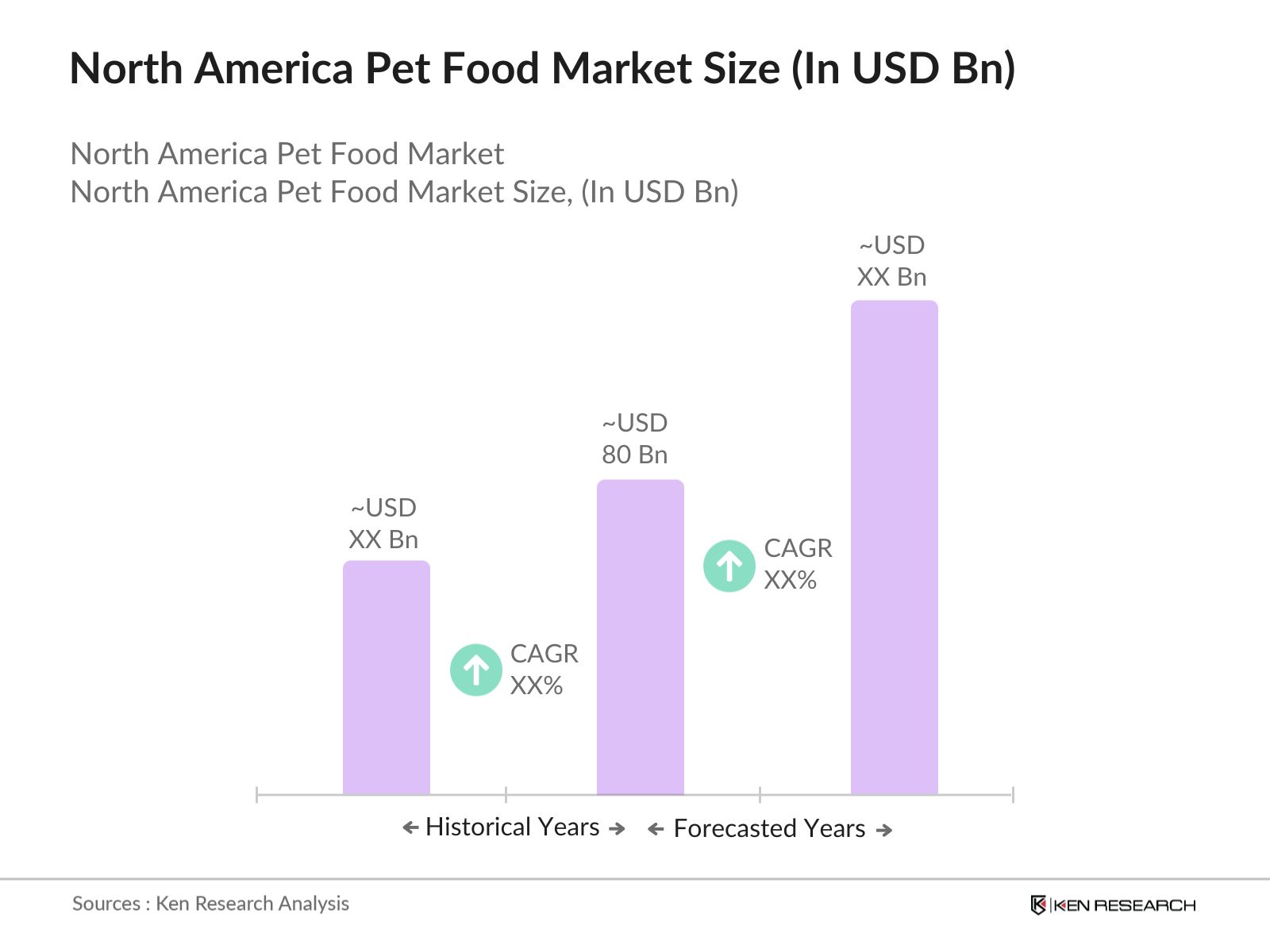
The North America pet food market is valued at USD 80 billion, driven by the trend of pet humanization and the rising demand for premium and organic pet food options.
Challenges include regulatory hurdles, particularly regarding FDA and AAFCO compliance, rising raw material costs, and supply chain disruptions, which can impact production and distribution.
Key players in the market include Mars Petcare, Nestl Purina PetCare, Hills Pet Nutrition, Blue Buffalo, and J.M. Smucker. These companies dominate due to their strong brand portfolios, extensive distribution networks, and continued product innovation.
Growth is propelled by increasing pet ownership, the trend of treating pets as family members, and the rising demand for premium and organic pet foods that cater to specific dietary needs.

What makes us stand out is that our consultants follows Robust, Refine and Result (RRR) methodology. i.e. Robust for clear definitions, approaches and sanity checking, Refine for differentiating respondents facts and opinions and Result for presenting data with story

We have set a benchmark in the industry by offering our clients with syndicated and customized market research reports featuring coverage of entire market as well as meticulous research and analyst insights.

While we don't replace traditional research, we flip the method upside down. Our dual approach of Top Bottom & Bottom Top ensures quality deliverable by not just verifying company fundamentals but also looking at the sector and macroeconomic factors.

With one step in the future, our research team constantly tries to show you the bigger picture. We help with some of the tough questions you may encounter along the way: How is the industry positioned? Best marketing channel? KPI's of competitors? By aligning every element, we help maximize success.

Our report gives you instant access to the answers and sources that other companies might choose to hide. We elaborate each steps of research methodology we have used and showcase you the sample size to earn your trust.

If you need any support, we are here! We pride ourselves on universe strength, data quality, and quick, friendly, and professional service.