















North America Polylactic Acid Market Outlook to 2030
Region:North America
Author(s):Shubham
Product Code:KROD4733
October 2024
89
About the Report
North America Polylactic Acid Market Overview
The North America Polylactic Acid (PLA) market is valued at USD 250 million, driven by the rising demand for sustainable materials and biodegradable plastics in industries such as packaging and textiles. The market's growth is supported by strong government initiatives aimed at reducing plastic waste and increasing awareness of environmentally friendly alternatives. Additionally, advances in biopolymer technology are expected to further drive market expansion, as companies focus on innovation and scalability. 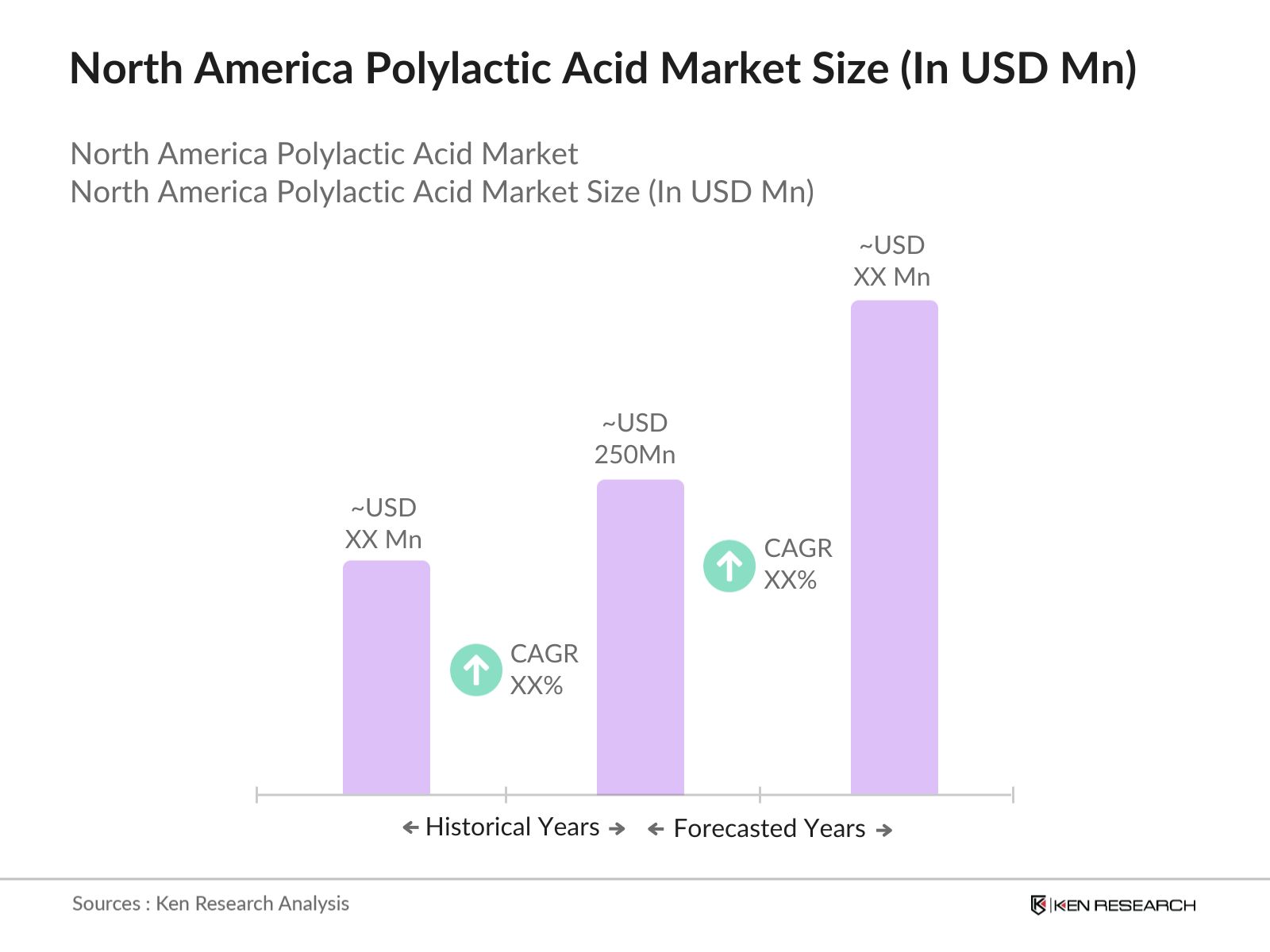
- The United States dominates the North America PLA market due to its advanced manufacturing infrastructure and regulatory policies promoting sustainable packaging and bioplastic alternatives. Major states like California and New York have stringent policies aimed at reducing single-use plastic usage, leading to the widespread adoption of PLA-based products. Canada and Mexico are also contributing to the markets growth, particularly in the packaging and food sectors, as sustainability initiatives gain traction.
- One noteworthy government regulation impacting the North America Polylactic Acid (PLA) market is California's Single-Use Plastics Law (SB 54). This regulation, which mandates a significant reduction in single-use plastics, requires all packaging in California to be recyclable or compostable by 2032. PLA-based materials, being compostable, are favoured under this regulation, driving demand for biodegradable alternatives in the packaging industry. This law is part of California's broader effort to reduce plastic waste and promote the adoption of sustainable materials, benefiting the PLA market significantly.
North America Polylactic Acid Market Segmentation
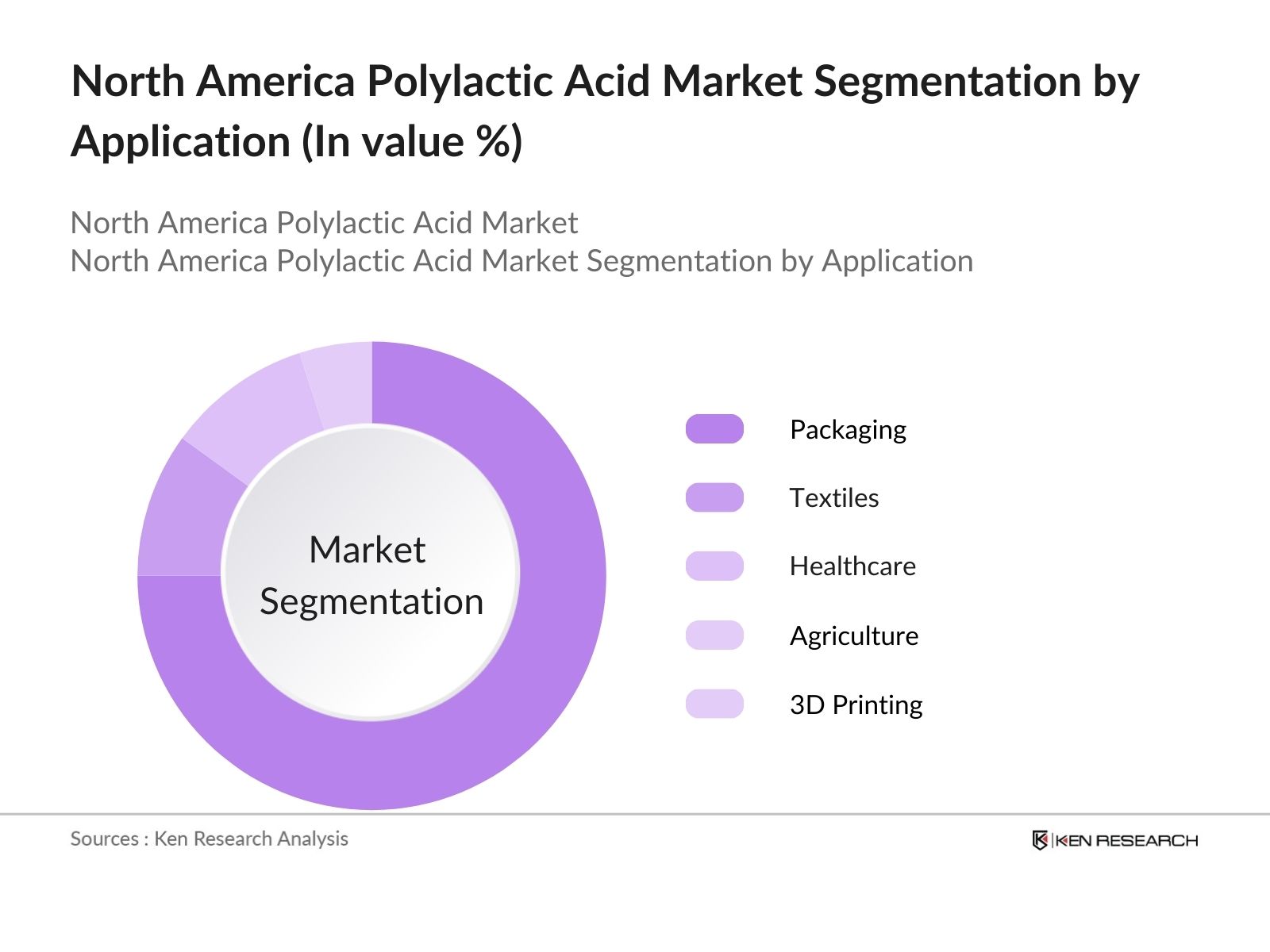
- By Application: The market is segmented into packaging, textiles, agriculture, 3D printing and healthcare. The packaging segment held the largest market share in 2023, driven by the increasing demand for eco-friendly packaging solutions. Leading companies in the food and beverage industry are adopting PLA-based packaging to reduce their carbon footprint and meet consumer demand for sustainable products. The textiles segment is also witnessing growth as PLA fibers gain traction in the apparel and home textiles sectors due to their biodegradability and minimal environmental impact.
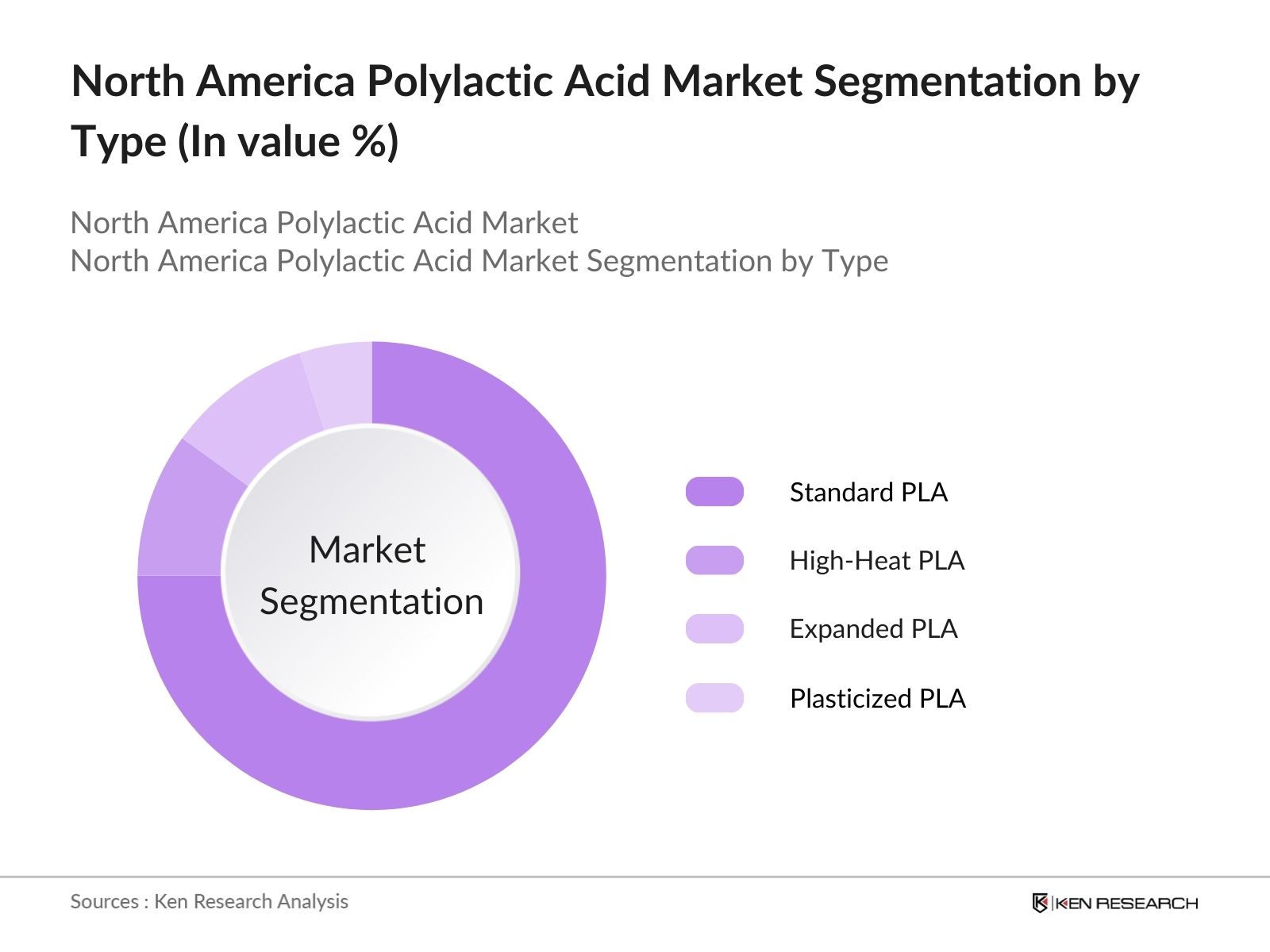
- By Type: The market is also segmented by type into high-heat PLA, plasticized, standard PLA, expanded PLA, and plasticized PLA. Standard PLA dominates the market with a 55% share in 2023, primarily because of its wide application in packaging and textiles. Standard PLA is cost-effective and easy to produce, making it the preferred choice for companies looking to adopt bioplastics without significantly increasing production costs. Its biodegradability and alignment with environmental regulations have further driven its adoption across various industries.
North America Polylactic Acid Market Competitive Landscape
The North America PLA market is highly competitive, with key players focusing on capacity expansions, innovations in biodegradable materials, and strategic partnerships. The industry is dominated by a few major players, including NatureWorks LLC, Total Corbion PLA, and BASF SE. These companies are significantly expanding their production capacity to meet the growing demand for sustainable materials in the region. The competitive landscape is characterized by technological innovation and a strong focus on R&D.
|
Company Name |
Establishment Year |
Headquarters |
Revenue |
Market Innovation |
Major Contracts |
No. of Employees |
R&D Expenditure |
Product Portfolio |
|
NatureWorks LLC |
1997 |
Minnetonka, Minnesota |
||||||
|
Total Corbion PLA |
2017 |
Gorinchem, Netherlands |
||||||
|
BASF SE |
1865 |
Ludwigshafen, Germany |
||||||
|
Danimer Scientific |
2004 |
Bainbridge, Georgia |
||||||
|
Futerro SA |
1992 |
Tournai, Belgium |
North America Polylactic Acid Market Analysis
Growth Drivers
- Rise in Demand for Biodegradable Packaging: The demand for biodegradable packaging, particularly polylactic acid (PLA), has increased due to the shift towards sustainability in North America. In 2023, U.S. manufacturing industries reported a surge in PLA consumption for eco-friendly packaging, contributing to a reduction of millions metric tons of plastic waste annually, according to the U.S. Environmental Protection Agency (EPA). This shift is driven by legislative mandates banning single-use plastics, creating a robust market for sustainable alternatives like PLA, which is entirely biodegradable within months. As a result, the packaging sector sees increased PLA adoption, notably in food and beverage packaging.
- Government Regulations Supporting Bioplastics: Government regulations across North America are propelling the adoption of bioplastics like PLA. In 2023, the U.S. federal government reinforced the Plastic Waste Reduction Act, which encourages the transition to bioplastics to combat plastic pollution. The Canadian government followed suit, imposing a nationwide ban on single-use plastics, effective in 2024, which is expected to eliminate over millions of metric tons of plastic waste annually. This regulatory pressure is motivating manufacturers to switch to PLA for producing biodegradable products in compliance with these mandates.
- Expansion of PLA Production Capacity: In 2024, significant investments have been made in expanding PLA production capacity across North America. NatureWorks, a leading producer of PLA, is constructing a new $manufacturing plant in Nebraska, which isexpected to increase the regions production substantially. The expansion aims to meet the rising demand for PLA in packaging and textiles. Similarly, Corbion announced a investment worth millions in a new PLA plant in Florida, which will double its production by the end of 2024, bolstering supply chains and driving the market forward.
Challenges
- High Production Costs: The production of PLA is significantly impacted by high raw material and manufacturing costs. The cost of producing PLA from corn and other biomass feedstock remains notably higher compared to conventional petrochemical-based plastics. This disparity makes PLA less competitive in terms of price, particularly when compared to more affordable plastic alternatives. These high production costs pose a barrier for wider adoption of PLA, especially for smaller manufacturers and industries that aim to shift towards bioplastics but struggle with the financial burden of this materials production requirements.
- Limited Technical Expertise: The processing of PLA requires specialized technical expertise, which many manufacturers find challenging to acquire. Integrating PLA into existing production lines can be difficult, as machinery often needs modification to handle the material's unique properties. Additionally, optimizing PLAs performance in various manufacturing applications, such as extrusion and injection molding, presents further technical obstacles. This lack of expertise has slowed the adoption of PLA in industries such as automotive and electronics, where precise material handling is essential for maintaining product quality and performance.
North America Polylactic Acid Market Future Outlook
Over the next five years, the North America PLA Market is expected to witness robust growth, driven by rising environmental awareness, government support, and expanding production capacity. The market will benefit from the increasing adoption of PLA in packaging, textiles, and healthcare applications, with advancements in processing technologies likely to reduce production costs over time.
The expansion of sustainable material initiatives in major cities, coupled with stringent regulations on single-use plastics, will drive demand for PLA across various industries. As new bioplastic technologies are developed, the PLA market is poised to become a critical component of North Americas shift toward a circular economy.
Future Market Opportunities
- Increasing Application of PLA in Healthcare: PLA is gaining significant traction in the healthcare sector, particularly for medical implants and biodegradable sutures. According to the U.S. Food and Drug Administration (FDA), over 20 new PLA-based medical products were approved for use in 2023, including biodegradable stents and drug delivery systems. The biocompatibility of PLA makes it ideal for these applications, and the global healthcare industry is expected to adopt more PLA solutions to reduce the environmental impact of medical waste. In 2024, the PLA-based medical device market in North America is projected to surpass million units annually.
- Adoption of PLA in Textiles and Apparel: The textile and apparel industry is increasingly adopting PLA as a sustainable alternative for producing fibers. PLA fibers are being used to create eco-friendly clothing lines by brands that are focused on sustainability. This material offers a renewable and biodegradable option for textiles, aligning with the growing demand for sustainable fashion. As more brands seek to reduce their environmental impact, the adoption of PLA in textile production is expected to continue growing. This shift towards sustainable textiles positions PLA as an important component in reducing the industry's overall carbon footprint moving forward.
Scope of the Report
|
By Application |
Packaging Textiles Healthcare Agriculture 3D Printing |
|
By Type |
High-Heat PLA Standard PLA Expanded PLA Plasticized PLA |
|
By End-User |
Food and Beverage Personal Care and Cosmetics Healthcare Agriculture Electronics and Electrical |
|
By Processing Method |
Extrusion Injection Molding Blow Molding Thermoforming\ 3D Printing |
|
By Region |
United States Canada Mexico |
Products
Key Target Audience
Manufacturers
Investors and Venture Capitalist Firms
Government and Regulatory Bodies (U.S. Environmental Protection Agency, Canadian Environmental Ministry)
Packaging Companies
Agriculture Firms
Healthcare Companies
Retailers and Distributors
Bioplastic R&D Centers
Banks and Financial Institutions
Companies
Players Mentioned in the Report
NatureWorks LLC
Total Corbion PLA
BASF SE
Danimer Scientific
Futerro SA
Mitsubishi Chemical Holdings Corporation
Synbra Technology BV
Green Dot Bioplastics
Toray Industries, Inc.
Teijin Limited
Biome Bioplastics Ltd.
Sulzer Chemtech AG
Galactic
Evonik Industries AG
Corbion N.V.
Table of Contents
1. North America Polylactic Acid Market Overview
1.1 Definition and Scope
1.2 Market Taxonomy (Application, End-User, Type)
1.3 Market Growth Rate (CAGR, Growth Drivers)
1.4 Market Segmentation Overview
2. North America Polylactic Acid Market Size (In USD Mn)
2.1 Historical Market Size
2.2 Year-On-Year Growth Analysis
2.3 Key Market Developments and Milestones
3. North America Polylactic Acid Market Analysis
3.1 Growth Drivers
3.1.1 Rise in Demand for Biodegradable Packaging (Sustainability, Eco-Friendly Packaging)
3.1.2 Government Regulations Supporting Bioplastics (Ban on Single-Use Plastics, Sustainability Initiatives)
3.1.3 Expansion of PLA Production Capacity (New Manufacturing Plants, Investments)
3.1.4 Increasing Consumer Preference for Sustainable Products (Consumer Trends, Market Adoption)
3.2 Market Challenges
3.2.1 High Production Costs (Raw Material Sourcing, Manufacturing Costs)
3.2.2 Limited Technical Expertise (PLA Processing, Integration Challenges)
3.2.3 Competition from Conventional Plastics (Cost Advantages, Market Penetration)
3.2.4 Regulatory Barriers in Developing Regions (Import Restrictions, Certification)
3.3 Opportunities
3.3.1 Increasing Application of PLA in Healthcare (Medical Implants, Biodegradable Sutures)
3.3.2 Technological Advancements in PLA Processing (Enhanced Production Techniques, Cost Reduction)
3.3.3 Adoption of PLA in Textiles and Apparel (Sustainable Fibers, Eco-Friendly Clothing)
3.3.4 Expansion of PLA Use in Agriculture (Biodegradable Mulch Films, Sustainable Farming)
3.4 Trends
3.4.1 Circular Economy Initiatives (Recycling, Waste Reduction)
3.4.2 Innovation in PLA-Based Packaging (Compostable Solutions, Edible Packaging)
3.4.3 Integration of PLA with Other Biopolymers (Blends, Enhanced Performance)
3.4.4 Growth in PLA 3D Printing Filament Use (Additive Manufacturing, Eco-Friendly Printing)
4. North America Polylactic Acid Market Competitive Landscape
4.1 Detailed Profiles of Major Companies
4.1.1 NatureWorks LLC
4.1.2 Total Corbion PLA
4.1.3 BASF SE
4.1.4 Danimer Scientific
4.1.5 Futerro SA
4.1.6 Mitsubishi Chemical Holdings Corporation
4.1.7 Synbra Technology BV
4.1.8 Green Dot Bioplastics
4.1.9 Toray Industries, Inc.
4.1.10 Teijin Limited
4.1.11 Biome Bioplastics Ltd.
4.1.12 Sulzer Chemtech AG
4.1.13 Galactic
4.1.14 Evonik Industries AG
4.1.15 Corbion N.V.
4.2 Cross Comparison Parameters (No. of Employees, Headquarters, Inception Year, Revenue, Production Capacity, Market Share, Key Innovations, Sustainability Efforts)
4.3 Market Share Analysis
4.4 Strategic Initiatives (Partnerships, Collaborations, Sustainability Projects)
4.5 Mergers and Acquisitions
4.6 Investment Analysis (CapEx, R&D Expenditure, Infrastructure Expansion)
4.7 Venture Capital Funding
4.8 Government Grants (Sustainability Grants, Plastic Alternatives Funding)
4.9 Private Equity Investments (Green Technology Funding, Bio-Based Materials)
5. North America Polylactic Acid Market Segmentation
5.1 By Application (In Value %)
5.1.1 Packaging (Food Packaging, Beverage Containers, Compostable Bags)
5.1.2 Textiles (Fibers, Apparel, Home Textiles)
5.1.3 Healthcare (Medical Implants, Sutures, Drug Delivery Systems)
5.1.4 Agriculture (Mulch Films, Seed Coatings)
5.1.5 3D Printing (PLA Filaments, Additive Manufacturing)
5.2 By Type (In Value %)
5.2.1 High-Heat PLA
5.2.2 Standard PLA
5.2.3 Expanded PLA
5.2.4 Plasticized PLA
5.3 By End-User Industry (In Value %)
5.3.1 Food and Beverage
5.3.2 Personal Care and Cosmetics
5.3.3 Healthcare
5.3.4 Agriculture
5.3.5 Electronics and Electrical
5.4 By Region (In Value %)
5.4.1 United States (East Coast, West Coast, Midwest, South)
5.4.2 Canada (Eastern, Western)
5.4.3 Mexico (Northern, Central)
5.5 By Processing Method (In Value %)
5.5.1 Extrusion
5.5.2 Injection Molding
5.5.3 Blow Molding
5.5.4 Thermoforming
5.5.5 3D Printing
6. North America Polylactic Acid Market Regulatory Framework
6.1 Environmental Standards (US Environmental Protection Agency, Canadian Environmental Regulations)
6.2 Compliance Requirements (FDA Approvals, Biodegradability Certifications)
6.3 Certification Processes (ISO Standards, ASTM Certifications)
6.4 Packaging and Labeling Regulations (Compostability Labels, Eco-Friendly Claims)
7. North America Polylactic Acid Future Market Size (In USD Mn)
7.1 Future Market Size Projections
7.2 Key Factors Driving Future Market Growth (Sustainability Initiatives, Government Support, Technological Advancements)
8. North America Polylactic Acid Future Market Segmentation
8.1 By Application (In Value %)
8.2 By Type (In Value %)
8.3 By End-User Industry (In Value %)
8.4 By Region (In Value %)
8.5 By Processing Method (In Value %)
9. North America Polylactic Acid Market Analysts Recommendations
9.1 TAM/SAM/SOM Analysis
9.2 Customer Cohort Analysis (Sustainability-Oriented Consumers, Industry-Specific Applications)
9.3 Marketing Initiatives (Sustainability Campaigns, B2B Focus)
9.4 White Space Opportunity Analysis (Emerging Applications, Untapped Markets)
Disclaimer Contact UsResearch Methodology
Step 1: Identification of Key Variables
The first phase involves mapping the ecosystem of the North America Polylactic Acid Market. This includes identifying key stakeholders such as manufacturers, raw material suppliers, end-users, and regulatory bodies. Extensive desk research and proprietary database analysis are conducted to gather market-specific information.
Step 2: Market Analysis and Construction
Historical data related to the market size, production capacity, and revenue generation of key players in the North America PLA market are compiled. The data is used to assess market penetration, price fluctuations, and application-specific market trends.
Step 3: Hypothesis Validation and Expert Consultation
Market hypotheses are validated through telephonic interviews with industry experts. These interviews provide insights into the operational and financial aspects of the PLA market, helping refine data accuracy.
Step 4: Research Synthesis and Final Output
Engagement with PLA producers ensures that insights into production techniques, sales performance, and market growth are corroborated. The final report provides a comprehensive view of the market, utilizing a bottom-up approach to validate all findings.
Frequently Asked Questions
01. How big is the North America Polylactic Acid Market?
The North America Polylactic Acid Market is valued at USD 250 million, driven by increasing demand for sustainable packaging and bioplastics, especially in the food and beverage sector.
02. What are the challenges in the North America Polylactic Acid Market?
Challenges in the North America Polylactic Acid Market include high production costs due to the complex manufacturing process and the competition from cheaper conventional plastics. Regulatory hurdles also pose challenges for companies looking to expand operations.
03. Who are the major players in the North America Polylactic Acid Market?
Key players in the North America Polylactic Acid Market include NatureWorks LLC, Total Corbion PLA, BASF SE, Danimer Scientific, and Futerro SA, which dominate the market due to their significant investments in capacity expansion and sustainability initiatives.
04. What are the growth drivers of the North America Polylactic Acid Market?
The North America Polylactic Acid Market is driven by growing consumer awareness about sustainability, government regulations promoting bioplastics, and the increasing demand for eco-friendly packaging solutions.
Why Buy From Us?

What makes us stand out is that our consultants follows Robust, Refine and Result (RRR) methodology. i.e. Robust for clear definitions, approaches and sanity checking, Refine for differentiating respondents facts and opinions and Result for presenting data with story

We have set a benchmark in the industry by offering our clients with syndicated and customized market research reports featuring coverage of entire market as well as meticulous research and analyst insights.

While we don't replace traditional research, we flip the method upside down. Our dual approach of Top Bottom & Bottom Top ensures quality deliverable by not just verifying company fundamentals but also looking at the sector and macroeconomic factors.

With one step in the future, our research team constantly tries to show you the bigger picture. We help with some of the tough questions you may encounter along the way: How is the industry positioned? Best marketing channel? KPI's of competitors? By aligning every element, we help maximize success.

Our report gives you instant access to the answers and sources that other companies might choose to hide. We elaborate each steps of research methodology we have used and showcase you the sample size to earn your trust.

If you need any support, we are here! We pride ourselves on universe strength, data quality, and quick, friendly, and professional service.