















North America Polyphenols Market Outlook to 2030
Region:North America
Author(s):Meenakshi Bisht
Product Code:KROD7469
November 2024
99
About the Report
North America Polyphenols Market Overview
- The North America Polyphenols Market is valued at USD 378 million, driven by the rising demand for natural food additives and health-conscious consumer preferences. Polyphenols, known for their antioxidant properties, are increasingly incorporated into food and beverages, dietary supplements, and cosmetics. Health-conscious consumers are pushing the demand for plant-based and natural products, propelling the market. The market growth is further bolstered by advancements in extraction technologies that enable efficient polyphenol production, contributing to steady market expansion.
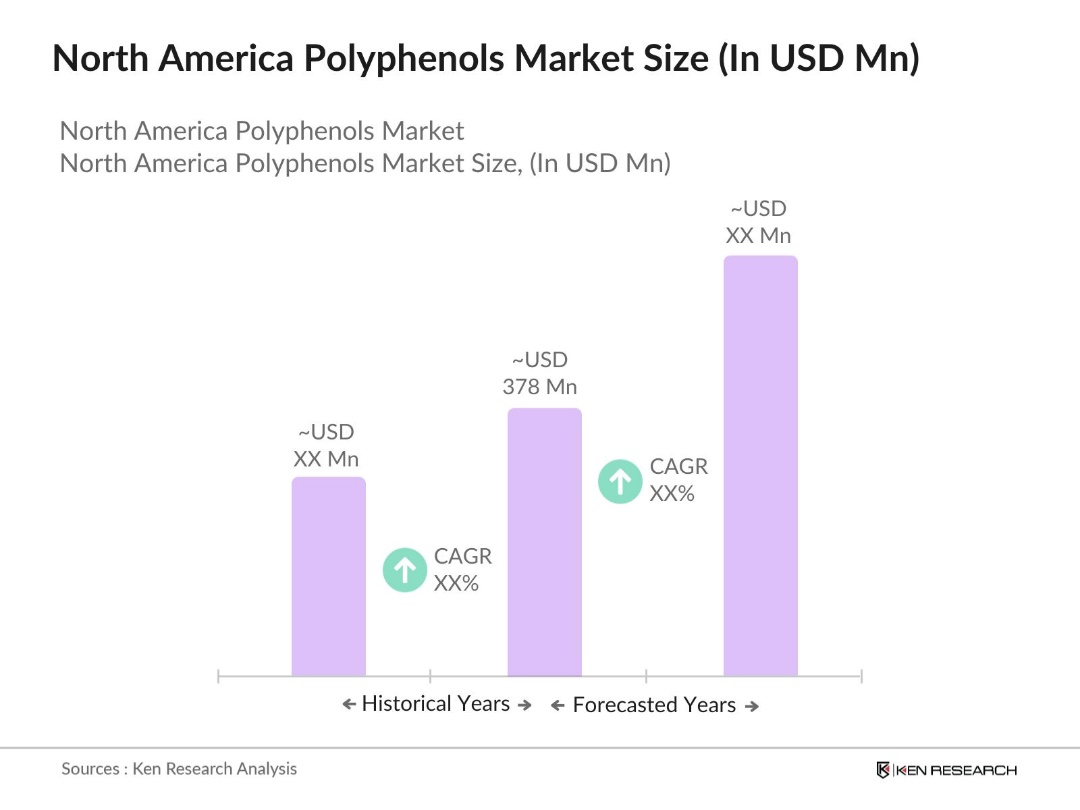
- The United States and Canada dominate the polyphenols market due to high consumer awareness and strong demand for natural, organic products. The presence of major nutraceutical companies and a high disposable income support market growth in these regions. The U.S. also benefits from a robust regulatory framework that promotes the use of natural ingredients in food, beverages, and supplements, making it a leading market in the region.
- The FDAs GRAS (Generally Recognized As Safe) Notification Program for animal food ensures that substances used in animal feeds, such as polyphenols or other additives, meet safety standards. Companies submit notices to the FDA to receive GRAS status, which is necessary for the legal use of these substances in the animal feed market. This initiative supports safe production and helps companies streamline product launches by complying with FDA regulations.
North America Polyphenols Market Segmentation
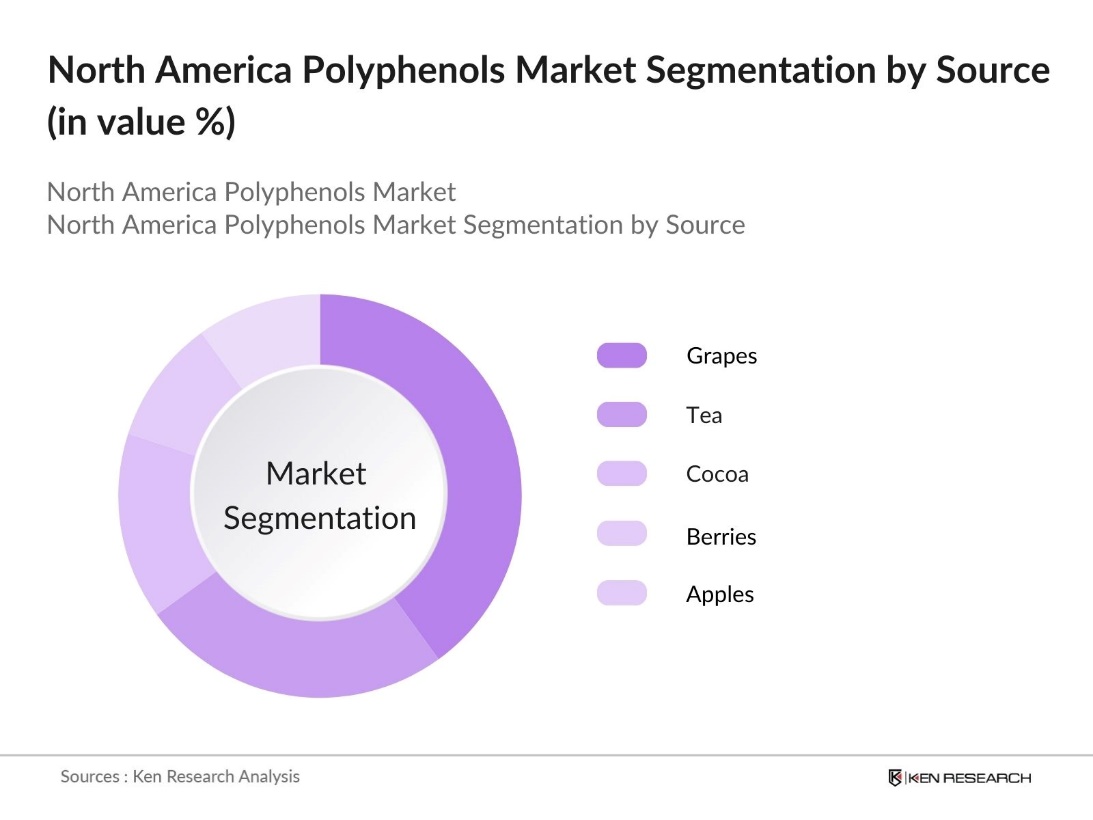
By Source: The North America polyphenols market is segmented by source into grapes, tea, cocoa, berries, and apples. Among these, grapes dominate the market due to their high polyphenol content, particularly in red wine and grape seed extracts. Grapes have a well-established application in nutraceuticals and dietary supplements, driven by consumer interest in heart health and anti-aging properties. Furthermore, the wine industry in the U.S. is a significant driver of grape-derived polyphenols, making this sub-segment a key contributor to overall market growth.
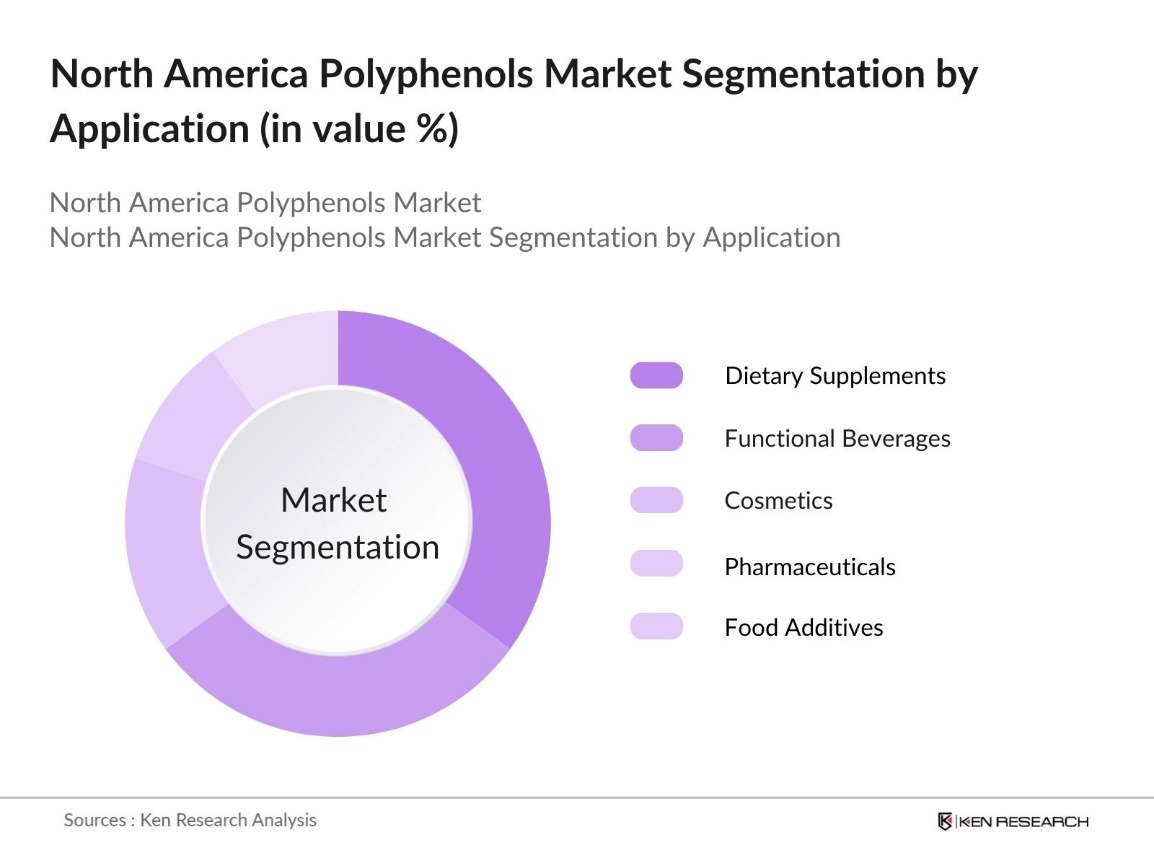
By Application: The North America polyphenols market is further segmented by application into functional beverages, dietary supplements, cosmetics, pharmaceuticals, and food additives. Dietary supplements hold the largest market share, fueled by increasing consumer interest in health and wellness products. Polyphenols are widely recognized for their antioxidant properties, which are beneficial for heart health, anti-inflammation, and immune support. As a result, dietary supplements enriched with polyphenols are becoming popular in North America, particularly among aging populations looking for natural health products.
North America Polyphenols Market Competitive Landscape
The market is dominated by a few major players, including Archer Daniels Midland, BASF SE, and DSM Nutritional Products. These companies have established themselves as leaders through their extensive R&D capabilities, advanced extraction technologies, and strong distribution networks. The market is characterized by continuous innovation in polyphenol extraction methods and new product developments.
|
Company Name |
Establishment Year |
Headquarters |
No. of Employees |
Revenue (USD Mn) |
Product Portfolio |
R&D Expenditure |
Market Reach |
Key Clients |
|
Archer Daniels Midland |
1902 |
Chicago, U.S. |
||||||
|
BASF SE |
1865 |
Ludwigshafen, Germany |
||||||
|
DSM Nutritional Products |
1902 |
Heerlen, Netherlands |
||||||
|
Naturex |
1992 |
Avignon, France |
||||||
|
Sabinsa Corporation |
1988 |
East Windsor, U.S. |
North America Polyphenols Industry Analysis
Growth Drivers
- Consumer Shift Towards Natural Ingredients: Urbanization across North America has increased the demand for natural food products, driven by health-conscious consumers. Urban consumers are increasingly seeking diversified diets, with significant rises in the consumption of fruits, vegetables, dairy, and meat. For instance, urban areas have seen a 30% increase in fruit and vegetable consumption over the past decade. The rise in lifestyle diseases also contributed to increased consumption of antioxidant-rich polyphenols for their health benefits.
- Increasing Applications in Beverages and Supplements: The applications of polyphenols in beverages and dietary supplements are expanding due to their antioxidant properties and potential health benefits. Polyphenols are a diverse group of over 8,000 compounds found in plants, categorized mainly into flavonoids, phenolic acids, polyphenolic amides, and other compounds like resveratrol. The rising demand in these sectors aligns with the growing awareness of polyphenols ability to combat oxidative stress.
- Government Regulations Favoring Natural Additives: In North America, governments are increasingly supporting natural additives, with regulations encouraging the use of plant-based ingredients like polyphenols. The U.S. FDA has classified many polyphenols as Generally Recognized As Safe (GRAS), facilitating their use in food and beverages. The Canadian government also allows polyphenols in functional foods under strict health claim regulations. These regulatory frameworks foster growth by easing market entry for polyphenol-rich products.
Market Challenges
- High R&D and Manufacturing Costs: Polyphenol extraction and production involve high research and development (R&D) costs due to the complexity of isolating plant-based compounds. These costs are further increased by the technological requirements needed for extraction processes, making it challenging for smaller companies to afford polyphenol-based production. The advanced machinery and specialized techniques required add to the financial burden, limiting the scalability of polyphenol production across the market.
- Stringent Regulatory Frameworks: Regulatory approval processes for polyphenol-related health claims in North America present significant challenges for manufacturers. Approvals from bodies like the U.S. FDA require extensive clinical evidence, which can be time-consuming and expensive. This regulatory framework can delay product launches and create obstacles for companies attempting to market the health benefits of polyphenols, making it difficult to navigate the market effectively.
North America Polyphenols Market Future Outlook
Over the next five years, the North America polyphenols market is expected to experience steady growth, driven by increasing consumer preference for natural and plant-based ingredients. The market will also benefit from continued research into the health benefits of polyphenols, particularly in functional foods and dietary supplements. Advancements in extraction technologies and growing applications in pharmaceuticals and cosmetics are likely to further propel market expansion.
Market Opportunities
- Expansion in Functional Foods & Beverages: The functional foods and beverages sector in North America is growing, creating opportunities for polyphenol integration. Polyphenols are increasingly being incorporated as natural antioxidants and preservatives in these products. This growth is driven by consumer demand for natural, health-enhancing ingredients, positioning polyphenols as key components in products aimed at improving cardiovascular and metabolic health.
- Innovative Extraction Methods: Technological advancements in polyphenol extraction methods, such as enzyme-assisted and supercritical fluid extraction, are enhancing the efficiency and yield of polyphenol production. These innovative techniques reduce waste while improving the quality of polyphenols, making them more cost-effective for manufacturers. As a result, polyphenols are becoming increasingly appealing for use in new product formulations.
Scope of the Report
|
By Source |
Grapes Tea Cocoa Berries Apples |
|
By Application |
Functional Beverages Dietary Supplements Cosmetics Pharmaceuticals Food Additives |
|
By Type |
Flavonoids Phenolic Acids Stilbenes Lignans |
|
By Extraction Method |
Solvent Extraction Enzymatic Extraction Supercritical Fluid Extraction Ultrasound-Assisted Extraction |
|
By Region |
U.S. Canada Mexico |
Products
Key Target Audience
Nutraceutical Manufacturers
Pharmaceutical Companies
Functional Beverage Manufacturers
Food and Beverage Companies
Government and Regulatory Bodies (FDA, Health Canada)
Investors and venture capital Firms
Banks and Financial Institutions
Companies
Players Mentioned in the Report
Archer Daniels Midland
BASF SE
DSM Nutritional Products
Naturex
Sabinsa Corporation
Ajinomoto Omnichem
Chr. Hansen Holding A/S
Evolva Holding SA
Frutarom Industries
Kemin Industries
Table of Contents
1. North America Polyphenols Market Overview
1.1. Definition and Scope
1.2. Market Taxonomy
1.3. Market Growth Rate
1.4. Market Segmentation Overview
2. North America Polyphenols Market Size (In USD Mn)
2.1. Historical Market Size
2.2. Year-On-Year Growth Analysis
2.3. Key Market Developments and Milestones
3. North America Polyphenols Market Analysis
3.1. Growth Drivers (Urbanization, Health Awareness, Rising Demand for Functional Foods)
3.1.1. Consumer Shift Towards Natural Ingredients
3.1.2. Increasing Applications in Beverages and Supplements
3.1.3. Government Regulations Favoring Natural Additives
3.2. Market Challenges (Cost Fluctuations, Regulatory Approvals, Market Fragmentation)
3.2.1. High R&D and Manufacturing Costs
3.2.2. Stringent Regulatory Frameworks
3.2.3. Limited Raw Material Availability
3.3. Opportunities (Technological Advancements, New Product Developments, Growing Demand for Organic Products) 3.3.1. Expansion in Functional Foods & Beverages
3.3.2. Innovative Extraction Methods
3.3.3. Market Expansion in Nutraceuticals and Pharmaceuticals
3.4. Trends (Clean Label Ingredients, Consumer Preferences)
3.4.1. Rise in Demand for Plant-Based Polyphenols
3.4.2. Increased Adoption in Skincare Products
3.4.3. Polyphenols as Antioxidants in Food Preservation
3.5. Government Regulations (FDA Guidelines, GRAS Certifications, Labeling Laws)
3.5.1. Regulations for Functional Ingredients
3.5.2. Health Claims Approval Process
3.5.3. Import/Export Restrictions
3.6. SWOT Analysis
3.7. Stake Ecosystem
3.8. Porters Five Forces
3.9. Competition Ecosystem
4. North America Polyphenols Market Segmentation
4.1. By Source (In Value %)
4.1.1. Grapes
4.1.2. Tea
4.1.3. Cocoa
4.1.4. Berries
4.1.5. Apples
4.2. By Application (In Value %)
4.2.1. Functional Beverages
4.2.2. Dietary Supplements
4.2.3. Cosmetics
4.2.4. Pharmaceuticals
4.2.5. Food Additives
4.3. By Type (In Value %)
4.3.1. Flavonoids
4.3.2. Phenolic Acids
4.3.3. Stilbenes
4.3.4. Lignans
4.4. By Extraction Method (In Value %)
4.4.1. Solvent Extraction
4.4.2. Enzymatic Extraction
4.4.3. Supercritical Fluid Extraction
4.4.4. Ultrasound-Assisted Extraction
4.5. By Region (In Value %)
4.5.1. U.S.
4.5.2. Canada
4.5.3. Mexico
5. North America Polyphenols Market Competitive Analysis
5.1. Detailed Profiles of Major Companies
5.1.1. Archer Daniels Midland
5.1.2. BASF SE
5.1.3. DSM Nutritional Products
5.1.4. Naturex
5.1.5. Sabinsa Corporation
5.1.6. Indena S.p.A.
5.1.7. Ajinomoto Omnichem
5.1.8. Chr. Hansen Holding A/S
5.1.9. FutureCeuticals, Inc.
5.1.10. Symrise AG
5.1.11. Evolva Holding SA
5.1.12. Frutarom Industries
5.1.13. Kemin Industries
5.1.14. Roquette Freres
5.1.15. Lonza Group
5.2. Cross Comparison Parameters (No. of Employees, Headquarters, Inception Year, Revenue, R&D Expenditure, Market Share, Product Portfolio, Geographic Reach)
5.3. Market Share Analysis
5.4. Strategic Initiatives
5.5. Mergers And Acquisitions
5.6. Investment Analysis
5.7 Venture Capital Funding
5.8. Government Grants
5.9. Private Equity Investments
6. North America Polyphenols Market Regulatory Framework
6.1. GRAS Certifications
6.2. FDA Compliance Requirements
6.3. Certification Processes
7. North America Polyphenols Future Market Size (In USD Mn)
7.1. Future Market Size Projections
7.2. Key Factors Driving Future Market Growth
8. North America Polyphenols Future Market Segmentation
8.1. By Source (In Value %)
8.2. By Application (In Value %)
8.3. By Type (In Value %)
8.4. By Extraction Method (In Value %)
8.5. By Region (In Value %)
9. North America Polyphenols Market Analysts Recommendations
9.1. TAM/SAM/SOM Analysis
9.2. Customer Cohort Analysis
9.3. Marketing Initiatives
9.4. White Space Opportunity Analysis
Disclaimer Contact UsResearch Methodology
Step 1: Identification of Key Variables
The first step involved constructing a detailed map of the North America polyphenols market, identifying critical stakeholders, product segments, and industry drivers. This was achieved through comprehensive desk research, utilizing proprietary databases and secondary sources like government publications and industry reports to ensure accurate identification of variables.
Step 2: Market Analysis and Construction
In this phase, historical data on market size, revenue generation, and polyphenol consumption patterns were analyzed to estimate the overall market landscape. The analysis also considered factors like supply chain dynamics, product demand fluctuations, and key market trends influencing the polyphenols sector.
Step 3: Hypothesis Validation and Expert Consultation
Market hypotheses were developed, focusing on market drivers, challenges, and opportunities. These hypotheses were then validated through interviews with industry experts and polyphenol manufacturers, providing on-the-ground insights and financial data that helped refine our understanding of market dynamics.
Step 4: Research Synthesis and Final Output
In the final stage, data was synthesized into a comprehensive market report. This included detailed analysis of the competitive landscape, market segmentation, and future projections based on inputs from key players and validated market data, ensuring a robust and actionable final report.
Frequently Asked Questions
01. How big is the North America Polyphenols Market?
The North America Polyphenols Market is valued at USD 378 million, driven by increasing demand for natural food additives and plant-based ingredients across various industries.
02. What are the challenges in the North America Polyphenols Market?
Challenges in the North America Polyphenols Market include the high cost of extraction processes, stringent regulatory approvals, and fluctuating raw material prices, which can impact overall market profitability.
03. Who are the major players in the North America Polyphenols Market?
Key players in North America Polyphenols Market include Archer Daniels Midland, BASF SE, DSM Nutritional Products, and Naturex. These companies have strong R&D capabilities and advanced extraction technologies.
04. What are the growth drivers of the North America Polyphenols Market?
The North America Polyphenols Market growth drivers include rising consumer awareness of health benefits, increased demand for natural food and beverage additives, and advancements in extraction technologies, enabling more efficient production.
Why Buy From Us?

What makes us stand out is that our consultants follows Robust, Refine and Result (RRR) methodology. i.e. Robust for clear definitions, approaches and sanity checking, Refine for differentiating respondents facts and opinions and Result for presenting data with story

We have set a benchmark in the industry by offering our clients with syndicated and customized market research reports featuring coverage of entire market as well as meticulous research and analyst insights.

While we don't replace traditional research, we flip the method upside down. Our dual approach of Top Bottom & Bottom Top ensures quality deliverable by not just verifying company fundamentals but also looking at the sector and macroeconomic factors.

With one step in the future, our research team constantly tries to show you the bigger picture. We help with some of the tough questions you may encounter along the way: How is the industry positioned? Best marketing channel? KPI's of competitors? By aligning every element, we help maximize success.

Our report gives you instant access to the answers and sources that other companies might choose to hide. We elaborate each steps of research methodology we have used and showcase you the sample size to earn your trust.

If you need any support, we are here! We pride ourselves on universe strength, data quality, and quick, friendly, and professional service.