
North America Probiotic Drink Market Outlook to 2030
Region:Mexico
Author(s):Paribhasha Tiwari
Product Code:KROD4491
Region:Mexico
Author(s):Paribhasha Tiwari
Product Code:KROD4491
December 2024
88
By Product Type: The North America Probiotic Drink Market is segmented by product type into dairy-based probiotic drinks, non-dairy probiotic drinks, and supplementary probiotic beverages. Dairy-based probiotic drinks hold a dominant market share due to their long-standing presence in the market, supported by trusted brands like Yakult and Danone. The fermented nature of dairy makes it a natural carrier for probiotics, which has helped maintain strong consumer loyalty. However, the rise in lactose intolerance and plant-based diets is driving growth in the non-dairy probiotic segment, leading to a notable shift in consumer preferences.

By Sales Channel: In terms of sales channels, the market is segmented into supermarkets/hypermarkets, convenience stores, online retail, and specialty stores. Supermarkets and hypermarkets dominate this segment due to their vast consumer reach and the wide variety of probiotic drink options they offer. These stores provide customers with convenience and the opportunity to browse an extensive range of brands and product types, which has led to strong growth in this channel. Furthermore, promotional strategies, including discounts and in-store advertising, enhance their attractiveness as the primary purchasing point for consumers.

The North America probiotic drink market is dominated by several key players, many of which have long-standing brand presence and advanced production capabilities. The competitive landscape is characterized by a combination of established multinational corporations and innovative local brands. Companies are investing in product innovation, focusing on clean-label products and plant-based alternatives to cater to growing consumer demands.
|
Company |
Establishment Year |
Headquarters |
Revenue |
Product Innovation |
Market Share |
Distribution Network |
Sustainability Initiatives |
New Product Launches |
|
Yakult Honsha Co., Ltd. |
1935 |
Tokyo, Japan |
- | - | - | - | - | - |
|
Danone S.A. |
1919 |
Paris, France |
- | - | - | - | - | - |
|
Lifeway Foods, Inc. |
1986 |
Illinois, U.S. |
- | - | - | - | - | - |
|
PepsiCo Inc. |
1965 |
New York, U.S. |
- | - | - | - | - | - |
|
Nestl S.A. |
1867 |
Vevey, Switzerland |
- | - | - | - | - | - |
Over the next five years, the North America probiotic drink market is expected to show consistent growth, driven by increasing consumer awareness of gut health and immunity, along with a growing preference for functional foods and beverages. Innovations in non-dairy alternatives, coupled with the development of new probiotic strains, are set to play a significant role in market expansion. Moreover, sustainable packaging solutions and clean-label products are likely to become essential in maintaining consumer interest and loyalty.
| By Product Type |
Dairy-Based Probiotic Drinks Non-Dairy Probiotic Drinks Supplementary Probiotic Beverages |
| By Sales Channel |
Supermarkets/Hypermarkets Convenience Stores Online Retail Specialty Stores |
| By Packaging |
Bottles, Can Cartons Sachets Others |
| By Flavor |
Plain/Unflavored, Fruit-Based Flavors Herbs & Spice Flavors Exotic Flavors |
| By Target Consumer |
Kids Adults Elderly Health-Conscious Individuals Athletes/Active Lifestyle Consumers |
1.1. Definition and Scope
1.2. Market Taxonomy
1.3. Market Growth Rate
1.4. Market Segmentation Overview
2.1. Historical Market Size
2.2. Year-On-Year Growth Analysis
2.3. Key Market Developments and Milestones
3.1. Growth Drivers
3.1.1. Increasing Consumer Health Awareness
3.1.2. Rise in Digestive Health Issues
3.1.3. Expanding Functional Beverages Category
3.1.4. Higher Consumption in Urbanized Areas
3.2. Market Challenges
3.2.1. High Production and Marketing Costs
3.2.2. Regulatory Challenges in Ingredient Approval
3.2.3. Cold Chain Logistics for Shelf Life Maintenance
3.3. Opportunities
3.3.1. Innovation in Non-Dairy Probiotic Drinks
3.3.2. Increasing Penetration in Rural and Less Urbanized Areas
3.3.3. Rising Demand for Clean Label Products
3.4. Trends
3.4.1. Growing Popularity of Plant-Based Probiotic Drinks
3.4.2. Adoption of Sustainable Packaging
3.4.3. Personalization in Nutritional Beverages
3.5. Government Regulation
3.5.1. FDA Guidelines for Probiotic Labeling (Probiotic Strain Identification, Health Benefit Claims)
3.5.2. Food Safety Modernization Act (FSMA) Compliance
3.5.3. Nutritional Labeling Requirements
3.6. SWOT Analysis
3.7. Stakeholder Ecosystem
3.8. Porters Five Forces
3.9. Competition Ecosystem
4.1. By Product Type (In Value %) 4.1.1. Dairy-Based Probiotic Drinks
4.1.2. Non-Dairy Probiotic Drinks
4.1.3. Supplementary Probiotic Beverages
4.2. By Sales Channel (In Value %) 4.2.1. Supermarkets/Hypermarkets
4.2.2. Convenience Stores
4.2.3. Online Retail
4.2.4. Specialty Stores
4.3. By Distribution Type (In Value %) 4.3.1. Direct Sales
4.3.2. Indirect Sales
4.4. By Packaging Type (In Value %) 4.4.1. Bottles
4.4.2. Cartons
4.4.3. Pouches
4.4.4. Cans
4.5. By Region (In Value %) 4.5.1. United States
4.5.2. Canada
4.5.3. Mexico
5.1 Detailed Profiles of Major Companies
5.1.1. Yakult Honsha Co., Ltd.
5.1.2. Danone S.A.
5.1.3. Lifeway Foods, Inc.
5.1.4. PepsiCo Inc.
5.1.5. Nestl S.A.
5.1.6. NextFoods Inc. (GoodBelly)
5.1.7. Bio-K+ International Inc.
5.1.8. GTs Living Foods
5.1.9. Chobani LLC
5.1.10. Kerry Group
5.1.11. Fonterra Co-operative Group Limited
5.1.12. KeVita Inc.
5.1.13. Stonyfield Farm, Inc.
5.1.14. General Mills, Inc.
5.1.15. The Hain Celestial Group, Inc.
5.2 Cross Comparison Parameters (Revenue, Headquarters, Product Portfolio, Market Presence, Innovation)
5.3. Market Share Analysis
5.4. Strategic Initiatives
5.5. Mergers and Acquisitions
5.6. Investment Analysis
5.7. Government and Private Sector Investments
6.1. Probiotic Ingredient Regulations
6.2. Labeling and Claims
6.3. Import/Export Regulations
7.1. Future Market Size Projections
7.2. Key Factors Driving Future Market Growth
8.1. By Product Type (In Value %)
8.2. By Sales Channel (In Value %)
8.3. By Distribution Type (In Value %)
8.4. By Packaging Type (In Value %)
8.5. By Region (In Value %)
9.1. TAM/SAM/SOM Analysis
9.2. Customer Cohort Analysis
9.3. Marketing Initiatives
9.4. White Space Opportunity Analysis
This phase focuses on identifying the critical variables that affect the North America probiotic drink market. Extensive desk research was conducted, using proprietary and secondary databases, to understand market dynamics. The aim was to define parameters like market drivers, challenges, and key stakeholders.
Historical data regarding the North America probiotic drink market were analyzed to evaluate market penetration, revenue growth, and consumer trends. Data from industry reports, trade journals, and public filings were synthesized to ensure reliability.
Market hypotheses were tested via interviews with industry experts, including executives from leading probiotic drink manufacturers. These insights helped refine market estimates and further validated our findings.
In the final phase, detailed consultations were held with major market participants to acquire product-specific insights and sales data. This helped confirm our projections and produce a comprehensive and validated analysis of the North America probiotic drink market.
01. How big is the North America Probiotic Drink Market?
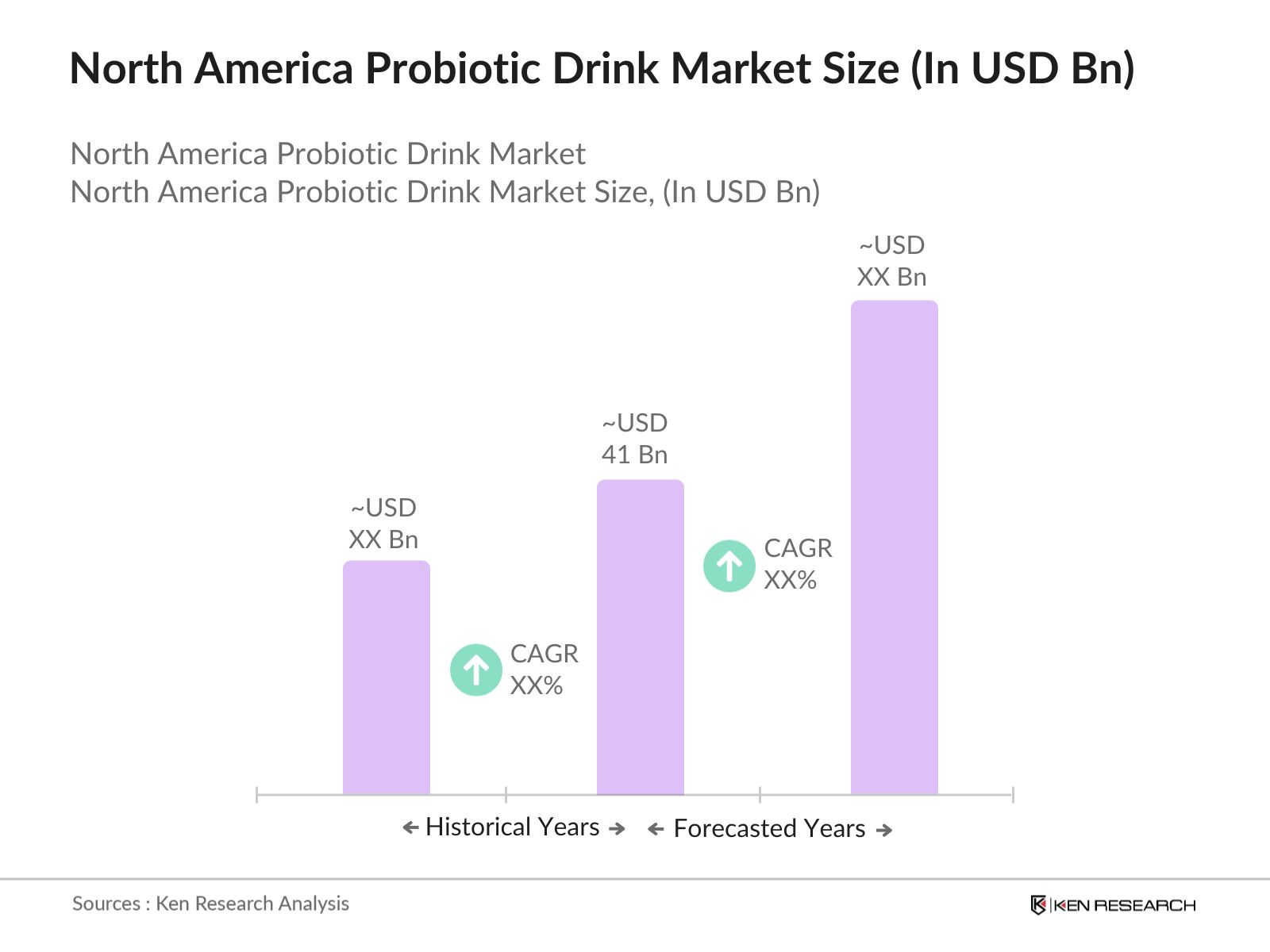
The North America probiotic drink market is valued at USD 41 billion, driven by rising consumer awareness of digestive and immune health benefits.
02. What are the challenges in the North America Probiotic Drink Market?
Challenges in North America probiotic drink market include high production costs, regulatory hurdles related to probiotic ingredient approval, and the complexities of maintaining a cold chain for product distribution.
03. Who are the major players in the North America Probiotic Drink Market?
Key players in North America probiotic drink market include Yakult Honsha Co., Ltd., Danone S.A., Lifeway Foods, Inc., PepsiCo Inc., and Nestl S.A. These companies dominate due to their strong brand presence and distribution networks.
04. What are the growth drivers of the North America Probiotic Drink Market?
The North America probiotic drink market is propelled by increasing health awareness, the rise of functional foods, and the growing popularity of non-dairy alternatives to traditional dairy-based probiotic drinks.

What makes us stand out is that our consultants follows Robust, Refine and Result (RRR) methodology. i.e. Robust for clear definitions, approaches and sanity checking, Refine for differentiating respondents facts and opinions and Result for presenting data with story

We have set a benchmark in the industry by offering our clients with syndicated and customized market research reports featuring coverage of entire market as well as meticulous research and analyst insights.

While we don't replace traditional research, we flip the method upside down. Our dual approach of Top Bottom & Bottom Top ensures quality deliverable by not just verifying company fundamentals but also looking at the sector and macroeconomic factors.

With one step in the future, our research team constantly tries to show you the bigger picture. We help with some of the tough questions you may encounter along the way: How is the industry positioned? Best marketing channel? KPI's of competitors? By aligning every element, we help maximize success.

Our report gives you instant access to the answers and sources that other companies might choose to hide. We elaborate each steps of research methodology we have used and showcase you the sample size to earn your trust.

If you need any support, we are here! We pride ourselves on universe strength, data quality, and quick, friendly, and professional service.