
North America Retail Security Tags Market Outlook to 2030
Region:United States
Author(s):Vijay Kumar
Product Code:KROD9169
Region:United States
Author(s):Vijay Kumar
Product Code:KROD9169
November 2024
85

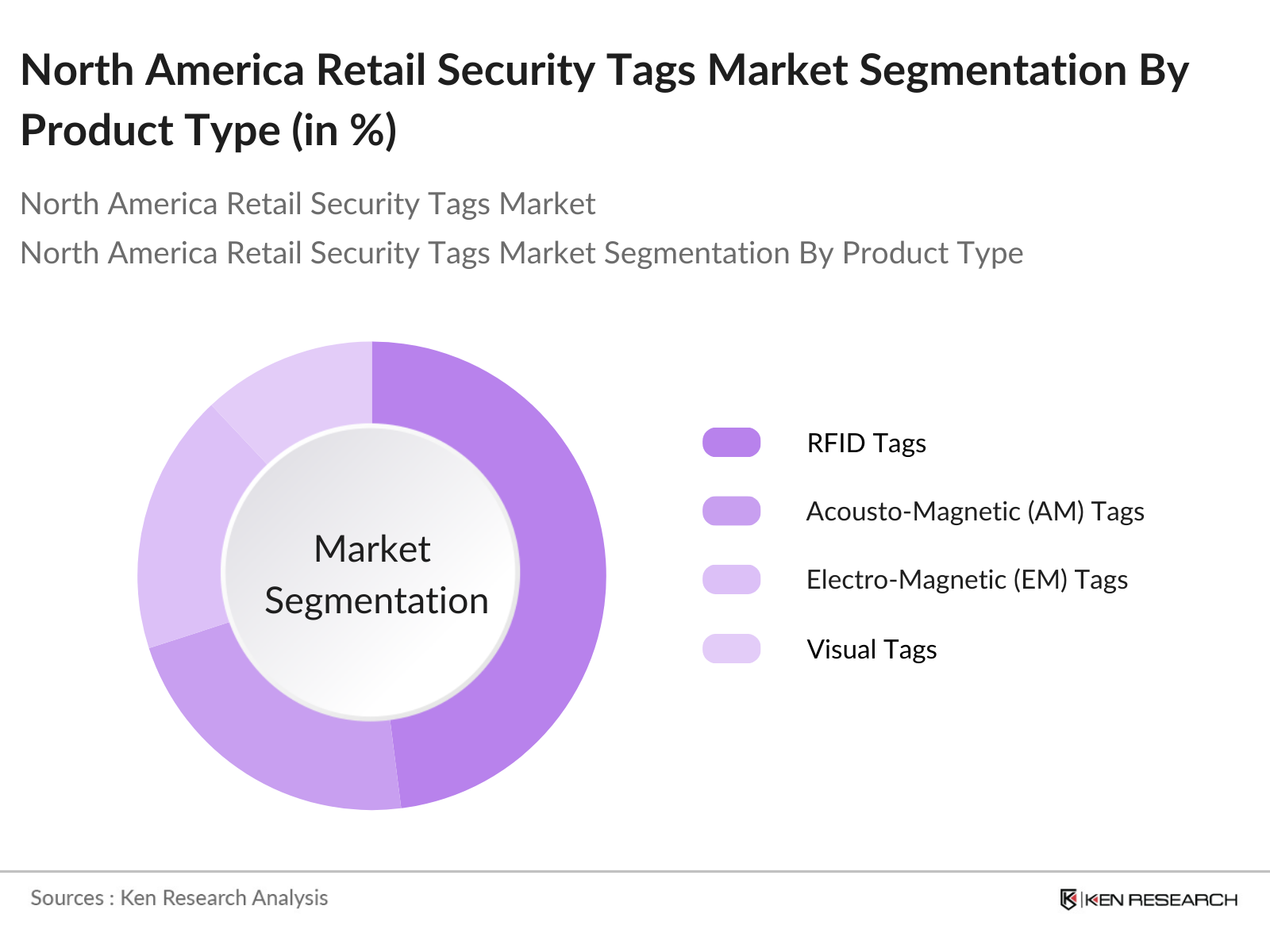
By Product Type: The North America Retail Security Tags market is segmented by product type into RFID Tags, Acousto-Magnetic (AM) Tags, Electro-Magnetic (EM) Tags, and Visual Tags. Recently, RFID Tags have gained a dominant market share within this segmentation due to their real-time tracking and high accuracy in theft prevention. The retail industry increasingly prefers RFID tags, as they enable efficient inventory management and offer superior security features.
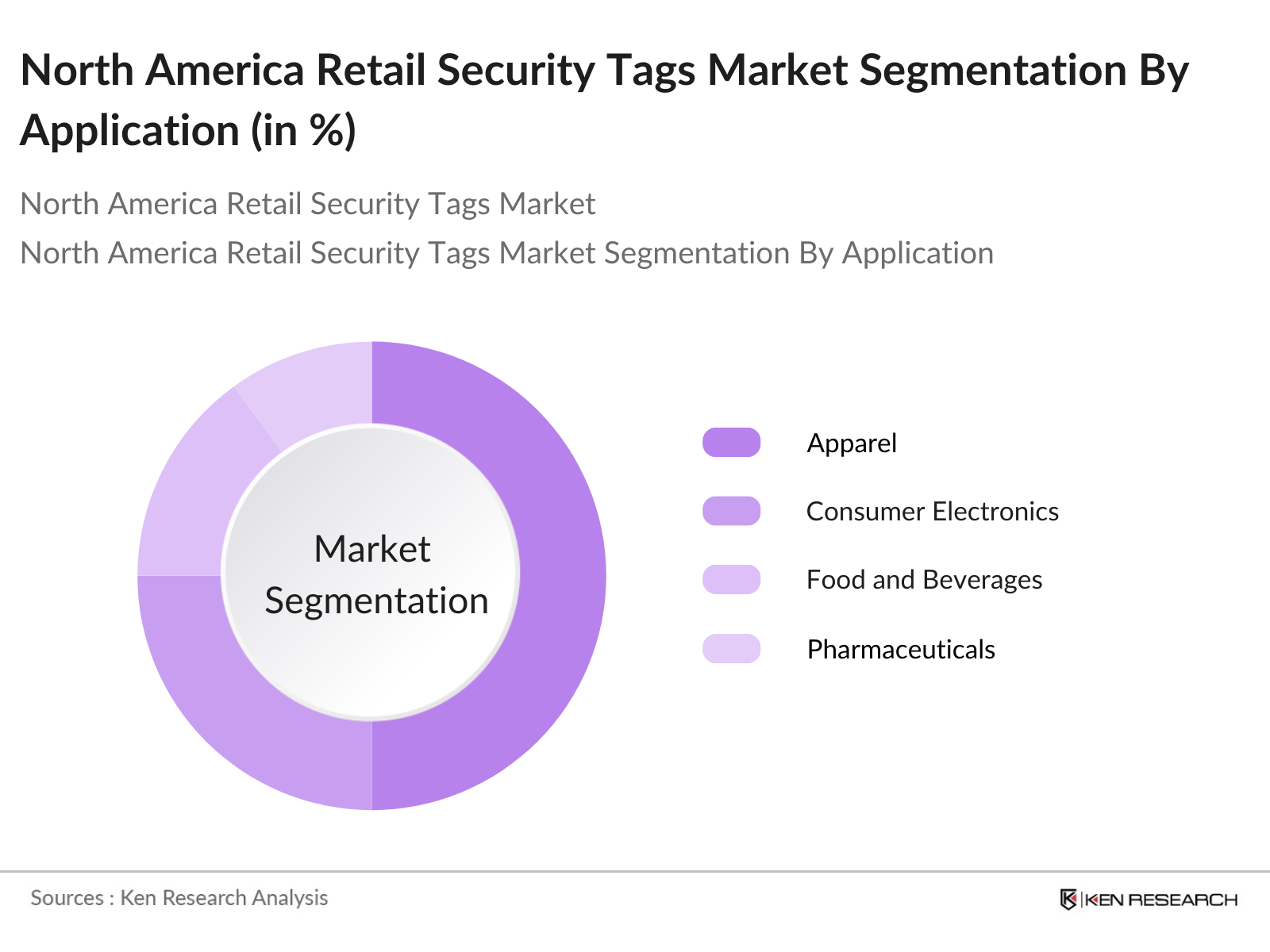
By Application: The North America Retail Security Tags market is also segmented by application into Apparel, Consumer Electronics, Food and Beverages, Pharmaceuticals, and Others (Footwear, Accessories). Apparel holds the largest market share within this segmentation due to high shoplifting rates in this sector. Clothing retailers, particularly department stores and specialty apparel shops, increasingly invest in anti-theft solutions like tags to prevent retail shrinkage.
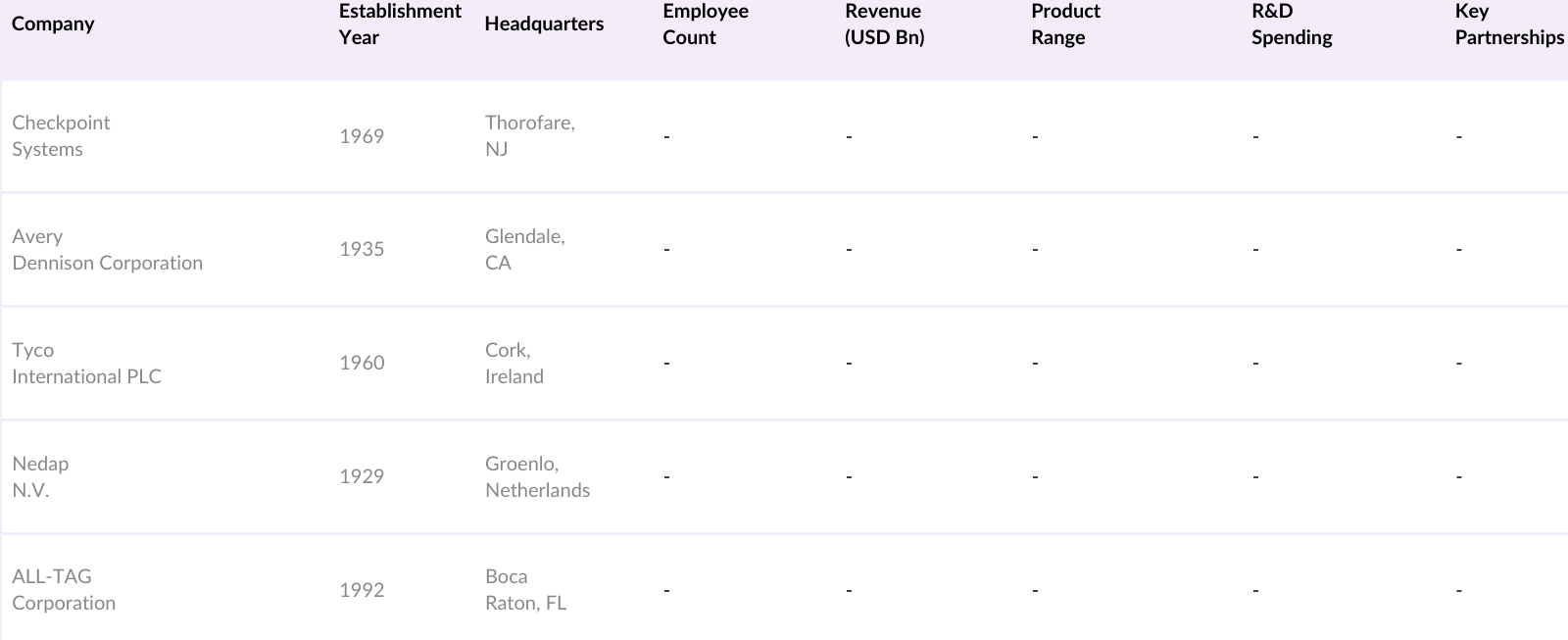
The North America Retail Security Tags market is dominated by several key players, who leverage technology and strategic partnerships to enhance their market position. Companies such as Checkpoint Systems and Tyco International lead with cutting-edge EAS solutions, while Avery Dennison has made strides in the RFID space. This consolidation highlights the substantial influence of these players on market trends and innovations.
The North America Retail Security Tags Market is anticipated to witness steady growth due to advancements in security technology, increasing retail shrinkage challenges, and the growing need for inventory accuracy in both physical and e-commerce environments. With innovations in RFID and smart tagging solutions, the market will likely see expanded applications in logistics and real-time asset tracking, further reinforcing the relevance of security tags across retail formats.
|
By Product Type |
RFID Tags |
|
By Application |
Apparel |
|
By Technology |
Radio Frequency Identification (RFID) |
|
By Retail Channel |
Brick and Mortar |
|
By Region |
United States |
1.1 Definition and Scope
1.2 Market Taxonomy
1.3 Market Growth Rate
1.4 Market Segmentation Overview
2.1 Historical Market Size
2.2 Year-On-Year Growth Analysis
2.3 Key Market Developments and Milestones
3.1 Growth Drivers
3.1.1 Technological Advancements in RFID and EAS (Electronic Article Surveillance) Systems
3.1.2 Rise in Retail Shrinkage Concerns
3.1.3 Growing Adoption of Security Tags in Organized Retail
3.2 Market Challenges
3.2.1 High Costs of Installation and Maintenance
3.2.2 Increasing Counterfeiting Risks
3.2.3 Variability in Operational Standards
3.3 Opportunities
3.3.1 Integration of IoT and Smart Tagging Solutions
3.3.2 Expansion of E-Commerce and Omnichannel Retailing
3.3.3 Demand for Source Tagging by Manufacturers
3.4 Trends
3.4.1 Shift Towards Digital Retail Transformation
3.4.2 Increased Demand for Ultra-Small and Durable Tags
3.4.3 Adoption of Cloud-Based Security Tag Management Systems
3.5 Regulatory and Compliance Landscape
3.5.1 EAS Standards
3.5.2 Radiofrequency Regulation (RF Compliance)
3.5.3 Data Privacy and Security Laws
3.6 SWOT Analysis
3.7 Stakeholder Ecosystem
3.8 Porters Five Forces Analysis
3.9 Competitive Landscape
4.1 By Product Type (in Value %)
4.1.1 RFID Tags
4.1.2 Acousto-Magnetic (AM) Tags
4.1.3 Electro-Magnetic (EM) Tags
4.1.4 Visual Tags
4.2 By Application (in Value %)
4.2.1 Apparel
4.2.2 Consumer Electronics
4.2.3 Food and Beverages
4.2.4 Pharmaceuticals
4.2.5 Others (Footwear, Accessories)
4.3 By Technology (in Value %)
4.3.1 Radio Frequency Identification (RFID)
4.3.2 Electronic Article Surveillance (EAS)
4.4 By Retail Channel (in Value %)
4.4.1 Brick and Mortar
4.4.2 E-Commerce
4.4.3 Hybrid
4.5 By Country (in Value %)
4.5.1 United States
4.5.2 Canada
4.5.3 Mexico
5.1 Profiles of Major Companies
5.1.1 Checkpoint Systems
5.1.2 Avery Dennison Corporation
5.1.3 Tyco International PLC
5.1.4 Johnson Controls
5.1.5 ALL-TAG Corporation
5.1.6 Nedap N.V.
5.1.7 Ketec, Inc.
5.1.8 3M Company
5.1.9 Guang Zhou Junye Packaging Co.
5.1.10 Hangzhou Century Co.
5.1.11 Universal Surveillance Systems (USS)
5.1.12 Hanmi IT
5.1.13 Sentry Technology Corporation
5.1.14 Se-Kure Controls, Inc.
5.1.15 ID Technologies
5.2 Cross Comparison Parameters (No. of Employees, Headquarters, Year Founded, Revenue, Product Range, R&D Expenditure, Market Share, Key Partnerships)
5.3 Market Share Analysis
5.4 Strategic Initiatives
5.5 Mergers and Acquisitions
5.6 Investment Analysis
5.7 Venture Capital Funding
5.8 Government Grants
5.9 Private Equity Investments
6.1 Security Tagging Standards and Protocols
6.2 Compliance Requirements by Country
6.3 Certification Processes and Quality Standards
7.1 Market Growth Projections
7.2 Key Drivers of Future Market Growth
8.1 By Product Type (in Value %)
8.2 By Application (in Value %)
8.3 By Technology (in Value %)
8.4 By Retail Channel (in Value %)
8.5 By Country (in Value %)
9.1 TAM/SAM/SOM Analysis
9.2 Customer Cohort Analysis
9.3 Marketing Initiatives
9.4 White Space Opportunity Analysis
Disclaimer Contact UsThis stage involves mapping the North America Retail Security Tags Market ecosystem, engaging all key stakeholders. Extensive desk research is conducted, drawing from secondary and proprietary databases to capture industry-level data, with the primary aim to identify crucial variables impacting market dynamics.
Here, historical data for the market is compiled, covering aspects such as product adoption rates and technological penetration. The analysis examines the ratio of physical retail adoption of security tags to e-commerce, supporting a reliable assessment of revenue contributions from each segment.
Initial market hypotheses are tested through computer-assisted interviews with industry experts from various segments. These consultations offer practical insights on revenue flow and product preferences, ensuring the accuracy of data projections.
This phase engages with multiple security tag manufacturers and retailers for detailed feedback on product performance, market demands, and consumer behavior. This collaboration helps validate the bottom-up market size approach, ensuring a robust analysis.
The North America Retail Security Tags Market is valued at USD 225 million, based on a five-year historical analysis. This market is primarily driven by increasing incidents of retail shrinkage and the adoption of advanced anti-theft technologies, particularly RFID (Radio Frequency Identification) and EAS (Electronic Article Surveillance) systems.
The market faces challenges such as high installation costs, counterfeiting risks, and regional regulatory compliance, which can impact the growth of security tagging solutions.
Key players include Checkpoint Systems, Avery Dennison, Tyco International, Nedap N.V., and ALL-TAG Corporation, each influencing market growth with unique product offerings.
Growth is propelled by rising concerns about retail shrinkage, advancements in RFID technology, and increasing investments in organized retail security solutions.

What makes us stand out is that our consultants follows Robust, Refine and Result (RRR) methodology. i.e. Robust for clear definitions, approaches and sanity checking, Refine for differentiating respondents facts and opinions and Result for presenting data with story

We have set a benchmark in the industry by offering our clients with syndicated and customized market research reports featuring coverage of entire market as well as meticulous research and analyst insights.

While we don't replace traditional research, we flip the method upside down. Our dual approach of Top Bottom & Bottom Top ensures quality deliverable by not just verifying company fundamentals but also looking at the sector and macroeconomic factors.

With one step in the future, our research team constantly tries to show you the bigger picture. We help with some of the tough questions you may encounter along the way: How is the industry positioned? Best marketing channel? KPI's of competitors? By aligning every element, we help maximize success.

Our report gives you instant access to the answers and sources that other companies might choose to hide. We elaborate each steps of research methodology we have used and showcase you the sample size to earn your trust.

If you need any support, we are here! We pride ourselves on universe strength, data quality, and quick, friendly, and professional service.