Ken Research Logo

North America Revenue Cycle Management Market Outlook to 2030

Region:North America

Author(s):Naman Rohilla

Product Code:KROD3475

Published On

November 2024

Total pages

99

About the Report

North America Revenue Cycle Management (RCM) Market Overview

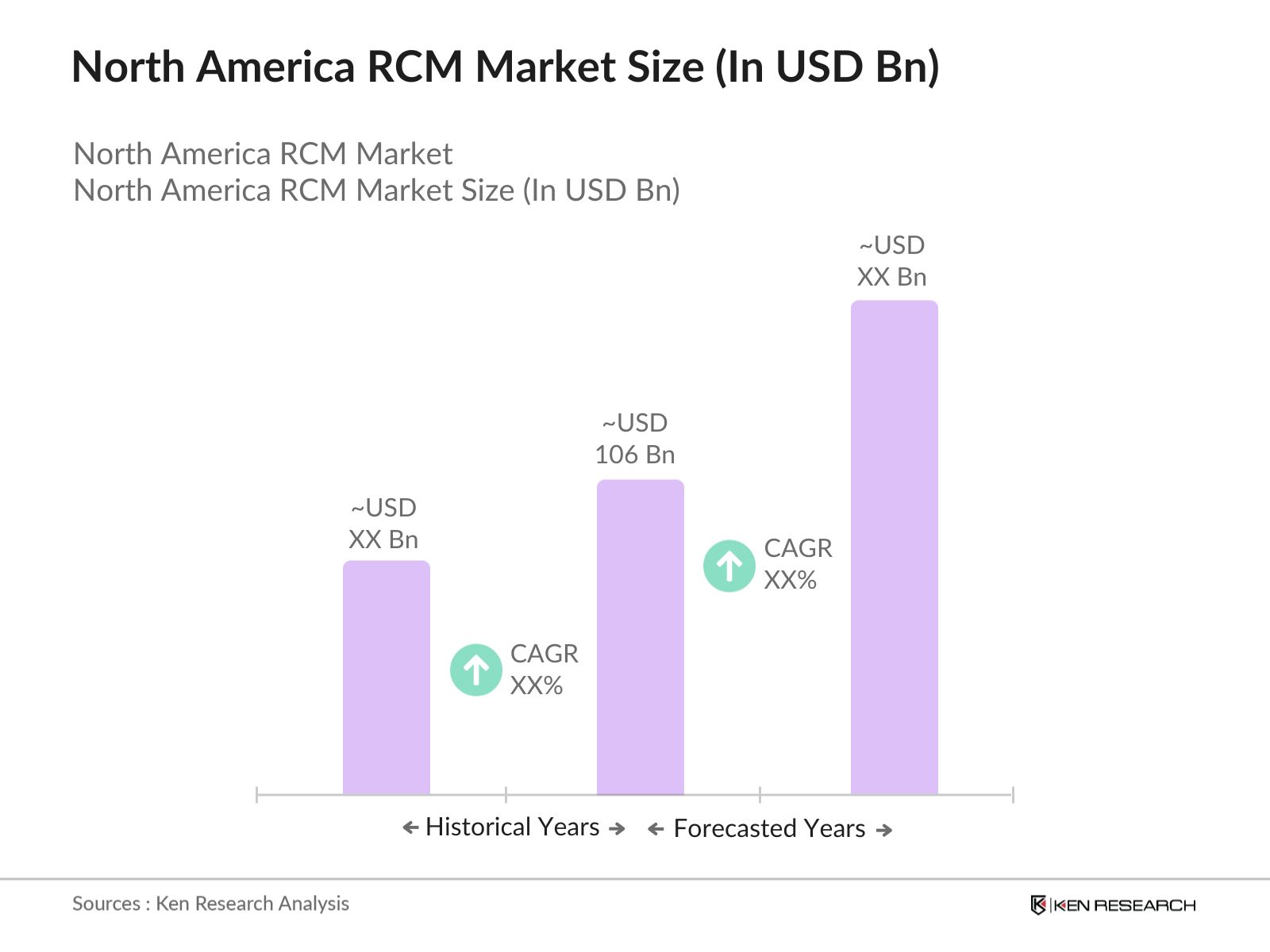
  • The North America Revenue Cycle Management (RCM) market is valued at USD 106 billion, driven by an increasing adoption of advanced healthcare IT systems across hospitals and clinics. RCM systems help streamline billing, claims processing, and revenue generation, enhancing the efficiency of healthcare providers. Key drivers include technological advancements in RCM software, rising healthcare expenditures, and a growing focus on improving patient care outcomes by healthcare institutions across the region. The demand for cloud-based and AI-integrated RCM solutions is expected to continue to grow as hospitals and clinics seek to optimize their revenue cycles and reduce administrative costs.
  • Dominant countries in this market include the United States and Canada. The U.S. leads due to its advanced healthcare infrastructure, widespread adoption of Electronic Health Records (EHR) systems, and a larger healthcare expenditure compared to other regions. Additionally, the U.S. healthcare system's complexity, which involves multiple payers, has increased the need for sophisticated RCM systems to manage claims and payments. Canada's dominance stems from a highly regulated healthcare system and a growing emphasis on digitization, driving demand for efficient RCM systems.
  • The use of AI in automating claims processing is rapidly gaining momentum in North America. By 2023, AI tools were responsible for automating nearly 30% of claims processing tasks in the U.S., reducing human intervention and errors. AI-driven claims management systems can analyze vast amounts of data, flagging potential issues and ensuring claims are submitted correctly the first time. This trend is expected to continue as healthcare providers increasingly turn to AI to optimize revenue cycles, improve accuracy, and speed up reimbursement times.

North America Revenue Cycle Management Market Size

North America Revenue Cycle Management Market Segmentation

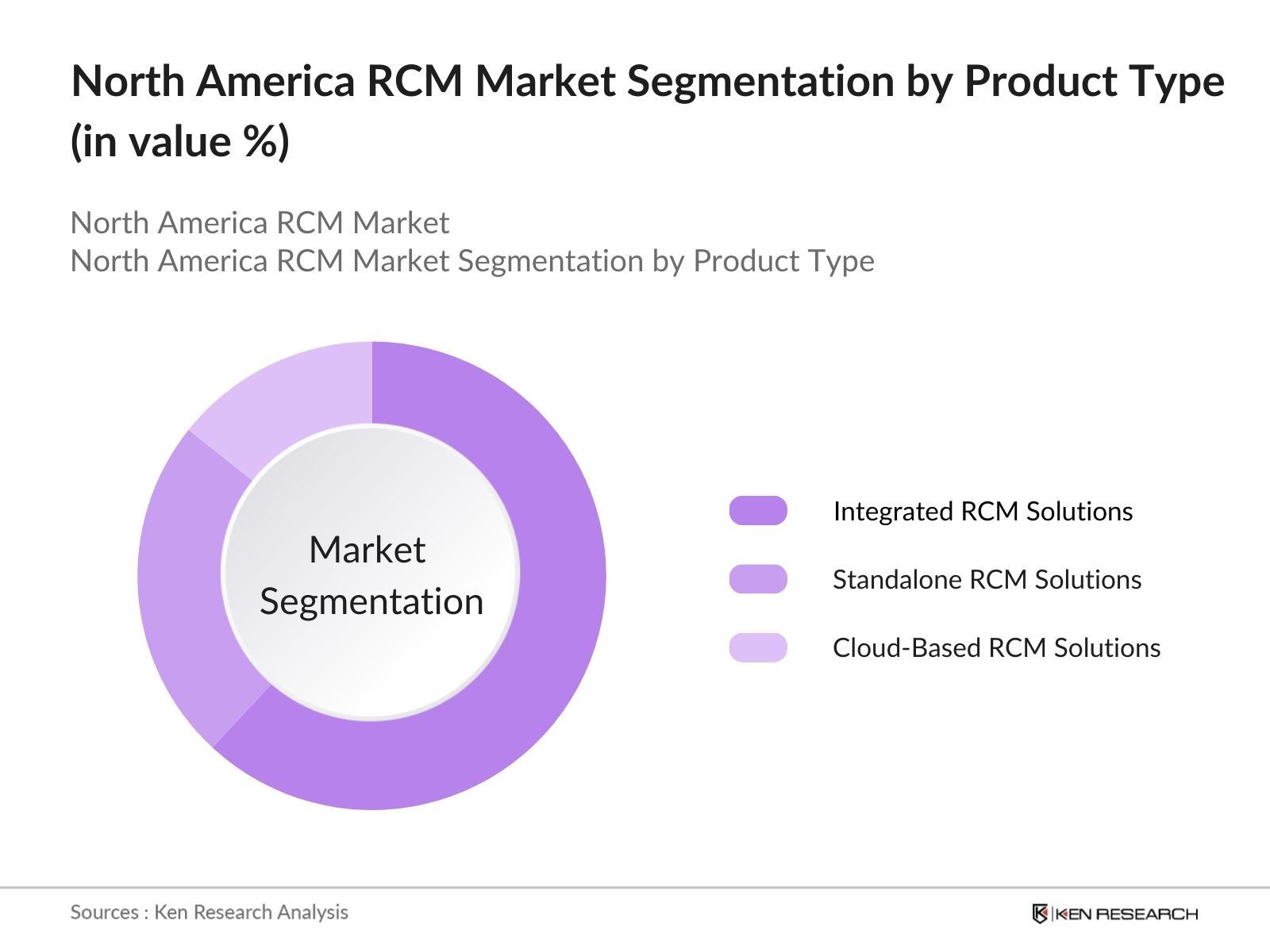
  • By Product Type: The North America RCM market is segmented by product type into integrated RCM solutions, standalone RCM solutions, and cloud-based RCM solutions. Integrated RCM solutions hold a dominant market share due to their ability to streamline multiple processessuch as claims management, billing, and patient data handlingwithin a single platform. These solutions are favored by larger healthcare institutions as they offer comprehensive functionalities that can be customized to fit the complex needs of different healthcare systems.

North America Revenue Cycle Management Market Segmentation by product type

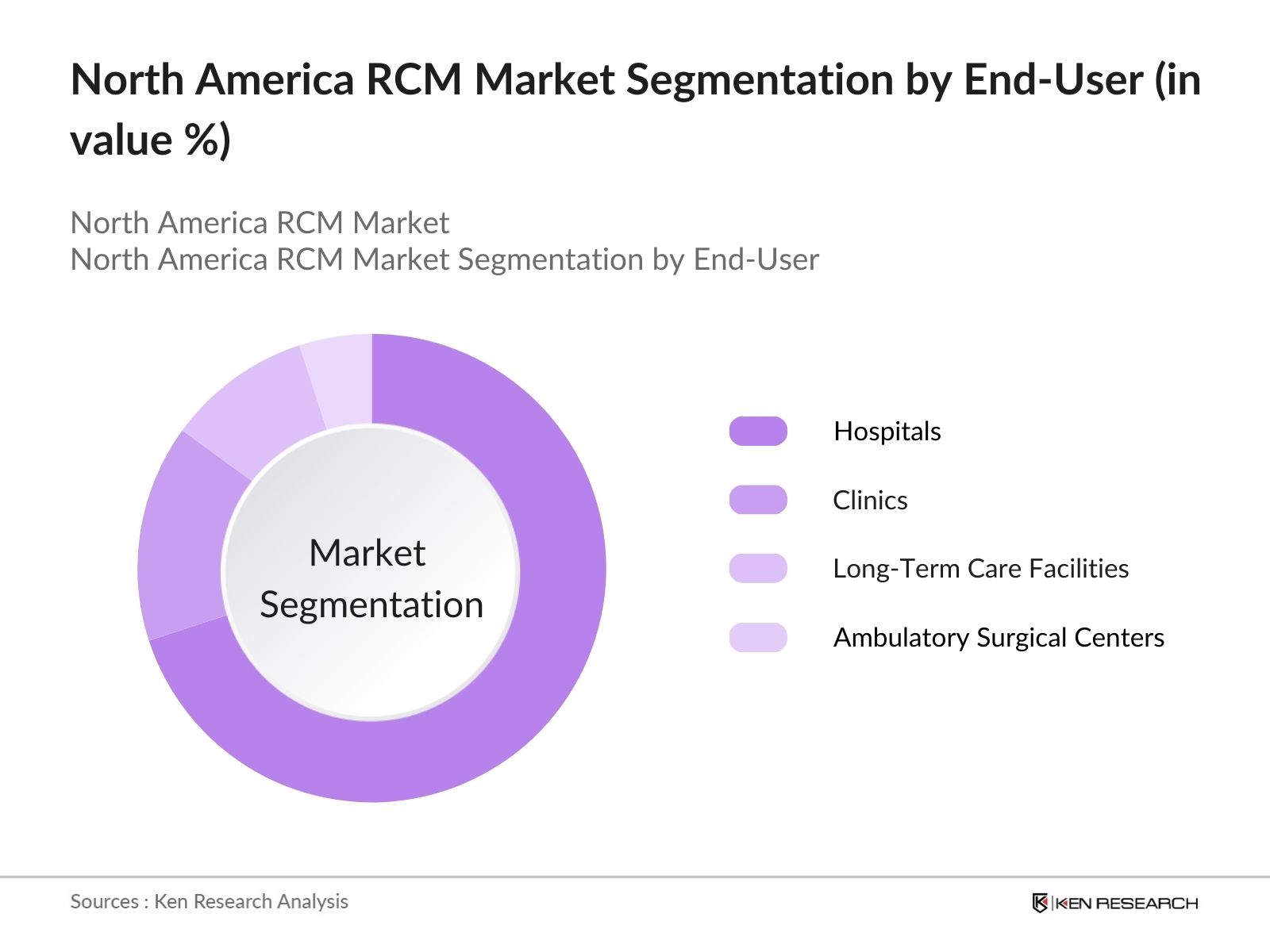
  • By End-User: The market is also segmented by end-user into hospitals, clinics, long-term care facilities, and ambulatory surgical centers. Hospitals dominate this segment due to their large-scale operations and complex billing systems that require advanced RCM solutions to manage claims, denials, and payment collections. The integration of AI-based tools and automation in hospital RCM systems has further boosted the efficiency of financial management, contributing to the growth of this segment.

North America Revenue Cycle Management Market Segmentation by end-user

Competitive Landscape

The North America RCM market is highly competitive, with several key players dominating the space. These players include both local and international companies that offer innovative RCM solutions, primarily focusing on streamlining claims and billing processes, reducing administrative overhead, and improving financial outcomes for healthcare providers.

Company

Establishment Year

Headquarters

No. of Employees

Revenue (USD Bn)

Key RCM Offering

Technology Focus

Geographical Reach

Strategic Initiatives

Cerner Corporation

1979

Kansas City, USA

-

-

-

-

-

-

McKesson Corporation

1833

Irving, USA

-

-

-

-

-

-

GE Healthcare

1994

Chicago, USA

-

-

-

-

-

-

Epic Systems Corporation

1979

Verona, USA

-

-

-

-

-

-

Athenahealth, Inc.

1997

Watertown, USA

-

-

-

-

-

-

North America RCM Market Analysis

North America RCM Market Growth Drivers

  • Increasing Adoption of Electronic Health Records (EHR) Systems: The widespread adoption of Electronic Health Records (EHR) systems in North America is a key growth driver for the RCM market. As of 2022, over 90% of hospitals in the U.S. have adopted certified EHR systems, driven by regulatory mandates like the Health Information Technology for Economic and Clinical Health (HITECH) Act. The digitization of patient records improves efficiency in managing billing, claims, and payments. With EHR adoption continuing to increase across both hospitals and outpatient facilities, the reliance on integrated RCM solutions is also rising, particularly as healthcare providers seek ways to reduce operational costs.
  • Shift Toward Value-Based Healthcare: The North American healthcare sector has been undergoing a transition towards value-based care, shifting focus from volume to outcomes, which impacts the demand for RCM solutions. In 2023, over 40% of healthcare payments in the U.S. were tied to value-based care models, where reimbursements are linked to patient outcomes rather than services rendered. This change requires sophisticated RCM tools capable of managing complex payment models, such as bundled payments and capitation, while ensuring compliance with evolving regulations. Healthcare providers are increasingly seeking advanced RCM systems to optimize revenue under these models.
  • Increasing Healthcare Expenditures: Healthcare expenditure in North America, particularly in the U.S., continues to climb, creating a larger pool of revenue that needs to be managed effectively. In 2022, the U.S. healthcare spending exceeded $4.3 trillion, with administrative costs accounting for nearly 30% of this total. This rising expenditure drives the demand for more efficient and automated RCM systems to manage revenue, reduce billing errors, and ensure timely payments. As healthcare costs continue to rise, hospitals and providers are focusing on implementing RCM systems to control administrative expenses and streamline billing operations.

North America RCM Market Challenges

  • High Initial Costs of RCM Systems: The implementation of advanced RCM solutions in North America is often hindered by the high initial investment required for software, hardware, and training. In 2023, the average cost of installing a comprehensive RCM system in a mid-sized hospital was reported to be around $500,000, including installation and integration expenses. Smaller healthcare providers, particularly in rural areas, find it difficult to justify these upfront costs despite the long-term savings and operational efficiencies these systems can provide. This has limited market penetration in certain segments, particularly among smaller or independent practices.
  • Integration and Interoperability Issues: A major challenge in the North American RCM market is the lack of interoperability between different systems. In 2022, over 75% of healthcare providers reported difficulties in integrating their RCM systems with other healthcare IT platforms like EHRs, laboratory information systems, and telehealth solutions. This lack of seamless data exchange often results in delayed billing processes, increased administrative workloads, and errors in claims submissions. These integration challenges are compounded by the fragmented nature of healthcare IT systems across different providers, requiring additional investments in middleware and customization.

Future Outlook

The North American RCM market is expected to experience robust growth over the next few years, driven by increasing healthcare expenditures, the rising complexity of medical billing, and the growing adoption of AI and machine learning in healthcare IT systems. As healthcare providers strive to reduce operational inefficiencies and improve patient outcomes, the demand for advanced RCM systems will rise. Government regulations mandating electronic health records and the increasing need for efficient claims processing in complex multi-payer systems will further fuel market growth.

North America RCM Market Opportunities

  • Advancements in AI & Machine Learning for RCM: Artificial Intelligence (AI) and Machine Learning (ML) technologies are transforming the RCM market, offering new opportunities for automation and enhanced decision-making. In 2023, AI-powered RCM tools were used in over 15% of hospitals in North America, streamlining claims processing, predictive analytics for patient payments, and fraud detection. These technologies reduce human errors and speed up payment cycles, leading to faster reimbursements. The growing adoption of AI-driven tools across hospitals and clinics in North America represents opportunities for market players to offer differentiated, tech-enhanced solutions.
  • Expanding Use of Cloud-Based Solutions: Cloud-based RCM solutions are gaining traction as healthcare providers seek scalable and cost-effective alternatives to traditional on-premise systems. In 2023, cloud-based solutions accounted for approximately 30% of new RCM deployments in North America, driven by their flexibility, lower upfront costs, and enhanced data accessibility. These solutions offer secure, real-time access to financial data, enabling providers to manage revenue across multiple locations. The increasing adoption of cloud infrastructure by healthcare organizations is expected to open up opportunities for vendors offering cloud-based RCM systems.

Major Players in the North America RCM Market

  • Cerner Corporation
  • McKesson Corporation
  • GE Healthcare
  • Epic Systems Corporation
  • Athenahealth, Inc.
  • Experian Health
  • R1 RCM Inc.
  • Allscripts Healthcare Solutions
  • Conifer Health Solutions
  • CareCloud Corporation
  • NextGen Healthcare Information Systems
  • Greenway Health
  • eClinicalWorks
  • Quest Diagnostics
  • AdvantEdge Healthcare Solutions

Scope of the Report

Segments

Sub-Segments

By Product Type

Integrated RCM Solutions

Standalone RCM Solutions

Cloud-Based RCM Solutions

By End-User

Hospitals

Clinics

Long-Term Care Facilities

Ambulatory Surgical Centers

By Functionality

Claims & Denial Management

Eligibility Verification

Payment Remittance & Processing

Medical Billing

By Mode of Delivery

On-Premise RCM Solutions

Cloud-Based RCM Solutions

By Region

USA

Canada

Mexico

Products


Key Target Audience

  • Hospitals and Healthcare Systems

  • Long-Term Care Facilities

  • Ambulatory Surgical Centers

  • Health Insurance Companies

  • Government and Regulatory Bodies

  • Investments and Venture Capitalist Firms

  • Healthcare IT Vendors

  • Medical Billing Service Providers

Table of Contents

1. North America Revenue Cycle Management Market Overview

1.1. Definition and Scope

1.2. Market Taxonomy

1.3. Market Growth Rate

1.4. Market Segmentation Overview

2. North America Revenue Cycle Management Market Size (In USD Bn)

2.1. Historical Market Size

2.2. Year-On-Year Growth Analysis

2.3. Key Market Developments and Milestones

3. North America Revenue Cycle Management Market Analysis

3.1. Growth Drivers

3.1.1. Increasing Adoption of Electronic Health Records (EHR) Systems

3.1.2. Government Initiatives Promoting Healthcare IT

3.1.3. Shift Toward Value-Based Healthcare

3.1.4. Increasing Healthcare Expenditures

3.2. Market Challenges

3.2.1. High Initial Costs of RCM Systems

3.2.2. Integration and Interoperability Issues

3.2.3. Lack of Skilled Workforce

3.3. Opportunities

3.3.1. Advancements in AI & Machine Learning for RCM

3.3.2. Expanding Use of Cloud-Based Solutions

3.3.3. Emerging Markets in North America (Expansion in Rural Areas)

3.4. Trends

3.4.1. Integration of AI in Claims Processing

3.4.2. Automation of RCM Functions

3.4.3. Growth in Outsourcing RCM Solutions

3.5. Government Regulations

3.5.1. HITECH Act & Healthcare IT Standards

3.5.2. Health Insurance Portability and Accountability Act (HIPAA)

3.5.3. Medicare and Medicaid Billing Regulations

3.6. SWOT Analysis

3.7. Stake Ecosystem

3.8. Porters Five Forces

3.8.1. Threat of New Entrants

3.8.2. Bargaining Power of Suppliers

3.8.3. Bargaining Power of Buyers

3.8.4. Threat of Substitutes

3.8.5. Competitive Rivalry

3.9. Competition Ecosystem

4. North America Revenue Cycle Management Market Segmentation

4.1. By Product Type (In Value %)

4.1.1. Integrated RCM Solutions

4.1.2. Standalone RCM Solutions

4.1.3. Cloud-Based RCM Solutions

4.2. By End-User (In Value %)

4.2.1. Hospitals

4.2.2. Clinics

4.2.3. Long-Term Care Facilities

4.2.4. Ambulatory Surgical Centers

4.3. By Functionality (In Value %)

4.3.1. Claims & Denial Management

4.3.2. Eligibility Verification

4.3.3. Payment Remittance & Processing

4.3.4. Medical Billing

4.4. By Mode of Delivery (In Value %)

4.4.1. On-Premise RCM Solutions

4.4.2. Cloud-Based RCM Solutions

4.5. By Region (In Value %)

4.5.1. USA

4.5.2. Canada

4.5.3. Mexico

5. North America Revenue Cycle Management Market Competitive Analysis

5.1. Detailed Profiles of Major Companies

5.1.1. Cerner Corporation

5.1.2. McKesson Corporation

5.1.3. GE Healthcare

5.1.4. Epic Systems Corporation

5.1.5. Allscripts Healthcare Solutions

5.1.6. Athenahealth, Inc.

5.1.7. Experian Health

5.1.8. eClinicalWorks

5.1.9. NextGen Healthcare Information Systems

5.1.10. R1 RCM Inc.

5.1.11. Conifer Health Solutions

5.1.12. Greenway Health

5.1.13. CareCloud Corporation

5.1.14. AdvantEdge Healthcare Solutions

5.1.15. Quest Diagnostics

5.2. Cross Comparison Parameters (No. of Employees, Headquarters, Inception Year, Revenue, Market Share, Service Offerings, Technology Focus, Strategic Partnerships)

5.3. Market Share Analysis

5.4. Strategic Initiatives

5.5. Mergers and Acquisitions

5.6. Investment Analysis

5.7. Venture Capital Funding

5.8. Government Grants

5.9. Private Equity Investments

6. North America Revenue Cycle Management Market Regulatory Framework

6.1. Healthcare Compliance Standards

6.2. RCM Certification Processes

6.3. Data Privacy Regulations (HIPAA, GDPR)

6.4. Reimbursement Policy Frameworks

7. North America Revenue Cycle Management Future Market Size (In USD Bn)

7.1. Future Market Size Projections

7.2. Key Factors Driving Future Market Growth

8. North America Revenue Cycle Management Future Market Segmentation

8.1. By Product Type (In Value %)

8.2. By End-User (In Value %)

8.3. By Functionality (In Value %)

8.4. By Mode of Delivery (In Value %)

8.5. By Region (In Value %)

9. North America Revenue Cycle Management Market Analysts Recommendations

9.1. TAM/SAM/SOM Analysis

9.2. Customer Cohort Analysis

9.3. Marketing Initiatives

9.4. White Space Opportunity Analysis

Disclaimer Contact Us

Research Methodology

Step 1: Identification of Key Variables

The research process begins by identifying critical variables such as the adoption of RCM solutions by healthcare institutions, technology trends, and regulations. This step leverages both primary and secondary research through industry databases, reports, and stakeholder interviews.

Step 2: Market Analysis and Construction

In this phase, historical data on the RCM market is gathered and analyzed to estimate market penetration rates, revenue, and key growth drivers. This helps in understanding the market dynamics that shape the RCM landscape.

Step 3: Hypothesis Validation and Expert Consultation

Market insights are validated through in-depth interviews with industry professionals, including RCM vendors, healthcare providers, and technology experts, to gather firsthand knowledge and refine the market estimates.

Step 4: Research Synthesis and Final Output

The final step involves synthesizing all the collected data and insights to create a comprehensive, accurate report on the North American RCM market. This includes analyzing product segments, service demand, and future growth opportunities.

Frequently Asked Questions

01. How big is the North America RCM Market?

The North America Revenue Cycle Management market is valued at USD 106 billion, driven by the increasing complexity of healthcare billing systems and the need for efficient revenue management.

02. What are the challenges in the North America RCM Market?

Key challenges include the high initial costs of implementing RCM systems, integration and interoperability issues between different healthcare IT platforms, and the lack of skilled professionals to manage the systems.

03. Who are the major players in the North America RCM Market?

The major players include Cerner Corporation, McKesson Corporation, GE Healthcare, Epic Systems Corporation, and Athenahealth, Inc. These companies dominate the market due to their technological innovation and extensive customer base.

04. What are the growth drivers of the North America RCM Market?

The market is driven by increasing adoption of electronic health records, the growing complexity of healthcare billing, and technological advancements such as AI and cloud computing in RCM systems.

Why Buy From Us?

RRR
Refine Robust Result (RRR) Framework

What makes us stand out is that our consultants follows Robust, Refine and Result (RRR) methodology. i.e. Robust for clear definitions, approaches and sanity checking, Refine for differentiating respondents facts and opinions and Result for presenting data with story

Our Reach Is Unmatched

We have set a benchmark in the industry by offering our clients with syndicated and customized market research reports featuring coverage of entire market as well as meticulous research and analyst insights.

Research
Shifting the Research Paradigm

While we don't replace traditional research, we flip the method upside down. Our dual approach of Top Bottom & Bottom Top ensures quality deliverable by not just verifying company fundamentals but also looking at the sector and macroeconomic factors.

Insite
More Insights-Better Decisions

With one step in the future, our research team constantly tries to show you the bigger picture. We help with some of the tough questions you may encounter along the way: How is the industry positioned? Best marketing channel? KPI's of competitors? By aligning every element, we help maximize success.

Trust
Transparency and Trust

Our report gives you instant access to the answers and sources that other companies might choose to hide. We elaborate each steps of research methodology we have used and showcase you the sample size to earn your trust.

support
Round the Clock Support

If you need any support, we are here! We pride ourselves on universe strength, data quality, and quick, friendly, and professional service.

Why Client Choose Us?

400000+ Reports in repository
150+ Consulting project a year
100+ Analysts
8000+ Client Queries in 2022