















North America Rice Market Outlook to 2030
Region:North America
Author(s):Shreya Garg
Product Code:KROD5854
December 2024
99
About the Report
North America Rice Market Overview
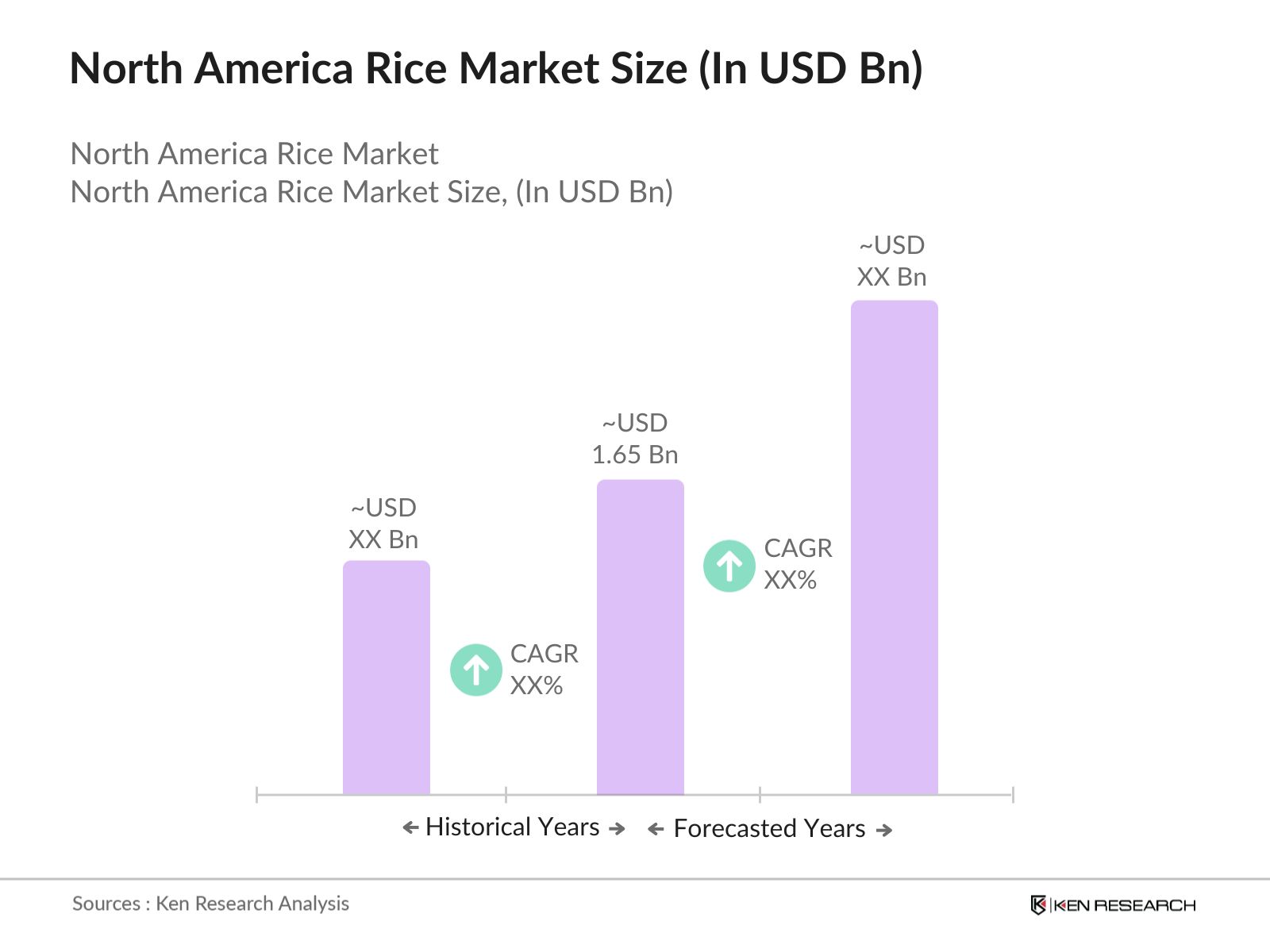
- The North America rice market is valued at USD 1.65 billion, based on a five-year historical analysis. The market is driven by increasing demand for specialty rice varieties, including organic and non-GMO options. Factors such as consumer awareness about healthier food alternatives and the rising popularity of Asian cuisine have also contributed to the expansion of the rice market. The adoption of sustainable and efficient farming techniques has further propelled the growth, making rice a significant staple in the region.
- In North America, the United States and Mexico dominate the rice market. The U.S. leads in production due to advanced farming techniques and government support, while Mexico imports substantial quantities to meet the local demand. The dominance of the U.S. is largely attributed to its favorable agricultural conditions, well-established infrastructure, and strong export capabilities, particularly to countries in Latin America and the Caribbean. Mexico's dominance stems from its heavy reliance on rice as a staple food and increasing demand for higher quality rice imports.
- Government programs supporting organic rice farming have been expanded in 2024, with an additional $300 million in subsidies allocated to promote organic rice production. This initiative is part of the USDA's broader goal to increase organic farming across the country and meet the growing consumer demand for organic products.
North America Rice Market Segmentation
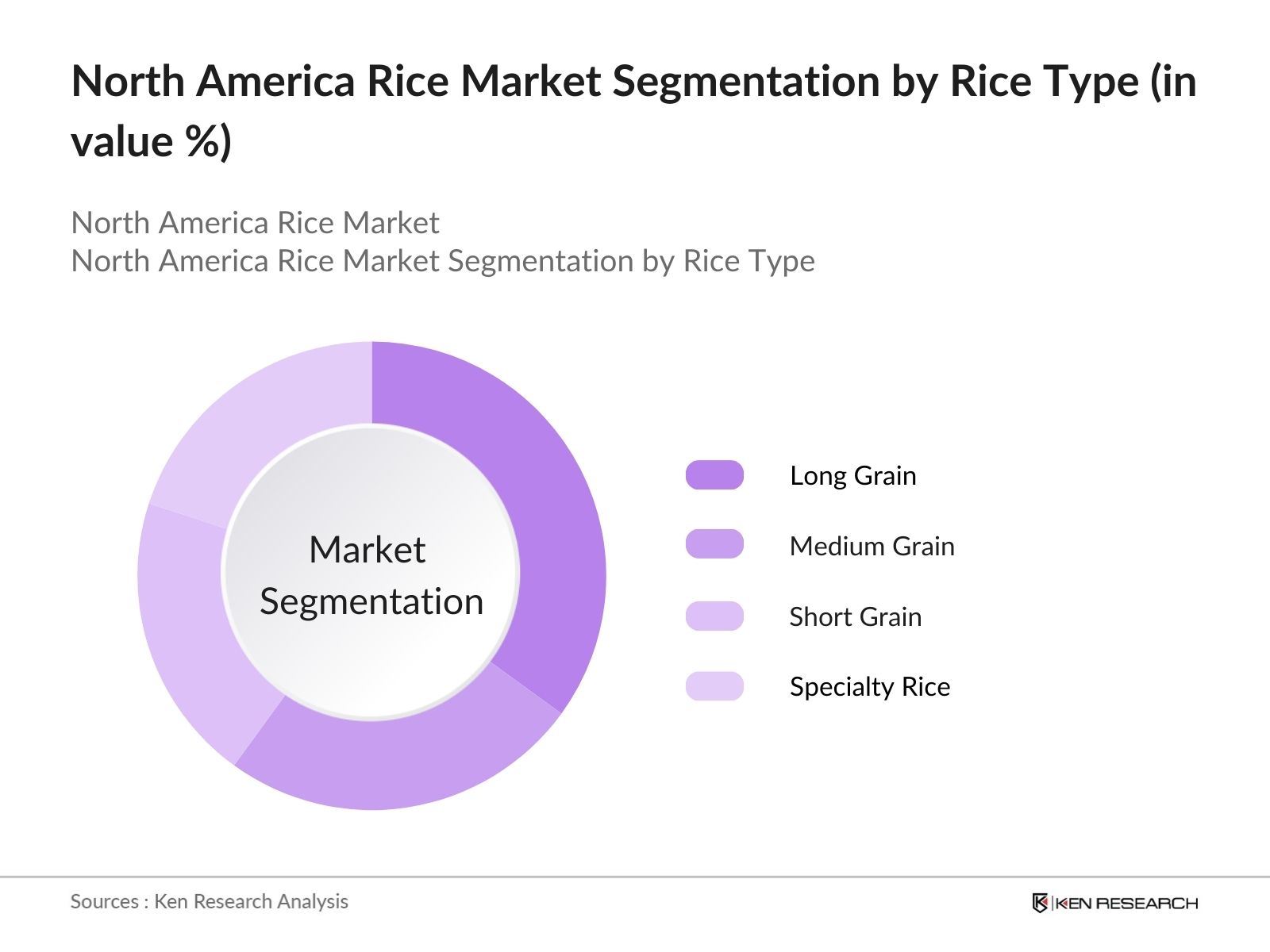
By Rice Type: The North America rice market is segmented by rice type into long grain, medium grain, short grain, and specialty rice. Specialty rice, which includes varieties like Basmati and Jasmine, dominates the market share under the rice type segmentation. This is largely due to growing consumer demand for high-quality and aromatic rice varieties, especially in health-conscious demographics and for ethnic cuisine consumption. These rice types offer unique cooking properties and nutritional benefits, contributing to their prominence in the market.
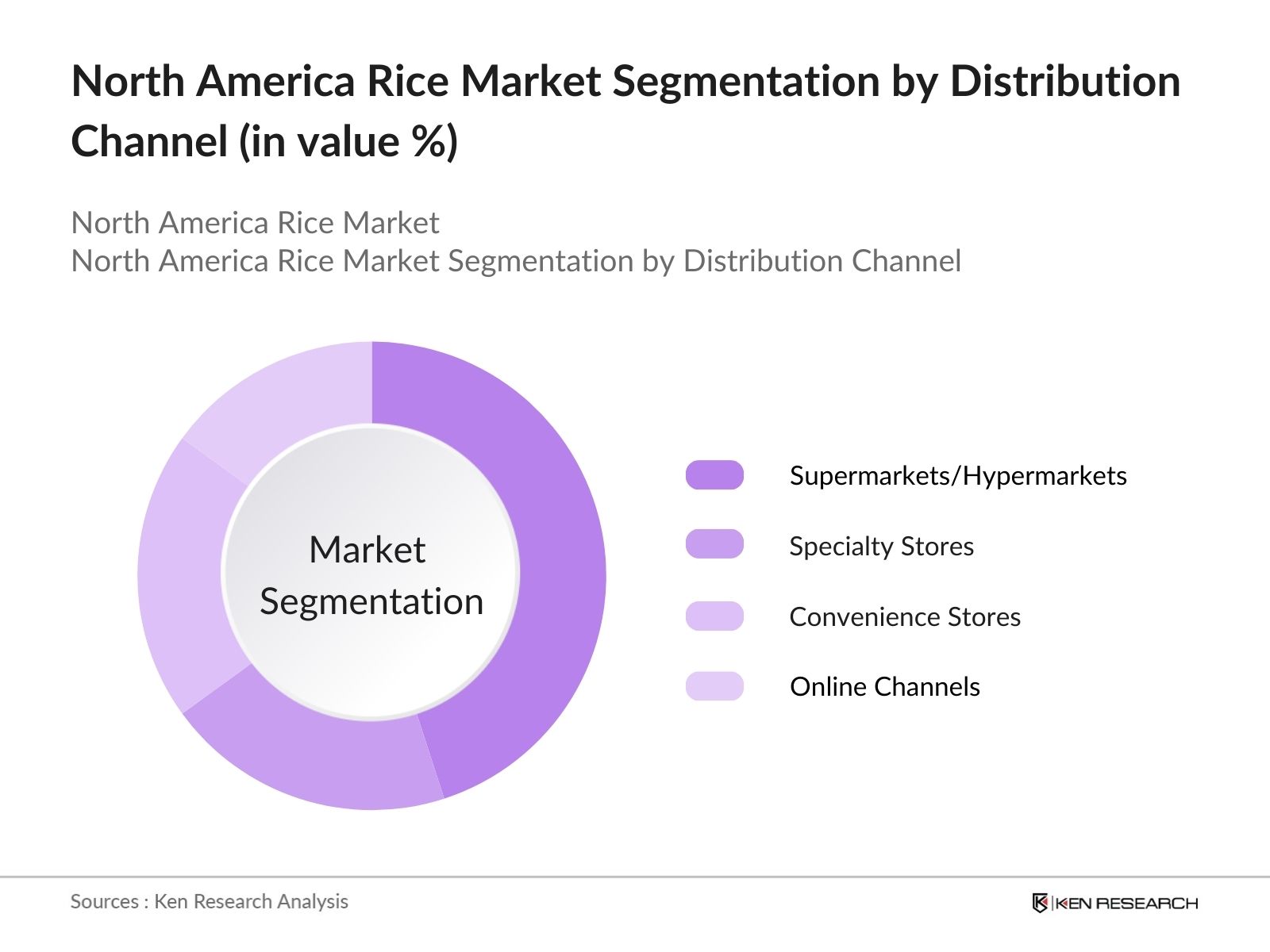
By Distribution Channel: The North America rice market is also segmented by distribution channels into supermarkets/hypermarkets, specialty stores, online channels, and convenience stores. Supermarkets and hypermarkets dominate this segment, as they are the preferred shopping destinations for bulk purchases of rice, offering a wide variety of brands and rice types. The accessibility, availability of bulk purchasing options, and competitive pricing have contributed to the dominance of supermarkets in rice sales.
North America Rice Market Competitive Landscape
The North America rice market is dominated by both local and global players, including well-established companies such as Riceland Foods and Mars, Inc. These companies control large-scale production, have extensive distribution networks, and offer a broad range of rice products. Additionally, the market is seeing consolidation, with players focusing on sustainable farming practices and product innovation to meet changing consumer demands.
|
Company |
Establishment Year |
Headquarters |
Key Products |
Production Capacity (MT) |
Sustainability Initiatives |
Export Markets |
Certifications |
Product Lines |
|
Riceland Foods |
1921 |
Arkansas, USA |
||||||
|
Mars, Inc. (Uncle Ben's) |
1911 |
McLean, Virginia, USA |
||||||
|
Lotus Foods |
1995 |
Richmond, California, USA |
||||||
|
Riviana Foods Inc. |
1911 |
Houston, Texas, USA |
||||||
|
California Family Foods |
1980 |
Arbuckle, California, USA |
North America Rice Market Analysis
Growth Drivers
- Changing Dietary Preferences: The shift in consumer dietary preferences toward plant-based foods has significantly boosted rice consumption in North America. According to the USDA, rice is increasingly viewed as a healthy staple, appealing to consumers focusing on plant-based diets. With an estimated population growth of around 2 million people in North America in 2024, this dietary shift is expected to push demand further for rice as a protein alternative, especially in urban areas where health-conscious consumption is on the rise.
- Expansion in Specialty Rice Varieties: Specialty rice varieties, including organic and non-GMO options, have witnessed a growing demand, particularly from affluent and health-conscious segments of the population. In 2024, organic rice consumption is set to rise by 12,000 metric tons, driven by consumer preference for sustainable and ethically produced food. Organic farming subsidies from the USDA and local governments further incentivize the expansion of these premium rice categories.
- Growing Export Opportunities: North American rice producers are experiencing growing export demand, particularly from regions like the Middle East, where rice consumption is integral to the diet. In 2024, exports from North America to the Middle East are projected to increase by over 10,000 metric tons due to high demand for specialty and premium rice. The US-Mexico-Canada Agreement (USMCA) and other trade agreements are helping to reduce tariffs, facilitating easier access to these international markets.
Market Challenges
- Fluctuating Commodity Prices: Rice farmers in North America face significant challenges due to fluctuating commodity prices, driven by global supply chain disruptions and economic instability. In 2024, rice commodity prices are projected to fluctuate between $11 and $15 per hundredweight, affecting the profitability of small and mid-sized rice producers who have limited ability to absorb such price volatility.
- Environmental Concerns: Rice cultivation is notably water-intensive, and with increasing concerns about water scarcity in regions like California, which accounts for over 30% of the US rice production, this has become a critical issue. The USDA reports that rice farming consumes over 5,000 liters of water per kilogram of rice produced, making water management practices a priority for long-term sustainability in 2024 and beyond.
North America Rice Market Future Outlook
Over the next five years, the North America rice market is expected to experience significant growth, driven by increasing consumer demand for healthier, organic, and specialty rice varieties. Advances in farming technologies, particularly in water management and yield improvement, are expected to boost production capabilities, while online sales channels are anticipated to gain momentum. Furthermore, the growing interest in Asian and Middle Eastern cuisine, coupled with the rise of plant-based diets, will fuel market expansion. Strategic partnerships between North American producers and international markets will further strengthen the market's outlook.
Future Market Opportunities
- Technological Innovations: Advances in agricultural technology, including smart irrigation systems and precision farming, offer substantial opportunities for improving efficiency in rice farming. In 2024, these technologies are expected to reduce water usage by up to 20%, according to the USDA, allowing rice farmers to optimize their resources and increase yield without straining environmental resources.
- Rising Demand for Organic Rice: The demand for organic rice is set to rise substantially, with health-conscious consumers driving this trend. In 2024, North America's organic rice market is projected to consume over 100,000 metric tons, driven by the growing focus on pesticide-free and ethically sourced foods. Government subsidies for organic farming and increasing health awareness will continue to expand this segment in the coming years.
Scope of the Report
|
Rice Type |
Long Grain, Medium Grain, Short Grain, Specialty Rice (Basmati, Jasmine, etc.) |
|
Product Type |
Brown Rice, White Rice, Parboiled Rice, Organic Rice |
|
Distribution Channel |
Supermarkets/Hypermarkets, Specialty Stores, Online Channels, Convenience Stores |
|
End-Use |
Household Consumption, Foodservice Industry, Industrial Use |
|
Region |
United States, Canada, Mexico |
Products
Key Target Audience
Rice Producers and Farmers
Rice Processors and Millers
Packaged Food Manufacturers
Supermarkets/Hypermarkets Chains
Specialty Food Stores
Investors and Venture Capitalist Firms
Government and Regulatory Bodies (USDA, FDA)
Exporters and Importers
Companies
Major Players
Riceland Foods
Mars, Inc. (Uncle Ben's)
Lotus Foods
Riviana Foods Inc.
California Family Foods
Farmers' Rice Cooperative
SunFoods LLC
Gulf Pacific Rice Co., Inc.
Blue Ribbon Rice
S&B Herba Foods Ltd.
Table of Contents
North America Rice Market Overview
1.1 Definition and Scope
1.2 Market Taxonomy
1.3 Market Growth Rate
1.4 Market Segmentation Overview
North America Rice Market Size (In USD Bn)
2.1 Historical Market Size
2.2 Year-On-Year Growth Analysis
2.3 Key Market Developments and Milestones
North America Rice Market Analysis
3.1 Growth Drivers
3.1.1 Changing Dietary Preferences (Increased consumption of plant-based foods)
3.1.2 Expansion in Specialty Rice Varieties (Organic, Non-GMO, and Premium rice types)
3.1.3 Government Support (Subsidies and incentives for rice farming)
3.1.4 Growing Export Opportunities (Demand from global markets like the Middle East)
3.2 Market Challenges
3.2.1 Fluctuating Commodity Prices (Impact on profitability)
3.2.2 Environmental Concerns (Water-intensive nature of rice farming)
3.2.3 Competition from Substitutes (Quinoa, other grains)
3.2.4 Impact of Climate Change (Unpredictable weather patterns affecting production)
3.3 Opportunities
3.3.1 Technological Innovations (Smart irrigation systems, precision farming)
3.3.2 Rising Demand for Organic Rice (Health-conscious consumers)
3.3.3 E-commerce Penetration (Online retail channels for specialty rice)
3.3.4 Partnerships with International Buyers (Increased exports to global markets)
3.4 Trends
3.4.1 Adoption of Sustainable Farming Practices (Focus on environmental sustainability)
3.4.2 Development of Value-added Rice Products (Rice-based snacks, beverages)
3.4.3 Preference for Locally Grown Rice (Rise of local food movements)
3.4.4 Vertical Integration in the Rice Supply Chain (Farm-to-market operations)
3.5 Government Regulation
3.5.1 Agricultural Subsidies (Direct support to rice farmers)
3.5.2 Trade Agreements (Impact of free trade policies on exports)
3.5.3 Environmental Regulations (Water usage restrictions in agriculture)
3.5.4 Labeling Standards (Regulation on organic and GMO labeling)
3.6 SWOT Analysis
3.7 Stake Ecosystem (Suppliers, distributors, wholesalers, and retailers in the market)
3.8 Porters Five Forces (Market-specific analysis)
3.9 Competition Ecosystem
North America Rice Market Segmentation
4.1 By Rice Type (In Value %)
4.1.1 Long Grain
4.1.2 Medium Grain
4.1.3 Short Grain
4.1.4 Specialty Rice (Basmati, Jasmine, etc.)
4.2 By Product Type (In Value %)
4.2.1 Brown Rice
4.2.2 White Rice
4.2.3 Parboiled Rice
4.2.4 Organic Rice
4.3 By Distribution Channel (In Value %)
4.3.1 Supermarkets/Hypermarkets
4.3.2 Specialty Stores
4.3.3 Online Channels
4.3.4 Convenience Stores
4.4 By End-Use (In Value %)
4.4.1 Household Consumption
4.4.2 Foodservice Industry
4.4.3 Industrial Use (Food processing and packaging)
4.5 By Region (In Value %)
4.5.1 United States
4.5.2 Canada
4.5.3 Mexico
North America Rice Market Competitive Analysis
5.1 Detailed Profiles of Major Companies
5.1.1. Riceland Foods
5.1.2. Farmers' Rice Cooperative
5.1.3. California Family Foods
5.1.4. SunFoods LLC
5.1.5. Mars, Inc. (Uncle Ben's)
5.1.6. Riviana Foods Inc.
5.1.7. Producers Rice Mill
5.1.8. AgriForce
5.1.9. Blue Ribbon Rice
5.1.10. Ebro Foods, S.A.
5.1.11. Lotus Foods
5.1.12. Olam International
5.1.13. Gulf Pacific Rice Co., Inc.
5.1.14. Hinode Rice
5.1.15. S&B Herba Foods Ltd.
5.2 Cross Comparison Parameters (No. of Employees, Headquarters, Revenue, Export Markets, Product Lines, Certifications, Production Capacity, Sustainability Initiatives)
5.3 Market Share Analysis
5.4 Strategic Initiatives
5.5 Mergers and Acquisitions
5.6 Investment Analysis
5.7 Venture Capital Funding
5.8 Government Grants
5.9 Private Equity Investments
North America Rice Market Regulatory Framework
6.1 Food Safety Regulations
6.2 Environmental Compliance Requirements
6.3 Export/Import Regulations
6.4 Certification Processes (Organic, GMO-free)
North America Rice Future Market Size (In USD Bn)
7.1 Future Market Size Projections
7.2 Key Factors Driving Future Market Growth
North America Rice Future Market Segmentation
8.1 By Rice Type (In Value %)
8.2 By Product Type (In Value %)
8.3 By Distribution Channel (In Value %)
8.4 By End-Use (In Value %)
8.5 By Region (In Value %)
North America Rice Market Analysts Recommendations
9.1 TAM/SAM/SOM Analysis
9.2 Customer Cohort Analysis
9.3 Marketing Initiatives
9.4 White Space Opportunity Analysis
Research Methodology
Step 1: Identification of Key Variables
The research process begins with identifying all critical variables in the North America rice market. This involves mapping out major stakeholders, including producers, distributors, and end-users, through comprehensive desk research.
Step 2: Market Analysis and Construction
In this phase, historical market data is compiled to analyze trends and patterns within the North American rice market. The focus is on market penetration, production capacity, and revenue generation across the rice supply chain.
Step 3: Hypothesis Validation and Expert Consultation
To validate the research hypotheses, telephone interviews with key industry stakeholders and experts are conducted. These discussions provide insights into production methods, market challenges, and strategic initiatives.
Step 4: Research Synthesis and Final Output
Finally, the research findings are synthesized, combining bottom-up approaches and qualitative insights to deliver a comprehensive and accurate market analysis. The data is corroborated by industry experts to ensure reliability and accuracy.
Frequently Asked Questions
01 How big is the North America Rice Market?
The North America rice market is valued at USD 1.65 billion, driven by rising demand for specialty rice varieties and increased health consciousness among consumers.
02 What are the challenges in the North America Rice Market?
Challenges in the market include fluctuating commodity prices, environmental concerns related to water-intensive farming, and competition from alternative grains like quinoa.
03 Who are the major players in the North America Rice Market?
Key players in the market include Riceland Foods, Mars, Inc. (Uncle Ben's), Lotus Foods, Riviana Foods Inc., and California Family Foods, all of which have extensive production capabilities and distribution networks.
04 What are the growth drivers of the North America Rice Market?
The market is driven by increasing consumer demand for organic and specialty rice varieties, the popularity of Asian cuisine, and government support for sustainable farming practices.
Why Buy From Us?

What makes us stand out is that our consultants follows Robust, Refine and Result (RRR) methodology. i.e. Robust for clear definitions, approaches and sanity checking, Refine for differentiating respondents facts and opinions and Result for presenting data with story

We have set a benchmark in the industry by offering our clients with syndicated and customized market research reports featuring coverage of entire market as well as meticulous research and analyst insights.

While we don't replace traditional research, we flip the method upside down. Our dual approach of Top Bottom & Bottom Top ensures quality deliverable by not just verifying company fundamentals but also looking at the sector and macroeconomic factors.

With one step in the future, our research team constantly tries to show you the bigger picture. We help with some of the tough questions you may encounter along the way: How is the industry positioned? Best marketing channel? KPI's of competitors? By aligning every element, we help maximize success.

Our report gives you instant access to the answers and sources that other companies might choose to hide. We elaborate each steps of research methodology we have used and showcase you the sample size to earn your trust.

If you need any support, we are here! We pride ourselves on universe strength, data quality, and quick, friendly, and professional service.